April 17, 2026: The Invisible Breach
At 2:00 AM Eastern Time this morning, the Cybersecurity and Infrastructure Security Agency (CISA) alongside Europol issued a joint emergency directive that permanently altered the definition of a network breach. A coordinated state-sponsored threat group, tracked as "PulseSpider," has successfully compromised over 400,000 consumer and enterprise networks worldwide. The attackers did not exfiltrate corporate emails, intercept financial transactions, or encrypt hard drives. Instead, they executed mass, undetectable biometric surveillance on targets entirely through walls, without utilizing a single camera, microphone, or wearable device.
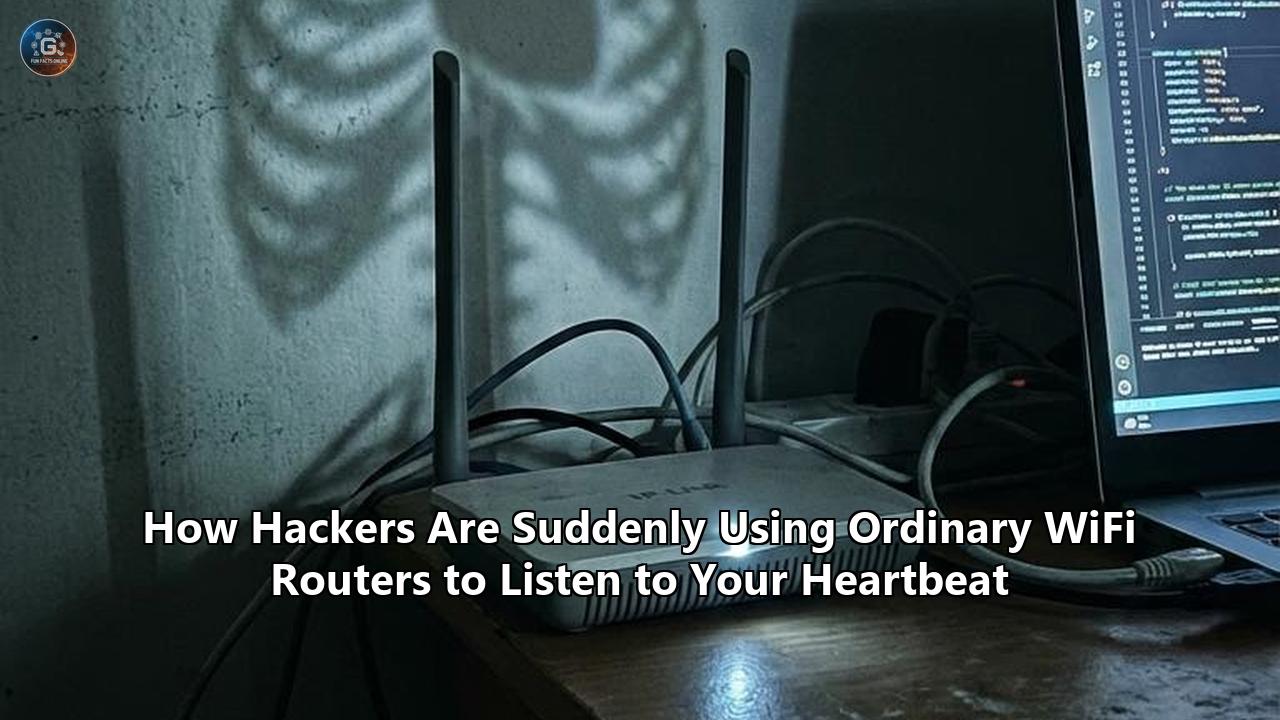
The mechanism of this attack relies on a feature built into the newest generation of home and office networks: IEEE 802.11bf. Known colloquially as the WiFi sensing standard, this protocol allows ordinary routers to act as passive radar systems. By analyzing how radio waves bounce off physical objects, these devices can map a room and detect movement.
The PulseSpider attackers deployed a custom malware payload that hijacked this capability, adjusting the routers' transmission rates to bathe targeted rooms in high-frequency radio waves. By analyzing the returning Channel State Information (CSI), the hackers successfully isolated the millimeter-level displacement of human chest cavities. They extracted real-time respiratory rates, sleep cycles, and precise cardiac rhythms.
Targets of the PulseSpider campaign included aerospace executives, investigative journalists, and political dissidents. In multiple documented instances over the past 48 hours, threat actors intercepted the physiological stress responses of negotiators during confidential video conferences, identifying exactly when a target's heart rate spiked during specific topics of discussion.
This zero-day exploitation represents the culmination of a six-year technological trajectory. The transition of radio frequency from a simple data carrier to a highly intrusive biometric surveillance tool did not happen overnight. It was the result of a slow, predictable escalation—from academic curiosity to consumer convenience, and finally, to weaponization.
2019–2021: The Accidental Radar
The origins of this vulnerability trace back to the realization that WiFi signals are highly susceptible to physical interference. Whenever a device transmits data, radio waves fill the physical space, bouncing off walls, furniture, and human bodies before reaching the receiver. Network engineers use a metric called Channel State Information (CSI) to measure these environmental disruptions and adjust signal strength accordingly to maintain a stable internet connection.
In late 2019, researchers at the University of Chicago and the University of California at Santa Barbara published a paper titled "Et Tu Alexa?". They demonstrated that the constant transmission of WiFi signals between smart speakers and home routers created an ambient web of radio frequency. By intercepting the CSI data, observers could detect human motion with terrifying accuracy. If a person walked into a room, the specific disruption in the WiFi signal could map their exact location.
The technology industry viewed this not as a security flaw, but as an untapped resource. If routers could detect presence, they could turn off lights when a room was empty, adjust thermostats based on occupancy, or serve as rudimentary burglar alarms—all without requiring consumers to install dedicated motion sensors.
To formalize this capability, the Institute of Electrical and Electronics Engineers (IEEE) established Task Group 802.11bf in September 2020. Their mandate was to create an official amendment to the global WiFi standard specifically dedicated to Wireless Local Area Network (WLAN) sensing. The objective was to enhance the ability of routers to interpret physical space while minimizing disruptions to actual data transmission. The early draft specifications focused heavily on the sub-7GHz band for broad room-scale sensing and the 60GHz band—using Directional Multi-Gigabit (DMG) implementation—for high-resolution, short-range detection.
At this stage, the technology was blunt. It could tell if a person was standing or sitting, walking or still. The human body was merely a large, watery mass disrupting radio waves.
2022–2024: The Biometric Escalation
The turning point occurred when academic researchers and hardware manufacturers realized that 60GHz radio waves, when processed through advanced machine learning algorithms, could detect micro-movements. A person sitting perfectly still in a chair is never actually stationary. Their chest rises and falls with breathing; their skin vibrates slightly with the pumping of blood.
The initial pitch for wifi router heartbeat monitoring was overwhelmingly positive, heavily marketed toward eldercare and telemedicine. Instead of forcing elderly patients to wear smartwatches that required daily charging and Bluetooth pairing, a sensing-enabled WiFi router could passively monitor their vital signs from the ceiling. If the patient stopped breathing or suffered a sudden cardiac arrhythmia, the router would detect the anomaly in the CSI data and automatically alert medical personnel.
The technical refinement during this period was staggering. A landmark study introduced the "2FiA" system, proving that WiFi sensing could be used for highly secure, dual-biometric human authentication. Researchers successfully built a pipeline that isolated the thoracic region of a target using statistical modeling. Because standard environments are filled with radio noise—ceiling fans, pets, moving curtains—the researchers utilized Blind Source Separation (BSS) algorithms. They applied a physiological constraint known as Respiratory Sinus Arrhythmia (RSA), which tracks the natural variance in heart rate that occurs during the breathing cycle, to validate the heartbeat signals.
By isolating the RSA coupling, the system effectively stripped away all non-thoracic interference. The returning data proved that cardiac signatures are uniquely identifiable. Just as a fingerprint contains distinct ridges, a human heartbeat produces a specific, unalterable rhythm and force that can uniquely identify an individual.
With the ratification of IEEE 802.11bf approaching, vendors rushed to embed these capabilities into consumer silicon. The physical layer (PHY) and media access control layer (MAC) of modern routers were upgraded to support constant environmental polling. The infrastructure for ambient biological surveillance was successfully installed in millions of living rooms, boardrooms, and bedrooms worldwide, entirely under the banner of health and convenience.
Mid-2025: The Ignored Vulnerabilities
As 802.11bf-compliant hardware flooded the consumer market in early 2025, independent security researchers began sounding the alarm. The core of their argument was straightforward: if a router is powerful enough to authenticate an individual by tracking their cardiac rhythm through a wall, that router is handling Category 1 biometric data.
Yet, the security architecture of the average consumer router remained notoriously fragile. Most users never change the default administrator passwords on their network hardware. Even when they do, manufacturers frequently leave debugging ports open, fail to patch firmware vulnerabilities, and utilize outdated encryption standards for local administrative access.
In May 2025, a white paper presented at an international cybersecurity symposium demonstrated a proof-of-concept attack known as "CSI Fuzzing." The researchers showed that by exploiting a vulnerability in a popular brand of mesh routers, an attacker could silently duplicate the Channel State Information matrix and forward it to an external server. The router's standard security alerts—designed to warn users of unfamiliar device logins or bandwidth spikes—were completely blind to this exfiltration. The biometric data was extremely lightweight, hiding easily within the normal background noise of internet traffic.
Hardware vendors dismissed the findings as overly theoretical. They argued that translating raw radio frequency data into a usable heartbeat required immense computational power—power that only advanced university laboratories possessed. They assumed that raw CSI data was effectively anonymized by its sheer complexity.
This assumption fundamentally underestimated the rapid commercialization of cloud-based artificial intelligence. Threat actors did not need to run the complex Blind Source Separation algorithms locally on the router; they only needed to export the raw radio data to offshore server farms where dedicated neural networks could process the interference patterns at scale.
Late 2025: Weaponizing the Thoracic Echo
The theoretical warnings materialized into active exploitation in November 2025. The initial signs did not present as traditional cyberattacks. There were no ransomware lock screens or stolen credit card dumps. Instead, the attacks manifested as highly coordinated extortion and corporate espionage campaigns.
The defining incident—now documented in the CISA advisory—involved the chief financial officer of a major European energy conglomerate. During weeks of high-stakes negotiations regarding a corporate merger, the opposing party inexplicably knew exactly when the CFO was bluffing, when they were anxious, and what specific clauses caused them genuine distress.
Forensic analysis of the CFO's home office network months later revealed a silent intrusion. Attackers had compromised the executive's 802.11bf-enabled mesh router. During the negotiation calls, the attackers utilized the sub-7GHz band to establish the executive's physical position in the room, then activated the 60GHz directional antennas to focus a continuous radio beam directly at the target's chest.
By applying automated wifi router heartbeat monitoring scripts to the intercepted radio waves, the attackers created a real-time biometric dashboard of the executive's physiological state. A sudden spike in pulse rate, a shallowing of breath, the specific cardiac irregularities associated with acute psychological stress—all of this was extracted passively, transmitted to the opposing negotiators, and used to systematically dismantle the CFO's bargaining position.
Following this incident, similar patterns emerged in political arenas. Dissidents living in exile reported instances where authoritarian regimes precisely tracked their sleep patterns and physical presence within safe houses, timing raids and intimidation tactics for the exact moments targets entered deep REM sleep. The biological state of the targets had become an open-source intelligence feed.
The Anatomy of the 2026 Exploit
The PulseSpider campaign revealed today demonstrates exactly how threat actors transitioned from targeted espionage to automated, mass-scale exploitation.
The attackers do not exploit the WiFi sensing standard directly; they exploit the router's Media Access Control (MAC) layer to manipulate the standard. Under typical operation, an 802.11bf router sends out Null Data Packets (NDPs)—empty signals used exclusively to measure the physical environment. A typical router might send ten NDPs a second to see if someone has walked into a room to turn on a smart light.
The PulseSpider malware infects the router and quietly alters the MAC layer protocols. It increases the NDP transmission rate from ten per second to over one thousand per second. This turns the router from a simple motion detector into a high-fidelity, bistatic radar system.
At one thousand measurements per second, the router captures a hyper-detailed Doppler map of the room. The malware then applies a lightweight pre-filter. It discards the massive macro-movements—people walking, doors opening—and isolates the micro-vibrations occurring in the 0.1 to 0.5 millimeter range. This specific frequency range corresponds exclusively to human respiration and cardiac contractions.
Once isolated, the data footprint shrinks dramatically. The malware packages the raw thoracic telemetry and sends it via encrypted DNS tunneling to command-and-control servers. There, massive clusters of machine learning models perform the heavy lifting. They separate the respiratory waves from the cardiac rhythms using the previously mentioned Respiratory Sinus Arrhythmia constraints.
The resulting output is terrifying in its precision. The attackers possess a continuous, unblinking record of a target's biological existence. They know when a target falls asleep, when they wake up in a panic, and when they are physically exerting themselves. Because recent academic studies have already proven that wifi router heartbeat monitoring can authenticate individuals based on unique cardiac signatures, the attackers can even distinguish between different family members occupying the same physical space. If a specific journalist enters a room, their unique heartbeat identifies them to the network immediately, triggering targeted surveillance protocols.
Traditional cybersecurity defenses are entirely useless against this vector. Firewalls monitor digital traffic, not radio wave propagation. Antivirus software scans the hard drives of laptops, not the firmware of a localized mesh node. Tape over a webcam prevents optical surveillance; no equivalent physical barrier stops a 60GHz radio wave from passing through a standard interior wall, striking a human heart, and echoing back to a router sitting on a bookshelf.
The Forward Outlook: Blindfolding the Network
The immediate fallout from the CISA directive has triggered absolute chaos within the hardware manufacturing sector. Network providers are currently scrambling to push emergency firmware updates to millions of devices.
The primary mitigation strategy being deployed today involves a technique known as "CSI Fuzzing". By intentionally injecting algorithmic noise into the Channel State Information matrix before it can be processed or exported, engineers hope to blur the radio echo just enough to hide the micro-movements of a beating heart, while still leaving enough macro-data intact to allow the WiFi to function and basic smart home devices to detect a person walking into a room.
However, defensive wifi router heartbeat monitoring patches are severely limited by the physical realities of radio frequency. If the noise injection is too aggressive, the router loses its ability to beamform—the process of directing a strong signal toward a user's laptop to maintain high-speed internet. If the noise is too subtle, sophisticated machine learning models on the attacker's side will simply filter the noise out and reconstruct the heartbeat. Defending against this requires solving a complex physics problem, not just a software bug.
Simultaneously, the regulatory landscape is completely unprepared for ambient biological surveillance. Laws governing medical privacy, such as HIPAA in the United States or the GDPR's biometric provisions in Europe, were drafted under the assumption that biological data must be actively collected—via a blood draw, a fingerprint scan, or a hospital-issued heart monitor. They lack a framework for a world where a consumer electronic device accidentally harvests medical-grade telemetry merely by broadcasting a wireless internet connection. Legal scholars are currently debating whether a network intrusion that maps an individual's cardiac rhythm constitutes a cybercrime, an unauthorized medical procedure, or a violation of basic human rights.
Moving forward, the hardware architecture of the smart home will have to change fundamentally. Security researchers are already advocating for the mandatory inclusion of physical hardware kill switches on all future 802.11bf routers—a mechanical toggle that severs the connection to the sensing antennas entirely, reducing the router back to a dumb data pipeline.
Until those hardware changes reach the market, the public is left grappling with a profound violation of physical sanctuary. The walls of a home, previously considered absolute barriers against outside observation, have been rendered transparent to the very infrastructure we installed to stay connected. The immediate priority for the cybersecurity community is no longer just securing the data flowing through our networks, but securing the biological echoes we leave behind simply by breathing in the presence of a machine.
Reference:
- https://www.computer.org/csdl/proceedings-article/sp/2026/606500b617/2bojwh1qN2w
- https://www.businessinsider.com/ai-training-beyond-facial-recognition-gait-detection-heartbeat-sensors-2019-10
- https://ar5iv.labs.arxiv.org/html/2207.04859
- https://arxiv.org/pdf/2207.04859
- https://www.researchgate.net/publication/381132212_An_Overview_on_IEEE_80211bf_WLAN_Sensing
- https://www.pbs.org/newshour/science/security-flaws-found-in-popular-smart-home-devices