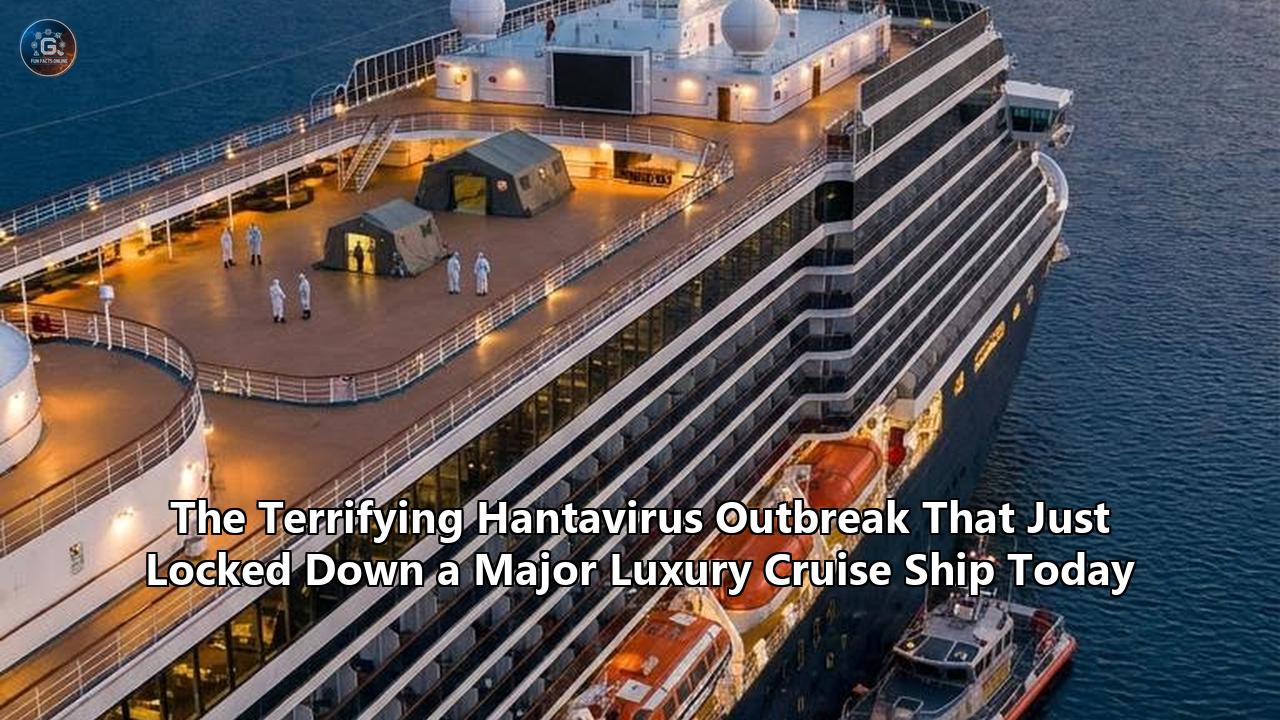
A lethal pathogen with a staggering mortality rate has effectively paralyzed a luxury expedition vessel in the Atlantic Ocean, triggering an international public health emergency and a complex multinational medical evacuation. As of Thursday, May 7, 2026, the Dutch-flagged MV Hondius sits moored off the coast of Cabo Verde, functioning as a floating quarantine zone after a confirmed outbreak of the Andes strain of hantavirus.
The crisis aboard the Oceanwide Expeditions vessel has so far claimed three lives and left several others critically ill among the 147 passengers and crew. Global health authorities, including the World Health Organization (WHO) and the UK Health Security Agency (UKHSA), have activated emergency protocols, scrambling to contain what is rapidly becoming the most medically severe maritime quarantine since the early days of the COVID-19 pandemic. However, unlike the pathogens responsible for previous maritime lockdowns, the biological agent at the center of this hantavirus cruise ship outbreak carries a mortality rate that can exceed 30 percent, plunging the remaining 88 passengers and 59 crew members into a terrifying period of isolation and uncertainty.
The timeline of the outbreak paints a grim picture of a virus moving silently through a sealed environment. The MV Hondius departed Ushuaia, Argentina, on April 1, 2026, embarking on a sprawling, multi-week itinerary across the South Atlantic. The voyage was designed to showcase some of the planet’s most isolated and ecologically pristine regions, including mainland Antarctica, South Georgia, Tristan da Cunha, and Ascension Island.
Trouble began just five days into the expedition. On April 6, a 70-year-old Dutch man developed a fever, headache, and mild gastrointestinal distress. Aboard a ship equipped for basic medical stabilization but lacking a full intensive care unit, his condition rapidly deteriorated. By April 11, as the vessel navigated deep, remote waters miles from the nearest airstrip, he succumbed to acute respiratory distress and died on board. At the time, without advanced microbiological testing available on the ship, the exact cause of death remained a mystery.
The situation escalated dramatically over the following weeks. The deceased man’s 69-year-old wife began showing severe symptoms and was eventually medically evacuated when the ship reached a viable extraction point. Her condition plummeted during a flight to Johannesburg, South Africa, and she died shortly afterward. Blood tests conducted by South Africa's Health Ministry provided the chilling confirmation: she tested positive for the Andes orthohantavirus.
On April 27, a critically ill British passenger was also evacuated to South Africa, testing positive for the same strain. By May 2, the day the WHO officially received notification of the cluster, a German national died on board the vessel. With three dead, at least five others showing symptoms, and a confirmed Swiss national testing positive, the vessel was ordered to halt its normal operations. Medical teams in protective gear have since initiated the delicate process of extracting the sickest patients, coordinating with the Dutch and Cape Verdean governments to fly a British, a Dutch, and a German national to the Netherlands for specialized biocontainment treatment.
The Culprit: Deconstructing the Andes OrthohantavirusTo understand the panic surrounding this specific incident, one must look at the unique virology of the pathogen involved. Hantaviruses are a family of viruses spread primarily by rodents. In North America, the most common strain is the Sin Nombre virus, carried by the deer mouse, which causes Hantavirus Pulmonary Syndrome (HPS). Infection typically occurs when humans inhale aerosolized particles of infected rodent urine, feces, or saliva—often while sweeping out an old cabin or working in agricultural settings.
Crucially, standard hantaviruses are considered dead-end infections in humans. A person who contracts the Sin Nombre virus cannot pass it to their spouse, their nurse, or the person sitting next to them on an airplane.
The Andes strain, however, breaks this fundamental epidemiological rule. Endemic primarily to Argentina and Chile, the Andes orthohantavirus (ANDV) is the only hantavirus known to be capable of human-to-human transmission. This specific capability is what elevates the current situation from a tragic localized exposure to a potential rolling outbreak within the enclosed environment of a ship.
Epidemiologists believe that human-to-human transmission of the Andes virus requires close, sustained contact, likely occurring through saliva or large respiratory droplets. The transmission chain documented aboard the MV Hondius—specifically the husband-to-wife infection—aligns perfectly with historical data regarding how the Andes strain moves between intimate contacts or caregivers. The WHO confirmed on May 6 that the strain isolated from the passengers is indeed the Andes variant, validating the worst fears of the medical personnel monitoring the ship.
"The Andes strain is a pathogen that demands absolute respect," said Dr. Céline Gounder, a medical correspondent and infectious disease specialist who has tracked previous outbreaks. "Because it is responsible for most cases of the illness in South America and carries this unique human-to-human transmission capability, placing it inside the hermetically sealed, climate-controlled environment of a maritime vessel creates a highly volatile epidemiological scenario."
Tracing the Itinerary: A Voyage Through Total IsolationThe sheer geography of the MV Hondius’s route compounds the severity of the crisis. Expedition cruising is fundamentally different from traditional Caribbean or Mediterranean leisure cruising. The vessels are smaller, built with reinforced hulls to navigate pack ice, and designed to operate for weeks without port resupply.
The ship’s departure point, Ushuaia, is located at the southernmost tip of Argentina in Tierra del Fuego. This region, along with the broader Patagonia area, is the natural habitat of the Oligoryzomys longicaudatus, commonly known as the long-tailed pygmy rice rat. This specific rodent is the primary natural reservoir for the Andes virus.
Investigators are currently working backward to determine how the virus breached the hull of the MV Hondius. There are two primary working theories:
- Pre-Embarkation Exposure: The most statistically probable scenario is that the 70-year-old Dutch man—identified as the index case—contracted the virus on land before boarding. Many passengers on Antarctic expeditions spend several days exploring Patagonia, hiking through national parks, or staying in rustic lodges before their ship departs. If the man entered an enclosed space, such as a storage shed or an abandoned trail cabin contaminated with aerosolized rat droppings, he could have inhaled the virus. The incubation period for hantavirus ranges from 9 to 33 days, perfectly aligning with his April 6 symptom onset, five days after the April 1 departure.
- A Stowaway Vector: A far less likely, though still rigorously investigated, possibility is that infected rodents boarded the ship in Ushuaia. Cargo loading operations involve massive pallets of food and supplies. While Polar Class vessels maintain strict pest control protocols, a breach could theoretically introduce the host animal into the ship's storage bays, exposing crew members who handle provisions.
Whatever the origin, the resulting outbreak unfolded in a medical vacuum. Following its departure from Argentina, the ship traveled south to the Antarctic Peninsula before turning northeast toward South Georgia and the South Sandwich Islands. These waters are among the most treacherous and remote on earth. If a patient requires sudden intubation or advanced hemodynamic support, the ship’s infirmary quickly reaches the limits of its capabilities.
By the time the vessel reached the vicinity of Tristan da Cunha—a volcanic island holding the title of the most remote inhabited archipelago in the world, positioned 1,500 miles from South Africa and 2,000 miles from South America—the virus was already spreading. The sheer distance from advanced tertiary care facilities meant that medical evacuations had to be delayed until the ship moved closer to the African continent or specialized long-range aircraft could be mobilized.
Clinical Progression: Inside Hantavirus Pulmonary SyndromeThe terror of the hantavirus cruise ship outbreak lies in what the pathogen does to the human body. Hantavirus Pulmonary Syndrome is a severe, rapidly progressive disease. For the passengers trapped on the MV Hondius, witnessing the physical decline of their fellow travelers would have been deeply traumatic.
The clinical progression occurs in distinct phases. Initially, patients experience a febrile prodrome lasting three to five days. Symptoms are highly non-specific: fever, chills, severe myalgia (particularly in the large muscle groups of the back and thighs), headaches, and gastrointestinal issues like nausea, vomiting, and diarrhea. During this phase, aboard a ship, the illness is virtually indistinguishable from severe seasickness, norovirus, or a standard influenza strain.
The devastating shift occurs when the virus attacks the endothelial cells lining the blood vessels in the lungs. This triggers the cardiopulmonary phase. The immune system's massive response to the viral invasion causes the capillaries in the lungs to suddenly become highly permeable. Blood plasma begins leaking rapidly into the alveolar spaces.
Patients effectively begin to drown in their own fluids. This non-cardiogenic pulmonary edema leads to severe shortness of breath, a sudden drop in blood oxygen levels, and acute respiratory distress syndrome (ARDS). Simultaneously, the fluid loss from the bloodstream causes a catastrophic drop in blood pressure, leading to cardiogenic shock. The heart, deprived of sufficient blood volume and oxygen, struggles to pump.
This transition from mild fever to terminal shock can happen in a matter of hours. Without a specific antiviral medication or an approved vaccine, medical treatment is entirely supportive. Patients require immediate transfer to an intensive care unit for mechanical ventilation. In the most severe cases, patients require Extracorporeal Membrane Oxygenation (ECMO), a machine that pumps and oxygenates a patient's blood outside the body, allowing the heart and lungs to rest. Implementing ECMO is impossible on a standard expedition ship, sealing the fate of patients whose lungs fail while at sea.
The Evacuation Protocol: Moving Bio-Hazards Across ContinentsAs the biological reality of the Andes strain became clear, the logistical machinery of international health and diplomacy was forced into overdrive. Managing a highly infectious, high-mortality pathogen requires specialized biocontainment transport.
The UK Health Security Agency stepped in to coordinate with the Foreign, Commonwealth and Development Office (FCDO) after a British national fell critically ill. "Our thoughts are with all those affected by the hantavirus outbreak onboard the MV Hondius," stated Dr. Meera Chand, Deputy Director for Epidemic and Emerging Infections at UKHSA. "It is important to reassure people that the risk to the general public remains very low. We are standing up arrangements to support, isolate and monitor British nationals from the ship on their return to the UK, and we are contact tracing anyone who may have been in contact with the ship or the hantavirus cases to limit the risk of onward transmission."
Extracting patients from a ship off the coast of West Africa involves complex aerospace medicine. The three patients flown to the Netherlands this week—a British, a Dutch, and a German national—were likely transported using Air Transit Isolators (ATIs). These are specialized, negative-pressure pods designed to encapsulate the patient entirely, protecting the flight crew and medical personnel from aerosolized viral particles during the journey.
The diplomatic hurdles are equally complex. Cape Verdean authorities allowed the ship to moor off their coast to facilitate the medical extractions but faced intense domestic pressure regarding port security. The vessel has now reportedly lifted anchor, charting a course toward the Spanish Canary Islands to seek a port equipped to handle the disembarkation and quarantine of the remaining 140-plus passengers and crew. Every country involved must balance humanitarian obligations against the absolute necessity of preventing the Andes virus from seeding a local outbreak.
Historical Precedent: The 2018 Epuyen ClusterTo predict what might happen next, infectious disease experts are looking back at the largest recorded outbreak of the Andes strain, which occurred in the small Patagonian town of Epuyen, Argentina, between late 2018 and early 2019.
That outbreak began when a single individual, who had contracted the virus from environmental exposure, attended a crowded birthday party. The virus leaped from the index patient to several guests. Over the next three months, the virus tore through the tight-knit community, resulting in 34 confirmed cases and 11 deaths—a staggering localized mortality rate.
The Epuyen outbreak taught epidemiologists vital lessons about how the Andes strain behaves in human networks. The virus showed a clear preference for close contacts, spreading among family members, romantic partners, and healthcare workers who treated the sick without adequate personal protective equipment (PPE). The Argentine Ministry of Health eventually halted the outbreak by implementing a draconian but necessary measure: mandatory, legally enforced home isolation for over 100 asymptomatic contacts of the infected.
Applying the lessons of Epuyen to the MV Hondius yields a mixed forecast. On one hand, a cruise ship is an incredibly dense environment, sharing the exact characteristics of the Epuyen birthday party: shared meals, close social interaction, and recirculated air. On the other hand, the transmission of the Andes virus typically requires closer, more sustained contact than highly airborne pathogens like measles or SARS-CoV-2.
If the virus is spreading exclusively through close contact—such as the husband infecting his wife—the overall attack rate on the ship may remain relatively low, confined to cabin mates and the medical staff who directly treated the victims. However, if the ship's ventilation system or dense dining halls facilitated a wider spread before the initial deaths raised the alarm, the number of symptomatic cases could spike over the next two weeks.
The Intersection of Eco-Tourism and Zoonotic SpilloverThe tragedy aboard the MV Hondius shines a harsh spotlight on a rapidly growing sector of the travel industry: extreme expedition cruising. Driven by an older, affluent demographic seeking raw, authentic experiences before climate change alters fragile ecosystems, expedition cruising has exploded in popularity.
Operators charge tens of thousands of dollars for itineraries that push deep into the Arctic, the Antarctic, and remote equatorial islands. These voyages are marketed on their proximity to untouched nature. Passengers disembark via Zodiac inflatables to walk among penguin colonies, hike through remote Patagonian forests, and visit isolated research stations.
However, this aggressive push into wild biomes comes with an inherent biological risk: zoonotic spillover. When human populations, particularly those comprising older individuals with varying underlying health conditions, insert themselves into the natural habitats of wild animals, they expose themselves to the pathogens circulating within those ecosystems.
While the expedition industry has stringent regulations regarding environmental protection—such as vacuuming passenger clothing to prevent the introduction of invasive seeds to Antarctica—infectious disease screening is mostly geared toward common human viruses like influenza or COVID-19. Protecting passengers from endemic zoonotic threats like hantavirus requires a different approach.
Following this incident, the industry will likely face immense pressure to re-evaluate pre-embarkation protocols. If the index case of this hantavirus cruise ship outbreak contracted the pathogen during a pre-cruise excursion in Tierra del Fuego, cruise lines may need to implement mandatory waiting periods or specific health screenings for passengers who engage in high-risk activities—such as exploring rodent-endemic wilderness areas—immediately prior to boarding.
Furthermore, the medical outfitting of Polar Class vessels will be under intense scrutiny. While it is financially and spatially impossible to put a full intensive care unit on a 150-person ship, the MV Hondius incident proves that relying on medical evacuations is not a viable safety net when operating weeks away from civilization. Improved onboard diagnostics, including rapid PCR testing panels capable of detecting a wider array of rare pathogens, will likely become an industry standard.
Maritime Biosecurity and the Psychological TollFor the 88 passengers and 59 crew members still aboard the MV Hondius, the psychological reality of their situation is acute. Trapped within their cabins or restricted to specific zones on the vessel, they are effectively enduring a floating game of epidemiological roulette.
The WHO and UKHSA have stated that returning nationals who do not display symptoms will be repatriated once the ship docks at its next destination, followed by strict isolation and monitoring protocols back in their home countries. UKHSA is already managing two individuals who returned independently from the ship prior to the lockdown, offering them support and advising strict self-isolation despite them currently showing no symptoms.
Living through a ship-wide quarantine evokes immediate comparisons to the Diamond Princess crisis of 2020. Yet, the emotional burden here is arguably heavier. The pathogen they are hiding from does not cause a mild cough in the majority of patients; it kills nearly one in three people it infects. Every headache, every bout of nausea, and every minor muscle ache experienced by a passenger right now is a source of immense anxiety, as these are the exact prodromal symptoms of Hantavirus Pulmonary Syndrome.
Oceanwide Expeditions, the operator of the MV Hondius, faces an unprecedented crisis management challenge. The crew, who are not only managing the technical operation of a ship at sea but also acting as frontline biohazard containment workers, are under extreme stress. Ensuring their psychological well-being, while maintaining rigorous infection control protocols to prevent the virus from sweeping through the crew quarters, is paramount.
Looking Ahead: The Next 14 DaysThe resolution of this crisis hinges on the next two weeks. Because the incubation period of the Andes virus can stretch beyond 30 days, health officials will not be able to declare the outbreak over even after the passengers disembark in the Canary Islands or mainland Europe.
The immediate priorities for international health agencies are clear:
First, secure the safe disembarkation and biocontained transport of all remaining individuals on the MV Hondius. This will require a coordinated effort between European health ministries to provide isolated transport flights and quarantine facilities. The passengers will need to be monitored meticulously for fever and drops in blood oxygen.
Second, investigators must sequence the genome of the virus isolated from the victims. While the WHO has confirmed it is the Andes strain, virologists need to know if the virus has mutated. A mutation that increases the efficiency of human-to-human respiratory transmission would represent a global health threat far beyond the confines of a single cruise ship. Currently, the WHO assesses the global risk as low, maintaining that transmission remains difficult and requires intimate contact, but genomic surveillance is the only way to guarantee that assessment remains accurate.
Third, a deep environmental sweep of the MV Hondius must be conducted. Epidemiologists and rodent abatement specialists will scour the ship's holds, galleys, and ventilation systems. They will look for any trace of rodent DNA, droppings, or nesting materials to definitively rule out the ship itself as the vector source. If the ship is cleared, the investigation will pivot entirely to Argentina, working to retrace the exact steps of the 70-year-old Dutch passenger in the days leading up to April 1.
The terrifying hantavirus outbreak that just locked down the MV Hondius serves as a stark reminder of humanity's vulnerability to the microscopic world. As we push the boundaries of travel, venturing deeper into untouched corners of the globe for adventure and recreation, we inevitably cross invisible biological borders. The Andes virus has exploited one of those crossings, turning a luxury expedition into a fight for survival, and forcing the global health community to navigate a complex, high-stakes rescue on the open sea. The coming weeks will determine whether the containment lines hold, or if the tragedy of the MV Hondius will expand its footprint onto dry land.
Reference:
- https://www.who.int/emergencies/disease-outbreak-news/item/2026-DON599
- https://www.cbsnews.com/news/hantavirus-spread-cruise-ship-outbreak-health-experts/
- https://www.gov.uk/government/news/ukhsa-update-on-the-hantavirus-cruise-ship-outbreak
- https://apnews.com/live/hantavirus-cruise-ship-updates-05-06-2026