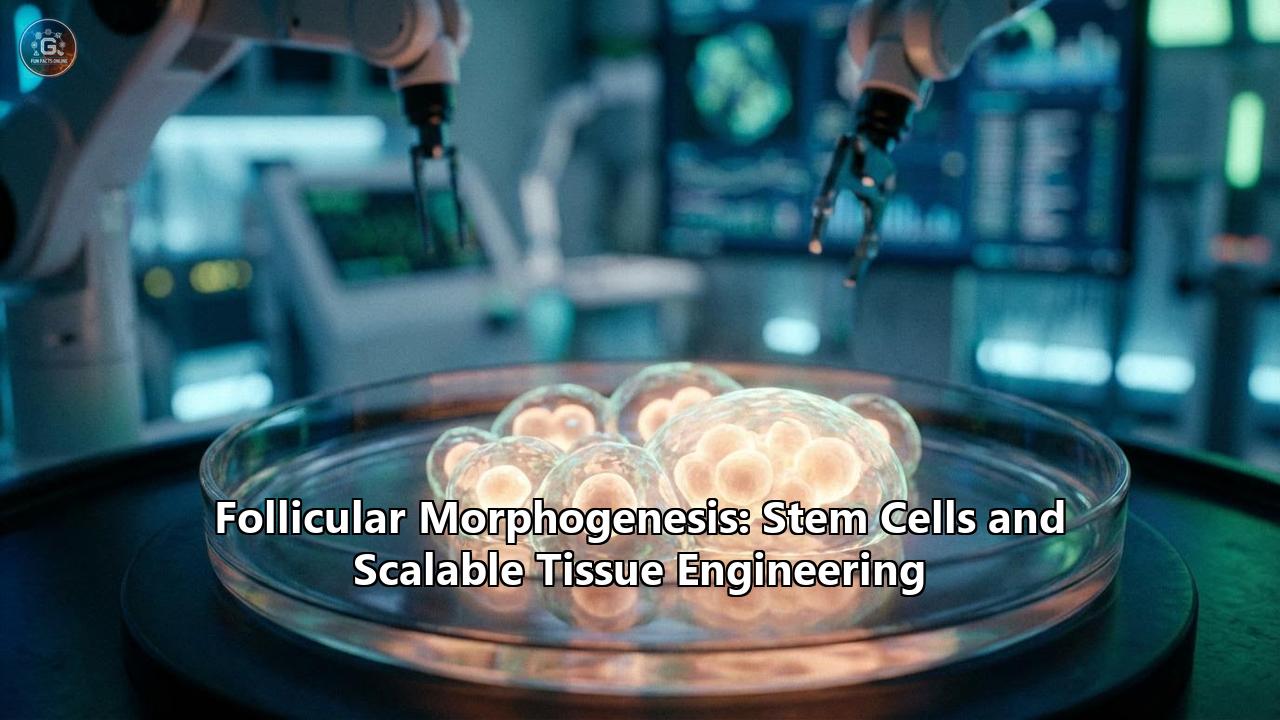
The human hair follicle is far more than a simple biological mechanism for producing a strand of keratin; it is one of the most intricate, dynamic, and fascinating mini-organs in the mammalian body. Uniquely capable of undergoing continuous cycles of regeneration, degeneration, and rest throughout an individual’s lifetime, the hair follicle represents a masterclass in tissue regeneration. For decades, the biological wizardry underlying this continuous renewal has captivated developmental biologists, dermatologists, and regenerative medicine specialists. Unlocking the secrets of the hair follicle holds the key not only to curing alopecia—a condition that carries profound psychological and emotional weight for millions globally—but also to advancing the broader fields of wound healing, organoid development, and whole-organ regeneration.
Today, we stand at the precipice of a bioengineering revolution. The convergence of stem cell biology, advanced biomaterials, and scalable tissue engineering technologies, such as 3D bioprinting and microfluidics, is transforming the dream of generating functional hair follicles in vitro into a tangible reality. This comprehensive exploration delves deep into the biological blueprints of follicular morphogenesis, the cellular architects driving hair regeneration, and the cutting-edge scalable tissue engineering strategies poised to reshape the future of regenerative medicine.
The Biological Blueprint: Understanding Follicular Morphogenesis
To engineer a hair follicle from scratch, scientists must first decipher the precise instructions nature uses to build one. Follicular morphogenesis is the developmental process through which hair follicles are initially formed during embryonic development. This intricate process is driven by a highly coordinated biological dialogue known as epithelial-mesenchymal interaction (EMI).
During embryogenesis, the primitive epidermis (epithelium) and the underlying dermis (mesenchyme) engage in a molecular cross-talk. The process begins when the mesenchyme sends a first signal to the overlying epithelium, prompting localized clusters of epithelial cells to thicken and form structures known as placodes. In response, the placode sends a reciprocal signal back down to the mesenchyme, instructing the mesenchymal cells to aggregate directly beneath the placode, forming a dense cluster known as the dermal condensate.
As the developmental dance continues, the placode invaginates, growing downward into the dermis to form a hair peg. The base of this epithelial peg eventually wraps around the dermal condensate, which matures into the dermal papilla (DP)—the permanent cellular command center of the hair follicle.
This morphological evolution is governed by a symphony of molecular signaling pathways:
- Wnt/β-catenin Pathway: This is the master initiator of hair follicle formation. Wnt signaling is crucial for both the initial establishment of the placode and the maintenance of the hair-inducing properties of the dermal papilla. Without active Wnt signaling, follicular morphogenesis halts.
- Sonic Hedgehog (Shh) Pathway: Once the placode is formed, Shh signaling takes over to drive the proliferation of epithelial cells and the downward growth of the follicle into the dermis. It is heavily involved in the late stages of follicle development and is strictly required for the formation of the dermal papilla.
- Bone Morphogenetic Protein (BMP) Pathway: BMP acts as a critical regulator and balancing force. While Wnt and Shh promote growth and formation, BMP signaling often provides inhibitory signals that dictate the spacing between follicles (ensuring we don't grow a solid sheet of hair) and triggers the cellular differentiation required to form the hair shaft and inner root sheath.
While true follicular morphogenesis only occurs in the fetus, the adult hair follicle mimics many of these developmental pathways during its continuous growth cycles: the growing phase (anagen), the regressing phase (catagen), and the resting phase (telogen).
The Cellular Cast: Stem Cells at the Helm
The lifelong cyclic regeneration of the hair follicle is made possible by distinct populations of stem cells and highly specialized support cells that reside within specific niches of the follicle structure.
1. Dermal Papilla Cells (DPCs): The Command CenterSituated at the very base of the hair follicle, the dermal papilla is composed of specialized mesenchymal cells. While not stem cells in the traditional sense, DPCs are highly plastic and act as the primary orchestrators of the hair cycle. They dictate the size of the hair shaft, the duration of the anagen phase, and instruct the surrounding epithelial stem cells to proliferate and differentiate. In tissue engineering, DPCs are highly prized because they possess "trichogenic" (hair-inducing) properties; when transplanted, they can induce the formation of new hair follicles in receptive epidermis.
2. Hair Follicle Stem Cells (HFSCs): The ReservoirHFSCs primarily reside in a distinct anatomical region of the outer root sheath known as the "bulge," located near the insertion point of the arrector pili muscle. These multipotent epithelial stem cells are generally quiescent (resting) during the telogen phase. However, at the onset of a new anagen phase, signals from the dermal papilla awaken them. The HFSCs proliferate and their progeny migrate downward into the hair matrix, where they rapidly divide and differentiate into the various layers of the hair shaft and the inner root sheath. Remarkably, HFSCs also play a critical role in epidermal wound healing; during severe skin injuries, these cells migrate upward to repair the skin surface, highlighting the dual importance of hair follicles in overall skin health.
3. Melanocyte Stem Cells (MeSCs): The PaintersAlso residing in the bulge region are melanocyte stem cells. During the hair growth cycle, these cells become activated and migrate down to the hair matrix, where they mature into pigment-producing melanocytes. These cells transfer melanin to the developing keratinocytes of the hair shaft, giving hair its distinct color.
4. Induced Pluripotent Stem Cells (iPSCs): The Modern WorkaroundA major limitation in hair restoration is the finite supply of autologous (patient-derived) cells. To overcome this, researchers are turning to human induced pluripotent stem cells (iPSCs). By taking standard adult cells, such as blood or skin fibroblasts, and reprogramming them back to an embryonic-like state, scientists can theoretically generate an unlimited supply of both epithelial and mesenchymal cells specifically tailored to a patient's genetic makeup.
The In Vitro Conundrum: The Failure of 2D Culture
If we know the cells involved and the signals they use, why haven't we been biomanufacturing hair for decades? The primary bottleneck in hair follicle bioengineering has been the temperamental nature of Dermal Papilla Cells (DPCs) when removed from the human body.
For tissue engineering to be scalable, cells extracted from a small patient biopsy must be expanded by millions in a laboratory setting. Traditionally, this is done by placing cells in flat, two-dimensional (2D) plastic petri dishes. However, when DPCs are cultured in 2D, they experience a biological phenomenon akin to "culture shock." Stripped of their complex, three-dimensional spatial arrangements and the mechanical forces of their native extracellular matrix (ECM), DPCs rapidly lose their distinct morphological features, flattening out and downregulating the expression of critical hair-inducing genes (such as ALP, β-catenin, and α-SMA). Within just a few passages (cell divisions) in 2D culture, DPCs completely lose their trichogenic inductivity. They forget how to make hair.
This dramatic loss of function proved that simply throwing the right cells into a dish with growth factors is not enough. The spatial architecture, biomechanical cues, and cell-to-cell contacts inherent in a three-dimensional environment are not just structural support—they are fundamentally instructive.
Enter Scalable Tissue Engineering: The 3D Revolution
To preserve the functionality of hair-forming cells, the bioengineering paradigm has shifted from 2D surfaces to immersive 3D microenvironments. By leveraging advanced biomaterials, scalable bioreactors, and precision manufacturing, scientists are recreating the exact conditions necessary for de novo follicular organogenesis.
Restoring Inductivity: Spheroids and the Hanging Drop Method
The simplest yet most profound breakthrough in maintaining DPC inductivity was the realization that forcing these cells to aggregate into tightly packed 3D spheres prevents the loss of their genetic identity. One of the most effective ways to achieve this is the "hanging drop" method. By placing a droplet of cell suspension on the lid of a petri dish and inverting it, gravity forces the cells to the bottom of the drop where there is no solid surface to attach to. To survive, the cells adhere to one another, spontaneously self-assembling into a dense 3D microtissue known as a spheroid.
Within these spheroids, the DPCs re-establish extensive cell-to-cell contacts, mimicking the dense cellular packing of the native dermal condensate. Gene expression analysis reveals a massive upregulation in Wnt, Shh, and BMP signaling components compared to 2D cultures, effectively restoring the cells' hair-inducing prowess. While the hanging drop method is highly effective, it is traditionally labor-intensive. To make this scalable, engineers are now developing high-throughput microwell arrays using materials like polydimethylsiloxane (PDMS). These specialized plates contain thousands of microscopic, non-adhesive dimples, allowing for the simultaneous, automated generation of tens of thousands of uniform hair follicle germs (HFGs) in a single batch.
Biomaterials: Simulating the Extracellular Matrix
Cells do not exist in a vacuum; they are encased in an extracellular matrix (ECM) that provides structural support and biochemical cues. To bioengineer hair follicles at scale, scientists utilize highly sophisticated biomaterials—often hydrogels—to simulate this ECM.
Natural polymers such as collagen, gelatin, hyaluronic acid, and alginate are extensively utilized because of their excellent biocompatibility and resemblance to native human tissue. For example, researchers have utilized 3D Matrigel cultures to grow high-passage DPCs. In these environments, DPCs form spheroidal structures that, when combined with epithelial cells and transplanted, form mature, fully structurally accurate hair follicles. Other studies have integrated degradable scaffolds utilizing sodium alginate, gelatin, and alginate lyase, which provide a microenvironment with controllable pore sizes and degradation rates, perfectly tailored for the colonization and functional maturation of hair follicular hanging drops. As the newly forming follicle grows, the hydrogel degrades at a matched rate, allowing the tissue to integrate seamlessly.
Scalability Achieved: 3D Bioprinting the Hair Follicle
While spheroids and hydrogels are excellent for creating isolated hair follicle germs, the ultimate goal of regenerative medicine is to engineer fully functional, hair-bearing skin grafts. This requires the precise spatial arrangement of multiple cell types—epidermis on top, dermis below, vascular networks interspersed, and hair follicles embedded at the correct depths and angles. Traditional manual tissue engineering simply cannot achieve this level of macroscopic and microscopic complexity at scale. This is where 3D bioprinting enters the fray as a transformative technology.
3D bioprinting applies the principles of additive manufacturing to biological materials. Instead of extruding melted plastic, bioprinters deposit "bio-inks"—viscous mixtures of living cells, growth factors, and biocompatible hydrogels—layer by layer.
A landmark advancement in this domain was demonstrated by researchers at Rensselaer Polytechnic Institute, who successfully 3D-printed hair follicles directly into lab-grown human skin tissue. Utilizing a highly automated, precise printing setup, the team cultured human skin and follicle cells until they had an expandable, printable cellular mass. The bioprinter deposited the skin layers using extremely thin needles while intentionally creating micro-channels within the bio-ink matrix. The hair-forming cells were deposited directly into these targeted channels. Over time, the surrounding skin cells migrated toward the channels, wrapping around the hair cells and mirroring the authentic structure of native follicles. This proof-of-concept represented a monumental leap toward the biomanufacturing of functional skin.
Other sophisticated 3D bioprinting models utilize multilayer composite scaffolds constructed from gelatin-alginate hydrogels (GAH). In one study, bio-inks encapsulating fibroblasts (for the dermis), human umbilical vein endothelial cells (HUVECs, for blood vessels), DPCs, and epidermal cells were specifically printed into distinct anatomical layers. By utilizing a hierarchical grid structure and precision "dot bioprinting" for the DPCs, the engineered constructs successfully facilitated the formation of self-aggregating DPC spheroids in situ. When these bioprinted scaffolds were transplanted into in vivo models, they generated completely mature hair follicles growing in the appropriate physiological orientation—a historical challenge in bioengineering.
The scalability of 3D bioprinting is its greatest asset. Once a digital blueprint (CAD model) of a hair-bearing skin graft is programmed, the bioprinter can reproduce the exact structure continuously, removing human error and vastly accelerating the production timeline. This paves the way for commercial and clinical scale-up, turning custom biological manufacturing from a bespoke art into an automated industrial process.
Beyond the Petri Dish: Skin Organoids and Self-Assembly
Parallel to the top-down approach of 3D bioprinting is the bottom-up marvel of organoid technology. Organoids are miniaturized, simplified versions of organs produced in vitro in three dimensions that show realistic micro-anatomy.
By guiding iPSCs through a carefully timed sequence of specific growth factors and signaling inhibitors (mimicking the Wnt, BMP, and TGF-β pathways experienced by an embryo), scientists have successfully coaxed these unspecialized stem cells into forming complex skin organoids. Remarkably, without any physical scaffolding or 3D printing, these organoids self-organize. Over the course of several months in a spinning bioreactor, the iPSCs differentiate into an epidermal layer, a dermal layer, and spontaneously erupt with fully formed hair follicles, sebaceous glands, and even rudimentary neural circuitry.
While currently taking months to mature—making them slower to produce than bioprinted constructs—iPSC-derived hair-bearing organoids offer the most biologically accurate model of human follicular morphogenesis ever created. They bypass the limitations of donor tissue availability and offer a pathway to generate perfectly matched, patient-specific grafts for regenerative therapies.
The Real-World Impact: Why Scalable Hair Engineering Matters
The push to engineer hair follicles at an industrial scale is not merely an aesthetic pursuit. The implications of this technology span several critical medical and commercial sectors.
1. The Ultimate Cure for AlopeciaAndrogenetic alopecia, alopecia areata, and cicatricial (scarring) alopecia affect hundreds of millions of people worldwide, significantly impacting quality of life, self-esteem, and mental health. Current treatments are severely limited. Pharmacological interventions like minoxidil and finasteride require lifelong use and have variable efficacy and notable side effects. Surgical hair transplantation (FUT or FUE) merely redistributes existing terminal hair from the back of the head to the balding areas; it does not increase the absolute number of hair follicles.
Scalable tissue engineering offers a definitive cure: follicular multiplication. By extracting a tiny punch biopsy of healthy follicles, expanding the DPCs and epithelial stem cells in vitro, and utilizing 3D bioprinting to construct thousands of new follicle units, clinicians could offer unlimited hair restoration, even for patients suffering from extensive total baldness who lack sufficient donor hair.
2. Next-Generation Skin Grafts for Trauma and BurnsCurrent tissue-engineered skin grafts used for severe burns and massive trauma are life-saving, but they are biologically simple. They consist primarily of fibroblasts and keratinocytes and lack all dermal appendages—meaning the grafted skin cannot sweat, lacks feeling, cannot secrete sebum, and cannot grow hair. Because hair follicles contain massive reservoirs of stem cells, native skin heals remarkably well. Engineered skin lacking follicles is prone to severe scarring, contracture, and chronic breakdown. Integrating 3D-bioprinted hair follicles into clinical skin grafts will dramatically enhance the durability, functionality, and aesthetic outcome of reconstructive surgeries, providing burn survivors with skin that actually acts like skin.
3. Pharmacological and Dermatological TestingThe pharmaceutical and cosmetics industries are under immense pressure to eliminate animal testing. However, accurately testing topical drugs, transdermal delivery systems, and cosmetic formulations requires human skin. Hair follicles act as primary entry points and reservoirs for many topical drugs and cosmetic agents. Contemporary in vitro skin models uniformly lack hair follicles, rendering safety and efficacy data incomplete.
Scalable biomanufacturing of hair-bearing skin provides an unprecedented, highly accurate in vitro screening model. Researchers can utilize engineered follicles to test novel hair growth promoters, study the inhibitory effects of specific compounds, and evaluate the toxicity of new cosmetics on human tissue without ever harming an animal. Cell proliferation, apoptosis, and growth factor secretion in these models serve as direct, reliable end-point markers for drug efficacy.
The Frontiers Ahead: Challenges and Future Directions
Despite these breathtaking advancements, the journey from the laboratory bench to the commercial clinic is fraught with distinct engineering and biological hurdles.
- Vascularization: Hair follicles are highly metabolically active; they require a robust, continuous blood supply to sustain the anagen growth phase. Integrating functional, perfusable capillary networks into densely packed, bioprinted hair grafts remains a massive biophysical challenge. Without a microvascular network, engineered follicles transplanted into a patient may suffer from necrosis before host blood vessels can integrate.
- Pigmentation and Cycling: While current in vitro models successfully sprout hair shafts, achieving long-term, sustained cycling (moving naturally from anagen to catagen to telogen and back) is difficult. Furthermore, integrating melanocyte stem cells to ensure the bioengineered hair possesses the patient's natural pigmentation, rather than growing out white or translucent, requires highly delicate cellular coordination.
- Directionality and Angles: Natural hair does not grow straight up at a 90-degree angle; it exits the scalp at acute angles and specific whorl patterns, which dictate the aesthetic flow of the hair. While bioprinters can control spatial coordinates, ensuring the autonomous growth of the hair shaft follows these angles post-transplantation requires advanced structural cues within the hydrogel scaffolds.
- Regulatory Pathways: Moving biologically active, multi-cellular, 3D-bioprinted tissues through stringent regulatory frameworks (such as the FDA or EMA) requires proving long-term safety. Ensuring that expanded stem cells do not undergo malignant transformation or form tumors post-transplantation is of paramount importance.
Conclusion: The Dawn of Bioengineered Hair
The quest to regenerate the human hair follicle sits at the vanguard of modern medicine. It is a field where the ancient developmental secrets of follicular morphogenesis meet the futuristic precision of 3D bioprinting and stem cell engineering.
We have moved past the era of viewing the hair follicle as a mere cosmetic appendage. It is a highly sophisticated, cyclic mini-organ whose masterly regulation of stem cell populations serves as the ultimate template for tissue regeneration. By unraveling the molecular dialogs of Wnt, Shh, and BMP, circumventing the limitations of 2D culture through hanging drop spheroids, and harnessing the scalability of 3D bioprinting and biomaterials, science has breached the barriers that once made in vitro hair generation an impossible dream.
As researchers continue to refine vascularization, prolong functional hair cycling, and navigate the regulatory landscape, the scalable biomanufacturing of hair follicles will transition from laboratory proofs-of-concept into transformative clinical realities. Whether it is providing a definitive cure for alopecia, engineering life-changing functional skin grafts for burn victims, or eliminating animal testing in pharmacology, the bioengineering of the hair follicle stands ready to profoundly impact human health, well-being, and regenerative medicine for decades to come.
Reference:
- https://pmc.ncbi.nlm.nih.gov/articles/PMC2649609/
- https://www.tandfonline.com/doi/full/10.4161/org.3.1.3237
- https://pmc.ncbi.nlm.nih.gov/articles/PMC9705605/
- https://pmc.ncbi.nlm.nih.gov/articles/PMC12676848/
- http://pfxbzlx.gdvdc.com/EN/10.3969/j.issn.1674-8468.2022.05.016
- https://www.researchgate.net/publication/12124607_Morphogenesis_and_Renewal_of_Hair_Follicles_from_Adult_Multipotent_Stem_Cells
- https://www.researchgate.net/publication/321362327_In_vitro_models_to_study_hair_follicle_generation
- https://pmc.ncbi.nlm.nih.gov/articles/PMC8072628/
- https://news.rpi.edu/content/2023/11/15/scientists-3d-print-hair-follicles-lab-grown-skin
- https://pubmed.ncbi.nlm.nih.gov/35288311/
- https://accscience.com/journal/IJB/articles/online_first/4550
- https://accscience.com/journal/IJB/11/2/10.36922/ijb.8535
- https://www.longdom.org/open-access/3d-bioprinting-of-hair-follicles-future-of-hair-restoration-1103247.html
- https://scispace.com/papers/review-of-hair-follicle-dermal-papilla-cells-as-in-vitro-m6ynrupe36