
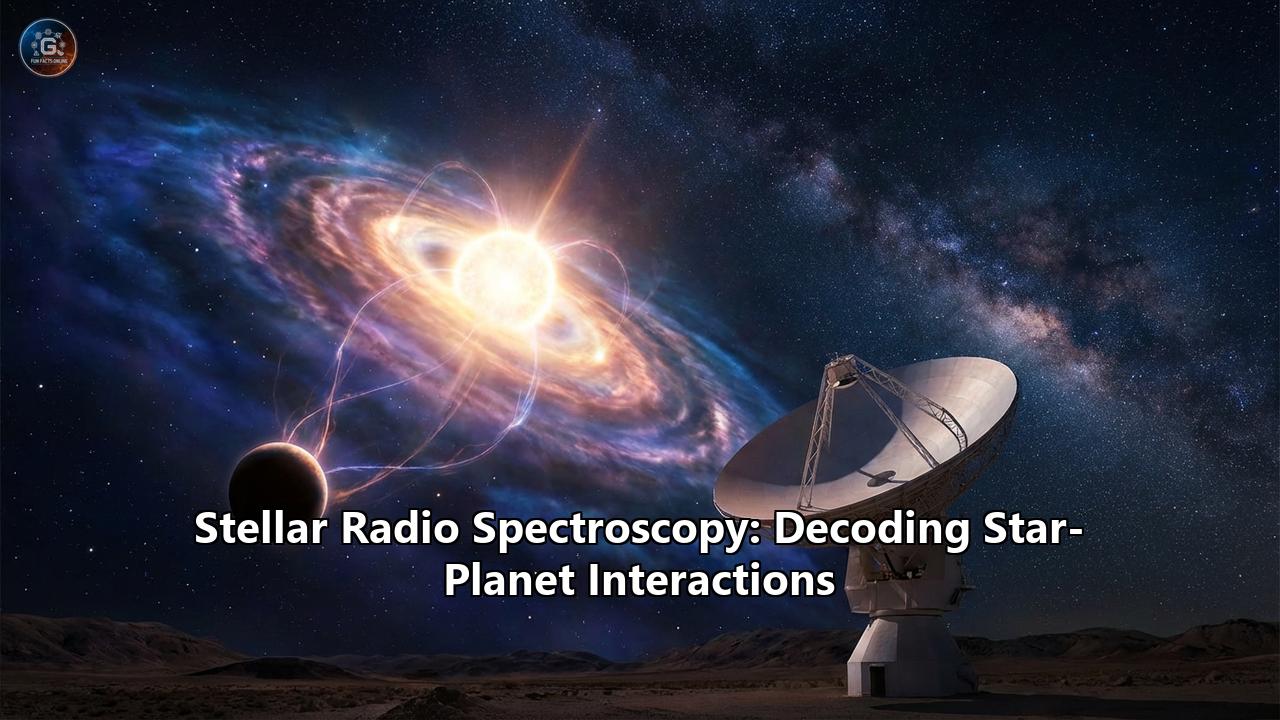
The universe is screaming, if you only know how to listen. For decades, astronomers have scanned the cosmos in the quiet hum of the radio spectrum, picking up the metronomic pulses of rotating neutron stars, the chaotic roar of black holes devouring gas, and the faint, fossilized whisper of the Big Bang itself. Yet, in the search for the most profound quarry—planets like our own, orbiting distant stars—the radio sky has remained frustratingly silent.
That silence broke three days ago.
On January 27, 2026, a team led by researchers at the Paris Observatory and the University of Hertfordshire announced a paradigm-shifting discovery in Nature Astronomy. Using a novel processing technique known as Multiplexed Interferometric Radio Spectroscopy (RIMS), they pulled not just one, but dozens of coherent radio signals from the archival noise of the LOFAR (Low-Frequency Array) telescope. These were not the random bursts of stellar flares, nor the steady beacons of pulsars. They were the distinctive, polarized songs of worlds interacting with their stars—the first definitive "space weather" reports from alien systems.
This breakthrough marks the dawn of a new era in astrophysics: the age of Stellar Radio Spectroscopy. It is a field that promises to decode the invisible magnetic umbilical cords connecting stars and planets, revealing secrets about exoplanetary atmospheres, interiors, and ultimately, their capacity to harbor life. To understand the magnitude of this moment, we must journey into the invisible architecture of magnetic fields, the violent dance of plasmas, and the technological marvels that have finally allowed us to hear the music of the spheres.
Part I: The Great Radio Silence
To appreciate the sudden flood of data, one must understand the drought that preceded it. Since the dawn of the exoplanet revolution in 1995, when Michel Mayor and Didier Queloz discovered 51 Pegasi b, our knowledge of alien worlds has been dominated by two methods: the transit method (shadows) and radial velocity (wobbles). These techniques tell us a planet’s radius, mass, and orbital period. With the James Webb Space Telescope (JWST), we began sniffing their atmospheres, looking for chemical fingerprints like methane or carbon dioxide.
But a planet is more than just a ball of gas or rock. It is a dynamic engine. Deep inside Earth, churning molten iron generates a magnetic field that stretches thousands of kilometers into space. This magnetosphere is our shield, a force field that deflects the stripping power of the solar wind. Without it, Earth might have shared the fate of Mars—a cold, desiccated husk whose atmosphere was scoured away billions of years ago.
If we want to know if an exoplanet is truly habitable, we need to know if it has a magnetic field. But magnetic fields are invisible to optical telescopes. They don't cast shadows. They don't wobble the star. However, they do sing.
The Jupiter AnalogueIn 1955, serendipity struck just outside Washington D.C., where astronomers accidentally detected bursts of radio static coming from a specific patch of sky. It wasn't a star, or a galaxy. It was Jupiter.
We now know that Jupiter is a "radio lighthouse." Its magnetic field is twenty thousand times stronger than Earth's. As its moon Io orbits, it spews volcanic plasma into Jupiter's magnetic environment. This plasma creates a conductive circuit—a physical wire made of charged particles—connecting the moon to the planet. As Io moves, it plucks the magnetic field lines of Jupiter like a guitar string. This generates powerful currents that accelerate electrons toward Jupiter's poles, causing them to spiral and emit intense, coherent radio waves. This phenomenon is known as the Electron Cyclotron Maser Emission (ECME).
For fifty years, astronomers reasoned that if Jupiter emits these signals, massive "Hot Jupiters"—gas giants orbiting furiously close to their stars—should be radio flashlights, blasting out signals thousands of times stronger.
Yet, every time we looked, we saw nothing.
The Ionospheric ShieldThe problem was two-fold. First, the universe is noisy. The galaxy is awash in synchrotron radiation, a background hiss that can drown out faint planetary signals. Second, and more importantly, was the "Ionospheric Cutoff." Earth's own atmosphere is a plasma shield. It blocks low-frequency radio waves (below 10 MHz) from reaching the ground. If a planet's magnetic field is weak, its radio emission falls into this blocked frequency range. We were like divers trying to hear a whisper from the surface while underwater.
The breakthrough of 2026 didn't come from a new telescope launching above the atmosphere—though the lunar arrays are coming—but from a realization that we were looking for the wrong kind of signal in the data we already had.
Part II: The Physics of the Invisible
Stellar Radio Spectroscopy is not about taking pictures; it is about analyzing the dynamic spectrum of radio waves—how their intensity changes over time and frequency. To decode these signals, we have to understand the three primary mechanisms of Star-Planet Interaction (SPI).
1. The Sub-Alfvénic Interaction (The "Unipolar Inductor")
This is the "Io scenario" scaled up to stellar proportions. It occurs when a planet orbits so close to its star that it sits inside the star’s Alfvén surface.
The Alfvén surface is a theoretical boundary in the stellar wind. Inside this boundary, the magnetic pressure of the star dominates the kinetic pressure of the wind. More importantly, information can travel backwards to the star.
- The Mechanism: Imagine a Hot Jupiter plowing through the magnetized corona of its host star. Because the stellar wind is moving slower than the "Alfvén speed" (the speed at which magnetic waves travel), the disturbance created by the planet can propagate back down the magnetic field lines to the star itself.
- Alfvén Wings: The planet acts as an obstacle, creating two "wings" of Alfvén waves that stretch back to the stellar surface.
- The Signal: When these waves hit the star's atmosphere, they drive massive electrical currents. These currents accelerate electrons, generating auroras on the star. We aren't seeing the planet's radio emission; we are seeing the star screaming because the planet is poking it.
This mechanism produces a signal that is modulated by the planet's orbital period. It turns on and off like clockwork as the magnetic connection sweeps across our line of sight.
2. The Bow Shock Interaction
For planets orbiting further out, like the Earth, the solar wind is supersonic. The planet creates a bow shock, like a boat moving through water.
- The Mechanism: The planet's magnetosphere slams into the stellar wind, compressing it.
- The Signal: Electrons are accelerated at the shock front, spiraling in the magnetic field and emitting synchrotron radiation. This signal is weaker and harder to distinguish from general background noise, but it is the "holy grail" for detecting Earth-like magnetospheres.
3. Reconnection Events
Magnetic fields hate to be crossed. When the magnetic field of a star and a planet collide with opposite polarities, they can "reconnect," snapping into a new configuration. This snap releases explosive energy, accelerating particles to relativistic speeds and triggering massive radio bursts. These look like stellar flares but occur with a periodicity linked to the planet's orbit.
Part III: The RIMS Revolution
The January 2026 breakthrough hinges on Multiplexed Interferometric Radio Spectroscopy (RIMS).
The challenge with previous observations, particularly with arrays like LOFAR or the Murchison Widefield Array (MWA), was the sheer volume of data. To find a planet, you need to stare at a star for hours, filtering out millions of terrestrial interference signals (FM radio, digital TV, military radar). Traditionally, astronomers would pick one target, stare at it, and process that tiny slice of data. It was like looking for a needle in a haystack by examining one straw at a time.
RIMS changes the game by treating the entire sky as a single, interconnected dataset.
- Interferometric Multiplexing: Instead of forming a single "beam" to look at one star, the RIMS algorithm utilizes the full correlator output of the array to synthesize thousands of "virtual beams" simultaneously.
- Temporal Filtering: It looks for signals that are not just bright, but coherent. Natural astrophysical noise (like a supernova remnant) is incoherent—it's just broad static. The ECME from a star-planet interaction is coherent—it acts like a laser, but in radio. The waves are in lockstep.
- The "Hidden" Signals: The team re-processed 1.4 years of archival data from the LOFAR "LoTSS" survey. They weren't looking for new data; they were mining the trash bin of previous surveys.
The result? Over 200,000 previously unidentified radio bursts. Among them, a distinctive subset of signals from red dwarf stars (M-dwarfs) that perfectly matched the theoretical predictions for star-planet interactions. They found the needles.
Part IV: The Zoo of Interactions
The initial findings from the RIMS analysis, combined with earlier tentative detections, have begun to populate a "zoo" of magnetic behaviors.
1. The Hot Jupiter Beacons: Tau Boötes bOne of the first systems to move from "candidate" to "confirmed" status in this new era is Tau Boötes. The planet is a massive Hot Jupiter orbiting its star every 3.3 days.
- The Signal: The radio emission detected is not constant. It arrives in slow, periodic bursts. This confirms the "pulsar-like" nature of the interaction. As the planet passes through specific magnetic longitudes of the star, the "Alfvén wing" connects, the circuit closes, and the radio beam sweeps across Earth.
- Implication: This tells us the magnetic polarity of the star and gives us a rough estimate of the planet's magnetic moment, suggesting Tau Boötes b has a magnetic core capable of generating a field similar to Jupiter's.
GJ 1151 was the teaser trailer for this movie. In 2020, LOFAR detected a low-frequency hum from this quiet red dwarf. The star itself is old and inactive—it shouldn't be emitting radio waves.
- The Verdict: The new RIMS analysis confirms that this emission is driven by an unseen Earth-sized planet. The planet is likely an electrically conductive rock (or has a magma ocean) that acts as a generator as it orbits, inducing currents in the star's corona. It is a "unipolar inductor" on a galactic scale.
- The Twist: Because the star is a red dwarf, its "habitable zone" is very close in. This means habitable planets around M-dwarfs are almost certainly in the sub-Alfvénic regime. They are physically plugged into their stars. This has terrifying implications for habitability—the direct magnetic connection could funnel stellar protons directly onto the planet's atmosphere, potentially stripping it faster than if it had no magnetic field at all.
Our nearest neighbor, Proxima Centauri, is a flare star. It spits out X-rays and UV radiation constantly. Radio bursts have been detected here before, often attributed to flares. However, the new spectroscopy reveals a component of the radio signal that is synchronized with the orbit of Proxima b.
- Space Weather Forecast: The data suggests Proxima b is being buffeted by "super-Alfvénic" pressures during flares, compressing its magnetosphere to the surface. If Proxima b has an atmosphere, it is being crushed and expanded rhythmically. The radio data allows us to map the "Joule heating"—the energy being dumped into the upper atmosphere of the planet.
Part V: The Habitability Equation
Why does this matter to the average person? Because the search for life is, at its core, a search for shields.
We often talk about the "Goldilocks Zone" in terms of temperature—not too hot, not too cold. But there is a "Magnetic Goldilocks Zone" as well.
- Too Weak: If a planet's magnetic field is too weak (like Mars), the stellar wind strips the atmosphere. The oceans boil off. The planet dies.
- Too Strong? Paradoxically, a super-strong magnetic field might trap too much radiation, creating radiation belts (like Earth's Van Allen belts) so intense they sterilize the surface or the moons.
- The Connection Danger: As seen with GJ 1151, if a planet is too close, its magnetic field couples with the star's. The protective shield becomes a funnel for stellar fury.
Stellar Radio Spectroscopy gives us the tool to measure this. By measuring the "cutoff frequency" of the radio emission, we can calculate the magnetic field strength of the planet.
- The Formula: The frequency of the electron cyclotron maser emission is directly proportional to the magnetic field strength ($f \approx 2.8 \times B$, where $f$ is in MHz and $B$ is in Gauss).
- The Measurement: If we detect a signal cutting off at 30 MHz, we know the planet has a magnetic field strength of roughly 10 Gauss (significantly stronger than Earth's 0.5 Gauss).
For the first time, we can look at an Earth-sized exoplanet and say, "It has a shield. It has a chance."
Part VI: The Future Landscape
The RIMS breakthrough is just the software opening the door. The hardware is about to kick it down.
The Square Kilometre Array (SKA)Construction is well underway in Western Australia (SKA-Low) and South Africa (SKA-Mid). When SKA-Low comes online later this decade, it will be roughly 50 times more sensitive than LOFAR.
- The Promise: SKA will not just detect these interactions; it will image them. It will allow us to see the "tomography" of the stellar wind—mapping the density of the plasma between the star and the planet. We will be able to watch a Coronal Mass Ejection (CME) leave a star and impact a planet in real-time, measuring how much the planet's magnetosphere compresses. It will be the ultimate space weather station.
The ultimate limit for ground-based astronomy is the ionosphere. We simply cannot hear frequencies below 10 MHz, which is where the magnetic signals of Earth-like planets (weak fields) live.
- The Solution: Go to the Moon. The Lunar Surface Electromagnetics Experiment-Night (LuSEE-Night) is a pathfinder mission scheduled for landing on the far side of the Moon. Shielded from Earth's radio noise and lacking an ionosphere, it will open the "Dark Ages" window of the radio spectrum.
- The Goal: A full lunar array could detect the auroral radio emissions of an Earth-twin around a Sun-like star. This is the only way to confirm if a true Earth 2.0 has a magnetosphere.
Conclusion: The Universe Unmuted
We have spent thirty years collecting the stamp collection of exoplanets. We have sorted them by size, by mass, and by orbital period. We have marveled at Hot Jupiters and wondered at Super-Earths. But until now, they have been static objects in our minds—silent spheres hanging in the dark.
Stellar Radio Spectroscopy has turned the volume up. It has revealed that these systems are not static; they are electric, dynamic, and violent. They are webs of energy where stars and planets are locked in a constant electromagnetic exchange.
The detection of these radio signals is more than a technical triumph; it is a shift in our cosmic perspective. It reminds us that habitability is not just about having water; it's about having a defense. As we tune into these alien broadcasts, decoding the hiss and crackle of magnetic reconnections, we are essentially listening for the heartbeat of living worlds.
The silence is over. The universe is speaking. And for the first time, we know the language.
Reference:
- https://www.researchgate.net/publication/231751568_Dipolar_and_Quadrupolar_Magnetic_Field_Evolution_over_Solar_Cycles_21_22_and_23
- https://www.stsci.edu/contents/newsletters/2020-volume-37-issue-01/how-well-do-we-understand-m-dwarfs
- https://www.researchgate.net/publication/359640086_Highlights_of_the_Square_Kilometre_Array_Low_Frequency_SKA-LOW_Telescope
- https://www.physics.ox.ac.uk/research/group/square-kilometre-array-ska