
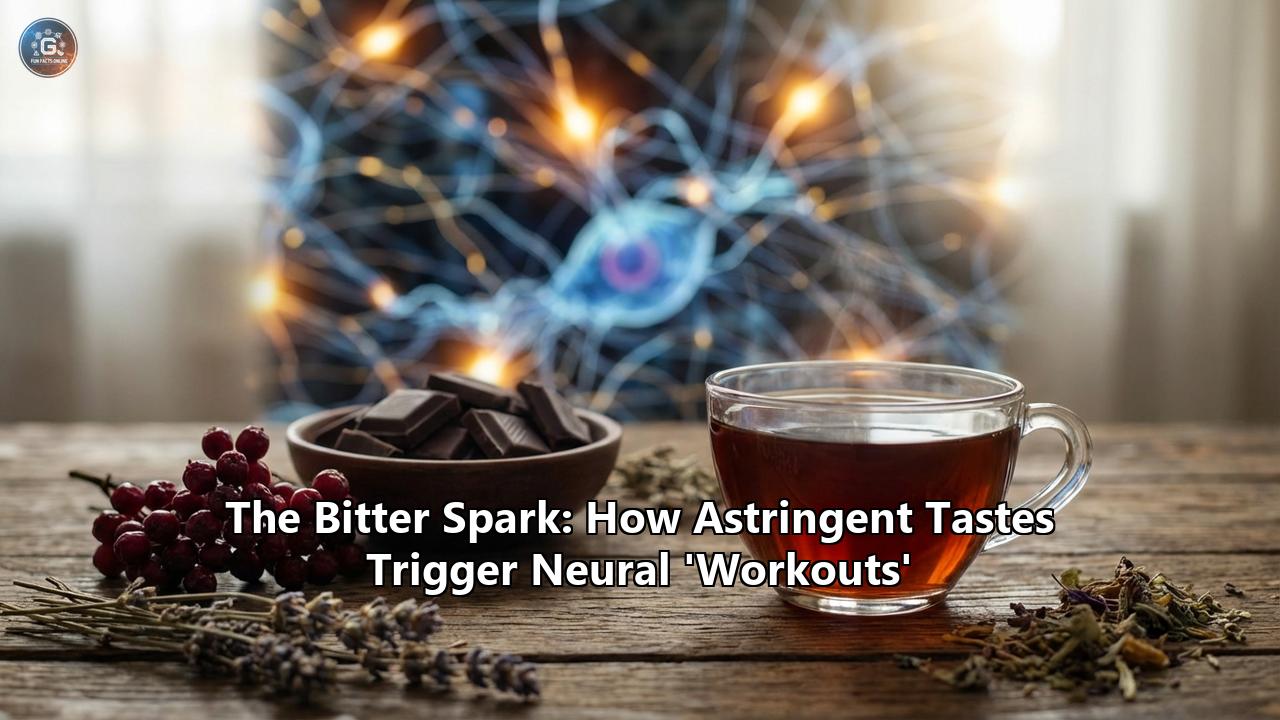
The first time you tasted a truly high-tannin wine, a raw walnut skin, or a piece of 100% dark chocolate, your face likely contorted into a reflex older than humanity itself. The mouth dried instantly, the tongue felt rough and "furry," and a shiver might have traced its way down your spine. This is the "pucker"—a sensory alarm bell that evolution designed to scream poison.
And yet, you took another bite. You sipped again.
In that moment of overriding instinct, something profound happened in your brain. Far from being just a culinary preference, that flash of astringency triggered a cascade of neural activity that scientists are only now beginning to map. It wasn't just a taste; it was a workout. A sudden, sharp activation of the brain’s alertness systems that clears mental fog, sharpens memory, and mimics the physiological effects of exercise.
Welcome to the world of the Bitter Spark. This is the story of how the things we once feared became the things that keep our minds alive.
Part I: The Anatomy of the Pucker
To understand why astringency wakes up the brain, we must first understand that it is not, strictly speaking, a taste at all.
When you eat a lemon, you taste sourness via specific receptor cells on your taste buds. When you eat sugar, you taste sweetness. But when you drink a cup of over-steeped green tea or bite into an unripe persimmon, the sensation you feel is not happening in the gustatory system. It is happening in the somatosensory system—the same system that feels heat, cold, and pain.
The Mechanics of FrictionAstringency is a tactile sensation. It is a physical event that occurs on the molecular level inside your mouth. The primary agents of this sensation are polyphenols, specifically a class of compounds known as tannins. Found in plants as a defense mechanism against being eaten, tannins are molecularly "sticky."
Your saliva is rich in specific proteins called proline-rich proteins (PRPs) and mucins. These proteins act as a lubricant, a biological oil that allows your tongue to glide effortlessly against the roof of your mouth and your teeth. This lubrication is so constant that we are completely unaware of it—until it’s gone.
When tannins enter the mouth, they bind aggressively to these lubricating proteins. The chemical attraction is so strong that the tannins strip the proteins out of the liquid solution of your saliva, causing them to clump together and precipitate. In seconds, your mouth loses its lubrication. The "dryness" you feel isn't a lack of water; it is a sudden, dramatic increase in friction. Your tongue is literally scraping against the soft tissues of your mouth.
The Trigeminal AlarmThis loss of lubrication is detected not by taste buds, but by the trigeminal nerve. This is the fifth cranial nerve, a massive, three-branched highway of information that is responsible for sensation in the face, biting, and chewing. It is the same nerve that registers the "burn" of chili peppers (capsaicin) and the "cool" of menthol.
When the trigeminal nerve detects this sudden friction and "roughness," it sends a high-priority signal to the brain stem. Unlike subtle aromatic notes of vanilla or cherry that might drift lazily to the olfactory bulb, the trigeminal signal is urgent. It bypasses the polite processing centers of flavor and goes straight to the brain's command center for survival.
The message is simple: "Something is happening to the structural integrity of the mouth."
This is the first spark. The brain, perceiving a potential threat (is this toxic? is this damaging?), snaps into a state of heightened vigilance. It is a biological interrupt signal, forcing your nervous system to pay attention. In a culinary landscape dominated by the comforting, numbing effects of fat, sugar, and salt, astringency is a splash of ice water.
Part II: The Neural Gymnasium
Recent research from the intersection of food science and neuroscience has begun to illuminate what happens after that trigeminal alarm is tripped. The results challenge our understanding of "nutrition" and suggest that the sensory experience itself—the very act of feeling that pucker—provides a unique cognitive benefit.
The Locus Coeruleus ConnectionThe trigeminal nerve feeds into the brainstem, specifically interacting with a small but critical nucleus called the locus coeruleus (LC). The LC is the primary source of the neurotransmitter noradrenaline (norepinephrine) for the entire brain.
Noradrenaline is the brain's "wake up" chemical. It regulates arousal, attention, and the stress response. When the LC fires, it sprays noradrenaline across the cortex, sharpening focus, enhancing memory retrieval, and increasing the "signal-to-noise" ratio of neuronal firing. It is the neurochemical equivalent of turning up the contrast on a blurry image.
Studies using mouse models have shown that the ingestion of astringent compounds like flavanols triggers this LC-noradrenaline pathway. The sensory shock of the astringency acts as a "mild stressor"—not enough to cause damage, but enough to activate the system.
The Dopaminergic BonusBut the brain doesn't just wake up; it also learns. The activation of these pathways has been linked to the release of dopamine in the hippocampus, the brain's center for memory and learning.
This is where the "workout" analogy becomes literal. Just as physical exercise places a mild stress on muscles, causing them to repair and grow stronger, the sensory stress of astringency places a demand on the nervous system. The brain responds by upregulating the production of neurotrophic factors—proteins like BDNF (Brain-Derived Neurotrophic Factor) that encourage the growth of new neurons and synapses.
In this light, a glass of tannic Cabernet Sauvignon or a square of bitter chocolate is not just a treat; it is a cognitive rep. It is a momentary challenge that forces the brain to engage, adapt, and strengthen.
Hormesis: The Sweet Spot of BitternessThis phenomenon falls under the biological concept of hormesis: the idea that low doses of a stressor elicit a beneficial adaptive response. We accept this readily in other areas—we lift heavy weights to tear muscle fibers so they grow back bigger; we sit in saunas to stress our cardiovascular system.
Astringency is sensory hormesis. The "unpleasant" sensation of dryness and bitterness is the stressor. The brain's compensatory reaction—increased blood flow, heightened alertness, and the release of mood-regulating neurotransmitters—is the benefit.
In a modern diet that is increasingly "pre-chewed"—processed, softened, sweetened, and smoothed—our trigeminal nerves are under-stimulated. We are living in a sensory sedative state. Introducing astringent and bitter foods is a way to reintroduce the necessary friction that keeps the neural machinery oiled and running.
Part III: The Evolution of Aversion
If astringency is so good for us, why did evolution program us to hate it?
To a hunter-gatherer, the world was a pharmacy, but it was also a minefield. Many of the most toxic compounds in nature—alkaloids like strychnine and cyanide—taste intensely bitter. Many unripe, indigestible fruits are intensely astringent, signaling that their seeds are not yet ready to be spread.
The "pucker" was nature's way of saying: Stop. Spit it out. Wait.
The Omnivore’s DilemmaHowever, humans are omnivores. We cannot survive on a single food source; we must explore. This created a tension that psychologists call the "Omnivore's Dilemma": the simultaneous need to seek new foods (neophilia) and the fear of new foods (neophobia).
Over hundreds of thousands of years, humans learned that while some bitter things kill you, others cure you. We learned that the astringency of an unripe fruit meant "wait," but the astringency of a medicinal bark meant "heal."
We began to hack our own biology. We discovered that by processing these foods—roasting cacao, fermenting tea leaves, aging wine—we could tame the toxicity while retaining the "spark." We didn't just tolerate the sensation; we began to revere it.
From Toxin to TonicHistorically, the most bitter and astringent substances were always the most prized medicines.
- Ancient Egypt: Wormwood and gentian were used as tonics to purge parasites and stimulate digestion.
- Traditional Chinese Medicine: "Bitter" is one of the five elemental phases, associated with the heart and the small intestine, used to "clear heat" and dry dampness.
- Ayurveda: Astringent (Kashaya) is one of the six rasas (tastes), essential for balancing the Kapha and Pitta doshas, believed to "squeeze" the tissues and improve tone.
This evolutionary pivot—from avoiding bitterness to seeking it out—marks a profound shift in human consciousness. It represents the triumph of knowledge over instinct. When you enjoy a bitter IPA or an espresso, you are celebrating a victory of your ancestors who learned to distinguish the deadly from the divine.
Part IV: The Psychology of the Hurt
Why do we do it? Why do we pay a premium for a wine that dries our mouth or a chocolate that makes us grimace?
Psychologist Paul Rozin coined the term "Benign Masochism" to describe this distinctly human trait. It is the enjoyment of a negative sensation when we know there is no actual threat.
The "Safe Threat"The pleasure of astringency comes from the gap between the raw data (Physical Threat!) and the cognitive context (I am safe in a restaurant).
When the trigeminal nerve screams "Poison!", the conscious brain steps in and whispers, "Relax, it's just a $100 Barolo." This cognitive override creates a rush of relief and mastery. It is the same psychological mechanism that makes us enjoy roller coasters, sad movies, and hot chilies.
This "hedonic reversal" is not just about tolerating pain; it is about transmuting it. The brain releases endorphins—natural painkillers—to counteract the sensory stress. This results in a post-ingestion "high" that smooth, sweet foods can never replicate. Sweetness is easy; it requires no effort. Astringency is earned.
The Refined PalateThis is why an appreciation for bitter and astringent foods is often associated with adulthood and sophistication. Children, ruled by raw biological instinct, reject bitterness universally. Their systems are smaller, their tolerance for toxins lower.
Acquiring a taste for the "dry" and the "bitter" is a rite of passage. It signifies that you have overridden your infantile reflexes. You have learned to find pleasure in complexity, in friction, and in challenge. In the culinary world, "balance" does not mean the absence of pain; it means the perfect counterweighting of it.
Part V: The Gastronomic Gymnasium
To truly understand the "Bitter Spark," we must leave the laboratory and enter the kitchen. Across the globe, cultures have developed sophisticated rituals and vocabularies to manage and celebrate these difficult sensations. Let us tour the equipment in this neural gymnasium.
1. The Grape's Armor: Red Wine
Wine is the most famous vessel for astringency. The sensation comes from tannins found in the grape's skins, seeds, and stems, as well as the oak barrels used for aging.
The Vocabulary of FrictionSommeliers have developed a poetic lexicon to describe the precise nature of the "pucker."
- Velvety/Silky: When tannins are fine-grained and polymerized (long chains), the friction is low and pleasant, like a high-thread-count sheet.
- Chewy/Chunky: When tannins are abundant and bold, you can almost feel a physical weight on the tongue, urging you to chew the liquid.
- Angular/Austere: A wine with high acid and high tannin that feels "sharp" and unyielding. This is the "workout" wine—challenging, intense, often needing food to tame it.
2. The God's Elixir: Cacao
Before it was a candy, chocolate was a sacrament. The ancient Olmecs and Mayans consumed cacao as a bitter, spicy, frothy beverage. It was not a dessert; it was a stimulant for warriors and priests.
Theobromine and TanninRaw cacao is intensely bitter and astringent. It contains theobromine (a cousin of caffeine) and massive amounts of flavanols.
- Ceremonial Grade: Today, the "Cacao Ceremony" has returned in spiritual circles. Participants drink a thick, unsweetened paste of raw cacao. The immediate physiological effect is a "heart-opening" rush—a combination of the vasodilator effects of theobromine and the trigeminal "shock" of the bitterness.
- The Modern Bar: High-percentage dark chocolate (85%+) retains this profile. Eating it requires a different technique than eating milk chocolate. You do not chew; you let it melt. This slow release modulates the astringency, turning a sharp spike into a long, slow burn of flavor.
3. The Green Gold: Olive Oil
In the world of Extra Virgin Olive Oil (EVOO), a cough is a compliment.
The Two-Cough RuleHigh-quality, early-harvest olive oil is rich in a phenolic compound called oleocanthal. When you swallow it neat, it triggers a very specific, stinging irritation at the back of the throat.
- The Science: Oleocanthal activates the TRPA1 receptor—the exact same receptor activated by ibuprofen. It is a natural anti-inflammatory.
- The Test: Olive oil connoisseurs rate oils by their "pungency." A "one-cough" oil is good; a "two-cough" oil is excellent. That sting is the direct sensory evidence of the oil's health potency. If your oil is smooth and buttery with no bite, it likely lacks the "spark" of fresh polyphenols.
4. The Deceptive Fruit: Persimmons
No food teaches the lesson of astringency more cruelly than the unripe Hachiya persimmon.
The Tannin BombBite into one before it is ready, and your mouth will feel like it has been stuffed with cotton balls. The tannins are soluble, meaning they are free to bind instantly with every protein in your mouth.
The Art of BlettingTo eat a Hachiya, one must practice the art of "bletting"—letting the fruit over-ripen until it looks almost rotten. Inside, a chemical miracle occurs. The fruit produces acetaldehyde, which binds the soluble tannins into insoluble clumps. They are still there, but they can no longer bind to your tongue. The fruit transforms from an inedible sponge into a sweet, jelly-like pudding.
- The Lesson: Patience. The "bitter spark" here is a guardian of the fruit's maturity.
5. The Brain Nut: Walnuts
Crack a fresh walnut, and you will see a thin, papery skin covering the pale meat. Most bakers try to rub this skin off. They are making a mistake.
The Phenolic SkinThat skin contains 90% of the phenols in the walnut. It is the source of the slight bitterness and astringency that offsets the rich, creamy fat of the nut.
- Health in the Husk: This bitterness is the taste of ellagic acid and other compounds that fight oxidative stress. By eating the skin, you are consuming the plant's own immune system. The "drying" sensation is the tactile proof of its potency.
Part VI: The Future of Flavor
We are entering a new era of "Sensory Nutrition." For decades, the food industry has raced to the bottom of the "Bliss Point"—the mathematically calculated ratio of sugar, salt, and fat that makes food addictive and effortless to eat. The result is a population that is overfed, undernourished, and neurologically bored.
But the pendulum is swinging back.
The Chef's PerspectiveVisionary chefs like Ferran Adrià and writers like Jennifer McLagan (author of Bitter) and Samin Nosrat (Salt, Fat, Acid, Heat) are championing the return of the challenging palate.
- Samin Nosrat teaches that salt is not just for saltiness—it is a tool to tame bitterness without erasing it. A pinch of salt in coffee or on grapefruit suppresses the bitter transduction, allowing the "spark" to remain without the bite.
- Jennifer McLagan argues that "Bitterness is an SOS"—a signal of complexity and danger that makes eating exciting. A meal without bitterness is a melody without a bass line; it lacks depth.
How do you incorporate the "Bitter Spark" into your life? You don't need to chew on tree bark. You need a protocol of progressive desensitization.
- The Dark Chocolate Ladder: Start at 60%. When that tastes sweet, move to 70%, then 85%. Stop chewing; let it melt. Focus on the finish.
- The Tea Ritual: Brew loose-leaf green tea. Don't add sugar. Notice the texture on your tongue. Is it drying? Good. That is the catechins working.
- The Salad Shift: Replace iceberg lettuce with arugula, radicchio, and dandelion greens. Dress them with fatty olive oil and salt. The fat and salt will balance the "green pain," turning it into a complex, peppery delight.
- Drink the Wood: Explore wines aged in oak or wines made with skin contact (Orange wines). Look for the word "structured" on the label.
Conclusion: Embracing the Pucker
The "Bitter Spark" is more than just a flavor profile; it is a philosophy of resilience.
In a world designed to comfort us to death, astringent tastes offer a moment of necessary friction. They remind our bodies that we are alive. They trigger the ancient machinery of survival, flooding our brains with the chemicals of focus, learning, and repair.
When you embrace the pucker, you are doing more than expanding your palate. You are taking your nervous system to the gym. You are engaging in a dialogue with nature that says, "I can handle this. I can transmute this friction into fire."
So the next time you taste that dry, bitter, challenging note in your wine or your greens, don't reach for the sugar. Don't recoil. Lean into it.
Feel the dryness. Feel the spark.
Your brain is waking up.Reference:
- https://pmc.ncbi.nlm.nih.gov/articles/PMC11521631/
- https://pmc.ncbi.nlm.nih.gov/articles/PMC9510174/
- https://cookingbythebook.com/cookbook-reviews/cookbook-review-bitter-by-jennifer-mclagan/
- https://www.goodreads.com/author/quotes/15401886.Samin_Nosrat
- https://sciencemeetsfood.org/persimmons-incredibly-inedibly-astringent/
- https://pmc.ncbi.nlm.nih.gov/articles/PMC9206672/
- https://fullpowercacao.com/blogs/news/the-story-of-cacao
- https://www.cacaomama.com/history-spirit/
- https://cocoacircle.com/cacao-ceremony-origins/
- https://olive-groves.sg/magazine/oleocanthal-natural-anti-inflammatory
- https://monell.org/nsaid-receptor-responsible-for-olive-oils-cough-and-more/
- https://www.sciencedaily.com/releases/2011/01/110118180514.htm
- https://www.sciencenews.org/article/why-olive-oils-quality-cough
- https://pmc.ncbi.nlm.nih.gov/articles/PMC4139846/
- https://www.canadianliving.com/food/article/cl-approved-bitter-jennifer-mclagan
- https://slate.com/human-interest/2014/10/jennifer-mclagans-cookbook-bitter-reviewed.html