
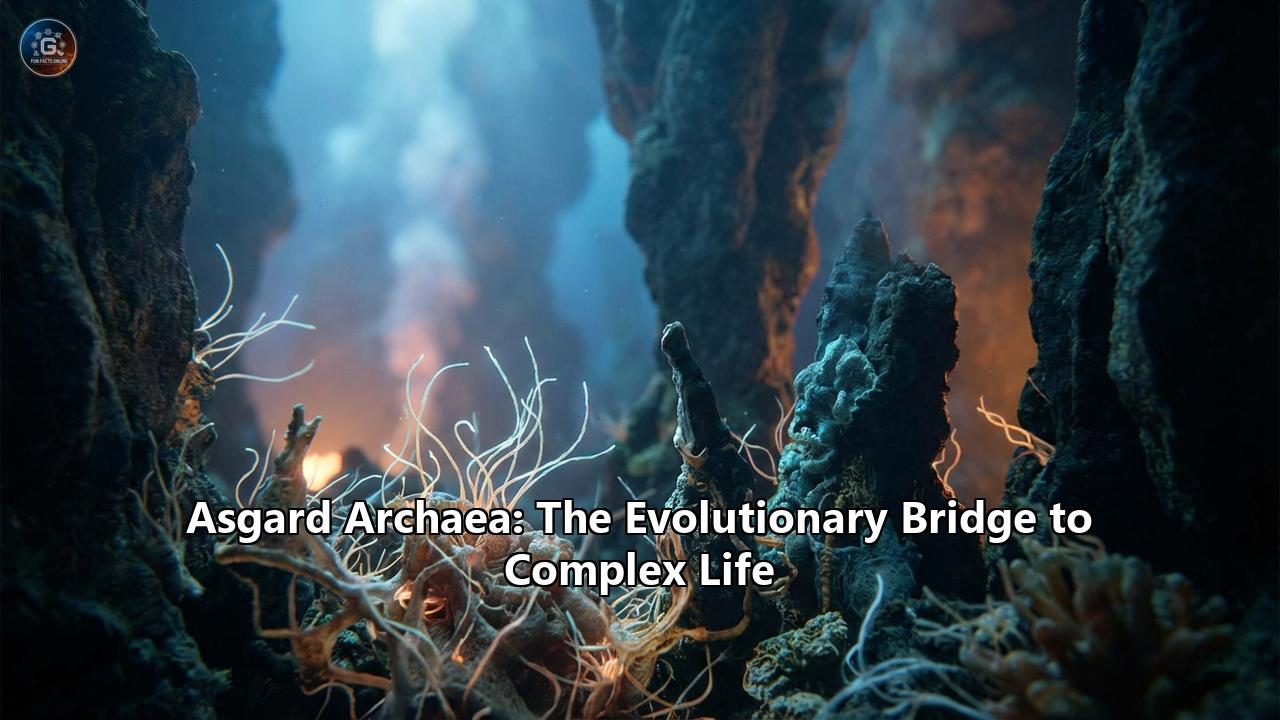
Introduction: The Missing Link in the Deep
For decades, the Tree of Life was a structure of three distinct pillars: Bacteria, Archaea, and Eukarya. We humans, along with every plant, animal, fungus, and amoeba, sat comfortably on the Eukarya branch, confident in our cellular complexity. Our cells possess intricate machinery—a nucleus to house DNA, mitochondria to generate energy, and a dynamic skeleton to move and shape the cell. Bacteria and Archaea, the "prokaryotes," were seen as simple, ancient vessels lacking this sophistication.
But a ghost haunted this tree. Evolutionary biologists knew that eukaryotes didn't just appear out of thin air. There had to be a bridge—a transitional form that connected the simple prokaryotic world to the complex eukaryotic one. For years, this link remained theoretical, a shadow in the genetic data.
Then, in 2015, the shadow took form. Deep in the sediment of the Arctic Ocean, near a hydrothermal vent field known as "Loki’s Castle," scientists discovered genetic fragments of a microbe that defied classification. It was an archaeon, but its genome was riddled with genes that should only exist in complex eukaryotes. They named it Lokiarchaeota.
This discovery was just the beginning. Soon, a whole pantheon of related microbes was unearthed, each named after a Norse god: Thor, Odin, Heimdall, Hel. Together, they form the Asgard Superphylum. These are not merely new bacteria; they are our closest microbial relatives, the long-lost cousins that reveal how complex life began. This is the story of the Asgard archaea, the evolutionary bridge that spans the greatest divide in biology.
Part I: The Discovery of the Asgard Superphylum
1.1 The Enigma of Loki’s Castle
The story begins in the freezing, pitch-black waters of the Arctic Mid-Ocean Ridge, 2,300 meters below the surface. Here, hydrothermal vents spew superheated, mineral-rich water into the abyss, creating chemical chimneys that support strange ecosystems. In 2010, a team of researchers from Uppsala University in Sweden collected sediment cores near one of these vent fields, ominously named Loki’s Castle after the shape-shifting Norse trickster god.
The scientists were not looking for a new domain of life; they were conducting a broad metagenomic survey—sequencing all the DNA in the mud to see what lived there. Most of the DNA belonged to known groups of bacteria and archaea. But one lineage stood out. It was abundant, yet it had never been cultured in a lab. Its genetic signature didn't fit neatly into the known phyla of Archaea.
When Thijs Ettema and his team pieced together the genome of this mystery organism in 2015, they were stunned. The genome contained "Eukaryotic Signature Proteins" (ESPs)—genes for complex cellular structures that were thought to be exclusive to eukaryotes. The team named the phylum Lokiarchaeota, a nod to the vent field and the elusive, "tricky" nature of the microbe.
1.2 The Pantheon Expands: Thor, Odin, and Heimdall
The discovery of Lokiarchaeota triggered a global treasure hunt. Microbiologists revisited metagenomic datasets from environments all over the world—river estuaries, hot springs, deep-sea mud, and shallow bays—looking for relatives of Loki.
The results were explosive.
- Thorarchaeota: Discovered in the White Oak River estuary in North Carolina, these archaea appear to be crucial players in sediment carbon cycling, capable of breaking down organic matter.
- Odinarchaeota: Found in hydrothermal environments, these organisms possess even more eukaryotic-like genes, including forms of tubulin that are shockingly similar to the structural beams in our own cells.
- Heimdallarchaeota: Perhaps the most significant of the group, these were found in marine sediments. Genetic analysis suggests they might be the closest direct ancestors to eukaryotes. Just as the god Heimdall guards the Bifröst bridge to Asgard, Heimdallarchaeota seems to stand at the very threshold of complex life.
More lineages followed, filling out the family tree: Helarchaeota, Gerdarchaeota, Hermodarchaeota, Hodarchaeota, and the chemically distinct Wukongarchaeota (named after the Monkey King). This group was collectively dubbed the Asgard Superphylum.
1.3 The Two-Domain Tree of Life
The discovery of Asgard archaea forced a rewriting of the textbooks. The classical "Three-Domain System" (Bacteria, Archaea, Eukarya) proposed by Carl Woese in 1977 implied that eukaryotes and archaea were sister groups that split from a common ancestor long ago.
The Asgard data supports a different reality: the Two-Domain System, or the "Eocyte Hypothesis." In this model, eukaryotes did not branch off from Archaea; they emerged from within Archaea. We are, effectively, highly specialized, overgrown Asgard archaea. The Asgard superphylum wraps around the base of the eukaryotic tree, making the distinction between "Archaea" and "Eukarya" more a matter of complexity than fundamental lineage.
Part II: The Genetic Bridge – Eukaryotic Signature Proteins (ESPs)
What makes Asgard archaea so special? It is not just their location on a tree, but the "tools" in their genetic toolbox. Before 2015, scientists believed that certain cellular features were unique inventions of eukaryotes. Asgard genomes shattered this assumption by revealing they possessed the blueprints for these features all along.
2.1 The Cytoskeleton: Actin and Tubulin
In eukaryotic cells, the cytoskeleton is a dynamic scaffolding made of actin filaments and microtubules (tubulin). It allows cells to change shape, move, and transport cargo internally. Bacteria have distant homologs of these proteins (like MreB and FtsZ), but they are structurally distinct.
Asgard archaea possess Lokiactins and OdinTubulins.
- Lokiactins: These proteins are so similar to our own actin that, in laboratory experiments, rabbit antibodies raised against eukaryotic actin will bind to them. This suggests that the complex cellular skeleton didn't evolve from scratch in eukaryotes; it was inherited from an Asgard ancestor that likely used it to build complex cell shapes or protrusions.
- OdinTubulin: Found in Odinarchaeota, this protein forms structures that are an evolutionary intermediate. While bacterial FtsZ forms simple rings to pinch a dividing cell, OdinTubulin can form filaments that resemble the microtubules used in our cells for intracellular transport and chromosome separation.
2.2 Information Processing: The Ubiquitin System
Protein degradation is vital for cell health. Eukaryotes use a sophisticated "tagging" system called ubiquitin to mark proteins for destruction or recycling. It was long thought to be a eukaryotic innovation.
Yet, Asgard genomes encode a functional ubiquitin system. They have the enzymes to link ubiquitin-like proteins to targets, a process previously unseen in prokaryotes. This implies that the ancestor of eukaryotes already had a complex system for regulating protein quality control, perhaps to manage the stress of a complex, proteome-rich environment.
2.3 Membrane Trafficking: ESCRT and GTPases
Complex life requires compartmentalization—separating the cell into rooms (organelles) like the nucleus, Golgi, and lysosomes. This requires machinery to bend, cut, and fuse membranes.
Asgard archaea contain the ESCRT (Endosomal Sorting Complexes Required for Transport) complex. In us, ESCRT helps pinch off vesicles and separate dividing cells. In Asgard archaea, this machinery likely helps them produce outer membrane vesicles or manage their unique cell shapes. Furthermore, they are rich in Small GTPases, molecular switches that control intracellular traffic. The sheer abundance of these signaling molecules in Asgard archaea suggests they were already engaging in complex regulation of their internal environment and membrane dynamics.
Part III: The "Entangle-Engulf-Enslave" (E3) Model
For years, the Asgard story was based solely on DNA sequences. No one had ever seen one alive. They were "dark matter" microbes. That changed in 2020, when a Japanese team led by Hiroyuki Imachi and Masaru K. Nobu achieved the impossible: they cultured an Asgard archaeon.
3.1 Enter Prometheoarchaeum syntrophicum
After twelve years of painstaking work using a continuous-flow bioreactor, the team isolated a strain of Lokiarchaeota from deep-sea methane seep sediments. They named it ---Prometheoarchaeum syntrophicum---, after Prometheus, the Greek titan who created humanity from mud.
The organism was tiny (550 nanometers), spherical, and grew agonizingly slowly, doubling only once every few weeks. But when viewed under an electron microscope, it revealed something extraordinary. It was not a simple sphere; it possessed long, branching, tentacle-like protrusions.
3.2 The E3 Mechanism
The morphology of Prometheoarchaeum inspired a new, tangible model for how eukaryotes began: the Entangle-Engulf-Enslave (E3) Model. This model replaces the old idea of "phagocytosis" (one cell eating another) with a more symbiotic, gradual process.
- Entangle: The Asgard ancestor was likely a syntrophic organism—it relied on a partner to consume its waste products (like hydrogen) to keep its metabolism running. Prometheoarchaeum uses its long tentacles to increase its surface area and physically entangle with its partners (in the lab, it paired with hydrogen-consuming methanogens).
- Engulf: As the dependency deepened, the Asgard host's tentacles grew around the partner bacterium (the future mitochondrion) to maximize chemical transfer. The tentacles eventually fused, wrapping the partner in a "membranous embrace" rather than digesting it.
- Enslave (Endogenize): The partner bacterium, now trapped inside the host's mesh of membrane protrusions, became a permanent resident. Over millions of years, the bacterium lost its autonomy, transferring genes to the host and becoming the mitochondrion, the powerhouse of the cell.
This model elegantly explains why eukaryotes have a nucleus (which may have formed to protect the host genome from the chaotic activity of the new endosymbiont) and why the mitochondrial membrane looks the way it does.
Part IV: Metabolic Mysteries and the Hydrogen Hypothesis
To understand why this merger happened, we must look at metabolism. Why would an Asgard archaeon tangle with a bacterium in the first place?
4.1 The Syntrophy Trap
Most Asgard archaea are anaerobes. They live in environments devoid of oxygen. Genomic analysis suggests that many, like Lokiarchaeota, are hydrogen-dependent. They degrade organic matter (amino acids, peptides) and produce hydrogen as a waste product.
If hydrogen builds up, the archaeon's metabolism stalls. It needs a partner to scavenge that hydrogen. This is where the Hydrogen Hypothesis (proposed by Bill Martin and Miklós Müller in 1998) gains modern support. It posited that the first eukaryotic cell arose from a symbiosis between a hydrogen-producing host (the archaeon) and a hydrogen-consuming symbiont (the future mitochondrion).
4.2 The "Reverse Flow" Model
However, the diversity of Asgard metabolism has added nuance to this. Some Asgard lineages, like Thorarchaeota, have the Wood-Ljungdahl pathway, suggesting they can fix carbon. Others, like Heimdallarchaeota, have genes that hint at an ability to tolerate, or even use, oxygen.
This led to the Reverse Flow Model. In this scenario, the metabolic relationship wasn't static. The Asgard host might have been a versatile organoheterotroph. The flow of electrons or hydrogen could switch directions depending on environmental conditions. This metabolic flexibility would have made the partnership resilient, allowing the duo to survive the fluctuating oxygen levels of the ancient Earth—specifically the Great Oxidation Event, which poisoned many anaerobes but paved the way for complex life.
4.3 The Heimdallarchaeota Connection
Heimdallarchaeota are particularly interesting because they are often found in coastal sediments where oxygen levels fluctuate. Their genomes contain genes for electron transport chains that look suspiciously similar to those used in aerobic respiration.This suggests that the "Asgard ancestor" was not a primitive, strict anaerobe hiding in the deep dark. It might have been a sophisticated, facultative organism living in the dynamic transition zones of the ocean, "pre-adapted" for the aerobic world that mitochondria would eventually help them conquer.
Part V: The Viral Connection – A New Frontier
One of the most cutting-edge areas of Asgard research is virology. If Asgard archaea are our ancestors, did our viruses come from them too?
5.1 Verdandi, Skuld, and Wyrd
In 2022, researchers identified viruses infecting Asgard archaea for the first time. They named them after the Norns, the Norse weavers of fate: Verdandiviruses, Skuldviruses, and Wyrdviruses.
These are large, double-stranded DNA viruses. Some resemble the "head-tail" bacteriophages, while others are spindle-shaped (lemon-shaped), a morphology unique to Archaea.
5.2 Viral Eukaryogenesis?
The discovery of these viruses fuels the controversial "Viral Eukaryogenesis" hypothesis. This theory suggests that the eukaryotic nucleus itself might have originated from a large DNA virus that infected an ancient archaeon. The virus would have created a "viral factory"—a membrane-bound room to replicate its DNA, separating it from the host's cytoplasm.
While the Asgard viruses discovered so far don't prove this theory, they do show that the Asgard ancestor was under constant assault by complex genetic invaders. This evolutionary pressure could have driven the development of the complex defense systems (like the separation of transcription and translation) that characterize the eukaryotic nucleus today. Furthermore, some Asgard viruses carry "auxiliary metabolic genes," suggesting they actively manipulated the host's metabolism—a trait that mimics how eukaryotic viruses interact with our cells.
Part VI: The Diversity of Asgard
The Asgard superphylum is not a monolith; it is a diverse kingdom of life. Understanding the distinct "personalities" of these phyla helps us reconstruct the ecosystem of the early Earth.
- Lokiarchaeota (The Tricksters): The original Asgards. They are widespread in deep marine sediments. Their genomes are a mosaic of bacterial and archaeal genes, hinting at a lifestyle of constant gene swapping (Horizontal Gene Transfer). They are the primary model for the hydrogen-dependent host.
- Thorarchaeota (The Thunderers): These are the sediment recyclers. Found in estuaries and mangroves, they degrade proteins and carbohydrates. They appear to be key players in the global carbon cycle, turning dead organic matter into methane precursors. Their specific profilins (actin-binding proteins) have a unique structure that may have been a precursor to the eukaryotic regulation of the cytoskeleton.
- Odinarchaeota (The All-Fathers): Rare and heat-loving, found in hydrothermal springs. Their tubulin proteins are the closest thing to a "missing link" for the evolution of microtubules. They may represent a lineage that stayed closer to the high-temperature origins of life while others adapted to the cold.
- Heimdallarchaeota (The Guardians): The cosmopolitans. Found in a wide range of aquatic environments. They have the largest genomes and the most ESPs. Phylogenetic trees often place the branch of Eukarya sprouting directly from within the Heimdallarchaeota (specifically the order Hodarchaeales), making them our "sister" group or direct grandparent.
- Wukongarchaeota (The Monkey Kings): A distinct, deep-branching lineage. Unlike the peptide-eating Loki, Wukongarchaeota appears to be a hydrogen-oxidizing acetogen—it makes acetate from hydrogen. This metabolic distinction suggests the Asgard ancestor was metabolically diverse, capable of adapting to various chemical niches.
Conclusion: We Are All Asgardians
The discovery of the Asgard archaea is a humbling reminder of our origins. We are not a separate dominion of life, standing apart from the microbial muck. We are a fusion, a chimera born from a desperate embrace between a tentacled archaeon and a breathing bacterium billions of years ago.
Every time you move a muscle, you are using actin inherited from an Asgard ancestor that lived in the mud. Every time your cells recycle waste, you use ubiquitin machinery refined in those ancient sediments. The Asgard archaea are not just "living fossils"; they are the living blueprint of complexity.
As we continue to explore the deep ocean and sequence the DNA of the unknown, we are likely to find more gods in the mud. But one thing is certain: the bridge between the simple and the complex has been found. We have crossed Bifröst, and on the other side, we found our ancestors waiting in the deep.
Reference:
- https://www.youtube.com/watch?v=KLRayMiAP2M
- https://pubmed.ncbi.nlm.nih.gov/30936488/
- https://www.researchgate.net/publication/332130492_Proposal_of_the_reverse_flow_model_for_the_origin_of_the_eukaryotic_cell_based_on_comparative_analyses_of_Asgard_archaeal_metabolism
- https://www.semanticscholar.org/paper/Proposal-of-the-reverse-flow-model-for-the-origin-Spang-Stairs/85496a5691a25c2f1f41ad839b1890600e7046ef
- https://www.molevol.hhu.de/fileadmin/redaktion/Fakultaeten/Mathematisch-Naturwissenschaftliche_Fakultaet/Biologie/Institute/Molekulare_Evolution/Dokumente/59.pdf
- https://en.wikipedia.org/wiki/Hydrogen_hypothesis
- https://www.chemeurope.com/en/encyclopedia/Hydrogen_hypothesis.html
- https://pmc.ncbi.nlm.nih.gov/articles/PMC6684364/
- https://pmc.ncbi.nlm.nih.gov/articles/PMC5557255/
- https://pubmed.ncbi.nlm.nih.gov/35760837/
- https://www.sci.news/biology/asgard-viruses-10955.html