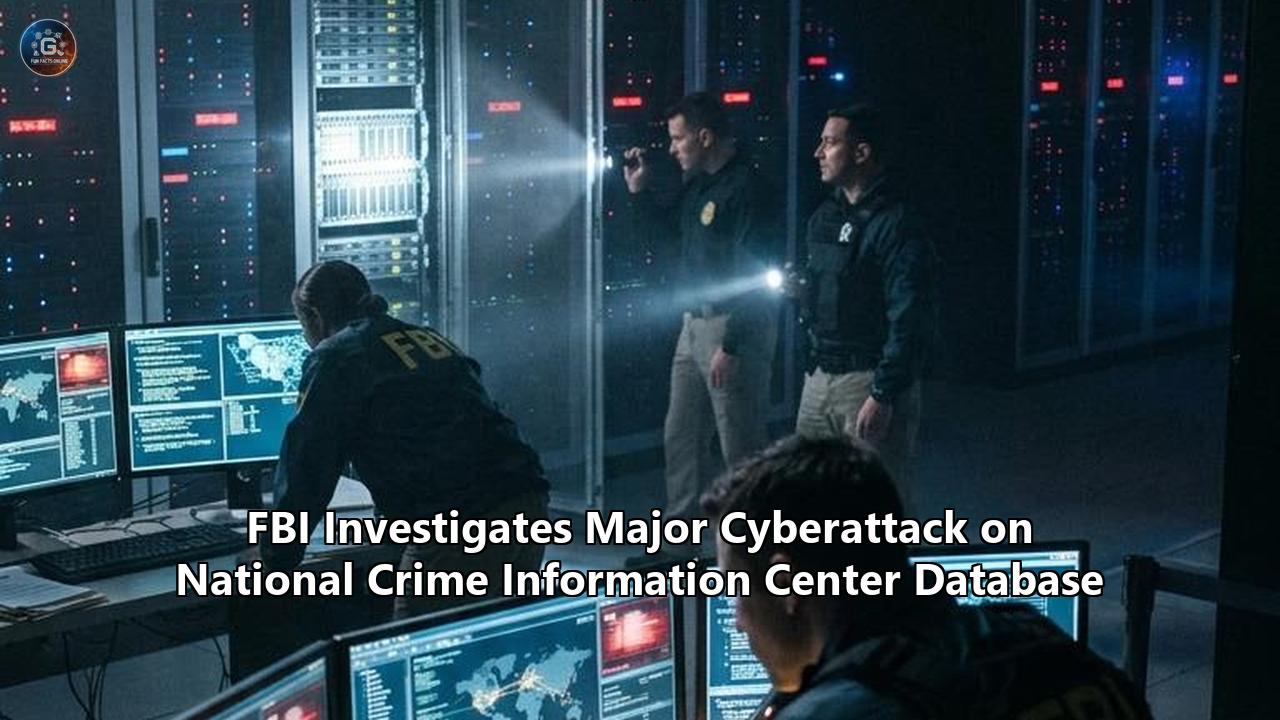
Federal investigators are actively working to determine the blast radius of an unauthorized intrusion into the National Crime Information Center (NCIC), the central clearinghouse that coordinates criminal justice data across the United States. Confirmed over the weekend of November 21, 2026, the breach targets the operational nervous system of American law enforcement—a computerized index containing more than 18 million active records across 22 operational files, consulted millions of times each day by over 92,000 federal, state, local, and tribal agencies.
The crisis escalated into public view on Saturday when President Donald Trump confirmed the compromise during a Fox News Channel interview. "We just heard about it, and I will say that it’s not good," Trump stated, following initial disclosures published late Friday by CNN and verified by The Associated Press and Reuters. The disclosure marks the third major cyber incident to puncture the Federal Bureau of Investigation’s perimeter within nine months, thrusting federal network defenses into intense political and operational scrutiny.
Unlike typical corporate breaches involving static identity data or payment credentials, the suspected NCIC database cyberattack targets a live, real-time command network. Frontline police officers, dispatchers, border agents, and federal background check analysts rely on NCIC files to make split-second safety and arrest determinations. The unfolding federal inquiry now centers not merely on whether sensitive law enforcement intelligence was exfiltrated, but on the far more dangerous possibility that the data police rely on every day may have been secretly altered.
The Precursor Intrusions: Early Warnings and Perimeter Probing (March – September 2026)
The breach of the NCIC did not materialize in an operational vacuum. Throughout 2026, federal counterintelligence and digital forensics units tracked a sequence of escalating probes directed against Department of Justice infrastructure.
2026 CHRONOLOGY: THE ROAD TO THE NCIC INTRUSION
┌────────────────────────────────────────────────────────────────────────┐
│ MARCH 2026: Anomaly detected on internal FBI surveillance networks     │
│             Pro-Iranian actors leak materials allegedly tied to Patel  │
├────────────────────────────────────────────────────────────────────────┤
│ SEPT 21, 2026: ShinyHunters breaches FBIJobs.gov                       │
│                Flaw in Oracle PeopleSoft exploited; AWS data accessed  │
├────────────────────────────────────────────────────────────────────────┤
│ NOV 16–18, 2026: Unexplained latency on state CJIS routing nodes       │
│                  Anomalous bulk credential authentications flagged     │
├────────────────────────────────────────────────────────────────────────┤
│ NOV 19, 2026: Bureau technicians confirm active NCIC compromise        │
│               White House removes National Cyber Director Cairncross   │
├────────────────────────────────────────────────────────────────────────┤
│ NOV 20, 2026: Friday night: CNN breaks news of the breach              │
│               State control agencies issue emergency audit protocols   │
├────────────────────────────────────────────────────────────────────────┤
│ NOV 21, 2026: Trump confirms hack on Fox News; AP confirms probe       │
│               Federal incident response teams begin file validation   │
└────────────────────────────────────────────────────────────────────────┘
The earliest public sign of systemic vulnerability surfaced in March 2026, when the FBI disclosed an investigation into "suspicious activities" detected inside an internal network responsible for processing sensitive surveillance operations and investigative wiretap workflows. Weeks later, documents reportedly extracted from bureau-affiliated systems appeared on dark web forums, accompanied by claims from hacktivist factions sympathetic to Tehran. While the FBI contained that perimeter breach without reporting disruptions to active field cases, forensic investigators identified signs of credential harvesting targeted at administrative accounts.
Six months later, on September 21, 2026, a more direct hit occurred. The financially motivated cybercriminal syndicate ShinyHunters claimed responsibility for penetrating the FBI’s primary recruitment portal, FBIJobs.gov. Exploiting an unpatched vulnerability in an Oracle PeopleSoft implementation (CVE-2026-35273), the intruders leveraged a compromised third-party contractor credential to pivot across commercial hosting environments and into an FBI-managed AWS GovCloud repository.
The September exfiltration yielded sensitive personal data belonging to approximately 38,000 current bureau employees, special agents, and intelligence applicants. The Justice Department moved aggressively in response, coordinating with foreign counterparts to arrest suspects in Jordan and Canada, including Canadian cybersecurity executive Ed Dubrovsky. Yet the root cause was systemic: external contractor integration points created seams through which determined adversaries could bypass hardened federal firewalls.
At the time, FBI leadership insisted that external recruitment infrastructure remained strictly segregated from the Criminal Justice Information Services (CJIS) Division in Clarksburg, West Virginia, where the bureau’s core operational databases live. However, threat intelligence analysts warned that the adversary’s strategic trajectory was shifting from peripheral contractor sites toward internal operational hubs.
Phase One: Anomalies in Clarksburg (Mid-November 2026)
The initial indications of what would become the NCIC database cyberattack registered during the third week of November 2026 inside the FBI’s sprawling, 986-acre CJIS complex in Clarksburg.
Operating continuously since its establishment in 1967, the NCIC functions through an architecture that bridges legacy mainframe core systems with modern distributed relational database clusters and cloud-hosted microservices. More than 100,000 terminals across the United States connect to Clarksburg via state Control Terminal Agencies (CTAs)—centralized state police routing hubs that multiplex local police queries across encrypted state networks before passing them to the FBI over dedicated CJIS wide-area network (WAN) links.
Between Monday, November 16, and Wednesday, November 18, automated anomaly-detection platforms monitored by CJIS enterprise security teams began generating persistent, low-priority alerts. System logs recorded unusual patterns of database queries originating from authenticated terminal sessions:
- Anomalous Bulk Queries: Off-peak record lookups that bypassed typical single-record interactive patterns, suggesting automated script scraping rather than officer-initiated stops.
- Privileged Session Duration: Prolonged administrative sessions originating from trusted gateway nodes that deviated from baseline administrative shifts.
- Cryptographic Token Discrepancies: Ephemeral authentication tokens used across certain API endpoints that lacked corresponding session records inside state-level message switches.
To system administrators, the early symptoms mimicked the friction of a wider federal IT overhaul. Across Washington, federal networks were experiencing intermittent disruptions and localized downtime that Trump administration officials publicly attributed to routine maintenance and vulnerability patching.
Behind closed doors, the anomalies in Clarksburg refused to clear. Technicians attempting to isolate the performance dips discovered that internal transaction audit logs were being systematically purged or rewritten on specific secondary database mirrors—a signature technique of sophisticated cyber actors aiming to eliminate forensic telemetry before deployment of secondary payloads.
Phase Two: Confirmation and the Thursday Alarm (November 19, 2026)
By the morning of Thursday, November 19, the situation crossed the threshold from routine network maintenance to an active national security crisis. Specialized forensic teams from the FBI’s Cyber Division, deployed to support CJIS technicians, verified that unauthorized entities had obtained persistent administrative access deep within the NCIC’s internal message-switching layer.
The discovery sent shockwaves through the upper echelons of the Department of Justice. The message-switching layer is the translation mechanism that routes requests between state criminal information hubs and the 22 master files in Clarksburg. An intruder positioned within this segment possesses the structural visibility to intercept queries, read output streams, and potentially inject synthetic responses before transaction packets reach state communication switches.
NCIC TRANSACTION ROUTING & COMPROMISED LAYER
┌────────────────────────────────────────────────────────┐
│ Patrol Car MDT / Station Dispatch Console              │
└───────────────────────────┬────────────────────────────┘
                            │ Encrypted State Net
┌───────────────────────────▼────────────────────────────┐
│ State Control Terminal Agency (CTA) / Nlets Message Hub│
└───────────────────────────┬────────────────────────────┘
                            │ Dedicated CJIS WAN
┌───────────────────────────▼────────────────────────────┐
│ [!] INTRUSION POINT: NCIC Message-Switching Subsystem  │
│     * Token manipulation observed                      │
│     * Anomalous query routing detected                 │
│     * Log suppression identified                       │
└───────────────────────────┬────────────────────────────┘
                            │ Internal High-Speed Bus
┌───────────────────────────▼────────────────────────────┐
│ Master File Storage Pools (Clarksburg, West Virginia)  │
│ (22 Files: Wanted Persons, Protective Orders, Guns)    │
└────────────────────────────────────────────────────────┘
The timeline of official actions that Thursday reveals an agency operating under severe internal pressure:
- Executive Escalation: Bureau technicians formally briefed FBI Director Kash Patel and senior national security leadership on the unauthorized intrusion.
- Capitol Hill Absence: Director Patel was conspicuously absent from a scheduled hearing on worldwide threats before the House Permanent Select Committee on Intelligence on Wednesday, with Deputy Director Christopher Raia testifying in his place as the bureau managed the unfolding operational emergency.
- The Fox News Address: Hours after receiving the initial briefing on the NCIC breach, Patel appeared on Fox News. Without disclosing that the bureau’s own flagship database had been compromised, Patel urged corporate America to dramatically upgrade private cybersecurity measures, holding up the FBI’s security baselines as an example of proactive defense.
- Leadership Turbulence: That same evening, the White House abruptly removed National Cyber Director Sean Cairncross following days of internal disputes over the management of widespread federal digital disruptions. President Trump immediately signaled plans to nominate corporate cybersecurity veteran Kirsten Davies to fill the critical post.
Simultaneously, word spread through federal circles that a separate cyber incident had crippled payment processing infrastructure at the U.S. Department of Agriculture (USDA), blocking subsidy disbursements to farmers across the country. While federal officials found no direct structural linkage between the USDA outage and the Clarksburg intrusion, the simultaneous degradation of critical federal platforms suggested a coordinated environment of digital instability.
Phase Three: Leaks, Containment, and National Exposure (November 20, 2026)
Throughout Friday, November 20, the FBI attempted to contain the compromise while keeping operational law enforcement channels open. Shutting down the NCIC entirely would freeze criminal justice operations nationwide: police dispatchers would be unable to verify whether pulled-over drivers had active felony warrants, federal firearm sales through the National Instant Criminal Background Check System (NICS) would grind to a halt, and border agents would lose instant verification against federal wanted lists.
Instead, CJIS engineers executed targeted isolation procedures. They severed external remote administration channels, forced system-wide credential rotations for state CTA administrators, and deployed active network monitoring taps across inter-state trunk lines.
The story broke publicly late Friday evening. CNN published an exclusive report revealing that federal authorities were investigating a major breach of the NCIC, citing two senior national security officials briefed on the inquiry.
State law enforcement executives across the country learned of the incident through news reports and urgent, back-channel administrative bulletins distributed across the National Law Enforcement Telecommunications System (Nlets). Within hours, state police agencies and major municipal departments began convening midnight technical briefings to evaluate whether state-level databases linked to the federal hub had been used as access conduits.
Phase Four: The Breaking Moment and Executive Confirmation (November 21–22, 2026)
On Saturday morning, November 21, the Associated Press, Reuters, and NBC News corroborated the breach through independent sources. The FBI officially declined to provide public comment, adhering to strict operational protocols regarding active counterintelligence and cyber investigations.
The official silence broke at the highest level of government on Saturday afternoon. Appearing in an interview on Fox News Channel, President Donald Trump confirmed that he had been briefed on the incident.
"We just heard about it, and I will say that it’s not good," Trump told host Maria Bartiromo. However, the president immediately injected a political interpretation into the developing security crisis:
"Maybe we'll learn things that we would have never learned otherwise. You had the Russia, Russia, Russia hoax. You had all these other hoaxes."
The remarks prompted swift reaction across Capitol Hill. Members of both the House and Senate Judiciary and Intelligence committees issued statements demanding emergency classified briefings, warning that politicizing an active breach of the nation’s criminal record repository could undermine criminal prosecutions and compromise ongoing counterterror operations.
By Sunday, November 22, the full reality of the crisis had settled over the American criminal justice apparatus. Federal digital forensics response teams from the Cybersecurity and Infrastructure Security Agency (CISA) joined the FBI’s Operational Technology and Cyber divisions inside the Clarksburg facility to execute a forensic sweep of every transaction logged over the preceding 90 days.
The Core Target: Inside the 22 Files of the NCIC
To grasp the operational gravity of the NCIC database cyberattack, one must examine the specific data sets exposed within the Clarksburg facility.
Established under J. Edgar Hoover with five rudimentary files holding fewer than 360,000 records, the modern NCIC is a multi-terabyte indexed repository. It processes an average of 12 to 14 million daily transactions with query response times clocked at less than 0.15 seconds. The database is organized into 22 distinct operational files, grouped broadly into two functional categories:
NCIC MASTER FILE STRUCTURE (22 OPERATIONAL FILES)
┌─────────────────────────────────┬──────────────────────────────────┐
│ PERSON FILES                    │ PROPERTY FILES                   │
├─────────────────────────────────┼──────────────────────────────────┤
│ * Wanted Persons (Felony/Misd.) │ * Stolen Vehicles                │
│ * Missing Persons / Juveniles   │ * Stolen License Plates          │
│ * Protection Orders (Domestic)  │ * Stolen Firearms                │
│ * National Sex Offender Registry│ * Stolen Boats                   │
│ * Foreign Fugitives (Interpol)  │ * Stolen Securities & Bonds      │
│ * Gang and Terrorist Files      │ * Stolen / Embezzled Property    │
│ * Known / Suspected Terrorists  │ * Stolen Aviation Equipment      │
│ * Supervised Release Records    │                                  │
│ * Identity Theft Victims File   │                                  │
│ * Threat to Law Enforcement     │                                  │
└─────────────────────────────────┴──────────────────────────────────┘
Every operational file serves an immediate, tactical purpose:
- Wanted Persons File: Contains federal, state, and local arrest warrants. It flags dangerous individuals, flight risks, and felony warrants across state lines.
- Protection Order File: Houses court-issued domestic violence restraining orders, child custody restrictions, and temporary protective decrees. Officers processing a domestic dispute consult this file to determine legal authority to remove an individual from a residence.
- Foreign Fugitive File: Bridges domestic terminals with red notices issued through Interpol and records shared by foreign treaty partners, primarily the Royal Canadian Mounted Police via the Canadian Police Information Centre (CPIC).
- National Sex Offender Registry: Coordinates registry enforcement between state jurisdictions, tracking compliance and active residence mandates.
- Stolen Guns and Vehicles Files: Massive serial-number directories referenced whenever recovered weapons or impounded vehicles are inventoried by local police departments.
Beyond patrol-level checks, the NCIC serves as an essential data source for the National Instant Criminal Background Check System (NICS). Under federal law, every commercial retail firearm transaction requires a mandatory query against NCIC records. A match indicating an active indictment, felony conviction, fugitive status, or active domestic violence protection order triggers an immediate statutory denial of the firearm purchase.
Technical Threat Modeling: Exfiltration Versus Manipulation
As cyber incident responders reconstruct the intrusion path, their analysis centers on two fundamentally different threat vectors, each carrying distinct consequences for national security and public safety.
THREAT SPECTRUM: TWO DEVASTATING SCENARIOS
┌────────────────────────────────────────────────────────────────────────┐
│ SCENARIO A: MASS EXFILTRATION (ESPINOAGE & HARVESTING)                 │
├────────────────────────────────────────────────────────────────────────┤
│ * Extraction of sealed federal indictments and warrants                │
│ * Identification of undercover officer cover personas / vehicle plates │
│ * Harvesting of sensitive gang informant dossiers and witness data     │
│ * Dark web monetization of restricted criminal histories              │
├────────────────────────────────────────────────────────────────────────┤
│ SCENARIO B: DATA INTEGRITY MANIPULATION (SYSTEMIC SABOTAGE)            │
├────────────────────────────────────────────────────────────────────────┤
│ * Silent erasure of active felony arrest warrants for specific targets │
│ * Invalidation of domestic violence protective orders                  │
│ * Modification of stolen gun serial numbers to clear illicit weapons   │
│ * Erasure of red flags during mandatory NICS firearm background checks │
└────────────────────────────────────────────────────────────────────────┘
Scenario A: Strategic Exfiltration and Espionage
If the attackers pursued intelligence gathering, the database represents an invaluable counterintelligence cache. Foreign intelligence services—such as Russia's SVR or China's Ministry of State Security—could mine the data to identify individuals under federal surveillance, cross-reference travel manifests against federal lookouts, or identify undercover law enforcement vehicles registered within property files to prevent roadside traffic stops.
Criminal cartels and extortion syndicates, by contrast, could monetize access to the Gang and Identity Theft files, exposing confidential informants, mapping protected witnesses, or blackmailing public figures whose sealed investigative flags are accessible through restricted administrative terminals.
Scenario B: The Nightmare of Data Tampering
A far more destabilizing prospect is data tampering. Former federal cyber investigators and law enforcement administrators emphasize that law enforcement databases are built on absolute trust. When a state trooper conducts a highway stop at 2:00 a.m. in adverse weather, that officer relies entirely on the terminal screen inside the patrol vehicle.
"My concern isn't simply whether hackers gained access to sensitive information, although that is an issue, but whether they could compromise the accuracy of the information that officers rely on," observed a former senior FBI official who led cybercriminal task forces, speaking to CNN.
Consider the operational fallout of corrupted data:
- The Erased Warrant: If an adversary deletes or modifies the extradition boundaries on a wanted-person record for a high-value fugitive, an arresting officer who runs a license check will receive a negative hit and release an active felon back onto the street.
- The Falsified Warrant: If malicious actors inject fraudulent felony warrants or synthetic protection orders targeting political dissidents, corporate executives, or whistleblowers, frontline officers acting in good faith would execute unlawful detentions and armed arrests.
- Invalidated Protective Orders: Deleting an active restraining order from the Protection Order File strips an officer of immediate statutory authority to make a mandatory domestic violence arrest, leaving victims unprotected during critical hours.
- Subversion of NICS Firearm Checks: Altering disqualification flags inside NCIC person files could allow individuals prohibited by federal law—such as convicted felons or subjects of active domestic violence decrees—to clear instant background checks and acquire firearms legally.
Federated Architecture: The Multi-Agency Vulnerability Trap
The strategic challenge facing federal investigators stems directly from how the NCIC is structured. The system is fundamentally federated.
The FBI hosts and maintains the central databases, mainframes, and network controllers in Clarksburg. However, the records themselves are entered, modified, and validated by the thousands of independent agencies using the system. Under longstanding CJIS regulations:
- Agency Ownership: The originating agency (the local police department, sheriff's office, or federal bureau field office) retains exclusive legal ownership of the record it inputs.
- Mandatory Validation: Agencies must periodically audit and re-validate active files against primary judicial source documents, such as physical signed warrants or certified court orders.
- The "Hit" Rule: Under federal rules, an NCIC match alone does not constitute immediate probable cause for an arrest. The arresting agency is required to send an urgent electronic hit confirmation request back to the entering agency, which must verify within 10 minutes (for urgent priority) that the warrant is active and that the individual in custody matches the wanted subject.
Because more than 92,000 distinct entities access this hub through tens of thousands of mobile data terminals (MDTs), stationhouse dispatch consoles, and commercial law enforcement software platforms, the potential entry points are extraordinarily dispersed.
THE FEDERATED LAW ENFORCEMENT ACCESS MATRIX
┌────────────────────────────────────────────────────────┐
│ FEDERAL LEVEL: FBI CJIS Central Hub (Clarksburg, WV)   │
└───────────────────────────▲────────────────────────────┘
                            │
┌───────────────────────────┴────────────────────────────┐
│ 50 STATE CONTROL TERMINAL AGENCIES (State Police CTAs)  │
└───────────────────────────▲────────────────────────────┘
                            │
┌───────────────────────────┴────────────────────────────┐
│ Nlets (International Justice & Public Safety Network)  │
└───────────────────────────▲────────────────────────────┘
                            │
┌───────────────────────────┴────────────────────────────┐
│ 92,000+ End-User Agencies (Local, County, Tribal, Fed) │
│ * 800,000+ Sworn Police Officers                       │
│ * Hundreds of Commercial RMS/CAD Software Vendors      │
│ * Cloud Migrations under CJIS Security Policy v6.1     │
└────────────────────────────────────────────────────────┘
The CJIS Security Policy sets federal standards for encryption, dual-factor authentication, physical terminal security, and vendor personnel screening, mapping 18 of its 20 core policy areas directly onto NIST Special Publication 800-53 controls. Yet local compliance remains uneven.
In recent years, budget-strained municipal police departments have increasingly migrated their local Records Management Systems (RMS) and Computer-Aided Dispatch (CAD) architectures to third-party commercial cloud environments. If an adversary compromised the valid administrative credentials of a major municipal RMS vendor, they could ride that authenticated connection through the state CTA and enter the Clarksburg mainframe with the digital authority of a verified police communications supervisor.
Forensic teams are currently scrutinizing state control terminal logs to determine whether the intruders used stolen state-level credentials to blend in with legitimate law enforcement traffic.
Geopolitical Context and Potential Threat Actors
The suspected NCIC database cyberattack unfolds against an aggressive offensive cyber landscape, where state-sponsored advanced persistent threat (APT) groups have demonstrated unprecedented willingness to penetrate core democratic and critical infrastructure systems.
POTENTIAL THREAT ACTOR TAXONOMY
┌────────────────────┬─────────────────────┬─────────────────────────────┐
│ ACTOR NEXUS        │ CAPABILITY TIER     │ PRIMARY STRATEGIC MOTIVE    │
├────────────────────┼─────────────────────┼─────────────────────────────┤
│ China (Volt / Salt │ Tier 1 (State APT)  │ Persistent Access, Systemic │
│ Typhoon Groups)    │                     │ Recon, Strategic Pre-Pos.   │
├────────────────────┼─────────────────────┼─────────────────────────────┤
│ Russia (SVR / GRU  │ Tier 1 (State APT)  │ Counterintelligence, Active │
│ Cyber Units)       │                     │ Measures, Disruption        │
├────────────────────┼─────────────────────┼─────────────────────────────┤
│ Iran (Pioneer      │ Tier 2 (State APT)  │ Retaliation, Harassment,    │
│ Kitten / Emennet)  │                     │ Disinformation Operations   │
├────────────────────┼─────────────────────┼─────────────────────────────┤
│ Cybercriminal      │ Sophisticated       │ Extortion, Weaponized Leaks,│
│ Syndicates         │ Transnational       │ Commercial Monetization     │
└────────────────────┴─────────────────────┴─────────────────────────────┘
Federal investigators are actively assessing four primary adversary profiles:
- State-Sponsored Pre-Positioning (China Nexus): Groups such as Volt Typhoon and Salt Typhoon have consistently bypassed peripheral corporate targets to compromise edge routers, telecommunications networks, and critical government infrastructure. Penetrating the NCIC aligns with a strategy of understanding domestic law enforcement deployment capabilities and identifying counter-espionage surveillance assets.
- Retaliatory Intelligence Operations (Iran Nexus): Given the March 2026 surveillance network alerts and subsequent document leaks explicitly targeting FBI leadership, Iranian state-sponsored actors maintain an active operational focus on Justice Department targets. Compromising law enforcement databases offers potent asymmetric opportunities for public harassment and institutional destabilization.
- Counterintelligence Sabotage (Russia Nexus): Russian intelligence units, notably Sandworm (GRU) and Cozy Bear (SVR), possess sophisticated capabilities for living-off-the-land techniques and administrative log subversion. Corrupting federal fugitive and Interpol coordination files provides direct operational cover for covert assets operating within the United States.
- Extortion Cartels: Although groups like ShinyHunters typically favor commercial targets and extortion demands, the weaponization of stolen employee files from the September FBIJobs.gov breach demonstrated that cybercriminal syndicates will compromise federal environments for criminal monetization and notoriety.
Institutional Fallout Across Washington
The public exposure of the breach has triggered friction across Washington's national security leadership.
The incident lands amid profound institutional turbulence. The firing of National Cyber Director Sean Cairncross on Thursday, November 19, stripped the Executive Office of the President of its lead coordinator for national cyber defense just as the Clarksburg intrusion was confirmed.
Congressional oversight committees have initiated formal inquiries into the sequence of events:
- Timeline Scrutiny: Lawmakers are demanding an exact accounting of when CJIS administrators first flagged the unauthorized lateral movement, and why public admissions were withheld until after investigative leaks surfaced in the press.
- Leadership Accountability: FBI Director Kash Patel faces intense scrutiny regarding his Thursday public appearance, where he promoted private sector cyber hygiene while internal incident teams were actively attempting to isolate the nation's primary criminal index.
- Budget and Supply-Chain Oversight: Congressional leaders have signaled plans to subpoena external software contractors and hosting vendors integrated into the CJIS network, building on lessons learned from the unpatched Oracle PeopleSoft flaw that opened the door to the September ShinyHunters breach.
Federal prosecutors are also preparing for legal challenges in open criminal proceedings. If digital forensics teams cannot definitively establish that master record files remained uncorrupted between initial intrusion and containment, defense attorneys in pending federal and state cases may challenge the evidentiary validity of NCIC records, disputing the constitutional legality of arrests executed on NCIC warrant hits or background-check firearm disqualifications logged during the window of vulnerability.
What to Watch Next: The Developing Investigation
As federal cybersecurity units, intelligence agencies, and state law enforcement leaders confront this national crisis, several critical turning points will dictate how the incident develops:
- Forensic Scope and File Validation: Investigators must complete a bit-by-bit cryptographic verification comparing active NCIC master files against offline, air-gapped system backups stored in secondary disaster recovery vaults. Only this verification can confirm whether attackers modified records or limited their operations to passive surveillance and data scraping.
- Official Vector Identification: The FBI and CISA are expected to deliver technical incident advisories to state CTAs detailing the exact compromise vector—whether attackers exploited a zero-day vulnerability in gateway routers, leveraged hijacked third-party administrative credentials, or penetrated the system through an insecure state-level police network.
- Operational Directives for Frontline Officers: Police departments nationwide are watching for updated CJIS directives. If system integrity cannot be certified, local agencies may be mandated to suspend automated reliance on terminal queries and institute mandatory, manual telephonic confirmation with issuing courts before executing custodial arrests on NCIC warrants.
- Attribution and Indictments: Justice Department prosecutors, working alongside intelligence community analysts, will seek to tie server infrastructure, exfiltration nodes, and intrusion artifacts to specific state-sponsored APT units or cybercrime syndicates, laying the groundwork for federal indictments or retaliatory sanctions.
- Congressional Hearings: Director Patel and senior Justice Department officials will inevitably face public testimony before the House and Senate Judiciary committees to explain how an adversary penetrated the core database of American law enforcement—and what structural steps are being taken to guarantee that the information police rely on to protect the public has not been silently compromised.
Reference:
- https://www.forbes.com/sites/larsdaniel/2026/11/21/fbi-reportedly-hacked-again-apparent-breach-hits-ncic-crime-database/
- https://sarkariresultine.com/us/fbi-ncic-database-hack/
- https://www.fox5ny.com/news/fbis-ncic-criminal-database-hacked-sources-tell-ap
- https://www.ksl.com/article/51647340/fbi-investigating-apparent-hack-of-its-key-national-criminal-justice-database-ap-source-says
- https://www.itsbizkit.com/fbi-ncic-database-hack-explainer/
- https://www.aljazeera.com/news/2026/11/21/fbi-national-crime-database-suffers-suspected-breach-reports
- https://www.securityweek.com/fbi-investigating-apparent-hack-of-its-key-national-criminal-justice-database-ap-source-says/
- https://www.wzzm13.com/article/news/nation-world/fbi-criminal-information-database-breached-cyberattack-report/507-8a30d23c-a238-4802-9953-24c88f7519e0
- https://tickernews.co/fbi-probes-new-cyberattack-on-crime-database/
- https://www.khou.com/article/news/nation-world/fbi-criminal-information-database-breached-cyberattack-report/507-8a30d23c-a238-4802-9953-24c88f7519e0