
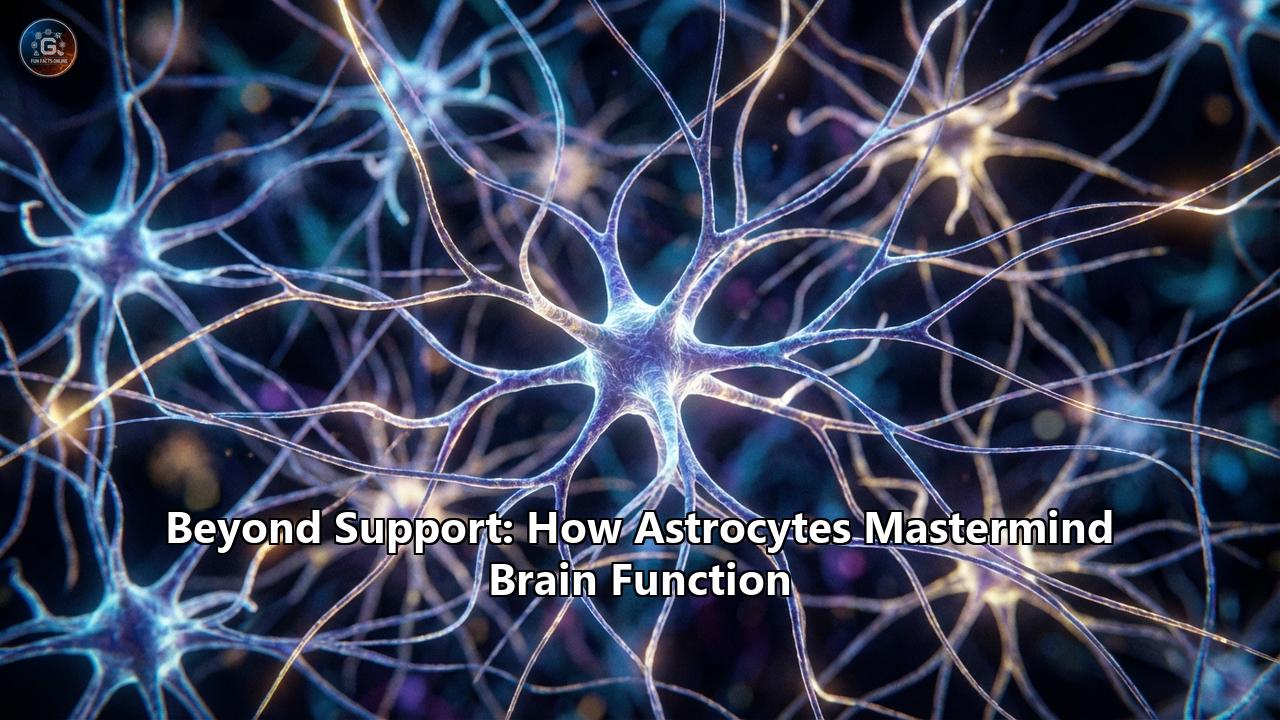
For over a century, the neuron has enjoyed the spotlight as the undisputed star of the brain. Neuroscientists mapped neuronal circuits, celebrated the crackle of their action potentials, and attributed everything from our deepest memories to our highest cognitive achievements to these electrically excitable cells. Meanwhile, a silent majority of star-shaped cells in the background were dismissed as biological spackle. Named "astrocytes" (from the Greek astron for star, and kytos for hollow vessel or cell), they were lumped into a category called glia—literally meaning "glue." Their presumed job was entirely pedestrian: to hold neurons together, clean up their waste, and perhaps provide a bit of metabolic nourishment.
But a dramatic paradigm shift is actively rewriting the textbooks of neuroscience. Advanced imaging techniques, transcriptomics, and computational modeling have revealed a staggering truth: astrocytes are not mere support staff. They are the masterminds of brain function.
The Tripartite Synapse: A Three-Way ConversationTo understand how astrocytes control the brain, we must first look at the very foundation of neural communication: the synapse. For decades, the synapse was taught as a two-part structure consisting of a presynaptic neuron (the sender) and a postsynaptic neuron (the receiver). This bilateral model is now considered incomplete. Welcome to the era of the "tripartite synapse".
An astrocyte does not sit idly by while neurons communicate. Instead, its incredibly complex, highly branched tendrils—known as processes—wrap tightly around the synaptic cleft. In regions of the brain devoted to memory, such as the hippocampus, astrocytes engulf over 60% of all synapses. A single human astrocyte can contact and monitor up to two million individual synapses simultaneously, creating an unimaginably vast and intricate communication web.
Within this tripartite structure, the astrocyte acts as a switchboard operator, a volume dial, and a quality control inspector. When a presynaptic neuron fires, it releases neurotransmitters like glutamate into the cleft. The astrocyte processes are covered in specialized receptors that actively detect this release. Instead of firing an electrical impulse like a neuron, the astrocyte responds chemically. This detection triggers a cascade within the astrocyte, leading to a surge of intracellular calcium ions.
The Calcium Chorus and GliotransmissionBecause astrocytes do not fire electrical action potentials, early neuroscientists assumed they were "silent". But their language is simply different: it is a chemical language written in dynamic waves of calcium. When you look at living astrocytes under a microscope using fluorescent calcium sensors, you don't see the rapid, sharp electrical flashes typical of neurons. Instead, you see mesmerizing, slow-rolling waves of brilliant color spreading across the astrocytic network like ripples in a pond.
These calcium fluctuations are not just internal housekeeping; they are actionable computational signals. When internal calcium levels rise, the astrocyte secretes its own signaling molecules back into the synaptic cleft—a process known as "gliotransmission". Astrocytes release molecules such as glutamate, ATP, and cytokines, which bind to the neurons and dictate how strongly they fire, whether they form a long-lasting connection, or whether the synapse should be dismantled altogether. The precise synchronization of these astrocytic signals is what fundamentally drives Long-Term Potentiation (LTP), the cellular mechanism behind learning and the physical formation of memories.
The Memory Architects: Expanding the Brain's Hard DrivePerhaps the most astonishing revelation in recent years is that astrocytes are directly responsible for the brain's massive memory capacity. The human brain contains roughly 86 billion neurons, but the mathematical limits of neuron-to-neuron networks have always struggled to fully explain the sheer volume of information a human can store and effortlessly recall over a lifetime.
Recent computational models and biological studies have provided the missing puzzle piece. In 2025, researchers at MIT proposed a new framework treating the astrocytic processes—not just the cell body—as individual computational units. Because a single astrocyte networks with millions of synapses simultaneously, they create a "dense associative memory" system. This means astrocytes can link multiple neurons at once, drastically boosting the network's storage capacity and computational efficiency far beyond what neurons could achieve alone.
Biological evidence strongly supports this computational theory. Groundbreaking 2024 research from Baylor College of Medicine discovered that astrocytes actively participate in the storage and retrieval of specific memories alongside neuronal "engrams" (the physical, cellular trace of a memory). When mice learned to associate a specific environment with a fear response, certain astrocytes activated a gene called c-Fos. These specific, memory-linked astrocytes were found physically intertwined with the memory-holding neurons. When researchers stimulated these astrocytes, they observed an immediate spike in synaptic communication essential for memory recall. If the astrocytic connection was disrupted, the memory was effectively lost, proving that astrocytes literally hold the keys to the brain's memory vault.
Emotional Tuning and Behavioral State SwitchingAstrocytes do not just manage raw data and memory; they orchestrate our moods, our behaviors, and our overall states of consciousness. Recent research has shown that astrocytes act as grand neuromodulators, dictating "state switching" in the brain.
When enough calcium builds up inside an astrocyte network, the cells release the energy molecule ATP, which quickly breaks down into adenosine outside the cell. Adenosine acts as a powerful neuromodulator. In animal models, such as zebrafish, this exact mechanism was shown to act as a behavioral switch—for example, suppressing neurons responsible for active movement and triggering a state of rest or sleep.
This points to a profound conclusion: human moods, which change relatively slowly compared to the millisecond firing of a neuron, are likely governed by the slow, sweeping calcium waves of astrocytes. Stress-triggered neuron-astrocyte circuits have already been linked to depression-like behaviors in mice, suggesting that many psychiatric and emotional disorders might not merely be "chemical imbalances" of neurons, but fundamental disorders of astrocyte signaling.
The Metabolic Middlemen: Fueling the Neural EngineEven in their traditional "support" role, astrocytes are far more active and vital than once believed. Neurons are the divas of the cellular world—they are incredibly energy-hungry but notoriously bad at storing their own fuel. Astrocytes act as their dedicated metabolic caterers.
Astrocytes extend specialized "end-feet" that wrap tightly around the brain's blood vessels, forming and regulating the critical blood-brain barrier (BBB). They dynamically instruct the blood vessels to dilate or constrict, directing oxygen and nutrient-rich blood flow precisely to the active brain areas that are thinking the hardest.
Through a mechanism known as the astrocyte-neuron lactate shuttle, astrocytes take up glucose from the bloodstream, metabolize it into lactate, and physically hand it over to neurons to burn for rapid energy. Furthermore, astrocytes are the sole architects of the brain's glutamine supply. They siphon excess glutamate (an excitatory neurotransmitter that causes fatal excitotoxicity if left to accumulate) out of the synapse using specialized transporters like EAAT1 and EAAT2. Once safely inside the astrocyte, the glutamate is converted into inert glutamine and shuttled back to the neuron to be safely recycled.
The Keepers of Time: Applying the Brakes on PlasticityDuring childhood, the brain is incredibly plastic, capable of learning languages effortlessly and recovering rapidly from injury. As we age, this plasticity fades, and habits, behaviors, and neural circuits become cemented. We now know that astrocytes are the biological clockmakers controlling this transition.
In early life, astrocytes secrete factors that stimulate the growth of new synapses and vigorously prune away weak ones to optimize brain efficiency. But research published in 2025 from the Salk Institute revealed that in adulthood, astrocytes actively put the brakes on this plasticity. They secrete a specialized protein called CCN1, which prompts the maturation of inhibitory neurons and stabilizes the existing neural circuits, effectively locking them in place.
This means that adult brain rigidity is not just a passive, "sad feature of getting older"—it is an active, ongoing state maintained by astrocytes. This discovery is revolutionary because it suggests that plasticity in the adult brain is not permanently lost, but merely lying dormant. By manipulating astrocytic signals like CCN1, scientists may one day be able to temporarily lift the brakes, allowing adult brains to rewire themselves to recover from strokes, traumatic brain injuries, or spinal cord damage.
The Dark Side: Astrocytes in NeurodegenerationBecause astrocytes hold so much power over neural survival and synaptic function, their dysfunction is catastrophic. It is becoming increasingly clear that the root causes of major neurodegenerative diseases, including Alzheimer's disease (AD) and Parkinson's disease (PD), are intimately tied to astrocytic failure.
In a healthy brain, astrocytes are fiercely protective. But when exposed to chronic stress, trauma, or the natural wear and tear of aging, they can transform into a state known as "reactive astrocytes". While initial reactivity is a defense mechanism meant to contain damage and promote tissue repair, chronic reactivity turns astrocytes against the very neurons they are meant to protect.
For example, in both Alzheimer's and Parkinson's disease, the brain is plagued by accumulations of toxic misfolded proteins (amyloid-beta and tau in AD; alpha-synuclein in PD). Historically, research focused almost entirely on how these proteins damaged neurons. But recent studies reveal that astrocytes actively ingest these aggregated proteins in a desperate attempt to clear them from the brain. Unfortunately, they fail to fully degrade them. Instead, the astrocytes become bloated storage lockers for these toxic aggregates, forming what researchers call Senescent Astrocytic Deposits (SADs).
Burdened by this toxic trash, the astrocytes become deeply inflamed and dysfunctional. They stop clearing glutamate, leading to a buildup that literally fries neuronal circuits. They physically retract their processes from the tripartite synapse, severing the vital lines of communication required for memory and learning. Worse yet, stressed astrocytes can physically spread these pathogenic protein aggregates to nearby healthy cells, acting as the primary vectors that propagate Alzheimer's and Parkinson's throughout different regions of the brain.
In extreme cases, neuroinflammatory signals from immune cells (such as microglia) can force astrocytes into a highly toxic "A1" phenotype. These neurotoxic astrocytes abandon all their supportive and metabolic functions. They stop feeding the neurons, stop repairing synapses, and actively release a targeted neurotoxin that specifically hunts and kills mature neurons and oligodendrocytes. This toxic astrocytic state is now found at the scene of the crime in Alzheimer's, Parkinson's, Amyotrophic Lateral Sclerosis (ALS), and Multiple Sclerosis. Consequently, next-generation therapies are pivoting away from solely targeting neurons and are instead looking at ways to "reprogram" reactive astrocytes, attempting to coax them back into their nurturing, neuroprotective state to halt or reverse neurodegeneration.
The Future: From AI to Cellular MedicineThe realization that astrocytes are dynamic computational powerhouses is not only changing the landscape of medicine; it is also influencing the future of artificial intelligence. For decades, artificial neural networks have been modeled strictly on neuron-to-neuron communication. By integrating astrocytic functions—specifically their ability to regulate networks through broad, associative chemical signaling and dynamic routing—computer scientists are currently developing highly energy-efficient, next-generation machine learning models that boast exponentially larger memory capacities than current architectures.
In the realm of advanced cellular medicine, clinicians are looking at the gut-brain axis, redox dynamics, and metabolic reprogramming to protect the astrocytic network. If we can maintain the metabolic health and signaling integrity of astrocytes, we can maintain the delicate architecture of the tripartite synapse, potentially preventing the cognitive decline typically associated with aging.
The brain is not merely a hardwired electrical circuit board of neurons. It is a vibrant, deeply interconnected ecosystem where chemical waves of calcium dictate the ebb and flow of our memories, our behaviors, and our consciousness. Astrocytes have officially stepped out of the shadows. They are the sculptors of our developing brains, the architects of our memory, the metabolic engines of our thoughts, and the ultimate gatekeepers of our mental decline. As neuroscience wholly embraces the era of the astrocyte, one thing is abundantly clear: to truly understand the mind, we must look to the stars within.
Reference:
- https://neurosciencenews.com/astrocytes-memory-capacity-29154/
- https://neuroforall.substack.com/p/astrocytes-a-key-support-cell-in
- https://pmc.ncbi.nlm.nih.gov/articles/PMC3867861/
- https://www.pnas.org/doi/10.1073/pnas.2417788122
- https://pmc.ncbi.nlm.nih.gov/articles/PMC10856373/
- https://www.thetransmitter.org/astrocytes/astrocytes-stabilize-circuits-in-adult-mouse-brain/
- https://www.quantamagazine.org/once-thought-to-support-neurons-astrocytes-turn-out-to-be-in-charge-20260130/
- https://patientdaily.com/stories/665743294-astrocytes-role-expands-beyond-support-cells-new-findings-on-memory-storage
- https://pmc.ncbi.nlm.nih.gov/articles/PMC5462417/
- https://pmc.ncbi.nlm.nih.gov/articles/PMC12345021/
- https://www.mdpi.com/2073-4409/12/19/2336
- https://www.biorxiv.org/content/10.1101/2025.10.31.685958v1.full-text
- https://pmc.ncbi.nlm.nih.gov/articles/PMC7151567/
- https://www.uu.se/en/department/public-health-and-caring-sciences/research/molecular-geriatrics/the-role-of-astrocytes
- https://www.youtube.com/watch?v=0KMejnF17t0
- https://www.frontiersin.org/journals/cell-and-developmental-biology/articles/10.3389/fcell.2021.649854/full
- https://ssrpinstitute.org/product/mastermind-14/