
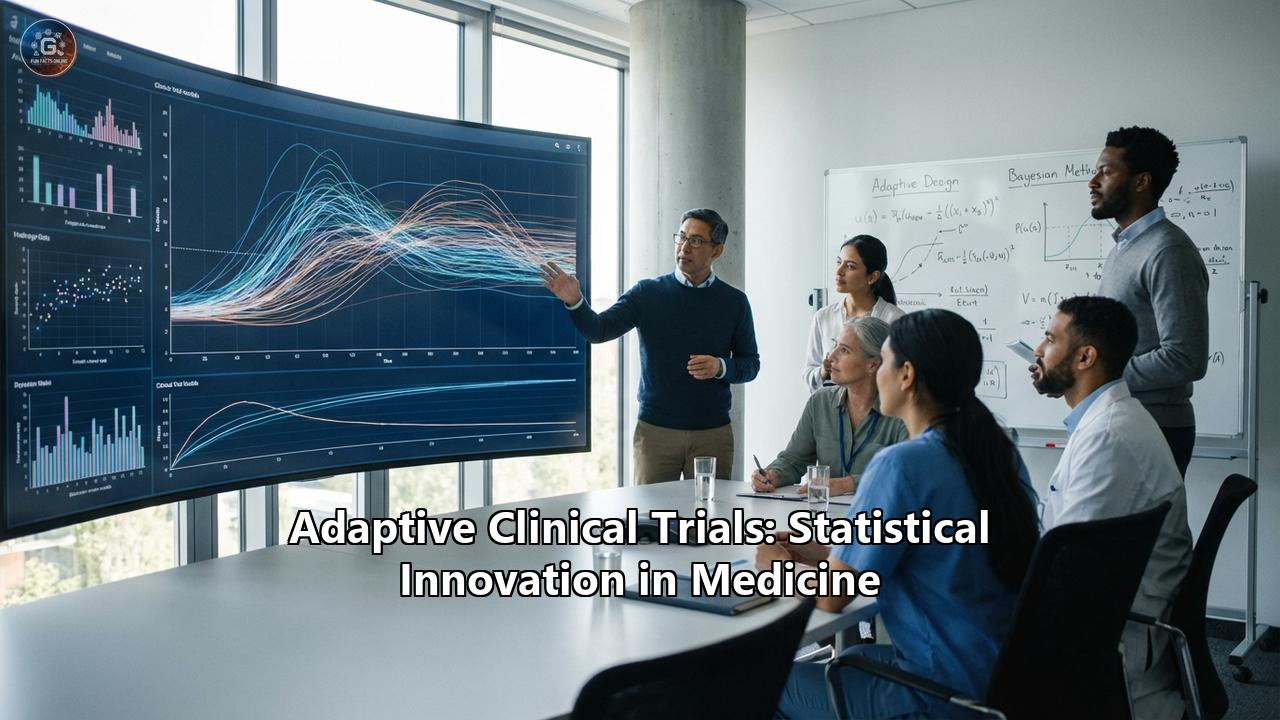
In the high-stakes world of pharmaceutical development, time is the ultimate adversary. For decades, the industry has operated under a rigid paradigm: the randomized controlled trial (RCT). Often hailed as the "gold standard," the traditional RCT is a monolithic structure. It is designed, fixed, and executed with the immutability of a statue. Once the first patient is enrolled, the protocol is locked. If assumptions made years prior about the drug’s potency or the patient population prove slightly incorrect, the trial is doomed to fail—a billion-dollar ship sinking in slow motion.
This rigidity has contributed to a phenomenon known as "Eroom’s Law"—Moore’s Law in reverse—where the cost of developing a new drug doubles roughly every nine years despite advancements in technology. The inefficiency is staggering. Promising drugs fail because of poor dose selection; effective therapies languish because they were tested on the wrong sub-population; and, perhaps most tragically, patients in control arms continue to receive inferior standards of care long after the data has begun to whisper the truth.
Enter the Adaptive Clinical Trial (ACT).
If the traditional RCT is a statue, the adaptive trial is a chameleon. It is a living, breathing entity capable of evolving in response to the data it generates. It represents a fundamental shift in the philosophy of medical evidence, moving from a "confirm then learn" approach to a continuous "learn and confirm" cycle. This article explores the statistical innovations, operational complexities, regulatory landscapes, and ethical frontiers of this medical revolution.
Part I: The Statistical Engine – From Frequentist Orthodoxy to Bayesian Fluidity
To understand the adaptive revolution, one must first look under the hood at the statistical engine driving these trials. Traditional trials rely heavily on Frequentist statistics. In this view, data is interpreted based on the probability of observing such results if the null hypothesis (that the drug doesn't work) were true. The "p-value" is the gatekeeper. However, Frequentist methods generally require the sample size to be fixed in advance to preserve the "Type I error rate" (the chance of a false positive). Peeking at the data early is statistically "expensive" in this framework, requiring harsh penalties that make early adaptation difficult.
Adaptive trials often—though not always—embrace Bayesian statistics. The Bayesian approach is akin to human learning. It starts with a "prior" belief (based on earlier phase data or biological plausibility) and updates this belief as new data arrives to form a "posterior" probability.
The Power of the Posterior
In a Bayesian adaptive trial, the question isn't "Is the p-value less than 0.05?" but "What is the probability that Drug A is better than Drug B given the data we have seen so far?"
If that probability crosses a pre-defined threshold (e.g., 99%), the trial can declare success early. If it drops below a futility threshold (e.g., 5%), the trial can stop early to save resources and spare patients from ineffective therapy. This continuous updating allows for:
- Predictive Probability: calculating the likelihood that the trial will succeed if it continues to the maximum sample size.
- Hierarchical Modeling: "borrowing" strength from data across different subgroups. For example, if a drug works well in lung cancer, a Bayesian model can use that information to slightly boost the prior belief that it might work in a genetically similar breast cancer, requiring fewer patients to prove the latter.
Controlling the False Positive (Type I Error)
Critics of ACTs often point to the risk of "alpha inflation." If you test a hypothesis enough times, eventually you will find a "significant" result by chance. This is the multiple comparisons problem.
Modern statistical innovation has solved this through Alpha Spending Functions (like the O’Brien-Fleming or Pocock boundaries). These mathematical tools allocate small slivers of the total error rate (usually 5%) to each interim analysis. It ensures that even with multiple looks at the data, the overall integrity of the final result remains uncompromised.
Part II: The Taxonomy of Adaptation
"Adaptive design" is an umbrella term covering a zoo of methodologies. Each species of design tackles a specific inefficiency in the drug development pipeline.
1. Group Sequential Designs (GSD)
The grandfather of adaptive designs. GSDs break the trial into "stages." At the end of each stage, an interim analysis is performed. The trial can stop for efficacy (it’s working!) or futility (it’s hopeless).
- Innovation: It prevents the "ethical tragedy" of continuing a trial when the answer is already known.
2. Sample Size Re-estimation (SSR)
Imagine a trial powered to detect a 20% improvement in survival. Halfway through, the data shows a 15% improvement. In a fixed trial, this would result in a "statistically insignificant" failure, even though the drug works.
SSR allows statisticians to recalculate the necessary number of patients mid-trial. If the effect size is smaller than expected but still clinically meaningful, the trial can expand its enrollment to ensure it has enough power to capture the win.
3. Response-Adaptive Randomization (RAR)
This is the most patient-centric innovation. In a traditional 1:1 randomization, a patient has a 50% chance of getting the experimental drug, regardless of how well it is performing.
RAR alters these ratios based on accumulating data. If Arm A is outperforming Arm B, the computer algorithm updates the randomization probabilities. Future patients have a higher probability (e.g., 60%, then 70%) of being assigned to the winning arm.
- The "Play the Winner" Rule: This approach mimics the ethical intuition of a doctor who wants to give their patient the best possible treatment, while still maintaining the randomization necessary for scientific rigor.
4. The Seamless Phase II/III Design
Traditionally, Phase II (dose-finding/safety) and Phase III (efficacy) are separated by a "white space" of 6-12 months for data cleaning and regulatory review. A seamless design combines them.
- Stage 1: The trial tests three different doses of a drug against a placebo.
- Interim Analysis: The best dose is selected.
- Stage 2: The other two doses are dropped, and the trial immediately continues enrolling into the winning dose arm and the placebo arm. Data from Stage 1 often contributes to the final analysis, shaving years off the development timeline.
5. Enrichment Designs
These designs allow a trial to change its inclusion criteria on the fly. If an interim analysis reveals that a drug only works in patients with a specific genetic marker (e.g., HER2 positive), the trial can stop enrolling the general population and "enrich" the study by only recruiting biomarker-positive patients. This salvages a drug that would have failed in a broad population but is a lifesaver for a specific subgroup.
Part III: The Rise of Master Protocols – Basket, Umbrella, and Platform Trials
The most transformative application of adaptive statistical principles is the emergence of Master Protocols. These are not just trials; they are perpetual testing infrastructures.
The Basket Trial
- Concept: One drug, many diseases.
- The Logic: Cancer is increasingly defined by mutation, not organ. A BRAF mutation drives certain melanomas, but also some lung and thyroid cancers. A Basket Trial puts patients with the same mutation into different "baskets" based on their tumor type and treats them all with the same targeted therapy.
- Statistical Innovation: If the drug works in the lung cancer basket, Bayesian hierarchical models can "share" that information to help determine efficacy in the thyroid basket.
The Umbrella Trial
- Concept: One disease, many drugs.
- The Logic: Breast cancer is not one disease. It is a cluster of genetic malfunctions. An Umbrella Trial screens a patient with breast cancer, sequences their tumor, and assigns them to one of several treatment arms (sub-protocols) specifically targeting their mutation.
The Platform Trial (The "Perpetual" Trial)
The Platform Trial is the ultimate adaptive machine. It has no fixed end date. It is a standing infrastructure that evaluates multiple therapies simultaneously against a common control arm.
- The Mechanism: New drugs enter the platform as they become available. If a drug fails, it is ejected. If it succeeds, it "graduates" to regulatory filing. The control arm data is recycled, meaning fewer patients need to be on placebo over time.
- The Crown Jewel: I-SPY 2:
The I-SPY 2 trial in breast cancer is the poster child for this methodology. It uses adaptive randomization to match specific genetic signatures with specific experimental drugs. By 2016, I-SPY 2 had graduated multiple drugs to Phase III testing with a fraction of the patients and time required by traditional methods. It demonstrated that a platform could serve as a high-speed "screening engine" for the industry.
Part IV: The Operational Iceberg
While the statistics are elegant, the operations are messy. Running an adaptive trial is like building an airplane while flying it.
1. The Supply Chain Nightmare
In a fixed trial, you know exactly how much drug you need and where. In a response-adaptive trial, demand is volatile. If Arm A starts winning, recruitment into Arm A surges. The supply chain must be agile enough to shift inventory to high-performing sites instantly. This requires "Just-in-Time" labeling and sophisticated forecasting algorithms that predict supply needs based on probabilistic trial outcomes.
2. The Data Deluge and the Firewalls
Adaptive trials require real-time data. You cannot adapt to data you haven't cleaned. This necessitates Electronic Data Capture (EDC) systems that are nearly instantaneous.
Furthermore, preventing bias is critical. If a doctor knows that the randomization ratio has shifted to 80:20 in favor of the drug, they might guess the drug is working and change how they assess the patient. To prevent this, unblinded teams (usually an Independent Data Monitoring Committee, or DMC) are strictly firewalled from the trial operations team. The "brains" of the adaptation (the statistical algorithms) must be kept in a black box, visible only to the unblinded statisticians.
3. IRT (Interactive Response Technology)
The IRT system is the central nervous system of an ACT. It links patient enrollment, randomization engines, and supply chain logistics. In an ACT, the IRT must be programmable. It needs to receive a file from the statisticians saying, "Change randomization weights for Stratum B," and execute that change globally within minutes.
Part V: The Regulatory Landscape – From Skepticism to Endorsement
For years, regulators viewed adaptive designs with suspicion. They feared that flexibility was a mask for "p-hacking"—manipulating data to find a result.
The turning point came with the FDA’s Critical Path Initiative and the subsequent 2019 Guidance for Industry on Adaptive Designs. The FDA, along with the EMA (European Medicines Agency), now explicitly encourages these designs, particularly for rare diseases and life-threatening conditions where efficiency is an ethical imperative.
However, the bar for approval is higher. Sponsors must submit extensive Clinical Trial Simulations (CTS). Before a single patient is enrolled, the trial is simulated millions of times on a computer. These "in silico" trials prove to the regulators that the design controls the Type I error rate under every conceivable scenario (e.g., "What if the drug works in men but kills women?" "What if patient accrual drifts over time?").
Part VI: Case Studies in Innovation
Case Study 1: The RECOVERY Trial (COVID-19)
When the pandemic struck, there was no time for traditional startup timelines. The UK launched the RECOVERY trial, a massive platform trial.
- Adaptation: It started with arms for Lopinavir-Ritonavir, Dexamethasone, and Hydroxychloroquine.
- Speed: Within 100 days, it recruited over 11,000 patients.
- Outcome: It quickly identified that Hydroxychloroquine was useless (stopping that arm) and that Dexamethasone saved lives (changing global standard of care overnight). Its simple, adaptive structure allowed it to pivot as the virus evolved.
Case Study 2: BATTLE (Lung Cancer)
The BATTLE trial (Biomarker-integrated Approaches of Targeted Therapy for Lung Cancer Elimination) was a pioneer in biomarker-adaptive randomization.
- Design: It biopsied patients and classified them into biomarker groups.
- Outcome: It was the first to show that adaptive randomization could effectively match patients to drugs based on their molecular profile, establishing the feasibility of personalized medicine trials.
Part VII: The Ethical Imperative
The strongest argument for ACTs is not financial, but ethical.
In a traditional 1:1 randomized trial of a blockbuster drug, 50% of patients receive the placebo or inferior standard of care until the bitter end. In a Response-Adaptive Randomization trial, as soon as the signal appears that the new drug is superior, the system guides more patients into the effective arm.
This minimizes patient exposure to failure. It treats the clinical trial not just as a scientific experiment, but as a therapeutic service. However, this raises complex ethical questions regarding equipoise—the genuine uncertainty among experts about which treatment is better. If the algorithm shifts to 90:10, does equipoise still exist? Ethicists argue that "clinical equipoise" applies to the medical community at large, allowing the trial to continue until the result is statistically definitive, even if the internal data leans heavily one way.
Part VIII: Future Horizons – AI and the Digital Twin
The next frontier of adaptive trials lies in the integration of Artificial Intelligence (AI) and Machine Learning (ML).
AI-Driven Simulations
Current simulations are static. Future AI could run dynamic simulations that learn from real-world data (RWD) in real-time, predicting operational bottlenecks (like site staffing shortages) before they happen and adapting the protocol operationally, not just statistically.
Digital Twins
Imagine a control arm made of "Digital Twins." Instead of recruiting a live patient to take a placebo, AI constructs a digital model of that patient based on historical medical records and predicts their disease progression. The trial then compares the actual patient on the drug against their digital self on placebo. While currently only accepted as supportive evidence (synthetic control arms), this could one day eliminate the need for placebo arms entirely in certain indications.
Patient-Centric Endpoints
Adaptive designs allow for composite endpoints. Future trials might use wearable technology to adaptively weigh endpoints. If patients indicate that "fatigue" is more debilitating than "nausea," the trial’s statistical engine could adapt to prioritize fatigue reduction as a primary outcome measure.
Conclusion: The New Era of Evidence
Adaptive Clinical Trials represent the maturing of evidence-based medicine. They acknowledge that we rarely know the full picture when we embark on the journey of discovery. By baking flexibility into the scientific method, we replace the arrogance of certainty with the humility of learning.
The shift is difficult. It requires statisticians to become programmers, clinicians to trust algorithms, and regulators to embrace probability over binary outcomes. But the reward is a medical development system that is faster, smarter, and, above all, more humane. As we move into the era of personalized medicine, the "one-size-fits-all" fixed trial will become a relic. The future belongs to the adaptive.
Reference:
- https://adaptivehealthintelligence.org.au/resources/bayesian-statistics-for-clinical-trials/
- https://www.iqvia.com/blogs/2021/11/adaptive-trial-designs-understanding-the-potential-of-statistical-innovation
- https://www.veristat.com/blog/what-are-the-major-common-types-of-adaptive-designs-used-in-clinical-trials-today
- https://toolbox.eupati.eu/resources/new-approaches-to-clinical-trials-adaptive-designs/
- https://inderocro.com/article/discover-8-types-of-adaptive-designs-in-clinical-trials/
- https://sanogenetics.com/resources/blog/master-protocols-in-precision-medicine
- https://credevo.com/articles/2020/09/15/clinical-trial-designs-basket-umbrella-platform-trial-designs/
- https://acrpnet.org/2019/12/04/fda-offers-guidance-on-adaptive-clinical-trials
- https://www.coherentsolutions.com/insights/role-of-ml-and-ai-in-clinical-trials-design-use-cases-benefits