
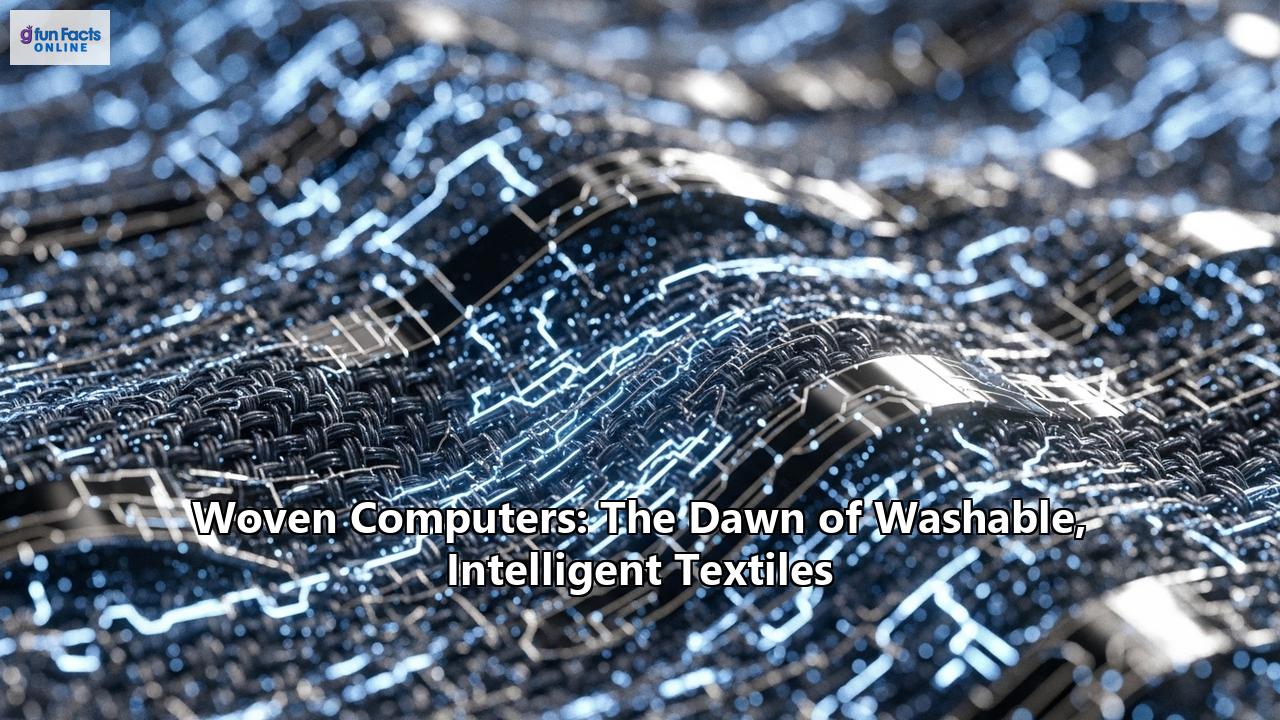
The Dawn of a New Digital Age: Unraveling the World of Woven Computers
Imagine a world where your clothes are not just passive garments but active, intelligent companions. A t-shirt that monitors your vital signs and alerts you to potential health issues, a jacket that charges your phone on the go, or a firefighter's uniform that detects hazardous gases in real-time. This is not the stuff of science fiction; it is the burgeoning reality of woven computers, a revolutionary field that is seamlessly integrating the digital and physical worlds by transforming the very fabric of our lives.Woven computers, also known as smart textiles or e-textiles, are fabrics with embedded electronic components and interconnections, effectively turning textiles into functional electronic devices. These are not just clothes with gadgets attached; the technology is woven directly into the material, creating a truly integrated system that is flexible, comfortable, and, increasingly, washable. This nascent technology stands at the intersection of material science, electronics, computer science, and fashion, promising to revolutionize industries from healthcare and sports to the military and entertainment.
This article will delve into the fascinating world of woven computers, exploring their historical roots, the core technologies that make them possible, their diverse and life-changing applications, and the challenges and future trends that will shape this exciting field.
From Ancient Looms to Modern Circuits: A History of Woven Computation
The concept of weaving and computation are surprisingly intertwined, with a history that stretches back centuries. The journey to the modern woven computer began not with silicon chips, but with the humble loom.
The Jacquard Loom: The First Binary Code
In the early 19th century, Joseph Marie Jacquard invented a loom that used a series of punched cards to control the weaving of complex patterns in textiles. This was a groundbreaking innovation that automated a previously laborious process. Each hole in the card corresponded to a specific action of the loom, creating a binary system of "on" and "off" that is the fundamental language of modern computers. The Jacquard loom's ability to "read" instructions from punched cards was a direct precursor to early computer programming and data entry.
The Pioneers of Wearable Technology
The 20th century saw the gradual merging of electronics and apparel. Early examples of wearable technology were often bulky and conspicuous, such as the calculator watch that emerged in the 1970s. However, these early devices laid the groundwork for the miniaturization and integration of electronics into our daily lives.
The true pioneers of modern e-textiles emerged in the latter half of the 20th century. Researchers at institutions like the Massachusetts Institute of Technology (MIT) began to explore the possibilities of embedding electronics directly into fabrics. In the mid-1990s, a team at MIT led by Steve Mann, Thad Starner, and Sandy Pentland developed what they termed "wearable computers," which involved attaching traditional computer hardware to the body.
A significant breakthrough came from another group at MIT, including Maggie Orth and Rehmi Post, who focused on more gracefully integrating electronics into soft materials. This research led to the development of methods for embroidering electronic circuits, a crucial step towards creating truly "soft" circuits. Furthering this progress, Leah Buechley, also from the MIT Media Lab, created the LilyPad Arduino in 2007, a microcontroller specifically designed for use in textiles, making e-textiles more accessible to hobbyists and designers.
These early explorations and inventions set the stage for the rapid advancements in woven computers that we are witnessing today.
The Anatomy of a Woven Computer: The Technologies Behind the Threads
A woven computer is a complex system of interconnected components, each playing a vital role in its functionality. These components are not simply attached to the fabric but are an integral part of its structure, often at the fiber or yarn level.
Conductive Fibers: The Nerves of the System
At the heart of every woven computer are conductive fibers. These are threads that can transmit electrical signals, acting as the wiring of the textile circuit. There are several types of conductive fibers, each with its own set of properties:
- Metal-Based Fibers: These fibers are often made from materials like silver, copper, nickel, or stainless steel due to their high conductivity. They can be created by weaving thin metallic strands into the fabric or by coating traditional fibers with a metallic layer. While highly conductive, they can sometimes be less flexible than other options.
- Carbon-Based Fibers: Carbon nanotubes and graphene are increasingly being used to create conductive fibers. These materials offer excellent conductivity, are lightweight, and have impressive strength and flexibility.
- Conductive Polymers: Certain polymers can be engineered to conduct electricity. These can be blended with traditional textile fibers or used as a coating to create conductive yarns. They offer good flexibility and are well-suited for creating sensors.
- Composite Fibers: These fibers combine different materials to achieve specific properties. For example, a non-conductive core yarn might be wrapped with a conductive material, or conductive particles might be embedded within a polymer fiber.
The choice of conductive fiber depends on the specific application, balancing the need for conductivity with factors like flexibility, durability, and cost.
Weaving and Knitting Circuits: The Fabric of Computation
Once you have conductive fibers, you need a way to create circuits with them. This is where traditional textile manufacturing techniques like weaving, knitting, and embroidery come into play, but with a high-tech twist.
- Weaving: In weaving, conductive yarns are interlaced with non-conductive yarns to create a fabric with integrated circuits. This method allows for the creation of complex and robust electronic textiles.
- Knitting: Knitting involves creating loops of yarn to form a fabric. Digital knitting machines can be programmed to incorporate conductive yarns in specific patterns, creating stretchable and flexible circuits. This method is particularly well-suited for creating garments that need to conform to the body.
- Embroidery: Conductive thread can be embroidered onto a fabric to create circuits and connect electronic components. This technique offers a high degree of precision and can be used to add electronic functionality to existing garments.
- Printing: Conductive inks can be printed directly onto fabric to create circuits. This method allows for the creation of thin, flexible, and lightweight electronic textiles.
These techniques allow for the creation of "fabric circuit boards" that are an integral part of the textile itself, a concept that is central to the idea of woven computers.
Flexible Electronics: The Brains of the Operation
A woven computer needs more than just wires; it needs "brains" in the form of electronic components like microcontrollers, sensors, and actuators. The challenge is to create these components in a way that they are flexible and can be integrated into a soft textile.
Recent advancements in flexible electronics have made it possible to create components that can be bent, stretched, and even washed without losing their functionality. These components can be directly integrated into the textile at the fiber or yarn level, or they can be attached to the fabric using techniques like sewing or embroidery. Researchers are even developing ways to create an entire computer within a single fiber, complete with sensing, communication, computation, and storage capabilities.
The Input and Output of Woven Computers: Sensors and Actuators
A woven computer's ability to interact with the world around it is made possible by a variety of sensors and actuators that can be integrated into the fabric.
Sensors: The Senses of the Fabric
Sensors are the "senses" of a woven computer, allowing it to gather information about the wearer and the environment. These sensors can be woven, knitted, or printed into the fabric and can detect a wide range of stimuli. Common types of sensors found in smart textiles include:
- Physiological Sensors: These sensors monitor the wearer's vital signs and other health-related data. Examples include:
ECG (Electrocardiogram) sensors: These measure the electrical activity of the heart.
Temperature sensors: These monitor body temperature.
Respiration sensors: These track breathing rate.
Motion sensors (accelerometers and gyroscopes): These detect movement and can be used to track physical activity and posture.
- Environmental Sensors: These sensors gather information about the world around the wearer. This can include sensors that detect:
Temperature and humidity:
Gases and chemicals:
Light levels:
- Pressure and Strain Sensors: These sensors detect changes in pressure and stretching, and can be used for applications like monitoring posture or creating touch-sensitive interfaces.
Actuators: The Fabric's Response
Actuators are the components that allow a woven computer to respond to the information it gathers. They can create physical changes in the fabric, providing feedback to the wearer or interacting with the environment. Examples of actuators in smart textiles include:
- Haptic Feedback: Vibrating motors can be embedded in the fabric to provide tactile feedback to the wearer. This can be used for navigation, alerts, or creating immersive virtual reality experiences.
- Shape-Changing Materials: Shape memory alloys (SMAs) and shape memory polymers (SMPs) are materials that can change their shape in response to a stimulus like heat or electricity. These can be integrated into textiles to create garments that can change their shape or provide compression on demand.
- Thermal Regulation: Heating and cooling elements can be woven into the fabric to help regulate the wearer's body temperature.
- Light-Emitting Diodes (LEDs): LEDs can be integrated into textiles to create dynamic displays or to provide visual alerts.
The combination of sensors and actuators allows for the creation of truly interactive and responsive textiles that can adapt to the needs of the wearer and the environment.
Powering the Threads and Communicating the Data
A woven computer, like any electronic device, needs power to function and a way to communicate the data it collects.
Powering the System: Flexible Batteries and Energy Harvesting
One of the biggest challenges in creating practical woven computers is providing a power source that is flexible, lightweight, and can withstand the rigors of daily wear and washing. There are two main approaches to powering smart textiles:
- Flexible Batteries: Researchers are developing batteries that are thin, flexible, and can be woven directly into the fabric. These batteries are often made from lightweight materials and can be twisted, bent, and stretched without losing their ability to store and provide power.
- Energy Harvesting: Another exciting area of research is energy harvesting, which involves capturing energy from the environment to power the woven computer. This can include:
Solar Power: Photovoltaic fibers can be woven into textiles to capture energy from sunlight.
Kinetic Energy: Piezoelectric and triboelectric materials can generate electricity from the wearer's movement.
Thermal Energy: Thermoelectric materials can generate electricity from the temperature difference between the wearer's body and the surrounding environment.
Energy harvesting has the potential to create truly self-powered woven computers that never need to be plugged in.
Communication: The Woven Network
Once a woven computer has collected data, it needs a way to communicate that data to other devices, such as a smartphone or a computer, for analysis and use. This can be achieved through:
- Wired Communication: Conductive threads can be used to create wired connections between different components of the woven computer.
- Wireless Communication: For communication with external devices, textile antennas can be woven or embroidered into the fabric. These antennas can transmit data using technologies like Bluetooth or Wi-Fi.
The development of reliable and efficient communication systems is crucial for creating a network of interconnected woven computers that can share data and work together.
The Fabric of Our Lives: Applications of Woven Computers
The potential applications of woven computers are vast and span a wide range of industries. Here are just a few examples of how this technology is already being used and how it might be used in the future:
Healthcare: A Second Skin for Monitoring and Treatment
Woven computers have the potential to revolutionize healthcare by providing continuous and unobtrusive monitoring of patients' health. Smart garments can track vital signs like heart rate, respiration, and body temperature, and can alert healthcare professionals to any potential problems in real-time. This is particularly useful for monitoring patients with chronic conditions, the elderly, and infants.
Woven computers can also be used for treatment and rehabilitation. For example, a garment could be programmed to provide electrical stimulation to muscles to help with rehabilitation after an injury, or it could release medication at specific times.
Sports and Fitness: Optimizing Performance and Preventing Injury
In the world of sports and fitness, woven computers are being used to help athletes optimize their performance and prevent injuries. Smart garments can track an athlete's movements, posture, muscle activity, and hydration levels, providing real-time feedback to coaches and trainers. This data can be used to identify areas for improvement, prevent overtraining, and reduce the risk of injury.
Military and Safety: Enhancing Protection and Situational Awareness
Woven computers have a wide range of potential applications in the military and for improving the safety of workers in hazardous environments. For example, a soldier's uniform could be equipped with sensors that detect the presence of toxic gases or that monitor the soldier's vital signs and location on the battlefield. This information could be transmitted to a central command center, providing valuable situational awareness and allowing for a rapid response in case of an emergency.
Firefighters' uniforms could be equipped with temperature sensors that alert them to dangerous heat levels, and workers in industrial settings could wear clothing that detects exposure to harmful chemicals.
Fashion and Entertainment: The Next Frontier of Self-Expression
Woven computers are also making their way into the world of fashion and entertainment, opening up new possibilities for self-expression and interaction. Clothes can be designed to change color or pattern in response to the wearer's mood or the environment. LEDs can be woven into fabric to create dynamic and interactive displays. And haptic feedback can be used to create immersive gaming and virtual reality experiences.
Automotive Industry: A More Connected Driving Experience
The automotive industry is also exploring the potential of woven computers to create a more connected and personalized driving experience. Smart textiles could be integrated into car seats to monitor the driver's posture and fatigue levels, and could even provide a gentle massage to help them stay alert. Wearable devices could also be used to control various functions of the car, such as unlocking the doors or adjusting the climate control.
The Challenges and the Future of Woven Computers
While the potential of woven computers is immense, there are still a number of challenges that need to be overcome before this technology can become truly mainstream.
The Hurdles to Overcome
- Durability and Washability: One of the biggest challenges is creating woven computers that can withstand the rigors of daily wear and repeated washing. The electronic components and conductive fibers need to be robust enough to survive the washing machine without losing their functionality.
- Manufacturing and Scalability: While many woven computer prototypes have been created in the lab, scaling up production to a commercial level is a significant challenge. New manufacturing techniques are needed to produce these complex textiles at a reasonable cost.
- Power and Connectivity: As mentioned earlier, providing a reliable and long-lasting power source for woven computers is a major hurdle. And ensuring seamless and secure data communication is another key challenge.
- User Acceptance: For woven computers to be widely adopted, they need to be comfortable, easy to use, and aesthetically pleasing. Users will not wear clothes that are bulky, uncomfortable, or difficult to care for.
- Ethical Considerations: The ability of woven computers to collect vast amounts of personal data raises a number of ethical concerns, particularly around privacy and data security. It is crucial to develop clear guidelines and regulations for the collection, use, and storage of this data.
The Future is Woven
Despite these challenges, the future of woven computers is incredibly bright. Researchers are constantly developing new materials and manufacturing techniques that are making these textiles more durable, washable, and affordable.
We can expect to see a new generation of smart fabrics that are even more seamlessly integrated into our lives. These textiles will be able to monitor our health in unprecedented detail, provide us with personalized feedback and coaching, and connect us to the digital world in new and exciting ways.
The development of woven computers represents a paradigm shift in how we think about technology. No longer will our devices be separate objects that we carry with us; they will be an integral part of the clothes we wear, the furniture we use, and the world we live in. The dawn of the age of woven computers is upon us, and it promises to be a future that is smarter, safer, and more connected than ever before.
Reference:
- https://textilesinside.com/e-textile-smart-textile/global-breakthroughs-in-smart-textile-innovations/
- https://bioengineer.org/groundbreaking-advances-in-eco-friendly-e-textiles-technology/
- https://electronics360.globalspec.com/article/22070/smart-textiles-in-2025-washable-comfortable-and-power-efficient
- https://fashnerd.com/2019/06/e-textiles-washability-degradation-future-of-fashion/
- https://web.fibion.com/articles/ethical-considerations-wearable-data/
- https://www.clinician.com/articles/ethical-concerns-if-study-participants-use-electronic-wearables
- https://handwovenmagazine.com/jacquard-looms-origin-of-weaving-computing/
- https://insidefashionlive.net/6-next-gen-smart-textile-developments/
- https://blog.millcraft.com/the-future-of-smart-textiles-innovations-in-wearable-technology
- https://displaydaily.com/breakthrough-research-unveils-seamless-integration-of-electronics-in-fabrics-for-next-gen-wearables/
- https://thedebrief.org/the-next-generation-of-smart-clothing-new-fabric-allows-hands-free-control-of-devices-even-underwater/
- https://irep.ntu.ac.uk/id/eprint/32316/1/PubSub9713_Kent.pdf
- https://textiletechsource.com/2020/11/23/the-challenge-and-possibilities-in-e-textiles/
- https://www.meegle.com/en_us/topics/wearable-technology/wearable-tech-for-ethical-concerns
- https://www.datanext.ai/smart-clothing/
- https://specialtyfabricsreview.com/2024/12/01/surmountable-challenges-in-making-e-textiles/
- https://eprints.whiterose.ac.uk/id/eprint/132977/2/Challenges%20in%20Knitted%20E-textiles.pdf
- https://www.apexmills.com/media_post/smart-textiles/
- https://www.researchgate.net/publication/265794806_User_requirements_for_wearable_smart_textiles_Does_the_usage_context_matter_medical_vs_sport
- https://specialtyfabricsreview.com/2024/03/01/smart-fabrics-testing-and-standards-under-development/
- https://www.delvens.com/pressRoom/the-future-of-smart-fabric
- https://www.domaindiscount24.com/en/blog/smart-fabrics-and-wearable-tech-the-future-of-fashion
- https://www.livescience.com/technology/computing/scientists-cram-an-entire-computer-into-a-single-fiber-of-clothing-and-you-can-even-put-it-through-your-washing-machine
- https://pubmed.ncbi.nlm.nih.gov/28155094/
- https://fashion.sustainability-directory.com/question/what-are-the-key-challenges-in-smart-textiles/
- https://www.proplate.com/durability-of-smart-textiles-enhanced-by-electroplating/
- https://usashop.filatime.com/blogs/sales-promotions/the-future-of-fashion-exploring-smart-clothing-and-wearable-tech
- https://www.encata.net/blog/the-future-of-wearable-technology-trends-and-possibilities
- https://heuritech.com/articles/fashion-fabric-innovations/
- https://www.fibre2fashion.com/industry-article/10573/intelligent-textiles-and-wearable-tech-how-smart-fabrics-are-powering-the-future-of-wellness
- https://www.mdpi.com/2673-4591/52/1/23
- https://www.advancedsciencenews.com/what-are-the-ethical-considerations-for-wearable-technology/
- https://eudl.eu/doi/10.4108/icst.pervasivehealth.2014.255179