
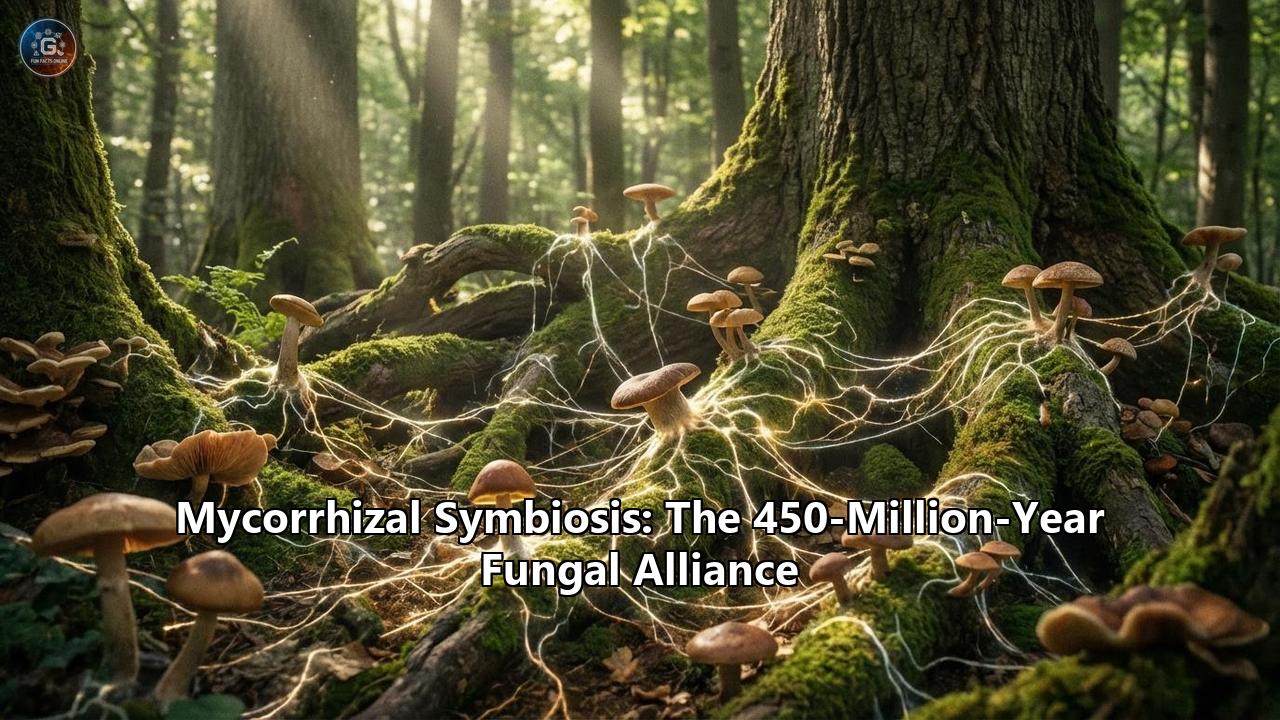
Walk into any old-growth forest, and your senses are immediately overwhelmed by the majesty of the visible world. The towering canopy of Douglas firs filters the sunlight into a cathedral-like glow; the emerald moss carpets the forest floor; the sharp, resinous scent of pine needles fills the air. It is easy to look at a forest and see a collection of individual botanical giants, standing stoic and solitary, competing for sunlight and water in a silent, slow-motion battle for survival.
But this is an illusion.
Beneath your boots lies an empire older than the dinosaurs, more complex than human infrastructure, and arguably more vital to the survival of terrestrial life than any other biological system on the planet. If you were to peel back the damp leaf litter and look closely at the soil, you would find fine, ghostly white threads weaving through the dirt, enveloping the roots of the trees, and extending miles into the dark earth.
These are the hyphae of mycorrhizal fungi. Together with the roots of nearly 90% of all land plants, they form a symbiotic partnership known as mycorrhiza (from the Greek mykós for fungus, and rhiza for root). It is an alliance forged 450 million years ago, one that facilitated the very greening of the Earth. Today, this hidden subterranean network not only shapes the ecosystems we see above ground but also actively sequesters vast amounts of the planet’s carbon, filters our water, and regulates the life-and-death struggles of the botanical kingdom.
Yet, as modern science peers deeper into this subterranean universe using advanced genetic sequencing and fluid dynamics, we are discovering that the story of this ancient alliance is far more intricate, more ruthless, and more awe-inspiring than we ever imagined.
Genesis: The Conquest of the Barren Continents
To understand the magnitude of the mycorrhizal alliance, we must travel back to the Ordovician period, roughly 450 to 460 million years ago. At this time, life teemed within the oceans—a swirling soup of trilobites, ancient mollusks, and towering kelp forests. But the continents were desolate, rocky, and utterly silent. The land was a hostile, irradiated wasteland devoid of soil, shade, or readily available nutrients.
Eventually, brave green algae washed up onto the shores, attempting to colonize the terrestrial frontier. However, these pioneering plants faced two insurmountable problems: they had no root systems to extract minerals from the solid rock, and they had no mechanisms to protect themselves from severe desiccation.
Enter the aquatic fungi. These ancient fungal organisms possessed the biochemical tools to secrete powerful acids and enzymes that could dissolve solid rock and extract vital minerals like phosphorus and zinc. What they lacked, however, was a reliable source of energy; they could not photosynthesize.
In what is arguably the most consequential biological handshake in Earth’s history, the plants and the fungi struck a deal. The plants offered a steady stream of carbon-rich sugars and fats, synthesized from the sunlight and carbon dioxide above ground. In exchange, the fungi acted as surrogate root systems, mining the barren rock for water and essential minerals and delivering them directly to the plants.
Fossil evidence found in the Rhynie Chert in Scotland—a beautifully preserved sedimentary deposit dating back over 400 million years—shows the microscopic remnants of these early, rootless plants locked in an intimate embrace with fungal threads. Without this partnership, plants would never have conquered the land. Without plants, there would be no topsoil, no forests, no oxygen-rich atmosphere, and ultimately, no animals. Every terrestrial creature, including human beings, owes its existence to this ancient fungal barter system.
The Chemical Courtship and the Lipid Exchange
How does a plant actually "speak" to a fungus in the dark expanse of the soil? The alliance begins with a highly sophisticated chemical courtship.
When a plant finds itself in nutrient-poor soil, it secretes a class of hormones known as strigolactones from its roots. These chemicals diffuse through the damp earth like a biological distress flare. Mycorrhizal spores lying dormant in the soil detect the strigolactones and immediately awaken. In response, the fungus releases its own chemical signals, known as "Myc factors."
When the plant’s roots detect the Myc factors, they undergo a radical transformation. The plant alters its own cellular architecture, essentially unlocking its doors to invite the fungus inside. The fungal hyphae penetrate the outer layers of the root, navigating between or even directly into the plant’s cells.
For decades, biologists believed that the foundation of this trade was relatively simple: plants gave fungi sugar (carbohydrates) in exchange for phosphorus and nitrogen. But recent groundbreaking research has rewritten this narrative, revealing a far more profound dependency. Scientists from the Boyce Thompson Institute and the University of Bonn discovered that plants do not just give fungi sugar; they actually manufacture complex fats—specifically, a lipid called 16:0 β-monoacylglycerol—and feed it directly to the fungi.
This discovery solved a major biological mystery: why are the most common mycorrhizal fungi (arbuscular mycorrhizae) "obligate biotrophs," meaning they physically cannot survive or reproduce without a plant host? Genetic sequencing revealed that these fungi entirely lack the genes required to synthesize their own essential fatty acids. They rely on the plant to build their cellular membranes and fuel their massive underground expansion. The plant is not just trading with the fungus; it is literally acting as an external organ for the fungus, synthesizing the fundamental fats it needs to live.
The Guilds of the Underworld: The Four Alliances
Over 450 million years, this primitive partnership has evolved and diversified into several highly specialized guilds, each dominating different ecosystems across the globe.
1. Arbuscular Mycorrhizal Fungi (AMF): The Ancient GeneralistsThis is the original and most widespread alliance. Around 80% of all land plant families, including most of our vital agricultural crops (wheat, corn, rice, soybeans) and tropical rainforest trees, form partnerships with AMF. These microscopic fungi are surgical in their precision. They pierce the cell walls of the plant roots and form highly branched, microscopic, tree-like structures inside the plant cells called arbuscules. The arbuscule is the biological stock exchange floor—the exact site where the plant's fats and sugars are swapped for the fungus's water and phosphorus. Because they are completely microscopic and never produce above-ground mushrooms, AMF remained largely unknown to the general public until modern microscopy unveiled their ubiquity.
2. Ectomycorrhizal Fungi (ECM): The Forest ArchitectsIf AMF are the invisible generalists of the tropics and farmlands, Ectomycorrhizal fungi are the architects of the great temperate and boreal forests. Trees like pines, oaks, birches, and firs partner with ECM. Unlike AMF, these fungi do not penetrate the plant cells. Instead, they form a dense, protective sheath—a microscopic glove—around the outside of the root tips, and weave a net of hyphae between the root cells known as the Hartig net.
ECM fungi are the ones that capture the human imagination because they produce the majestic, often edible fruiting bodies we call mushrooms. When you forage for chanterelles, porcini, matsutake, or highly prized truffles, you are actually harvesting the reproductive organs of an ectomycorrhizal network attached to the nearby trees. ECM fungi are fiercely protective of their hosts. The dense sheath they form acts as physical armor against soil pathogens, and they secrete antibiotics to ward off parasitic bacteria.
3. Ericoid Mycorrhizas: The ExtremophilesIn the world's harshest, most acidic, and nutrient-poor soils—think of the sweeping peat bogs of Ireland, the high-altitude heathlands, and the acidic understories where blueberries, cranberries, and rhododendrons thrive—the Ericoid mycorrhizae reign supreme. These plants survive in environments where organic matter decays incredibly slowly due to the high acidity. Ericoid fungi possess an arsenal of powerful enzymes capable of breaking down tough, raw organic matter (like dead leaves and insect exoskeletons) to extract raw nitrogen, feeding it to the plants and allowing them to flourish where no other plants can survive.
4. Orchid Mycorrhizas: The Nursery MaidsThe most beautiful flowers on Earth are entirely dependent on fungal life support. Orchid seeds are famously microscopic—like dust—because they contain absolutely no endosperm (food reserves) to power their germination. When an orchid seed falls to the ground, it will simply die unless it is immediately infected by a specific species of mycorrhizal fungus. The fungus acts as an umbilical cord, pumping carbon and nutrients into the seed until it can grow leaves and begin photosynthesizing on its own.
Inside the Tubes: The Fluid Mechanics of Fungi
To conceptualize the scale of this network, one must look closely at the hyphae themselves. A single teaspoon of healthy forest soil can contain miles of fungal hyphae. These threads are extraordinarily thin—roughly one-tenth the diameter of a human hair. Yet, they are not solid strings; they are hollow tubes acting as the ultimate subterranean supply chain.
In 2025, an international team of biophysicists and evolutionary biologists from Princeton University and VU Amsterdam managed to map the internal fluid dynamics of these fungal networks in stunning detail. What they found looks remarkably like an intelligent transportation grid. Inside the microscopic tubes, fluids carrying sugars, fats, and phosphorus flow back and forth across the entire organism.
These fungi do not blindly grow through the dirt. They deploy specialized growing tips that act as pathfinders, navigating the soil matrix to explore new territory. When these fungal pathfinders discover a rich patch of phosphorus, the network dynamically adapts. Researchers discovered that the fungi alter their own architecture to solve "traffic congestion" by widening their tubes and increasing fluid flows specifically in areas of high resource demand. As evolutionary biologist Toby Kiers noted, the fungi operate much like ruthless global commodities traders—moving resources to where demand (and the resulting payout of plant sugars) is highest. They even favor long-term infrastructural expansion over short-term gains, purposefully weaving dense, lacelike networks to secure future access to minerals.
The Wood Wide Web: Myth, Magic, and Scientific Mutiny
For the last two decades, the popular understanding of mycorrhizal networks was dominated by a beautifully poetic concept: The "Wood Wide Web". Popularized in the late 1990s and heavily expanded upon by Canadian forest ecologist Dr. Suzanne Simard, the theory suggested that trees in a forest are not solitary competitors, but a deeply cooperative community linked together by Common Mycorrhizal Networks (CMNs).
The narrative was captivating. It suggested that older, massive trees—affectionately termed "Mother Trees"—act as central hubs in the forest, using the fungal network to intentionally pump excess carbon and nutrients to shaded, struggling seedlings (even recognizing their own genetic offspring). It was also posited that when a tree was attacked by insects, it could send chemical warning signals through the fungal grid, prompting neighboring trees to preemptively ramp up their defensive enzymes. The Wood Wide Web transformed our view of the forest into a sentient, empathetic superorganism. It inspired bestselling books like Peter Wohlleben's The Hidden Life of Trees, TED talks, and even the planetary neural network in James Cameron’s blockbuster film Avatar.
However, the scientific method demands rigorous skepticism, and by the mid-2020s, the Wood Wide Web found itself at the center of a fierce and sometimes bitter scientific mutiny.
In 2023, a coalition of veteran mycorrhizal researchers, led by Dr. Justine Karst of the University of Alberta, Dr. Melanie Jones, and Dr. Jason Hoeksema, published a bombshell peer-reviewed perspective in the journal Nature Ecology & Evolution. Their exhaustive review of decades of field studies concluded that the popular claims regarding the Wood Wide Web had dramatically outpaced the actual scientific evidence.
Karst and her colleagues pointed out several painful truths for lovers of the Mother Tree narrative. First, mapping a CMN in a wild forest is staggeringly difficult; to date, very few forests have been comprehensively mapped, meaning we do not actually know how widespread these interconnected networks are in the wild. Second, while carbon certainly moves into the fungal network from older trees, there is sparse evidence from field experiments (outside of highly controlled greenhouse pots) that this carbon is actively and purposefully transported into the neighboring seedlings in quantities large enough to ensure their survival.
The most profound shift in perspective lies in biological motivation. The Wood Wide Web narrative often anthropomorphized trees as altruistic parents sharing food with their neighbors. The counter-argument posits that the fungus is the one in charge. Fungi are not passive fiber-optic cables; they are living, resource-hungry organisms acting in their own self-interest. If a fungus takes carbon from a massive, sun-drenched canopy tree and moves it toward a shaded sapling, it is likely doing so to keep its own network expansion alive in the shade, not because the Mother Tree commanded it to save its offspring. The fungi are maximizing their own investment portfolio, maintaining multiple hosts to ensure a steady supply of fats and sugars in case one tree dies.
As Karst succinctly summarized the movement to ground the romanticism back into rigorous data: "Less hype. More hyphae".
Yet, even stripped of its anthropomorphic fairy-tale qualities, the reality remains breathtaking. Whether driven by botanical altruism or fungal capitalism, the end result is a staggeringly complex, dynamic, interdependent ecosystem where the survival of the forest relies absolutely on the microscopic trade happening in the dark.
The Dark Arts: Cheats, Vampires, and Saboteurs
Wherever there is a thriving biological economy, there will be cheats and criminals eager to exploit it. The mycorrhizal network is no different.
While the vast majority of plants engage in fair trade—trading photosynthesized carbon for fungal minerals—some plants have evolved to become botanical vampires. These plants are known as "mycoheterotrophs." Over evolutionary time, they realized that if they could hack into the fungal network, they wouldn't need to photosynthesize at all.
The Ghost Pipe (Monotropa uniflora) is a prime example. Walking through a dark, dense forest, you might spot this striking plant pushing up through the leaf litter. It looks like a flower carved from pure white wax. It has no green parts because it contains no chlorophyll; it cannot harvest energy from the sun. Instead, its roots tap into the ectomycorrhizal network of neighboring trees (often via Russula mushrooms). The Ghost Pipe acts as a parasitic siphon, stealing the sugars that the canopy trees produced, routed through the helpless fungal middleman.
The network is also used as an arena for subterranean chemical warfare. It has long been known that certain trees, like the Black Walnut, secrete a potent herbicide called juglone to kill competing plants around them—a process known as allelopathy. Recent research has shown that these toxic chemicals can actually travel through the very mycorrhizal networks meant to share resources. A walnut tree can essentially pump poison into the shared fungal grid, devastating neighboring saplings of different species to secure the canopy space for itself.
The Carbon Keepers: Climate Warriors of the Underworld
While the ecological dramas of cooperation and theft unfold locally, mycorrhizal fungi are simultaneously performing a service of global, planetary magnitude: they are one of Earth's greatest carbon sinks.
When plants draw carbon dioxide out of the atmosphere during photosynthesis, they convert it into carbon-rich sugars and lipids. Up to 20% to 30% of this liquid carbon is pumped directly downward into the root system and fed to the mycorrhizal fungi. The fungi use this carbon to build their vast underground hyphal networks.
But what happens to this carbon? In the late 1990s, scientists discovered that Arbuscular Mycorrhizal Fungi secrete a sticky, carbon-rich protein called glomalin. Glomalin acts like a biological superglue in the soil. It binds microscopic particles of sand, silt, and clay together into larger granules called soil aggregates. This aggregation is what gives healthy soil its sponge-like, crumbly structure, allowing it to hold water and resist erosion. Crucially, glomalin takes decades, if not centuries, to break down. It traps vast amounts of atmospheric carbon deep within the soil matrix. It is estimated that glomalin accounts for up to one-third of all the carbon stored in soils globally.
Ectomycorrhizal fungi perform their own climate magic through a process dubbed the "Gadgil effect." Because ECM fungi are fiercely competitive for nitrogen, they actively inhibit the bacteria and saprotrophic fungi that normally decompose dead wood and leaves. By slowing down the decomposition of the forest floor, ECM fungi prevent massive amounts of carbon dioxide from being released back into the atmosphere, locking the carbon away in the forest soil for centuries.
Despite their critical role as planetary climate warriors, these fungal networks are in peril. In 2025, the Society for the Protection of Underground Networks (SPUN) released a groundbreaking "Underground Atlas" analyzing the DNA of mycorrhizal fungi from 130 countries. By matching soil samples with climate and vegetation models, researchers mapped the globe's fungal biodiversity. Their findings were a stark warning: only 9.5% of the world's fungal biodiversity hotspots fall within currently protected areas. When forests are clear-cut for agriculture or cattle grazing, the plant hosts are destroyed, and the ancient, carbon-sequestering fungal networks below them starve and collapse, leading to rapid soil erosion and massive carbon emissions.
The Fall and Rise of the Fungal Empire
For the last century, human agricultural practices have inadvertently waged war on the mycorrhizal kingdom. The Green Revolution of the mid-20th century vastly increased global food production through the introduction of high-yielding crop varieties, mechanized tilling, and the heavy application of synthetic N-P-K (nitrogen, phosphorus, potassium) fertilizers.
However, this triumph of chemistry came at a severe biological cost. When a field is heavily sprayed with readily available synthetic phosphorus and nitrogen, the crops no longer need the fungal network. From an energy standpoint, why should a corn plant give away 20% of its hard-earned sugars to a fungus when the farmer is providing free minerals directly to the roots?
The crops effectively abandon their mycorrhizal partners. This creates what soil scientists call "lazy plants." Cut off from the host, the fungal networks starve and die. But this short-term agricultural boom creates a long-term vulnerability. Without the expansive, deep-reaching hyphae to scavenge for water, the lazy, synthetically-fed crops become incredibly susceptible to drought. Without the glomalin glue produced by the fungi, the soil loses its structure, becoming compacted dirt that washes away in heavy rains or blows away as dust. Furthermore, the constant mechanical churning of the soil through deep rototilling physically shreds the delicate hyphal networks to pieces, resetting the fungal clock every planting season.
We are only now realizing the error of our ways. A regenerative renaissance is beginning to take root in agriculture and forestry. Forward-thinking farmers are transitioning to no-till farming practices, leaving the soil undisturbed so the ancient fungal networks can rebuild. They are utilizing cover crops—plants grown in the off-season specifically to keep feeding carbon into the soil food web.
In commercial forestry, modern timber operations are moving away from massive clear-cutting. Recognizing that saplings struggle to survive when planted in dead, sun-baked soil completely cut off from an established mycorrhizal grid, sustainable forestry practices now prioritize selective logging. Leaving "retention trees" in a harvested area ensures that the living fungal network remains intact, ready to plug into the roots of the newly planted seedlings and jumpstart the forest's regeneration.
Scientists are even developing targeted mycorrhizal inoculants—brewing specific strains of resilient AMF and ECM spores to coat agricultural seeds before planting. By repairing the broken alliance between crop and fungus, agriculture could theoretically reduce its reliance on toxic chemical fertilizers, rebuild topsoil, and draw millions of tons of carbon out of the atmosphere back into the ground where it belongs.
Epilogue: As Above, So Below
The discovery and growing understanding of the mycorrhizal symbiosis represents one of the most profound paradigm shifts in the history of biology. It demands that we abandon our obsession with the individual. A tree is not simply a tree; it is a chimera, a holobiont, a biological node in an impossibly complex subterranean tapestry.
The 450-million-year-old alliance between plants and fungi is a testament to the evolutionary power of symbiosis. It teaches us that life did not conquer this planet solely through bloody competition and isolation, but through radical, cross-kingdom collaboration.
The next time you walk through a forest, or a city park, or even step onto your own lawn, take a moment to look down. Beneath your feet is a ceaseless, microscopic metropolis. Invisible rivers of liquid carbon and ancient minerals are flowing through millions of miles of crystalline tubes. Fungal pathfinders are charting the dark frontier, navigating the microscopic crevices of the earth to keep the green world breathing. We are entirely reliant on a vast, hidden empire that we are only just beginning to understand—an empire built entirely on the beautiful, brutal, and eternal exchange of life.
Reference:
- https://www.ecomatcher.com/understanding-the-wood-wide-web/
- https://www.biographic.com/seeing-the-fungi-for-the-trees/
- https://pmc.ncbi.nlm.nih.gov/articles/PMC5559270/
- https://btiscience.org/explore-bti/news/post/feeding-fat-to-fungi-evidence-for-lipid-transfer-in-arbuscular-mycorrhiza/
- https://www.sciencedaily.com/releases/2017/04/170406121520.htm
- https://elifesciences.org/articles/29107
- https://www.princeton.edu/news/2025/03/25/research-reveals-underground-traffic-between-fungi-and-plants
- https://ecomatcher.medium.com/the-science-of-tree-communication-understanding-the-wood-wide-web-03c07813cb6c
- https://www.biobasedpress.eu/2025/06/do-trees-communicate-with-each-other/
- https://caliber.az/en/post/wood-wide-web-theory-once-captivating-now-embroiled-in-bitter-scientific-dispute
- https://gwern.net/doc/statistics/bias/2023-karst.pdf
- https://www.theguardian.com/commentisfree/article/2024/jul/09/wood-wide-web-theory-charmed-us-bitter-fight-scientists
- https://wilderness-society.org/the-wood-wide-web-supports-wild-forests/