
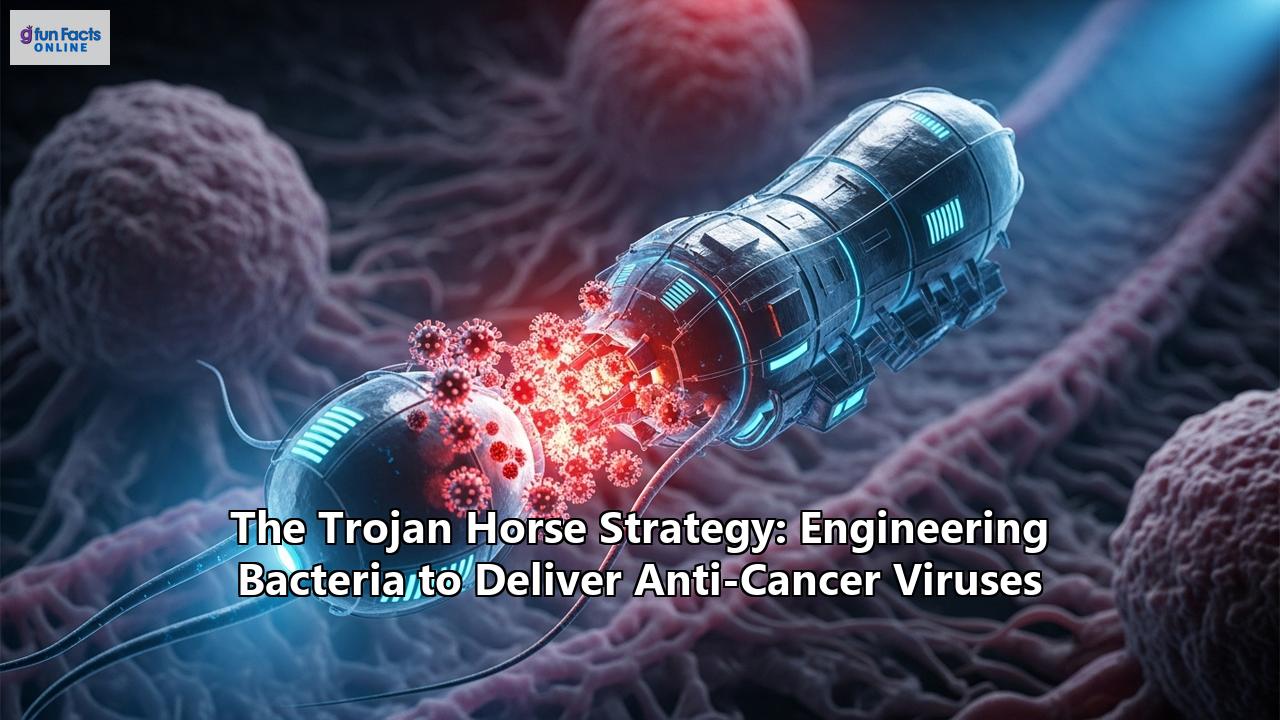
The Microbial Alliance: Unleashing a Trojan Horse on Cancer's Fortress
In the relentless war against cancer, a revolutionary new strategy is emerging from the most unexpected of allies: bacteria and viruses. For centuries, these microbes have been viewed primarily as adversaries, agents of disease to be eradicated. Yet, in a remarkable twist of biomedical ingenuity, scientists are now harnessing their inherent capabilities, transforming them into a sophisticated, two-pronged weapon against malignant tumors. This groundbreaking approach, aptly named the "Trojan Horse" strategy, involves engineering tumor-seeking bacteria to carry a deadly cargo of cancer-killing viruses, smuggling them past the body's vigilant immune defenses and unleashing them deep within the enemy's stronghold. This microbial alliance promises to overcome some of the most significant hurdles in cancer therapy, heralding a new era of living medicines.
A Tale of Two Therapies: The Historical Prelude to a Powerful Partnership
The idea of using microbes to fight cancer is not entirely new; its roots stretch back over a century. In the late 19th and early 20th centuries, physicians anecdotally observed that some cancer patients who contracted concurrent bacterial or viral infections experienced spontaneous tumor regression. These tantalizing observations sparked the interest of pioneering researchers.
On the bacterial front, the most notable early proponent was Dr. William B. Coley, a surgeon at New York Hospital. In the 1890s, inspired by a case of a patient with an inoperable neck sarcoma who recovered after a severe streptococcal infection, Coley began treating patients with a mixture of heat-killed bacteria, which came to be known as "Coley's Toxins." While his methods were met with mixed results and skepticism, his work laid the foundation for bacterial immunotherapy. Decades later, this field would see a major breakthrough with the approval of Bacillus Calmette-Guérin (BCG), an attenuated strain of Mycobacterium bovis, as a standard treatment for non-muscle invasive bladder cancer.
Simultaneously, the field of oncolytic virotherapy was taking its own independent path. The term "oncolytic" literally means cancer-destroying, and the concept of using viruses for this purpose gained traction in the mid-20th century. Researchers began to explore how certain viruses could selectively infect and destroy cancer cells while leaving healthy cells unharmed. Early clinical trials in the 1950s and 60s experimented with various wild-type viruses, but these efforts were often hampered by the host's immune response, which would clear the virus before it could have a significant effect, and concerns about the safety of using live viruses.
The advent of genetic engineering in the latter half of the 20th century revolutionized both fields. Scientists could now precisely modify the genetic makeup of bacteria and viruses, enhancing their therapeutic properties while minimizing their pathogenic risks. This led to the development of attenuated bacterial strains with enhanced tumor-targeting abilities and oncolytic viruses with improved cancer cell specificity and safety profiles. A pivotal moment for oncolytic virotherapy came in 2015 with the FDA approval of Talimogene laherparepvec (T-VEC), a genetically modified herpes simplex virus, for the treatment of advanced melanoma.
For decades, bacterio- and virotherapy for cancer progressed along these parallel, yet separate, tracks. However, researchers began to recognize that the strengths of one approach could compensate for the weaknesses of the other. This realization set the stage for a paradigm shift: the unification of these two microbial forces into a single, powerful therapeutic strategy. The "Trojan Horse" was conceived.
The Perfect Disguise: Why a Microbial Partnership Makes Sense
The elegance of the Trojan Horse strategy lies in its synergistic approach to overcoming the formidable defenses of both the human body and the tumor itself. When used alone, oncolytic viruses face a significant challenge: the host's immune system. Many people have pre-existing immunity to common viruses, either from prior infections or vaccinations. This means that when therapeutic viruses are introduced into the bloodstream, they are often swiftly neutralized by circulating antibodies before they can ever reach their intended target.
This is where the bacterial "horse" comes into play. By encapsulating the oncolytic virus, or its genetic material, within a bacterium, the virus is effectively cloaked from the immune system. The bacterium acts as a living, mobile invisibility cloak, ferrying its deadly payload through the bloodstream undetected.
But the advantages of this partnership extend beyond simply evading the immune system. The bacteria chosen for this task are not just any bacteria; they are specifically selected or engineered for their natural ability to home in on tumors.
The Tumor Microenvironment: An Unlikely Haven for Bacteria
Solid tumors create a unique microenvironment that is hostile to many conventional therapies but surprisingly hospitable to certain types of bacteria. As tumors grow, they often outstrip their blood supply, leading to regions of low oxygen, or hypoxia. This hypoxic core, along with the abundance of nutrients from necrotic (dead) tissue, creates an ideal niche for anaerobic or facultative anaerobic bacteria to thrive.
Several species of bacteria have been identified as promising candidates for this tumor-targeting role:
- ---Salmonella---: Attenuated strains of Salmonella typhimurium are a popular choice due to their natural ability to migrate towards and colonize the hypoxic and nutrient-rich environments within tumors. They are facultative anaerobes, meaning they can survive in both low- and normal-oxygen conditions, but they show a preference for the tumor microenvironment.
- ---Clostridium---: As obligate anaerobes, Clostridium species can only germinate and grow in the near-complete absence of oxygen, making them highly specific to the necrotic cores of solid tumors. This inherent specificity provides a built-in safety mechanism, as they cannot survive in healthy, well-oxygenated tissues.
- ---Escherichia coli---: Certain probiotic strains of E. coli, such as Nissle 1917, have been engineered for cancer therapy. They can be modified to home in on tumors and have a well-established safety profile in humans.
- ---Listeria monocytogenes---: This intracellular bacterium possesses the unique ability to escape from the phagosome (a vesicle within a cell) and live within the cytoplasm of the host cell. This allows it to deliver its payload directly into the cellular machinery, making it an excellent vector for gene and virus delivery.
Once these bacterial vectors have successfully infiltrated the tumor, the second phase of the attack begins: the release of the viral "soldiers."
Engineering the Microbial Warriors: A Feat of Synthetic Biology
The creation of these bacterial-viral chimeras is a testament to the power of synthetic biology. It involves intricate genetic engineering of both the bacterial carrier and the viral payload to ensure they work in a coordinated and controlled manner.
Modifying the Bacterial "Horse"
The bacterial component is engineered with several key features:
- Attenuation: The first and most crucial step is to disarm the bacteria, ensuring they do not cause disease in the patient. This is typically achieved by deleting genes responsible for their virulence and toxicity.
- Controlled Lysis: The bacteria must be programmed to release their viral cargo at the right time and place. This is accomplished by introducing a "lysis circuit" into their genetic code. One common approach is a "synchronized lysis circuit" that is triggered by quorum sensing. Quorum sensing is a system of stimulus and response correlated to population density. The bacteria are engineered to produce a signaling molecule, and once the concentration of this molecule reaches a certain threshold (indicating that a sufficient number of bacteria have accumulated within the tumor), it triggers a gene that causes the bacteria to burst open, or lyse. Other innovative approaches include using external triggers like focused ultrasound or near-infrared light to induce lysis, offering an even greater degree of spatial and temporal control.
- Payload Delivery: The bacteria are engineered to carry the oncolytic virus, either as a whole particle or, more commonly, as its genetic material (RNA or DNA) encoded on a plasmid. This plasmid is designed to be activated and transcribed only once the bacterium is inside a cancer cell.
Arming the Viral "Soldiers"
The oncolytic viruses used in this strategy are also carefully selected and modified:
- Tumor Selectivity: While some viruses are naturally oncolytic, many are genetically modified to enhance their ability to selectively replicate in cancer cells. This can be achieved by deleting viral genes that are necessary for replication in normal cells but are redundant in cancer cells, which often have dysfunctional antiviral pathways.
- Enhanced Potency: Viruses can be "armed" with additional therapeutic genes. These transgenes can encode for proteins that stimulate the immune system (like cytokines), enzymes that convert a non-toxic prodrug into a potent chemotherapy agent, or molecules that disrupt the tumor's blood supply.
- Safety Switches: To further enhance safety, viruses can be engineered with dependency mechanisms. For example, a virus might be modified to require a specific bacterial enzyme for its replication or maturation. This ensures that the virus can only become fully active and spread in the presence of its bacterial delivery vehicle, effectively tethering the viral infection to the tumor site.
The Attack Plan: A Step-by-Step Breakdown of the Trojan Horse Strategy
The elegance of this strategy lies in its multi-stage, coordinated attack on the tumor. Here is a step-by-step breakdown of how this microbial alliance works in practice, using the well-studied example of the CAPPSID (Coordinated Activity of Prokaryote and Picornavirus for Safe Intracellular Delivery) system developed by researchers at Columbia University:
- Administration and Camouflage: The engineered bacteria, such as Salmonella typhimurium carrying the genetic blueprint for an oncolytic virus like Senecavirus A, are administered to the patient, typically via intravenous injection. The bacterial cell wall acts as a shield, protecting the viral payload from being detected and neutralized by the host's immune system.
- Tumor Homing and Infiltration: The bacteria circulate through the bloodstream and, due to their innate tumor-homing abilities, they preferentially accumulate in the hypoxic and nutrient-rich microenvironment of solid tumors.
- Invasion and Payload Delivery: Once within the tumor, the bacteria invade the cancer cells. Inside the cytoplasm of the cancer cell, the engineered genetic circuits within the bacteria are activated.
- Bacterial Lysis and Viral Release: The controlled lysis circuit is triggered, causing the bacteria to burst open. This releases the viral genetic material (in the case of CAPPSID, the viral RNA) directly into the cancer cell's cytoplasm.
- Viral Replication and Oncolysis: The cancer cell's own machinery is hijacked by the viral RNA to produce new viral particles. These new viruses then cause the cancer cell to lyse, releasing a fresh wave of oncolytic viruses to infect and destroy neighboring cancer cells.
- Immune System Activation: The destruction of cancer cells by both the bacteria and the viruses releases a flood of tumor-associated antigens (TAAs) and pathogen-associated molecular patterns (PAMPs). This "danger signal" alerts the immune system, overcoming the tumor's natural immunosuppressive environment and triggering a robust and targeted anti-tumor immune response. This can lead to the destruction of cancer cells that were not directly infected by the virus, and potentially even distant metastases.
Preclinical Evidence: A Glimmer of Hope on the Horizon
The Trojan Horse strategy has shown significant promise in a growing number of preclinical studies. The CAPPSID system, for example, has been successfully validated in mouse models. Researchers demonstrated that this system could effectively deliver the Senecavirus A genome to tumors, leading to viral replication and complete tumor regression in some cases. Crucially, the strategy was effective even in mice with pre-existing immunity to the virus, a major hurdle for conventional oncolytic virotherapy.
Another promising preclinical study utilized engineered Salmonella to deliver the genome of the Minute Virus of Mice (MVMp), a potent oncolytic virus. The study showed that this approach successfully produced functional viral particles within various cancer cell lines, including breast, pancreatic, and osteosarcoma, leading to cell death and the spread of the infection to neighboring cancer cells.
Preclinical research into Listeria-based vaccines has also shown that they can be highly effective at activating anti-tumor immunity and eradicating tumors in various cancer models. While many of these studies focus on delivering tumor antigens, the same principles can be applied to delivering oncolytic viruses.
While the majority of this research is still in the preclinical phase, the results are incredibly encouraging. Efforts are underway to translate this technology from the laboratory to clinical trials, with researchers working to expand the approach to a wider variety of cancer types and to test different bacteria-virus combinations.
Advantages of the Microbial Alliance: A Multifaceted Assault on Cancer
The Trojan Horse strategy offers several key advantages over conventional cancer therapies and even over its individual microbial components:
- Overcoming Immune Neutralization: As previously discussed, the bacterial carrier provides an "invisibility cloak" for the oncolytic virus, allowing it to reach the tumor without being intercepted by the immune system.
- Enhanced Tumor Targeting and Penetration: Bacteria's natural ability to home in on and actively penetrate deep into the hypoxic cores of tumors allows for a more thorough and widespread delivery of the therapeutic payload than can be achieved with passive delivery methods. This overcomes a major limitation of both viral therapy and traditional chemotherapy, which often struggle to reach the less accessible parts of a tumor.
- Localized and Amplified Therapy: The virus is only released and activated within the tumor, minimizing off-target effects on healthy tissues. Furthermore, the replication of the oncolytic virus within the tumor creates a self-amplifying therapeutic effect, meaning that a small initial dose can lead to a large and sustained anti-cancer response.
- Synergistic Tumor Killing and Immune Activation: The strategy combines the direct tumor-killing effects of both the bacteria and the virus with a powerful, secondary immune-mediated attack. The release of tumor antigens and bacterial components acts as an in-situ vaccine, training the immune system to recognize and destroy cancer cells throughout the body.
Challenges and Future Directions: Navigating the Path to the Clinic
Despite its immense promise, the Trojan Horse strategy is not without its challenges. The use of live, genetically modified microbes as a therapeutic raises important safety considerations. The potential for the bacteria to cause an infection, or for the virus to escape the tumor and infect healthy tissue, must be carefully managed. The sophisticated genetic engineering and built-in safety mechanisms, such as dependency circuits and controlled lysis, are designed to mitigate these risks, but rigorous testing is essential.
The long-term stability of the engineered genetic circuits within the microbes is another area of active research. Over time, mutations can arise that may cause the circuits to fail. Scientists are developing innovative solutions to this problem, such as "rock-paper-scissors" systems that use multiple bacterial strains to maintain the functionality of the therapeutic circuit.
Furthermore, the path from promising preclinical results to an approved clinical therapy is a long and arduous one. Extensive clinical trials will be necessary to determine the safety, optimal dosing, and efficacy of this approach in human patients. While some clinical trials are underway for oncolytic viruses and bacteria as separate therapies, and for oncolytic viruses in combination with other immunotherapies, trials specifically testing the combined bacterial delivery strategy are still in their early stages.
The future of this field lies in continued innovation and refinement. Researchers are working to build a "toolkit" of different bacteria and viruses that can be matched to specific cancer types and patient characteristics. The development of even more sophisticated genetic circuits that can sense the tumor microenvironment and respond with tailored therapeutic outputs is also on the horizon.
A New Dawn for Cancer Therapy
The Trojan Horse strategy represents a paradigm shift in our approach to fighting cancer. By forging an unlikely alliance between two of nature's most formidable microbes, scientists are creating a living, breathing medicine that is intelligent, adaptable, and incredibly potent. This fusion of microbiology, virology, and synthetic biology is pushing the boundaries of what is possible in cancer therapy.
While there is still much work to be done, the prospect of unleashing these microbial Trojan Horses on the fortress of cancer offers a profound new hope for patients and a fascinating glimpse into the future of medicine. The war on cancer is far from over, but with these tiny, powerful allies on our side, the tide may be beginning to turn.
Reference:
- https://pmc.ncbi.nlm.nih.gov/articles/PMC11126981/
- https://pmc.ncbi.nlm.nih.gov/articles/PMC11842258/
- https://www.frontiersin.org/journals/immunology/articles/10.3389/fimmu.2023.1140463/full
- https://www.researchgate.net/figure/Important-clinical-trials-involving-bacterial-intervention-in-cancer_tbl1_42440292
- https://www.frontiersin.org/journals/immunology/articles/10.3389/fimmu.2021.615930/full
- https://www.discovermagazine.com/turns-out-bacteria-and-viruses-can-join-forces-to-kill-tumors-from-the-inside-47927
- https://www.vanwickle.org/engineering-bacteria-to-launch-and-control-an-oncolytic-virus-for-targeted-cancer-therapy
- https://bioengineer.org/harnessing-bacteria-to-deliver-viruses-directly-into-tumors/
- https://pmc.ncbi.nlm.nih.gov/articles/PMC4655389/
- https://www.frontiersin.org/journals/immunology/articles/10.3389/fimmu.2023.1278011/full
- https://www.frontiersin.org/journals/microbiology/articles/10.3389/fmicb.2021.624618/full
- https://pubmed.ncbi.nlm.nih.gov/38799578/
- https://www.frontiersin.org/journals/cellular-and-infection-microbiology/articles/10.3389/fcimb.2023.1293351/full
- https://pmc.ncbi.nlm.nih.gov/articles/PMC6150096/
- https://www.researchgate.net/publication/245538942_Salmonella_and_cancer_From_pathogens_to_therapeutics
- https://pmc.ncbi.nlm.nih.gov/articles/PMC8081050/
- https://www.researchgate.net/publication/372933540_Bacteria-based_immunotherapy_for_cancer_a_systematic_review_of_preclinical_studies
- https://pmc.ncbi.nlm.nih.gov/articles/PMC8309967/
- https://www.mdpi.com/2076-393X/6/3/48
- https://www.rigvir.com/news/oncolytic-virus-preclinical-toxicology-studies.php
- https://www.researchgate.net/publication/350854586_Clinical_Experience_and_Recent_Advances_in_the_Development_of_Listeria-Based_Tumor_Immunotherapies
- https://aacrjournals.org/clincancerres/article/27/1/96/83414/Intratumoral-Injection-of-Clostridium-novyi-NT