
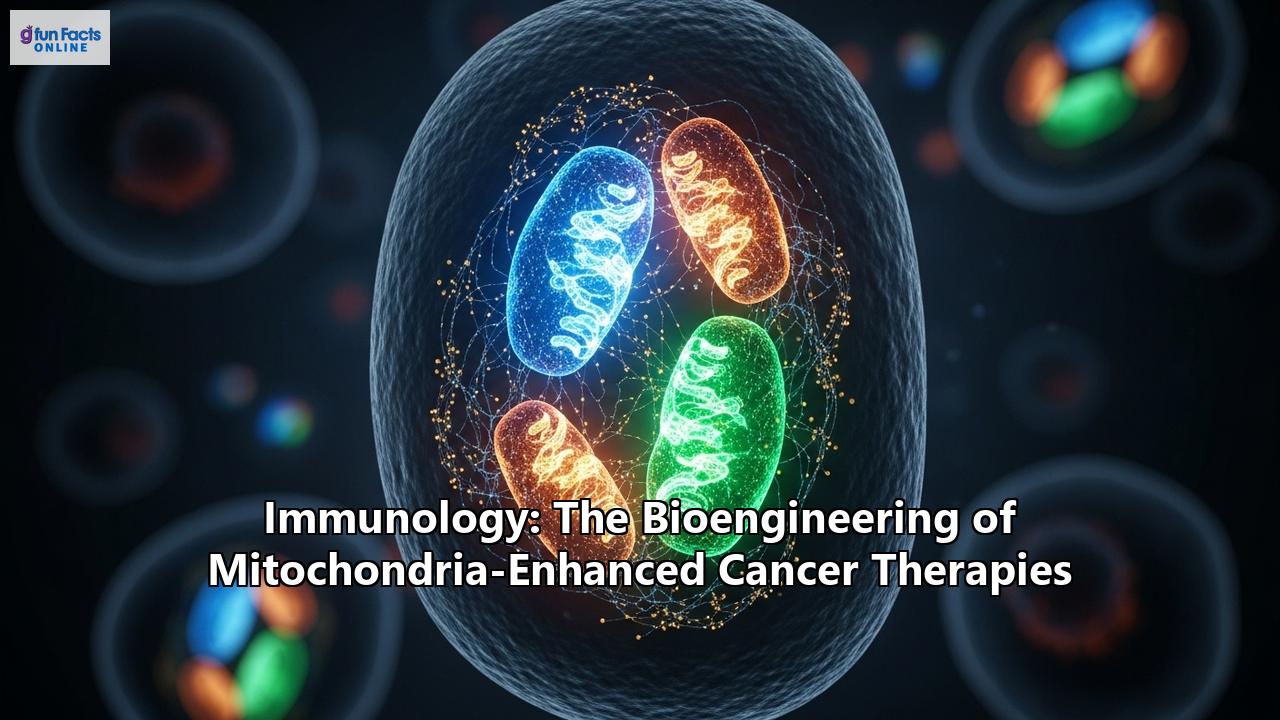
An epic battle is being waged at the microscopic level within the human body: the immune system versus cancer. For decades, scientists have been developing ways to arm our natural defenses to better fight this formidable foe. This has led to the rise of immunotherapy, a revolutionary approach that has transformed cancer treatment. However, this is not a war with a guaranteed victory. Cancer cells are cunning adversaries, employing a variety of tactics to evade and even suppress the immune system. One of the key battlegrounds in this conflict is the tumor microenvironment (TME), a complex and often hostile landscape where immune cells must fight to survive and function.
In recent years, a crucial player in this cellular drama has emerged from the shadows: the mitochondrion. Long known as the "powerhouse of the cell," this tiny organelle is now understood to be a central hub for metabolism, signaling, and cell fate decisions, profoundly influencing the effectiveness of our immune warriors, particularly T cells. The recognition of mitochondria's pivotal role has opened up a new and exciting frontier in cancer therapy: the bioengineering of mitochondria to enhance the anti-tumor immune response. This article will delve into the intricate world of immuno-oncology, exploring how the bioengineering of these cellular powerhouses is poised to revolutionize the fight against cancer.
The Mighty Mitochondrion: Fueling the T-Cell Army
T cells are the special forces of the immune system, capable of recognizing and eliminating cancerous cells. Like any elite fighting force, their performance is heavily dependent on their energy supply and overall fitness. This is where mitochondria take center stage. The metabolic state of a T cell, orchestrated by its mitochondria, is intricately linked to its function and fate. Different types of T cells have distinct metabolic needs that reflect their roles in the immune response.
- Naïve T cells, which are in a quiescent state awaiting activation, primarily rely on a process called oxidative phosphorylation (OXPHOS) to meet their basic energy demands. This is a highly efficient way of generating adenosine triphosphate (ATP), the cell's main energy currency, from nutrients like glucose, fatty acids, and amino acids.
- Upon activation by an antigen, such as a protein on the surface of a cancer cell, naïve T cells undergo a dramatic metabolic reprogramming. They switch to aerobic glycolysis, a process that rapidly generates ATP and provides the necessary building blocks for the massive proliferation and differentiation required to mount an effective attack. This metabolic shift is crucial for their transformation into effector T cells (Teff), the front-line soldiers that directly kill cancer cells. Effector T cells are characterized by punctate, or fragmented, mitochondria, a morphology that supports their high glycolytic rate.
- After the initial threat is cleared, a small population of T cells differentiates into long-lived memory T cells (Tm). These cells are essential for providing long-term immunity and preventing cancer recurrence. Memory T cells revert to a more metabolically quiescent state, relying on fatty acid oxidation (FAO) and OXPHOS. They possess fused, elongated mitochondria, a structure that enhances their respiratory capacity and promotes their survival and persistence.
Mitochondria are not just passive energy producers; they are also critical signaling platforms. Reactive oxygen species (ROS), once considered merely damaging byproducts of metabolism, are now known to act as important signaling molecules that regulate T-cell activation and differentiation. The dynamic nature of mitochondria, constantly undergoing fusion and fission, also plays a crucial role in determining T-cell fate. Mitochondrial fusion is associated with the development of memory T cells, while fission is linked to the effector phenotype. Therefore, the health and proper functioning of mitochondria are paramount for a robust and sustained anti-tumor immune response.
The Tumor Microenvironment: A Metabolic War Zone
The tumor microenvironment (TME) is a hostile territory for infiltrating immune cells. It is a complex ecosystem consisting of cancer cells, stromal cells, blood vessels, and a variety of immune cells, all embedded in an extracellular matrix. This environment is often characterized by:
- Hypoxia: Rapidly proliferating cancer cells consume oxygen faster than it can be supplied, creating areas of low oxygen.
- Nutrient Depletion: Cancer cells have a voracious appetite for nutrients like glucose and amino acids, outcompeting T cells for these essential resources.
- Acidosis: The high rate of glycolysis in cancer cells leads to the production of lactic acid, which lowers the pH of the TME, creating an acidic environment that is detrimental to T-cell function.
- Immunosuppressive Metabolites: Cancer cells can produce metabolites, such as kynurenine, that actively suppress T-cell activity.
This metabolically challenging landscape takes a heavy toll on the mitochondria of tumor-infiltrating lymphocytes (TILs), a population of T cells that are critical for controlling tumor growth. Within the TME, TILs often exhibit signs of mitochondrial dysfunction, including decreased mitochondrial mass, impaired OXPHOS, and excessive ROS production. This metabolic exhaustion is a key reason why T cells often fail to eradicate tumors, and it is a major obstacle to the success of many immunotherapies.
To make matters worse, recent research has revealed a sinister new tactic employed by cancer cells: they can actually hijack mitochondria from T cells. This "mitochondrial theft" is thought to occur through physical connections called tunneling nanotubes (TNTs), which form between cancer cells and immune cells. By stealing the powerhouses of their attackers, cancer cells not only bolster their own metabolic fitness but also further weaken the anti-tumor immune response. This discovery has highlighted the urgent need for strategies to protect and enhance the mitochondrial health of T cells within the TME.
Bioengineering a Better T Cell: Strategies for Mitochondrial Enhancement
The growing understanding of the central role of mitochondria in anti-tumor immunity has spurred the development of innovative bioengineering strategies aimed at boosting the metabolic fitness of T cells. These approaches can be broadly categorized into mitochondrial transfer, the use of nanocarriers, and synthetic biology.
Mitochondrial Transfer: A Natural Power Boost
One of the most exciting recent discoveries is the natural phenomenon of intercellular mitochondrial transfer. It has been observed that certain cells, such as bone marrow stromal cells (BMSCs), can donate their healthy mitochondria to other cells, including T cells. This transfer often occurs through tunneling nanotubes, which act as microscopic bridges between the donor and recipient cells.
This natural process has inspired a new therapeutic strategy: "supercharging" T cells by providing them with a fresh supply of healthy mitochondria. In a groundbreaking study, researchers developed a co-culture system that facilitates the transfer of mitochondria from BMSCs to CD8+ T cells. The resulting "mito-boosted" T cells displayed enhanced mitochondrial respiration, greater expansion, and improved ability to infiltrate tumors. Most importantly, these supercharged T cells showed superior anti-tumor activity and were more resistant to exhaustion. This approach has been successfully applied to various T-cell-based therapies, including those using tumor-infiltrating lymphocytes (TILs) and genetically engineered T cells expressing chimeric antigen receptors (CARs) or T-cell receptors (TCRs).
The technique of artificially transferring isolated mitochondria into cells, sometimes referred to as mitochondrial transplantation, is also gaining traction. Researchers have developed methods to isolate healthy mitochondria from donor cells and introduce them into T cells. Preclinical studies have shown that this can lead to improved metabolic fitness, enhanced proliferation, and greater anti-tumor efficacy. This approach holds particular promise for rejuvenating exhausted T cells that have already suffered mitochondrial damage within the TME.
Nanocarriers: Precision Delivery for Mitochondrial Support
Nanotechnology offers a powerful platform for delivering therapeutic agents directly to their target sites, and this includes the mitochondria of immune cells. Various types of nanocarriers, such as liposomes, polymeric nanoparticles, and metallic nanoparticles, are being developed to encapsulate and transport a range of cargos.
While much of the research in this area has focused on delivering drugs that target mitochondrial pathways, there is growing interest in using nanocarriers to deliver whole, functional mitochondria. Although still in the early stages of development, the concept is to load isolated mitochondria into a biocompatible nanocarrier that can then be specifically targeted to T cells. This would provide a more direct and potentially more efficient way to achieve mitochondrial enhancement compared to co-culture systems.
More established is the use of nanocarriers to deliver drugs that boost mitochondrial function. For example, nanoparticles can be loaded with agonists of PGC-1α, a master regulator of mitochondrial biogenesis, or with antioxidants that protect mitochondria from oxidative stress. By decorating these nanocarriers with molecules that bind to receptors on the surface of T cells, it is possible to achieve targeted delivery and enhance the metabolic fitness of these immune cells in a more controlled manner. Some nanoparticles are even designed to be responsive to the TME, releasing their payload only in the acidic or hypoxic conditions found within tumors.
Synthetic Biology: Rewiring T-Cell Metabolism for Optimal Performance
Synthetic biology provides a powerful toolkit for rationally re-engineering the internal circuitry of cells. This approach is being used to create "smarter" and more effective T-cell therapies by modifying their metabolic pathways to better withstand the rigors of the TME.
One strategy is to genetically engineer T cells to overexpress key metabolic regulators. For instance, increasing the expression of PGC-1α can drive mitochondrial biogenesis, leading to an increase in mitochondrial mass and enhanced respiratory capacity. This has been shown to promote the formation of memory T cells and improve their anti-tumor activity.
Another approach is to modulate the signaling pathways that control T-cell metabolism. The PI3K/Akt/mTOR pathway, for example, is a central regulator of T-cell growth and differentiation. While its activation is necessary for the initial T-cell response, sustained activation can lead to exhaustion. Pharmacological inhibitors of this pathway are being explored as a way to "reset" T cells to a more memory-like state with improved mitochondrial fitness.
Synthetic biology also allows for the creation of sophisticated genetic circuits that can sense the TME and respond accordingly. For example, T cells can be engineered with synthetic receptors that, upon encountering an immunosuppressive molecule like TGF-β, trigger the production of a counteracting agent. It is also possible to create circuits that control the expression of metabolic enzymes, allowing T cells to better utilize alternative nutrient sources when glucose is scarce. These "smart" T cells would be better equipped to survive and function in the hostile metabolic landscape of a tumor.
Powering Up Modern Immunotherapies
The bioengineering of mitochondria is not just a standalone strategy; it has the potential to significantly enhance the efficacy of existing cancer immunotherapies, particularly CAR-T cell therapy and immune checkpoint blockade.
Supercharging CAR-T Cells
Chimeric antigen receptor (CAR)-T cell therapy has been a game-changer for the treatment of certain blood cancers. This therapy involves genetically modifying a patient's own T cells to express a CAR that recognizes a specific antigen on the surface of cancer cells. While highly effective in some cases, CAR-T therapy has faced major challenges in treating solid tumors. One of the key reasons for this is that CAR-T cells often become exhausted and dysfunctional within the suppressive TME of solid tumors.
Mitochondrial enhancement strategies are now being applied to CAR-T cells to overcome this limitation. By "supercharging" CAR-T cells with healthy mitochondria before they are infused into the patient, researchers aim to create a more resilient and persistent fighting force. Preclinical studies have shown that mitochondria-boosted CAR-T cells have superior expansion, cytokine production, and anti-tumor activity, both in vitro and in vivo. This approach is particularly promising for improving the efficacy of CAR-T cell therapy against solid tumors, where metabolic fitness is a critical determinant of success.
Breaking Down the Walls of Checkpoint Inhibitor Resistance
Immune checkpoint inhibitors, such as antibodies that block the PD-1/PD-L1 pathway, have revolutionized the treatment of many cancers. These drugs work by "releasing the brakes" on the immune system, allowing T cells to more effectively attack cancer cells. However, a significant number of patients do not respond to checkpoint inhibitors, and many who initially respond eventually develop resistance.
Mitochondrial dysfunction in T cells is now recognized as a key mechanism of resistance to checkpoint blockade. T cells with impaired mitochondria are often unable to mount an effective anti-tumor response, even when the PD-1/PD-L1 brake is released. Bioengineering strategies that enhance T-cell mitochondrial function can therefore be used to overcome this resistance. By combining checkpoint inhibitors with therapies that boost mitochondrial biogenesis or transfer healthy mitochondria to T cells, it may be possible to turn non-responders into responders and achieve more durable anti-cancer responses. Preclinical studies have already shown synergistic effects when combining PD-1 blockade with drugs that activate mitochondrial metabolism.
The Road Ahead: Challenges and Future Directions
While the bioengineering of mitochondria holds immense promise for the future of cancer immunotherapy, there are still significant challenges that need to be addressed before these therapies can become mainstream clinical practice.
Manufacturing and Quality Control
The production of mitochondria-enhanced cell therapies is a complex and highly specialized process. Isolating healthy, functional mitochondria from donor cells requires stringent protocols to ensure their integrity and purity. For therapies involving genetically engineered T cells, such as CAR-T cells, the manufacturing process becomes even more intricate, involving multiple steps of cell isolation, genetic modification, expansion, and mitochondrial enhancement.
Ensuring the quality and consistency of the final cell product is paramount. This includes developing robust assays to assess the viability and function of the transferred mitochondria, as well as the overall fitness and anti-tumor potential of the engineered T cells. Scalability is another major hurdle; developing cost-effective and efficient manufacturing processes that can produce enough cells to treat a large number of patients is a key challenge for the field.
Safety and Ethical Considerations
As with any novel therapeutic approach, safety is a primary concern. The long-term fate of transferred mitochondria within the recipient T cells and their potential impact on cellular function need to be thoroughly investigated. If allogeneic (from a different donor) mitochondria are used, there is a potential risk of an immune response against the foreign organelles. The interaction between the donor mitochondrial DNA (mtDNA) and the recipient cell's nuclear DNA also needs to be carefully studied to rule out any unintended consequences.
The use of mitochondrial transfer technologies also raises certain ethical questions, particularly in the context of mitochondrial replacement therapy (MRT), which is used to prevent the transmission of mitochondrial diseases from mother to child. While the application of mitochondrial transfer in cancer therapy is focused on somatic cells and does not involve germline modification, the broader ethical considerations surrounding the manipulation of fundamental cellular components warrant careful and ongoing discussion.
Conclusion: A New Dawn in Cancer Immunotherapy
The convergence of immunology, cell biology, and bioengineering has ushered in a new era in the fight against cancer. The once-humble mitochondrion has been revealed as a master regulator of T-cell function and a critical determinant of success in cancer immunotherapy. The ability to bioengineer T cells with enhanced mitochondrial fitness represents a paradigm shift in how we approach the treatment of this devastating disease.
From the natural elegance of intercellular mitochondrial transfer to the precision of nanocarrier-based delivery and the sophisticated control offered by synthetic biology, the toolkit for creating "supercharged" immune cells is rapidly expanding. These innovative strategies hold the potential to overcome some of the most significant challenges facing current immunotherapies, including T-cell exhaustion, the hostile tumor microenvironment, and resistance to treatment.
While the path to the clinic is fraught with challenges, the preclinical evidence is compelling, and the pace of research is accelerating. The ongoing efforts to refine these technologies, ensure their safety, and develop robust manufacturing processes will be crucial for realizing their full therapeutic potential. The bioengineering of mitochondria is not just about creating a better cancer drug; it's about empowering our own immune system to win the war against cancer from within. As we continue to unlock the secrets of this remarkable organelle, we move one step closer to a future where cancer is a manageable, and ultimately curable, disease.
Reference:
- https://pubmed.ncbi.nlm.nih.gov/39276774/
- https://www.mdpi.com/2673-6411/5/3/23
- https://www.frontiersin.org/journals/immunology/articles/10.3389/fimmu.2024.1347181/full
- https://news.ki.se/mechanisms-for-mitochondrial-targeted-cancer-therapy-detected
- https://www.biorxiv.org/content/10.1101/2024.03.24.584499v1.full-text
- https://pmc.ncbi.nlm.nih.gov/articles/PMC11337860/
- https://pmc.ncbi.nlm.nih.gov/articles/PMC11046027/
- https://pmc.ncbi.nlm.nih.gov/articles/PMC9562038/
- https://library.search.stmarys-ca.edu/discovery/fulldisplay?docid=cdi_proquest_miscellaneous_3131851834&context=PC&vid=01STMARYSCA_INST:BASELINE&lang=en&search_scope=MyInst_and_CI&adaptor=Primo%20Central&tab=Everything&query=sub%2Cexact%2C%20Mesenchymal%20Stem%20Cells%20-%20immunology%20%2CAND&mode=advanced&offset=30
- https://pmc.ncbi.nlm.nih.gov/articles/PMC11531673/
- https://en.wikipedia.org/wiki/Erythrocyte_membrane-coated_nanoparticles
- https://www.researchgate.net/publication/385990049_Nanotube-mediated_mitochondrial_transfer_power_to_the_T_cells
- https://www.youtube.com/watch?v=OsQg5UaDk8M
- https://pmc.ncbi.nlm.nih.gov/articles/PMC10903101/
- https://pmc.ncbi.nlm.nih.gov/articles/PMC8633539/
- https://www.frontiersin.org/journals/immunology/articles/10.3389/fimmu.2021.645242/epub
- https://www.mdpi.com/1422-0067/25/19/10365
- https://pubmed.ncbi.nlm.nih.gov/39835140/
- https://www.frontiersin.org/journals/molecular-medicine/articles/10.3389/fmmed.2024.1310002/full
- https://www.youtube.com/watch?v=YcEpIozljqg
- https://pmc.ncbi.nlm.nih.gov/articles/PMC7373240/
- https://www.innovations-report.com/health-life/life-sciences/supercharging-t-cells-with-mitochondria-enhances-their-antitumor-activity/