
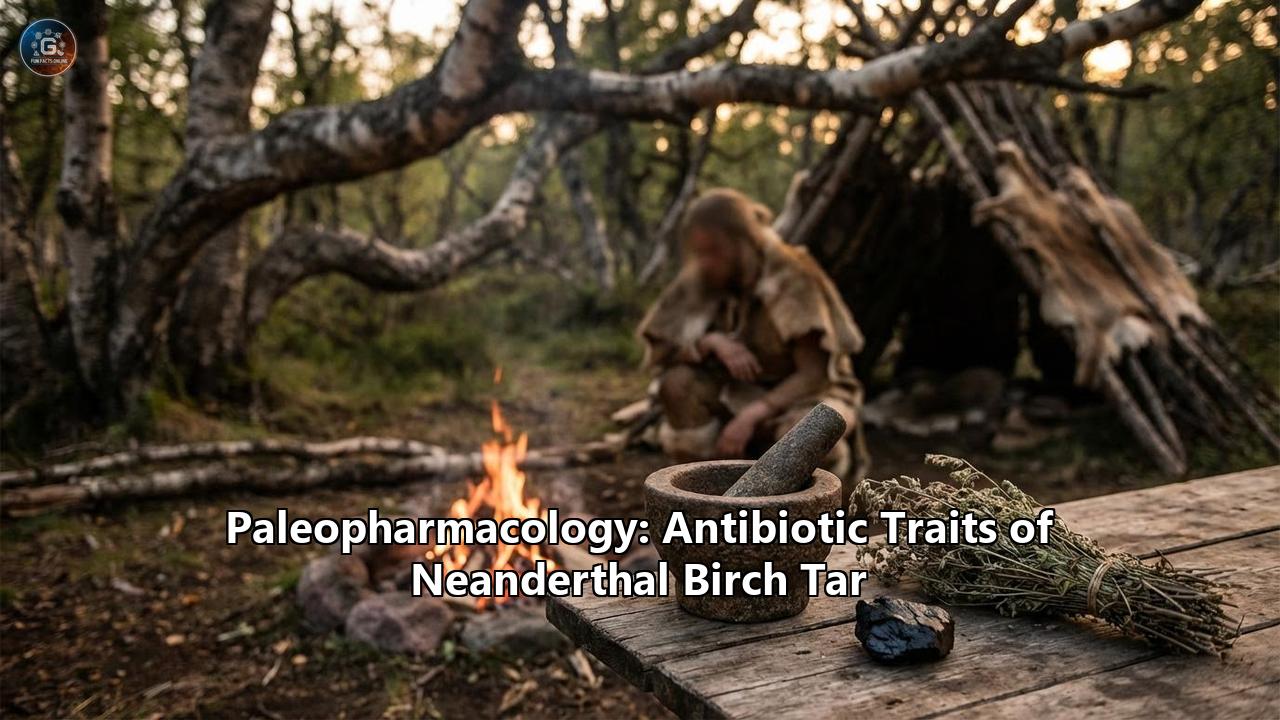
For over a century and a half, the popular imagination has done a profound disservice to the Neanderthals. Depicted as brutish, lumbering simpletons incapable of complex thought, our closest evolutionary cousins were long relegated to the footnotes of human history—an evolutionary dead-end that simply couldn’t compete with the intellectual superiority of Homo sapiens. But the past two decades of archaeological and genetic discoveries have systematically dismantled this caricature. We now know that Neanderthals created art, buried their dead, fashioned jewelry, and possessed a deep, empirical understanding of their environment.
Yet, perhaps the most astonishing revelation about Neanderthal intelligence lies not in their art or their weapons, but in their medicine.
Welcome to the cutting-edge science of paleopharmacology—the study of ancient medicinal practices. By blending experimental archaeology, microbiology, and ancient DNA analysis, researchers are uncovering a hidden history of Ice Age healthcare. At the center of this revolution is a humble, sticky, black substance that Neanderthals manufactured for over 150,000 years: birch tar. Long classified simply as a prehistoric superglue used to attach stone blades to wooden spears, recent groundbreaking studies have revealed that birch tar was also a potent, highly selective antibiotic.
The revelation that Neanderthals were actively synthesizing their own antimicrobial wound treatments forces us to radically rewrite the history of medicine. It suggests that the quest to heal, to soothe, and to stave off infection did not begin with modern humans, but is a legacy inherited from the deep Pleistocene past.
The Black Gold of the Pleistocene
To understand the medicinal genius of birch tar, we must first understand the staggering technological leap required to create it. Birch tar, or birch pitch, is not something you can simply scrape off a tree. It is a synthetic material—arguably the world’s first—produced through a process known as dry distillation.
If you set birch bark on fire, it simply burns to ash. To extract the viscous, hydrophobic tar trapped within the bark, one must heat the material to hundreds of degrees in a low-oxygen environment. For a Neanderthal living 100,000 years ago, achieving this required an intimate understanding of fire dynamics. Archaeologists have discovered that Neanderthals utilized various methods to achieve this, from digging specialized clay pit kilns to carefully arranging bark against smooth stones beneath controlled hearth fires.
The result of this laborious, sensory, and incredibly messy process was a thick, black pitch. For decades, archaeologists found lumps of this tar at Neanderthal sites dating back as far as 180,000 years, often bearing the impressions of stone tools or wooden hafts. It was the ultimate Ice Age adhesive, waterproof and resilient, allowing Neanderthals to craft sophisticated composite weapons necessary for hunting megafauna.
But indigenous knowledge systems and folk medicine have long pointed to a secondary use for this substance. Communities such as the Mi’kmaq of Eastern Canada and the Saami of Lapland have historically used birch tar extracts as a natural antiseptic and healing agent for skin conditions and open wounds. Could Neanderthals, living in the perilous, injury-prone environment of the Ice Age, have discovered these same healing properties?
The 2026 Breakthrough: Experimental Archaeology Meets Microbiology
In March 2026, a landmark study published in the journal PLOS One by an international team led by Dr. Tjaark Siemssen from the University of Cologne and the University of Oxford finally provided empirical proof. The researchers set out to test the hypothesis that Neanderthal birch tar was a viable medical treatment.
To ensure their results were historically accurate, the team didn't rely on modern, industrially refined chemicals. Instead, they ventured into the realm of experimental archaeology. They harvested bark from modern birch species known to have existed in Pleistocene Europe and recreated the tar using the exact prehistoric extraction methods available to Neanderthals, including clay pit distillation and stone condensation. As the researchers noted, the process was intensely tactile: "Every step of the production is a sensory experience in itself, and getting the tar off our hands after spending hours at the fire has been a challenge every time".
Once they had their authentic Ice Age tar, the team took it to the microbiology lab and exposed it to various strains of bacteria. The results were nothing short of spectacular.
The experimentally produced birch tar proved highly effective at inhibiting the growth of Staphylococcus aureus. This is a crucial finding. S. aureus is a Gram-positive bacterium and remains one of the leading causes of severe skin and wound infections today. In the Pleistocene, a minor cut or laceration sustained while foraging or hunting could easily become infected, leading to sepsis and death. The application of birch tar would have aggressively suppressed this bacteria, acting as a life-saving barrier.
Fascinatingly, the study revealed that the antibiotic nature of birch tar is highly selective. While it decimated the Gram-positive Staphylococcus, it had zero effect on Escherichia coli, a Gram-negative bacterium.
This selectivity comes down to cellular architecture. Gram-positive bacteria like S. aureus possess a thick outer layer of peptidoglycan. Birch tar is rich in phenolic derivatives—compounds like catechols and guaiacols—which are highly effective at penetrating and disrupting this peptidoglycan layer, effectively tearing the bacterial cell walls apart. Gram-negative bacteria, however, possess an additional outer lipid membrane that blocks these phenolic compounds from entering.
The tar's chemistry may not be a broad-spectrum cure-all, but it didn't need to be. For a Neanderthal suffering from a scrape, a burn, or a bleeding laceration, S. aureus was the exact enemy they needed to defeat. Whether the tar was produced via a complex underground kiln or simply by burning bark beneath a flat rock, its life-saving antibacterial properties remained constant.
The "Chewing Gum" of Antiquity: Dentistry and DNA
The application of birch tar wasn't limited to topical wound care. Across numerous archaeological sites in Europe, researchers have found small, curious lumps of birch pitch that bear the unmistakable impressions of human teeth. The Neanderthals—and later, early Homo sapiens—were chewing it.
Initially, anthropologists theorized that prehistoric people chewed the pitch simply to soften it before applying it as a glue to their tools, much like a modern handyman warming up putty. But the revelation of birch tar's biocidal and antimicrobial properties suggests a dual purpose. Chewing this resinous, slightly bitter substance would have released its phenolic compounds directly into the mouth.
This ancient "chewing gum" likely served as a prehistoric form of dental hygiene and oral medicine. By chewing birch tar, Neanderthals could have proactively managed periodontal disease, soothed inflamed gums, and treated oral infections. Furthermore, it may have been chewed to ease the pain of a toothache, acting as a mild, localized therapeutic.
These chewed lumps of tar have recently become a goldmine for another scientific field: paleogenetics. Because the tar is waterproof and chemically stable, it acts as a perfect time capsule. In wetland environments where bones rot away, ancient chewed pitch preserves the DNA of the person who chewed it, along with the microorganisms that lived in their mouth, and even the remnants of their last meal. By sequencing the DNA trapped in prehistoric pitch, scientists are confirming that ancient hominins suffered from familiar oral pathogens like Porphyromonas gingivalis (a cause of gum disease), providing even more context for why a natural antibacterial gum would have been highly prized.
The Pharmacy of El Sidrón Cave
The discovery of birch tar's antibiotic traits does not exist in a vacuum. It is part of a rapidly expanding mosaic of evidence proving that Neanderthals possessed a robust "materia medica"—a working knowledge of the therapeutic properties of the flora and fungi in their environment.
The most compelling corroborating evidence for Neanderthal paleopharmacology comes from El Sidrón cave in the Asturias region of northern Spain. Dating back nearly 50,000 years, this cave yielded the skeletal remains of at least 13 Neanderthals. By analyzing the dental calculus—calcified plaque—on the teeth of these individuals, researchers like bioarchaeologist Keith Dobney and paleoanthropologist Karen Hardy have unlocked the dietary and medicinal secrets of the Ice Age.
Dental calculus traps microfossils, food particles, and DNA, preserving them for millennia. When researchers analyzed the calculus of a young male Neanderthal from El Sidrón, they found a tragic but illuminating story. This individual was gravely ill. He suffered from a visible dental abscess that would have caused agonizing pain, and his calculus contained the DNA of Enterocytozoon bieneusi, a parasite that causes severe gastrointestinal distress and diarrhea.
But this sick Neanderthal was not simply waiting to die; he was self-medicating.
Unlike the other healthy individuals in his group, this male’s teeth contained traces of two highly specific medicinal materials. The first was the bark of the poplar tree (Populus). Poplar bark is rich in salicylic acid—the exact same active chemical compound found in modern aspirin, used to reduce inflammation and pain. The second discovery was even more astonishing: traces of Penicillium mold, the natural fungus from which the antibiotic penicillin is derived.
The presence of these compounds heavily implies that this ailing individual, or his caregivers, actively sought out natural painkillers and antibiotics to treat his infected jaw and stomach illness. Furthermore, earlier analyses of the El Sidrón populations revealed the ingestion of yarrow and chamomile. Both plants are famously bitter and offer virtually zero caloric or nutritional value. However, both have been used for thousands of years in traditional medicine as anti-inflammatories, astringents, and digestive aids. The Neanderthals, who possessed the gene for bitter taste perception, were not eating these plants for pleasure or sustenance; they were using them as drugs.
Reevaluating the Neanderthal Mind
The image of the Neanderthal that emerges from these discoveries is one of profound empathy and scientific curiosity. The traditional view of early hominins assumes they reacted to their environment purely on instinct. Paleopharmacology proves otherwise.
Identifying the medicinal properties of plants and synthesizing materials like birch tar requires a foundational pillar of the scientific method: empirical observation and cumulative culture. A Neanderthal had to observe that chewing a specific bitter weed alleviated a stomach ache, or that applying the sticky black runoff from a smoldering fire prevented a scrape from turning gangrenous. This knowledge then had to be codified, remembered, and passed down across generations, surviving the brutal climatic shifts of the Pleistocene.
Moreover, the use of medicine implies a social structure deeply rooted in caregiving. We know from skeletal remains that Neanderthals often survived devastating injuries—shattered femurs, crushed skulls, and amputated arms—injuries that would have rendered them entirely dependent on their community for months, if not years. The production of birch tar to treat wounds, and the gathering of poplar bark to soothe a companion's toothache, paints a picture of a compassionate society that actively fought to keep its vulnerable members alive.
Indigenous Wisdom and the Future of Medicine
The confirmation of birch tar's antibacterial properties in 2026 also serves as a powerful validation of indigenous knowledge systems. For centuries, the ethnobotanical traditions of Northern European, Siberian, and North American indigenous communities have been marginalized by Western medicine. Yet, science is now proving that the practices of the Mi’kmaq, the Saami, and others represent an unbroken continuum of medicinal knowledge stretching back hundreds of thousands of years.
This intersection of experimental archaeology and indigenous pharmacology is not just an academic exercise; it has urgent modern applications. We are currently facing a global antimicrobial resistance crisis, with modern, synthetic antibiotics rapidly losing their efficacy against mutating superbugs. By looking backward—by studying the paleopharmacology of our ancestors—scientists hope to rediscover forgotten organic compounds and natural remedies that could inspire the next generation of antibiotics. The birch forests that provided salvation to wounded Neanderthals during the Ice Age may still hold biochemical secrets that can aid modern medicine.
The Legacy of the First Healers
The story of Neanderthal birch tar is a testament to the resilience and ingenuity of the hominin spirit. It tells us that the desire to heal, to experiment, and to protect one another from the invisible threats of infection is not a modern luxury, but a fundamental trait of our broader human family.
The next time you apply a smear of antibacterial ointment to a scrape, or swallow an aspirin to numb an ache, consider the vast, ancient lineage of that simple act. You are partaking in a tradition of self-medication that predates the dawn of Homo sapiens. You are echoing the actions of an Ice Age healer, sitting beside a smoky hearth 100,000 years ago, carefully distilling the black gold of the birch tree to save a life.
Reference:
- https://www.anthropology.net/p/neanderthal-birch-tar-was-an-antibacterial
- https://www.sci.news/archaeology/neanderthal-birch-tar-14631.html
- https://scienmag.com/neanderthals-possibly-utilized-birch-tar-for-its-antibacterial-benefits/
- https://www.ecoticias.com/en/the-black-chewing-gum-that-appeared-in-neolithic-villages-concealed-something-unexpected-and-scientists-have-finally-managed-to-decipher-it/25858/
- https://www.iflscience.com/neanderthals-may-have-used-birch-tar-as-an-antibiotic-to-prevent-infections-82894
- https://thedebrief.org/new-evidence-shows-neanderthals-exploited-this-versatile-natural-material-for-multiple-functions/
- https://www.popsci.com/health/neanderthals-antibiotic-birch-tar-medicine/
- https://www.discovermagazine.com/ice-age-neanderthals-may-have-used-birch-tar-as-early-medicine-48837
- https://www.courthousenews.com/did-it-keep-its-flavor-stone-age-chewing-gum-yields-human-dna/
- https://www.theguardian.com/science/2017/mar/08/neanderthal-dental-tartar-reveals-plant-based-diet-and-drugs
- https://www.york.ac.uk/news-and-events/features/el-sidron/
- https://pubmed.ncbi.nlm.nih.gov/28273061/
- https://www.cambridge.org/core/journals/antiquity/article/neanderthals-trees-and-dental-calculus-new-evidence-from-el-sidron/FB9B1618F8214898ACBFCD3607659D03