
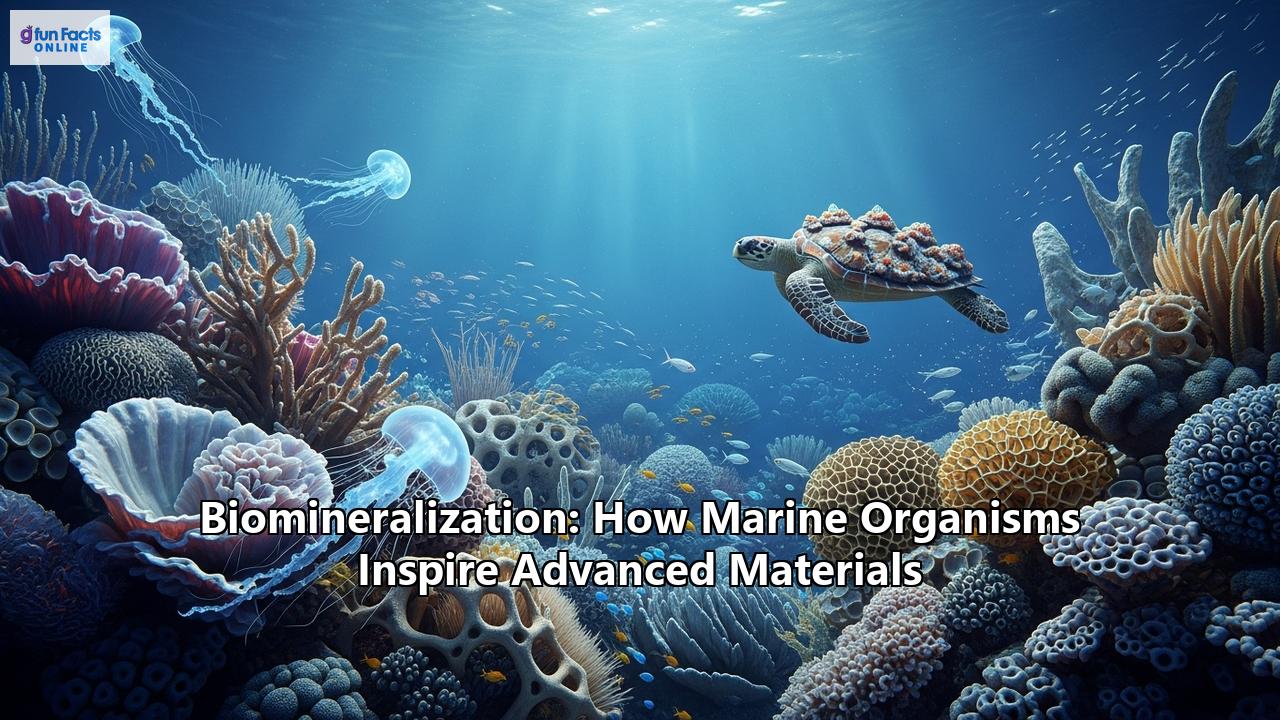
In the vast and mysterious depths of our planet's oceans, a silent and intricate process of construction has been taking place for millions of years. It is a testament to the ingenuity of nature, a masterclass in materials science that predates human civilization by eons. This process, known as biomineralization, is how marine organisms, from the smallest plankton to the largest corals, build their own exquisitely structured and remarkably resilient homes and armors. These natural marvels, forged in the gentle embrace of the sea, are now serving as a profound source of inspiration for the development of the next generation of advanced materials, promising to revolutionize fields as diverse as medicine, engineering, and environmental science.
Biomineralization is the intricate process by which living organisms produce minerals, often to harden or stiffen existing tissues. This biological phenomenon is ubiquitous, with representatives from all six taxonomic kingdoms capable of forming minerals. In the marine realm, this process is particularly spectacular, giving rise to the breathtaking architecture of coral reefs, the iridescent beauty of seashells, and the microscopic artistry of diatom frustules. These structures are not simply inert minerals; they are complex composites of inorganic materials like calcium carbonate and silica, interwoven with a matrix of organic molecules such as proteins and polysaccharides. This intimate blend of the organic and inorganic at the nanoscale is the secret behind their extraordinary properties, often far surpassing those of their purely synthetic counterparts.
The study of these natural materials and the processes that create them has given rise to the burgeoning field of biomimicry. Scientists and engineers are now looking to the ocean's master builders for blueprints to design and fabricate novel materials with unprecedented strength, toughness, and functionality. This exploration into the world of marine biomineralization is not just an academic pursuit; it holds the key to solving some of the most pressing technological and environmental challenges of our time.
The Architects of the Sea: A Gallery of Biomineralization Wonders
The ocean is teeming with a diverse array of organisms that have mastered the art of biomineralization. Each has evolved unique strategies to create hard structures tailored to their specific needs, from defense and support to predation and sensory perception. Understanding these diverse approaches provides a rich tapestry of inspiration for materials scientists.
Mollusks: The Masters of Nacre and Shell Formation
Mollusks, a vast and varied phylum that includes clams, oysters, snails, and the chambered nautilus, are renowned for their ability to construct shells of remarkable strength and beauty. These shells are primarily composed of calcium carbonate, the same mineral found in chalk and limestone, yet they exhibit a fracture toughness that can be up to 3,000 times greater than that of the pure mineral. This incredible enhancement in mechanical properties is a direct result of the intricate, hierarchical structure of the shell, meticulously controlled by the mollusk.
The most famous of these structures is nacre, also known as mother-of-pearl. Nacre is the iridescent inner layer of many mollusk shells and is composed of microscopic hexagonal platelets of aragonite, a crystalline form of calcium carbonate, arranged in a "brick-and-mortar" structure. These aragonite "bricks," which are about 10-20 micrometers wide and 0.5 micrometers thick, are glued together by a thin layer of organic "mortar" composed of proteins and polysaccharides like chitin.
The formation of this intricate structure is a highly controlled process. It begins with the mantle, a specialized tissue in the mollusk, which secretes a complex cocktail of organic molecules. These molecules, including acidic proteins and polysaccharides, form a template that guides the nucleation and growth of the aragonite crystals. Some proteins are believed to initiate crystal formation, while others inhibit growth in certain directions, ensuring the formation of the characteristic platelet shape. This organic matrix is not just a passive scaffold; it plays an active role in the mineralization process, dictating the crystal phase, orientation, and morphology. The result is a material that is not only strong but also incredibly tough, capable of deflecting cracks and absorbing energy from impacts.
Corals: The Engineers of Reef Ecosystems
Coral reefs, often called the "rainforests of the sea," are the largest structures built by living organisms on Earth, and they are a testament to the power of biomineralization. These massive underwater cities are constructed by tiny animals called coral polyps, which secrete skeletons of calcium carbonate, primarily in the form of aragonite.
The process of coral calcification begins with the coral polyp absorbing calcium and carbonate ions from the surrounding seawater. These ions are then transported to a specialized space between the polyp's cells and its existing skeleton, where they are precipitated as aragonite crystals. This process is not a simple chemical precipitation; it is a highly regulated biological process. The coral actively pumps hydrogen ions out of the calcifying space to increase the concentration of carbonate ions, facilitating the formation of the calcium carbonate skeleton.
The growth of a coral reef is a slow and incremental process, with each polyp contributing to the construction of the larger colony. The polyps secrete a cup-like structure called a calyx, and by periodically lifting themselves up and secreting a new basal plate, they add to the height of the skeleton. Over thousands of years, the accumulation of these individual skeletons creates the complex, three-dimensional structure of the reef. This intricate architecture provides a vital habitat for a quarter of all marine species, making corals keystone species in these incredibly diverse ecosystems.
Diatoms: The Microscopic Marvels of Silica
Diatoms are a major group of algae and are among the most common types of phytoplankton. These single-celled organisms are encased in a unique and exquisitely patterned cell wall called a frustule, which is made of hydrated silicon dioxide, or silica. The intricate and often beautiful patterns of these frustules have fascinated scientists for centuries, and they are a prime example of biomineralization at the nanoscale.
The formation of the diatom frustule is a remarkable feat of biological engineering. The process takes place within the diatom cell in a specialized compartment called the silica deposition vesicle (SDV). Diatoms actively transport silicic acid from the surrounding water into the SDV, where it is polymerized into amorphous silica. The shape and pattern of the frustule are determined by a complex interplay of organic molecules, including proteins called silaffins and long-chain polyamines. These molecules are thought to act as a template, guiding the deposition of silica into the intricate patterns characteristic of each diatom species. Some studies even suggest that in addition to the intracellular process within the SDV, some diatom species may also form intricate silica extensions outside the cytoplasm, expanding our understanding of the mechanisms they employ.
The resulting frustules are not just beautiful; they are also incredibly strong and lightweight, providing the diatom with protection from predators and the physical stresses of its environment. The porous nature of the frustule also plays a role in nutrient uptake and gas exchange.
Sea Urchins: The Masters of Self-Sharpening Structures
Sea urchins are well-known for their spiny exteriors, but they possess an even more remarkable biomineralized structure: a complex and highly efficient feeding apparatus known as Aristotle's lantern. This intricate structure is composed of five continuously growing and self-sharpening teeth that are capable of grinding through rock.
The sea urchin tooth is a masterpiece of composite material design. It is composed of calcite crystals arranged into plates and fibers, all held together by a super-hard nanocement of calcite with a high magnesium content. Crucially, strategically placed layers of weaker organic material are interspersed between the stronger calcite components. This clever arrangement is the key to the tooth's self-sharpening ability. As the tooth wears down, the weaker organic layers fracture in a controlled manner, exposing a new, sharp cutting edge. This process is akin to the way a perforated sheet of paper tears along a predetermined line.
The biomineralization of the sea urchin tooth is a continuous process, with new material constantly being added at the base of the tooth to replace what is lost at the tip. The process begins with the formation of amorphous calcium carbonate, which then slowly transforms into a crystalline structure. This gradual transformation allows the sea urchin to create the complex, curved shape of the tooth without the facets that are characteristic of conventionally grown crystals. The spines of the sea urchin are also remarkable examples of biomineralization, consisting of a single, large crystal of magnesium-containing calcite that regenerates after being damaged.
Biomimicry: Learning from the Ocean's Masters
The remarkable properties of these marine biominerals have not gone unnoticed by the scientific community. Researchers are now actively working to mimic these natural structures and processes to create a new generation of advanced materials with enhanced performance and novel functionalities.
Nacre-Inspired Materials: The Quest for Ultimate Toughness
The brick-and-mortar structure of nacre has become a classic model for the design of tough and lightweight composite materials. Scientists have developed a variety of techniques to replicate this structure, including layer-by-layer assembly, freeze-casting, and 3D printing. These methods involve arranging microscopic "bricks" of a hard ceramic material, such as alumina or silica, in a "mortar" of a softer, more flexible polymer.
One of the key challenges in creating nacre-like composites is replicating the complex interfaces between the organic and inorganic components, which play a crucial role in the material's toughness. Recent advances have focused on incorporating features like nanoscale asperities and mineral bridges, which are found in natural nacre and help to increase the energy required to fracture the material.
The potential applications for these nacre-inspired materials are vast. They are being explored for use in:
- Body Armor: The lightweight and impact-resistant properties of nacre-like composites make them ideal for developing next-generation body armor that is both more effective and more comfortable for soldiers and law enforcement officers.
- Biomedical Implants: The biocompatibility of the components used in some nacre-inspired materials, such as calcium phosphate and chitosan, makes them promising candidates for bone implants and tissue engineering scaffolds. These materials can provide the necessary mechanical support for bone regeneration while being gradually replaced by new tissue.
- Aerospace and Automotive Components: The high strength-to-weight ratio of these composites makes them attractive for use in aerospace and automotive applications, where reducing weight can lead to significant fuel savings.
- Advanced Coatings: Nacre-inspired coatings can provide enhanced scratch resistance and durability for a variety of surfaces, from electronics to industrial equipment.
Coral-Inspired Materials: Building a Better Future for Bone Repair and Reef Restoration
The porous and interconnected structure of coral skeletons has made them a source of inspiration for materials used in bone regeneration. For decades, natural coral has been used as a bone graft substitute due to its biocompatibility and its resemblance to the structure of human cancellous bone. However, the use of natural coral is limited by its availability and the need to protect coral reefs.
To address these limitations, researchers are now using advanced manufacturing techniques like 3D printing to create synthetic bone grafts that mimic the structure of coral. These 3D-printed scaffolds can be customized to the specific size and shape of a patient's bone defect, and they can be made from a variety of biocompatible and biodegradable materials. Recent breakthroughs have led to the development of coral-inspired bone graft substitutes that not only promote rapid bone growth but also dissolve naturally in the body as the new bone forms.
Beyond medicine, the principles of coral biomineralization are also being applied to the restoration of damaged coral reefs. Scientists are developing artificial reef structures that are designed to attract coral larvae and promote their settlement and growth. Some innovative approaches even use a small electrical current to accelerate the deposition of calcium carbonate on these structures, creating a more hospitable environment for new coral growth.
Diatom-Inspired Nanotechnology: The Power of Tiny Structures
The intricate silica frustules of diatoms are a testament to nature's ability to create complex nanostructures with remarkable precision. Scientists are now harnessing the power of these microscopic marvels for a wide range of applications in nanotechnology and biomedicine.
One of the most promising areas of research is the use of diatom frustules as drug delivery vehicles. The porous structure of the frustules can be loaded with drugs, which are then released in a controlled manner at a specific target site in the body. The surface of the frustules can also be chemically modified to attach targeting molecules that direct the drug to cancer cells or other diseased tissues.
The unique optical properties of diatom frustules are also being explored for applications in photonics. The regular, repeating patterns of the frustules can interact with light in interesting ways, and researchers are investigating their use in creating more efficient solar cells, optical sensors, and other photonic devices. The scalability of diatom cultivation also presents a significant advantage for manufacturing these nanostructured materials.
Sea Urchin-Inspired Innovations: From Self-Sharpening Tools to Advanced Robotics
The sea urchin's self-sharpening teeth have inspired the development of a new class of cutting and grinding tools that never get dull. By mimicking the composite structure of the sea urchin tooth, with its alternating layers of hard and soft materials, engineers are creating tools that can maintain their sharpness through controlled wear. This technology has the potential to revolutionize a wide range of industries, from mining and drilling to manufacturing and machining.
The Aristotle's lantern has also inspired the design of novel robotic grippers and samplers. Researchers have created a claw-like device that mimics the opening and closing motion of the sea urchin's teeth, allowing for precise and efficient collection of samples from a variety of surfaces. This technology is being explored for use in space exploration, where it could be used to collect soil and rock samples from other planets. The architecture of the sea urchin's skeleton has even inspired the design of lightweight and strong building structures.
The Environmental Imperative: Biomineralization in a Changing Ocean
The remarkable biomineralization processes of marine organisms are not immune to the impacts of human activity. The increasing concentration of carbon dioxide in the atmosphere is leading to a phenomenon known as ocean acidification, which poses a serious threat to calcifying organisms. As the ocean absorbs more carbon dioxide, its pH decreases, making it more acidic. This change in chemistry reduces the availability of carbonate ions, which are the essential building blocks for the calcium carbonate skeletons and shells of many marine organisms.
For corals, ocean acidification can lead to slower growth rates and weaker skeletons, making them more vulnerable to damage from storms and disease. In severe cases, it can even cause their skeletons to dissolve. The combination of ocean acidification and rising sea temperatures, which can cause coral bleaching, creates a synergistic threat that is pushing many coral reef ecosystems to the brink of collapse.
Mollusks are also highly vulnerable to ocean acidification. The shells of some species become thinner and more fragile in more acidic waters, making them more susceptible to predation. The early life stages of many marine organisms are particularly sensitive to these changes, which could have cascading effects on marine food webs.
The study of how marine organisms respond to these environmental stressors is not only crucial for conservation efforts but can also provide valuable insights for materials science. By understanding the genetic and molecular mechanisms that allow some organisms to be more resilient to ocean acidification, scientists may be able to develop new strategies for creating more durable and sustainable materials.
The Future of Bio-Inspired Materials: Challenges and Opportunities
The field of bio-inspired materials is still in its early stages, and there are many challenges that need to be overcome before the full potential of marine biomineralization can be realized. One of the biggest hurdles is replicating the complex, hierarchical structures of these natural materials in a scalable and cost-effective way. While techniques like 3D printing are showing promise, they are still a long way from matching the precision and efficiency of nature's own manufacturing processes.
Another major challenge is understanding the intricate interplay between the organic and inorganic components of these materials. The subtle chemical and physical interactions at the nanoscale are what give these materials their remarkable properties, and recreating these interactions in synthetic systems is a formidable task.
Despite these challenges, the future of bio-inspired materials is incredibly bright. As our understanding of marine biomineralization continues to grow, so too will our ability to create new materials with unprecedented performance. The ongoing exploration of the deep sea is likely to reveal even more fascinating examples of biomineralization, providing a rich source of inspiration for future innovations. From self-healing materials inspired by the regenerative abilities of marine organisms to new adhesives based on the powerful bonding agents of mussels, the possibilities are as vast as the ocean itself.
In the end, the study of biomineralization is more than just a quest for new materials; it is a journey of discovery that is revealing the profound and often-overlooked ingenuity of the natural world. By learning from the ocean's master builders, we can not only create a new generation of advanced materials but also gain a deeper appreciation for the intricate and beautiful web of life that sustains our planet. The silent architects of the sea have much to teach us, and if we are willing to listen, their lessons could help us to build a more sustainable and technologically advanced future.
Reference:
- https://people.bu.edu/xinz/Advanced%20Materials%20and%20Manufacturing%20-%20Diatom-Enabled%20Scalable%20Nanomanufacturing.htm
- https://scientificliterature.org/Nanomedicine/Nanomedicine-18-117.pdf
- https://core.ac.uk/download/pdf/297282634.pdf
- https://www.researchgate.net/publication/323857735_Bioinspired_self-healing_materials_Lessons_from_nature
- https://www.researchgate.net/publication/224847325_A_review_of_experimental_techniques_to_produce_a_nacre-like_structure
- http://echinoblog.blogspot.com/2016/06/sea-urchin-biomimicry-echinoids.html
- https://pmc.ncbi.nlm.nih.gov/articles/PMC10222510/
- https://pmc.ncbi.nlm.nih.gov/articles/PMC10246149/
- https://www.3dnatives.com/en/researchers-develop-revolutionary-3d-printed-coral-inspired-bone-graft-091220245/
- https://pubs.acs.org/doi/full/10.1021/acsbiomaterials.3c00258
- https://www.researchgate.net/publication/248840779_The_challenge_of_biominerals_to_simulations
- https://pmc.ncbi.nlm.nih.gov/articles/PMC6321530/
- https://pmc.ncbi.nlm.nih.gov/articles/PMC5870156/
- http://autonomic.beckman.illinois.edu/files/nrs074.pdf
- https://www.frontiersin.org/journals/marine-science/articles/10.3389/fmars.2021.584445/full
- https://www.frontiersin.org/journals/microbiology/articles/10.3389/fmicb.2017.01239/epub
- https://www.voxelmatters.com/scientists-3d-print-coral-inspired-bone-graft-substitute/
- https://www.researchgate.net/figure/Large-scale-fabrication-of-nacre-like-composites-a-Schematic-illustration-of-the_fig1_367285335
- https://www.biorxiv.org/content/10.1101/2024.06.28.601120v1
- https://repository.kaust.edu.sa/items/3e59affd-6921-40eb-9bc6-a82cc10adb63
- https://www.youtube.com/watch?v=4Xjm23u84LY
- https://pmc.ncbi.nlm.nih.gov/articles/PMC6477613/
- https://www.mdpi.com/2075-163X/9/2/68
- https://pmc.ncbi.nlm.nih.gov/articles/PMC3652400/
- https://pubmed.ncbi.nlm.nih.gov/27166636/
- https://dialogue.earth/en/ocean/marine-biomimetics-could-be-blue-economys-next-big-hit/
- https://www.mdpi.com/1424-8220/21/11/3778
- https://pmc.ncbi.nlm.nih.gov/articles/PMC4908604/
- https://pmc.ncbi.nlm.nih.gov/articles/PMC6367174/
- https://www.popsci.com/science/3d-printed-coral-inspired-material-can-heal-bones/
- https://www.pnas.org/doi/10.1073/pnas.2118868119
- https://publications.lib.chalmers.se/records/fulltext/140256.pdf
- https://www.ewadirect.com/proceedings/ace/article/view/12062
- https://pubmed.ncbi.nlm.nih.gov/9893259/
- https://c-materiainnovationual.weebly.com/blog/biomimicry-and-architecture-pavilion-inspired-by-sea-urchins
- https://pmc.ncbi.nlm.nih.gov/articles/PMC8102716/
- https://www.youtube.com/watch?v=xPQpKEBedg0
- https://en.wikipedia.org/wiki/Marine_biogenic_calcification
- https://pmc.ncbi.nlm.nih.gov/articles/PMC7272335/
- https://www.researchgate.net/publication/327543450_Marine_Biominerals_with_a_Biotechnological_Future
- https://pmc.ncbi.nlm.nih.gov/articles/PMC9802412/
- https://www.biomimeting.com/visionary-designs-inspired-by-marine-biology/
- https://www.scientific.net/KEM.377.151