
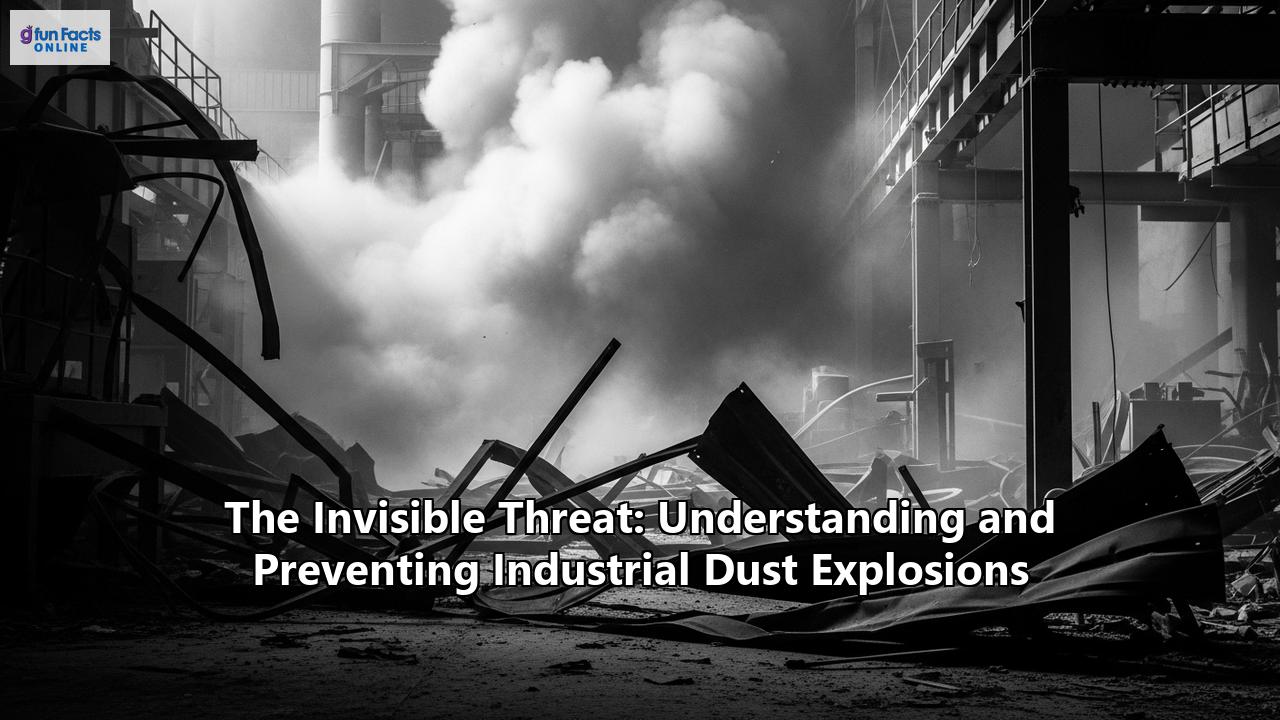
An ever-present, yet often unseen, danger lurks in a vast array of industrial settings. It is a threat born from the seemingly innocuous byproducts of production – fine, airborne particles that can, under the right conditions, unleash a catastrophic force. This invisible threat is combustible dust, and the explosions it can fuel are among the most devastating industrial accidents possible. This article delves into the complex world of industrial dust explosions, exploring their causes, the industries most at risk, and the comprehensive strategies available to prevent and mitigate this significant hazard.
The Anatomy of a Dust Explosion: The Pentagon of Fire
For a dust explosion to occur, five specific elements must come together in what is known as the "Dust Explosion Pentagon." The absence of just one of these components is enough to prevent a disaster.
- Combustible Dust (The Fuel): Not all dust is explosive, but a surprisingly wide range of materials can become combustible when finely divided. The smaller the particle size, the greater the surface area available for rapid combustion, increasing the risk and potential severity of an explosion.
- Oxygen (The Oxidant): The oxygen present in the ambient air is typically sufficient to support a dust explosion. Environments with higher concentrations of oxygen or other oxidizing agents can be even more hazardous.
- Dispersion (The Cloud): The combustible dust must be suspended in the air as a cloud with a concentration that falls within the explosive range. If the concentration is too low, there won't be enough fuel for an explosion; if it's too high, there won't be enough oxygen.
- Ignition Source (The Heat): An explosion requires a source of ignition to provide the initial energy. This can be an open flame, a spark from electrical equipment, static electricity, friction, or a hot surface. It is a common misconception that a large, obvious flame is necessary; in reality, more than half of dust explosions in some analyses have been from non-flame sources.
- Confinement (The Pressure Cooker): When a dust cloud ignites in an enclosed or semi-enclosed space, such as a room, silo, or piece of equipment, the pressure from the rapidly expanding gases can build up to devastating levels, leading to a powerful explosion.
When these five elements align, the result can be a deflagration, which is a rapid combustion that propagates at subsonic speeds. This initial explosion, known as a primary dust explosion, can be destructive in its own right. However, the true catastrophe often lies in the secondary explosion. The shockwave from the primary blast can dislodge accumulated dust from surfaces throughout a facility, creating a much larger and more widespread dust cloud. When this secondary cloud ignites, the resulting explosion is often far more powerful and destructive than the first, leading to widespread damage, injuries, and fatalities.
A Spectrum of Danger: Combustible Materials Across Industries
The list of materials that can form combustible dust is extensive and encompasses a wide range of industries. Many materials that are not flammable in their larger form can become explosive when ground into a fine powder. The U.S. Occupational Safety and Health Administration (OSHA) provides a comprehensive list of such materials.
Industries at a particularly high risk for dust explosions include:
- Agriculture and Food Processing: This sector is frequently affected by dust explosions due to the handling of materials like grain, flour, sugar, starch, powdered milk, spices, and cocoa powder. The very processes of milling, conveying, and packaging these products can generate significant amounts of combustible dust.
- Wood and Woodworking: Sawdust and fine wood particles from cutting, sanding, and other woodworking processes are highly combustible and pose a significant explosion hazard in sawmills, furniture factories, and other related facilities.
- Metalworking: Dust from metals such as aluminum, magnesium, and titanium is not only combustible but can also lead to particularly severe explosions due to their high heat of combustion. Processes like grinding, polishing, and finishing create these hazardous metal dusts.
- Pharmaceuticals: The production of pharmaceuticals often involves the handling of fine powders, many of which are combustible. Processes like granulation, blending, and tablet pressing can create dust explosion hazards.
- Plastics and Rubber: The manufacturing of plastics and rubber products can generate fine dust particles that are combustible. Processes such as grinding, pelletizing, and conveying can create explosive atmospheres.
- Recycling: Recycling facilities handle a diverse mix of materials, including paper, plastics, and metals, all of which can generate combustible dust during shredding, sorting, and processing.
- Additive Manufacturing (3D Printing): The growing field of additive manufacturing, particularly with powdered metals and plastics, presents a new frontier for dust explosion hazards. The fine powders used in these processes are often highly combustible.
Lessons from Disaster: Case Studies in Dust Explosions
The devastating potential of dust explosions is not merely theoretical. History is tragically punctuated with incidents that serve as stark reminders of this invisible threat.
The Imperial Sugar Refinery Explosion (2008)On February 7, 2008, a massive explosion tore through the Imperial Sugar refinery in Port Wentworth, Georgia, resulting in 14 deaths and 38 injuries. The U.S. Chemical Safety and Hazard Investigation Board (CSB) determined that the explosion was fueled by massive accumulations of combustible sugar dust throughout the facility's packaging building. A key factor in the disaster was a steel conveyor belt that transported sugar, which was enclosed in a tunnel. This enclosure allowed an explosive concentration of sugar dust to accumulate. An overheated bearing in the conveyor system is the most likely ignition source for the primary explosion. The initial blast then triggered a series of catastrophic secondary explosions that propagated throughout the refinery, fueled by the extensive sugar dust that had settled on floors, equipment, and other surfaces due to poor housekeeping practices. The CSB's investigation highlighted the company's failure to address known dust hazards and the inadequacy of its emergency plans.
The West Pharmaceutical Services Explosion (2003)On January 29, 2003, an explosion and fire destroyed the West Pharmaceutical Services plant in Kinston, North Carolina, killing six workers and injuring 38 others. The fuel for this explosion was a fine plastic powder used in the manufacturing of rubber products. The CSB found that the plastic dust had accumulated in the hidden space above a suspended ceiling over a manufacturing area. While the exact ignition source could not be definitively determined, the investigation identified several possibilities, including an overheated batch of rubber or an electrical fault. This incident underscored the danger of hidden dust accumulations and the critical need for thorough cleaning and maintenance, even in areas that are not readily visible. The company was found to have an inadequate understanding of the dust hazard and lacked adherence to fire safety standards.
The DeBruce Grain Elevator Explosion (1998)On June 8, 1998, a series of powerful grain dust explosions occurred at the DeBruce Grain elevator near Wichita, Kansas, which was the largest grain elevator in the world at the time. The incident resulted in the deaths of seven workers and injured ten others. The initial explosion was believed to have been caused by an overheated roller bearing on a conveyor belt, which ignited the accumulated grain dust. This primary explosion then propagated through the facility, leading to a series of devastating secondary explosions. The investigation revealed that the facility's dust collection system had been out of service for nearly a year, and there was no policy for manual dust cleaning, leading to significant and dangerous accumulations of grain dust. This tragedy highlighted the critical importance of proper maintenance and housekeeping in grain handling facilities.
These cases, and countless others like them, share common themes: a failure to recognize and assess the hazard, inadequate housekeeping, and poorly maintained equipment. They serve as a solemn testament to the fact that dust explosions are preventable, and that vigilance is paramount.
A Fortress of Safety: Prevention and Mitigation Strategies
Preventing and mitigating the risk of industrial dust explosions requires a multi-layered approach that addresses all five elements of the Dust Explosion Pentagon. This involves a combination of robust housekeeping practices, sophisticated engineering controls, and a strong safety culture.
Housekeeping: The First Line of Defense
One of the most effective and fundamental strategies for preventing dust explosions is rigorous and regular housekeeping. The principle is simple: if combustible dust is not allowed to accumulate, it cannot fuel a secondary explosion. Key housekeeping practices include:
- Regular and Thorough Cleaning: Establish a routine cleaning schedule for all areas of the facility, including floors, walls, and overhead surfaces like rafters, light fixtures, and the tops of equipment where dust can settle.
- Proper Cleaning Methods: The method of cleaning is as important as the frequency. Using compressed air or brooms for cleaning should be avoided as this can suspend dust in the air, creating an explosive cloud. The preferred method is to use industrial vacuum cleaners that are specifically designed and approved for collecting combustible dust. These vacuums are grounded and bonded to prevent static electricity buildup. Wet cleaning methods can also be effective, but care must be taken to ensure that electrical equipment is de-energized and that the water does not react with the dust, as is the case with some metal dusts.
- Access to Hidden Areas: Ensure that all areas of the facility, including concealed spaces, are accessible for inspection and cleaning.
- Dust Accumulation Limits: The National Fire Protection Association (NFPA) recommends that cleaning be initiated when dust accumulation reaches a thickness of 1/32 of an inch (about the thickness of a dime) over an area of just 5% of a room's surface.
Engineering Controls: Designing Safety In
Engineering controls are designed to prevent or mitigate dust explosions by controlling the elements of the Dust Explosion Pentagon at their source. These controls are a critical component of a comprehensive safety strategy.
- Dust Collection Systems: Local exhaust ventilation systems are essential for capturing dust at the point of generation, preventing it from becoming airborne and accumulating in the work environment. These systems typically consist of hoods, ductwork, and a dust collector, such as a baghouse or cyclone separator. The collected dust must be stored and disposed of safely.
- Ignition Source Control: A critical aspect of prevention is the strict control of potential ignition sources. This includes:
Using electrical equipment and wiring that is approved for hazardous locations.
Controlling static electricity through bonding and grounding of equipment.
Prohibiting smoking and open flames in hazardous areas.
Implementing a hot work permit system for activities like welding and cutting.
Regularly maintaining equipment to prevent overheating of bearings and other mechanical parts.
- Explosion Venting: Explosion venting is a passive protection measure that provides a planned pathway for the pressure and flame front of an explosion to escape to a safe area, typically outdoors. This prevents the pressure from building up to destructive levels within the confined space. Explosion vents are designed to rupture at a predetermined pressure.
- Explosion Suppression Systems: These are active systems that detect the onset of an explosion and rapidly discharge a chemical suppressant to extinguish the flame before it can fully develop. Suppression systems are often used when venting is not feasible, such as for equipment located indoors.
- Explosion Isolation Systems: Isolation systems are designed to prevent an explosion from propagating from one piece of equipment to another through interconnected ductwork or pipes. This is crucial for preventing a primary explosion from triggering a larger secondary event. Isolation can be achieved through:
Active Mechanical Isolation: This involves high-speed valves that are triggered by a detector to quickly close and form a mechanical barrier.
Passive Mechanical Isolation: These are devices like flap valves that are activated by the pressure of the explosion itself to close and block the propagation.
Chemical Isolation: This active system rapidly discharges a chemical suppressant into the ductwork to extinguish the flame front as it travels.
Dust Hazard Analysis (DHA): The Blueprint for Safety
A cornerstone of modern dust explosion prevention is the Dust Hazard Analysis (DHA). Mandated by NFPA 652, a DHA is a systematic review of a facility's processes and operations to identify and evaluate potential fire, flash fire, and explosion hazards associated with combustible dust. A DHA should be conducted by a qualified person and should address:
- Material Characterization: Determining if the dusts present are combustible and understanding their explosive properties.
- Hazard Identification: Identifying all locations where combustible dust is present and where explosive atmospheres could form.
- Ignition Source Evaluation: Identifying all potential ignition sources in the facility.
- Evaluation of Existing Controls: Assessing the adequacy of current prevention and protection measures.
- Recommendations for Improvement: Developing a prioritized action plan to mitigate the identified hazards.
The DHA provides the foundation for a comprehensive dust safety program and is a critical tool for ensuring compliance with relevant standards.
The Regulatory Landscape: OSHA and NFPA Standards
In the United States, the primary authorities governing combustible dust safety are OSHA and the NFPA.
- Occupational Safety and Health Administration (OSHA): While OSHA does not have a single, comprehensive standard for combustible dust, it addresses the hazard through its General Duty Clause, which requires employers to provide a workplace free from recognized hazards. OSHA also has a Combustible Dust National Emphasis Program (NEP), which outlines policies and procedures for inspecting workplaces that generate or handle combustible dust. The NEP targets industries with a history of dust-related incidents and provides guidance for compliance officers. In 2023, OSHA revised the NEP to include additional industries with known combustible dust hazards.
- National Fire Protection Association (NFPA): The NFPA publishes a suite of standards that provide detailed guidance on the prevention of dust explosions. These standards are widely recognized and are often referenced by OSHA and other regulatory bodies. Key NFPA standards include:
NFPA 652: Standard on the Fundamentals of Combustible Dust: This is the foundational standard that provides general requirements for managing combustible dust hazards and requires the completion of a DHA.
NFPA 654: Standard for the Prevention of Fire and Dust Explosions from the Manufacturing, Processing, and Handling of Combustible Particulate Solids: This standard provides guidance for a wide range of industries that are not covered by a more specific commodity standard.
NFPA 61: Standard for the Prevention of Fires and Dust Explosions in Agricultural and Food Processing Facilities: This standard provides specific requirements for the agriculture and food processing industries.
NFPA 484: Standard for Combustible Metals: This standard addresses the unique and severe hazards associated with combustible metal dusts.
NFPA 664: Standard for the Prevention of Fires and Explosions in Wood Processing and Woodworking Facilities: This standard provides specific guidance for the woodworking industry.
NFPA 68: Standard on Explosion Protection by Deflagration Venting: This standard provides detailed requirements for the design and installation of explosion venting systems.
* NFPA 69: Standard on Explosion Prevention Systems: This standard covers other explosion protection methods, including suppression and isolation.
Compliance with these standards is essential for creating a safe work environment and for protecting against the devastating consequences of a dust explosion.
The Future of Dust Explosion Prevention: Emerging Technologies
The field of dust explosion safety is continually evolving, with new technologies emerging to provide more effective prevention and mitigation.
- Advanced Sensor Technology: Researchers are developing new types of sensors that can provide real-time monitoring of dust concentration levels, allowing for earlier warnings and more proactive control measures. For example, image- and video-based applications are being developed to detect and quantify suspended dust concentrations.
- Predictive Maintenance and IoT: The Internet of Things (IoT) is enabling predictive maintenance of equipment by continuously monitoring performance and identifying potential issues, such as overheating bearings, before they can become ignition sources.
- Artificial Intelligence and Risk Assessment: AI-powered software is being developed to assist in conducting more sophisticated and accurate Dust Hazard Analyses, helping companies to better understand and prioritize their risks.
- Innovative Suppression and Isolation Systems: Research continues into new and more effective explosion suppression agents and faster-acting isolation systems to provide even greater levels of protection.
Conclusion: A Call to Vigilance
The threat of industrial dust explosions is real, and the consequences can be catastrophic. However, these events are not inevitable. Through a comprehensive understanding of the science behind dust explosions, a commitment to robust prevention and mitigation strategies, and a culture of safety that permeates every level of an organization, this invisible threat can be effectively managed. The lessons learned from past tragedies, combined with the guidance of organizations like OSHA and the NFPA and the promise of new technologies, provide a clear roadmap for creating safer workplaces. The ultimate responsibility lies with every employer and employee to remain vigilant, to prioritize safety, and to ensure that the invisible threat of combustible dust is never underestimated.
Reference:
- https://stonehousesafety.com/combustible-dust-10-nfpa-codes-and-standards/
- https://www.vortexglobal.com/resources/minimising-the-risk-of-dust-related-explosions
- https://stonehousesafety.com/nfpa-652/
- https://risklogic.com/explosion-protection-systems-for-combustible-dusts/
- https://www.fike.com/explosion-protection/solutions/isolation/
- https://www.bsbipd.com/en/OSHA.html
- https://www.environmentalworks.com/how-to-safely-collect-combustible-dust/
- https://www.safetytalks.ca/preventing-explosions-combustible-dust-housekeeping-tips/
- https://dustsafetyscience.com/explosion-vented-equipment-system/
- https://www.robovent.com/learn/blog/10-ways-to-reduce-the-risk-of-combustible-explosions/
- https://blog.fumextractors.com/does-nfpa-484-apply-to-you
- https://biomassmagazine.com/articles/changes-to-dust-fire-and-explosion-standards-17063
- https://www.aiha.org/news/230202-osha-revises-combustible-dust-national-emphasis-program
- https://hsseworld.com/dust-control-in-manufacturing-5-best-practices/
- https://www.workplacepub.com/workplace-safety/oshas-combustible-dust-emphasis-program/
- https://www.glacier-technology.com/explosion-fire-mitigation/combustible-dust-systems/
- https://sigma-hse.com/news-insights/prevent-mitigate-combustible-dust/
- https://info.hughesenv.com/nfpa-654-understanding-how-to-avoid-a-dust-explosion
- https://www.ieptechnologies.com/whats-the-solution/isolation-devices
- https://www.keramida.com/blog/how-to-prevent-combustible-dust-explosions-and-fire
- https://www.controleng.com/preventing-dust-explosions/
- https://manuals.interlinksupply.com/Surface%20Prep%20Manuals/RUWAC%20SPEC%20SHEETS/Combustible%20Dust%20Housekeeping%20Guide.pdf
- https://primeprocesssafety.com/osha-national-emphasis-program-nep/
- https://dustsafetyscience.com/how-to-prevent-a-combustible-dust-explosion/
- https://dustsafetyscience.com/biomass-dust-explosion/
- https://www.firesafetycouncil.com/bookstraining/codes-amp-standards/n-654-17-prevention-of-fire-and-dust-explosions-from-the-manufacturin
- https://atex.center/understanding-and-preventing-dust-explosions-causes-risks-and-safety-measures/
- https://www.rsbp.cz/pl/informacje-prasowe/explosion-isolation
- https://astcanada.ca/wp-content/uploads/resources/Combustible-Dust-NFPA652-Guide-to-Vacuum-Cleaners-AST.pdf
- https://www.nfpa.org/product/nfpa-484-standard/p0484code/nfpa-484-standard-for-combustible-metals-2019/48419
- https://www.purdue.edu/newsroom/archive/releases/2020/Q3/real-time-imaging-can-help-prevent-deadly-dust-explosions.html
- https://www.ieptechnologies.com/