
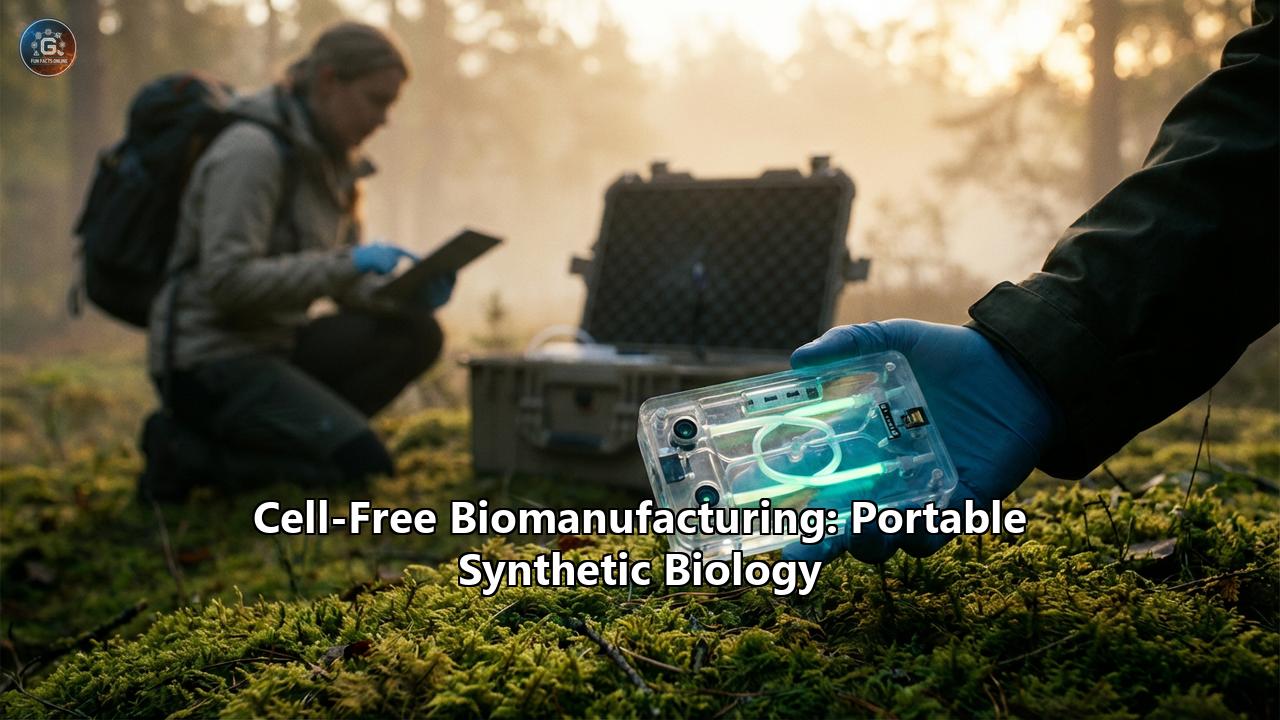
Imagine a scenario where a devastating viral outbreak occurs in an isolated, resource-constrained village. The roads are impassable, and the nearest hospital is days away. Traditional medicine dictates that vaccines and diagnostic tests must be shipped in refrigerated containers—a fragile "cold chain" that is easily broken. But what if, instead of waiting for a temperature-controlled shipment, healthcare workers could simply open a briefcase, pull out a piece of paper embedded with freeze-dried biochemical machinery, add a drop of water, and instantly manufacture the required diagnostic tests or therapeutic proteins on the spot?
This is no longer the realm of science fiction. It is the reality being forged by cell-free biomanufacturing, a paradigm-shifting branch of synthetic biology that is liberating the power of cellular machinery from the confines of the living cell. By extracting the essential engines of life—the enzymes, ribosomes, and nucleic acids—and stabilizing them for portable use, scientists have created a new era of decentralized, on-demand biology. From paper-based sensors that can detect the Zika virus to wearable biosensors integrated into military uniforms, and from educational kits in high school classrooms to rapid vaccine production on the front lines, portable synthetic biology is fundamentally rewriting the rules of biomanufacturing.
The Evolution of Bio-Factories: Breaking the Biological Chains
To understand the magnitude of cell-free biomanufacturing, we must first look at how biological products have traditionally been made. For decades, the biotechnology industry has relied on living cells—such as Escherichia coli, yeast, or mammalian Chinese Hamster Ovary (CHO) cells—as microscopic factories. Scientists genetically engineer these cells, insert the DNA of a desired product (like insulin or a monoclonal antibody), and cultivate them in massive, stainless-steel bioreactors.
While this whole-cell paradigm has given us modern medicine, it is inherently limited. A living cell is fiercely dedicated to its own survival. It expends the vast majority of its energy and resources on growing, dividing, and maintaining its complex internal environment. When we force a cell to produce an unnatural therapeutic protein, we are essentially fighting against billions of years of evolutionary programming. Furthermore, if the desired chemical or protein is toxic to the cell, the microscopic factory will die before it can produce a meaningful yield. Additionally, extracting the final product requires breaking the cell open and purifying the target molecule from a chaotic soup of native cellular debris, a costly and time-consuming downstream process.
Cell-free systems bypass these biological bottlenecks completely. The foundational principle is elegantly simple: biological processes, such as transcription (turning DNA into RNA) and translation (turning RNA into protein), do not actually require a living, breathing cell to function. Instead, scientists can culture a batch of cells, gently break them open (lyse them), and extract the "guts". This crude cell extract contains all the necessary molecular machines—ribosomes, RNA polymerases, amino acids, and energy molecules—but lacks the living cell membrane and the biological imperative to replicate.
This creates an "open" biochemical environment. In a cell-free protein synthesis (CFPS) reaction, researchers have absolute control. Because the system is no longer alive, it cannot be killed by toxic products. Because there are no cellular membranes to cross, scientists can directly add linear DNA, adjust metabolic pathways on the fly, or introduce non-canonical amino acids to create entirely new classes of synthetic materials.
The concept itself is not entirely new; in fact, cell-free extracts of E. coli were famously used in the 1960s to decipher the genetic code. However, for decades, cell-free systems were viewed primarily as fragile, low-yielding research tools. It is only within the last decade, fueled by breakthroughs in synthetic biology, energy regeneration, and materials science, that cell-free systems have evolved into a robust, scalable platform for practical biomanufacturing.
The Freeze-Dried Revolution: Escaping the Cold Chain
If extracting the cellular machinery was the first breakthrough, the second—and arguably the most critical for portable synthetic biology—was stabilization. Cellular machinery is notoriously delicate. Proteins and RNAs break down rapidly at room temperature, meaning that early cell-free extracts had to be kept strictly frozen at -70°C. This tethered the technology to the laboratory and the "cold chain," drastically limiting its utility in the field.
The game-changer was lyophilization, commonly known as freeze-drying. Inspired by the way the food industry stabilizes biological materials like cow's milk into powdered milk, synthetic biologists discovered that cell-free extracts could be freeze-dried into shelf-stable powders or embedded onto porous matrices like paper.
Once freeze-dried, the biochemical reactions are effectively frozen in time. They can be stored in a drawer, shipped in a standard envelope, or carried in a backpack across the globe without refrigeration. The magic happens upon rehydration. By simply adding water—or a liquid sample containing a target pathogen—the molecular machinery instantly reawakens, reading the provided DNA instructions and synthesizing the programmed proteins on the spot.
However, freeze-drying is a harsh physical process that can damage delicate enzymes, and storing these materials in extreme heat can still cause degradation. To unlock true global portability, researchers have been hunting for the perfect lyoprotectants—chemical additives that shield the molecular machinery during desiccation.
Some researchers have turned to nature for inspiration, utilizing trehalose, a specialized sugar found in desiccation-hardy organisms like tardigrades (water bears), which allows reactions to be dried even under ambient conditions without expensive freeze-drying equipment. Others have identified low-cost energy substrates like maltodextrin, which acts simultaneously as a fuel source and a protectant, vastly increasing the thermostability of the reactions while driving down the cost to a fraction of a dollar per dose. Recently, an interdisciplinary team from California Polytechnic State University leveraged machine learning algorithms to test complex combinations of preservatives, ultimately discovering formulations that maintain the full protein-producing capacity of cellular machinery for weeks at room temperature, unlocking a new tier of shelf-life for field deployment.
On-Demand Therapeutics: The Briefcase Pharmacy
The ability to synthesize proteins without a lab has staggering implications for global health and crisis response. Currently, the centralized model of pharmaceutical manufacturing is highly vulnerable. Global pandemics, natural disasters, and geopolitical conflicts can easily sever supply chains, leaving populations without access to life-saving medicines. Cell-free biomanufacturing offers a resilient, decentralized alternative: moving the manufacturing floor from a distant mega-factory directly to the front lines.
Pioneering work by synthetic biologists, including James Collins and his colleagues, has vividly painted a future where therapeutics are synthesized on demand. In proof-of-concept studies, researchers have successfully produced small proteins for use as diphtheria vaccines and antimicrobial peptides to fight off antibiotic-resistant bacterial infections, all from shelf-stable, freeze-dried pellets. They have even programmed these pellets to generate the multi-step metabolic enzymes required to synthesize violacein, a complex drug known for its antibiotic and anticancer properties.
Vaccine distribution, particularly in developing nations, is famously hindered by the need for continuous refrigeration. Cell-free technologies are directly addressing this bottleneck. For example, researchers have developed an in vitro conjugate vaccine expression (iVAX) platform. Conjugate vaccines are highly effective but notoriously complex and expensive to manufacture in living cells. By moving this process to a portable, freeze-dried cell-free system, it becomes possible to synthesize precise, safe, and effective vaccines at the point of care, bypassing global supply chain bottlenecks entirely.
The concept of "just-in-time" biomanufacturing extends far beyond Earth. Space agencies are heavily investing in cell-free synthetic biology. On a multi-year mission to Mars, astronauts cannot pack every conceivable medicine they might need, nor can they rely on shipments from Earth. The degradation of pharmaceuticals due to cosmic radiation is a severe risk. A lightweight repository of freeze-dried DNA and cell-free extracts would act as an astropharmacy, allowing astronauts to synthesize exactly the therapeutic they need, precisely when they need it, using a few drops of water.
Point-of-Care Diagnostics: From Paper to Smart Wearables
While therapeutic production is the ultimate goal, portable cell-free technology is already making massive waves in the field of diagnostics. The traditional diagnostic workflow requires drawing blood or collecting a swab, transporting the sample to a centralized laboratory, and running complex polymerase chain reaction (PCR) tests—a process that can take days. Cell-free biosensors collapse this entire workflow onto a piece of paper or a microfluidic chip.
A cell-free biosensor combines the transcription/translation machinery with synthetic genetic circuits designed to "detect and report." For instance, a genetic circuit can be engineered so that it only produces a brightly colored protein or a fluorescent signal if it encounters the specific RNA sequence of a virus. These circuits, along with the cell extract, are freeze-dried onto a simple paper disc. When a patient's saliva or blood is dropped onto the paper, the system rehydrates. If the viral RNA is present, the genetic circuit triggers, and the paper changes color—providing a highly accurate, visual diagnosis in under an hour.
This exact approach was rapidly deployed during recent global health crises. Paper-based cell-free sensors were developed to detect the Zika virus, Ebola, and eventually SARS-CoV-2, proving that synthetic biology could respond to emerging pathogens at unprecedented speeds.
But the diagnostic potential doesn't stop at infectious diseases. Researchers have developed cell-free biosensors capable of detecting vital physiological markers, such as a transcription-factor-based glucose biosensor aimed at providing rapid, user-friendly, and robust point-of-care detection for diabetes management. By providing direct access to the translation machinery, these biosensors boast enhanced sensitivity and drastically reduced response times compared to traditional enzymatic sensors.
Furthermore, the integration of cell-free synthetic biology with advanced materials science has birthed an entirely new field: wearable biotechnology. Until recently, biological sensors embedded in clothing relied on live engineered bacteria, which presented massive sustainment challenges (as the bacteria required nutrients and containment). By freeze-drying cell-free components into flexible substrates and textiles, researchers have created shelf-stable, genetically-programmable "smart garments".
These wearables can provide continuous, fine-grained monitoring of physiological states. Imagine a first responder's uniform that passively detects exposure to dangerous chemicals or biological toxins, immediately exhibiting a colorimetric or fluorescent warning. Or consider "smart bandages" that continuously monitor a wound; upon detecting the chemical signature of an emerging bacterial infection, the bandage could autonomously synthesize and release appropriate antimicrobial peptides to treat the infection before it spreads. These highly programmable wearable systems hold immense potential for the military, clinical personnel, and athletic performance monitoring.
Environmental Monitoring and Food Safety
The same principles that allow for the detection of human pathogens can be turned outward to monitor the health of our environment. Clean water access and food safety are persistent global challenges. Traditional water quality testing requires collecting samples and sending them to an analytical chemistry lab to test for heavy metals, pesticides, or toxins.
Cell-free biosensors have demonstrated immense utility for environmental monitoring due to their high sensitivity and the elimination of the requirement to keep biological sensing agents alive in toxic environments. For instance, researchers have developed highly specific cell-free fluorescence biosensors capable of detecting pentachlorophenol, a highly toxic pesticide, in environmental water samples. Other sensors have been engineered to detect endocrine-disrupting chemicals and harmful heavy metals like arsenic, lead, and mercury.
Because these freeze-dried sensors are incredibly cheap and require no specialized equipment, they can be distributed to remote agricultural communities, allowing local workers to test their own water supplies and crops instantly. This empowers localized decision-making and drastically reduces the response time to environmental contamination.
Democratizing Science: The Classroom Revolution
One of the most profound, yet underappreciated, impacts of portable synthetic biology is its ability to democratize science education. For decades, giving students hands-on experience with molecular biology has been heavily restricted by the cost of equipment and safety concerns. Working with live, genetically modified organisms requires expensive incubators, sterile environments, -80°C freezers, and strict biosafety protocols that are entirely out of reach for most middle schools, high schools, and underfunded universities.
Cell-free technology completely circumvents these barriers. Because the systems contain no living, reproducing organisms, they present a drastically lowered biosafety and biosecurity risk. They are effectively abiotic biochemical reagents.
This realization led to the creation of platforms like BioBits, an educational kit developed by synthetic biologists aiming to help students "learn biology by doing biology". BioBits leverages cutting-edge freeze-dried cell-free technology to create user-friendly, inexpensive, and highly portable educational modules. Students can simply add water to a tube containing freeze-dried cell-free extract and custom DNA, and watch as the liquid glows fluorescent under a blacklight or produces distinct odors (like banana or wintergreen) synthesized by the genetic circuits.
By removing the need for complex lab infrastructure, cell-free educational kits are bringing high-level synthetic biology to classrooms globally, vastly expanding the exposure of the technology and inspiring the next generation of bioengineers.
Advanced Engineering: Microfluidics and Modular Metabolic Networks
As the applications of cell-free systems have expanded, so too has the sophistication of the hardware used to run them. While simple batch reactions in test tubes or on paper are excellent for rapid diagnostics, scaling up production requires precise control over the reaction environment.
One of the primary historical limitations of cell-free systems was their short lifespan; in a closed batch reaction, the machinery eventually runs out of energy substrates and becomes poisoned by its own metabolic byproducts. To solve this, researchers have turned to microfluidic technology. Microfluidics involves the manipulation of fluids at a microscopic scale, allowing for the automation of complex, multi-step workflows in highly controlled, miniaturized environments.
By integrating cell-free synthesis with microfluidic chips, engineers have developed continuous-exchange systems. In these microscopic reactors, a semi-permeable membrane separates the cell-free reaction from a feeding solution. Fresh nutrients and energy molecules continually diffuse into the reaction chamber, while toxic byproducts diffuse out. This drastically extends the lifetime and productivity of the cell-free machinery. Microfluidic platforms have successfully enabled the on-demand, point-of-care production of therapeutic proteins at clinically relevant quantities directly on a chip.
Looking toward the horizon of complex chemical manufacturing, researchers are moving beyond the synthesis of single proteins and into the realm of cell-free metabolic engineering (CFME). In nature, the synthesis of high-value chemicals, biofuels, and complex biomaterials requires dozens of enzymes working together in precise metabolic pathways.
Through major funding initiatives like the National Science Foundation's CFIRE program, interdisciplinary teams are developing advanced methods to optimize these pathways outside the cell. For example, researchers are utilizing liquid phase separation to create specialized, localized micro-environments within a single cell-free bioreactor, mimicking the compartmentalization found in living cells but with absolute synthetic control. Others are designing modular metabolic reaction networks, creating "plug-and-play" modules of transcription and translation that can be recombined in countless ways to efficiently manufacture an array of commercial biomolecules.
The Global Bioeconomy and Future Perspectives
The rapid maturation of cell-free biomanufacturing represents a pivotal shift in the global industrial landscape. As the world seeks sustainable alternatives to traditional hydrocarbon-dependent chemical manufacturing, industrial biomanufacturing is emerging as a critical solution. By utilizing biological systems to produce medicines, biodegradable plastics, biofuels, and agricultural chemicals, we can shift toward a carbon-neutral footprint.
However, realizing this sustainable bioeconomy requires overcoming the limitations of centralized, whole-cell fermentation. Cell-free synthetic biology offers a pathway to not just scale up production, but to scale it out. By decoupling the manufacturing process from massive, multi-million-dollar bioreactor facilities, we enable distributed manufacturing networks.
Despite the staggering progress, challenges remain before freeze-dried, cell-free systems completely replace traditional pipelines. First is the cost of raw materials. While additives like maltodextrin have brought costs down, the initial preparation of the cell extract and the synthesis of energy molecules remain relatively expensive compared to bulk microbial fermentation. Second is standardization. There is inherent variability in cell extract performance from batch to batch and laboratory to laboratory, which poses hurdles for strict regulatory approval processes required by agencies like the FDA. Rigorous quality control protocols, mathematical modeling to estimate costs and bottlenecks, and advancements in downstream purification will be critical for commercial and clinical adoption.
Nevertheless, the trajectory is undeniable. We are transitioning from a world where biological tools are locked behind the doors of state-of-the-art laboratories to one where biology is a programmable, distributable technology. Cell-free biomanufacturing is solidifying its role as the ultimate platform for rapid prototyping, robust diagnostics, and decentralized therapeutic production.
In the near future, the question will no longer be how to safely transport fragile medicines across the world. Instead, it will be how quickly we can email the genetic sequence of a cure to a remote clinic, allowing them to print the DNA, rehydrate their freeze-dried biological machinery, and manufacture salvation with a single drop of water. Portable synthetic biology is not merely an alternative manufacturing method; it is the democratization of the building blocks of life itself.
Reference:
- https://pmc.ncbi.nlm.nih.gov/articles/PMC6358126/
- https://news.mit.edu/2016/to-produce-biopharmaceuticals-on-demand-just-add-water-0922
- https://dspace.mit.edu/handle/1721.1/127730
- https://technology.igem.org/chassis/cell-free-systems
- https://www.globenewswire.com/news-release/2024/08/19/2932216/28124/en/Biomanufacturing-Market-Global-Report-2024-Key-Technologies-Market-Trends-and-Growth-Projections-from-2025-to-2035.html
- https://www.eurekalert.org/news-releases/1101189
- https://pmc.ncbi.nlm.nih.gov/articles/PMC11054211/
- https://pmc.ncbi.nlm.nih.gov/articles/PMC9872175/
- https://www.mdpi.com/2227-9717/8/6/675
- https://www.mdpi.com/2674-0583/3/3/10
- https://synthelis.com/en/new-trends-in-cell-free-synthetic-biology/
- https://www.innovations-report.com/education/interdisciplinary-research/stabilizing-freeze-dried-cellular-machinery-unlocks-cell-free-biotechnology/
- https://www.labmanager.com/stabilizing-freeze-dried-cellular-machinery-unlocks-cell-free-biotechnology-21855
- https://pmc.ncbi.nlm.nih.gov/articles/PMC12385134/
- https://pubmed.ncbi.nlm.nih.gov/41688139/
- https://www.frontiersin.org/journals/bioengineering-and-biotechnology/articles/10.3389/fbioe.2020.00399/full
- https://www.twistbioscience.com/fr/resources/publication/mechanistic-modeling-cell-free-glucose-biosensor-therapeutic-applications