
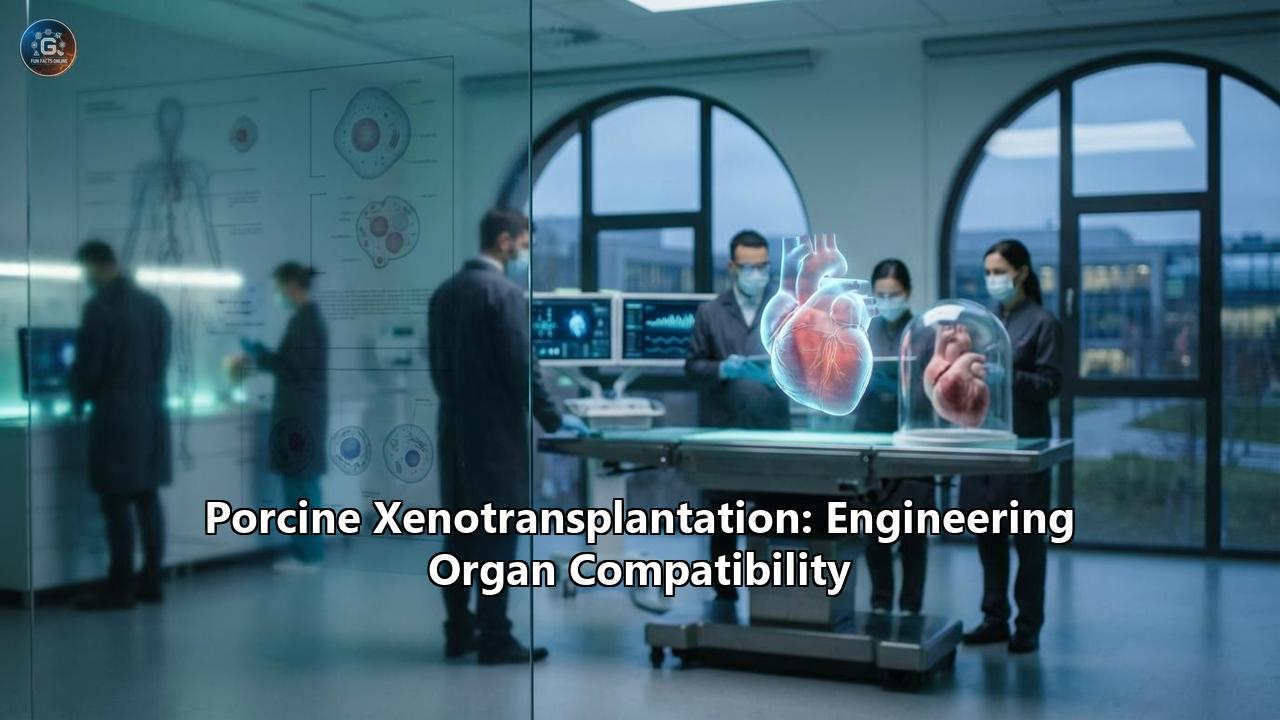
For decades, the transplant waitlist has been a grim hourglass for millions of people worldwide. When an organ fails, the human body becomes entirely dependent on the altruism of strangers, the tragic circumstances of another family’s loss, or the exhausting life support of dialysis and mechanical pumps. The mathematical reality is devastating: there simply are not enough human organs to go around. Thousands die every year waiting for a phone call that never comes. But in the quiet, highly sterilized rooms of biotechnology labs and specialized breeding facilities, a radical and once-fictional solution has transitioned from a biological pipedream to a clinical reality. We have entered the era of clinical porcine xenotransplantation—the transplantation of genetically engineered pig organs into human beings.
The concept of taking an organ from an animal and sewing it into a human is not new. The history of medicine is dotted with desperate, often tragic attempts to bridge the interspecies gap. From the baboon heart transplanted into "Baby Fae" in 1984 to chimpanzee kidneys used in the 1960s, early xenotransplantation was fundamentally stonewalled by the brutal efficiency of the human immune system. The human body is an evolutionary fortress, designed to recognize and aggressively eradicate anything deemed "non-self." When the "non-self" is not merely from another human but from an entirely different species, the immune response is catastrophic.
Yet, pigs have long been viewed as the ideal candidate for a sustainable organ supply. They are physiologically similar to humans, their organs are roughly the same size, they breed rapidly, and they are already raised at a massive scale for agriculture. The primary barrier has never been the plumbing; it has been the biology. Overcoming this barrier required unraveling the genetic code of the pig and rewriting it, gene by gene, to hide the organ from the human immune system. Today, thanks to the unprecedented precision of CRISPR-Cas9 genome editing, we are witnessing the dawn of engineered organ compatibility, a breakthrough that promises to fundamentally reshape the future of medicine.
To understand the magnitude of this achievement, one must first understand the ferocity of the human immune system when confronted with a xenograft. When a wild-type (unmodified) pig organ is connected to the human bloodstream, rejection does not take weeks or days; it takes minutes. This phenomenon is known as hyperacute rejection.
The vascular endothelium—the inner lining of the pig’s blood vessels—is coated with complex sugar molecules. The most prominent of these is galactose-alpha-1,3-galactose, commonly known as alpha-gal. While most mammals produce alpha-gal, humans and certain other primates lost the functional enzyme (alpha-1,3-galactosyltransferase, or GGTA1) millions of years ago during our evolutionary divergence. Because our bodies do not naturally produce alpha-gal, we constantly produce natural, preformed antibodies against it, largely due to exposure to similar sugars on gut bacteria.
The moment human blood flows into a pig kidney or heart, millions of these preformed antibodies lock onto the alpha-gal antigens lining the organ's blood vessels. This immediate binding triggers the classical pathway of the complement cascade—a primitive, highly destructive part of the innate immune system. Complement proteins punch holes in the endothelial cells, causing them to rupture. Blood vessels rapidly undergo thrombosis (clotting), hemorrhage, and edema. The organ turns black and dies before the surgeon can even close the patient's chest or abdomen.
Defeating hyperacute rejection was the first and most critical mountain to climb. The breakthrough came in the form of the alpha-gal knockout pig. By disabling the GGTA1 gene, scientists created pigs whose organs lacked the alpha-gal sugar, allowing them to survive the initial onslaught of human blood. However, solving alpha-gal only unmasked the next layer of the immune system’s defense.
Researchers soon discovered two other carbohydrate antigens present in pigs but absent in humans: Neu5Gc (synthesized by the CMAH gene) and the SDa antigen (synthesized by the B4GALNT2 gene). To prevent acute humoral rejection—a slightly delayed but equally fatal antibody-mediated assault—all three of these sugar-producing genes had to be deleted. The result was the "Triple Knockout" (TKO) pig, a foundational canvas for modern xenotransplantation.
But merely removing the targets for human antibodies was not enough. The complement system can still activate spontaneously via the alternative pathway, and the human immune system is relentless. In human-to-human allotransplantation, the donor organ naturally expresses complement regulatory proteins (such as CD46, CD55, and CD59) that act like chemical shields, telling the complement system to stand down. Pig complement regulatory proteins, however, are incompatible with human complement proteins. Therefore, genetic engineers had to "humanize" the pig by inserting the human genes for CD46, CD55, and CD59 into the pig's genome. When the pig organ expresses these human proteins on its blood vessel walls, it effectively mimics human tissue, neutralizing the complement cascade.
Furthermore, macrophages and natural killer (NK) cells—the aggressive foot soldiers of the innate immune system—pose a severe threat. To pacify them, researchers introduced the human CD47 gene into the pig genome. CD47 acts as a molecular "Do Not Eat Me" signal; when it binds to the SIRP-alpha receptor on human macrophages, it inhibits phagocytosis and dampens inflammation. Without human CD47, human macrophages would recognize the pig tissue as foreign debris and aggressively consume it.
Even with the innate immune system temporarily blindfolded, physiological incompatibilities between pig and human blood threaten to destroy the organ. Coagulation dysregulation is a major hurdle. Pig endothelial cells do not appropriately interact with human blood clotting factors, leading to massive, organ-wide thrombosis and consumptive coagulopathy. To resolve this, scientists inserted human coagulation-regulatory genes, such as Thrombomodulin (THBD) and Endothelial Protein C Receptor (EPCR), into the pig genome. These human proteins help maintain a smooth, clot-free flow of human blood through the intricate capillaries of the pig organ.
Another vital consideration is organ growth. Pigs grow much faster and larger than humans; a standard farm pig can easily reach 400 kilograms. If a pig heart is transplanted into a human chest, it retains its intrinsic biological drive to grow, which can quickly lead to fatal compression within the pericardial sac. To control organ size, geneticists knocked out the pig’s growth hormone receptor (GHR) gene. This edit ensures that the xenograft remains proportionally sized for a human adult.
Beyond immune rejection and physiological mismatches, xenotransplantation has historically been haunted by the specter of cross-species viral infection. Deep within the DNA of every pig on earth are the remnants of ancient viruses known as Porcine Endogenous Retroviruses (PERVs). Unlike standard viruses that can be bred out of a herd in clean, bio-secure facilities, PERVs are permanently written into the pig genome.
For decades, the fear was that an immunosuppressed human recipient of a pig organ could act as an incubator for these retroviruses. If a PERV mutated to infect human cells and then began spreading from human to human, xenotransplantation could theoretically trigger a novel pandemic. In fact, laboratory tests in the late 1990s confirmed that PERVs could infect human cells in a petri dish, leading to an international moratorium on clinical xenotransplantation trials.
The solution to the PERV problem stands as one of the most astonishing feats of genetic engineering to date. In 2015, utilizing the newly discovered CRISPR-Cas9 technology, a team of researchers led by Harvard geneticist George Church and Luhan Yang successfully disabled all 62 copies of the PERV retrovirus scattered across the pig genome in a single cell line. This "multiplexability" of CRISPR allowed for a massive, simultaneous rewriting of the genome that older technologies like Zinc Finger Nucleases could never have achieved. These PERV-inactivated cells were then used in somatic cell nuclear transfer (cloning) to birth the world’s first PERV-free pigs, effectively neutralizing the risk of retroviral zoonosis and reopening the doors to human clinical trials.
The culmination of these genetic edits gave rise to highly tailored "designer pigs." Companies like eGenesis and Revivicor (a subsidiary of United Therapeutics) have engineered pigs with dozens of modifications. For instance, the eGenesis pigs utilized in recent landmark trials feature an astonishing 69 genetic edits: 3 carbohydrate knockouts (the TKO), the addition of 7 human transgenes for immune and coagulation regulation, and the inactivation of 59 PERV gene copies. Revivicor’s "UKidney" models similarly employ a 10-gene edit blueprint, finely balancing knockouts and human transgenes to ensure maximum compatibility.
With the biology fundamentally altered, the field transitioned rapidly from laboratory models in non-human primates to the surgical theater of human medicine. The leap from bench to bedside occurred with breathtaking speed in the 2020s.
The initial forays into human testing were conducted using the bodies of neurologically deceased (brain-dead) individuals whose families had graciously donated their bodies to science. At institutions like NYU Langone Health and the University of Alabama at Birmingham, surgeons attached gene-edited pig kidneys and hearts to brain-dead recipients, keeping them on ventilators to monitor the organs' performance. These crucial experiments proved that the hyperacute rejection barrier had been broken; the kidneys produced urine, and the hearts beat rhythmically without immediately turning black.
But the ultimate test was in living human beings who had run out of all other options. In 2022, the world watched as David Bennett, a 57-year-old man with terminal heart failure, received the first genetically modified pig heart. Granted emergency authorization by the FDA under compassionate use protocols, the surgery was a historic success. Bennett survived for two months, proving that a pig heart could sustain human life. Though he eventually succumbed to heart failure—complicated by the presence of a porcine cytomegalovirus (PCMV) that had evaded pre-transplant screening—his survival eclipsed that of the first human-to-human heart transplant patient, Louis Washkansky, who lived just 18 days in 1967. In 2023, a second patient, Lawrence Faucette, received a pig heart and survived for six weeks before his immune system mounted a delayed rejection response.
The focus then shifted to the kidney, an organ whose failure affects millions globally. In March 2024, a team at Massachusetts General Hospital performed the first successful transplant of a 69-gene-edited pig kidney into a living patient, 62-year-old Richard Slayman. Slayman had been suffering from end-stage renal disease and had lived on dialysis for years following the failure of a previous human kidney transplant. Upon waking from the surgery, Slayman reported feeling revitalized, noting that the "cloud of dialysis" had lifted. His new kidney successfully filtered his blood and produced urine, allowing him to be discharged and return home. Although Slayman passed away in May 2024 due to an unexpected cardiac event entirely unrelated to the transplanted kidney, his case served as a monumental proof of concept.
The momentum accelerated rapidly. In April 2024, Lisa Pisano became the second recipient of a gene-edited pig kidney, coupled uniquely with a mechanical heart pump, demonstrating the potential for xenotransplantation in patients with complex, multi-organ comorbidities. She lived until July 2024. By January 2025, a third patient, Tim Andrews, received an eGenesis-supplied kidney at Mass General, further cementing the clinical viability of the procedure.
The breakthroughs were not restricted to the United States. In China, researchers at the Xijing Military Hospital achieved massive success in 2024 and 2025, pushing the boundaries of xenotransplantation into the liver—an organ vastly more chemically complex than the heart or kidney. Using a 6-gene-modified pig, they performed the first pig-to-human auxiliary liver transplant in a brain-dead patient. The pig liver successfully produced bile and maintained vascular integrity for the duration of the 10-day study without signs of hyperacute rejection. Because the liver is responsible for synthesizing thousands of proteins and managing coagulation, complete liver xenotransplantation remains incredibly daunting. However, these Chinese trials proved that a pig liver could serve as a vital "bridge" therapy, keeping a patient alive for a few crucial days or weeks until a human liver becomes available.
As the sheer volume of compassionate use data mounted, the FDA crossed a historic threshold. In February 2025, the agency authorized the transition from one-off emergency surgeries to formalized clinical trials. This allowed institutions like NYU Langone to launch the EXPAND trial (NCT06878560), sponsored by United Therapeutics, utilizing the 10-gene-edited UKidney. These structured trials aim to definitively measure safety, optimal immunosuppression protocols, and long-term efficacy, moving xenotransplantation out of the realm of experimental miracles and into standardized medical practice.
Despite these dazzling successes, the war against the immune system is not entirely won. While the immediate 24-hour threat of hyperacute rejection has been effectively neutralized, delayed rejection mechanisms still pose a significant threat. As xenografts survive for months rather than minutes, scientists are uncovering unprecedented insights into the human body's slower, adaptive immune mechanisms.
In mid-2025, pioneering research utilizing spatial molecular imaging provided the first high-resolution cellular map of how the human immune system attacks a pig kidney over time. The study revealed that even with heavy genetic modification, human macrophages and T-cells begin to infiltrate the microscopic filtering systems of the pig kidney by day 10. This adaptive immune response requires an intense, finely tuned regimen of immunosuppressive drugs. Standard anti-rejection medications used in human allotransplantation, like tacrolimus and mycophenolate, are often insufficient on their own to protect a xenograft. Consequently, experimental xenotransplants frequently rely on novel co-stimulation blockade therapies, such as anti-CD40 monoclonal antibodies, which specifically disrupt the communication channels between T-cells and B-cells, preventing them from mounting a coordinated attack on the foreign tissue.
The ultimate holy grail in both allotransplantation and xenotransplantation is "immune tolerance". Tolerance means manipulating the patient’s immune system so that it recognizes the pig organ as "self," completely eliminating the need for life-long, toxic immunosuppressive drugs. Researchers are actively exploring mixed chimerism—a process where bone marrow stem cells from the donor pig are infused into the human recipient alongside the solid organ. By allowing pig immune cells to co-exist with human immune cells in the bone marrow, the human immune system is "re-educated" to view pig tissue as native. Another promising avenue is vascularized thymic transplantation, where a piece of the pig's thymus (the organ where T-cells mature and learn to distinguish self from non-self) is transplanted alongside the kidney or heart.
The applications of xenotransplantation also extend far beyond whole solid organs. For the millions of individuals suffering from Type 1 Diabetes, the destruction of insulin-producing beta cells in the pancreas dictates a life tethered to synthetic insulin injections. Human islet cell transplantation is a known cure, but again, the human donor shortage is overwhelmingly prohibitive.
Pigs, however, offer an infinite supply of highly effective, insulin-producing islet cells. Because islets are clusters of cells rather than vascularized organs, they do not face the same immediate threat of hyperacute vascular rejection. In 2025, a landmark Phase I/II clinical trial, named OPF-310 and led by Otsuka Pharmaceutical Factory, began testing the transplantation of porcine islets into humans with Type 1 Diabetes. To protect the pig cells from the human immune system, the islets are encased in a microscopic, semi-permeable encapsulation device. This capsule acts as a physical bunker: it allows oxygen and glucose to flow in, and insulin to flow out, but its pores are too small for aggressive human immune cells and antibodies to penetrate. If successful, encapsulated porcine islets could effectively cure Type 1 Diabetes without the need for systemic genetic modification of the pigs or heavy immunosuppression of the patients.
As we navigate this biomedical renaissance, we must also confront profound ethical, legal, and social implications. The mass breeding of genetically engineered sentient animals solely for the purpose of harvesting their organs raises complex animal welfare considerations. Strict regulatory oversight is required to ensure that these "donor" animals are raised in highly humane, pathogen-free, and ethically sound environments. Furthermore, global legal frameworks are racing to catch up with the science. Questions regarding who gets access to these organs, how trials are monitored, and what safety protocols are mandatory for preventing zoonotic infections must be addressed on an international scale to prevent unsafe "transplant tourism".
Yet, the moral imperative driving this research is undeniably powerful. When faced with the stark reality of hundreds of thousands of patients slowly dying on dialysis or suffocating from heart failure, the ethical balance tilts heavily toward innovation. For a patient gasping for breath or confined to a machine for 20 hours a week, the origin of a healthy, functioning organ—whether from a tragic human accident or a genetically edited pig—is irrelevant compared to the gift of life it provides.
We are standing on the precipice of a new medical epoch. Porcine xenotransplantation, driven by the miracles of CRISPR gene editing, deep immunological mapping, and courageous clinical pioneers, has shattered the biological barriers that have separated species for millions of years. It is no longer a question of if animal organs will be routinely used to save human lives, but when the protocols will be perfected. In the near future, the agonizing waitlist for human organs will become a relic of medical history, replaced by a reliable, limitless supply of engineered organs, perfectly tailored to integrate seamlessly into the human body.
Reference:
- https://animalbiotech.com/2024/11/18/porcine-research-breakthrough-first-living-human-receives-pig-kidney-transplant/
- https://www.ibanet.org/xenotransplantation-law-mexico
- https://www.frontierspartnerships.org/journals/transplant-international/articles/10.3389/ti.2025.13807/full
- https://www.cas.org/resources/cas-insights/xenotransplantation
- https://www.synthego.com/blog/crispr-pigs-xenotransplantation/
- https://pmc.ncbi.nlm.nih.gov/articles/PMC4684773/
- https://www.eujtransplantation.com/article/view/266
- https://www.researchgate.net/publication/374438718_IMMUNOBIOLOGICAL_BARRIERS_TO_PIG_ORGAN_XENOTRANSPLANTATION
- https://www.frontiersin.org/journals/immunology/articles/10.3389/fimmu.2022.899657/full
- https://www.frontiersin.org/journals/immunology/articles/10.3389/fimmu.2023.1242478/full
- https://pmc.ncbi.nlm.nih.gov/articles/PMC12727543/
- https://journals.asm.org/doi/10.1128/cmr.00150-23
- https://www.researchgate.net/publication/395252151_CRISPR-Cas9-Mediated_Genetic_Modifications_in_Pig-to-Human_Xenotransplantation
- https://www.ahajournals.org/doi/10.1161/CIRCULATIONAHA.117.032246
- https://nyulangone.org/news/first-gene-edited-pig-kidney-transplant-clinical-trial-begins-nyu-langone-health
- https://wyss.harvard.edu/technology/engineered-pig-organs-for-human-transplant/
- https://sciencemediacentre.es/en/first-pig-human-liver-transplant-evaluated
- https://www.sciencedaily.com/releases/2025/06/250630073445.htm
- https://www.thejdca.org/publications/report-library/archived-reports/2025-reports/new-t1d-practical-cure-trial-uses-pig-islets.html