
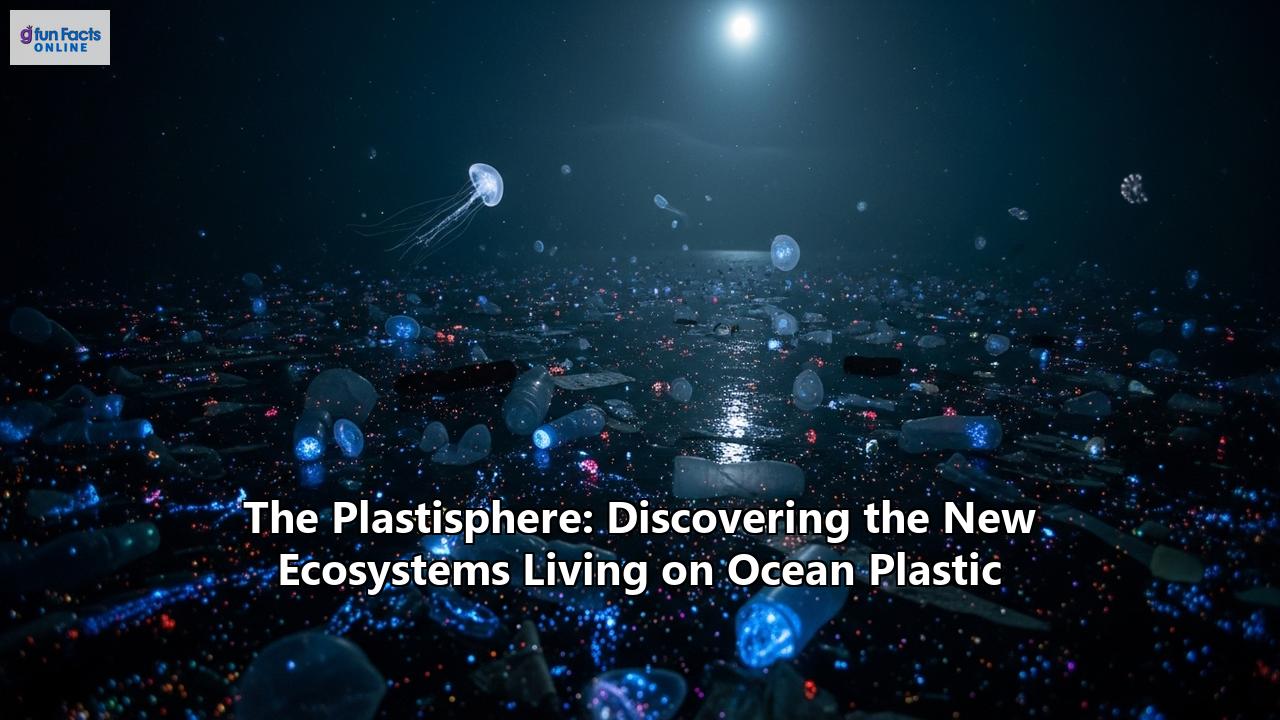
A World of its Own: The Rise of the Plastisphere and the New Ecosystems on Ocean Plastic
In the vast expanse of our oceans, a new and unsettling world is taking shape. It is a world born from our own creation, a testament to the enduring legacy of our plastic age. This world, known as the "plastisphere," is a complex and thriving ecosystem that has emerged on the surfaces of countless pieces of plastic debris adrift in marine environments. Far from being inert, these floating plastic islands have become bustling hubs of microbial life, forming novel communities that are profoundly altering the oceanic landscape. This is the story of the plastisphere, a discovery that has redefined our understanding of life in the ocean and unveiled a host of new ecological and evolutionary questions.
The Dawn of a New Ecological Era: Discovering the Plastisphere
The concept of the plastisphere is a relatively recent one, though the presence of life on marine plastic was noted as early as the 1970s. However, it was in 2013 that a team of scientists—Linda Amaral-Zettler from the Marine Biological Laboratory, Tracy Mincer from the Woods Hole Oceanographic Institution, and Erik Zettler from the Sea Education Association—formally coined the term "plastisphere" to describe the unique microbial communities they discovered on plastic fragments collected from the North Atlantic Ocean. Using powerful tools like scanning electron microscopy and DNA sequencing, they revealed a startlingly diverse world of microorganisms that was distinct from the surrounding seawater. This was not just a random assortment of microbes; it was a structured and complex ecosystem, a "microbial reef" teeming with life.
Their research, published in the journal Environmental Science & Technology, marked a turning point in how the scientific community viewed plastic pollution. No longer was it just an issue of ingestion and entanglement for larger marine animals; plastic was now understood to be a new type of habitat, a novel substrate that was actively shaping microbial life in the oceans.
Building a World on Waste: The Formation and Inhabitants of the Plastisphere
The creation of the plastisphere is a dynamic process of colonization and succession. As soon as a piece of plastic enters the ocean, a race begins for microbes to claim this new territory. The journey from a sterile piece of plastic to a mature plastisphere involves several key stages:
1. The Pioneers Arrive: The initial colonization of plastic surfaces is a rapid process, often beginning within minutes of entering the water. The hydrophobic nature of plastic makes it an attractive surface for certain microbes. Among the first to arrive are pioneer species, primarily bacteria from the groups Gammaproteobacteria and Alphaproteobacteria. These early colonizers are crucial as they modify the surface of the plastic, making it more hospitable for subsequent arrivals. 2. The Biofilm Takes Shape: The pioneer species secrete a slimy, glue-like substance called extracellular polymeric substances (EPS). This EPS matrix forms a biofilm, a protective layer that allows other microorganisms to attach and thrive. The biofilm is not just a passive structure; it's a dynamic environment that concentrates nutrients from the surrounding water, a phenomenon known as the "ZoBell effect." 3. A Community Flourishes: As the biofilm matures, it attracts a diverse array of other microorganisms. Diatoms, a type of algae, are common and important members of the plastisphere, contributing to the ecosystem as primary producers through photosynthesis. Fungi, archaea, and protozoans also join the community, creating a complex food web of producers, consumers, predators, and decomposers. A single, tiny piece of plastic, no bigger than a pinhead, can host over 1,000 different types of microbial cells. 4. The Rise of "Neopelagic Communities": The plastisphere is not limited to microscopic life. The durable and buoyant nature of plastic debris allows it to transport coastal species far out into the open ocean, creating what scientists have termed "neopelagic communities." These are novel ecosystems where coastal organisms like anemones, hydroids, bryozoans, and even some species of worms and jellyfish, coexist with open-ocean species on floating plastic rafts. The Great Pacific Garbage Patch, a massive accumulation of plastic debris, has become a hotbed for these new, unnatural communities. These coastal species are not just surviving; they are thriving and reproducing, suggesting that plastic is providing a permanent new habitat in the open ocean.The Far-Reaching Consequences: Ecological Implications of the Plastisphere
The emergence of the plastisphere has profound implications for marine ecosystems, creating a ripple effect that extends far beyond the microbial world.
A Vehicle for Invasive Species and Pathogens: One of the most significant concerns is the role of the plastisphere as a transport vector for invasive species and harmful pathogens. Plastic's longevity allows it to travel vast distances, carrying its microbial and macro-organismal passengers to new environments. This can lead to the introduction of non-native species that can disrupt local ecosystems and outcompete native organisms. The 2011 Japanese tsunami provided a stark example of this, as hundreds of Japanese coastal species were found to have rafted across the Pacific on tsunami debris.The plastisphere has also been identified as a reservoir for a variety of pathogens that pose a threat to both marine life and human health. The genus Vibrio, which includes the bacteria responsible for cholera (Vibrio cholerae) and other gastrointestinal illnesses, has been found in high abundance on marine plastics. Studies have shown that Vibrio species, including the "flesh-eating" bacteria Vibrio vulnificus, can readily colonize plastic surfaces. Furthermore, parasites that are typically land-based, such as Toxoplasma gondii, Cryptosporidium, and Giardia, have been found to attach to microplastics, providing them with a new pathway to enter the marine environment and infect marine animals like sea otters.
The close proximity of different microbes within the plastisphere's biofilm creates a hotspot for horizontal gene transfer, a process where bacteria can exchange genetic material. This can accelerate the spread of antibiotic resistance genes, making the plastisphere a potential breeding ground for drug-resistant pathogens.
Altering the Ocean's Biogeochemical Rhythms: The microbial communities of the plastisphere are actively involved in the biogeochemical cycling of key elements in the ocean, including carbon and nitrogen. By providing a surface for photosynthesis, the plastisphere can influence local primary productivity. However, the impact on the broader carbon cycle is complex and still under investigation. Some research suggests that the incorporation of plastic into marine snow—the continuous shower of organic material from the upper ocean to the deep sea—could slow down the sinking of carbon, potentially reducing the ocean's ability to sequester atmospheric carbon dioxide.The plastisphere also plays a significant role in the nitrogen cycle. Studies have found that different types of plastic can either promote or inhibit key nitrogen cycling processes like nitrification and denitrification, potentially disrupting the balance of nutrients in marine ecosystems. Some plastisphere communities have also been shown to produce nitrous oxide, a potent greenhouse gas.
A New Food Source and a Toxic Pathway: For some marine organisms, the biofilm on plastic may represent a new food source. However, the ingestion of plastic by marine life, from tiny zooplankton to large whales, is a major concern. The plastic itself can cause physical harm, but it also acts as a sponge for toxic chemicals in the ocean. Persistent organic pollutants (POPs) like PCBs and DDTs, as well as heavy metals, can accumulate on the surface of plastics at concentrations much higher than in the surrounding water. When marine animals ingest these plastics, the toxins can be released and bioaccumulate in their tissues, moving up the food chain and ultimately posing a risk to human consumers of seafood.The Cutting Edge of Discovery: How We Study the Plastisphere
Unraveling the secrets of the plastisphere requires a multidisciplinary approach, combining traditional and cutting-edge techniques.
- Microscopy: Scanning electron microscopy (SEM) has been instrumental in visualizing the intricate three-dimensional structure of plastisphere communities, revealing the diverse morphologies of its inhabitants and the pits and cracks on the plastic surface that they may create.
- DNA Sequencing: High-throughput DNA sequencing techniques have revolutionized our ability to identify the vast diversity of microorganisms in the plastisphere. By sequencing specific marker genes, such as the 16S rRNA gene for bacteria and archaea, and the 18S rRNA gene for eukaryotes, scientists can get a comprehensive picture of the community composition.
- Culture-Based Methods: While DNA sequencing tells us who is there, culturing microorganisms in the lab allows scientists to study their physiology and metabolic capabilities in a controlled environment. This is crucial for investigating processes like plastic degradation and antibiotic resistance.
- Metagenomics and Other 'Omics' Approaches: Metagenomics involves sequencing all the DNA in a sample, providing insights into the functional potential of the entire microbial community. Other 'omics' approaches, such as proteomics (studying proteins) and metabolomics (studying metabolites), can reveal what the microbes are actually doing in the plastisphere.
The Future of the Plastisphere: An Evolutionary Experiment in the Making
The plastisphere is not a static ecosystem; it is a dynamic and evolving one. The constant influx of plastic into the oceans is creating a new and powerful selective pressure on marine life. Microbes that can colonize and even utilize plastic as a resource will have a competitive advantage. This raises the fascinating and somewhat alarming possibility that we are witnessing a rapid evolutionary event, where new species and new metabolic pathways are emerging in response to our plastic waste.
One of the most exciting areas of research is the discovery of plastic-degrading microbes within the plastisphere. Scientists have identified several species of bacteria and fungi that can break down various types of plastic, such as polyethylene (PE), polyethylene terephthalate (PET), and polystyrene (PS). These organisms produce enzymes, like PETases, lipases, and laccases, that can cleave the strong chemical bonds of plastic polymers. While the natural rate of degradation is slow, this discovery opens up the possibility of harnessing these microbial capabilities for bioremediation and recycling.
Charting a Course for the Future: Solutions and Mitigation Strategies
The discovery of the plastisphere underscores the urgent need to address the global plastic pollution crisis. While the challenges are immense, a multi-pronged approach offers a path forward:
- Reducing Plastic Production and Consumption: The most effective solution is to reduce the amount of plastic we produce and use in the first place, particularly single-use plastics. This involves a combination of government regulations, industry innovation, and changes in consumer behavior.
- Improving Waste Management and Recycling: Enhancing waste collection and recycling infrastructure is crucial to prevent plastic from reaching the oceans. This includes investing in advanced recycling technologies that can handle a wider range of plastic types.
- Developing Biodegradable Alternatives: Innovation in materials science is leading to the development of biodegradable plastics made from renewable sources like seaweed and agricultural waste. However, it is important to ensure that these materials truly biodegrade in the marine environment.
- Ocean Cleanup Technologies: A number of innovative technologies are being developed to remove plastic debris from the oceans, from large-scale systems like The Ocean Cleanup to smaller, more targeted approaches like bubble barriers and Seabins.
- Bioremediation and Upcycling: Research into plastic-degrading microbes from the plastisphere could lead to new bioremediation strategies to break down plastic waste. Furthermore, some microbes can convert plastic waste into valuable bioplastics like polyhydroxyalkanoates (PHAs), offering a "waste-to-wealth" approach.
The plastisphere is a stark reminder of the profound and often unforeseen ways in which human activities are reshaping the natural world. It is a world that we have inadvertently created, a living testament to the pervasiveness of our plastic footprint. As we continue to explore this new frontier, we are not just discovering new ecosystems; we are also confronting the complex and far-reaching consequences of our actions. The story of the plastisphere is a cautionary tale, but it is also a call to action—a challenge to innovate, to collaborate, and to chart a more sustainable course for the future of our oceans and our planet.
Reference:
- https://pmc.ncbi.nlm.nih.gov/articles/PMC10989970/
- https://pubs.acs.org/doi/10.1021/es401288x
- https://pmc.ncbi.nlm.nih.gov/articles/PMC10726253/
- https://www.efginternational.com/us/insights/2025/innovation_below_the_surface_tackling_ocean_plastics_with_nature_and_tech.html
- https://www.mdpi.com/2076-3298/12/3/86
- https://www.researchgate.net/publication/384042876_Microbial_bioremediation_techniques_of_microplastics_and_nanoplastics_in_the_marine_environment
- https://pmc.ncbi.nlm.nih.gov/articles/PMC8861569/
- https://www.biorxiv.org/content/10.1101/2024.08.29.610283v1.full-text
- https://www.researchgate.net/publication/387268148_Understanding_the_soil_plastisphere_and_its_environmental_impacts
- https://www.researchgate.net/publication/361705681_Future_climate_change_enhances_the_complexity_of_plastisphere_microbial_co-occurrence_networks_but_does_not_significantly_affect_the_community_assembly
- https://www.frontiersin.org/journals/marine-science/articles/10.3389/fmars.2023.1017378/full
- https://pubmed.ncbi.nlm.nih.gov/37211165/
- https://www.vliz.be/imisdocs/publications/58/357658.pdf
- https://tontoton.com/effective-plastic-waste-solutions-strategies-for-reducing-marine-pollution/
- https://www.nioz.nl/application/files/5714/9451/4153/de_tender-2017-a_review_of.pdf
- https://www.tandfonline.com/doi/full/10.1080/10643389.2023.2224182
- https://www.mdpi.com/2073-4441/15/21/3746
- https://www.mcsuk.org/news/how-to-reduce-ocean-plastic-pollution/
- https://www.researchgate.net/publication/387635475_Addressing_the_plastisphere_Sustainable_approaches_to_combat_plastic_pollution
- https://www.frontiersin.org/journals/marine-science/articles/10.3389/fmars.2023.1162680/full
- https://www.kabk.nl/en/lectorates/design/toxic-progeny-the-plastisphere-and-other-queer-futures-by-heather-davis
- https://www.bigblueoceancleanup.org/updates/2021/12/20/the-plastisphere-and-bacteria-have-we-found-the-solution-to-plastic-waste
- https://pmc.ncbi.nlm.nih.gov/articles/PMC6651478/
- https://as-proceeding.com/index.php/ijanser/article/download/2127/2070/4021
- https://www.oceanicsociety.org/resources/7-ways-to-reduce-ocean-plastic-pollution-today/
- https://oceanmaterial.com/10-scientific-solutions-to-plastic-pollution/
- https://www.jeeng.net/pdf-145463-72879?filename=Microbial%20Biofilm%20of.pdf