
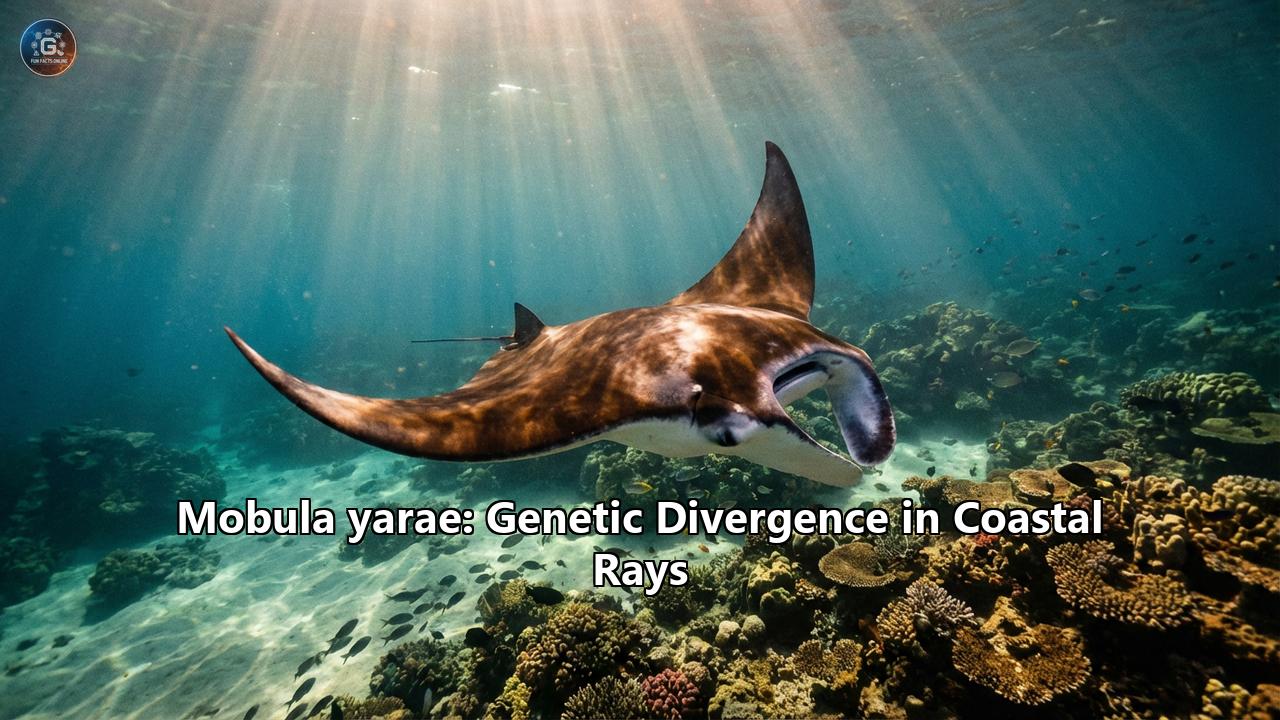
The Phantom of the Atlantic: Mobula yarae and the Hidden Mechanics of Genetic Divergence in Coastal Rays
The ocean is often described as the final frontier, a realm where the unknown eclipses the known. For centuries, humanity has cataloged the life teeming beneath the waves, yet the sheer scale of marine biodiversity continues to defy our assumptions. In July 2025, a seismic shift occurred in the world of marine megafauna research. After decades of speculation, ambiguous sightings, and whispered theories among field biologists, a third species of manta ray was formally described: Mobula yarae, the Atlantic manta ray.
This discovery was not merely the addition of a name to a list; it was a revelation that struck at the heart of our understanding of evolution in the marine environment. For years, science recognized two giants: the Giant Oceanic Manta (Mobula birostris) and the Reef Manta (Mobula alfredi). But hiding in plain sight, patrolling the coastal waters of the Americas from Florida to Brazil, was a third distinct lineage. The confirmation of Mobula yarae offers a rare and profound glimpse into "evolution in action"—a snapshot of genetic divergence occurring not in the distant past, but in a geologically recent window, driven by the unique pressures of coastal ecosystems.
This article explores the comprehensive story of Mobula yarae, delving into the genetic detective work that unveiled it, the ecological forces driving its divergence, and the critical implications this has for the conservation of coastal rays. It is a story of cryptic speciation, where the boundaries between species are drawn not just by physical barriers, but by the invisible hand of genetic drift and ecological adaptation.
Part I: The Ghost in the Data
The Long Road to Recognition
The description of a new species of megafauna is a rare event in the 21st century. While new species of deep-sea invertebrates or cryptic insects are found regularly, an animal with a wingspan of six meters that lives in some of the most heavily trafficked waters on Earth should, in theory, be impossible to miss. Yet, Mobula yarae managed to evade formal scientific recognition for centuries.
The history of this discovery is a testament to the limitations of morphological observation. For a long time, all manta rays were lumped into a single species, Manta birostris. It wasn’t until 2009 that Dr. Andrea Marshall, a pioneer in mobulid research, successfully split the genus into two: the oceanic giant (M. birostris) and the resident reef manta (M. alfredi). However, even as this duality became accepted, anomalies persisted.
In the western Atlantic, particularly off the coasts of the Yucatan Peninsula, Florida, and Brazil, researchers were encountering mantas that didn’t quite fit the profile. They were smaller than the oceanic giants but larger than the typical reef manta. Their markings were peculiar—dorsal shoulder patches that flared in a "V" rather than the "T" shape of birostris, and ventral spotting patterns that seemed unique. For fifteen years, these animals were referred to in scientific literature as Mobula cf. birostris—a "confer" designation indicating they were similar to, but perhaps not the same as, the known species.
The breakthrough came not from the naked eye, but from the sequencer. In a landmark study published in Environmental Biology of Fishes in 2025, a team led by Brazilian researcher Nayara Bucair and collaborators from the Marine Megafauna Foundation provided the smoking gun. By integrating morphometrics with advanced genomic analysis, they demonstrated that these Atlantic rays were effectively genetically isolated from their oceanic cousins. The "phantom" finally had a name: Mobula yarae, named after Yara, the "Mother of Waters" in Tupi-Guarani mythology—a fitting moniker for a creature that has reigned over the Atlantic coasts since before the arrival of modern civilization.
The Concept of Cryptic Speciation
Mobula yarae is a prime example of cryptic speciation—a phenomenon where two or more distinct species are erroneously classified as one because they look nearly identical. In the marine environment, cryptic speciation is surprisingly common. Unlike terrestrial environments, where mountains and rivers create obvious physical barriers that separate populations (allopatric speciation), the ocean appears continuous. Genetic divergence in the sea often happens without absolute physical walls, driven instead by "soft" barriers like water temperature, depth, currents, and prey availability.For coastal rays, the distinction between "coastal" and "pelagic" (open ocean) habitats is a powerful evolutionary wedge. While Mobula birostris is a circumglobal wanderer, traversing vast abyssal plains and crossing oceans, Mobula yarae appears to have specialized. It is a creature of the continental shelf, a specialist of the productive, nutrient-rich waters where land meets sea. This ecological specialization likely acted as the initial wedge, separating the ancestral population into two groups that, over millennia, ceased to interbreed.
Part II: Genetic Divergence – The Molecular Evidence
Unraveling the Genome
The genetic study that confirmed Mobula yarae utilized both mitochondrial DNA (mtDNA) and nuclear DNA markers to reconstruct the family tree of the mobulids. The results were startling. They placed Mobula yarae as a sister taxon to Mobula birostris, but with a divergence time that is incredibly recent in geological terms—perhaps as little as 100,000 to 500,000 years ago.
This recent split makes Mobula yarae one of the youngest large vertebrate species known to science. In evolutionary biology, this is often referred to as an "incipient species" or a lineage in the late stages of speciation. The genetic distance between M. yarae and M. birostris is small compared to the distance between M. birostris and M. alfredi, yet it is consistent and distinct. There is no evidence of significant gene flow between the two, even though their ranges overlap—a condition known as sympatry.
Mechanisms of Divergence in Coastal Rays
How does a species split in two when they swim in the same waters? This is the central puzzle of marine speciation. For Mobula yarae, the answer likely lies in ecological speciation and assortative mating.
- Niche Partitioning: M. birostris is adapted for the high seas. It is built for endurance, capable of diving to frigid depths of over 1,000 meters and migrating thousands of kilometers. M. yarae, conversely, appears adapted to the fluctuating, turbid, and highly productive waters of the coast. This difference in habitat preference effectively reduces encounters between the two groups during critical mating periods.
- Reproductive Isolation: Even when the two species do cross paths—for instance, when oceanic mantas come close to shore to visit cleaning stations—they do not appear to interbreed. This suggests the evolution of pre-zygotic barriers. These could be behavioral (different courtship dances or timing), sensory (pheromone incompatibility), or mechanical. The genetic data shows distinct mitochondrial haplotypes (lineages traced through mothers), suggesting that female M. yarae are staying coastal and not mixing with the oceanic population.
- The Founder Effect: One hypothesis for the origin of M. yarae is a "founder event" during a glacial maximum. During the ice ages, sea levels dropped, and ocean circulation patterns changed dramatically. A population of ancestral mantas may have become isolated in a specific Atlantic basin or coastal refuge. Cut off from the global gene pool, this smaller population would have experienced rapid genetic drift, evolving unique traits to survive in their restricted environment. When the ice melted and the oceans reconnected, these rays were sufficiently different that they no longer recognized the oceanic mantas as potential mates.
Comparative Genetics: The Hammerhead Parallel
The story of Mobula yarae echoes findings in other elasmobranchs, particularly the hammerhead sharks (Sphyrna spp.). In the Western North Atlantic, geneticists discovered a "cryptic" lineage of scalloped hammerhead that was genetically distinct from the global population. Like M. yarae, this cryptic hammerhead was essentially a coastal specialist hiding inside a cosmopolitan species complex.
These parallel discoveries point to a widespread pattern: the Atlantic coast of the Americas is a hotbed for marine speciation. The complex geography of the Caribbean, the Gulf of Mexico, and the varied outflow of massive river systems like the Mississippi and the Amazon create a mosaic of habitats that drives genetic divergence. Mobula yarae is not an anomaly; it is a symptom of the rich, dynamic evolutionary processes occurring on our continental shelves.
Part III: Morphology and Identification – Spotting the Difference
The "Tesla" Mark and Other Clues
While genetics provided the definitive proof, morphological analysis remains the primary tool for field biologists. Distinguishing Mobula yarae from M. birostris requires a keen eye, as the differences are subtle—a classic trait of cryptic species.
- Dorsal Shoulder Patches: The most reliable field mark is found on the back.
Oceanic Manta (M. birostris): The white shoulder patches form distinct triangles that create a "T" shape in the black background pattern. The patches are usually sharp and well-defined.
Atlantic Manta (M. yarae): The shoulder patches are more curved and hook-shaped, often described as resembling the logo of the car company Tesla, or forming a soft "V". These patches typically flare outwards more dramatically than the rigid triangles of the oceanic manta.
- Ventral Coloration:
Oceanic Manta: The belly is largely white with a sparse distribution of spots. However, the critical feature is the grey shading around the mouth and gill slits. M. birostris typically has a dark, charcoal-colored margin on the trailing edge of the pectoral fins and dark shading around the mouth.
Atlantic Manta: The belly of M. yarae is often more "dusky" or speckled. The spots are clustered heavily around the abdomen, often appearing as a splash of dark freckles. Crucially, the area around the mouth is usually paler than in M. birostris.
- Size and Scale:
While M. birostris is the true giant, reaching disc widths of over 7 meters (23 feet), M. yarae is somewhat smaller. Most mature individuals are in the 4 to 5-meter range. While still massive, they lack the colossal bulk of the largest oceanic mantas.
- Dermal Denticles:
Microscopic examination of the skin reveals differences in the dermal denticles (scales). M. yarae possesses denticles that are structurally distinct, an adaptation that likely affects hydrodynamics. This suggests that the two species have different swimming efficiencies suited to their respective environments—one for long-distance cruising, the other perhaps for more maneuverable coastal movements.
Part IV: Ecology and Behavior – The Coastal Specialist
Life in the Upwelling Zones
The distribution of Mobula yarae is tightly coupled with areas of high productivity. It is found predominantly in the Western Atlantic, with strongholds in the Gulf of Mexico (specifically the Flower Garden Banks), the Caribbean coast of Mexico (Isla Holbox and Isla Contoy), and down the Brazilian coastline.
These areas share a common feature: upwelling. Seasonal upwellings bring cold, nutrient-rich water from the deep ocean to the surface, triggering massive blooms of plankton. M. yarae is a filter feeder, and its life revolves around these blooms. Unlike the oceanic manta, which chases ephemeral patches of food across the open sea, the Atlantic manta appears to have a smaller home range, moving seasonally between these reliable coastal banquets.
Sympatry and Niche Segregation
One of the most fascinating aspects of M. yarae is its sympatry with M. birostris. In places like the Yucatan, both species can be seen. However, they are rarely seeing "doing the same thing."
- Temporal Separation: Studies suggest that while both species visit the same feeding grounds, they may do so at different times of the year or utilize the area differently. M. birostris may pass through transiently, while M. yarae remains for extended periods.
- Dietary Differences: Although both eat zooplankton, stable isotope analysis—a method of tracing chemical signatures in tissue—hints that they may be feeding at different trophic levels or on different types of plankton. M. yarae signatures align more closely with nearshore, estuarine-influenced food webs, whereas M. birostris shows signatures of open-ocean, pelagic feeding.
This niche segregation is critical. It allows two massive filter feeders to coexist without outcompeting each other. It also reinforces the reproductive isolation between them; if you eat in different places, you meet different mates.
Part V: The Conservation Imperative
A Vulnerable New Species
The formal description of Mobula yarae has immediate and urgent consequences for conservation. Previously, these rays were managed under the umbrella of M. birostris, which is listed as Endangered on the IUCN Red List. However, splitting the species changes the math of extinction risk.
- Smaller Population Estimates: By recognizing M. yarae as distinct, we effectively cut the estimated population of "Atlantic mantas" into two smaller groups. A smaller population is inherently more vulnerable to extinction.
- Restricted Range: M. birostris has a global safety net—if they are wiped out in the Atlantic, they still exist in the Pacific and Indian Oceans. Mobula yarae does not. It is endemic to the Western Atlantic. If it disappears here, it is gone forever.
- The Coastal Trap: The coastal habitat of M. yarae puts it directly in the crosshairs of human activity. The "urban ocean" is a dangerous place.
The Threat Matrix
- Fisheries Bycatch: This is the single greatest threat. The coastal waters of Brazil, Venezuela, and the U.S. are heavily fished by gillnets and trawlers. M. yarae, swimming in shallow waters, is frequently entangled in nets meant for tuna, swordfish, or shrimp. In Brazil, artisanal fisheries have historically landed large numbers of these rays.
- Vessel Strikes: Florida is a hotspot for M. yarae, particularly juvenile populations. It is also the boating capital of the world. Propeller scars are a common sight on rays in this region. As surface feeders, they are oblivious to the speedboats zooming overhead.
- Pollution and Runoff: Living near the coast means living in the outflow of civilization. Agricultural runoff from the Mississippi and Amazon rivers creates "dead zones" and introduces pesticides and heavy metals into the food web. Being high-order filter feeders, mantas can bioaccumulate these toxins.
- Climate Change: Coastal upwelling systems are sensitive to climate shifts. If warming oceans disrupt the plankton blooms off the Yucatan or Brazil, M. yarae could face starvation.
Policy Implications
The recognition of M. yarae requires a rewrite of international protection laws.
- IUCN Red List: M. yarae will need its own assessment. Given its endemic status and high exposure to threats, it is likely to be classified as Endangered or even Critically Endangered.
- CITES: Manta rays are protected under CITES (Convention on International Trade in Endangered Species) Appendix II. Regulators now need to train border control agents to distinguish the gill plates of M. yarae from other species to ensure trade bans are enforced effectively.
- Local Management: Countries like the U.S. and Brazil must recognize that they are the stewards of a unique species. This increases the pressure to establish Marine Protected Areas (MPAs) in critical nursery grounds, such as the coastal waters of Florida.
Part VI: Evolution in Real Time
The Scientific Significance
The discovery of Mobula yarae is a gift to evolutionary biology. Usually, speciation is a historical event we reconstruct from fossils or deep genetic divergences. With M. yarae, we are watching it happen. The genetic split is so recent that the two species are still "sorting" themselves out.
This "evolution in action" allows scientists to ask fundamental questions:
- How many genetic changes does it take to make a new species?
- Which genes drive the changes in size and color?
- Is the speciation process reversible if the environment changes?
The existence of M. yarae challenges the old notion that the ocean is a slow-changing, homogeneous environment. It depicts a marine world that is dynamic, where biodiversity is constantly being generated in the productive margins of the continents.
The "Shadow" Biodiversity
If a 5-meter ray can remain hidden from science until 2025, what else is out there? Mobula yarae serves as a flagship for cryptic biodiversity. It suggests that our current counts of marine species are severe underestimates. We may be looking at "populations" of sharks, whales, and rays that are, in fact, distinct species with their own unique evolutionary trajectories.
This realization forces a shift in conservation philosophy. We cannot just protect "habitats" or broad "species complexes." We must look deeper, using genetic tools to identify the hidden diversity that comprises the resilience of our oceans. We may be losing species we don't even know exist yet.
Conclusion: The Mother of Waters
The naming of Mobula yarae after a mythological figure is poetic. Like Yara, the siren of the Amazon, this ray has existed in the twilight between myth and reality, seen but not truly known. Its emergence into the light of scientific fact is a triumph of modern technology and persistent field research.
But with recognition comes responsibility. The Atlantic manta ray is not a global wanderer that can flee to the safety of the remote Pacific. It is our neighbor. It patrols the beaches where we vacation, the shipping lanes where we trade, and the fishing grounds where we harvest. Its fate is inextricably linked to the health of the Atlantic coast.
The genetic divergence of Mobula yarae tells a story of resilience and adaptation, of life carving out a niche in the turbulent coastal seas. It is a reminder that evolution is not a finished chapter, but an ongoing narrative. As we look at these rays now—gliding through the emerald waters of the Atlantic, their V-shaped shoulders marking them as unique—we are witnessing the living, breathing creativity of the natural world. The challenge now is to ensure that this newly written chapter does not end in tragedy.
Further Reading & References Overview
- Bucair et al. (2025): An integrative taxonomy investigation unravels a cryptic species of Mobula... (Environmental Biology of Fishes). The primary description paper.
- Marshall et al. (2009): Redescription of the genus Manta... (Zootaxa). The foundational work splitting M. birostris and M. alfredi.
- Pate & Marshall (Marine Megafauna Foundation): Ongoing field research and sighting databases for Atlantic mantas.
- Hosegood et al. (2020): Phylogenomics and species delimitation of mobulid rays... (Molecular Ecology). Early genomic evidence of the cryptic lineage.
(This article synthesizes the latest scientific findings as of early 2026, combining genetic analysis, ecological theory, and conservation science to provide a complete profile of the newest giant of the ocean.)
Reference:
- https://www.mdpi.com/2673-6500/4/3/27
- https://shop.freetheocean.com/blogs/news/caribbean-manta-ray
- https://divemagazine.com/scuba-diving-news/its-official-there-are-three-species-of-manta-ray
- https://marinemegafauna.org/news/third-manta-ray-species-mobula-yarae-discovered-in-atlantic-ocean
- https://oceanographicmagazine.com/news/scientists-hail-third-manta-ray-species-evolution-in-action/
- https://www.originaldiving.com/blog/meet-the-mobula-yarae-a-new-species-of-manta-ray
- https://sedarweb.org/documents/sedar-77-rd15-genetic-evidence-of-cryptic-speciation-within-hammerhead-sharks-genus-sphyrna/
- https://www.researchgate.net/figure/Phylogenetic-tree-showing-the-relationships-among-mobulid-species-relative-to-three_fig1_319200902
- https://oceana.org/blog/a-new-manta-in-the-atlantic-meet-mobula-yarae/
- https://news.mongabay.com/short-article/2025/08/third-manta-ray-species-confirmed-in-western-atlantic/
- https://pmc.ncbi.nlm.nih.gov/articles/PMC5120345/
- https://mantarayadvocates.com/atlantic-manta-ray-third-species-mobula-yarae/
- https://www.fishbase.se/summary/Mobula-yarae
- https://www.researchgate.net/publication/225190872_Genetic_evidence_of_cryptic_speciation_within_hammerhead_sharks_Genus_Sphyrna
- https://academic.oup.com/zoolinnean/article/182/1/50/3886052
- https://www.researchgate.net/publication/269169232_A_dated_molecular_phylogeny_of_manta_and_devil_rays_Mobulidae_based_on_mitogenome_and_nuclear_sequences