
In the quiet laboratories of the University of Rochester in 1974, a psychologist named Robert Ader was conducting a seemingly mundane experiment on rats. He was studying taste aversion—how animals learn to avoid foods that make them sick. His method was simple: give the rats some saccharin-sweetened water, and then inject them with a drug that induces nausea. As expected, the rats quickly learned to hate the sweet water. But then, something strange happened. The rats didn’t just avoid the water; they started dying.
The drug Ader had used was cyclophosphamide, an immunosuppressant. When he continued to feed the rats the saccharin water without the drug, their immune systems still crashed, as if they had been drugged. He had inadvertently discovered that the immune system could be conditioned, just like a dog salivating at the sound of a bell. The brain, remembering the taste, had ordered the immune system to shut down.
Until that moment, medical science believed the immune system was an autonomous defense force, operating independently of the mind. Ader’s dying rats proved them wrong. They birthed a new field of science with a tongue-twisting name: Psychoneuroimmunology (PNI).
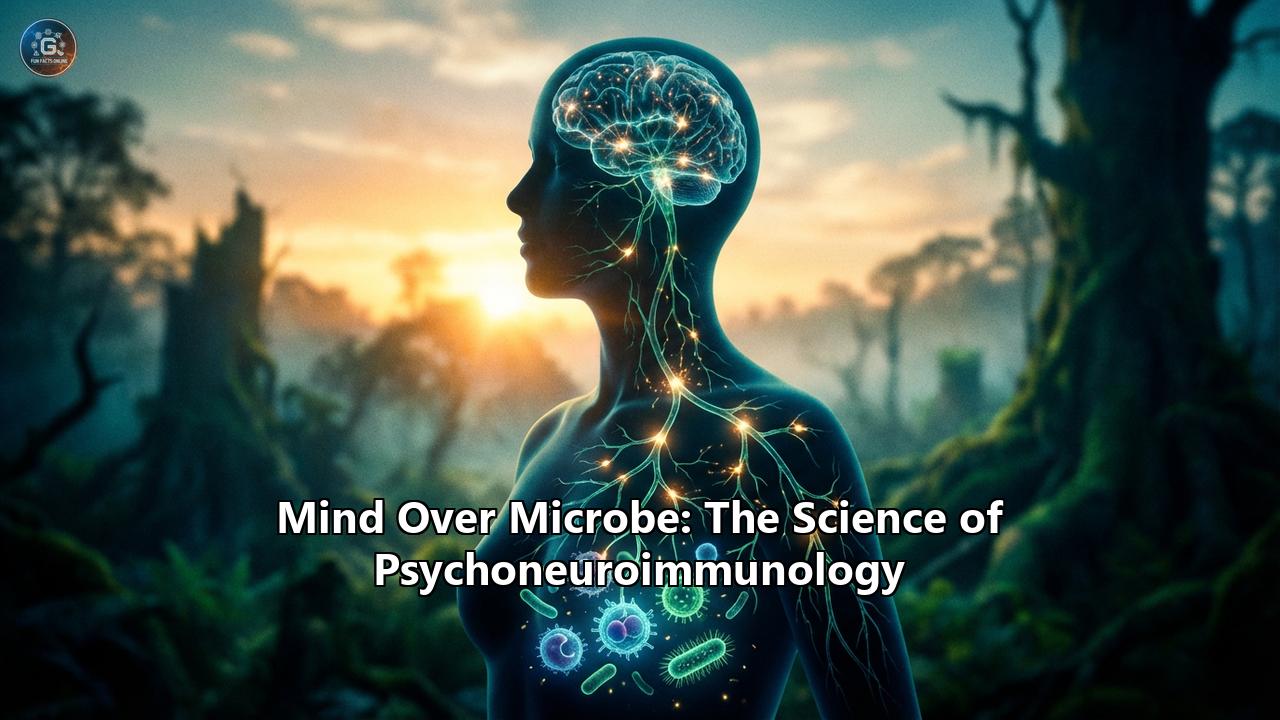
This article explores the comprehensive science of PNI, a discipline that has revolutionized our understanding of health. Over the next 10,000 words, we will journey through the biological "hardware" that connects your thoughts to your white blood cells, explore how your gut bacteria whisper to your brain, understand why childhood trauma can inflame your body decades later, and detail the specific lifestyle interventions—from diet to sleep—that allow you to harness the power of your mind over the microbial world within.
Part I: The Hardware of Connection
The End of Dualism
For centuries, Western medicine operated under the Cartesian dualism that separated the mind from the body. The mind was the realm of philosophers and priests; the body was a machine of meat and bone, the domain of surgeons. PNI shattered this divide by mapping the physical bridges that cross the chasm. We now know that the brain and immune system are not just "connected"; they are a single, integrated defense network. They speak the same chemical language.
The Chemical Conversation: Neurotransmitters and Cytokines
The first major discovery of PNI was that immune cells have "ears." White blood cells—lymphocytes, macrophages, and natural killer (NK) cells—are covered in receptors for neurotransmitters. They can "hear" the brain's chemical signals.
- Catecholamines (Adrenaline/Noradrenaline): When you are stressed, your sympathetic nervous system floods your body with adrenaline. Your immune cells have beta-adrenergic receptors that catch these molecules. In the short term, this mobilizes your immune army—a legacy of our "fight or flight" evolutionary past where stress often meant physical injury and infection risk.
- Cortisol: The primary stress hormone, released by the adrenal glands, acts as a potent brake on the immune system. It prevents the army from becoming too aggressive and attacking healthy tissue (autoimmunity). However, chronic stress breaks this brake, leading to "cortisol resistance," where the immune system stops listening and ramps up inflammation uncontrollably.
Conversely, the brain has "ears" for the immune system. The messengers here are cytokines—protein molecules like Interleukin-1 (IL-1), Interleukin-6 (IL-6), and Tumor Necrosis Factor-alpha (TNF-alpha). When you cut your finger or catch a virus, immune cells release these cytokines. They travel through the blood and signal the brain, crossing the blood-brain barrier or stimulating the vagus nerve.
The Vagus Nerve: The Superhighway
The vagus nerve is the physical fiber-optic cable of PNI. It wanders from the brainstem down to the colon, touching the heart, lungs, and stomach along the way. It is the primary pathway for the "Inflammatory Reflex."
When the immune system detects a threat (like a bacterium in the gut), it activates the vagus nerve. The nerve sends a signal up to the brainstem: "We are under attack." The brain processes this and sends a signal back down the vagus nerve to the spleen and other organs, releasing acetylcholine to dampen the inflammation. This reflex prevents your immune system from overreacting and killing you with septic shock. It is a rapid, neural control of immunity—proof that the brain is the general of the immune army.
Part II: The Software of Sickness
Why We Feel "Sick"
Have you ever wondered why, when you have the flu, you feel depressed, lethargic, and anti-social? You lose your appetite, your libido vanishes, and your sleep becomes fragmented. PNI reveals that this is not just a side effect of the virus; it is a deliberate program run by the brain called Sickness Behavior.
When cytokines (specifically IL-1 and TNF-alpha) reach the brain, they alter neural function in the hypothalamus and basal ganglia. They essentially "reprogram" your motivation.
- Lethargy: Conserves energy for the fever response (which is metabolically expensive).
- Social Withdrawal: Prevents you from spreading the infection to your kin.
- Anhedonia (Loss of Pleasure): Stops you from wasting energy on non-essential activities like seeking a mate or exploring.
The Depression Connection
The most profound implication of Sickness Behavior is its link to clinical depression. Researchers noticed that the symptoms of major depression—fatigue, loss of interest, sleep disturbance—are nearly identical to Sickness Behavior. This led to the "Cytokine Theory of Depression."
In many people, depression is not just a neurotransmitter imbalance (low serotonin); it is a chronic inflammatory state. The body is acting as if it is infected, even when it isn't. Psychological stress triggers the same cytokine release as a virus. If the stress is chronic, the brain stays stuck in "sickness mode," leading to what we diagnose as depression. This explains why anti-inflammatory drugs are now being investigated as potential antidepressants for a subset of patients with high inflammation markers (like C-Reactive Protein).
Part III: The Gut-Brain Axis
The Second Brain
If PNI was the revolution of the 20th century, the Microbiome is the revolution of the 21st. The gut contains trillions of bacteria that collectively weigh as much as the brain itself. In PNI, we now refer to the Microbiota-Gut-Brain Axis.
These bacteria are not passive passengers; they are active factories.
- Neurotransmitter Production: 90% of the body's serotonin and 50% of its dopamine are produced in the gut. While these don't cross the blood-brain barrier directly, they influence the vagus nerve and immune signaling.
- GABA and Anxiety: Specific strains of Lactobacillus and Bifidobacterium produce GABA, the brain's primary calming neurotransmitter. Studies show that animals fed these bacteria (dubbed "Psychobiotics") show reduced anxiety and lower cortisol levels.
Leaky Gut, Leaky Brain
Stress impacts the gut lining. High cortisol levels weaken the "tight junctions" between intestinal cells, making the gut permeable—a condition often called "leaky gut." This allows bacterial toxins (like Lipopolysaccharide, or LPS) to escape into the bloodstream. The immune system spots this LPS, panics, and launches a systemic inflammatory attack. This inflammation travels to the brain, causing neuroinflammation, brain fog, and mood disorders.
Thus, a PNI loop is formed: Stress -> Leaky Gut -> Immune Activation -> Neuroinflammation -> More Stress/Depression. Breaking this loop is a key target for modern PNI therapies.
Part IV: The Ghost in the Machine – Developmental PNI
Adverse Childhood Experiences (ACEs)
One of the most sobering findings in PNI is the "biological embedding" of childhood trauma. Large-scale epidemiological studies have shown that adults who experienced Adverse Childhood Experiences (ACEs)—such as abuse, neglect, or household dysfunction—have significantly higher rates of autoimmune diseases, cancer, and heart disease 50 years later.
How does the body "remember" trauma from decades ago? The answer lies in Epigenetics.
Early life stress marks the DNA. It doesn't change the genetic code, but it adds chemical tags (methylation) that turn genes on or off. specifically, it often methylates the gene for the Glucocorticoid Receptor (GR).
- The Mechanism: The GR is the receptor that allows cells to "hear" cortisol's signal to stop inflammation. In trauma survivors, this receptor is often silenced. Their bodies become resistant to cortisol. As a result, their immune systems lack the "off switch," leading to a lifelong state of low-grade inflammation. This chronic inflammation slowly damages blood vessels (heart disease) and DNA (cancer risk), explaining the lower life expectancy in those with high ACE scores.
Part V: Interventions – Hacking the System
The beauty of PNI is that because the system is bidirectional, we can intervene at multiple points. We can use the mind to calm the body, and the body to heal the mind.
1. Diet: Feeding the Axis
- Omega-3 Fatty Acids: The brain is 60% fat, but the immune benefit of Omega-3s (EPA/DHA) is crucial. They are the precursors to "Resolvins," molecules that actively turn off inflammation. Studies show that high-dose EPA supplements can reduce cytokine levels in depressed patients.
- Polyphenols: Found in berries, tea, and dark chocolate, these compounds feed beneficial gut bacteria and can cross the blood-brain barrier to reduce neuroinflammation.
- Fermented Foods: Yogurt, kimchi, and sauerkraut introduce live bacteria that can transiently modulate the gut immune system, lowering the "alarm state" of the vagus nerve.
2. Sleep: The Great Reset
Sleep is not a passive state; it is an active immune phase. During deep slow-wave sleep, cortisol levels drop to their nadir, allowing the immune system to release pro-inflammatory cytokines (like IL-1) that help form "immunological memory." This is why you get a fever at night.
Sleep deprivation is catastrophic for PNI balance. Just one night of partial sleep deprivation (4 hours) can reduce Natural Killer cell activity by 70%. It also increases circulating IL-6 the next day, making you feel groggy and "sick." Prioritizing sleep is the single most effective PNI intervention for restoring the "cortisol brake."
3. Exercise: The Goldilocks Zone
- Moderate Intensity: Regular, moderate exercise (like brisk walking or light jogging) enhances "immunosurveillance." It increases the circulation of immune cells, helping them patrol the body for viruses and tumors. It also has a long-term anti-inflammatory effect.
- High Intensity: PNI research identifies an "Open Window" of immunosuppression following exhaustive exercise (like a marathon). For 3-72 hours post-exertion, stress hormones are so high that immune function dips, increasing susceptibility to upper respiratory infections. For PNI health, consistency beats intensity.
4. Mind-Body Therapies
- Expressive Writing: Psychologist James Pennebaker discovered that writing about traumatic events for just 20 minutes a day for four days can boost immune function. By translating emotional turmoil into language, the brain processes the trauma, resolving the "low-level alarm" that keeps the sympathetic nervous system active. Studies found that HIV+ patients who did this saw increased CD4+ T-lymphocyte counts.
- Conditioning the Immune System: Just as Ader conditioned rats, humans can condition their own immune responses. In clinical trials, patients given a distinctive drink alongside an immunosuppressant drug can eventually achieve partial immunosuppression with the drink alone. This suggests a future where we can lower drug dosages (and side effects) by using "placebo boosters."
Conclusion: The Integrated Self
Psychoneuroimmunology has returned medicine to a holistic reality. We are not a mind floating above a machine; we are a symphony of cells, thoughts, bacteria, and hormones. Every negative thought ripples through your immune system; every bout of inflammation colors your mood.
The phrase "Mind Over Microbe" is not just a catchy title—it is a physiological fact. By understanding the language of PNI, we empower ourselves to participate in our own healing, bridging the gap between what we feel and how we heal. The science is clear: to treat the body, we must tend to the mind; and to heal the mind, we must respect the biological intelligence of the body.