
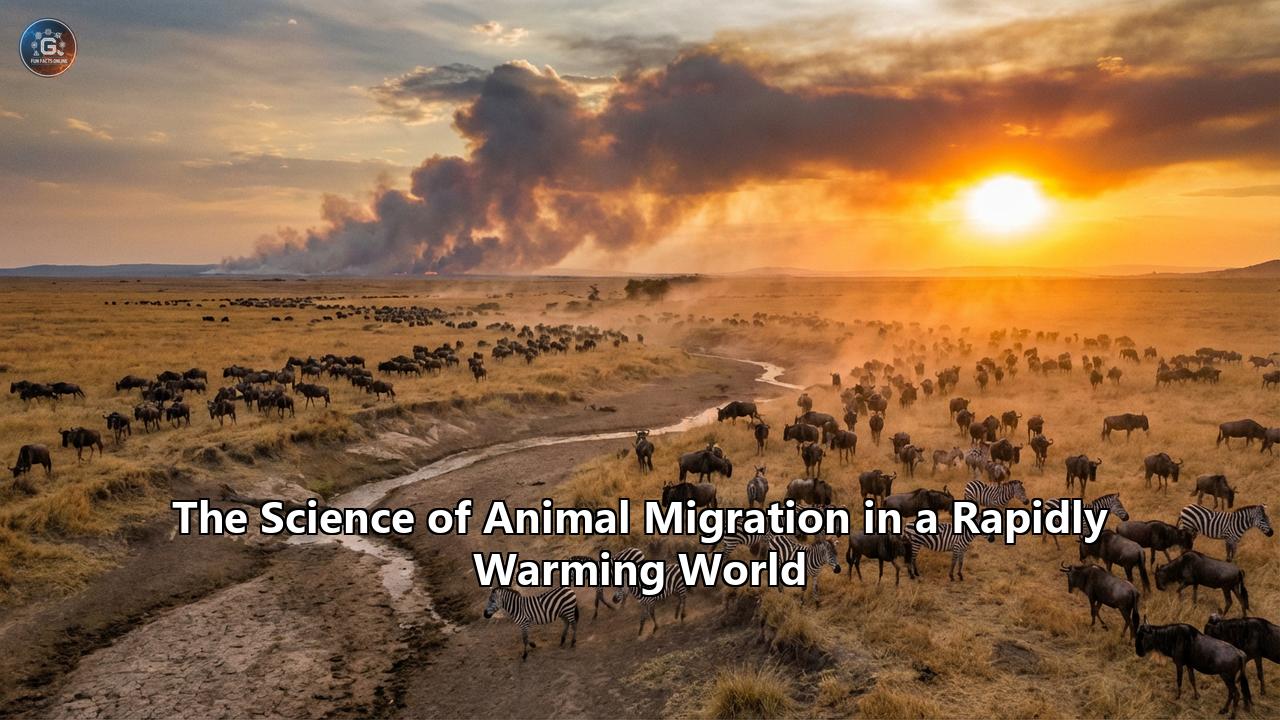
For millennia, the cyclical movement of animals across the globe has been one of the most awe-inspiring phenomena in the natural world. From the 3,000-mile odyssey of the monarch butterfly to the transoceanic voyages of the leatherback sea turtle, animal migration is a biological imperative intricately synchronized with the rhythms of the Earth. These journeys are not random wanderings; they are highly choreographed responses to seasonal shifts, resource availability, and the instinctual drive to reproduce. However, as of 2026, the map that has guided these ancient routes is warping. The world is rapidly warming, fundamentally altering the environmental cues and ecological conditions upon which migratory species depend.
The science of animal migration is no longer just about understanding where animals go and how they get there. It has evolved into a high-stakes investigation into how climate change is unraveling the delicate threads of global ecosystems. Species are being forced to adapt, shift their ranges, or face the stark reality of local extinction. By examining the shifting patterns of birds, marine life, terrestrial mammals, and insects, scientists are decoding a critical warning: the preservation of biodiversity in the 21st century requires us to protect not just static habitats, but the pathways of life in motion.
The Great Acceleration: How Warming Rewrites the Rules
To understand the crisis facing migratory species, we must first examine the drivers of these unprecedented shifts. The global climate system is experiencing a great acceleration in warming, with the ocean absorbing roughly 30% of anthropogenic carbon dioxide emissions and the vast majority of excess heat. This has led to rising sea temperatures, with global ocean temperatures increasing by approximately 0.08 degrees Celsius per decade since the late 19th century. The consequences are far-reaching: melting sea ice, rising sea levels, ocean acidification, and the alteration of critical ocean currents like the Gulf Stream.
On land, the changes are equally profound. Plants and animals are shifting their ranges an average of 11 miles northward and 36 feet upslope each decade in an attempt to track optimal environmental conditions. The seasons themselves are shifting. Winters are shorter and milder, spring arrives earlier, and extreme weather events—from prolonged droughts to intense floods—are becoming the new normal.
For migratory animals, these climatic shifts represent a collapse of the predictable cues that have guided them for thousands of years. Migration is often triggered by hardwired cues such as photoperiod (day length), which remains constant regardless of the temperature. However, the resources these animals rely upon at their destinations—such as the blooming of specific plants, the hatching of insects, or the melting of sea ice—are entirely temperature-dependent. This growing disconnect is creating one of the most significant ecological crises of our time.
The Timing Trap: The Phenomenon of Phenological Mismatch
Phenology is the study of cyclical and seasonal natural phenomena, especially in relation to climate and plant and animal life. When the timing of these life-cycle events in interacting species falls out of sync, it is known as a "phenological mismatch". This uncoupling is a primary threat to migratory species in a warming world.
The Avian Dilemma
One of the most extensively studied examples of phenological mismatch involves migratory songbirds. Species such as the pied flycatcher and the great tit rely on a massive, ephemeral bloom of caterpillars to feed their nestlings. The timing is critical: birds must lay their eggs so that they hatch exactly when caterpillars are at their fattest and most abundant. However, because spring temperatures are warming, caterpillar eggs are hatching earlier in the year.
Many migratory birds rely on the length of the day in their wintering grounds to trigger their migration back to breeding grounds. Because day length does not change with global warming, the birds depart at their usual time, completely unaware that spring has already sprung at their destination. By the time they arrive, mate, and hatch their young, the peak caterpillar boom has often passed. In populations of great tits in the Hoge Veluwe in the Netherlands, for example, the caterpillar peak date has advanced significantly, but the birds have struggled to advance their laying dates enough to match the shift, leading to reduced breeding success and population declines. Similar trends have been observed in North America, where phenology mismatches strongly correlate with the widespread decline of Nearctic migratory bird populations.
The Arctic Shift
The Arctic is warming faster than almost anywhere else on Earth, leading to drastic changes in local ecosystems. In the Yukon Delta of coastal Western Alaska, the Pacific black brant—a migratory goose—faces a complex phenological mismatch. These geese travel thousands of miles to nest and raise their young, relying on the nutrient-rich forage species Carex subspathacea. Historically, the geese arrive just as the vegetation is greening up, allowing them to graze on highly nutritious, newly emerged shoots.
However, warmer temperatures and shorter winters are causing earlier snowmelt and advanced spring growing conditions, shifting the growth cycle of the plants forward by several weeks. When researchers simulated these conditions, they found that a mismatch in timing between the geese and their forage resources profoundly altered the physical traits of the plants themselves. Delayed grazing by the geese (relative to the early plant growth) led to an increase in plant biomass and shifted the plants' reproduction from clonal to sexual, fundamentally altering the genetic diversity and landscape structure of the ecosystem. Conversely, if geese arrived early and grazed before the plants were ready, it negatively impacted root and stem biomass, degrading the very resources the birds need to survive.
Cascading Effects on Parasites, Pollinators, and Predators
The ripple effects of phenological mismatch extend across trophic levels. The timing of migrations and the availability of food sources are becoming uncoupled for pollinators, leading to scenarios where early-blooming plants miss their migratory bird or insect pollinators entirely. If a plant blossoms before its pollinator arrives, the plant cannot reproduce, and the pollinator goes hungry—a dual tragedy that threatens the survival of both species.
Predator-prey and host-parasite dynamics are also being skewed. For example, experimental temperature increases have led to strong mismatches between the phenologies of parasites, like the trematode Ribeiroia ondatrae, and their amphibian hosts, potentially leading to local extinctions of the parasite and altering disease dynamics. In predator-prey relationships, increasing temperatures have shifted the overlap between the autumn migration times of birds and the arrival of their avian predators, such as the sparrowhawk, subtly altering mortality rates and natural selection pressures.
The Ocean in Flux: Marine Migrations on the Move
While terrestrial shifts are alarming, the most rapid and dramatic changes in migration patterns are occurring beneath the waves. Marine species are highly sensitive to temperature gradients and are moving toward cooler regions—typically closer to the poles or into deeper waters—at a rate of 5 to 10 times faster than terrestrial species, averaging about 44 miles per decade. This mass exodus is transforming the structure and function of marine ecosystems globally.
The Plankton Foundation
The foundation of the marine food web is already migrating. Phytoplankton and zooplankton, driven by warming waters, are shifting poleward at rates of up to 10 kilometers per year. Because these microscopic organisms form the base of the food chain, their relocation triggers a cascading effect. Predators must follow their prey, and species that cannot adapt or migrate quickly enough face starvation. This mass movement disrupts historical predator-prey relationships, leading to food scarcity in traditional hunting grounds and destabilizing entire food webs.
Giants in Peril
Marine megafauna, particularly whales, are among the most visible victims of these shifting baselines. A 2025 report by the Convention on the Conservation of Migratory Species of Wild Animals concluded that all migratory marine species are now at risk due to climate change, with whales facing severe threats from shrinking prey availability and altered migration routes.
The North Atlantic right whale is currently recognized as especially vulnerable. Warming seas are shifting the distribution of their primary food source, forcing these massive mammals to make unprecedented migratory detours into unfamiliar and dangerous pockets of the ocean. These detours often intersect with heavy shipping traffic and commercial fishing zones, dramatically increasing the risk of fatal ship strikes and fishing gear entanglements.
Similarly, in the Mediterranean, marine heatwaves threaten to cut the habitats of fin whales by 70% by mid-century, simultaneously shrinking the ranges of dolphins and exacerbating the stress of pollution and food loss. In the Arctic, many marine mammals that historically migrated based on sea ice extent are having to radically adjust. Polar bears are forced to travel exponentially longer distances in search of stable ice and food, drastically increasing their caloric expenditure and threatening population viability.
Fish Stocks and the Larval Lottery
Changes in ocean temperatures do not just push adult fish into new territories; they disrupt the very beginnings of marine life. Ocean warming is causing many fish species to alter their spawning times, often releasing larvae earlier in the spring. These prematurely released larvae are frequently swept up in stronger, faster ocean currents that carry them away from optimal habitats and into warmer waters where their chances of survival plummet.
Adult fish populations are also rapidly redrawing the geopolitical map of fisheries. In the Pacific, the shrinking of the Bering Sea's "Cold Pool"—a thermal barrier that historically separated species—has facilitated the mass dispersal of juvenile walleye pollock from the Bering Sea into the Chukchi Sea. Some individuals are even migrating entirely across the Arctic Ocean to the North Atlantic. Such dramatic shifts cause monumental issues for fishers and coastal communities. In the United States alone, fisheries supported 2.1 million jobs and over $319 billion in sales impacts in 2023. As fish stocks move out of the range of the fleets that traditionally harvest them, the resulting economic destabilization demands rapid, science-based adaptation and international policy adjustments.
The Terrestrial Shuffle: Mammals and Insects on the Brink
On land, the barriers to migration are not just climatic, but physical. Human development has severely fragmented natural landscapes, leaving animals trapped between rapidly changing climate zones and impassable urban sprawl.
Mammalian Navigations
Large mammals such as elk, mule deer, and pronghorn often travel hundreds of miles between the lowlands where they winter and their higher-elevation summer ranges. However, changing weather patterns are disrupting the timing of these movements, altering the availability of seasonal vegetation. Furthermore, climate change is forcing generational range shifts. Entire ecosystems, down to rooted life like aspens and sugar maples, are slowly shifting, requiring animals to continuously seek new habitable pathways.
When critical winter ranges shrink due to erratic snowmelt or drought, animals are forced to alter their routes, often pushing them into direct conflict with human infrastructure. At the National Elk Refuge in Wyoming, thousands of elk descend from the high country to survive the winter. To manage these changing patterns and prevent collisions, land managers have implemented structural solutions like "elk jumps"—specialized fence breaks that allow animals safe entry while limiting their interactions with adjacent highways.
The Monarch's Plight
Insects, despite their size, undertake some of the most spectacular migrations on the planet, but their journeys are fraught with new climate-induced perils. The monarch butterfly migrates up to 3,000 miles between its overwintering sites in Mexico and California to its breeding areas in the northern United States and Canada. This epic journey is highly reliant on temperature cues and the presence of a single type of plant: milkweed.
Warmer temperatures are disrupting the timing of the monarchs' departure and arrival, while severe droughts and shifting climate zones are shrinking the distribution of both milkweed for caterpillars and vital nectar-producing plants for migrating adults. When monarchs arrive at stopover points to find their fuel sources depleted by early blooming or drought, the entire migration pipeline collapses, contributing to the severe population declines witnessed in recent years.
The Ripple Effects on Ecosystems and Humanity
The decline or alteration of migratory patterns is not an isolated biological curiosity; it has profound implications for global ecosystem health and human well-being. Migratory species act as the circulatory system of the biosphere. They transport immense amounts of nutrients across ocean basins and continents, linking disparate environments. Whales fertilize the upper photic zones of the ocean with their iron-rich waste, stimulating phytoplankton growth which in turn captures carbon dioxide. Terrestrial migrants like forest elephants contribute to the carbon storage capacity of jungles by dispersing large seeds and thinning undergrowth. Avian migrants regulate insect populations and provide critical pollination services. When migration stops, or shifts away from historical routes, these vital ecosystem services break down.
Furthermore, as climate change forces wildlife to migrate into new territories, it drives unprecedented interactions between species that have never historically coexisted. This geographical reshuffling is a potent catalyst for disease emergence. As mammals are forced to move to new habitats in search of cooler, more tolerable climates, they share viruses with new species, drastically increasing the likelihood of novel pathogens crossing over to humans and domestic livestock.
The Science of Tracking: Peering into the Migratory Matrix
To combat these challenges, science has revolutionized the way we track and understand animal movement. In the past, researchers relied on visual observation and basic banding techniques. Today, a sophisticated array of technologies provides a real-time pulse of the planet's moving biomass.
Satellite telemetry allows researchers to continuously track the movements of large marine animals like whales, seals, and sea turtles across vast, inhospitable ocean expanses, pinpointing precisely where their routes are deviating in response to warming waters. For smaller terrestrial and avian species, lightweight GPS and radio telemetry tags provide granular data on migration timing, stopover duration, and mortality.
Beyond physical tags, the modern era of conservation leverages environmental DNA (eDNA) to detect the presence of migrating species in waterways simply by sampling the water for genetic material shed by passing animals. Coupled with Artificial Intelligence and machine learning algorithms, scientists are now synthesizing this tracking data with predictive climate models to forecast where species will need to migrate decades from now. Furthermore, citizen science has emerged as a formidable tool; thousands of ordinary people contribute to massive, open-source databases via smartphone apps, providing critical real-time sightings of shifting migratory patterns, such as the early arrival of hummingbirds or the out-of-season appearance of coastal fishes.
Conservation in Motion: Adapting to a Changing Map
Historically, conservation relied on the establishment of static protected areas—drawing lines on a map to fence in biodiversity. However, in a rapidly warming world, the environment within those lines is changing. A protected area established to save a specific species in 2000 may no longer have the suitable climate or food resources to sustain that species in 2050. As a result, the paradigm of modern conservation has shifted from freezing nature in place to keeping life in motion.
Wildlife Corridors and Connectivity
To ensure that animals can successfully migrate and track shifting climate zones, creating and maintaining connected landscapes is the single most vital conservation strategy. A wildlife corridor is a continuous swath of undeveloped or sustainably managed land that connects fragmented habitats, allowing animals safe passage over roads, through agricultural lands, and around urban sprawl.
An exemplary model of this proactive approach is "Bobcat Alley" in New Jersey. Recognizing that flora and fauna are shifting northward and upslope, conservationists have spent over a decade acquiring and conserving connective lands to protect the endangered local bobcat population. This effort culminated in New Jersey passing its first-ever Wildlife Corridor Action Plan in 2025, effectively securing a 230,000-acre migratory superhighway that links the central and northern Appalachian Range, allowing not just bobcats, but thousands of species to safely migrate as the climate shifts.
Connectivity applies equally to aquatic habitats. Natural corridors like rivers and streams are heavily impacted by human infrastructure such as dams and dikes. At the Tualatin River National Wildlife Refuge in Oregon, an ambitious restoration project dismantled decades-old agricultural dikes and reconnected Chicken Creek to its historic meandering path. By installing free-spanning bridges and removing metal water control structures, the project successfully restored a crucial aquatic corridor, allowing cutthroat trout and Coho salmon to once again migrate upstream to their ancestral spring spawning grounds.
Climate Refugia and Stepping Stones
For species that cannot migrate quickly enough, conservationists are identifying and aggressively protecting "climate refugia"—areas that, due to unique geographic or topographical features, remain relatively buffered from the most extreme effects of climate change. By establishing these areas as protected "stepping stones," conservationists provide temporary sanctuaries that allow species to rest, feed, and gradually disperse over generations as the surrounding climate becomes inhospitable. Broad connectivity zones that span varying elevations are particularly crucial in mountainous landscapes, providing immediate escape routes for species fleeing rising heat in the valleys.
Dynamic Conservation in the Ocean
In the vastness of the ocean, where physical fences cannot be built, conservationists are pioneering "Dynamic Marine Protected Areas" (DMPAs). Unlike static marine reserves, the boundaries of DMPAs shift in space and time based on real-time environmental data and animal tracking. If satellite data indicates that anomalous ocean warming is pushing a pod of endangered right whales into a commercial shipping lane, a dynamic management framework can trigger immediate, localized speed limits for ships or temporarily close specific fishing zones to prevent deadly gear entanglements. This flexible, science-based approach is crucial for managing marine ecosystems that are constantly in flux.
The Urgency of Now
The science of animal migration in a rapidly warming world delivers a clear and sobering message: the ecological isolation of habitats is no longer tenable. From the mismatch between hatching chicks and emerging caterpillars in a European forest, to the redirection of walleye pollock into the depths of the Chukchi Sea, to the desperate, elongated journeys of polar bears across vanishing ice, the evidence of global disruption is absolute.
Yet, there is a path forward. By treating the Earth's ecosystems as an interconnected, moving matrix rather than a series of isolated terrariums, we can mitigate some of the most disastrous impacts of climate change. Expanding wildlife corridors, embracing dynamic conservation models, and tearing down the barriers that fragment our landscapes will give species the room they need to maneuver. Ultimately, however, treating the symptoms of shifted migration is not enough. The fundamental preservation of these epic journeys relies entirely on the global community's commitment to aggressively curtail greenhouse gas emissions and stabilize the warming of the planet.
The cyclical migrations of Earth’s creatures are a profound indicator of planetary health. As we witness these ancient travelers veer off course in warming seas and struggle to navigate human-made labyrinths on land, we must recognize that their fate is inextricably intertwined with our own. Keeping the wild world in motion is not merely a matter of preserving natural wonder; it is a fundamental prerequisite for sustaining the biological infrastructure that makes life on Earth possible.
Reference:
- https://www.riverheadfoundation.org/the-influence-of-climate-change-on-marine-migration-patterns/
- https://www.frontiersin.org/journals/environmental-science/articles/10.3389/fenvs.2024.1434549/full
- https://oceanographicmagazine.com/news/climate-change-is-threatening-all-of-the-oceans-migratory-species/
- https://www.seasidesustainability.org/post/ocean-warming-and-marine-life-migration
- https://www.ujecology.com/articles/tracking-wildlife-migration-patterns-in-a-changing-climate.pdf
- https://www.nature.org/en-us/what-we-do/our-insights/animal-migration-protecting-nature-on-the-move/
- https://www.fisheries.noaa.gov/topic/climate-change
- https://climateandnature.org.nz/climate-wiki/evidence/phenology/
- https://www.youtube.com/watch?v=G6K3CYqmuPQ
- https://pmc.ncbi.nlm.nih.gov/articles/PMC6544530/
- https://pmc.ncbi.nlm.nih.gov/articles/PMC1559974/
- https://www.researchgate.net/publication/26755404_The_Phenology_Mismatch_Hypothesis_Are_Declines_of_Migrant_Birds_Linked_to_Uneven_Global_Climate_Change
- https://gaiacompany.io/wildlife-corridors-explanation-examples-benefits/
- https://www.fws.gov/story/wildlife-corridors
- https://www.fs.usda.gov/nac/buffers/guidelines/2_biodiversity/6.html