
The crash of the Pacific waves against the rocky cliffs of Cerro Azul has long served as a rhythmic metronome for the coastal desert of Peru, keeping time for a landscape steeped in ancient myths and forgotten empires. For centuries, the sun-baked ruins of the El Huarco Archaeological Complex, perched high above the ocean in the Cañete Province south of Lima, have stood as a silent testament to a fierce pre-Columbian kingdom and its eventual, tragic subjugation by the Inca Empire. However, the true scale of this coastal citadel has remained shrouded in mystery, obscured not just by the sands of time, but by the churning waters of the Pacific.
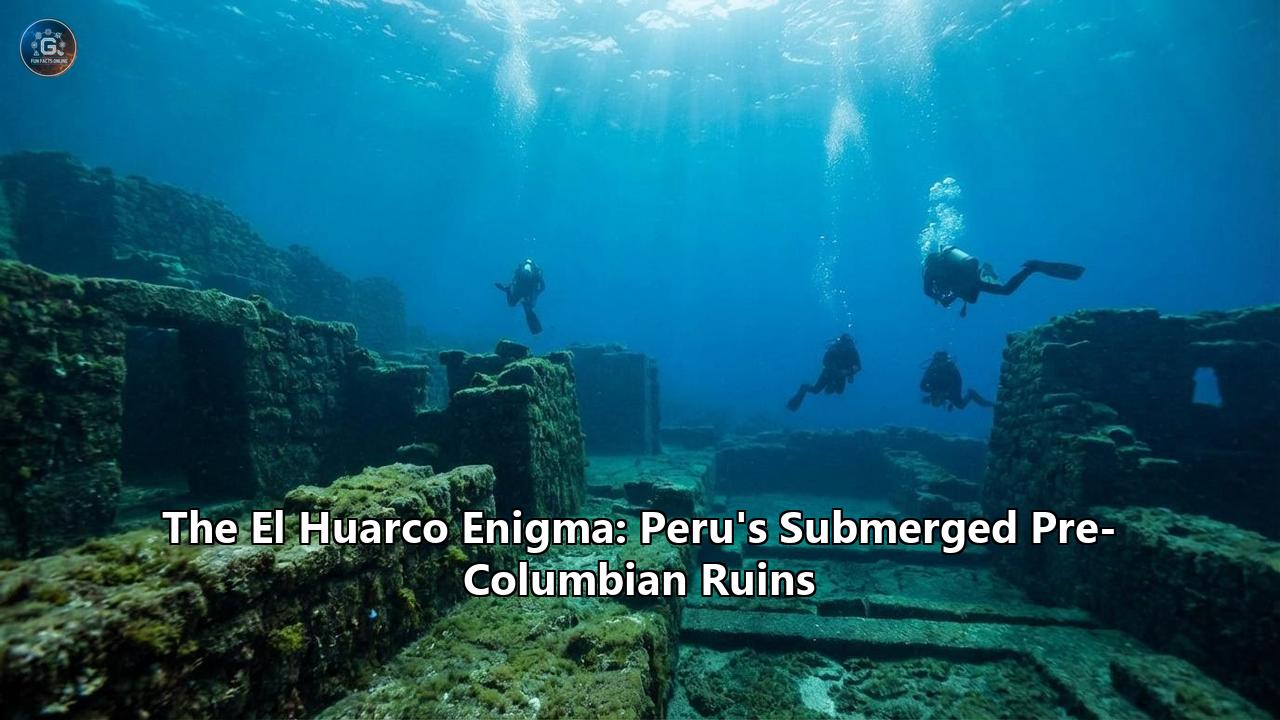
In a groundbreaking revelation that has sent shockwaves through the global archaeological community, a team of marine specialists and archaeologists recently ventured beneath the waves to uncover the submerged secrets of El Huarco. Conducted over a series of targeted immersions in mid-December 2025 and announced to the world in early 2026, these underwater expeditions have brought to light sunken Inca-period stone walls, enigmatic navigational artifacts, and the tantalizing remains of an ancient vessel. The Pacific Ocean, it seems, has been guarding the lost maritime legacy of the Huarco kingdom and their Inca conquerors.
This is the enigma of El Huarco: a story of a fierce coastal resistance, a ruthless imperial conquest, and a highly advanced civilization whose architectural and cultural footprint extended far beyond the shoreline, integrating the land and the sea into a single, awe-inspiring domain.
Where the Desert Meets the Pacific: The Domain of the Huarco
To understand the magnitude of the recent underwater discoveries, one must first look to the land. Located approximately 130 kilometers south of Lima, the Cañete Valley is a lush, fertile oasis slicing through the arid Peruvian coastal desert. At the mouth of this valley lies the modern district of Cerro Azul, a picturesque fishing village and popular surfing destination. But a millennium ago, this was the epicenter of a formidable civilization.
Between 1000 and 1470 AD, a period known to archaeologists as the Late Intermediate Period, the lower Cañete valley was controlled by the Kingdom of Huarco (also spelled Guarco). The Huarco were not merely survivors of the harsh coastal environment; they were its absolute masters. They transformed the fertile valley into an agricultural powerhouse, building intricate networks of irrigation canals that maximized crop yields.
But the true source of their wealth and power was the ocean. The Huarco were masterful fishers and navigators, utilizing the rich marine ecosystem of the Humboldt Current. Their capital, the monumental El Huarco fortress, was strategically built across a 35-hectare coastal promontory, sprawling over the cliffs of El Fraile, Centinela, and Camacho. From these high vantage points, they could monitor maritime traffic, spot approaching enemies, and oversee their vast agricultural domains.
The land-based ruins reveal a highly organized society. Archaeologists excavating the domestic quarters of the Huarco elite have uncovered sprawling residences equipped with sleeping quarters, long kitchens with extended hearths, and massive sunken ceramic vessels used for fermenting chicha (corn beer). Perhaps most fascinating are the specialized preservation rooms—chambers filled entirely with sand, designed to dry and preserve the massive quantities of fish harvested from the ocean. This dried fish was a highly prized commodity, loaded onto the backs of llamas in large courtyards and traded with highland populations deep in the Andes.
The Lord of the Coast and the Inca Onslaught
By the mid-15th century, the Inca Empire, radiating outward from its capital in Cusco, was sweeping across the Andes. Under the brilliant and ambitious leadership of Pachacuti and his son, Tupac Inca Yupanqui, the Incas assimilated countless tribes and kingdoms. However, when the Inca war machine reached the Cañete Valley, they encountered a wall of resistance unlike any they had faced on the coast.
The Huarco were ruled by a powerful Curaca (chief) named Chuquimanco. Recognizing the existential threat posed by the expanding empire, Chuquimanco rallied his forces, utilizing the formidable geography of Cerro Azul and nearby fortresses like Ungará to mount a legendary defense. For roughly four years, the Huarco successfully repelled the Inca armies. Their coastal fortresses, perched on jagged cliffs and fortified by massive adobe walls, proved nearly impenetrable. Furthermore, the Huarco's deep connection to the sea ensured a steady supply of food, allowing them to withstand prolonged sieges that would have starved a lesser kingdom.
The Spanish chroniclers who arrived a century later were captivated by tales of this epic standoff. Pedro Cieza de León, a meticulous 16th-century historian and conquistador, recorded the local oral traditions describing the Huarco's bravery: "Not wanting to remain as vassals, for their fathers had left them free, they showed themselves so valiant that they sustained the war".
Realizing that brute force alone could not break the Huarco, the Incas resorted to psychological warfare and devastating deceit. According to the chronicler José de Acosta, the Inca leadership feigned a desire for peace. They proposed a treaty and requested that the Huarco organize a grand ceremonial fishing expedition to celebrate the new alliance. Exhausted by years of relentless warfare, the Huarco leadership accepted.
When the Huarco warriors took to the sea for the ceremonial event, leaving their fortresses vulnerable, the Incas launched a devastating surprise attack. The betrayal was absolute, and the retribution was merciless. The Inca slaughtered the defenders and executed the Huarco leadership. To serve as a gruesome warning to any other coastal domains that dared defy the Sapa Inca, the conquerors hung the bodies of the defeated from the towering walls of the fortress. In the Quechua language of the Incas, the word Huarco (or Warku) translates to "the hanged ones" or "the place of the hanged". The kingdom was erased; only their tragic, macabre moniker survived.
An Andean Castle on the Coastal Cliffs
With the Huarco subdued, the Incas sought to stamp their indelible architectural and cultural mark upon the conquered promontory. They did not simply occupy the existing adobe structures; they embarked on a massive remodeling campaign to transform Cerro Azul into an imperial administrative center and a symbol of undisputed Inca dominion over the Pacific.
The Incas constructed typical imperial edifices utilizing finely cut stone masonry (sillar) imported or quarried specifically for the site, a rarity on the adobe-dominated coast. They built the Hatun Wasi (Great House) and surrounded the central public plaza with imposing administrative structures. These stone buildings, featuring the iconic Inca trapezoidal niches and perfectly fitted blocks, faced directly toward the ocean.
When Spanish explorers first sailed along the Peruvian coast, the sight of El Huarco left them in awe. Cieza de León and others described it as resembling a grand medieval European castle rising from the sea cliffs. It was a visual masterpiece of psychological dominance—a piece of the mountainous capital of Cusco magically transplanted to the shores of the Pacific Ocean.
Over the centuries following the Spanish conquest, however, the glory of El Huarco faded. The site was abandoned, its exquisite stone blocks often looted to build modern structures in the developing port town of Cerro Azul. The relentless coastal winds buried the plazas beneath layers of fine, talcum-like desert sand, while the ocean continuously battered the cliffs. For decades, modern archaeologists focused exclusively on these terrestrial ruins, mapping the plazas, unearthing the chicha vessels, and trying to reconstruct the timeline of the Huarco-Inca transition.
They had no idea that half of the story was hidden entirely underwater.
The 2026 Revelation: Unlocking the Submerged Enigma
For generations, local fishermen and divers in Cerro Azul whispered stories of strange, carved stones and ancient artifacts resting on the seabed just off the cliffs of El Huarco. Occasionally, artifacts would wash ashore or be pulled up in fishing nets, finding their way into the municipal custody of the Cerro Azul Museum. Yet, an organized, scientifically rigorous underwater archaeological survey remained elusive due to the turbulent waters and lack of specialized subaquatic resources.
That changed dramatically with the launch of a new research campaign by the Peruvian Ministry of Culture. Recognizing that the intertidal zone and the adjacent seabed were an inextricable part of the El Huarco complex, a specialized team of marine archaeologists launched an intensive subaquatic survey between December 15th and 17th, 2025.
Braving the frigid, nutrient-rich waters of the Humboldt Current, the dive teams meticulously mapped the ocean floor surrounding the promontories of El Fraile and Centinela. What they discovered fundamentally shifts our understanding of pre-Columbian coastal engineering.
Resting in the marine depths, the team identified a series of distinct underwater features. Most remarkably, they located submerged stone walls displaying unmistakable Inca-period masonry. These walls were not merely debris that had tumbled from the cliffs above; their arrangement suggests that the Inca and pre-Inca inhabitants actively built structures extending down to the waterline and into the intertidal zone, possibly serving as ancient breakwaters, docks, or ceremonial marine platforms.
Furthermore, the team recovered a variety of artifacts intrinsically linked to early maritime navigation, providing hard evidence of the advanced seafaring capabilities of the local populations. But the most tantalizing discovery of all was the material evidence suggesting the presence of a sunken vessel. While the exact chronology and origin of the vessel are still being determined by experts, the potential of discovering a pre-Columbian or early colonial shipwreck in direct association with an Inca coastal fortress is unprecedented.
The archaeologists meticulously georeferenced and recorded every structural anomaly and artifact, utilizing 21st-century subaquatic technology to create the most comprehensive dataset ever compiled on Peru's submerged coastal heritage.
Integrating Land and Sea: A New Paradigm
The discovery of El Huarco's submerged ruins forces historians and archaeologists to rewrite the narrative of pre-Hispanic coastal life. For decades, the academic focus on Andean civilizations has possessed a distinctly terrestrial bias—focusing on the dizzying heights of Machu Picchu, the sprawling adobe city of Chan Chan, or the vast network of the Qhapaq Ñan (the Inca road system). The ocean was often viewed merely as a boundary or a resource pool.
The underwater walls at Cerro Azul prove that for the Huarco and the Incas, the sea was not a boundary, but an extension of their architectural and sacred landscape. The integration of the marine environment into their urban planning speaks to a profound cosmological and practical relationship with the Pacific. Just as they terraced the steep Andean mountainsides to conquer the vertical landscape, they engineered the intertidal zones to master the dynamic, shifting environment of the coast.
This integration likely served multiple purposes. Practically, submerged or semi-submerged walls would have facilitated the safe docking of caballitos de totora (reed watercraft) and larger wooden rafts used for long-distance trade and fishing. Defensively, manipulating the coastline could have prevented enemy incursions from the sea. Ceremonially, water was a highly sacred element in Andean cosmology. Building structures that allowed the ocean to flow in and out of the fortress could have been a way of paying homage to Mama Cocha, the Inca goddess of the sea and fishes.
The underwater findings at El Huarco parallel other recent, revolutionary subaquatic discoveries in South America, such as the submerged Tiwanaku temples discovered deep beneath the surface of Lake Titicaca. Together, these sites are giving birth to a golden age of underwater archaeology in the Andes, proving that to truly understand these ancient empires, we must be willing to look beneath the surface.
Guardians of the Deep: The Fight for Preservation
With the revelation of the submerged ruins comes an urgent need for protection. The marine environment is highly dynamic, and the artifacts that have survived for half a millennium are incredibly fragile once exposed to modern interventions.
The Ministry of Culture is currently using the georeferenced data from the December 2025 expedition to compile a rigorous dossier. The ultimate goal is to formally declare the marine sector of El Huarco as "Cultural Heritage of the Nation". This legal designation is vital. It would establish a protected maritime perimeter, regulating activities that threaten the site.
Currently, the underwater ruins face several severe anthropogenic threats. While local artisanal fishing and recreational diving have coexisted with the site for decades, the extraction of stones from the intertidal zone for modern construction purposes has become a pressing concern for authorities. Removing these stones destabilizes the ancient marine architecture and destroys the contextual evidence archaeologists need to date and understand the structures.
The success of El Huarco's preservation ultimately relies on the local community of Cerro Azul. Fortunately, local knowledge and stewardship have already played a crucial role in the survival of the site's history. Generations of Cerro Azul residents have acted as the unofficial guardians of the ruins, dutifully turning over artifacts recovered from the sea to the Municipal Museum. By integrating the local population into the ongoing archaeological initiatives—such as the Ministry of Culture's Fortaleza program—officials hope to foster a renewed sense of pride and shared responsibility.
The vision for the future is a holistic archaeological park where visitors can stand beside the monolithic stone walls of the Hatun Wasi, look out over the crashing waves, and understand that the ancient city continues deep into the blue abyss below.
The Ocean’s Memory
The El Huarco Enigma is a poignant reminder of the sheer resilience of human history. The Inca Empire sought to obliterate the Huarco kingdom, erasing their leaders and hanging their defenders to create a monument of imperial terror. In turn, the Spanish conquistadors dismantled the Inca's coastal castles, repurposing their sacred stones and leaving the once-great administrative centers to be swallowed by the desert sands.
Yet, neither imperial ambition nor colonial expansion could conquer the ocean. The Pacific waves, crashing endlessly against the cliffs of Cerro Azul, embraced the lower reaches of the fortress, shielding its maritime secrets in cold, nutrient-dense waters for more than five hundred years.
Today, as marine archaeologists carefully brush the silt away from submerged Inca masonry and document the ghosts of ancient vessels, the lost voices of El Huarco are finally surfacing. The discovery of these submerged ruins bridges the gap between land and sea, offering an unprecedented window into the ingenuity, spirituality, and daily lives of pre-Columbian coastal societies. It proves that the history of the Americas is not just written in the dust of the earth, but is anchored deep within the silent, eternal depths of the sea.
Reference:
- https://www.geographicus.com/P/ctgy&Category_Code=ciezadeleon
- https://www.scribd.com/document/960672356/The-Fortress-of-Ungara
- https://greekreporter.com/2026/01/20/underwater-inca-era-structures-el-huarco-peru/
- https://alansinger.net/wp-content/uploads/2019/02/15.1-spanish-conquest-of-inca.pdf
- https://qhapaqnan.cultura.pe/sites/default/files/articulos/182759490-El-Huarco-Cerro-Azul-y-la-conquista-inca-en-el-valle-de-Canete.pdf
- https://en.wikipedia.org/wiki/Pedro_Cieza_de_Le%C3%B3n
- https://www.unesco.org/en/lamemoriasumergida