
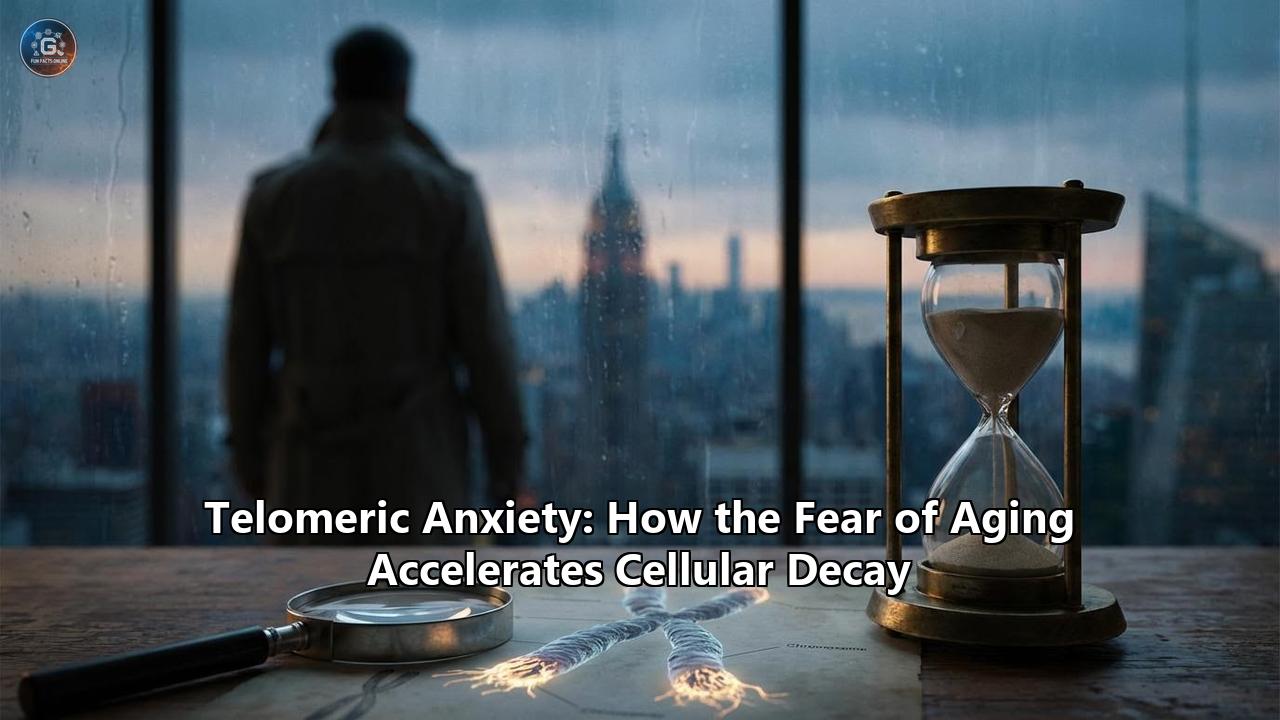
It is one of the greatest and most tragic ironies of modern health and wellness: the very fear of getting older is actively accelerating the aging process.
We live in an era dominated by a multi-billion-dollar anti-aging industrial complex. Every day, we are bombarded with advertisements for miracle serums, longevity protocols, extreme diets, and cosmetic procedures, all promising to halt the inevitable march of time. Society treats aging not as a biological imperative or a privilege, but as a disease to be cured. Consequently, many of us develop a deep-seated dread of growing older. We scrutinize every new wrinkle, panic over minor memory lapses, and obsessively track our biological metrics.
But beneath the surface of this cultural obsession lies a hidden, microscopic consequence. The psychological burden of fearing aging triggers a chronic stress response in the body. This relentless, low-grade anxiety does not simply make us feel tired or overwhelmed; it infiltrates our biology at the cellular level, fraying our DNA and driving a phenomenon known as "telomeric anxiety".
Through the pioneering research of Nobel laureates and leading health psychologists, science has now proven what ancient wisdom has long suggested: our minds and our cells are locked in a continuous, intimate dialogue. When the mind perceives the passage of time as a threat, the body's cells age faster to match that narrative.
To understand how our fear of aging becomes a self-fulfilling prophecy, we must first journey into the nucleus of our cells and look at the biological ticking clocks known as telomeres.
The Aglets of Our DNA: Understanding Telomeres
In order to comprehend how stress physically dismantles our youth, we have to look at our genetic blueprints. Almost every cell in the human body contains a nucleus, and inside that nucleus lies our DNA, tightly coiled into structures called chromosomes.
You can visualize a chromosome as a shoelace. If you have ever owned a pair of lace-up shoes, you know that the ends of the laces are capped with small pieces of plastic or metal called aglets. These aglets prevent the shoelace from fraying and unraveling. Telomeres are the biological equivalent of these aglets. They are repetitive sequences of non-coding DNA located at the very tips of our chromosomes, and their primary job is to protect our genetic data during cell division.
Every time a cell divides to replenish skin, repair tissue, or maintain the immune system, the DNA must be copied. However, due to a quirk in how our cellular machinery operates, the very end of the chromosome cannot be fully replicated. Consequently, with every cell division, the telomere gets a tiny bit shorter.
When we are young, our telomeres are long and robust. But as the years pass and our cells divide thousands of times, our telomeres gradually wear down. Once a telomere becomes critically short, the cell receives a distress signal. It realizes it can no longer divide safely without risking the loss of vital genetic information. At this point, the cell either undergoes apoptosis (programmed cell death) or enters a state called cellular senescence.
Senescent cells are often referred to as "zombie cells." They stop dividing, but they refuse to die. Instead, they linger in the body, secreting a toxic cocktail of inflammatory molecules that damage surrounding healthy cells. The accumulation of these zombie cells is a primary driver of the physical signs of aging—from sagging skin and weakened immunity to cardiovascular disease and cognitive decline.
For a long time, scientists believed that this telomere shortening was simply an inescapable, metronomic function of time. But in 1984, Elizabeth Blackburn and Carol Greider made a monumental discovery that would eventually win them the 2009 Nobel Prize in Physiology or Medicine. They discovered an enzyme called telomerase.
Telomerase is a cellular elixir of youth. Its sole function is to add DNA base pairs back onto the ends of chromosomes, effectively rebuilding the telomeres and restoring the protective caps. The discovery of telomerase revealed a stunning truth: aging is not a one-way street. The degradation of our cells is dynamic. Our telomeres are constantly being worn down by division and damage, but they are also constantly being rebuilt by telomerase.
The critical question then became: what controls the balance? Why do some people maintain robust telomerase activity and long telomeres well into their eighties, while others suffer from accelerated cellular decay in their forties?
The answer, it turns out, has much to do with how we experience stress.
The Mind-Cell Connection: How Stress Gets Under the Skin
The realization that psychological stress could directly dictate the length of our telomeres was a paradigm-shifting moment in human biology. This breakthrough was spearheaded by Dr. Elizabeth Blackburn and Dr. Elissa Epel, a leading health psychologist at the University of California, San Francisco.
Epel and Blackburn wanted to know if severe, chronic psychological stress could "get under the skin" and accelerate the cellular aging process. To test this, they designed a landmark study observing women who were enduring one of the most profound chronic stressors imaginable: mothers caring for children with severe, chronic illnesses.
The researchers measured the telomere lengths of these highly stressed mothers and compared them to a control group of mothers with healthy children. The results were staggering. The immune cells of the highly stressed mothers had telomeres that were significantly shorter than those of the control group. In fact, the women experiencing the highest levels of perceived stress had telomeres so degraded that they equated to at least a full decade of additional aging compared to low-stress women.
For the first time in history, science had drawn a direct, measurable line between the psychological experience of chronic stress and the physical shortening of DNA.
How exactly does a thought—a feeling of anxiety, a state of worry—destroy a physical strand of DNA? The mechanism is a toxic cascade involving the neuroendocrine system and the cellular environment.
When we experience psychological stress, our brain's amygdala signals the adrenal glands to release a flood of stress hormones, primarily cortisol and adrenaline. This "fight or flight" response is highly adaptive if we are running from a physical predator. But the human brain does not easily distinguish between a physical threat to our life and a psychological threat to our ego or our future.
When we are constantly anxious, cortisol remains chronically elevated in the bloodstream. In a petri dish, exposing cells directly to high levels of stress hormones has been shown to rapidly downregulate the activity of telomerase, stripping the cells of their ability to repair their protective caps. Furthermore, chronic stress triggers a massive increase in reactive oxygen species (ROS) in the body, leading to oxidative stress.
Telomeres are incredibly rich in guanine, a DNA base that is exceptionally vulnerable to oxidative damage. When the body is bathed in the oxidative stress created by chronic anxiety, the ROS molecules act like microscopic blowtorches, physically burning away the telomeres at an accelerated rate. Simultaneously, the psychological stress suppresses the telomerase enzyme, meaning the body cannot rebuild the damage it is actively suffering.
This is the biological blueprint of stress-induced aging. And while caring for a sick child or enduring financial ruin are obvious sources of chronic stress, researchers are increasingly finding that our internal narratives—specifically, our fears about getting older—are potent enough to trigger this exact same cellular decay.
Telomeric Anxiety: The Fear That Ages You
We have created a society that pathologizes normal biological aging. From the moment we spot our first gray hair or notice a new ache in our joints, a quiet panic sets in. We obsess over "anti-aging" routines and worry endlessly about losing our vitality, our cognitive sharpness, and our physical independence.
This specific, hyper-focused fear of growing older is what gives rise to "telomeric anxiety." It is the ultimate biological paradox.
Recent studies utilizing advanced epigenetic clocks—tools like the DunedinPACE clock that quantify the biological pace of aging by measuring DNA methylation—have begun to decode the impact of aging anxiety. Researchers have discovered that heightened anxiety specifically regarding the aging process is linked to physiological changes consistent with physical weakening and an elevated probability of age-related disorders.
When individuals harbor intense fears about their health declining or losing their autonomy as they age, this worry functions as a relentless psychological stressor. Every time a person looks in the mirror and feels a spike of cortisol over a new wrinkle, or lays awake at night dreading the prospect of becoming frail, they are activating the very neuroendocrine pathways that suppress telomerase and increase oxidative stress.
Fascinatingly, research indicates that the type of aging anxiety matters. Concerns strictly centered on physical appearance or a loss of youthfulness do not show as significant an impact on cellular aging as deep-seated anxieties regarding the loss of health, autonomy, and independence. When we catastrophize about our physical future, our body treats that catastrophic narrative as a present-day emergency. The cortisol flows, the oxidative stress spikes, the telomeres shorten, and the biological clock speeds up.
Dr. Becca Levy, a professor of epidemiology and psychology at the Yale School of Public Health, has spent decades pioneering the study of how our beliefs about aging affect our physical health. Her findings are nothing short of revolutionary. Levy's longitudinal research demonstrates that individuals who internalize negative age stereotypes—viewing aging as an inevitable tragedy of decline, memory loss, and helplessness—experience significantly worse health outcomes.
In a pivotal study that tracked participants over decades, Levy found that people who held positive, empowering attitudes about aging lived, on average, 7.5 years longer than those with negative, fearful views. To put that in perspective, 7.5 years of added life span is a greater longevity benefit than maintaining a low body mass index, never smoking, or engaging in regular exercise.
How can a simple belief system grant nearly a decade of extra life? It all comes back to telomeric anxiety and the mind-cell connection. When you view aging as a period of continued growth, wisdom, and fulfillment, the physical process of getting older is no longer perceived by your brain as a threat. The stress response is turned off. Cortisol levels remain stable. Telomerase is free to do its restorative work, maintaining the length of your telomeres.
Conversely, if you absorb society's ageist messaging and view your future self with dread, your brain remains in a constant state of low-grade physiological alarm. You are chronically stressed by your own future, and your cells pay the price in the present. As geriatric psychiatrist Daniel Plotkin notes, physiological changes are deeply tied to our psychology; it is rare to have a condition that is entirely physical without a mental component. The body is always a precursor for where the mind goes, and if the mind expects frailty and decay, the body will biologically engineer that exact outcome.
The Intergenerational Echo of Cellular Stress
The devastating impact of stress on our telomeres is not just limited to our own lifespan. Startling research has revealed that the cellular wear-and-tear of psychological stress can actually echo across generations, beginning before we take our first breath.
Our biological age does not begin at birth; it begins at conception. The intrauterine environment is profoundly shaped by the mother's physical and psychological health. When a pregnant woman experiences high levels of psychological stress, the excess cortisol in her bloodstream can cross the placental barrier.
Studies examining maternal health and telomeres in offspring have found a direct correlation between a mother's prenatal anxiety and the telomere length of her newborn baby. Mothers who are highly stressed during pregnancy give birth to children who have shorter telomeres right from the start. This means that the child enters the world with a biological clock that has already been fast-forwarded.
Furthermore, as children grow, their cellular health is continuously impacted by their environment. Studies conducted by researchers like Professor Ian Gotlib at Stanford University have demonstrated that healthy young girls who have a family history of stress and depression, and who are exposed to high-stress environments, exhibit significantly shorter telomeres and higher cortisol reactivity. These girls are biologically older than their chronological peers. The trauma, stress, and anxieties of the parents create a high-stress environment that literally ages the DNA of the next generation.
This intergenerational transfer of cellular aging highlights just how deeply embedded our psychology is in our biology. It is not just about our own fear of aging; it is about the culture of stress and anxiety we perpetuate and pass down. If we are constantly modeling a fear of the future, a dread of physical decline, and a hyper-stressed approach to modern life, we are not just shortening our own telomeres—we are potentially compromising the cellular foundation of our children.
The Mechanisms of Decay: Inflammaging and Senescence
To fully grasp the severity of telomeric anxiety, we have to look at what happens in the body once the fear of aging successfully wears down the telomeres.
When chronic stress suppresses telomerase and oxidative damage breaks the telomeres down to a critical threshold, the cell enters senescence. Senescent cells are heavily implicated in a process scientists call "inflammaging"—the chronic, systemic, low-grade inflammation that characterizes the aging phenotype.
Senescent cells secrete a specific set of proteins, cytokines, and chemokines known as the Senescence-Associated Secretory Phenotype (SASP). These toxic secretions cause local inflammation and can actually turn neighboring, healthy cells into senescent cells, spreading cellular aging like a virus through the tissue.
This inflammaging is the root cause of almost every major age-related disease. In the cardiovascular system, senescent endothelial cells lead to the stiffening of arteries and plaque buildup. In the brain, cellular senescence and oxidative stress contribute to the degradation of neurons, paving the way for cognitive decline and Alzheimer's disease. In the immune system, the shortening of telomeres in T-cells leads to immunosenescence—a weakened ability to fight off viruses, bacteria, and emerging cancer cells.
Because telomeric anxiety is characterized by a specific fear of health decline, the cruel irony is that the anxiety itself is the mechanism that invites the disease. The patient who is paralyzed by the fear of developing cardiovascular disease or dementia produces the cortisol and oxidative stress that shortens their telomeres. The shortened telomeres produce the senescent cells. The senescent cells produce the systemic inflammation. And the systemic inflammation eventually manifests as the exact cardiovascular disease or cognitive decline the patient was so desperate to avoid.
Breaking the Cycle: Curing Telomeric Anxiety
If the mind has the power to destroy our cells through fear, it also has the profound ability to heal and protect them through intentional intervention. Telomere shortening is not a one-way street, and telomeric anxiety is a highly treatable condition.
In their groundbreaking book The Telomere Effect, Dr. Elizabeth Blackburn and Dr. Elissa Epel outline a comprehensive "Telomere Manifesto"—a set of actionable, scientifically proven strategies to increase telomerase activity, protect our chromosomes, and slow the biological pace of aging. By combining their cellular research with the psychological insights of experts like Dr. Becca Levy, we can create a powerful protocol for reversing telomeric anxiety.
1. Reframe the Stress Response: Threat vs. Challenge
We cannot eliminate stress from modern life. Financial burdens, family crises, and global uncertainties will always exist. The key to protecting our telomeres is not to live a perfectly serene, stress-free life, but to change our relationship with stress.
When we encounter a stressor, our brain appraises it in one of two ways: as a threat, or as a challenge. A threat response occurs when we believe we do not have the resources to handle the situation. We feel helpless, panicked, and doomed. This threat response triggers the massive, sustained release of cortisol that strips away our telomeres.
A challenge response, however, occurs when we perceive a stressful situation as difficult, but manageable. We view it as an opportunity to rise to the occasion. Fascinatingly, a challenge response creates a completely different biochemical reaction in the body. While it still involves short-term arousal, it does not lead to the prolonged, toxic cortisol spikes that cause oxidative stress.
When it comes to the fear of aging, we must reframe the passage of time from a "threat" to a "challenge". Getting older is not a terrifying disease that is coming to rob us of our identity; it is a natural biological challenge that requires us to adapt, find new sources of purpose, and focus on wisdom rather than pure physical youth. When we shift this mindset, we immediately defuse the neuroendocrine bomb that destroys telomeres.
2. Cultivate Positive Age Beliefs
Dr. Becca Levy’s research explicitly shows that combating cultural ageism and cultivating positive age beliefs is a literal life-saving intervention. We must audit our own internal biases about getting older.
Stop using language that disparages age. When you forget where you placed your keys, do not immediately label it a "senior moment" or panic about early-onset dementia; accept that people of all ages misplace their keys. When you look in the mirror, try to sever the connection between aesthetic changes (like wrinkles) and your intrinsic value or health. Surround yourself with positive role models of aging—individuals who are vibrant, active, and deeply engaged with life in their seventies, eighties, and beyond. By adopting the belief that your best years, your deepest wisdom, and your truest peace are still ahead of you, you signal to your cells that the environment is safe. The stress response quiets, and telomerase activity increases.
3. Mindfulness and Meditation
One of the most potent, scientifically validated tools for boosting telomerase activity is mindfulness meditation. Studies have shown that individuals who engage in regular mindfulness practices—such as focused breathing, mindful awareness, or loving-kindness meditation—exhibit significantly higher levels of telomerase activity in their immune cells.
Meditation works as a direct antidote to telomeric anxiety. Anxiety is entirely focused on the future—worrying about the decline that might happen five, ten, or twenty years from now. Mindfulness anchors the brain violently and beautifully in the present moment. When the brain realizes that, in this exact second, you are safe, breathing, and okay, it shuts off the chronic fight-or-flight response. This reduction in psychological stress immediately decreases the production of reactive oxygen species, protecting the delicate guanine base pairs in the telomeres from being burned away.
4. Physical Movement (Without the Chronic Stress of Over-Training)
Exercise is a cornerstone of telomere protection, but it comes with an important caveat regarding stress. Regular, moderate aerobic exercise and strength training have been shown to reduce oxidative stress over time, improve mitochondrial function, and support telomere length.
However, because the anti-aging industry is driven by panic, many people approach exercise with a frantic, punishing mindset. They engage in chronic over-training, pushing their bodies to the absolute limit day after day in a desperate attempt to stay young. This over-training actually acts as a severe physiological stressor. It floods the body with excessive cortisol and creates massive amounts of oxidative stress that the body cannot recover from, thereby accelerating telomere shortening.
To protect your telomeres, exercise must be a celebration of what your body can do, not a punishment for what you ate or a panicked attempt to outrun the clock. Practices like Tai Chi, which combine physical movement with deep breathing and mindfulness, have been shown to be incredibly effective for stress management and longevity.
5. Sleep as Cellular Armor
Sleep optimization is a fundamental longevity practice. When we sleep, the body undergoes critical cellular repair processes. The brain clears out metabolic waste, hormone levels balance, and the immune system regulates itself.
Chronic sleep deprivation—getting less than seven hours of quality sleep per night—is a massive physiological stressor. It accelerates aging markers, increases systemic inflammation, and contributes directly to telomere attrition. Unfortunately, telomeric anxiety often manifests as insomnia. Laying awake worrying about health, mortality, and aging spikes nighttime cortisol, ruining sleep architecture and creating a vicious cycle of cellular damage. Developing a rigorous, calming sleep schedule and practicing strict sleep hygiene is essential for giving telomerase the time and biological environment it needs to rebuild your DNA.
6. A Telomere-Protective Diet
The food we consume directly influences the amount of oxidative stress in our bodies. A diet high in heavily processed foods, refined sugars, and excessive red meat promotes systemic inflammation and generates reactive oxygen species, which actively cleave telomeres.
Conversely, consuming a diet rich in antioxidants—found abundantly in colorful fruits, vegetables, and leafy greens—provides the body with molecules that neutralize ROS before they can damage the DNA. Furthermore, Omega-3 fatty acids, found in fatty fish, walnuts, and flaxseeds, have been heavily correlated with preserved telomere length. Proper nutrition does not make you immortal, but it equips your cells with the biological shields necessary to deflect the daily stress of living.
Rewriting the Narrative: The Privilege of Time
We are living through a unique moment in human history. We have access to more scientific data regarding our own biology than any generation before us. We can measure our telomeres, track our sleep cycles, map our genomes, and calculate our epigenetic age. But this wealth of data has become a double-edged sword. For many, the constant monitoring has morphed into an obsession, and the obsession has bred an anxiety that is quietly destroying the very vitality we are trying to preserve.
Telomeric anxiety teaches us a profound lesson about the limits of reductionist medicine. We cannot simply look at the human body as a machine made of meat and DNA, entirely separate from the mind that inhabits it. The mind and the body are a singular, unified ecosystem.
Elizabeth Blackburn and Elissa Epel’s discovery that stress shortens our telomeres, paired with Becca Levy’s revelation that positive age beliefs extend our lives, forces us to reevaluate our entire cultural approach to aging. The anti-aging industry sells us fear, because fear is profitable. But biologically, fear is a poison.
If we want to live longer, healthier, and more vibrant lives, we have to stop going to war with our own biology. We must put down the weapons of self-criticism and cease viewing every passing year as a tragic loss of youth. Aging is not a failure; it is the natural progression of a life well-lived.
The telomeres at the ends of our chromosomes are not just ticking clocks counting down to our demise. They are dynamic, living records of how we experience the world. They record our traumas, our chronic stresses, and our deep-seated fears. But they also record our resilience, our mindfulness, our joy, and our peace.
When we finally let go of the paralyzing fear of getting older, we do not just free our minds from a heavy psychological burden. We literally change the chemistry of our bloodstream. We shut down the toxic flood of cortisol. We extinguish the fires of oxidative stress. We awaken the regenerative power of telomerase.
In the end, the ultimate anti-aging protocol cannot be bought in a bottle, injected into a wrinkle, or achieved through a punishing diet. The ultimate protocol is radical acceptance. By embracing the passage of time as a privilege rather than a punishment, we grant our cells the biological safety they need to thrive. We stop the decay of telomeric anxiety, and we allow ourselves, at long last, to age with grace, vitality, and cellular peace.
Reference:
- https://www.lybrate.com/topic/stress-is-only-real-disease-all-other-diseases-are-complications-of-stress-everyone-should-aware-of/32463308c89206489a05784d6e883f30
- https://www.jpost.com/science/article-889570
- https://www.salk.edu/news-release/salk-president-co-authors-book-slowing-human-aging/
- https://www.pnas.org/doi/10.1073/pnas.0407162101
- https://somaticmovementcenter.com/telomere-effect/
- https://www.apa.org/monitor/2014/10/chronic-stress
- https://pmc.ncbi.nlm.nih.gov/articles/PMC8920518/
- https://globalrph.com/2025/12/the-internists-role-in-the-longevity-movement-separating-science-from-pseudoscience/
- https://nutritionfacts.org/hnta-video/the-effect-of-psychological-stress-on-telomeres/
- https://personalizemymedicine.com/product/the-telomere-effect-a-revolutionary-approach-to-living-younger-healthier-longer-by-dr-elizabeth-blackburn-dr-elissa-epel/
- https://pmc.ncbi.nlm.nih.gov/articles/PMC534658/
- https://www.yourtango.com/self/genetic-quirk-make-you-look-older-than-friends
- https://pmc.ncbi.nlm.nih.gov/articles/PMC6458519/
- https://mccriteplaza.com/2024/10/the-power-of-attitude-on-aging-lessons-from-ellen-langer-and-becca-levy/
- https://www.penguin.co.uk/books/442538/breaking-the-age-code-by-levy-becca/9781785043550
- https://www.asuolli.org/asu/course/course.aspx?catId=157
- https://www.researchgate.net/publication/332228611_Accelerating_Research_on_Biological_Aging_and_Mental_Health_Current_Challenges_and_Future_Directions
- https://www.youtube.com/watch?v=FCzQIRmEu94