
For over a century, the medical community’s understanding of a patient’s cardiovascular health has been tethered to a remarkably rudimentary ritual: wrapping a pneumatic cuff around the upper arm, inflating it until blood flow stops, and listening for the return of a pulse. The sphygmomanometer, while a triumph of 19th-century engineering, offers only a fleeting snapshot of a dynamic, ever-changing biological system. Blood pressure is not a static number; it is a fluid metric that ebbs and flows with stress, sleep, physical exertion, and the time of day.
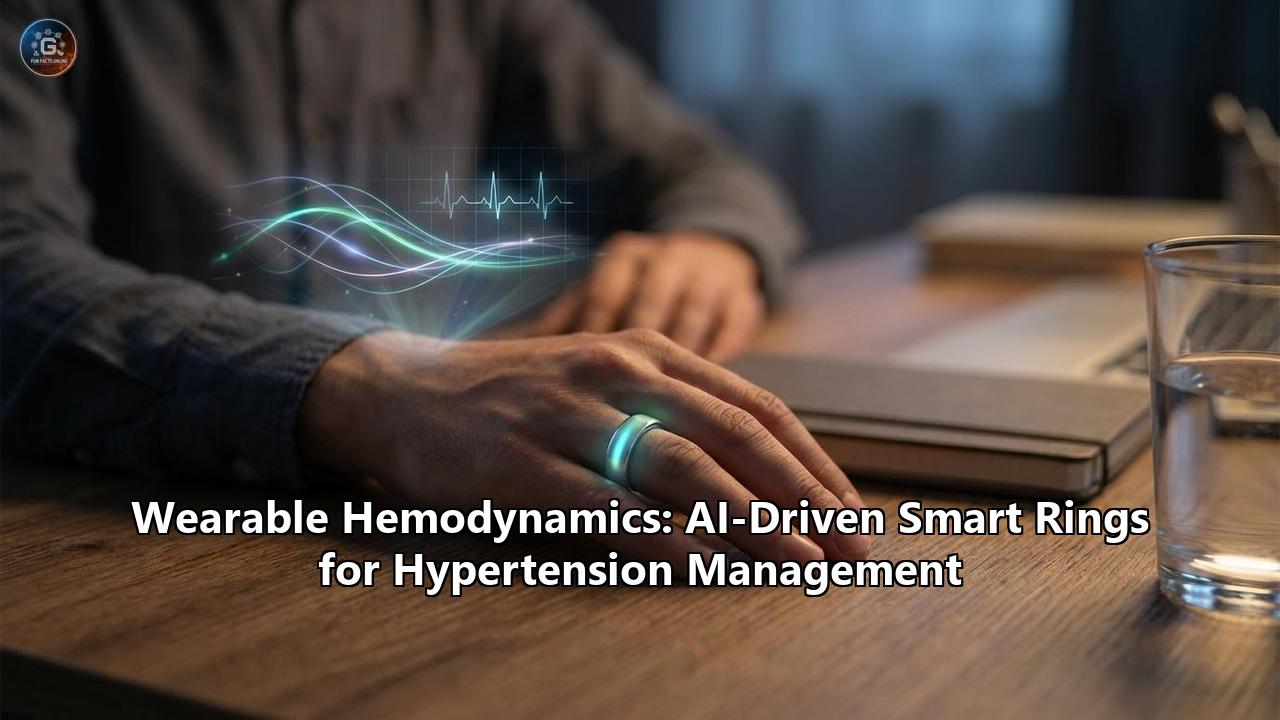
Today, we stand at the precipice of a cardiovascular care revolution. The convergence of miniaturized biosensors and advanced artificial intelligence has birthed a new era of wearable hemodynamics. Leading this charge is not the smartwatch, but the smart ring—a sleek, unobtrusive form factor that sits quietly on the finger, continuously decoding the complex language of the human heart. By leveraging AI-driven analytics, these rings are transforming hypertension management from a reactive, point-in-time diagnosis into a continuous, proactive, and predictive science.
The Silent Killer and the Flaws of the Snapshot
Hypertension is globally recognized as the "silent killer." It frequently presents no symptoms until it culminates in a catastrophic event such as a myocardial infarction (heart attack), stroke, or renal failure. The traditional method of measuring blood pressure in a clinical setting is fraught with inherent limitations.
Foremost among these is "white-coat hypertension," a phenomenon where the stress and anxiety of a medical environment cause a patient's blood pressure to spike, leading to false-positive diagnoses and unnecessary medication. Conversely, "masked hypertension" occurs when a patient exhibits normal readings in the clinic but experiences dangerous spikes during their daily life. Furthermore, conventional monitoring fails to capture nocturnal blood pressure—the behavior of our hemodynamics while we sleep. In healthy individuals, blood pressure naturally "dips" by 10% to 20% at night. The absence of this nocturnal dip is one of the strongest predictors of future cardiovascular mortality, yet it is nearly impossible to track with a standard, wake-disrupting blood pressure cuff.
Ambulatory Blood Pressure Monitoring (ABPM) has historically been the gold standard for tracking 24-hour hemodynamic profiles, but it requires the patient to wear a bulky arm cuff that inflates every 30 minutes, severely disrupting sleep and daily activities. The sheer discomfort of ABPM ensures it is used sparingly. To truly understand and manage hypertension, medicine required a device that was invisible to the user but omniscient in its data collection.
Why the Finger? The Anatomical Advantage of Smart Rings
While smartwatches have popularized wrist-based health tracking, the finger is anatomically superior for capturing high-fidelity hemodynamic data. The digital arteries in the fingers boast a dense, superficial capillary bed that provides a much stronger and clearer pulse signal than the wrist.
Furthermore, form factor dictates data quality. A smartwatch is relatively heavy and prone to sliding up and down the arm, introducing severe motion artifacts that corrupt delicate cardiovascular data. A smartly designed ring, however, maintains tight, 360-degree contact with the skin. Devices like the CIRCUL Ring have capitalized on this with "Sensor Stabilization Technology" (SST), utilizing elastic structural designs and adaptive pressure sensing to maintain optimal skin contact and absorb micro-movements during daily activities. This stable environment is critical when measuring the microvascular changes required to estimate blood pressure without a physical cuff.
Decoding Hemodynamics: The Role of PPG and Artificial Intelligence
Smart rings do not physically squeeze the finger to measure pressure. Instead, they rely on Photoplethysmography (PPG), an optical technique that illuminates the skin with LED light (typically green, red, or infrared) and measures the amount of light that is absorbed or reflected by the blood vessels beneath. As the heart beats, blood volume in the microvascular bed changes, creating a pulsatile waveform.
However, translating a PPG light wave into a highly accurate, clinical-grade blood pressure reading (measured in millimeters of mercury, or mmHg) is an incredibly complex physics problem. Raw PPG signals are notoriously noisy. They are easily distorted by ambient light, finger movement, and—crucially—fluctuations in skin temperature, which cause blood vessels to constrict or dilate.
This is where Artificial Intelligence steps in as the grand translator.
AI and machine learning algorithms are trained on vast datasets of paired PPG waveforms and traditional arterial blood pressure measurements. These deep learning models do not just look at the peak of the pulse wave; they analyze the entire morphology of the waveform. They assess:
- Pulse Transit Time (PTT) and Pulse Arrival Time (PAT): The time it takes for a pulse wave to travel from the heart to the peripheral extremities. Faster transit times generally correlate with stiffer arteries and higher blood pressure.
- Wave Reflection Analytics: AI examines the secondary "dicrotic notch" in the pulse wave, which represents blood reflecting back from the lower body. The shape and timing of this reflection provide profound insights into arterial stiffness and vascular resistance.
- Motion and Temperature Compensation: Advanced systems utilize a synergistic hardware-software co-design. For example, by integrating a built-in accelerometer and skin temperature sensors, AI algorithms can dynamically fuse features. If the skin temperature drops and capillaries constrict, the AI recalibrates the PPG data in real-time to mitigate thermal drift, ensuring the blood pressure estimation remains accurate regardless of environmental conditions.
By applying techniques like complete ensemble empirical mode decomposition with adaptive noise (ICEEMDAN) and recursive least squares (RLS) adaptive filters, the AI strips away the noise, revealing a pristine heartbeat waveform from which it extracts continuous systolic and diastolic blood pressure readings.
The Vanguard of Wearable Hemodynamics in 2026
The commercial and clinical landscape of smart rings has evolved rapidly, transitioning from mere sleep trackers to sophisticated, FDA- and CE-approved Class II medical devices. Several key players have defined the 2025/2026 market:
Sky Labs CART BP
South Korean health-tech startup Sky Labs has achieved a monumental breakthrough with the CART BP (Cardio Tracker Blood Pressure) ring. Approved by Korea’s Ministry of Food and Drug Safety (MFDS) and holding an EU MDR (Medical Device Regulation) approval, the CART BP is recognized as the world’s first ring-type cuffless blood pressure monitor intended for 24/7 everyday use.
Adopted by over 1,700 hospitals and clinics as an alternative to traditional ABPM devices, the CART BP completely changes the patient experience. Worn on the finger, it quietly logs daytime fluctuations and, most importantly, nighttime blood pressure without waking the patient. Its companion AI app visualizes this data into a "Blood Pressure Calendar," allowing physicians to instantly spot masked hypertension, morning surges, and non-dipping nocturnal patterns. In clinical head-to-head comparisons, Sky Labs' ring device even outperformed the Apple Watch in detecting Atrial Fibrillation (AFib), achieving an 84.6% sensitivity rate compared to the Apple Watch’s 69.1%.
The CIRCUL Ring
The CIRCUL Ring represents the push toward professional-grade metrics in the consumer space. Utilizing ECG-calibrated accuracy and a proprietary multi-sensor data fusion model, CIRCUL focuses heavily on motion artifact elimination. Its AI algorithms automatically compensate for micro-movements, allowing it to maintain high-fidelity monitoring of heart rate variability (HRV) and blood oxygen saturation (SpO2) even during exercise. By treating blood pressure and cardiovascular tracking not just as resting metrics but as dynamic, active data points, the CIRCUL ring provides a continuous feedback loop for performance and recovery.
The Doni Smart Ring
Taking a radically holistic approach, the Doni Smart Ring integrates medical-grade hemodynamics modeling with emotional and hormonal tracking. Moving far beyond simple step counts, Doni tracks six critical cardiovascular risks: atrial fibrillation, arrhythmia, blood viscosity, arterial stiffness, myocardial ischemia, and heart failure indicators.
Fascinatingly, the Doni ring uses its PPG sensors and AI not only to monitor physical pressure but to detect physiological responses tied to emotional states. By analyzing HRV, respiration, and nervous system signals, the AI quantifies hormonal shifts and maps out seven core emotions. This paradigm acknowledges that hypertension is deeply intertwined with mental health, chronic stress, and emotional regulation, providing a unified "body energy score" that treats the mind and the vascular system as one connected entity.
Samsung Galaxy Ring and the Broader Tech Ecosystem
Mainstream tech giants are also heavily invested in the space. Samsung introduced the Galaxy Ring to massive fanfare, emphasizing a subscription-free ecosystem seamlessly integrated into Samsung Health. While the first iteration of the Galaxy Ring heavily leaned into "Energy Scores," sleep tracking, and AI-driven wellness tips based on heart rate and skin temperature, the industry anticipates future iterations (like the highly rumored Galaxy Ring 2) to push deeper into clinical hemodynamics. Currently, Samsung directs users to the Galaxy Watch for direct blood pressure estimation (which requires monthly cuff calibration), but the broader trajectory of Samsung’s AI research indicates a relentless pursuit of incorporating non-invasive, continuous blood pressure tracking directly into the ring form factor.
Transforming the Clinical Paradigm
The integration of AI-driven smart rings into standard medical practice is shifting the entire treatment paradigm for hypertension from a trial-and-error approach to precision medicine.
When a physician prescribes anti-hypertensive medication, the traditional follow-up involves a clinic visit weeks later to check a single blood pressure reading. With wearable hemodynamics, the physician receives a continuous data stream. They can see exactly how the patient's vascular system responds to a beta-blocker or an ACE inhibitor hour by hour. If a patient experiences hypotensive dips (dangerously low blood pressure) at 3:00 PM, or if their medication wears off by 4:00 AM leading to a dangerous morning surge, the physician can titrate the dosage or change the timing of the medication with absolute precision.
Furthermore, the predictive capabilities of AI are beginning to transition these devices from diagnostic tools to early-warning systems. By establishing a personalized hemodynamic baseline for the user over weeks of continuous wear, the AI can detect minute deviations in arterial stiffness or pulse wave velocity that precede a hypertensive crisis, potentially alerting the user and their healthcare provider days before an adverse cardiovascular event occurs.
Challenges, Limitations, and the Road Ahead
Despite the profound advancements, the field of wearable hemodynamics is not without its hurdles.
The Calibration Conundrum:Currently, many PPG-based blood pressure estimation systems still require periodic calibration with a traditional arm cuff to ensure accuracy. The ring needs an initial "ground truth" to understand the unique physical characteristics of the user's vascular system. While companies are racing to develop "calibration-free" algorithms using deep learning and massive, diverse datasets, achieving universal, out-of-the-box clinical accuracy for every body type remains a complex challenge.
Optical Equity and Melanin Bias:A significant technical and ethical challenge in optical biosensors is the issue of skin tone bias. PPG technology relies on light penetrating the skin. Melanin, the pigment that gives skin its color, absorbs light. In darker skin tones, melanin can absorb the green LEDs typically used in PPG, leading to weaker signal-to-noise ratios and potentially less accurate readings. Advanced smart ring developers are combating this by utilizing multi-wavelength sensors (incorporating red and infrared light, which penetrate deeper and are less affected by melanin) and training their AI models on diverse global populations to ensure equitable accuracy across all ethnicities.
Power Consumption and Miniaturization:Continuous AI processing and high-frequency sensor sampling demand power. Packing a battery, Bluetooth transmitters, PPG sensors, accelerometers, and temperature gauges into a device that is merely 2 millimeters thick and weighs 3 grams is an engineering marvel. Managing battery life to last 5 to 15 days, as seen in devices like the Doni ring, requires incredibly efficient edge-computing architectures, where the ring performs preliminary data filtering before offloading the heavy algorithmic processing to the paired smartphone or cloud.
Data Privacy and Ecosystem Integration:Continuous cardiovascular monitoring generates deeply intimate health data. As these devices map out our stress levels, sleep cycles, and heart rhythms, securing this data with quantum-safe encryption and ensuring strict adherence to healthcare privacy laws (like HIPAA and GDPR) is paramount. Furthermore, for these tools to reach their full potential, the data cannot live isolated in a proprietary app; it must flow seamlessly into Electronic Health Records (EHRs) so that physicians can access AI-generated insights natively within their clinical workflow.
The Future of Cardiovascular Health
We are moving toward a future where managing hypertension is entirely frictionless. The days of startling alarms, tight cuffs, and anxious waiting rooms are fading. In their place is a quiet, continuous dialogue between our bodies and our technology.
The smart ring, empowered by artificial intelligence, acts as an invisible guardian. It understands that blood pressure is a story told by the heart, the brain, the lungs, and the nervous system over the course of a lifetime. By listening to this story without interruption, AI-driven hemodynamics will not only prevent heart attacks and strokes; it will empower millions to reclaim control over their cardiovascular destiny, one heartbeat at a time.
Reference:
- https://www.prnewswire.com/news-releases/sky-labs-launches-cart-bp-a-ring-type-cuffless-blood-pressure-monitor-302565758.html
- https://www.signifyresearch.net/insights/a-formative-year-ahead-biobeat-noax-and-the-rise-of-smarter-form-factors/
- https://neura.health/insights/ask-neura/do-smart-rings-measure-blood-pressure
- https://healthcare-in-europe.com/en/news/smart-ring-medical-device-blood-pressure-monitoring.html
- https://vertu.com/lifestyle/smart-ring-tracks-blood-pressure/
- https://circulsense.com/blogs/product-guide-101/circul-ring-ppg-sensor-technology-in-smart-ring-wearables
- https://www.researchgate.net/publication/380616476_Accurate_Blood_Pressure_Measurement_Using_Smartphone's_Built-in_Accelerometer
- https://eureka.patsnap.com/article/smartwatches-ppg-based-continuous-blood-pressure-estimation
- https://discovery.researcher.life/article/accurate-blood-pressure-measurement-using-smartphone-s-built-in-accelerometer/38d22e3981ff3ae09f8fb3edc1a87a71
- https://www.fastcompany.com/91033750/sky-labs-most-innovative-companies-2024
- https://www.bioworld.com/articles/705270-more-data-supports-worlds-first-wearable-ring-for-bp-monitoring?v=preview
- https://pharmaphorum.com/news/sky-labs-smart-ring-tops-apple-watch-afib-comparison
- https://doniring.com/shop/doniring/
- https://www.tomsguide.com/wellness/fitness-trackers/samsung-galaxy-ring-2
- https://samsung.gadgethacks.com/news/samsung-galaxy-ring-2-delayed-to-2026-amid-patent-wars/
- https://www.youtube.com/watch?v=G003hGWOGXw
- https://www.samsung.com/uk/mobile-phone-buying-guide/introducing-samsung-galaxy-ring/