
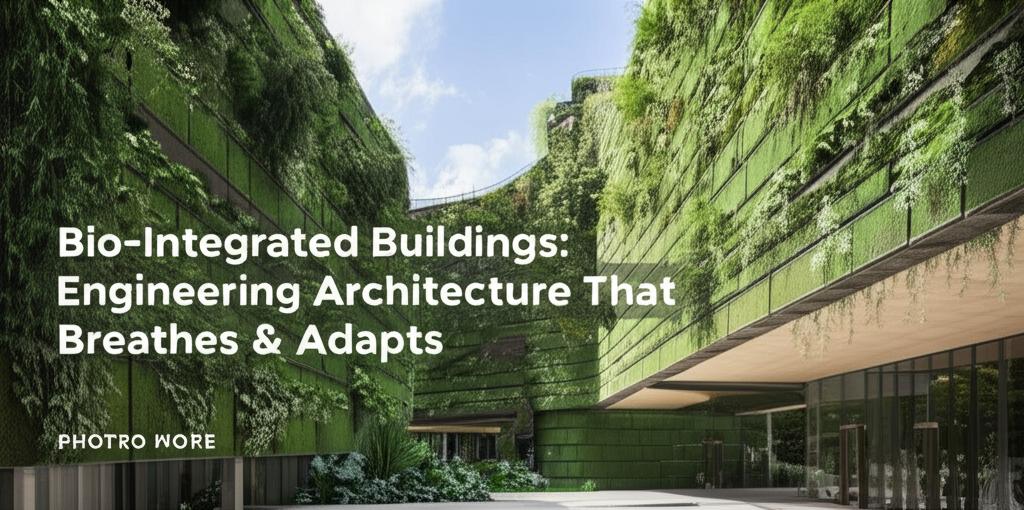
Imagine stepping into a building that feels alive. It breathes with you, adapting to the changing daylight and seasons, and even purifies the air you inhale. This isn't a futuristic fantasy; it's the rapidly evolving reality of bio-integrated architecture. This innovative approach is shifting our perception of buildings from static structures to dynamic, living systems that work in harmony with nature.
At its heart, bio-integrated design seeks to seamlessly merge biological elements and processes into the fabric of our buildings. This goes far beyond simply adding a few potted plants or a green roof. Instead, it involves a deep, functional integration where living organisms and natural processes actively contribute to the building's performance and sustainability. Think of facades teeming with microalgae that absorb CO2 and produce biomass, or walls constructed from mycelium (the root network of fungi) that offer superb insulation and are completely biodegradable.
The Living Skin: Responsive FacadesOne of the most exciting frontiers in bio-integrated design is the development of responsive facades – building skins that act like living membranes. These aren't passive shells; they actively react to environmental cues. Imagine facades that can:
- Breathe: Hygromorphic materials, which change shape in response to humidity, can be used to create building skins with variable porosity, allowing structures to literally breathe and adapt to moisture levels without the need for complex sensors or energy.
- Regulate Temperature: Living walls and green facades provide natural insulation, reducing heat gain in summer and heat loss in winter, thereby lowering energy consumption for heating and cooling. Some innovative designs incorporate water-filled glass or thermally adaptive fabrics that adjust their heat reflection or retention based on the temperature.
- Clean the Air and Water: Plants and algae integrated into building skins can actively filter pollutants from the air and water. Bio-receptive cladding systems are being developed to support the growth of moss and algae specifically for air purification and carbon sequestration.
- Generate Energy: Researchers are exploring microbial fuel cells integrated into facades and even harnessing the photosynthetic power of moss to generate electricity. Algae bioreactor facades can also produce biomass that can be converted into biofuel.
The material palette of bio-integrated architecture is a radical departure from conventional concrete and steel. We're seeing the rise of:
- Mycelium Composites: These materials, grown from fungi, can bind agricultural waste into biodegradable building blocks, offering excellent insulation and a low environmental impact.
- Bio-concrete: Some types of concrete are being engineered with bacteria that can self-heal cracks, extending the lifespan of structures.
- Bio-plastics and Bio-polymers: Derived from renewable resources like corn starch or sugar cane, these offer alternatives to fossil fuel-based plastics in building components.
- Timber and Bamboo: These natural, renewable materials are gaining renewed attention for their structural capabilities and carbon-capturing potential.
- Waste Reimagined: Innovative materials are being created from agricultural waste like coffee husks, or even seaweed, which can be formed into durable bricks.
The push towards bio-integrated buildings is driven by a host of compelling benefits:
- Enhanced Sustainability: By using renewable, bio-based materials, reducing energy consumption, and actively sequestering carbon, these buildings significantly lower their environmental footprint.
- Improved Occupant Well-being: Better air quality, increased exposure to natural elements, and more stable indoor temperatures contribute to healthier and more productive indoor environments.
- Increased Biodiversity: Integrating vegetation into urban structures creates habitats for wildlife, promoting biodiversity in our cities.
- Resource Efficiency: Some bio-integrated systems can treat wastewater or even produce resources like biofuel.
While the vision of bio-integrated architecture is inspiring, the path to widespread adoption has its challenges. These include the need for further research and development to ensure the long-term durability and performance of living materials, as well as overcoming current perceptions about profitability and scalability. The maintenance of living systems and ensuring their resilience in diverse urban climates are also key considerations.
However, the momentum is undeniable. Researchers, architects, and engineers are collaborating across disciplines, pushing the boundaries of materials science, biotechnology, and design. As our understanding of natural systems deepens and our technological capabilities expand, we are moving towards a future where buildings are not just shelters, but active, adaptive, and regenerative contributors to a healthier planet and a more harmonious coexistence between our built environment and the natural world.