
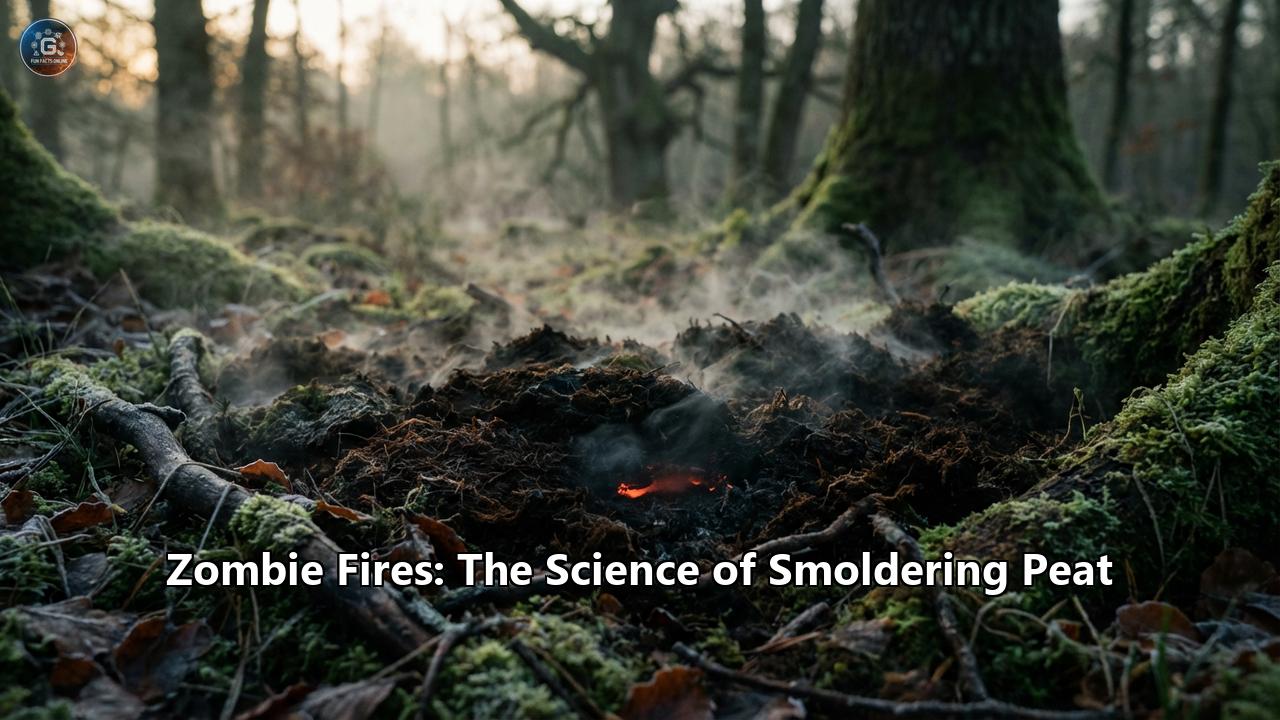
In the vast, frozen expanses of the circumpolar North, a new and unsettling phenomenon has captured the attention of climatologists, ecologists, and the public alike. They are called "zombie fires"—remnants of the previous summer’s infernos that refuse to extinguish with the arrival of winter. Instead of dying out under the crushing weight of snow and sub-zero temperatures, these fires burrow deep into the organic soil, smoldering in a flameless, persistent state of combustion. They hibernate, fueled by ancient carbon, only to re-emerge in the spring, fully formed and ready to ignite the landscape once again before the lightning season has even begun.
To the casual observer, the idea of fire surviving beneath a meter of snow seems to defy the laws of physics. Fire requires heat, fuel, and oxygen—three elements that the frozen Arctic winter appears to systematically deny. Yet, the science of smoldering peat reveals a complex interplay of thermodynamics, biochemistry, and geology that allows these "undead" fires to not only survive but thrive in conditions that would snuff out a conventional flame in seconds.
As the Arctic warms at a rate nearly four times the global average, zombie fires have transformed from a rare ecological curiosity into a significant climate feedback mechanism. They are no longer just anomalies; they are a symptom of a biosphere in transition. This article delves deep into the molecular, ecological, and atmospheric mechanics of zombie fires, exploring how microscopic bacteria can ignite a landscape, how ancient Indigenous wisdom predicted this crisis, and why the "sleeping giants" of the carbon cycle are waking up.
Part I: The Anatomy of the Undead — The Physics of Smoldering
To understand a zombie fire, one must first discard the traditional image of a wildfire. A forest fire is typically visualized as a flaming front, consuming canopy and underbrush with high heat and visible flames. This is "flaming combustion," a gas-phase reaction where volatile gases released by heated fuel mix with oxygen and ignite.
Zombie fires, however, rely on a fundamentally different process known as smoldering combustion.
1. The Flameless BurnSmoldering is a heterogeneous, surface-combustion process. It occurs when oxygen directly attacks the surface of a solid fuel—in this case, peat—without the intermediate step of a gas-phase flame. It is the same physics that keeps a cigarette burning or charcoal glowing in a barbecue.
- Temperature Differential: While flaming fires burn at temperatures between 1,500°C and 1,800°C, smoldering fires burn at significantly lower temperatures, typically between 400°C and 600°C.
- Speed: Flaming fires race across the landscape, driven by wind and convection. Smoldering fires creep. They move at a glacial pace, often advancing only 0.5 to 5 meters per week. This slowness is deceptive; it allows the fire to be incredibly thorough, consuming not just the surface vegetation but the soil itself.
The survival of these fires through the Arctic winter is a paradox of insulation. Snow, often seen as the enemy of fire, acts as its protector. Fresh snow consists of ice crystals trapping pockets of air, making it an exceptional thermal insulator.
- The Igloo Effect: When a peat fire burns deep into the ground, it creates a "cavity" of heat. If a heavy snowpack falls early in the season, it traps this heat underground. The soil temperature can remain at a cozy combustion point while the air temperature a few feet above drops to -40°C.
- The Oxygen Feed: Peat is porous. Even under snow, the network of pores within the dried organic soil allows oxygen to diffuse slowly to the combustion front. The fire does not need a gale of wind; it needs only a whisper of oxygen to maintain its slow oxidation.
Peat is not just dirt; it is a matrix of partially decayed organic matter—mosses, sedges, and shrubs—that has accumulated over thousands of years. In the Arctic, the cold slows decomposition, meaning carbon is stored rather than released. A single meter of peat can represent a millennium of carbon sequestration. When a zombie fire burns, it is not burning "wood"; it is burning the history of the ecosystem itself.
Part II: The Spark of Life — Biochemistry and Spontaneous Combustion
One of the most fascinating frontiers in the study of zombie fires is the mechanism of biological self-heating. While many zombie fires are remnants of lightning strikes, recent research suggests that some may start—or be sustained—by the microscopic life teeming within the soil.
1. The Microbial HeaterIn the initial stages of peat decomposition, biological activity plays a crucial role. Bacteria and fungi break down organic matter, a metabolic process that releases heat.
- The 60°C Threshold: Mesophilic bacteria (those that thrive at moderate temperatures) can raise the temperature of a peat pile to about 40°C. As the temperature climbs, thermophilic (heat-loving) bacteria take over, pushing the temperature up to roughly 60°C to 70°C.
- The Biotic-Abiotic Handoff: Biology has a limit. Most bacteria cannot survive above 75°C. However, at this critical temperature threshold, the peat enters a state of high chemical reactivity. The heat generated by the dying microbes is sufficient to trigger low-temperature chemical oxidation. This is the "handoff" where biology ends and physics takes over. The heat generated by chemical oxidation then drives the temperature up to the smoldering ignition point (~200°C+), creating a fire without a spark.
Recent studies in peat decomposition have highlighted specific bacterial agents. For instance, strains like Pseudomonas taiwanensis have been observed accelerating the decomposition of peat fibers. While not solely responsible for fire, these decomposers create the "heat pre-load" necessary for ignition. Furthermore, methanogens (methane-producing archaea) deep in the anaerobic layers produce methane. As the fire dries the soil, this methane can seep upward, providing a highly flammable volatile fuel that aids the transition from smoldering to flaming when the fire breaches the surface.
3. Chemical Mechanisms: The Chromophore EffectAt the molecular level, the decomposition of organic material produces chromophores—compounds with conjugated carbon-carbon double bonds that absorb light and energy. Research indicates that the breakdown of these compounds can generate singlet oxygen—a highly reactive form of oxygen.
- Radical Reactions: This singlet oxygen attacks the carbon structure, creating hydroxyl and peroxyl radicals. These radical reactions are highly exothermic (heat-releasing). In the dense, insulated environment of a deep peat layer, this heat cannot escape. It accumulates until the carbon structure begins to char and eventually smolder.
Part III: The Arctic Tinderbox — Why Here, Why Now?
Zombie fires are not new to the planet, but their frequency and intensity in the Arctic are unprecedented in the modern record. To understand why, we must look at the changing geology and hydrology of the North.
1. The Drying of the SpongeHealthy peatlands are wet—often called "mires" or "bogs"—and are naturally resistant to fire. They act as sponges, holding water tables high. However, climate change is drying this sponge out.
- Vapor Pressure Deficit (VPD): As Arctic air temperatures rise, the atmosphere's thirst for moisture increases. This draws water out of the soil at accelerated rates.
- Permafrost Thaw: Permafrost acts as an impermeable barrier that holds water near the surface. As permafrost thaws, this "floor" drops out. Water drains deeper into the ground, leaving the surface peat dry, aerated, and perfectly primed for deep burning.
Paleo-ecological studies using peat cores from Alaska and Siberia have reconstructed fire histories going back millennia. Charcoal analysis reveals that for the last 3,000 years, fire was a relatively rare event in the high tundra.
- The Modern Surge: Starting around 1950, and accelerating dramatically after 2000, the frequency of fires has spiked to levels unseen in the Holocene record. We are entering a "pyric transition"—a shift from a climate-limited fire regime (where it was too cold/wet to burn) to a fuel-limited regime (where it burns until it runs out of fuel).
- Siberia (2019-2020): The Feedback Loop in Action
The summer of 2019 was exceptionally hot in Siberia, leading to massive wildfires. Satellite data from the Copernicus Atmosphere Monitoring Service tracked these fires as they went "dark" in October. In May 2020, sensors picked up thermal anomalies in the exact same coordinates. These were not new fires; they were the 2019 fires waking up. This event was a wake-up call for the scientific community, proving that overwintering fires could account for a significant percentage of the total burned area (up to 38% in some years).
- Canada (2023-2024): The Donnie Creek Monster
The Donnie Creek fire in British Columbia was one of the largest in the province's history. What made it terrifying was not just its size, but its persistence. After consuming over 600,000 hectares, parts of the fire overwintered. In the spring of 2024, plumes of smoke were spotted rising from the snow-free patches of the burn scar. The fire had survived temperatures of -40°C, protected by the very depth of the burn it had created.
Part IV: Indigenous Wisdom and Historical Context
While Western science has only recently focused its satellites on zombie fires, Indigenous peoples of the North have lived with them for millennia.
1. "Holdover Fires"Indigenous communities, such as the Gwich'in and Athabaskan peoples, have long had terminology for fires that survive the winter. They are often referred to as "holdover fires." Traditional knowledge holders have described seeing steam rising from the ground in deep winter or smelling smoke when there was no lightning.
2. Cultural Burning as PreventionHistorically, Indigenous fire management (cultural burning) played a role in mitigating these risks.
- Spring Burning: Indigenous practices often involved controlled burns in the early spring, when the ground was still frozen but the grass was dry. These "cold burns" removed the surface fuel without heating the underlying peat.
- The Disruption: Colonial fire suppression policies outlawed these practices, viewing all fire as destructive. This allowed fuel loads (vegetation and dead organic matter) to build up for a century, creating the "fuel powder keg" that now feeds intense, deep-burning zombie fires.
In traditional management, a mosaic of burned and unburned land acted as natural firebreaks. A recent burn lacks the fuel to carry a new fire. However, zombie fires bypass this logic. Because they burn under the surface, they can re-emerge in the center of a burn scar and, if the winds are right, jump to unburned fuel at the edges.
Part V: The Climate Feedback Loop — A Vicious Cycle
The most alarming aspect of zombie fires is their contribution to positive feedback loops.
1. The Carbon BombPeatlands cover only 3% of the Earth’s land surface but store twice as much carbon as all the world’s forests combined. When a forest fire burns trees, the carbon released is "young" (sequestrated over decades). When a zombie fire burns peat, it releases "old" carbon (sequestrated over millennia).
- The 15% Gap: Standard emissions models often calculate carbon release based on acres of surface vegetation burned. They frequently miss the carbon released from the combustion of the soil itself. Some estimates suggest that smoldering peat fires contribute an additional 15% to global fire emissions that is currently unaccounted for in many climate models.
Zombie fires re-emerge in spring, often when snow is still on the ground. The smoke they release is rich in black carbon (soot).
- Darkening the Snow: When this black soot settles on white snow and ice, it darkens the surface, reducing its albedo (reflectivity). The dark snow absorbs more sunlight, melting faster. This exposes more peat to drying and warming, increasing the risk of more fires—a classic self-reinforcing cycle.
The heat from a smoldering fire does not just go up; it goes down. It degrades the thermal protection of the permafrost.
- The Thermokarst Effect: As the ice in the permafrost melts, the ground collapses, forming sinkholes and depressions known as thermokarst. These slumps can drain water away, further drying the peat, or create new anaerobic pools that release methane.
Part VI: Hunting the Undead — Detection Technology
You cannot fight a fire you cannot see. Detecting a fire that is burning two meters underground is one of the great technological challenges of the modern Arctic.
1. The Limits of SatellitesStandard fire-detection satellites (like MODIS or VIIRS) rely on detecting the high thermal signature of open flames. A smoldering fire, however, is relatively cool and insulated by soil.
- Sentinel-2 and Landsat: Scientists have developed algorithms using high-resolution optical imagery to spot "early wake-up" fires. They look for smoke plumes in early May or burn scars that expand before the first lightning strikes of the season.
- Thermal Inertia: Zombie fires often reveal themselves not by intense heat, but by preventing the ground from freezing as solidly as the surrounding area. Synthetic Aperture Radar (SAR) is being explored to detect these subtle changes in ground texture and moisture caused by underground heat.
On the ground, detection is visceral. Firefighters look for "fumaroles"—vents where smoke and steam escape the earth. Handheld thermal cameras are used, but they require walking over unstable, burning ground.
- The Drone Future: The next generation of detection involves drones equipped with multispectral sensors that can detect the specific chemical signature of peat smoke (which differs from wood smoke) or slight surface temperature anomalies that satellites miss.
Part VII: Fighting the Unfightable — Mitigation Strategies
Extinguishing a zombie fire is a logistical nightmare. You cannot simply spray water on it; the water will evaporate on the surface or channel through cracks, missing the smoldering heart of the fire entirely.
1. The "Peat Soup" ProblemTo put out a peat fire with water, you essentially have to turn the landscape into a bog again. This requires massive volumes of water—millions of liters—pumped into the ground. In remote Arctic locations, this is often impossible.
2. Chemical Warfare: SurfactantsRecent research from Imperial College London has shown that adding surfactants (wetting agents) to water can reduce the amount of liquid needed to extinguish a peat fire by 40%.
- Reducing Surface Tension: Peat, when dry, becomes hydrophobic—it repels water. Surfactants break the surface tension, allowing the water to penetrate the microscopic pores of the peat and cool the combustion zone more effectively.
If water isn't an option, suffocation is.
- Compaction: Heavy machinery is used to compress the soil, closing the pore spaces and cutting off the oxygen supply. This is dangerous work, as heavy dozers risk breaking through the crust into the fire below.
- Trenching: Digging down to the mineral soil (the non-flammable layer beneath the peat) creates a physical barrier. This is the only sure-fire way to stop the lateral spread of a zombie fire, but it is destructive and labor-intensive.
The long-term solution is not firefighting; it is ecosystem restoration. Blocking drainage canals (dug in the 20th century for forestry or agriculture) and reintroducing beavers can raise the water table. A wet peatland is a fire-proof peatland.
Conclusion: The Warning from the Ground
Zombie fires are a warning. They are a signal that the Arctic’s resilience is eroding. The "fire that will not die" is a potent metaphor for the climate crisis itself—a problem that persists, festers, and re-emerges with greater intensity if ignored.
Addressing this challenge requires a fusion of high-tech and old wisdom. It demands the deployment of advanced satellite algorithms and biodegradable suppression agents, but also the reinstatement of Indigenous land stewardship and cultural burning practices. It requires us to view the ground beneath our feet not as inert dirt, but as a living, breathing, and potentially burning volatility.
As we move deeper into the Anthropocene, the battle against zombie fires will not be fought just with water and hoses, but with carbon policy, ecosystem restoration, and a fundamental rethinking of our relationship with the frozen North. The zombies are waking up; the question is whether we will wake up in time to stop them.
Reference:
- https://connectsci.au/wf/article/30/6/454/21803/How-to-build-a-firebreak-to-stop-smouldering-peat
- https://ira.lib.polyu.edu.hk/bitstream/10397/92503/1/74_IJWF_2021_Peat_firebreak.pdf
- https://www.researchgate.net/publication/377015111_Bacteria_Pseudomonas_taiwanensis_as_a_decomposing_agent_of_peat_fiber
- https://www.imperial.ac.uk/news/217233/magical-fire-suppressant-kills-zombie-fires/