
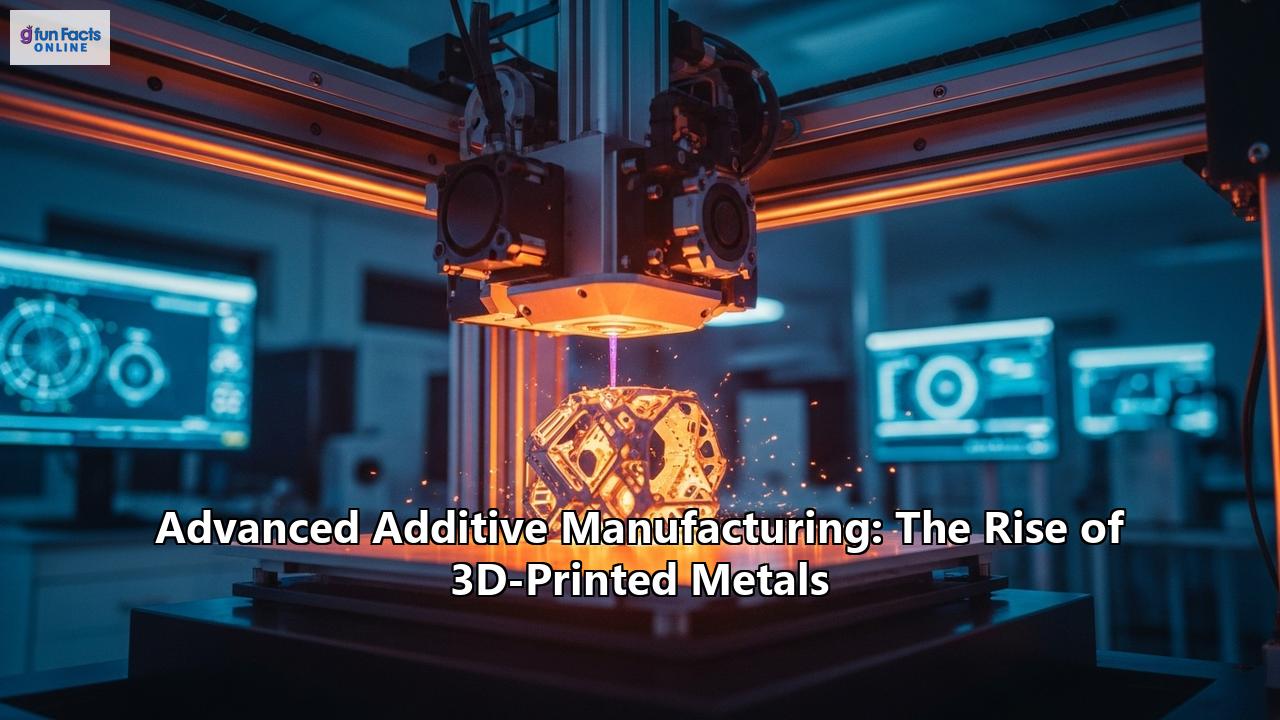
In the ever-evolving landscape of manufacturing, a transformative technology is reshaping what's possible, moving from the realm of rapid prototyping to the factory floor of full-scale production. This revolution is being forged, layer by layer, in a process known as metal additive manufacturing (AM), or more commonly, metal 3D printing. It represents a paradigm shift from traditional subtractive methods, where material is cut away from a solid block, to an additive approach where complex objects are built up from nothing but digital data and fine metal powder. This technology is not merely a new tool; it is an enabler of innovation, unlocking designs of unprecedented complexity, strength, and lightness that were once confined to the imagination.
The roots of metal AM can be traced back to the late 1980s, with pioneering work in technologies like Selective Laser Sintering (SLS), Selective Laser Melting (SLM), and Electron Beam Melting (EBM). However, it is in recent years that the technology has truly matured, driven by advancements in laser systems, electron beams, material science, and computational power. Today, its growth is explosive, with market projections showing a compound annual growth rate of nearly 25% through 2030, signaling a technology that is not just rising, but soaring. From the skies to the operating room, metal AM is becoming an indispensable part of modern industry.
The Core Technologies: A Spectrum of Innovation
Metal additive manufacturing is not a single method but a family of sophisticated processes. While most revolve around fusing metal powder, the way they achieve this varies significantly, each with unique strengths tailored to different applications.
Powder Bed Fusion (PBF): The Precision Standard
The most common and mature method for metal 3D printing is Powder Bed Fusion (PBF). This process takes place inside a tightly controlled chamber, often filled with an inert gas to prevent oxidation. It works by spreading an ultra-thin layer of fine metal powder across a build plate. A high-energy source, either a laser or an electron beam, then selectively melts and fuses the powder particles together according to a precise cross-section of the 3D model. The build platform then lowers, a new layer of powder is applied, and the process repeats until the final object is fully formed within the bed of unfused powder.
The main PBF technologies include:
- Selective Laser Melting (SLM) and Direct Metal Laser Sintering (DMLS): These are the most prevalent forms of PBF. They use high-powered lasers to achieve a full or partial melt of the metal powder. The terms are often used interchangeably, though DMLS typically involves sintering, where metal alloys are fused at a molecular level without liquefying completely. These methods are celebrated for their high precision, excellent detail resolution, and ability to create parts with mechanical properties that can rival or even exceed those made by traditional casting.
- Electron Beam Melting (EBM): Instead of a laser, EBM employs a powerful electron beam in a vacuum. This technology typically operates at higher temperatures, which can relieve internal stresses during the build process, making it particularly well-suited for high-performance and crack-prone materials like titanium aluminide. EBM often results in faster build rates compared to SLM, though the surface finish may be rougher.
Directed Energy Deposition (DED): For Building and Repairing
Directed Energy Deposition (DED) operates on a different principle. Instead of a bed of powder, a multi-axis robotic arm aims a nozzle that deposits metal material—either in powder or wire form—directly onto a surface, where it is simultaneously melted by a concentrated energy source (a laser or electron beam). This method is often used for adding features to existing components or for repairing high-value parts, such as turbine blades or tooling inserts. DED is generally faster than PBF and allows for the creation of much larger parts, as it is not constrained by the size of a build chamber. Key DED techniques include Laser Engineered Net Shaping (LENS) and Electron Beam Additive Manufacturing (EBAM).
Binder Jetting: The Path to Mass Production
Binder Jetting is an emerging technology with immense potential for scalable, high-volume production. Unlike PBF or DED, Binder Jetting does not use heat during the printing process itself. Instead, a liquid binding agent is precisely jetted from an inkjet-style printhead onto a bed of metal powder, layer by layer, to form a "green" part. This green part is fragile and porous. It is then removed from the powder bed and placed into a furnace for a post-processing step called sintering. During sintering, the binder is burned out and the metal particles are heated to just below their melting point, causing them to fuse into a dense, solid metal object. A major advantage of Binder Jetting is its speed and cost-effectiveness for producing multiple parts at once, as no support structures are typically needed.
Material Extrusion (Metal FFF): Making Metal Printing Accessible
A newer and highly accessible form of metal AM is Metal Fused Filament Fabrication (FFF), also known as Bound Powder Extrusion (BPE). This technology uses filaments composed of metal powder held together by a polymer binder. The filament is heated and extruded through a nozzle to build a part layer-by-layer, similar to common desktop plastic 3D printers. After printing, the part undergoes a two-step post-processing treatment: first, a debinding process to remove the polymer binder, followed by sintering in a furnace to fuse the metal particles into a fully dense part. This method significantly lowers the cost and safety barriers associated with traditional metal AM, making it an attractive option for prototyping and small-part production.
The Materials of Metal AM: An Expanding Palette
The versatility of metal 3D printing is intrinsically linked to the growing range of materials it can process. These materials are typically in the form of fine, spherical powders or wires, engineered for optimal flow and melting characteristics.
Commonly used metals include:
- Stainless Steels (e.g., 316L, 17-4PH): Valued for their strength, corrosion resistance, and relatively low cost, stainless steels are workhorses in many industries.
- Aluminum Alloys: Their high strength-to-weight ratio makes them ideal for lightweight applications in the aerospace and automotive sectors.
- Titanium Alloys (e.g., Ti6Al4V): Biocompatible, corrosion-resistant, and exceptionally strong, titanium is a premier choice for medical implants and high-performance aerospace components.
- Nickel-Based Superalloys (e.g., Inconel 625 & 718): These alloys excel in extreme environments, maintaining their strength and corrosion resistance at high temperatures, making them essential for jet engines and gas turbines.
- Cobalt-Chrome: Known for its high wear resistance, strength, and biocompatibility, this material is frequently used in dental and medical implants.
- Tool Steels: These hard and abrasion-resistant materials are used to print custom tools, molds, and dies with complex internal features like conformal cooling channels.
- Precious Metals: Gold, silver, and platinum can also be 3D printed, opening new avenues for complex and customized jewelry design.
A Revolution Across Industries
The unique capabilities of metal AM are not just improving existing products; they are creating entirely new possibilities across a diverse range of sectors. The technology allows for the creation of parts designed for function, not for manufacturability, leading to a wave of innovation.
Aerospace & Defense: Lighter, Stronger, Faster
The aerospace and defense industries were early adopters of metal AM and continue to be at the forefront of its application. In an industry where weight reduction is paramount for fuel efficiency and performance, the ability to create topologically optimized, lightweight structures is a game-changer. Metal AM is used to produce everything from complex brackets and fuel nozzles to critical engine components like turbine blades. Part consolidation is another major benefit; a complex assembly of dozens of individual components can be redesigned and printed as a single, stronger part, reducing assembly time, weight, and potential points of failure. NASA, for instance, has stated its intent to 3D print over 80% of its future rocket engines.
Medical & Dental: Personalized Healing
In the medical field, metal AM is enabling a new era of personalized medicine. The ability to create custom implants directly from a patient's CT or MRI scan data ensures a perfect fit, improving patient outcomes and reducing surgery times. Biocompatible materials like titanium and cobalt-chrome are used to print spinal cages, hip and knee replacements, and cranio-maxillofacial implants. In dentistry, the technology is used for the mass-customization of crowns, bridges, and dental implants with remarkable speed and precision. The complex, porous structures that can be created with AM are also beneficial for orthopedic implants, as they encourage bone ingrowth (osseointegration), leading to better long-term stability.
Automotive: Accelerating Performance
While still emerging from the realm of prototyping into serial production, metal AM is making significant inroads in the automotive industry, particularly in the high-performance and luxury sectors. It allows for the rapid creation of functional prototypes from production-grade materials, drastically shortening development cycles. For racing and high-end vehicles, the technology is used to produce lightweight, complex components that enhance performance. Furthermore, it is revolutionizing tooling by enabling the creation of custom jigs, fixtures, and molds with optimized cooling channels that reduce cycle times and improve the quality of traditionally manufactured parts.
Energy and Tooling: Enhancing Efficiency
In the energy sector, metal 3D printing is being used to manufacture and repair components for turbines and other heavy machinery, improving efficiency and reducing downtime. The tooling industry also benefits immensely from the technology. Creating molds with conformal cooling channels—cooling lines that follow the exact contours of the part—was once incredibly difficult and expensive. With metal AM, it is straightforward, leading to faster cooling, shorter injection molding cycles, and higher-quality plastic parts. Additionally, the on-demand nature of AM makes it an ideal solution for producing spare or obsolete parts, reducing the need for large, costly inventories.
The Unmistakable Advantages of Additive
The rapid adoption of metal 3D printing is driven by a suite of powerful advantages that legacy manufacturing methods struggle to match.
- Unprecedented Design Freedom: The primary advantage is the ability to produce geometries of immense complexity. Internal channels for cooling, intricate lattice structures, and organic shapes are all possible, freeing engineers to design for optimal performance rather than being constrained by the limitations of CNC machining or casting.
- Lightweighting and Part Consolidation: Through topology optimization software, parts can be designed with material placed only where it is structurally necessary. This creates strong but lightweight components, a critical advantage in aerospace and automotive applications. Assemblies that once required numerous parts can be redesigned and printed as a single, consolidated unit, reducing weight, cost, and complexity.
- On-Demand and Customized Production: Metal AM is a tool-less process, making it economically viable to produce single parts or small batches. This facilitates mass customization, particularly in the medical field, and enables on-demand manufacturing that can drastically shorten supply chains and reduce inventory costs.
- Sustainability and Material Efficiency: As an additive process, AM uses only the material needed to create the part, generating significantly less waste than subtractive methods like machining, which can scrap up to 90% of the initial material block. This not only saves costs but also reduces the environmental impact of manufacturing.
Navigating the Current Challenges
Despite its transformative potential, the path to widespread adoption of metal additive manufacturing is not without its obstacles.
- Cost of Entry and Materials: The initial investment for industrial-grade metal 3D printers remains high, placing the technology out of reach for many smaller companies. The specialized metal powders used in the process are also expensive, contributing significantly to the final part cost.
- Quality Control and Standardization: Ensuring the consistency and reliability of every printed part is a major challenge. Microscopic variations in the printing process can affect the material properties of the final product. Developing robust industry standards, certification processes, and in-process monitoring is crucial for safety-critical applications in aerospace and medicine.
- Post-Processing Requirements: Metal 3D-printed parts are rarely ready to use straight out of the printer. They typically require a series of post-processing steps, including stress relief via heat treatment, removal from the build plate, elimination of support structures, and surface finishing (such as machining or polishing) to achieve the required tolerances and smoothness. These steps add time and cost to the overall process.
- Limited Material Portfolio: While the range of printable metals is growing, it is still small compared to the vast library of alloys available for traditional manufacturing. Significant research is ongoing to develop and certify new alloys specifically designed to leverage the unique physics of AM processes, such as extremely high cooling rates.
The Future is Forged in Layers
The future of metal additive manufacturing is incredibly bright, with ongoing research and development aimed at overcoming its current limitations and unlocking even greater potential. Several key trends are shaping its trajectory:
- Integration with AI and Machine Learning: Artificial intelligence is being integrated into AM workflows to optimize designs, predict and correct failures in real-time, and automate quality control, making the process smarter and more reliable.
- Hybrid Manufacturing Systems: The rise of hybrid machines that combine additive (3D printing) and subtractive (CNC machining) capabilities in a single platform is streamlining the production process. These systems can print a part and then immediately machine critical surfaces to achieve high precision without moving the part to a different machine.
- A Shift to Serial Production: As printing speeds increase and costs decrease, metal AM is transitioning from a prototyping and low-volume tool to a viable method for large-scale production. Companies are beginning to design products with an "additive-first" mindset.
- Advancements in Materials and Processes: The development of new metal alloys tailored for AM will unlock enhanced material properties. Furthermore, improvements in process control, such as multi-laser systems and advanced sensors, will continue to boost speed, accuracy, and repeatability.
Conclusion: A New Foundation for Manufacturing
Advanced additive manufacturing is fundamentally altering the landscape of what is possible with metal. It has transcended its origins as a niche technology for prototypes and is now a powerful, industry-disrupting force for creating high-value, functional, end-use parts. By enabling the creation of complex, lightweight, and customized components on-demand, 3D-printed metals are driving innovation, efficiency, and sustainability across the most demanding sectors. While challenges remain, the pace of advancement is relentless. The rise of 3D-printed metals is not just a trend; it is the forging of a new foundation for the future of manufacturing, one intricate layer at a time.
Reference:
- https://2onelab.com/newsandmore/blog/what-is-metal-3d-printing/
- https://www.mdpi.com/2076-3417/11/3/1213
- https://www.metal-am.com/introduction-to-metal-additive-manufacturing-and-3d-printing/
- https://www.hubs.com/knowledge-base/introduction-metal-3d-printing/
- https://www.renishaw.com/en/what-is-metal-additive-manufacturing--15240
- https://ultimaker.com/learn/3d-metal-printing-revolutionizing-manufacturing-with-advanced-metal-parts/
- https://pubmed.ncbi.nlm.nih.gov/32432024/
- https://www.researchgate.net/publication/341028626_Recent_Developments_in_Metal_Additive_Manufacturing
- https://www.thesteelprinters.com/news/metal-3d-printing-market-growth-usage-and-size
- https://markforged.com/resources/learn/design-for-additive-manufacturing-metals/metal-additive-manufacturing-introduction/types-of-3d-printing-metal
- https://chemtron.com.sg/blogs/comparing-metal-3d-printing-technologies
- https://www.hp.com/us-en/printers/3d-printers/learning-center/how-does-metal-3d-printing-work.html
- https://www.rayvatek.com/elementor-11140/
- https://imrtest.com/the-top-6-additive-manufacturing-methods/
- https://www.mdpi.com/2504-4494/8/1/14
- https://eoxs.com/new_blog/whats-next-for-3d-printing-in-metal-manufacturing-emerging-trends-and-innovations/
- https://www.veerometals.com/blog/6-most-popular-industries-to-use-metal-3d-printing.html
- https://www.corrotherm.co.uk/blog/the-future-of-metal-3d-printing-for-aerospace-manufacturing
- https://eoxs.com/new_blog/top-applications-of-3d-printing-in-metal-manufacturing/
- https://www.xometry.com/resources/3d-printing/metal-3d-printing-applications/
- https://www.arkeglorus.com/5-key-advances-for-metal-additive-manufacturing/
- https://www.xometry.com/resources/3d-printing/future-of-3d-printing/
- https://www.unleashedsoftware.com/blog/what-is-metal-additive-manufacturing-and-why-is-it-trending/