
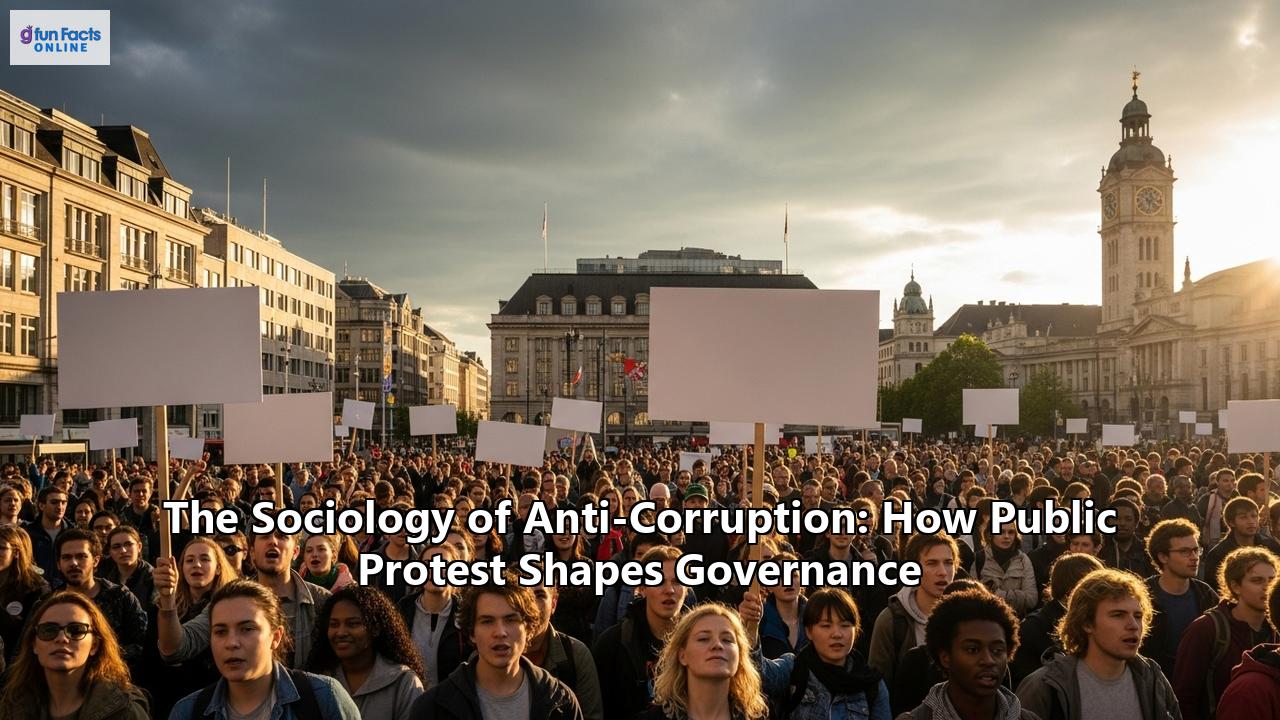
The Sociology of Anti-Corruption: How Public Protest Shapes Governance
In the intricate dance between the governors and the governed, few phenomena are as potent and revealing as the public outcry against corruption. From the bustling streets of New Delhi to the historic squares of Bucharest, and across the digital landscapes that connect global citizenry, anti-corruption protests have emerged as a powerful force for political change. These are not mere expressions of discontent; they are complex social phenomena that challenge the very foundations of power, demand accountability, and seek to reshape the contours of governance. This article delves into the sociology of anti-corruption, exploring how public protest, in its myriad forms, acts as a catalyst for transforming state institutions, legal frameworks, and the unwritten rules of political conduct.
The fight against the abuse of public office for private gain is as old as the state itself. Yet, the last few decades have witnessed a surge in mass mobilizations specifically targeting corruption. This wave of contentious politics is fueled by a growing global awareness of the corrosive effects of corruption on economic development, social justice, and democratic legitimacy. It is a struggle waged not just by formal non-governmental organizations (NGOs), but by a diverse cast of actors: students, professionals, artists, and ordinary citizens who, armed with a sense of collective grievance and empowered by new technologies, are increasingly unwilling to accept corruption as an inevitable facet of public life.
This exploration will journey through the theoretical underpinnings that help us understand the social dynamics of anti-corruption movements. It will traverse the globe, examining in-depth case studies from India, South Korea, Romania, Guatemala, Brazil, and the recent, still-unfolding events in Ukraine. Through this comparative lens, we will dissect the mechanisms by which street-level anger is translated into tangible governance reforms, from the passage of landmark legislation to the ousting of powerful incumbents. We will also confront the complexities and contradictions inherent in these movements – their potential for co-optation, the risk of political manipulation, and the often-arduous path from protest to lasting institutional change. Ultimately, this article aims to provide a comprehensive sociological portrait of a world in which the collective voice of the people is increasingly holding power to account, demanding a future where governance is synonymous with integrity.
The Theoretical Bedrock: Understanding the Social Roots of Anti-Corruption Protest
To comprehend how public protests against corruption shape governance, one must first turn to the rich theoretical landscape of sociology and social movement studies. These frameworks provide the analytical tools to move beyond a simplistic view of protests as spontaneous outpourings of anger, and instead see them as structured, strategic, and deeply embedded in the social and political fabric of a nation.
The Spark of Mobilization: From Individual Grievance to Collective Action
At its core, corruption is a violation of public trust, a transgression that can breed cynicism and despair. Sociological theories help explain how this diffuse sentiment can crystallize into a potent force for collective action.
Rational Choice Theory and Game Theory: Some scholars, drawing from economics, employ rational choice theory to understand the decision to protest. This perspective suggests that individuals weigh the costs and benefits of participating in a protest. Game theory, a related approach, frames corruption as a "prisoner's dilemma" where individuals may engage in corrupt acts out of a rational calculation that others are doing the same. Protests, in this light, can be seen as an attempt to alter this calculus by increasing the perceived costs of corruption for elites, such as reputational damage, loss of office, or legal repercussions. Institutional Theory: This perspective posits that corruption is not merely the sum of individual deviant acts, but is often embedded in the very structures, rules, and routines of institutions. When formal anti-corruption frameworks are weak or unenforced, corrupt practices can become normalized. Protests, from an institutionalist viewpoint, are a response to the failure of these formal institutions to self-correct. They are a powerful signal that the official channels for redress are blocked or ineffective, forcing a public and often disruptive demand for institutional reform. Symbolic Interactionism and Cultural Theory: These theories emphasize the social construction of corruption. Symbolic interactionism, for instance, focuses on how corruption is learned and normalized through everyday interactions. Cultural theory, in a similar vein, highlights how societal norms and values can either inhibit or facilitate corrupt practices. What is considered a bribe in one context might be seen as a customary gift in another. Anti-corruption protests can be seen as a form of cultural contestation, an attempt to redefine social norms and shift the collective understanding of what is acceptable behavior from public officials.The Architecture of a Movement: How Protests are Built and Sustained
The leap from widespread discontent to a sustained social movement is not automatic. Social movement theories offer crucial insights into the factors that enable and shape anti-corruption protests.
Resource Mobilization Theory: This theory argues that grievances alone are insufficient to generate a social movement. Instead, it emphasizes the importance of resources, such as funding, leadership, organizational infrastructure, and communication networks. In the context of anti-corruption protests, these resources are often provided by civil society organizations (CSOs), which can offer strategic direction, legal expertise, and a platform for coordinating action. The ability to mobilize these resources is often a key determinant of a movement's ability to sustain itself beyond an initial, spontaneous outburst. Political Opportunity Structure: The success or failure of a social movement is also heavily influenced by the "political opportunity structure" – the broader political context in which it operates. This includes factors such as the openness of the political system, the presence of influential allies, divisions among elites, and the state's capacity and propensity for repression. Anti-corruption protests are more likely to emerge and succeed when there are cracks in the ruling elite, when influential figures within the state or judiciary are willing to support the movement's goals, and when the state is less able or willing to use overwhelming force to crush dissent. Framing Theory: This perspective focuses on the crucial role of "framing" in mobilizing support for a social movement. Movement leaders and activists must frame the issue of corruption in a way that resonates with the public's values, beliefs, and emotions. This involves diagnosing the problem (e.g., "the system is rigged by corrupt elites"), proposing a solution (e.g., "we need a new anti-corruption law"), and motivating people to act. The ability to create a compelling and unifying narrative is essential for building a broad-based coalition and sustaining momentum. As we will see in the case studies that follow, the successful framing of corruption as a threat to national sovereignty, economic well-being, or democratic principles has been a powerful tool for anti-corruption movements around the world.These theoretical lenses, when taken together, provide a powerful framework for understanding the complex interplay of individual motivations, organizational dynamics, political contexts, and cultural narratives that drive anti-corruption protests and determine their impact on governance. They remind us that these movements are not simply reactions to a problem, but are themselves a form of politics – a contentious, creative, and often transformative force in the ongoing struggle for a more just and accountable society.
From the Streets to the Halls of Power: Mechanisms of Change
Public protests against corruption are more than just a spectacle of public anger; they are a form of political leverage. The critical question for understanding their impact on governance is how the energy of the streets is translated into concrete changes in policy, law, and institutional behavior. Several key mechanisms facilitate this transition, often working in concert to exert pressure on those in power.
Agenda Setting and Public Pressure
Perhaps the most immediate and visible impact of large-scale anti-corruption protests is their ability to set the political agenda. By mobilizing vast numbers of people, protests can elevate corruption from a chronic but often ignored problem to an urgent national crisis that political elites can no longer afford to overlook. This forces governments to publicly address the issue, respond to the protesters' demands, and at least appear to be taking action.
The sheer scale of a protest can be a powerful threat to the legitimacy and stability of a government. The "sea of people" captured in aerial photographs and broadcast through global media sends a powerful message to both domestic and international audiences that the government has lost the confidence of a significant portion of its citizenry. This public pressure can create a sense of crisis that compels politicians to make concessions they would otherwise resist. As one scholar notes, "a high volume of protest raises the visibility and recognition of protester demands, amplifying these costs."
Legislative and Policy Change
A primary goal of many anti-corruption movements is to secure concrete changes to the legal and policy framework that governs public life. Protests can be a powerful catalyst for such reforms by creating a political environment in which it is more costly for politicians to block anti-corruption measures than to pass them.
A clear example of this mechanism can be seen in the recent events in Ukraine. In July 2025, the Ukrainian parliament passed a law that was widely seen as curtailing the independence of the country's key anti-corruption bodies, the National Anti-Corruption Bureau (NABU) and the Specialized Anti-Corruption Prosecutor's Office (SAPO). This move triggered immediate and widespread protests in Kyiv and other major cities, the largest the country had seen since the start of the full-scale war with Russia. The public outcry was amplified by swift condemnation from the European Union and other international partners, who linked the independence of these institutions to Ukraine's EU accession prospects and ongoing financial support. Faced with this immense internal and external pressure, President Volodymyr Zelenskyy reversed course, and the parliament voted to restore the independence of the anti-corruption agencies. This rapid legislative reversal is a textbook case of how public protest, coupled with international pressure, can directly force a government to backtrack on a contentious policy and enact legislation that aligns with the protesters' demands.
Removal of Corrupt Officials
In some cases, public protests can lead to the ultimate form of political accountability: the removal of corrupt officials from power. This can happen through several channels, including impeachment, resignation, or electoral defeat. When protests expose a major corruption scandal and sustain public pressure, it can become politically untenable for the implicated officials to remain in office.
The 2015 "La Línea" (The Line) scandal in Guatemala provides a dramatic illustration of this. The revelation of a massive customs fraud network, brought to light by the International Commission against Impunity in Guatemala (CICIG), sparked unprecedented public protests. For months, thousands of Guatemalans from diverse social backgrounds, including the historically hesitant urban middle class, united in sustained demonstrations demanding accountability. The immense and unrelenting public pressure, combined with the ongoing investigation, ultimately led to the resignation and arrest of both Vice President Roxana Baldetti and President Otto Pérez Molina. This was a landmark moment for Guatemala, demonstrating that a mobilized citizenry, allied with independent judicial bodies, could topple even the highest-ranking officials implicated in corruption.
Similarly, the "Candlelight Revolution" in South Korea from 2016 to 2017, which saw millions of citizens take to the streets in peaceful protest, was a direct response to a sprawling corruption scandal involving President Park Geun-hye and her close confidante. The sustained, massive, and highly organized protests created overwhelming pressure on the political system, leading the National Assembly to impeach President Park, a decision that was later upheld by the Constitutional Court, forcing her from office.
Empowering Reformers and Strengthening Institutions
Anti-corruption protests do not operate in a vacuum. They often create a more favorable environment for reformers within the state, such as independent prosecutors, judges, and auditors. The public support and scrutiny generated by protests can provide these internal actors with the political cover and public mandate they need to pursue powerful figures who might otherwise be protected by their political connections.
In Romania, for instance, the large-scale protests in 2017 against a government decree that would have decriminalized certain corruption offenses were not just about reversing a single piece of legislation. They were also a massive show of public support for the country's National Anticorruption Directorate (DNA), which had been making significant strides in prosecuting high-level corruption. The protests signaled to both the government and the judiciary that there was a strong public constituency for the DNA's work, thereby strengthening its hand in the ongoing battle against entrenched corruption.
Furthermore, successful anti-corruption movements can lead to the creation of new institutions or the strengthening of existing ones. The "India Against Corruption" movement in 2011, while facing a long and arduous struggle, was instrumental in pushing for the passage of the Lokpal and Lokayuktas Act in 2013. This legislation established an independent ombudsman (Lokpal) at the federal level and called for the creation of similar bodies (Lokayuktas) in the states to investigate allegations of corruption against public officials. While the implementation and effectiveness of this law have been debated, its very existence is a testament to the power of a social movement to force the creation of new institutional mechanisms for accountability.
In conclusion, the mechanisms through which public protests shape governance are multifaceted. They range from the immediate and visible act of setting the political agenda to the more profound and long-term impacts of changing laws, removing officials, and reshaping the institutional landscape. These mechanisms are not mutually exclusive; in fact, the most successful anti-corruption movements are often those that are able to activate several of these channels simultaneously, creating a cascade of pressure that becomes impossible for the political establishment to ignore.
Global Case Studies: The Diverse Faces of Anti-Corruption Protest
To truly grasp the sociological dynamics of anti-corruption protests, it is essential to move from the abstract to the concrete. By examining in-depth case studies from around the world, we can see how the theoretical frameworks and mechanisms of change play out in different cultural and political contexts. Each case offers unique lessons about the triggers for mobilization, the strategies employed, the challenges faced, and the ultimate impact on governance.
The Candlelight Revolution, South Korea: A Symphony of Civil Society
The impeachment of South Korean President Park Geun-hye in 2017 was the culmination of one of the largest and most successful anti-corruption movements in recent history. The "Candlelight Revolution," as it came to be known, was a powerful demonstration of how a well-organized and unified civil society can achieve profound political change.
The trigger for the protests was a series of shocking revelations about the immense and improper influence that Park's close friend, Choi Soon-sil, wielded over state affairs, including allegations of systemic graft and influence-peddling. What began as small-scale demonstrations quickly swelled into massive, peaceful rallies that brought millions of South Koreans from all walks of life onto the streets of Seoul and other cities for months on end.
A key factor in the movement's success was the sophisticated and coordinated alliance of diverse civil society organizations. Rather than competing, a federation of over 130 CSOs, including labor unions and various advocacy groups, worked together to organize the protests and channel the public's anger into a clear and unified demand: the president's resignation. This federated structure allowed the movement to maintain its momentum and present a united front, making it difficult for the government to dismiss or divide the protesters.
The Candlelight Revolution also benefited from a deep-seated public awareness and concern about corruption, rooted in the country's history of authoritarian rule and collusion between the government and the powerful corporate conglomerates known as chaebol. For many South Koreans, the fight against corruption was inextricably linked to the broader struggle for democracy and justice. This allowed the movement to frame the scandal not just as an isolated case of wrongdoing, but as a fundamental betrayal of democratic principles, a narrative that resonated deeply with the public.
The impact on governance was seismic. The sustained pressure from the protests led directly to the National Assembly's vote to impeach President Park, a decision later upheld by the Constitutional Court. Her removal from office paved the way for a snap election that brought a new administration to power on a platform of anti-corruption and reform. The Candlelight Revolution stands as a powerful testament to the capacity of a highly organized, peaceful, and persistent public protest to hold the highest levels of power accountable and enact dramatic political change.
India Against Corruption: The Long and Winding Road to a People's Ombudsman
The "India Against Corruption" (IAC) movement of 2011 was a watershed moment in the country's recent political history. Led by the veteran social activist Anna Hazare, the movement mobilized millions of Indians in a massive, non-violent campaign for a strong anti-corruption law.
The central demand of the IAC movement was the passage of the Jan Lokpal Bill (People's Ombudsman Bill), a piece of legislation drafted by civil society activists that proposed the creation of an independent body to investigate corruption cases against public officials. For years, weaker versions of a "Lokpal Bill" had languished in Parliament, never making it into law. The IAC movement sought to break this legislative deadlock through a series of high-profile hunger strikes, rallies, and acts of civil disobedience that captured the nation's attention.
The movement's success in mobilizing the public was driven by a powerful and simple frame: a direct assault on the endemic corruption that plagued the daily lives of ordinary citizens. Hazare, with his Gandhian persona and tactics, became a powerful symbol of the people's frustration with a political class perceived as deeply corrupt. The movement was also amplified by a vibrant and often supportive media landscape, which provided extensive coverage of the protests and helped to build a national consensus around the need for the Jan Lokpal Bill.
However, the path from protest to policy was fraught with challenges. While the movement succeeded in forcing the government to form a joint committee with civil society members to draft the bill, there were significant disagreements over its provisions. The government's version of the bill was seen by activists as a watered-down and ineffective alternative to their proposed Jan Lokpal.
Ultimately, the IAC movement had a mixed but significant impact on governance. While the original, more stringent Jan Lokpal Bill was not passed in its entirety, the sustained pressure from the protests was instrumental in the eventual passage of the Lokpal and Lokayuktas Act in 2013. This act, for the first time, established a national anti-corruption ombudsman. Furthermore, the movement had a profound impact on the political landscape. It is widely credited with contributing to the electoral defeat of the incumbent government in 2014 and the rise of the Aam Aadmi Party (Common Man's Party), a new political party that emerged directly from the movement's leadership. The Indian case demonstrates that even when a movement does not achieve all of its specific legislative goals, it can still fundamentally alter the political discourse and create new avenues for political change.
Romania and Guatemala: Battling Entrenched Impunity
The anti-corruption protests that erupted in Romania in 2017 and Guatemala in 2015 offer powerful examples of how citizens can mobilize to defend nascent anti-corruption institutions and challenge deeply entrenched systems of impunity.
In Romania, the trigger for the largest protests since the fall of communism was a government ordinance that would have effectively decriminalized many corruption offenses. This move was seen as a direct attack on the country's National Anticorruption Directorate (DNA), which had been gaining credibility by successfully prosecuting high-level officials. In response, hundreds of thousands of Romanians took to the streets in a peaceful display of "pro-justice" activism. While the protests did not immediately topple the government, they succeeded in forcing it to withdraw the controversial decree. The Romanian protests, such as the persistent "We are watching you" demonstrations in the city of Sibiu, highlight the role of sustained citizen vigilance in creating a "culture of protest" that can act as a crucial check on governmental overreach.
In Guatemala, the 2015 protests were sparked by revelations from a UN-backed investigative body, the CICIG, which uncovered a massive corruption ring known as "La Línea" involving top government officials. This scandal brought together a diverse coalition of Guatemalans, from indigenous groups to urban youth, who were mobilized in part through social media campaigns like the #RenunciaYa (ResignNow) hashtag. The sustained public pressure was a critical factor in the resignation and subsequent arrest of both the president and vice president. The Guatemalan experience underscores the powerful synergy that can be created when the investigative work of an independent body like the CICIG is amplified and supported by a mobilized citizenry. However, it also serves as a cautionary tale: despite the initial success of the protests in removing corrupt leaders, the underlying systems of corruption proved resilient, and the subsequent failure to renew the CICIG's mandate highlighted the challenges of achieving long-term, structural reform.
Brazil's Car Wash and the Perils of Politicization
The "Operação Lava Jato" (Operation Car Wash) scandal in Brazil, which began in 2014, is arguably one of the largest corruption schemes ever uncovered. It involved a massive network of bribes and kickbacks centered on the state-owned oil company, Petrobras, and implicated top politicians and business leaders across the political spectrum. The investigation was accompanied by massive street protests, with millions of Brazilians demonstrating against corruption and in support of the investigating judges and prosecutors.
The Car Wash scandal and the associated protests had a dramatic impact on Brazilian governance. It led to the imprisonment of numerous high-profile figures, including former President Luiz Inácio Lula da Silva, and was a major factor in the impeachment of his successor, Dilma Rousseff. However, the Brazilian case also reveals the complex and often perilous relationship between anti-corruption movements and partisan politics.
While the protests were ostensibly non-partisan, they were predominantly directed against the ruling Workers' Party. As the investigation became increasingly politicized, with allegations that the judiciary was biased against the left, the anti-corruption narrative itself became a potent political weapon. The controversy surrounding the investigation and the subsequent rise of a far-right president who campaigned on an anti-corruption platform highlight the risk of such movements being co-opted or instrumentalized for partisan ends. The Brazilian experience serves as a stark reminder that while public protest can be a powerful tool for exposing and punishing corruption, it can also become entangled in broader political battles, with unpredictable and sometimes polarizing consequences for the democratic process.
These case studies, from the unified civil society of South Korea to the politicized landscape of Brazil, illustrate the diverse pathways and outcomes of anti-corruption protests. They show that there is no single formula for success, but that factors such as the strength of civil society, the ability to frame a compelling narrative, the presence of institutional allies, and the broader political context all play a crucial role in determining whether the voice of the people will lead to a more accountable and just system of governance.
The Double-Edged Sword: Success, Failure, and the Unintended Consequences of Anti-Corruption Protest
While the spectacle of mass protest can be inspiring, a sober sociological analysis requires us to look beyond the immediate drama and assess the long-term impact and potential pitfalls of these movements. The path from protest to good governance is rarely linear, and the outcomes are often complex and multifaceted. This section explores the factors that contribute to the success or failure of anti-corruption movements and examines the unintended consequences that can arise from even the most well-intentioned protests.
The Anatomy of Success: What Makes an Anti-Corruption Movement Effective?
Based on the evidence from global case studies, several key factors appear to be crucial for the success of anti-corruption protests:
- A Broad and Unified Coalition: Movements that can bridge social, economic, and ideological divides are often the most powerful. The South Korean Candlelight Revolution, for example, succeeded in large part because of its ability to federate a wide array of civil society groups into a single, unified movement. Similarly, the 2015 protests in Guatemala were notable for bringing together urban middle classes with previously marginalized indigenous and peasant groups. This diversity lends legitimacy to the movement and makes it harder for the government to dismiss it as the work of a fringe group.
- Strategic Framing and Clear Messaging: The ability to frame corruption in a way that resonates with the public's core values and everyday experiences is essential. Whether it's the "people's ombudsman" in India or the defense of democratic institutions in Romania, a clear and compelling narrative can mobilize support and sustain a movement through difficult times.
- The Role of Institutional Allies: Protests are most effective when they can find allies within the state. Independent judiciaries, courageous prosecutors, and reform-minded politicians can amplify the demands of protesters and translate them into concrete action. The partnership between the CICIG and street protesters in Guatemala is a prime example of this powerful synergy.
- The Power of Non-Violence: Research consistently shows that non-violent campaigns are more likely to succeed in achieving their goals than violent ones. The peaceful nature of the South Korean and Romanian protests, for instance, garnered widespread public support and international legitimacy, making it more difficult for the state to justify a violent crackdown.
- Leveraging Media and Technology: In the 21st century, media, and particularly social media, has become an indispensable tool for organizing and publicizing anti-corruption protests. Hashtags can galvanize movements, and the viral spread of images and videos can bring global attention and pressure to bear on a corrupt regime. However, as the case of Brazil shows, this digital activism is most effective when it is combined with a clear advocacy strategy and on-the-ground organizing.
The Specter of Failure: Why Do Some Movements Falter?
Despite their potential, many anti-corruption protests fail to achieve their stated goals or produce lasting change. The reasons for this are as varied as the movements themselves:
- State Repression and Co-optation: Governments are not passive actors in the face of protest. They can employ a range of tactics, from violent repression to more subtle forms of co-optation, to undermine a movement. In many non-democratic or semi-authoritarian regimes, the state's willingness to use force is a major deterrent to protest. Even in more open societies, governments can try to divide a movement, discredit its leaders, or make superficial concessions that address the immediate grievances without tackling the underlying systemic issues.
- Lack of a Clear Political Strategy: As the "Occupy Wall Street" movement demonstrated, outrage and mobilization are not enough. Without a clear set of demands and a long-term political strategy for achieving them, a protest movement can easily fizzle out once the initial energy dissipates. The transition from protesting in the streets to the "dull, political work" of negotiating policy change is a challenge that many movements struggle to overcome.
- Political Instrumentalization: The line between a genuine, grassroots anti-corruption movement and a politically motivated campaign can be blurry. As seen in Brazil, the language of anti-corruption can be hijacked by political opponents to destabilize a government or advance a partisan agenda. When a movement is perceived as being aligned with a particular political party or faction, it can lose its broad-based appeal and become just another player in a polarized political landscape.
- The Resilience of Kleptocratic Systems: Perhaps the greatest challenge facing anti-corruption movements is the deeply entrenched nature of the systems they seek to dismantle. Corruption is often not just the work of a few bad apples, but a complex network of political and economic elites who benefit from the status quo. As the case of Guatemala after the initial success of the "La Línea" protests showed, removing a few corrupt leaders does not necessarily dismantle the kleptocratic structures that allowed them to flourish in the first place.
The Unintended Consequences: When Protests Have Unforeseen Effects
The impact of anti-corruption protests is not always straightforward. Sometimes, they can have unforeseen or even negative consequences:
- Increased Political Instability: While protests can be a catalyst for democratic consolidation, they can also destabilize weak democracies, leading to political crises or even violence. The Arab Spring, which began with protests against corruption and authoritarianism, ultimately led to protracted civil wars in several countries.
- The Rise of Populist Leaders: In some cases, anti-corruption protests can pave the way for populist leaders who ride a wave of public anger to power, only to undermine democratic institutions themselves. These leaders often use the rhetoric of anti-corruption to attack their opponents and consolidate their own power, without addressing the systemic issues that gave rise to the protests in the first place.
- Cynicism and Apathy: When a major anti-corruption movement fails to produce tangible results, it can lead to widespread disillusionment and cynicism. This can make it even harder to mobilize people for future protests, as citizens may come to believe that change is impossible and that all politicians are equally corrupt.
In conclusion, the sociology of anti-corruption protest is a study in contrasts. It is a story of remarkable successes and disheartening failures, of profound political transformations and the stubborn resilience of the status quo. The double-edged sword of public protest reminds us that while the collective voice of the people is a powerful force for good governance, its effectiveness is contingent on a complex interplay of strategy, context, and political will. The challenge for citizens and activists alike is to wield this sword with wisdom and perseverance, in the ongoing struggle to build a more just and accountable world.
Conclusion: The Enduring Power of the Public Voice
The sociological exploration of anti-corruption protests reveals a fundamental truth about the relationship between a state and its citizens: governance is not a one-way street. When formal institutions fail, when the trust between the governed and their governors is broken, the public square emerges as a vital arena for political contestation and renewal. The collective voice of the people, expressed through marches, rallies, and digital campaigns, has proven to be a formidable force in the global fight against corruption. It is a force that can rewrite laws, topple governments, and reshape the very culture of governance.
Throughout this article, we have seen how diverse theoretical frameworks help us understand the complex social dynamics at play, from the rational calculations of individual protesters to the strategic framing of collective grievances. We have dissected the mechanisms through which the raw energy of the street is channeled into tangible political change: setting the public agenda, forcing legislative reform, removing corrupt officials, and empowering the very institutions meant to uphold the rule of law.
Our journey through global case studies has illuminated the multifaceted nature of this struggle. In South Korea, we witnessed the power of a unified and disciplined civil society to achieve a "Candlelight Revolution." In India, we saw how a movement, even if it falls short of its most ambitious goals, can fundamentally alter the political landscape and give birth to new political forces. The experiences of Romania and Guatemala have highlighted the crucial role of citizen vigilance in defending and strengthening nascent anti-corruption bodies against the backlash of entrenched elites. And in Brazil, we have been reminded of the inherent risks of political polarization and the potential for the noble cause of anti-corruption to be instrumentalized in partisan power struggles.
Yet, for all the successes, the path to good governance remains fraught with obstacles. The resilience of kleptocratic systems, the threat of state repression, and the potential for movements to be co-opted or to lose momentum are ever-present challenges. The fight against corruption is not a single battle, but a long and arduous war of attrition, requiring sustained engagement, strategic acumen, and unwavering public resolve. As the enduring protests in Romania and the ongoing struggles for reform in countries like Guatemala demonstrate, initial victories must be followed by long-term vigilance to prevent backsliding and to consolidate gains.
In the final analysis, the sociology of anti-corruption teaches us that public protest is more than just a symptom of bad governance; it is an essential part of the cure. It is a mechanism through which societies can diagnose their own ills, debate their own values, and collectively strive for a more just and equitable future. In an era where trust in political institutions is often at a low ebb, the enduring power of the public voice serves as a vital source of hope and a powerful reminder that the ultimate authority in any truly democratic society rests not in the hands of the few, but in the collective will of the many. The protests may be noisy, they may be disruptive, but they are the sound of a citizenry that refuses to be silent in the face of injustice, a citizenry that is actively, and often courageously, shaping the future of governance for generations to come.
Reference:
- https://uncaccoalition.org/fighting-for-the-jan-lokpal-the-peoples-movements-against-corruption-in-india/
- https://en.wikipedia.org/wiki/2011_Indian_anti-corruption_movement
- https://www.theguardian.com/world/2017/jun/01/brazil-operation-car-wash-is-this-the-biggest-corruption-scandal-in-history
- https://www.opengovhub.org/blog-2-1/blog-post-title-one-2ld8n
- https://www.google.com/search?q=time+in+%E0%A4%A8%E0%A4%BE%E0%A4%97%E0%A4%AA%E0%A5%82%E0%A4%B0+%E0%A4%A1%E0%A4%BF%E0%A4%B5%E0%A5%8D%E0%A4%B9%E0%A4%BF%E0%A4%9C%E0%A4%A8,+IN
- https://www.mdpi.com/2077-1444/9/11/330
- https://www.google.com/search?q=time+in+Chisec,+GT
- https://www.eai.or.kr/new/en/etc/search_view.asp?intSeq=19953&board=eng_issuebriefing
- https://www.bsg.ox.ac.uk/blog/anti-corruption-protests-romania-opportunity-generation
- https://viamediationcentre.org/readnews/MzMz/Jan-Lokpal-Bill-movement-Indias-fight-against-corruption
- https://www.theguardian.com/world/2019/jul/23/we-are-watching-you-protesters-corruption-romania-sibiu
- https://www.aljazeera.com/news/2019/8/26/brazilians-rally-in-support-of-car-wash-corruption-probe
- https://www.opensocietyfoundations.org/podcasts/talking-justice-corruption-busting-in-guatemala
- https://coha.org/guatemalan-political-corruption-impunity-starched-out-by-reform/
- https://indianmediastudies.com/india-against-corruption-movement/
- https://madeinchinajournal.com/2018/10/18/online-activism-and-south-koreas-candlelight-movement/
- https://snuac.snu.ac.kr/eng/index.php/2018/06/28/publication-reviving-korean-civil-society/
- https://viamediationcentre.org/readnews/Njc1/ANALYSIS-OF-JAN-LOKPAL-BILL
- https://www.safeyglobal.com/case-study-anti-corruption-protests-in-romania
- https://bulletin.ids.ac.uk/index.php/idsbo/article/view/3048/Online%20article
- https://www.researchgate.net/publication/336391210_Youth-Led_Anti-Corruption_Movement_in_Post-Conflict_Guatemala_%27Weaving_the_Future%27
- https://www.usip.org/publications/2021/01/what-guatemalas-anti-corruption-movement-can-learn-past
- https://en.wikipedia.org/wiki/Operation_Car_Wash
- https://www.teses.usp.br/teses/disponiveis/101/101131/tde-28042022-142202/publico/Gustavo_Jordan_Ferreira_Alves_VCorrigida.pdf