
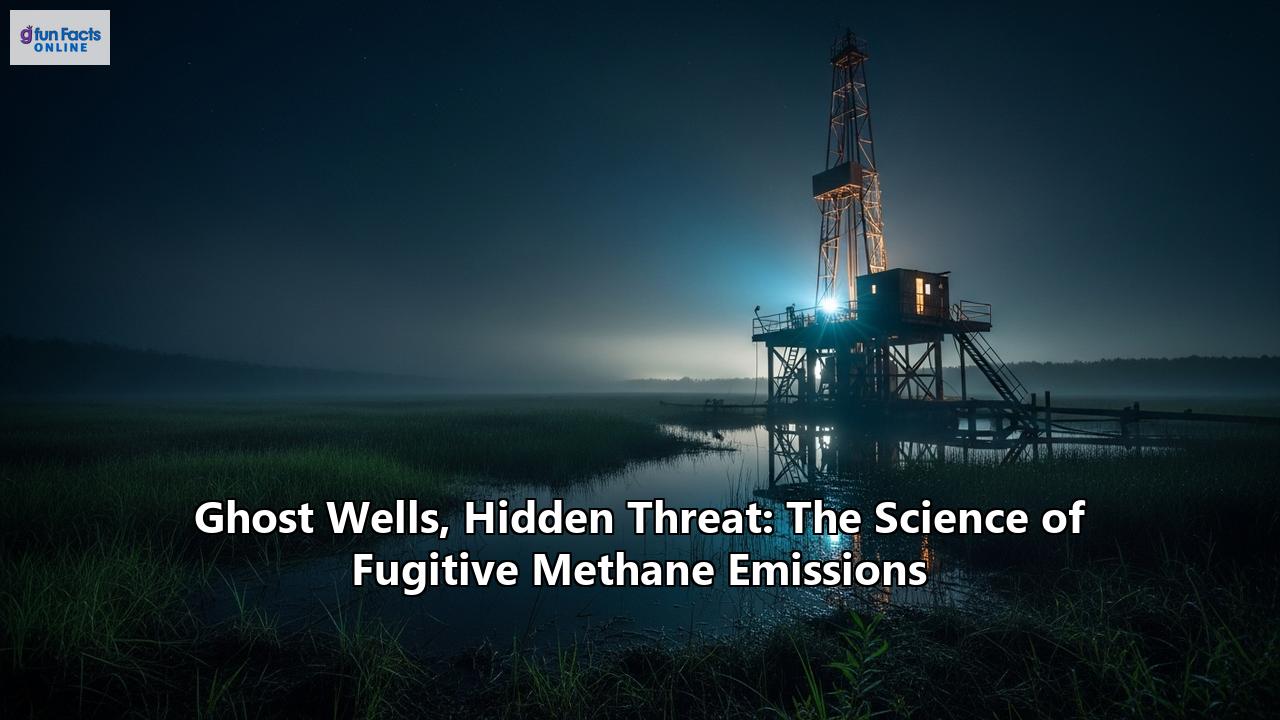
Beneath our feet lies a sprawling, unseen network of old oil and gas wells, often referred to as "ghost wells." These remnants of past energy extraction, officially known as orphaned or abandoned wells, are more than just relics of a bygone era; they are a significant and often overlooked source of fugitive methane emissions, a potent greenhouse gas posing a hidden threat to our climate and public health.
What Are Ghost Wells?Ghost wells are oil or gas wells that are no longer operational and have no solvent owner responsible for their maintenance or proper decommissioning. An "abandoned" well typically has a known, though unproductive, owner/operator, while an "orphaned" well has no identifiable responsible party, leaving the financial burden of plugging often to the state or federal government. These wells may have been deactivated because they became uneconomical, ownership was not transferred, or they were simply neglected. Many of these wells were drilled decades ago, some even in the late 1800s and early 1900s, before modern regulatory standards for plugging were established. Consequently, many are improperly plugged or left entirely unplugged, creating direct conduits for methane and other pollutants to escape into the atmosphere and surrounding environment.
The Scale of the Problem: A Staggering NumberThe exact number of ghost wells globally is difficult to ascertain due to historically poor record-keeping. However, estimates paint a concerning picture. In the United States alone, recent estimates suggest there could be as many as 3.9 million orphaned and abandoned wells. The U.S. Environmental Protection Agency (EPA) has estimated that over 2 million inactive, unplugged wells, including documented orphan wells, exist. State-level data analysis has revealed an estimated 225,287 documented orphan wells, a figure significantly higher than previous EPA estimates of 123,000, though still lower than the anticipated millions. Some research suggests that in Pennsylvania alone, the number of these wells could be as high as 750,000. Globally, one estimate suggests there could be as many as 29 million abandoned wells. The Interstate Oil and Gas Compact Commission estimates the number of undocumented orphaned wells in the U.S. to be between 310,000 and 800,000, though the true number is likely higher. An updated map in 2022 showed 120,000 documented orphan wells in 30 U.S. states, a nearly 50% increase from the previous year, largely due to increased state efforts to locate them.
Fugitive Methane: The Invisible MenaceMethane (CH4) is the primary component of natural gas and a powerful greenhouse gas. Over a 20-year period, methane has more than 80 times the warming power of carbon dioxide. Ghost wells, particularly those that are unplugged or improperly sealed, can leak methane directly from underground oil and gas reservoirs into the atmosphere. These emissions are termed "fugitive" because they escape unintentionally.
The U.S. EPA estimates that methane emissions from inactive, unplugged wells (including orphan wells) amount to a CO2 equivalent of 7 to 20 million metric tons annually, comparable to the emissions from 2 to 5 million cars. Some studies suggest that annual methane emissions from abandoned wells are significantly underestimated, potentially by 150% in Canada and 20% in the U.S. Unplugged gas wells are generally the highest emitters. A 2020 estimate suggested that methane released from abandoned wells in the U.S. had a greenhouse gas impact equivalent to three weeks of U.S. oil consumption each year. Recent research in 2022 estimated global emissions from abandoned wells at 400,000 tonnes of methane, with 98% originating from just ten countries and 70% from the USA alone; 90% of these emissions came from unplugged wells.
Environmental and Health Domino EffectThe environmental consequences of these fugitive methane emissions are far-reaching:
- Climate Change: As a potent greenhouse gas, methane from ghost wells contributes significantly to global warming. Addressing these emissions is seen as a crucial step in slowing climate change.
- Groundwater Contamination: Leaky wells can provide pathways for oil, gas, and other toxic substances like arsenic, benzene, and hydrogen sulfide to contaminate groundwater aquifers, impacting drinking water sources. About 35% of documented orphaned wells in the U.S. are located within 1 km of a domestic groundwater well.
- Soil and Ecosystem Degradation: Contaminants can also pollute the surrounding soil, harming local ecosystems, wildlife, and livestock.
- Air Quality: Besides methane, these wells can release other air pollutants, including volatile organic compounds (VOCs) and hydrogen sulfide, which can degrade local air quality and contribute to smog formation. Smog can worsen asthma and other respiratory conditions.
- Safety Hazards: Methane is highly explosive. Seepage into nearby buildings can create significant explosion risks. It can also displace oxygen in enclosed spaces, leading to asphyxiation risks with symptoms like weakness, nausea, vomiting, and convulsions. There are documented cases of methane leaks from underground storage causing explosions and fatalities, such as in Hutchinson, Kansas, in 2001.
Millions of people live in close proximity to these wells. For instance, it's estimated that over 4.6 million people in the U.S. live within 1 kilometer of orphaned and abandoned wells, highlighting the public health risks. Another calculation estimates that around 14 million Americans live within a mile of a documented orphan well.
The Science of Detection and MeasurementIdentifying and quantifying methane leaks from ghost wells is a complex scientific challenge. Various technologies and methods are employed:
- Ground-Based Techniques: These are currently considered more accurate for measuring emissions from individual wells.
Flux Chambers: Provide high precision for measuring methane emissions in small areas directly over the wellhead.
Handheld Gas Detectors and Analyzers: Devices like portable gas analyzers and thermal conductivity detectors are used to screen wells for leaks by placing probes directly over openings. These can detect methane concentrations from parts per million (ppm) up to 100% gas. High-flow samplers are also used.
Optical Gas Imaging (OGI) Cameras: Handheld devices that can visualize gas leaks.
- Aerial Surveys:
Drones (UAS/UAVs): Drones equipped with sensors like methane detectors and magnetometers are increasingly used to locate wells, especially undocumented ones, and measure emissions. Drone-based solutions like ABB's HoverGuard™ can access hard-to-reach areas and detect methane at low concentrations.
Manned Aircraft: Aircraft equipped with optical sensors can survey larger areas but may have limitations in detecting smaller leaks from individual wells. These typically measure emissions in the range of 100-1,000 kilograms per hour.
Satellite-Mounted Sensors: High earth-orbit satellites generally detect large emission sources (metric tons per hour), while low earth-orbit sensors can be more sensitive (0.1-0.2 metric tons/hour). These are more suited for identifying super-emitters rather than individual well leaks, which are often below detection thresholds.
- Other Techniques:
Geospatial Data Analysis and AI: Combining geospatial data (land features, elevation, historical land use) with historical records and machine learning algorithms (like RandomForestRegressor) helps predict and pinpoint potential orphan well locations.
Electromagnetic Field Detectors: Used in conjunction with drones and other remote sensing technologies to search for 'ghost' wells.
* Soil-Gas Sampling: A sensitive method for detecting gas migration in the soil near wells, especially when microbial activity might reduce surface methane efflux.
Despite technological advancements, accurately quantifying emissions remains a challenge due to the sheer number of wells, their dispersed locations, and the variability in leak rates. Many wells emit little to no methane, while a small fraction of "super-emitter" wells can be responsible for a disproportionate amount of emissions. For example, research in Canada suggests that a small number of unplugged gas wells contribute most of the emissions.
The Science and Technology of PluggingProperly plugging a ghost well is crucial to stopping fugitive emissions and mitigating environmental risks. The process, often called decommissioning, typically involves:
- Well Characterization: Assessing the well's condition, construction, and surrounding geology.
- Removing Obstructions: Clearing any remaining piping or debris from the wellbore.
- Cement Plugging: Placing cement plugs at specific depths within the wellbore to seal off hydrocarbon-bearing zones and prevent fluid migration between geological formations or into aquifers. Modern regulations generally require cement for sealing.
- Surface Reclamation: Removing surface equipment and restoring the well site to its natural condition, including revegetation.
- Cement: The primary material used for plugging.
- Bentonite and Other Sealants: Also used in some plugging operations.
- Emerging Technologies: Research is ongoing into new materials and techniques for more durable and effective well plugs. The National Academies of Sciences, Engineering, and Medicine are examining current and emerging technologies for well characterization, plugging, verification, and long-term durability.
The cost of plugging varies significantly, from under $20,000 for a shallow land well to over $1 million, depending on factors like well depth, age, accessibility, and the complexity of the plugging operation. The median cost to plug a well without surface restoration is around $20,000, while plugging and reclaiming the surface can increase the median cost to $76,000.
Challenges in Tackling the Ghost Well ProblemAddressing the ghost well crisis is fraught with challenges:
- Locating Undocumented Wells: A significant number of wells, especially older ones, are poorly documented or entirely undocumented, making them difficult to find. This is a primary hurdle.
- Scale and Cost: The sheer number of wells requiring plugging translates to an enormous financial burden, estimated to be in the hundreds of billions of dollars in the U.S. alone. While federal funding like the $4.7 billion allocated through the Bipartisan Infrastructure Law in the U.S. is a significant step, it may be inadequate to address the full scale of the problem.
- Insufficient Bonding: Financial assurance (bonds) required from operators to cover plugging costs are often grossly insufficient, especially for older wells or when companies go bankrupt.
- Regulatory Gaps and Enforcement: While regulations exist, they vary by state and can have loopholes or insufficient enforcement, allowing wells to be idled for extended periods before being declared abandoned or orphaned. Some states cannot order shut-in gas wells plugged unless there's an active environmental threat.
- Technical Complexity: Plugging older wells, or those with compromised integrity, can be technically challenging. Offshore wells present even greater logistical and technical hurdles for decommissioning.
- Lack of Resources: There can be a shortage of resources, equipment, and experienced personnel to carry out large-scale plugging operations. Finding qualified pluggers has been an issue in some regions.
- Legacy Wells: Many wells were plugged using outdated standards (e.g., with drilling mud), which are now known to be inadequate and prone to failure.
- Data Gaps: There is still insufficient data to accurately estimate methane emissions from all abandoned wells, hindering prioritization efforts.
The economic impacts of ghost wells are twofold:
- Costs of Inaction: Unplugged wells lead to lost resources (methane), climate change mitigation costs, environmental remediation expenses, reduced property values, and potential health costs.
- Costs of Action: Plugging wells creates jobs, often for skilled oil and gas workers, providing economic stimulus, especially in regions affected by declining fossil fuel production. A federal program to plug half a million wells in the U.S. was estimated to potentially create up to 120,000 jobs.
Recognizing the severity of the problem, efforts are underway to address fugitive methane from ghost wells:
- Government Funding and Initiatives: The U.S. government, through the Bipartisan Infrastructure Law, has allocated significant funds for plugging orphaned wells. This includes funding for locating, characterizing, and prioritizing wells, as well as for research into better plugging technologies. Many states also have their own plugging programs.
- Technological Advancement: Continued research and development are focused on improving detection technologies (e.g., more sensitive aerial and satellite sensors, AI-driven location methods) and plugging techniques (e.g., more durable and cost-effective materials and methods). Companies like ABB are developing advanced methane detection systems.
- Regulatory Reform: There is a push for stronger regulations regarding well idling, bonding requirements to ensure operators cover future plugging costs, and timely decommissioning of unproductive wells.
- International Cooperation and Awareness: The problem of abandoned wells is global. Recent studies are providing a more comprehensive global inventory of these wells and their emissions, highlighting the need for international attention and action.
- Non-Profit Involvement: Organizations like The Well Done Foundation are actively working to plug orphan wells, often using advanced detection technologies.
While not strictly an orphaned well at the time, the massive 2015 methane leak at the Aliso Canyon natural gas storage facility in California, which utilized old oil wells for storage, serves as a stark reminder of the potential dangers lurking underground. The leak released vast quantities of methane, forcing thousands of residents to relocate and highlighting the environmental and health risks associated with aging well infrastructure. The incident released enough methane to be the largest leak in U.S. history in terms of climate impact.
Conclusion: Unearthing Solutions to a Hidden ThreatGhost wells represent a significant, lingering legacy of our reliance on fossil fuels. The fugitive methane and other pollutants they release pose a serious, often invisible, threat to our climate, environment, and public health. While the scale of the problem is daunting and the challenges are many, a growing understanding of the science behind these emissions, coupled with technological innovation, increased funding, and a commitment to regulatory reform, offers a path forward. Addressing ghost wells is not just an environmental cleanup exercise; it's a critical component of climate action, a public health imperative, and an opportunity to create economic benefits in the transition to a cleaner energy future. The silent threat of these hidden emitters must be brought into the light and decisively managed.
Reference:
- https://en.wikipedia.org/wiki/Orphan_wells
- https://www.researchgate.net/figure/Summary-of-Orphaned-and-Abandoned-Oil-and-Gas-Well-Definitions_tbl1_363879618
- https://www.edf.org/orphanwellmap
- https://www.bradley.com/insights/publications/2023/06/abandoned-and-orphaned-wells-how-to-reduce-risks-and-minimize-environmental
- https://dec.ny.gov/environmental-protection/oil-gas/orphaned-abandoned-well-plugging
- https://www.nationalacademies.org/our-work/technologies-and-practices-for-plugging-and-remediating-orphaned-and-abandoned-oil-and-gas-wells
- https://acrcarbon.org/resources/orphaned-oil-and-gas-wells/
- https://pubs.acs.org/doi/10.1021/acs.est.0c04265
- https://www.mdpi.com/2076-3417/14/24/11518
- https://www.researchgate.net/publication/386898450_Environmental_Impacts_of_Orphaned_and_Abandoned_Wells_Methane_Emissions_and_Implications_for_Carbon_Storage
- https://pubs.usgs.gov/publication/dr1167/full
- https://blogs.edf.org/energyexchange/2022/12/02/new-maps-unveil-scale-of-u-s-orphan-well-challenge-highlight-solutions-at-hand/
- https://aegex.com/learning-center/blog/abandoned-wells-and-methane-emissions-understanding-the-impacts
- https://www.azom.com/article.aspx?ArticleID=21749
- https://www.momscleanairforce.org/orphan-wells-pollute/
- https://www.mcgill.ca/nursing/channels/news/methane-leaks-dormant-oil-and-gas-wells-canada-are-seven-times-worse-thought-mcgill-study-suggests-365629
- https://www.heienergy.org/system/files/hei-energy-brief-4-abandoned-wells.pdf
- https://airqualitynews.com/headlines/new-research-reveals-danger-of-abandoned-oil-and-gas-wells/
- https://www.bradley.com/-/media/files/insights/publications/2024/02/prel2403_collura.pdf?rev=86b95e4ea91a4fd0b56420ec808eff4f
- https://www.rff.org/publications/journal-articles/environmental-risks-and-opportunities-of-orphaned-oil-and-gas-wells-in-the-united-states/
- https://www.newsweek.com/2016/01/29/porter-ranch-california-methane-gas-leak-crisis-412807.html
- https://carboncontainmentlab.org/documents/methane-measurement-memo-website-version-1671206674.pdf
- https://www.doi.gov/sites/default/files/federal-orphaned-wells-methane-measurement-guidelines-final-for-posting-v2.pdf
- https://pubs.acs.org/doi/10.1021/acsomega.3c00676
- https://biosqueeze.com/blog/orphan-wells-update-may-2023
- https://www.azocleantech.com/article.aspx?ArticleID=1708
- https://tech4future.info/en/abandoned-oil-wells/
- https://calyxglobal.com/research-hub/research/an-introduction-to-plugging-of-orphan-oil-and-gas-wells/
- https://www.epa.gov/sites/default/files/2018-04/documents/ghgemissions_abandoned_wells.pdf?v=021511
- https://fordschool.umich.edu/news/2021/raimi-research-economic-and-environmental-benefits-plugging-orphan-wells-reflected-biden
- https://www.rff.org/news/press-releases/new-study-reveals-key-factors-for-estimating-costs-to-plug-abandoned-oil-and-gas-wells/
- https://www.eesi.org/articles/view/plugging-orphaned-oil-and-gas-wells-provides-climate-and-jobs-benefits
- https://www.blm.gov/sites/default/files/docs/2024-06/BLM-OilandGas-Orphanwells-Factsheet-June2024.pdf
- https://oklahoma.gov/content/dam/ok/en/occ/documents/og/OCC-Plan-Addressing-Orphaned-Well-Plugging-Challenges.pdf
- https://getglobalgroup.com/decommissioning-and-abandonment-challenges-faced-by-the-upstream-oil-and-gas-industry/
- https://www.rff.org/news/press-releases/new-research-examines-environmental-job-creation-benefits-plugging-orphaned-and-abandoned-oil-and-gas-wells/
- https://www.smithsonianmag.com/science-nature/size-california-methane-leak-isnt-scariest-part-story-180958234/