
For more than a century, humanity’s understanding of cancer was dominated by a singular, persistent focus: the rogue cell. Science dedicated its finest minds to interrogating the genetic blueprint of the tumor, searching for the precise mutations that transform a healthy cell into an unstoppable engine of replication. However, this hyper-focus on the “seed” of cancer often ignored the “soil” in which it grows. As far back as 1889, the English surgeon Stephen Paget proposed the "seed and soil" hypothesis, suggesting that cancer cells can only thrive and spread if they land in a congenial and supportive environment. Today, modern oncology is undergoing a profound paradigm shift by returning to Paget’s profound insight. We now recognize that cancer is not merely a collection of mutated cells; it is a complex, rogue organ. And like any organ, it requires infrastructure, blood supply, and a dedicated workforce.
Enter the fibroblast. Traditionally viewed as the passive maintenance workers of our connective tissues, fibroblasts are now recognized as the master architects of cancer progression. Long before a tumor becomes a life-threatening malignancy, it begins as a microscopic cluster of aberrant cells. To survive the body's natural defenses, these early mutant cells must aggressively reshape their surroundings, creating what is known as the "precancerous niche". By hijacking local fibroblasts, nascent tumors engineer a highly specialized, protective sanctuary that guarantees their survival, fuels their growth, and ultimately paves the way for their spread across the body.
The Unwitting Accomplices: Normal Fibroblasts in Healthy Tissue
To understand how fibroblasts drive tumor survival, one must first understand their day job. In healthy tissue, normal fibroblasts are the primary caretakers of the extracellular matrix (ECM)—the intricate, three-dimensional scaffold of proteins, collagen, and carbohydrates that gives our organs their shape, structural integrity, and elasticity. Fibroblasts are essentially the body’s construction and repair crew. Under normal homeostatic conditions, they lie relatively dormant, quietly regulating the turnover of ECM components to keep tissues healthy and functioning.
However, when a tissue is injured—by a cut, an infection, or a burn—these resting cells rapidly awaken. They transform into activated myofibroblasts, rushing to the site of damage. Once there, they deploy a rapid-response wound-healing protocol: they stitch the wound together by depositing massive amounts of collagen, secrete factors to stimulate the formation of new blood vessels, and communicate with the immune system to ward off infection. Once the wound is healed, these activated fibroblasts are supposed to either return to their dormant state or undergo programmed cell death.
But what happens when the wound never heals? In the 1980s, the pathologist Harold Dvorak famously described tumors as "wounds that do not heal". Cancer cells expertly exploit the body's innate repair mechanisms. By continuously emitting inflammatory signals, malignant cells trick local fibroblasts into a state of perpetual activation. These corrupted cells are classified as Cancer-Associated Fibroblasts (CAFs), and they serve as the foundational pillars of the tumor microenvironment (TME).
The Distress Signal: Birth of the Precancerous Niche
The timeline of cancer's development has been fundamentally rewritten by recent discoveries regarding the earliest interactions between mutant cells and their environment. It is now understood that the creation of a tumor-permissive environment happens remarkably early—even before a definitive malignancy has formed.
In a landmark study published in March 2026, researchers from the Cambridge Stem Cell Institute dramatically illuminated how this precancerous niche is born. Utilizing advanced 3D tissue models and in vivo mapping, the researchers discovered that at the very earliest stages of development, nascent tumor cells send out a powerful molecular "distress signal" to nearby fibroblasts.
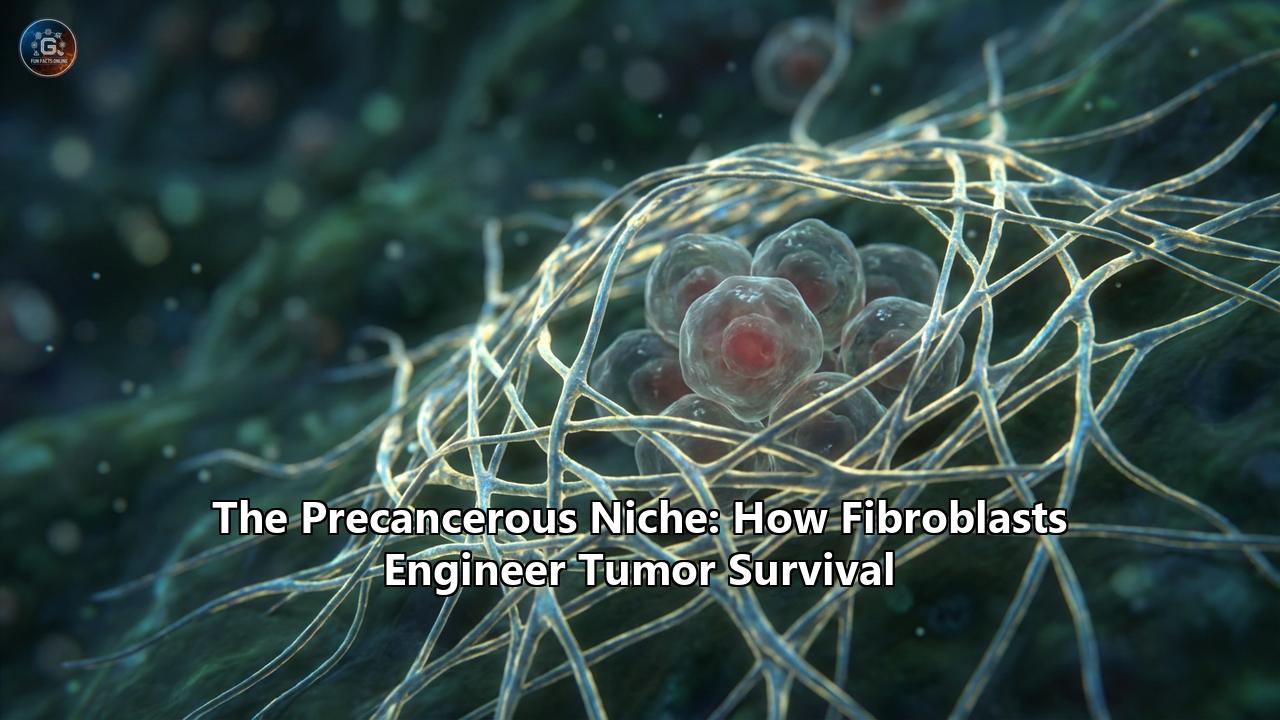
The fibroblasts in the underlying tissue receive this signal and misinterpret the presence of the aberrant cells as severe tissue damage. Springing into their evolutionary "first-aid" role, the fibroblasts mount a vigorous wound-healing response, rapidly spinning a dense fibrotic scaffold around the emergent tumor cells. This localized remodeling creates the precancerous niche—a physical and biochemical shelter that protects the fragile, newly-formed tumor from being detected and cleared by the host’s immune system.
Astonishingly, the Cambridge researchers found that this fibroblast-derived scaffold is so potently pro-tumorigenic that its mere presence is enough to force healthy, non-mutant cells to exhibit tumor-like properties. The implications of this are staggering: beyond genetic mutations, the ultimate survival of a nascent tumor is fundamentally dictated by how the healthy surrounding tissue responds to its emergence. When researchers therapeutically blocked this "distress communication" between the early tumor cells and the local tissue, the precancerous niche failed to form efficiently, and the vast majority of early tumors simply perished.
The Physical Engineering: Remodeling the Extracellular Matrix
Once fibroblasts are recruited and activated into CAFs, their primary method of engineering tumor survival is the radical remodeling of the extracellular matrix. The precancerous niche is characterized by profound changes in both the biochemical composition and the biophysical stiffness of the tissue.
In conditions such as Ductal Carcinoma In Situ (DCIS)—a pre-invasive precursor to breast cancer—the surrounding breast stroma is heavily cultivated by the pre-invasive lesion, much like a farmer fertilizing a field before planting seeds. CAFs begin to churn out immense quantities of ECM proteins. However, this is not the organized, functional matrix of healthy tissue; it is a chaotic, dense, and rigid landscape. The CAFs induce a shift from a normal stroma to an invasion-permissive "myxoid" stroma, marked by a sharp decrease in protective proteins like decorin (which normally inhibits cancer cell adhesion) and an increase in molecules like versican,.
Simultaneously, CAFs secrete a critical enzyme known as Lysyl Oxidase (LOX),. LOX acts as a biological welding tool, creating cross-links between collagen fibers. This excessive cross-linking significantly increases the mechanical stiffness and rigidity of the tissue. This desmoplastic reaction, or fibrosis, is what makes many solid tumors—such as breast and pancreatic cancers—feel like hard lumps upon clinical examination.
This increased tissue stiffness is not merely a structural byproduct; it is a profound mechanical signal that drives cancer progression. The rigid ECM triggers "outside-in" mechanotransduction signaling in the cancer cells via surface receptors called integrins. The mechanical tension activates internal kinase pathways (such as the EPHA2/LYN pathway), which promote Epithelial-to-Mesenchymal Transition (EMT)—a process whereby cancer cells lose their cell-to-cell adhesion and gain the ability to migrate and invade surrounding tissues. By literally paving a stiffened "highway" of aligned collagen fibers, CAFs provide the tracks upon which cancer cells escape the primary tumor.
Biochemical Warfare: The Soluble Signals of Survival
Fibroblasts engineer tumor survival through chemistry just as much as they do through physics. CAFs are prodigious biological factories, secreting a rich cocktail of growth factors, cytokines, and chemokines that directly feed the tumor cells and manipulate the surrounding host tissue.
Chief among these chemical signals is Transforming Growth Factor-beta (TGF-β). The release of TGF-β by early cancer cells acts as a master switch to convert normal fibroblasts into corrupt CAFs. Once activated, the CAFs themselves secrete large amounts of TGF-β, creating a positive feedback loop that solidifies the precancerous niche. TGF-β acts directly on the premalignant cells, further driving the EMT process and allowing them to acquire the mesenchymal properties necessary for invasion.
Additionally, CAFs secrete factors that guarantee the tumor's logistical survival. They release Vascular Endothelial Growth Factor (VEGF) and Fibroblast Growth Factor 2 (FGF2), which stimulate angiogenesis. By forcing the host to sprout new blood vessels into the precancerous niche, CAFs ensure that the rapidly multiplying mutant cells are supplied with oxygen and nutrients. Furthermore, CAF-derived Hepatocyte Growth Factor (HGF) has been directly implicated in protecting cancer cells from modern therapies; for instance, in BRAF-mutant melanomas, CAF-secreted HGF can reactivate survival pathways in the melanoma cells, allowing them to effectively evade the lethal pressure of targeted cancer drugs.
The Metabolic Marketplace: Feeding the Nascent Tumor
As early tumors grow, they rapidly outstrip their local energy supplies. To survive in an often nutrient-deprived microenvironment, cancer cells must rewire their metabolism. Here again, the CAFs step in as essential enablers.
Through a process known as the "Reverse Warburg Effect," the precancerous niche functions as a sophisticated metabolic marketplace. Cancer cells secrete factors like Lysophosphatidic acid (LPA) or platelet-derived growth factor (PDGF), which trigger oxidative stress and stabilize Hypoxia-Inducible Factor 1-alpha (HIF-1α) in the neighboring CAFs. This forces the CAFs to undergo aerobic glycolysis.
Instead of using glucose to generate energy for themselves, the CAFs ferment glucose and excrete high-energy metabolic byproducts, such as lactate and pyruvate. The adjacent cancer cells then greedily scavenge these metabolites, using them to fuel their own mitochondrial oxidative phosphorylation. By effectively turning the fibroblasts into cellular "feeder" factories, the tumor ensures it has the limitless energy required for explosive, unchecked growth.
Constructing the Fortress: Immunosuppression in the Niche
One of the most formidable hurdles any nascent tumor faces is the human immune system. Cytotoxic T-cells and natural killer (NK) cells are constantly patrolling the body, seeking out and destroying abnormal cells. To ensure tumor survival, the precancerous niche must be transformed into an immunosuppressive fortress.
Recent advancements in single-cell RNA sequencing have revealed that CAFs are not a single, monolithic population, but rather a highly diverse and specialized workforce. Two prominent sub-populations of CAFs perfectly illustrate how fibroblasts engineer immune evasion: Matrix CAFs (mCAFs) and Immunomodulatory CAFs (iCAFs).
The mCAFs are the structural engineers. They synthesize the dense extracellular matrix and literally ensheath the tumor nests. This fibrotic wall creates a severe physical and pressure barrier that physically prevents tumor-killing T-cells from infiltrating the cancerous tissue, marginalizing them to the tumor borders.
Simultaneously, the iCAFs act as the biochemical defense ministers. They are enriched in late-stage and highly infiltrative tumors and express shockingly high levels of chemokines and cytokines. iCAFs secrete molecules like CXCL12, CCL2, and Interleukin-6 (IL-6). These signals act as a sophisticated jamming system against the immune response. CXCL12 actively repels effector T-cells, while CCL2 and TGF-β are used to recruit immune-suppressive cells to the tumor site, such as Regulatory T-cells (Tregs), Tumor-Associated Macrophages (TAMs), and Myeloid-Derived Suppressor Cells (MDSCs). By actively recruiting these suppressor cells, the iCAFs effectively neutralize the body’s natural anti-cancer immunity, creating a "cold" tumor microenvironment where the cancer can grow undisturbed.
The Pre-Metastatic Niche: Preparing the Distant Soil
The engineering prowess of fibroblasts is not confined to the primary tumor site. The ultimate cause of mortality in most cancer patients is metastasis—the systemic spread of the disease to distant organs. It was once believed that metastasis was a somewhat random process, governed by where circulating tumor cells (CTCs) happened to get trapped in capillary beds. We now know that metastasis is highly orchestrated, and fibroblasts play a starring role in preparing the landing zones.
Long before a cancer cell physically leaves the primary tumor, it begins communicating with distant organs—a process that establishes the "pre-metastatic niche" (PMN),. The primary tumor achieves this long-distance engineering by shedding vast quantities of extracellular vesicles and exosomes,. These microscopic cargo vessels travel through the bloodstream, loaded with non-coding RNAs (miRNAs), proteins, and signaling molecules.
When these tumor-derived exosomes arrive at common metastatic sites, such as the lungs, liver, or brain, they are absorbed by resident, healthy fibroblasts. The exosomes forcibly activate these distant fibroblasts, turning them into CAFs before a single cancer cell has even arrived. These newly minted distant CAFs immediately begin remodeling their local microenvironment.
In breast cancer, for example, primary tumor signals stimulate lung stromal fibroblasts to produce Tenascin-C (TNC) and Periostin (POSTN). These highly specific matrix proteins are essentially biological landing pads. They alter the local tissue mechanics to support the survival and fitness of metastatic stem cells, increasing their responsiveness to crucial survival pathways like Wnt and Notch signaling. Similarly, in melanoma, tumor-derived TGF-β travels systemically to stimulate distant resident fibroblasts, prompting them to lay down fresh collagen and create an inflammatory microenvironment that suppresses adaptive immunity at the future site of metastasis.
When the circulating tumor cells finally arrive at the distant organ, they do not face a hostile, foreign environment; they step into a fully furnished, supportive home. Moreover, fibroblasts often act as personal bodyguards during the dangerous journey through the bloodstream. Studies have shown that Circulating Tumor Cell (CTC) clusters frequently contain CAFs. By expressing adhesion molecules like CD44 and forming protective homophilic interactions, these "traveling CAFs" shield the cancer cells from the shear stress of blood flow and immune attack, dramatically increasing their metastatic potential.
A New Frontier in Therapy: Dismantling the Architects
The realization that the precancerous and tumor microenvironments are constructed and maintained by fibroblasts is revolutionizing how we approach cancer therapy. If the survival of early tumors is dictated by the fibrotic niche rather than just the mutant cells themselves, then our therapeutic arsenal must expand.
For decades, the standard of care has been to poison, burn, or cut out the cancer cells. However, if the "soil" remains fundamentally corrupted, the disease is highly likely to return. Consequently, oncology is turning its attention to fibroblast-based therapies.
The goal is not necessarily to blindly kill all fibroblasts, as they are essential for normal bodily functions and wound healing. Instead, the focus is on dismantling the niche they have created and reprogramming the CAFs back into quiescent, healthy cells.
Therapeutic strategies currently under intense investigation include:
- Intercepting the Distress Signal: As demonstrated by the recent Cambridge Stem Cell Institute findings, if we can identify and block the early communication pathways—the "distress signals"—between nascent tumor cells and surrounding fibroblasts, we might prevent the precancerous niche from ever forming. This opens unprecedented avenues for cancer prevention, stopping the disease in its tracks before it ever takes hold.
- Softening the Matrix: By targeting the enzymes that stiffen the extracellular matrix, researchers hope to mechanically collapse the tumor's physical infrastructure. LOX inhibitors are being evaluated for their ability to prevent collagen cross-linking. By reducing tissue stiffness, these therapies not only halt the mechanically-induced progression of cancer but also relieve the physical pressure inside the tumor, allowing traditional chemotherapies and immune cells to successfully penetrate the core.
- Blocking Biochemical Warfare: Clinical trials are heavily focused on inhibiting the soluble factors that CAFs use to communicate. TGF-β inhibitors aim to cut off the master switch that activates fibroblasts and suppresses the immune system. Additionally, therapies targeting specific CAF markers, such as Fibroblast Activation Protein (FAP), are being used to deliver localized payloads of drugs directly to the corrupted stroma.
- Reversing Immunosuppression: By neutralizing the chemokines secreted by iCAFs, such as CXCL12, researchers are attempting to strip away the tumor's "invisibility cloak." Combining CAF-targeted therapies with modern immune checkpoint inhibitors shows immense promise in converting unresponsive "cold" tumors into "hot" tumors that the patient's own immune system can recognize and destroy.
Rewriting the Rules of Engagement
The narrative of cancer is no longer a solitary tale of a rogue cell driven mad by genetic errors. It is a complex, ecological saga of communication, coercion, and architectural engineering. By emitting molecular distress signals, nascent cancer cells manipulate the very maintenance workers sworn to protect our tissues, forcing normal fibroblasts to build a supportive, protective, and heavily fortified precancerous niche.
From the stiffening of the extracellular matrix to the biochemical suppression of the immune system, and from local metabolic reprogramming to the preparation of distant metastatic landing pads, fibroblasts are the undisputed master engineers of tumor survival.
As our understanding of this intricate cellular crosstalk deepens, so too does our ability to intervene. By shifting our gaze from the seed to the soil, science is pioneering a new era of therapeutics. We are learning how to dismantle the physical fortresses of tumors, silence their deceptive distress calls, and ultimately turn the architecture of the precancerous niche against the cancer itself. In the endless war against malignancy, understanding the architect is the first vital step to tearing down the building.
Reference:
- https://pmc.ncbi.nlm.nih.gov/articles/PMC4615059/
- https://www.stemcells.cam.ac.uk/news/alcolea-group-discovery-tumour-development-could-help-catch-and-treat-cancer-earliest-stages
- https://journals.biologists.com/dmm/article/4/2/165/53523/Remodeling-and-homeostasis-of-the-extracellular
- https://orbit.dtu.dk/files/332737088/fimmu_14_1154528.pdf
- https://pmc.ncbi.nlm.nih.gov/articles/PMC8003545/
- https://crukcambridgecentre.org.uk/news/discovery-why-only-some-early-tumours-survive-could-help-catch-and-treat-cancer-very-earliest
- https://www.cam.ac.uk/research/news/discovery-of-why-only-some-early-tumours-survive-could-help-catch-and-treat-cancer-at-very-earliest
- https://pmc.ncbi.nlm.nih.gov/articles/PMC8303391/
- https://www.4open-sciences.org/articles/fopen/pdf/2019/01/fopen180011.pdf
- https://www.biorxiv.org/content/10.1101/2021.01.12.426460v1.full-text
- https://www.frontiersin.org/journals/cell-and-developmental-biology/articles/10.3389/fcell.2018.00048/full
- https://pmc.ncbi.nlm.nih.gov/articles/PMC12853664/
- https://www.mdpi.com/1422-0067/26/13/6132
- https://www.frontiersin.org/journals/cell-and-developmental-biology/articles/10.3389/fcell.2023.1089068/full
- https://www.biorxiv.org/content/10.1101/2023.05.03.539213v2.full-text
- https://pmc.ncbi.nlm.nih.gov/articles/PMC10845297/
- https://journals.physiology.org/doi/10.1152/ajpcell.00145.2015