
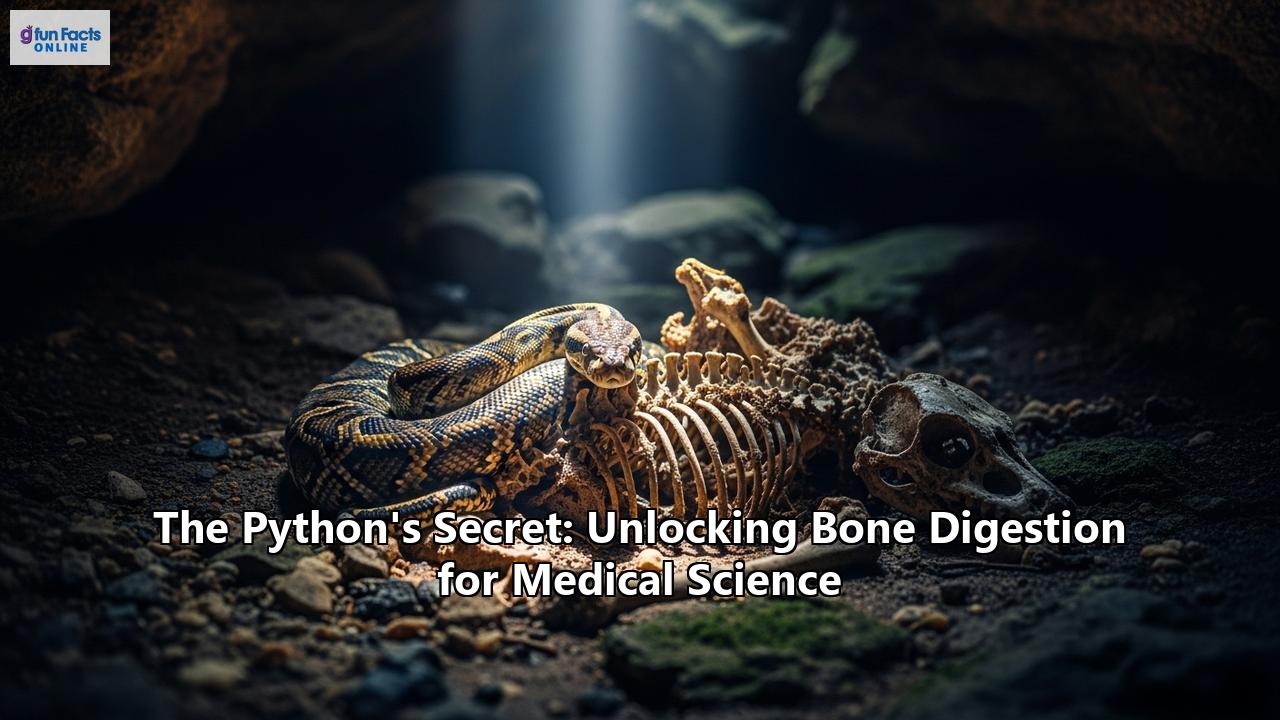
The Serpent's Superpower: How Python Digestion is Unlocking Revolutionary Medical Secrets
In the silent, patient world of the ambush predator, the python reigns supreme. It is a creature of immense power and startling efficiency, known for its ability to consume prey of astonishing size—sometimes as large as deer or alligators. This feat alone is a marvel of the natural world, but the true spectacle begins after the swallow. Deep within the python's body, a biological furnace ignites, a digestive process so potent it can dissolve flesh, organs, and even solid bone, leaving almost nothing behind. For centuries, this incredible digestive capacity was simply a curiosity of nature. Now, however, scientists are peering into the python's gut, not just out of fascination, but with a transformative goal: to unlock its secrets for the advancement of human medicine.
This is not the stuff of science fiction. The python's unique physiology, honed over millions of years of evolution to cope with infrequent but massive meals, presents a living blueprint for solving some of the most persistent challenges in medical science. Imagine a world where we could develop treatments for bone-wasting diseases like osteoporosis by mimicking the very process that allows a python to digest a skeleton. Envision new enzyme-based therapies capable of dissolving deadly blood clots or even targeting cancerous tumors, inspired by the potent chemical cocktail in a snake's digestive tract. Consider novel drug delivery systems that can navigate the harsh environment of the human stomach, learning from the python's ability to protect its own organs from self-digestion.
The journey into the python's digestive system is a journey to the extremes of biological adaptation. It involves a breathtaking cascade of physiological changes: organs that double in size within days, a metabolic rate that skyrockets by over 40-fold, and a stomach that transforms from a neutral chamber into a vat of powerful acid. By understanding the intricate molecular and cellular mechanisms that orchestrate this transformation, researchers are not just learning about a remarkable snake; they are discovering new pathways and principles that could revolutionize therapeutic strategies. This is the burgeoning field of biomimicry, where nature's most successful designs provide the inspiration for human innovation. This article delves deep into the python's secret, exploring the profound biological processes of its digestive system and illuminating the exciting frontier of medical science it inspires.
The Feast and the Furnace: A Masterclass in Digestive Engineering
The python's life is one of feast and famine. As a sit-and-wait predator, it can go for weeks, even months, without eating. During these long fasting periods, its body is a model of conservation. Its gastrointestinal (GI) tract becomes quiescent, shutting down to a near-dormant state to save precious energy. The stomach stops producing acid, the intestines atrophy, and its metabolic rate slows to a crawl. But the moment prey is captured and consumed, this tranquil state is shattered, and one of the most dramatic transformations in the animal kingdom begins.
A Cascade of Physiological ChangesThe ingestion of a meal, which can equal or exceed half the python's own body mass, triggers a rapid and systemic upregulation of its entire digestive machinery. This is not a gentle awakening; it's an explosive, highly coordinated physiological event.
Within 24 to 48 hours, the snake's organs undergo astonishing growth, a process known as organ hypertrophy. The heart, liver, pancreas, kidneys, and small intestine can all increase in mass, some by as much as 40-100%. The heart, for instance, grows by up to 40% not through cell division (hyperplasia) but by increasing the size of existing muscle cells (hypertrophy), a response needed to support a massive increase in cardiac output to fuel the digestive process. This physiological hypertrophy is fully reversible; once digestion is complete, the organs shrink back to their fasting size, awaiting the next meal.
This rapid growth is mirrored by an equally dramatic surge in metabolic rate. A digesting python's oxygen consumption can increase by up to 44-fold compared to its standard metabolic rate. This specific dynamic action (SDA), the energy expended on digestion, is the largest recorded among vertebrates and can consume up to a third of the energy contained within the meal itself. To fuel this immense energetic cost, the python's body mobilizes vast reserves. Plasma concentrations of triglycerides can skyrocket by more than 150-fold, turning the snake's blood milky with lipids that serve as a critical energy source. This entire process operates on a "pay before pumping" principle, where the snake must first expend a significant amount of its own stored energy to kickstart the digestive engine before it can begin to absorb nutrients from its meal.
The Acid Test: The Power of the Python's StomachThe centerpiece of this digestive powerhouse is the stomach. During fasting, the gastric environment is neutral, with a pH around 7.5. However, within 24 hours of consuming a meal, the stomach undergoes a radical transformation. Specialized cells in the gastric lining, known as oxyntopeptic cells, go into overdrive, pumping out massive quantities of hydrochloric acid (HCl). This torrent of acid causes the stomach's pH to plummet from a neutral 7 to a highly acidic 2, and it can be maintained at a searingly low pH of 1.5 for the duration of gastric digestion, which can last for several days.
This extreme acidity is crucial for the initial breakdown of the prey. The HCl begins to denature proteins and, most importantly, starts the process of dissolving the hard, mineralized structure of bone. X-ray studies of digesting pythons show the skeleton of a consumed rat, completely intact on day one, progressively breaking down until it has completely dissolved and passed into the small intestine by day six.
Complementing the acid bath is a powerful enzymatic assault. The oxyntopeptic cells also secrete a potent protease called pepsin in its inactive form, pepsinogen. The highly acidic environment of the stomach cleaves pepsinogen into active pepsin, an enzyme that excels at breaking down proteins into smaller peptides. This combination of extreme acid and powerful enzymes begins the systematic liquefaction of the prey's soft tissues and skeleton.
Beyond the Stomach: The Intestinal Powerhouse and Hormonal ControlAs the partially digested, acidic slurry, now called chyme, is metered from the stomach into the small intestine, another remarkable transition occurs. The chyme's pH is rapidly neutralized, increasing from as low as 2.5 to 6.5 within a few centimeters, a process likely mediated by bicarbonate secretions from the pancreas. This protects the intestinal lining from the harsh acidity of the stomach.
The small intestine, which has already doubled in mass, becomes a hive of activity. Its internal surface area expands dramatically, not just through the lengthening of its villi (finger-like projections), but also through an unprecedented five-fold increase in the length of the microscopic microvilli on the surface of intestinal cells. This massive expansion of surface area creates an enormous capacity for absorbing nutrients.
The pancreas releases a cocktail of digestive enzymes into the small intestine, including trypsin and chymotrypsin for protein digestion, amylase for carbohydrates, and lipase for fats. The activity of these enzymes skyrockets; post-meal, trypsin activity can increase six-fold and amylase activity twenty-fold. This enzymatic onslaught continues the breakdown of the meal into its fundamental components—amino acids, glucose, and fatty acids—which are then eagerly absorbed by the hyper-functional intestinal lining.
This entire symphony of digestion is meticulously controlled by a host of gastrointestinal hormones and neuropeptides. Peptides like cholecystokinin (CCK), which stimulates the pancreas and gallbladder, can see their plasma concentrations increase by a staggering 25-fold after a meal. Other regulatory peptides like neurotensin and glucagon also surge, coordinating the complex interplay between the gut, pancreas, and other organs to ensure the efficient processing of the massive nutrient load.
The Bone-Dissolving Breakthrough: A Cellular Secret Revealed
For a long time, the most profound mystery of the python's digestive system was its ability to completely dissolve bone. While the potent hydrochloric acid was clearly a major factor, the process seemed too efficient to be explained by acid alone. The breakthrough came with a remarkable discovery: a previously unknown type of cell in the intestines of Burmese pythons that plays a crucial role in managing the massive influx of calcium from a bony meal.
Skeletons are a vital source of minerals like calcium and phosphorus for the python; snakes fed a boneless diet can develop calcium deficiencies. However, absorbing the entire calcium content of a large animal's skeleton would be toxic, flooding the snake's bloodstream with dangerously high levels of the mineral. Researchers discovered that Burmese pythons possess specialized, narrow cells in their intestinal lining that are uniquely adapted to handle this challenge.
These cells contain an apical fold that forms a small crypt. During the digestion of a meal containing bones, these crypts become filled with tiny, multi-layered particles made of calcium, phosphorus, and iron. In snakes fed a boneless diet, these particles are absent, confirming their direct link to calcium intake. It is believed that these specialized cells actively sequester the excess calcium and phosphorus that has been liberated from the dissolved bones, packaging them into these solid particles. These particles are then not absorbed into the bloodstream but are instead passed through the digestive tract and expelled with the waste.
This ingenious mechanism allows the python to have the best of both worlds: it can fully dissolve the skeleton to extract the necessary minerals, while simultaneously preventing a toxic overdose by safely packaging and excreting the excess. This discovery not only solved a long-standing biological puzzle but also opened a new window into how organisms can evolve highly specific cellular machinery to cope with extreme dietary challenges. It is this precise and powerful system of bone deconstruction and mineral management that holds such tantalizing promise for medical science.
From Serpent to Syringe: Biomimicry and Medical Innovation
The burgeoning field of biomimicry, or biomimetics, looks to nature for inspiration to solve human problems. From the design of high-speed trains inspired by the beak of a kingfisher to the development of adhesives based on a gecko's feet, nature's time-tested solutions are providing blueprints for technological and medical breakthroughs. The python's digestive system, with its extreme adaptations, is a particularly rich source of inspiration, offering potential solutions for a range of medical conditions, most notably bone disease.
A New Strategy Against Osteoporosis?Osteoporosis is a debilitating disease characterized by a loss of bone density, which makes bones weak and prone to fracture. This condition arises from an imbalance in the natural process of bone remodeling. Throughout our lives, specialized cells called osteoclasts break down, or resorb, old bone tissue, while other cells called osteoblasts build new bone. In osteoporosis, the rate of bone resorption by osteoclasts outpaces the rate of bone formation, leading to a net loss of bone mass.
The mechanism of bone resorption by osteoclasts is remarkably analogous to what happens in a python's stomach, albeit on a microscopic scale. An osteoclast attaches to the bone surface and creates a sealed, isolated microenvironment. Into this compartment, it pumps protons (hydrogen ions) to create an acidic environment that dissolves the bone mineral (calcium phosphate). It also secretes enzymes, most notably a powerful protease called cathepsin K, which digests the organic matrix of the bone, primarily collagen.
This parallel is where the python's secret becomes medically relevant. The python's system is designed for the complete and rapid dissolution of bone. By studying the specific enzymes and the chemical environment it creates, researchers could gain insights into developing more effective therapies for bone diseases. The goal is not to dissolve bone, but to control the cells that do. For instance, understanding the potent proteases a python uses could inspire the design of highly specific inhibitors for human cathepsin K or other osteoclast enzymes. The challenge in treating osteoporosis is to slow down the overactive osteoclasts without completely stopping the essential process of bone remodeling. The python's system offers a model of extreme, yet controlled, bone deconstruction that could reveal new targets for therapeutic intervention. While direct research into python-inspired osteoporosis drugs is still in its infancy, the conceptual link between the snake's gut and the human skeleton provides a fertile ground for future investigation.
Enzyme Therapies: Dissolving Clots and Fighting DiseaseThe potent chemical cocktail of the python's digestive system extends beyond its implications for bone disease. The powerful proteolytic enzymes it produces are master decomposers of tissue. This has led scientists to consider whether similar enzymes could be harnessed for other therapeutic purposes where the breakdown of unwanted protein structures is beneficial. A prime example is in the treatment of thrombosis—the formation of life-threatening blood clots.
Blood clots are primarily composed of a mesh of a protein called fibrin. The body has its own natural system for breaking down clots, called fibrinolysis, which relies on an enzyme called plasmin. However, when this system is overwhelmed, clots can block blood vessels in the heart (causing a heart attack) or the brain (causing a stroke). Current treatments often involve thrombolytic ("clot-busting") drugs that aim to activate the body's own plasmin.
Interestingly, a rich source of powerful, clot-dissolving enzymes is found not in the digestive tracts of snakes, but in their venom. Many snake venoms contain serine proteases and metalloproteases that have fibrinolytic activity, meaning they can directly degrade fibrin. These venom-derived enzymes are being actively studied and, in some cases, have been developed into therapeutic drugs. While these enzymes come from venom, not the gut, the principle is the same: harnessing a snake's powerful biological tools for medical benefit. The digestive enzymes of the python, adapted to break down all manner of proteins, represent another, largely untapped library of potentially therapeutic proteases that could inspire future drug development for conditions ranging from thrombosis to the dissolution of scar tissue or the breakdown of the protein matrix surrounding tumors.
Revolutionizing Drug Delivery: Learning from Nature's DefensesOne of the major challenges in designing oral medications is ensuring they survive the incredibly harsh environment of the human stomach. The stomach's low pH and powerful digestive enzymes can easily degrade many drug molecules before they have a chance to be absorbed in the intestines. This is where another of the python's secrets offers inspiration.
How does a python's own digestive tract survive being exposed to a pH of 1.5 and a barrage of potent enzymes? The cells lining the stomach and intestines have highly effective protective mechanisms. The intestinal cells, for example, are coated in a thick layer of mucus, and the rapid neutralization of chyme as it enters the intestine is a key defensive strategy.
This has inspired researchers in the field of drug delivery to explore biomimetic systems. The goal is to create "smart" nanoparticles or capsules that can protect their drug cargo from the stomach's destructive environment and then release it at a specific target site, such as the small intestine. For example, scientists are developing liposomes and other nanocarriers that are coated with materials designed to mimic the protective membranes of cells. By studying the molecular structure of the python's gut lining and the composition of its protective mucus, researchers could gain valuable insights into designing more robust and effective oral drug delivery systems. The python provides a model for how to shield delicate biological materials from extreme chemical stress, a lesson that could transform how we administer a wide range of medicines.
Challenges on the Path from Python to Patient
While the medical potential inspired by the python is immense, the path from observing a biological marvel to developing a safe and effective human therapy is long and fraught with challenges. The process of translating these natural secrets into medicine requires overcoming significant scientific, technical, and ethical hurdles.
The Complexity of ReplicationNature's systems are the product of millions of years of evolution and are characterized by a level of complexity that is exceedingly difficult to replicate in a laboratory. The python's digestive process is not the result of a single "super-enzyme" but rather a highly integrated system of physiological changes, hormonal signals, and a precisely balanced cocktail of acids and multiple enzymes.
Synthesizing a single one of these enzymes in a lab can be a formidable task. They are often large, complex proteins with specific three-dimensional structures that are essential for their function. Producing them through recombinant DNA technology can be difficult and expensive, and ensuring they remain stable and active outside of their natural biological context is another major challenge.
Furthermore, simply isolating an enzyme is not enough. To be therapeutically useful, it would need to be delivered to the correct location in the human body, function in an environment very different from a python's gut, and do so without causing harmful side effects or triggering an immune response. Recreating the dynamic, responsive, and perfectly-timed cascade of events that characterizes python digestion is currently beyond the reach of medical technology. Therefore, the more immediate promise lies not in wholesale replication, but in using the python's system as a source of inspiration to identify novel drug targets or design new classes of molecules.
Ethical Considerations in ResearchThe use of animals in scientific research carries a significant ethical responsibility, and studies involving pythons are no exception. Research that has unveiled the secrets of their digestion has necessarily involved laboratory studies on live animals, including feeding experiments, surgical procedures, and tissue collection.
Scientific and regulatory bodies have established strict guidelines for the ethical treatment of reptiles in research. These guidelines emphasize that procedures should be designed to minimize any pain, stress, or distress to the animals. This includes using appropriate anesthesia or analgesia for any invasive procedures, providing proper husbandry and housing that mimics their natural environment, and ensuring that the number of animals used is the absolute minimum necessary to obtain scientifically valid results.
Furthermore, there is a strong ethical imperative to ensure that the potential knowledge gained from such research is substantial and genuinely advances scientific understanding or medical capabilities. The principle of the "Three Rs"—Replacement (using non-animal methods where possible), Reduction (using the minimum number of animals), and Refinement (improving procedures to minimize harm)—is a cornerstone of modern animal research ethics. As this field of biomimicry progresses, it will be crucial for researchers, institutions, and the public to maintain a continuous dialogue about the ethical dimensions of this work, balancing the quest for knowledge and medical progress with the welfare of the incredible animals that make it possible.
The Future is Biomimetic: A New Frontier in Medicine
The study of the python's digestive system is a powerful testament to the value of basic biological research. What began as an exploration driven by pure curiosity about an animal's extreme physiology is now pointing the way toward novel solutions for human health. This journey from the gut of a snake to the forefront of medical science is emblematic of the promise of biomimicry—a paradigm shift that views nature not just as something to be preserved, but as a vast, living library of brilliant ideas.
The future of this specific field of research is likely to branch in several exciting directions. In the short term, the python will continue to serve as an invaluable model organism for studying fundamental biological processes like reversible organ growth, extreme metabolic regulation, and tissue protection. The molecular pathways identified in pythons, such as the mTOR and PI3K/AKT pathways that control organ growth, are also present in humans and are implicated in diseases like cancer and diabetes. Understanding how a python can turn these pathways on and off with such precision could provide critical insights into how they malfunction in human disease.
Looking further ahead, we can anticipate more targeted efforts to translate these findings into therapeutics. This could involve computational drug design, where scientists use the structure of a python's digestive enzymes as a template to create new synthetic molecules that can inhibit human enzymes, such as those involved in bone resorption or blood clotting. We may also see the development of advanced drug delivery systems, perhaps using novel polymers or lipid formulations, whose designs are directly inspired by the protective mechanisms of the python's gut lining.
Ultimately, the python's secret is a reminder that the solutions to some of our most complex problems may be hidden in plain sight, within the extraordinary biology of the creatures with whom we share our planet. The ability to dissolve bone, once a mere biological oddity, has become a beacon of hope for medical innovation. By continuing to explore the natural world with a sense of wonder and a sharp scientific eye, we may find that the serpent holds the key to not just one, but a whole host of medical miracles yet to be discovered. The future of medicine may well be written in the language of nature, and the python is just beginning to tell its story.
Reference:
- https://pubmed.ncbi.nlm.nih.gov/15876398/
- https://www.research.ucsb.edu/sites/default/files/policies/iacuc/SS_Amphib.pdf
- https://pubmed.ncbi.nlm.nih.gov/12682094/
- https://www.researchgate.net/publication/23556010_Digestive_physiology_of_the_Burmese_python_Broad_regulation_of_integrated_performance
- https://journals.biologists.com/jeb/article/211/24/3767/18007/Digestive-physiology-of-the-Burmese-python-broad
- https://scialert.net/fulltext/?doi=ajbs.2019.396.403
- https://pmc.ncbi.nlm.nih.gov/articles/PMC8608887/
- https://pmc.ncbi.nlm.nih.gov/articles/PMC8388123/
- https://pmc.ncbi.nlm.nih.gov/articles/PMC5689512/
- https://en.wikipedia.org/wiki/Osteoclast
- https://www.researchgate.net/publication/20715084_Dietary_regulation_of_digestive_enzyme_levels_in_the_water_snakeNatrix_tessellata
- https://journals.biologists.com/jeb/article/206/10/1621/13595/Gastric-function-and-its-contribution-to-the
- https://erenweb.org/wp-content/uploads/2011/07/GUIDELINES-FOR-USE-OF-LIVE-AMPHIBIANS-AND-REPTILES-IN-FIELD-RESEARCH.pdf
- https://www.thebhs.org/images/stories/BHS-ethicspolicy.pdf
- https://pmc.ncbi.nlm.nih.gov/articles/PMC5412052/
- https://www.pnas.org/doi/10.1073/pnas.1314475110
- https://www.researchgate.net/publication/7990345_Physiology_Postprandial_cardiac_hypertrophy_in_pythons
- https://journals.biologists.com/jeb/article/227/20/jeb247445/362203/Molecular-regulation-of-reversible-cardiac
- https://www.discovermagazine.com/the-sciences/dining-with-the-snakes
- https://pmc.ncbi.nlm.nih.gov/articles/PMC11760623/
- https://www.researchgate.net/publication/26865864_Functional_Changes_with_Feeding_in_the_Gastro-Intestinal_Epithelia_of_the_Burmese_Python_Python_molurus
- https://digitalcommons.calpoly.edu/cgi/viewcontent.cgi?article=3052&context=theses
- https://pubs.acs.org/doi/10.1021/acs.langmuir.1c01689
- https://pmc.ncbi.nlm.nih.gov/articles/PMC5597892/
- https://www.assaygenie.com/blog/protease-vs-peptidase
- https://www.pnas.org/doi/10.1073/pnas.241524698
- https://pubmed.ncbi.nlm.nih.gov/9437709/
- https://researchers.westernsydney.edu.au/files/94926906/uws_49614.pdf
- https://www.pnas.org/doi/10.1073/pnas.2408719121
- https://pmc.ncbi.nlm.nih.gov/articles/PMC4421790/
- https://scispace.com:443/pdf/chapter-3-osteoclast-biology-and-bone-resorption-1smwq9tc5y.pdf
- https://portal.findresearcher.sdu.dk/files/257764592/Panwar_et_al_2024.pdf
- https://www.researchgate.net/publication/382851813_Comparative_analysis_of_vision_transformers_and_convolutional_neural_networks_in_osteoporosis_detection_from_X-ray_images
- https://pmc.ncbi.nlm.nih.gov/articles/PMC3086185/
- https://www.mdpi.com/1999-4923/15/7/1968
- https://ccac.ca/Documents/Standards/Guidelines/CCAC_Guidelines_Reptiles.pdf
- https://parcplace.org/education/herpethics/