
Introduction: The Paradox of Efficiency
In the grand economic design of life, efficiency is typically the gold standard. From the smallest bacterium to the largest blue whale, organisms have evolved under the ruthless pressure of natural selection to maximize energy extraction from their environment. Every calorie hunted, gathered, or synthesized is a hard-won prize, and wasting it would seem to be a cardinal sin of biology. Yet, deep within the cellular machinery of nearly every eukaryotic organism lies a mechanism dedicated solely to the deliberate, seemingly reckless waste of energy. This process is known as mitochondrial uncoupling.
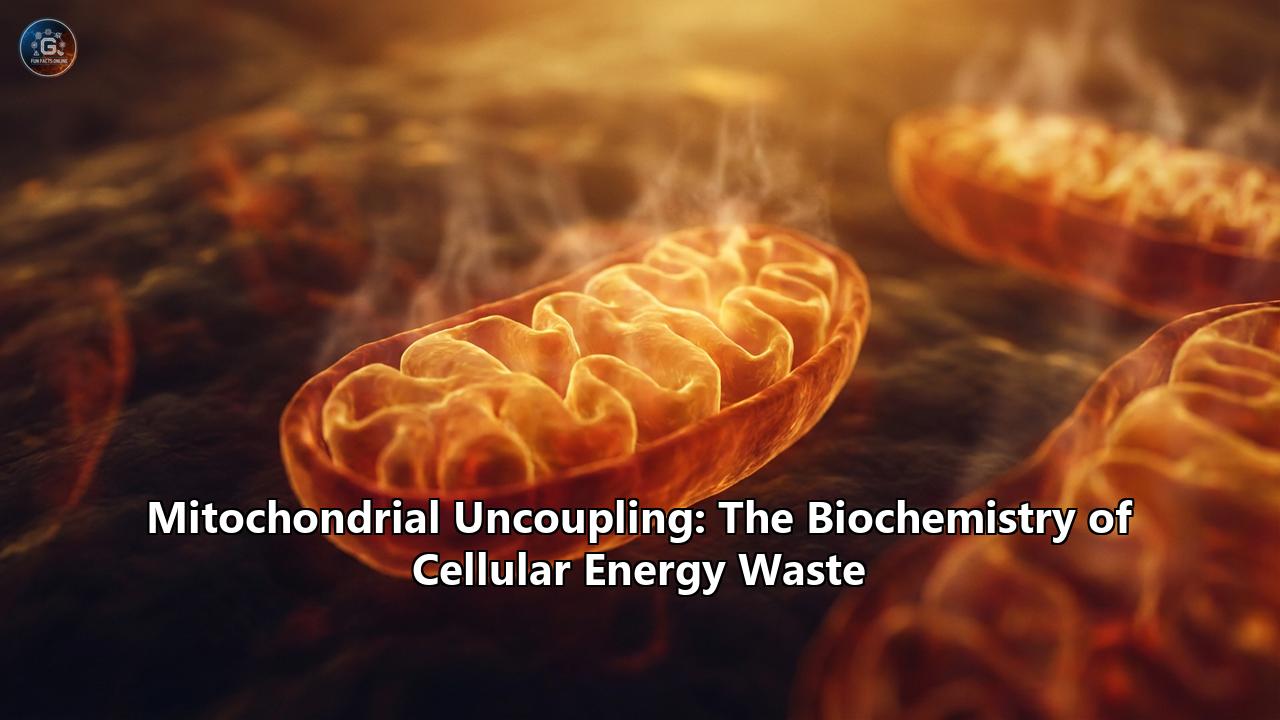
To the uninitiated, mitochondrial uncoupling appears to be a biological glitch—a leak in the fuel tank of the cell. It involves the dissipation of the proton motive force, the electrochemical battery that powers the synthesis of ATP (adenosine triphosphate), the universal currency of cellular energy. Instead of being harnessed to forge ATP, the energy stored in this gradient is released as heat, vanishing into the ether without performing any chemical work.
However, characterizing this process as mere "waste" is a profound misunderstanding of cellular physiology. This "waste" is, in fact, a sophisticated control system. It is the heater that keeps mammals warm in the dead of winter; it is the pressure valve that prevents the cellular engine from exploding under the strain of oxidative stress; and, according to emerging research, it may be a master switch for metabolic regulation, capable of reversing obesity, diabetes, and perhaps even aging itself.
This article delves into the biochemistry of this fascinating inefficiency. We will explore the molecular mechanics of the electron transport chain, the dangerous allure of synthetic uncouplers like 2,4-Dinitrophenol (DNP) that once killed thousands in the name of weight loss, and the modern renaissance of "safe" uncoupling agents like BAM15. We will journey from the evolutionary origins of uncoupling proteins in ancient plants and fungi to the cutting-edge pharmaceutical labs hoping to harness the power of energy waste to cure the metabolic plagues of the 21st century.
Part I: The Engine of Life and the Proton Leak
To understand how energy is wasted, one must first understand how it is saved. The story begins in the inner mitochondrial membrane, the site of one of the most elegant machinery complexes in nature: the Electron Transport Chain (ETC).
The Chemiosmotic Theory
For decades, the mechanism of ATP synthesis was a "black box" in biochemistry. It wasn't until 1961 that Peter Mitchell proposed the Chemiosmotic Theory, a radical idea suggesting that energy wasn't transferred through high-energy chemical intermediates, but through a physical gradient of ions—specifically, protons (H+).
The mitochondria act as biological batteries. As we break down food (glucose, fatty acids, amino acids), high-energy electrons are stripped away and loaded onto carrier molecules like NADH and FADH2. These carriers shuttle electrons to the ETC, a series of protein complexes embedded in the inner mitochondrial membrane. As electrons flow down this chain, releasing energy at each step, the protein complexes (Complex I, III, and IV) act as pumps. They physically push protons from the mitochondrial matrix into the intermembrane space.
This pumping creates a dam. The intermembrane space becomes flooded with protons, creating a steep electrochemical gradient—the proton motive force (PMF). This force has two components: a chemical gradient (pH difference) and an electrical gradient (membrane potential, or ΔΨm). The protons, desperate to return to the matrix to equalize the charge and concentration, are blocked by the impermeable inner membrane.
There is only one official gate open for their return: the ATP Synthase (Complex V). This enzyme is a molecular turbine. As protons rush back through it, they spin the rotor of the enzyme, generating the mechanical torque needed to smash ADP and inorganic phosphate together to form ATP. This is "coupled" respiration: oxygen consumption (electron flow) is tightly chemically coupled to ATP production.
The Leak in the Dam
In a perfectly efficient system, every proton pumped out would return through ATP synthase. But biological membranes are not perfect insulators. Even in the absence of specific proteins, the inner mitochondrial membrane is slightly permeable to protons. This phenomenon is known as basal proton leak.
Basal leak accounts for a staggering 20-30% of the resting metabolic rate in hepatocytes (liver cells) and skeletal muscle. This means that a third of the oxygen you breathe while reading this sentence is not generating ATP; it is merely counteracting a leak. For years, this was viewed as an imperfection—a "cost of doing business" for maintaining a charged membrane. However, the discovery of specific proteins dedicated to increasing this leak changed everything.
Uncoupling: The biochemical Short-Circuit
Mitochondrial uncoupling occurs when protons bypass ATP synthase and re-enter the matrix through alternative pathways. When this happens, the energy stored in the proton gradient is released instantly as heat.
The thermodynamics are simple but dramatic. Since the energy is not captured in a chemical bond (ATP), it must be dissipated. The equation of respiration changes:
- Coupled: Fuel + O2 → ATP + CO2 + H2O + Heat (minor)
- Uncoupled: Fuel + O2 → CO2 + H2O + Heat (massive)
In an uncoupled state, the cell burns fuel furiously. The ETC works overtime to pump protons out because they keep flooding back in. Oxygen consumption spikes, but ATP levels drop or remain constant. The cell effectively becomes a furnace, burning through its fat and sugar reserves just to maintain the membrane potential.
Part II: Nature’s Radiators – The Uncoupling Proteins (UCPs)
The existence of a dedicated molecular mechanism for uncoupling was confirmed with the discovery of Uncoupling Protein 1 (UCP1), also known as Thermogenin.
UCP1 and the Fire of Brown Fat
UCP1 is found exclusively in Brown Adipose Tissue (BAT). Unlike the white adipose tissue (WAT) that stores energy as blubber, brown fat is packed with iron-rich mitochondria (giving it the brown color) and acts as a biological heater.
In small mammals (like mice) and human infants, maintaining body temperature is a constant battle against thermodynamics. They have a high surface-area-to-volume ratio and lose heat rapidly. When exposed to cold, the sympathetic nervous system releases norepinephrine. This triggers lipolysis in brown fat cells, releasing free fatty acids.
Here lies the biochemical elegance: Fatty acids are not just fuel; they are the activators. Long-chain fatty acids bind to UCP1, triggering a conformational change that opens a proton channel. Protons rush back into the matrix, short-circuiting the battery. The mitochondria begin to run wildly, oxidizing the very fatty acids that activated them. This generates intense heat, which warms the blood flowing through the highly vascularized brown fat tissue, distributing warmth to the rest of the body. This process is called Non-Shivering Thermogenesis.
For decades, it was believed that adult humans lost their brown fat, having outgrown the need for it. However, PET-CT scans in the late 2000s revealed that adults retain active depots of brown fat, particularly in the neck and supraclavicular regions, which can be activated by cold exposure. This discovery reignited interest in UCP1 as a target for obesity treatment. If we could voluntarily activate this heater, could we simply burn off excess calories as heat?
The Enigma of UCP2 and UCP3
Following the cloning of UCP1, researchers raced to find homologs. They discovered UCP2 (ubiquitous expression) and UCP3 (mainly skeletal muscle). Initially, the excitement was palpable. Since muscle is the largest organ by mass, a muscle-specific uncoupler (UCP3) seemed like the Holy Grail for weight loss.
However, the biochemistry told a different story. Unlike UCP1, UCP2 and UCP3 are not potent thermogenic uncouplers under physiological conditions. They do not respond to cold stress in the same way. The consensus view has shifted toward the "Uncoupling to Survive" hypothesis.
The electron transport chain is a dangerous place. It leaks not just protons, but electrons. These rogue electrons can react with oxygen to form Superoxide (O2•-), a potent Reactive Oxygen Species (ROS). ROS can damage DNA, proteins, and lipids (oxidative stress).
ROS production is highly dependent on the membrane potential. When the potential is high (the battery is fully charged), the electron carriers become "backed up," increasing the likelihood of electron slip and ROS formation. UCP2 and UCP3 appear to act as pressure valves. By allowing a mild proton leak, they slightly lower the membrane potential—just enough to reduce ROS production without compromising ATP synthesis.
Thus, while UCP1 is a heater, UCP2 and UCP3 are safety valves. They waste a little energy to prevent the cellular engine from rusting out.
Part III: The Deadly Diet – The History of DNP
Long before the biochemistry of UCP1 was understood, humanity stumbled upon the power of mitochondrial uncoupling through a darker avenue: the munitions factories of World War I.
The Yellow Powder
In French munitions plants during the Great War, workers were tasked with filling artillery shells with a mixture of explosives. One of the chemical precursors was 2,4-Dinitrophenol (DNP). It was a yellow, crystalline solid.
Doctors soon noticed a strange pattern among the factory workers. They were sweating profusely, even on cold days. They lost weight rapidly, despite having ravenous appetites. Tragically, some died of mysterious fevers that no antipyretic could break. Their bodies had literally cooked them alive.
After the war, scientists Maurice Tainter and Windsor Cutting investigated this phenomenon at Stanford University. In 1933, they published a study showing that DNP could skyrocket metabolic rate by 50% or more. The mechanism was identified later: DNP is a protonophore.
Mechanism of a Chemical Killer
DNP is a lipophilic weak acid. It can easily pass through lipid membranes. In the intermembrane space (where proton concentration is high), DNP picks up a proton, becoming neutral. It then diffuses across the inner membrane into the matrix. Once inside (where proton concentration is low), it releases the proton. The anionic DNP molecule then diffuses back to the intermembrane space to repeat the cycle.
DNP acts as a ferry, shuttling protons back into the matrix and completely bypassing ATP synthase. It uncouples respiration from ATP production with brutal efficiency.
The 1930s Diet Craze
Upon Tainter’s publication, DNP exploded onto the market. It was the first "medical" weight loss drug, sold under names like Redusols and Formula 281. It worked terrifyingly well. Patients could lose 2-3 pounds of pure fat per week while lying in bed. It was hailed as a miracle.
But the therapeutic window of DNP is razor-thin.
- Therapeutic dose: Increased metabolic rate, sweating, weight loss.
- Toxic dose: Uncontrolled hyperthermia (fevers of 109°F/43°C), tachycardia, rigid muscles (rigor mortis-like), and death.
The difference between "slimming" and "cooking" could be a matter of a few pills, or an unusually hot day, or individual sensitivity. Furthermore, DNP causes cataracts and agranulocytosis (loss of white blood cells). By 1938, after reports of blinded patients and horrific deaths, the FDA used DNP as one of the primary cases to demand the authority to regulate drug safety, leading to the Food, Drug, and Cosmetic Act of 1938. DNP was banned for human consumption.
The Underground Return
Despite the ban, DNP never truly vanished. It went underground, circulating in bodybuilding subcultures. In the internet age, it has resurfaced as a "fat burner" sold on illicit websites. The biochemistry remains as unforgiving as ever. Emergency rooms still see young, healthy individuals brought in with temperatures incompatible with life, their cells burning furiously until they run out of substrate or enzymes denature. There is no specific antidote for DNP poisoning; doctors can only try to cool the patient down, often unsuccessfully.
Part IV: Mitohormesis and the Paradox of Aging
If high-level uncoupling (DNP) kills, and zero uncoupling (perfect efficiency) leads to oxidative stress, is there a "Goldilocks" zone? This question leads us to the concept of Mitohormesis.
Hormesis is the biological phenomenon where a low dose of a toxin or stressor elicits a beneficial adaptive response. Exercise is a classic example: it causes muscle damage and oxidative stress, which signals the body to build stronger muscles and better antioxidant defenses.
"Uncoupling to Survive"
Research into aging has produced a counterintuitive finding: increased metabolic rate usually correlates with a shorter lifespan (the "Rate of Living" theory). However, mild mitochondrial uncoupling breaks this rule.
In models ranging from C. elegans (worms) to Drosophila (flies) and mice, mild uncoupling has been linked to increased longevity. How can wasting energy extend life?
- ROS Reduction: As mentioned with UCP2/3, a slightly "leaky" membrane prevents the proton gradient from becoming too high, which is the state where electrons are most likely to slip and form superoxide. By lowering the "pressure," uncoupling reduces the cumulative oxidative damage to DNA and proteins over a lifetime.
- Adaptive Signaling: The mild stress of uncoupling (a slight drop in ATP, a slight rise in heat) triggers nuclear signaling. This "retrograde signaling" (from mitochondria to nucleus) activates longevity pathways.
AMPK Activation: A drop in ATP activates AMP-activated protein kinase (AMPK), the cell's energy sensor. AMPK stimulates mitochondrial biogenesis (making new, fresh mitochondria), induces autophagy (cleaning out damaged cellular junk), and improves insulin sensitivity.
Mitokines: Stressed mitochondria secrete signaling molecules called mitokines (e.g., FGF21, GDF15). These hormones travel to the brain and liver, regulating systemic metabolism, reducing appetite, and improving glucose tolerance.
Thus, the "waste" of energy acts as a continuous, low-level exercise mimetic, keeping the cell's repair mechanisms sharp and active.
Part V: The Future of Fat Loss – Can We Uncouple Safely?
The obesity epidemic has forced science to revisit the mechanism of uncoupling. We know DNP works but is too dangerous. We know UCP1 works but is hard to activate in humans. The quest now is for Safe, Liver-Targeted, Mild Uncouplers.
BAM15: The New Hope
In the last decade, a molecule named BAM15 has emerged as a leading candidate. BAM15 is a synthetic protonophore, like DNP, but with crucial differences that make it potentially safe.
- Mitochondrial Selectivity: DNP is a "promiscuous" protonophore; it can depolarize not just the inner mitochondrial membrane but also the plasma membrane of cells. Depolarizing the plasma membrane affects nerve conduction and heart rhythm, leading to the seizures and arrhythmias seen in DNP toxicity. BAM15 is highly selective for the mitochondrial membrane, sparing the plasma membrane.
- Self-Limiting Kinetics: BAM15 appears to have a wider therapeutic index. In mouse models, it increases metabolic rate and reverses obesity without raising body temperature to fatal levels.
- Reduced ROS: Unlike some uncouplers that might increase stress, BAM15 has been shown to decrease mitochondrial ROS, protecting against ischemia-reperfusion injury (such as in heart attacks).
In mouse studies, BAM15-treated animals ate the same amount of food as controls but remained lean and insulin-sensitive, effectively "wasting" the excess calories from a high-fat diet.
Liver-Targeted Uncoupling (CRMP)
Another strategy is to restrict the uncoupling to the liver. The liver is the metabolic hub of the body; if you can increase energy expenditure there, you can drain the body's lipid reserves.
Researchers have developed Controlled-Release Mitochondrial Protonophores (CRMP). These are modified versions of DNP that are encapsulated to release slowly and are preferentially taken up by the liver. By keeping the peak concentration in the blood low (avoiding the "cooking" effect) and focusing the action on the liver (burning liver fat), CRMP has shown the ability to reverse Non-Alcoholic Fatty Liver Disease (NAFLD) and Type 2 Diabetes in rats and primates without the toxic side effects of systemic DNP.
The Evolutionary Perspective: Why Wait?
The existence of uncoupling proteins in plants (PUMPs - Plant Uncoupling Mitochondrial Proteins), fungi, and even protozoa suggests that this mechanism is ancient. Plants use it to ripen fruit or survive freezing temperatures. Skunk cabbage, for example, uses uncoupling to heat its flowers to 70°F even when the air is freezing, melting the snow around it to attract pollinators.
This deep evolutionary history suggests that "energy waste" is a fundamental feature of eukaryotic life, not a bug. It implies that the ability to decouple energy intake from energy storage was crucial for survival in fluctuating environments. In our modern environment of endless caloric abundance, our efficient storage genes have become a liability. Re-activating this ancient waste pathway might be the only way to align our Paleolithic biology with our modern lifestyle.
Conclusion
Mitochondrial uncoupling represents one of the most captivating dualities in biochemistry. It is a process that balances on a knife-edge between life and death. In the form of UCP1, it is the warmth of life for a newborn. In the form of UCP2, it is the shield against the ravages of time and oxygen. In the form of DNP, it is a chaotic fire that consumes the self.
As we look to the future, the biochemistry of cellular energy waste offers a promising horizon. By learning to finely tune this "leak," we may be able to treat the diseases of excess—obesity, diabetes, and fatty liver—by simply allowing our cells to do what they evolved to do: waste a little energy to stay healthy. The "waste" of the mitochondria may turn out to be the most valuable loss we can incur.
Reference:
- https://pdf.benchchem.com/1667/A_Comparative_Analysis_of_BAM15_and_DNP_on_Cellular_Respiration_A_Guide_for_Researchers.pdf
- https://www.fightaging.org/archives/2022/04/more-on-the-safe-mitochondrial-uncoupling-compound-bam15/
- https://en.wikipedia.org/wiki/Uncoupler
- https://pmc.ncbi.nlm.nih.gov/articles/PMC4843886/
- https://pmc.ncbi.nlm.nih.gov/articles/PMC151194/
- https://journals.physiology.org/doi/10.1152/japplphysiol.00994.2001
- https://pubmed.ncbi.nlm.nih.gov/31786315/
- https://pmc.ncbi.nlm.nih.gov/articles/PMC2924931/
- https://www.youtube.com/watch?v=9-yuyDCfwhc
- https://pubmed.ncbi.nlm.nih.gov/31578240/
- https://diabetesjournals.org/diabetes/article/69/Supplement_1/459-P/56560/459-P-Liver-Targeted-Mitochondrial-Uncoupling-by
- https://pmc.ncbi.nlm.nih.gov/articles/PMC6996238/
- https://portlandpress.com/biochemj/article/481/23/1831/235328/Biochemical-basis-and-therapeutic-potential-of