
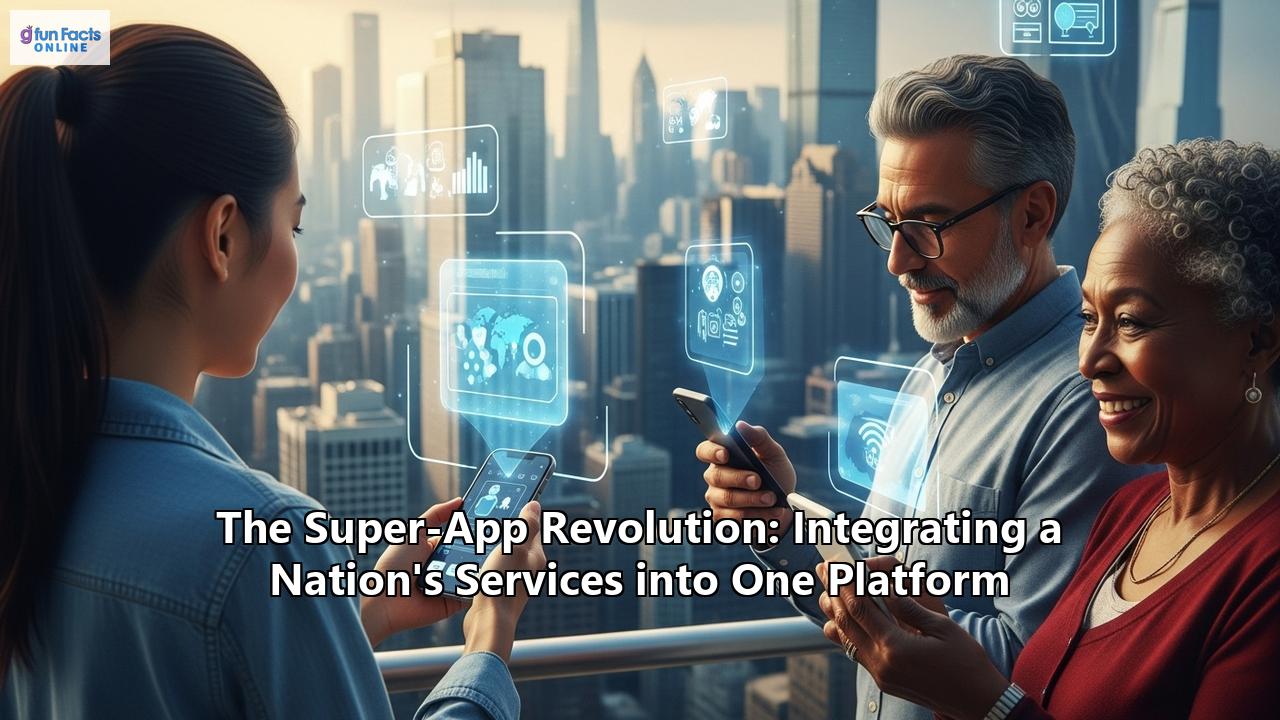
The Super-App Revolution: Reshaping Nations Through a Single Digital Gateway
In an era defined by digital immediacy, the quest for convenience has led to a groundbreaking shift in how we interact with technology, commerce, and even our own governments. This transformation is being spearheaded by the rise of the "super-app"—a single mobile application that consolidates a vast array of services into one seamless, integrated ecosystem. What began as a trend in Asian markets, with behemoths like China's WeChat and Southeast Asia's Grab, is now evolving into a global phenomenon with profound implications for national governance. Governments worldwide are looking to this model, not just as a means of modernizing services, but as a way to fundamentally reshape the relationship between the state and its citizens. The super-app revolution is no longer just about ordering a taxi or a meal; it's about creating a unified digital fabric for an entire nation.
From Messaging to a Digital Swiss Army Knife: The Genesis of the Super-App
The term "super-app," first coined in 2010 by BlackBerry founder Mike Lazaridis, described a future of interconnected applications creating a seamless user experience. However, it was Tencent's WeChat in China that truly brought this vision to life. Launched in 2011 as a simple messaging service, WeChat rapidly evolved by integrating payments, social media, e-commerce, and eventually, access to government services, becoming an indispensable tool for over a billion users.
This model flourished in Asia's mobile-first environment, where for many, a smartphone was the primary, if not sole, gateway to the internet. This created a fertile ground for platforms that could offer a multitude of functions without overwhelming a device's storage or data plan. Following WeChat's lead, companies like Gojek in Indonesia, which began as a ride-hailing service, and Grab in Southeast Asia expanded to offer a dizzying array of services, from food delivery and digital payments to financial and insurance products.
The core of a super-app's architecture lies in its platform-based model. It typically starts with a high-frequency core service, like messaging or ride-hailing, that builds a large and loyal user base. It then layers on additional functionalities, often through "mini-programs" or "mini-apps"—lightweight applications developed by third parties that run within the super-app's ecosystem. This modular approach allows for immense scalability and customization, enabling the super-app to become a central hub for a user's digital life.
The New Frontier: Governments Embrace the Super-App Model
The success and efficiency of private-sector super-apps have not gone unnoticed by governments. Faced with fragmented, often redundant, and underutilized digital services, public-sector leaders are increasingly turning to the super-app model to streamline citizen interactions. The logic is compelling: instead of forcing citizens to navigate a confusing web of separate government websites and apps, a single, unified platform can offer a one-stop-shop for public services.
This has led to a wave of government-led super-app initiatives across the globe:
- India's UMANG (Unified Mobile Application for New-age Governance): A prime example of a government-driven super-app, UMANG provides access to over 22,000 services from more than 300 government departments. Citizens can use the app for everything from applying for a passport to paying utility bills, with the platform even offering personalized recommendations for services like health insurance based on a user's profile.
- Singapore's LifeSG: This app is designed around a "moments of life" approach, curating services relevant to key life events. What started as a way to streamline birth registration now supports citizens through various life stages, from education and housing to end-of-life planning.
- Indonesia's GovTech Initiative: The Indonesian government is undertaking a massive consolidation effort, aiming to merge approximately 27,000 disparate government applications into a handful of super-apps, each focused on a priority service like health, education, or digital identity. This ambitious project seeks to reduce bureaucratic hurdles and accelerate the delivery of public services.
- Saudi Arabia's Tawakkalna: Initially launched as a COVID-19 tracking app, Tawakkalna has evolved into a comprehensive national super-app offering over 1,100 services from more than 80 government entities. Its open platform model, which includes a software development kit (SDK) for third parties, has enabled a rapid expansion of services.
Similar initiatives are underway in countries like the Philippines with its eGov PH app, and Thailand with its Thang Rath platform, all driven by the promise of a more efficient, user-centric, and connected government.
The Promise of a Unified Nation: The Benefits of a National Super-App
The move towards integrating a nation's services into a single platform offers a multitude of potential benefits for both citizens and the state.
For Citizens:- Unparalleled Convenience: The most immediate advantage is the sheer convenience of having a single point of access for all government interactions. This eliminates the need to remember multiple logins, navigate different interfaces, and understand the bureaucratic structure of various departments.
- Personalized and Proactive Services: By consolidating data, government super-apps can offer a more personalized experience, proactively suggesting relevant services and benefits. For instance, the app could notify new parents about child benefits or alert job seekers to relevant training programs.
- Increased Transparency and Accessibility: A centralized platform can enhance transparency by allowing citizens to track applications, view their records, and access public information more easily. It can also improve accessibility for those in remote areas or with mobility issues.
- Financial Inclusion: In many developing nations, super-apps are a key driver of financial inclusion. By integrating digital wallets and payment services, they provide access to the digital economy for unbanked or underbanked populations, a model that government apps can also leverage.
- Enhanced Efficiency and Cost Savings: Consolidating thousands of apps into one platform can lead to significant cost savings in development, maintenance, and infrastructure. It also streamlines back-end processes by forcing inter-departmental collaboration and breaking down data silos.
- Improved Service Delivery: A unified platform allows for better data collection and analytics, providing insights that can be used to improve public services and make data-driven policy decisions.
- Combating Corruption: By digitizing and streamlining transactions, super-apps can reduce the opportunities for corruption and discretionary actions by officials.
- Strengthened Citizen Engagement: A well-designed super-app can foster a closer relationship between the government and its citizens, improving trust and satisfaction with public services.
The Double-Edged Sword: Navigating the Perils of Centralization
Despite the immense potential, the path to a national super-app is fraught with significant challenges and risks that require careful consideration.
- Data Privacy and Surveillance: The most pressing concern is the immense concentration of citizen data in a single place. A government-controlled super-app could become a powerful tool for surveillance, and a poor data security track record can make it a prime target for hackers. Critics express legitimate fears about how this data will be used, protected, and who will have access to it, especially in the absence of robust data protection laws.
- Security Risks: A centralized system creates a single point of failure. A successful cyberattack on a national super-app could be catastrophic, potentially exposing the personal data of millions and disrupting essential services. This necessitates a massive investment in cybersecurity, including robust encryption, multi-factor authentication, and continuous monitoring.
- The Digital Divide: While super-apps can enhance inclusion for some, they risk excluding others. Citizens who lack digital literacy, affordable internet access, or a smartphone could be left behind, creating a new form of inequality. To mitigate this, governments must ensure that offline alternatives remain available and invest in digital literacy programs.
- Monopolization and Stifled Innovation: A dominant government super-app could stifle competition and innovation in the private sector. If the government becomes the sole digital gatekeeper, it could create a monopolistic environment that disadvantages smaller tech companies and limits consumer choice.
- Implementation Complexity: Building a super-app is a monumental undertaking. It requires a whole-of-government approach to overcome bureaucratic silos, standardize data, and ensure interoperability between different departmental systems. The technical architecture must be modular and scalable to handle millions of users and a constantly expanding array of services.
Building the Future: Governance, Technology, and Partnerships
Successfully launching and managing a national super-app requires a carefully crafted strategy that goes beyond just the technology.
- Governance and Partnerships: Many governments are turning to Public-Private Partnerships (PPPs) to leverage the expertise and agility of the private sector while retaining public oversight. These partnerships can take various forms, from contracting private companies to build and operate the platform to creating open ecosystems where private businesses can integrate their services as mini-apps. A clear governance framework that defines roles, responsibilities, and data-sharing protocols is crucial for the success of any PPP.
- Technical Architecture: The underlying technology of a government super-app must be both robust and flexible. A modular, API-first architecture is often favored, as it allows different services to be developed and updated independently before being integrated into the main platform. The use of common government tech stacks, like in Singapore, can streamline development and ensure consistency across services.
- The Role of Emerging Technologies: The future of government super-apps will be shaped by the integration of cutting-edge technologies.
Artificial Intelligence (AI): AI is already being used to personalize services and power chatbots within these apps. In the future, it could be used for more advanced applications like predictive service delivery and automated decision-making.
Digital Identity: A secure and reliable digital identity system is the bedrock of any government super-app, providing a single, secure way for citizens to authenticate themselves across all services.
* Blockchain: Blockchain technology offers the potential for enhanced security, transparency, and decentralization. It could be used for secure voting, land registries, and creating more user-centric, decentralized identity systems where citizens have greater control over their own data.
The Dawn of a New Civic Era?
The super-app revolution represents a pivotal moment in the evolution of governance. The prospect of integrating a nation's services into a single, intuitive platform holds the promise of a more efficient, responsive, and citizen-centric state. The convenience and potential for enhanced public services are undeniable, and the successes of early adopters are paving the way for wider adoption.
However, the journey is not without its perils. The legitimate concerns around data privacy, security, and the potential for a digital divide must be addressed head-on with robust legal frameworks, transparent governance, and a steadfast commitment to inclusivity. The ultimate success of this revolution will depend not just on the sophistication of the technology, but on the ability of governments to build and maintain the trust of their citizens. If this delicate balance can be struck, the super-app may well become the defining feature of 21st-century governance, transforming the very nature of citizenship in the digital age.
Reference:
- https://www.miquido.com/blog/super-apps-europe/
- https://www.expresscomputer.in/news/the-future-of-super-apps-decentralisation-and-security-in-a-new-digital-ecosystem/118536/
- https://brightmarbles.io/blog/why-are-super-apps-great-and-why-they-might-not-be/
- https://www.bankinfosecurity.asia/indonesia-to-create-super-apps-to-run-government-services-a-25341
- https://www.ppiaf.org/sites/default/files/documents/2019-01/The_Governance_of_Public-Private_Partnerships_A_Comparative_Analysis.pdf
- https://dco.org/wp-content/uploads/2024/10/Public-Private-Partnership.pdf
- https://sdk.finance/super-app-the-future-of-digital-ecosystems/
- https://www.google.com/search?q=time+in+Istanbul,+TR
- https://govinsider.asia/intl-en/article/navigating-ai-and-superapp-adoption-in-indonesias-public-sector
- https://www.sydle.com/blog/super-apps-66a8d458357fa52540b0ff02
- https://govinsider.asia/intl-en/article/what-does-it-take-to-build-a-government-superapp
- https://www.helpnetsecurity.com/2024/02/19/super-app-privacy/
- https://techwithmuchiri.com/the-growing-super-apps-landscape-in-africa/
- https://spaksu.medium.com/the-risks-of-over-reliance-on-centralized-digital-services-and-platforms-932ccd1a35bf
- https://droomdroom.com/future-of-super-apps-in-decentralized-world/
- https://www.biometricupdate.com/202506/philippines-digital-government-super-app-integrates-1000-services
- https://publications.iadb.org/en/governance-public-private-partnerships-comparative-analysis
- https://www.ey.com/en_id/insights/international-development/how-governments-in-developing-countries-can-close-the-digital-gap
- https://www.marsdevs.com/blogs/super-apps-is-a-boon-or-ban-examine-the-benefits-and-drawbacks
- https://mypmdiary.com/the-asian-super-app-model-and-why-its-not-working-in-the-west/
- https://www.bpcbt.com/blog/super-apps-latam
- https://digitaloneagency.com.au/the-rise-of-super-apps/
- https://proceedings.open.tudelft.nl/DGO2025/article/view/962
- https://www.e3s-conferences.org/articles/e3sconf/pdf/2024/95/e3sconf_icuems2024_03004.pdf