
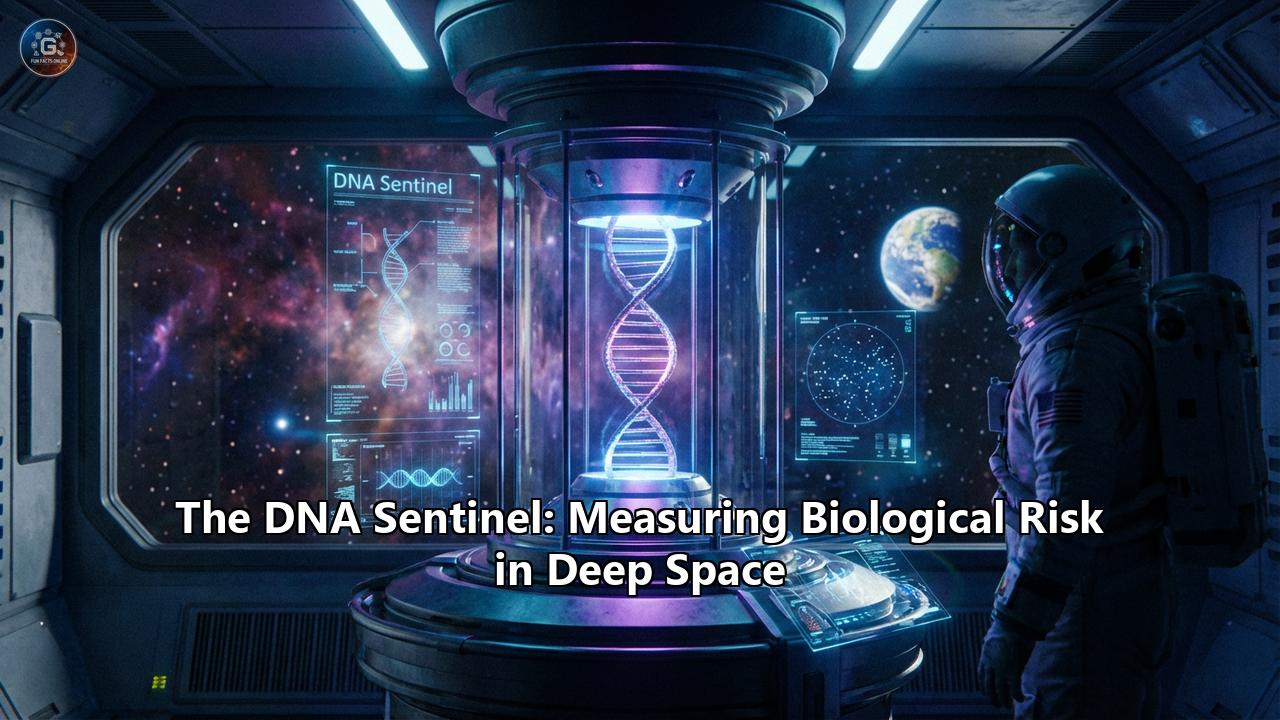
Introduction: The Silent Watcher in the Void
In the vast, silent theater of deep space, the threats that will kill you are not always the ones you can see. They are not the jagged cliffs of a Martian canyon or the explosive decompression of a hull breach. The most insidious enemies of the interplanetary traveler are invisible, silent, and patient. They are the high-energy protons of Galactic Cosmic Rays (GCRs) shredding through the hull of a spacecraft like paper; they are the dormant viruses hiding in the spinal ganglia of a commander, waiting for the immune system to falter; they are the terrestrial bacteria that mutated into hyper-virulent superbugs after six months in microgravity.
For fifty years, human spaceflight has relied on a "monitor and return" paradigm. Astronauts on the International Space Station (ISS), shielded by Earth’s magnetosphere and just a few hours from a terrestrial hospital, are monitored closely, but their deepest biological data is often analyzed weeks or months after they return. We collect blood, freeze it, and study it later.
But as humanity pivots toward Mars, the Moon, and beyond, "later" is no longer an option. On a three-year mission to the Red Planet, there is no return abort. There is no resupply. There is no hospital. The biological integrity of the crew must be managed in real-time, with autonomous systems capable of detecting a single broken strand of DNA and initiating a repair before a cancer cell can take root.
Enter the concept of The DNA Sentinel.
This is not a single machine, but a converging ecosystem of technologies—nanopore sequencers, AI-driven "digital twins," synthetic biology foundries, and autonomous bio-surveillance networks—that together form a digital immune system for the deep space vessel. It is a system that watches over the crew’s genome, the ship’s microbiome, and the alien environment outside, ensuring that biology, our most fragile cargo, can survive the void.
Part I: The Invisible War – The Biological Battlefield of Deep Space
To understand the necessity of a DNA Sentinel, one must first understand the battlefield. Space is not merely empty; it is a radiologically hostile environment that actively dismantles the machinery of life.
1.1 The Radiation Shredder
On Earth, we are coddled by a thick atmosphere and a robust magnetic field that deflects the majority of solar and cosmic radiation. Low Earth Orbit (LEO), where the ISS resides, is still largely within this protective magnetic bubble. Deep space is different.
The primary threat comes from Galactic Cosmic Rays (GCRs). These are atomic nuclei—ranging from hydrogen to iron—stripped of their electrons and accelerated to near light-speed by supernova explosions elsewhere in the galaxy. When a heavy ion (like Iron-56) strikes a human cell, it doesn't just pass through; it plows a track of destruction on an atomic scale. It can shatter the double helix of DNA, causing what is known as a Double-Strand Break (DSB).
DSBs are the catastrophic failures of the genetic world. While our cells have repair mechanisms (Non-Homologous End Joining or Homologous Recombination), these systems are imperfect. In the chaos of a heavy ion strike, the cell may sew the wrong ends of DNA together, creating translocations, deletions, or mutations that lead to cancer. The DNA Sentinel must be able to quantify this damage load in real-time, moving beyond the crude "dosimeters" we wear today that only measure radiation energy, to "biodosimeters" that measure actual biological impact.
1.2 The Sleeping Dragon: Viral Reactivation
Stress kills. In space, the combined stressors of isolation, confinement, disrupted circadian rhythms, and microgravity induce a state of immune dysregulation. NASA has documented that more than half of astronauts on space shuttle missions shed latent viruses like Epstein-Barr, Varicella-Zoster (chickenpox), and Herpes Simplex.
On Earth, these viruses are kept in check by T-cells. In space, T-cell function is blunted. A dormant virus can wake up, replicate, and cause illness or simply degrade the crew's performance. The DNA Sentinel acts as an early warning radar, detecting the rising titers of viral RNA in saliva or blood days before physical symptoms appear, allowing for preemptive antiviral treatment.
1.3 The Microgravity Mutator
Perhaps the most unnerving discovery of the last two decades is that bacteria behave differently in space. In microgravity, the fluid dynamics around a bacterium change; nutrients don't settle, and waste doesn't flow away. Bacteria perceive this as a stress state and often respond by becoming more virulent and forming thicker, more drug-resistant biofilms.
Experiments have shown that Salmonella grown in space becomes significantly more lethal to mice than Earth-grown controls. On a Mars mission, the harmless flora in an astronaut's gut or the biofilm growing in the water reclamation system could evolve into a life-threatening pathogen. The DNA Sentinel must constantly sequence the ship's microbiome, watching for the genetic markers of increased virulence or antibiotic resistance.
Part II: The Eye of the Sentinel – Sensing the Unseen
The foundation of the DNA Sentinel is the ability to "see" biology at a molecular level. Until recently, this required a room-sized laboratory. Now, it fits in the palm of a hand.
2.1 The Revolution of Nanopore Sequencing
The game-changer for space biology was the arrival of the MinION, developed by Oxford Nanopore Technologies. Unlike traditional sequencing, which uses light and cameras to read genetic letters, nanopore sequencing uses electricity.
Imagine a microscopic hole (a nanopore) embedded in an electrically resistant membrane. A current is passed through the hole. As a strand of DNA is ratcheted through the pore, each chemical base (A, C, G, T) disrupts the current in a unique way. By measuring these fluctuations, the device reads the sequence in real-time.
In 2016, astronaut Kate Rubins successfully sequenced DNA on the ISS for the first time, proving that microgravity does not disrupt the delicate physics of the nanopore. This marked the birth of in-situ space genomics. The DNA Sentinel builds on this, utilizing next-generation automated sequencers that require no human prep. These devices will be integrated into the ship's environmental control systems, air vents, and waste processing units, sniffing for biological signatures 24/7.
2.2 Swab-to-Sequencer: The End of Petri Dishes
In the old days of space biology, if you wanted to identify a microbe, you had to grow it on a petri dish (culture). This is slow, messy, and selects only for the microbes that like to grow on agar. Many pathogens are "viable but non-culturable."
The DNA Sentinel utilizes "swab-to-sequencer" technology (demonstrated by the NASA Biomolecule Extraction and Sequencing Technology (BEST) experiment). An astronaut can take a swab from a vent, inject it into a cartridge, and the machine extracts the DNA, amplifies it, and sequences it within hours.
Future iterations will be fully autonomous. Robotic "lab-on-a-chip" systems will sample the station's water and air, extracting DNA and comparing it against a database of known pathogens. If a new fungal spore appears in the airlock, the Sentinel identifies it, determines its resistance profile, and alerts the crew before it spreads.
2.3 The Omics Revolution: SOMA
Sequencing DNA (genomics) is just the beginning. To truly understand astronaut health, we must look at the transcriptome (RNA messages telling cells what to do), the proteome (the proteins actually doing the work), and the epigenome (the chemical switches turning genes on and off).
The Space Omics and Medical Atlas (SOMA) represents the current state-of-the-art database for this info, but the DNA Sentinel transforms SOMA from a static archive into a live diagnostic tool. By monitoring changes in RNA expression (transcriptomics), the Sentinel can detect if an astronaut’s body is mounting an immune response to a yet-undetected infection, or if their cells are upregulating DNA repair genes in response to a solar flare.
This "multi-omics" approach provides a high-fidelity snapshot of the crew's biological reality. It detects the smoke before the fire.
Part III: The Brain of the Sentinel – The Digital Twin
Data without context is noise. A sequencer might tell you that 53BP1 protein levels are elevated, but what does that mean for Commander Lewis? Is she sick, or just recovering from a gym workout? This is where Artificial Intelligence and the concept of the Digital Twin come into play.
3.1 The Crew Medical Officer Digital Assistant (CMO-DA)
NASA and Google have already begun collaborating on AI systems designed to act as a flight surgeon when the real one is 140 million miles away. The CMO-DA is an early prototype.
The DNA Sentinel integrates this AI with the omics data. Each astronaut will have a Biological Digital Twin—a highly detailed virtual model of their own physiology, built from pre-flight genetic sequencing, stress tests, and medical history.
As the mission progresses, the Sentinel feeds real-time data into the Digital Twin.
- Input: "Commander Lewis's wearable sensor shows increased heart rate variability. Her morning saliva sample shows elevated cortisol RNA and a spike in inflammatory cytokines."
- Processing: The Digital Twin runs thousands of simulations. It compares this data to her baseline on Earth and her previous reactions to stress.
- Output: "Alert: Commander Lewis is entering a state of chronic inflammatory fatigue. Risk of viral reactivation is 85%. Recommendation: Adjust duty schedule for 12 hours of rest and administer prophylactic antiviral protocol Alpha."
This is predictive medicine. Instead of treating a disease, the Sentinel manages a trend, steering the astronaut back to health before they ever technically get sick.
3.2 The Human Digital Twin Platform (HDTP)
The HDTP expands this to the physical realm. It models bone density loss and muscle atrophy based on the astronaut's specific genetic predisposition.
We know that genetics plays a huge role in how bodies react to space. Some astronauts lose vision due to fluid shifts (SANS - Spaceflight Associated Neuro-ocular Syndrome); others don't. Some lose bone mass quickly; others are resistant. The DNA Sentinel uses the Digital Twin to customize the daily exercise and nutrition regiment.
If the Sentinel detects genetic markers indicating rapid bone resorption in a specific crew member, it might automatically increase the resistance on their ARED (Advanced Resistive Exercise Device) workout and synthesize a higher dose of Vitamin D and bisphosphonates for their next meal.
Part IV: The Shield – Synthetic Biology and Repair
Detection is useless without intervention. The DNA Sentinel is not just a passive observer; it is an active participant in the crew's survival. This leads us to the frontier of Space Synthetic Biology.
4.1 The Astropharmacy: Drugs on Demand
You cannot pack a pharmacy for a three-year Mars mission. Drugs expire. Radiation degrades complex molecules. You don't know what illnesses will occur.
The solution is the Astropharmacy, a concept funded by NASA's NIAC (kudos to researchers like Dr. Lynn Rothschild). Instead of carrying pills, the ship carries spores of Bacillus subtilis—a hardy bacterium—that have been genetically engineered to produce specific drugs.
These spores can survive dormant for years. When the DNA Sentinel detects a need (e.g., "Crew Member 3 requires Granulocyte Colony-Stimulating Factor to boost white blood cells after radiation exposure"), the system wakes up the specific batch of bacteria, feeds them, and they synthesize the drug. The drug is then purified by a microfluidic cartridge and dispensed.
The DNA Sentinel manages this inventory. It is the pharmacist, deciding which "living foundry" to activate to produce antibiotics, mood stabilizers, or bone-density boosters on demand.
4.2 Bioprinting the Future
In the event of physical trauma—a burn or a fracture—the Sentinel coordinates with 3D bioprinting systems. The European Space Agency (ESA) has already demonstrated printing skin and bone samples upside down to prove it works in microgravity.
The "ink" for these printers would be derived from the astronauts' own cells (stem cells harvested pre-flight or from blood plasma). If an astronaut suffers a severe burn, the Sentinel scans the wound, designs a tissue patch using the Digital Twin's anatomical data, and prints a graft of the astronaut's own skin, eliminating the risk of rejection.
4.3 CRISPR and Radioprotection: The Ultimate Shield
The most futuristic—and controversial—aspect of the Sentinel is Gene Therapy.
Researchers are investigating the use of CRISPR-Cas9 to repair radiation damage. In 2019, the Genes in Space-6 experiment proved that CRISPR could be used to edit yeast DNA in space.
Theoretically, if a massive Solar Particle Event (SPE) is detected, the Sentinel could calculate that the shielding is insufficient. It might recommend a radical course of action: a temporary gene therapy that upregulates the body's natural radioprotective proteins (like the Dsup protein found in tardigrades, which makes them immune to radiation). This "genetic armor" would be activated only during the high-risk window and then allowed to fade.
While this is currently science fiction, the technology to "turn on" repair genes via epigenetic controllers is in development today. The DNA Sentinel would be the arbiter of when to deploy such extreme biological countermeasures.
Part V: The Planetary Guardian – Biosecurity on Two Worlds
The DNA Sentinel has a dual mandate: protect the crew, but also protect the worlds they visit. This brings us to the strict discipline of Planetary Protection.
5.1 Forward Contamination: The Prime Directive
We cannot search for life on Mars if we bring Earth life with us that kills it or confuses our instruments. This is Forward Contamination.
Robotic rovers are baked and chemically sterilized, but humans are "walking bags of microbes." We shed skin, bacteria, and viruses constantly. A human habitat on Mars is a biological dirty bomb.
The DNA Sentinel extends its sensor network to the airlocks and EVA suits. Before an astronaut steps onto the Martian surface, the system sequences the exterior of the suit. It ensures that the sterilization protocols (plasma cleaning or UV irradiation) have worked.
If the Sentinel detects a breach—perhaps a seal on the suit is leaking Earth bacteria—it aborts the EVA. It is the automated gatekeeper, ensuring we don't accidentally terraform Mars with E. coli before we even find out if Martians exist.
5.2 Backward Contamination: The Andromeda Strain
The nightmare scenario for space agencies is Backward Contamination—bringing a Martian pathogen back to Earth.
If there is life on Mars, it will likely be microbial and potentially DNA-based (or sufficiently similar). The DNA Sentinel is the first line of defense. The "Double Walled Isolator" concepts for Mars Sample Return would be equipped with the Sentinel's sequencing tech.
Here, the system faces its greatest challenge: discrimination. How do you tell the difference between a mutated Earth bacteria that hitched a ride to Mars and a genuine Martian microbe?
The Sentinel uses AI trained on "agnostic biosignatures." It looks for DNA with different backbones, different ratios of bases, or homochirality (handedness) that differs from Earth life. If the Sentinel detects a sequence that does not match the "Earth Tree of Life" database, it initiates a Level 5 Quarantine. The sample is sealed, the lab is locked down, and the crew is alerted. The Sentinel ensures that the "Chain of Contact" is broken, preventing the alien biology from ever touching the crew or the Earth return vehicle.
Part VI: The Ghost in the Machine – Ethics and the Human Cost
The technology of the DNA Sentinel is dazzling, but it casts a long shadow. The implications of total biological surveillance are profound.
6.1 The End of Privacy
On Earth, the Genetic Information Nondiscrimination Act (GINA) prevents employers from seeing your DNA. In space, NASA is the employer, the doctor, and the insurance company.
For the Sentinel to work, the crew must surrender total genetic privacy. The system knows their predisposition to Alzheimer's, their carrier status for recessive diseases, and their real-time psychological stress markers.
This creates a "transparent astronaut." If the Sentinel predicts with 90% accuracy that a Commander's cognitive decline will begin in week 60 of the mission due to a genetic interaction with radiation, does Mission Control remove them from command? The "Digital Twin" might doom a career before a single symptom appears.
6.2 The Psychological Burden
Imagine waking up every morning and checking a dashboard that tells you exactly how much your DNA has degraded overnight. "Good morning, Dave. Your telomeres shortened by 0.5% while you slept. Your cancer risk has risen to 12%."
The psychological weight of this "quantified self" could be crushing. The Sentinel must be designed with "human-in-the-loop" interfaces that provide actionable data without inducing panic or fatalism. It requires a delicate balance between transparency and morale.
6.3 Cellular Liberty
Dr. Christopher Mason, a leading geneticist in space bioethics, discusses the concept of "cellular liberty"—the right to modify one's own cells to survive. If the Sentinel offers a gene therapy to survive radiation, does the astronaut have the right to refuse? Conversely, does a human have the right to demand genetic modification to become a better spacefarer?
The DNA Sentinel forces us to answer whether we are willing to direct our own evolution to survive the cosmos.
Conclusion: The Necessary Evolution
The DNA Sentinel is not science fiction; it is an inevitable engineering requirement. We cannot send 21st-century biological organisms into a cosmic environment using 20th-century medicine.
The transition from "monitoring" to "sentinel" marks a shift in our relationship with space. We are no longer just visiting; we are adapting. We are building a synthetic exoskeleton of data and biology around our fragile bodies.
When the first humans step onto the red sands of Mars, they will not be alone. They will be accompanied by the silent hum of the DNA Sentinel, the invisible guardian that watches the code of life, ensuring that the footprint they leave is human, and that the home they return to is safe. This system is the bridge between the pale blue dot and the black ocean beyond. It is the ultimate expression of our survival instinct, written in code and nucleotide bases.
Detailed Analysis of Component Technologies
To fully appreciate the scope of The DNA Sentinel, we must delve deeper into the specific technologies that make it possible.
1. The MinION and the Democratization of Sequencing
The Oxford Nanopore MinION is the hardware heart of the Sentinel. Before this device, sequencing required polymerase chain reaction (PCR) amplification that was sensitive to temperature and vibration, and bulky optical scanners.
The MinION is the size of a USB stick. It contains a flow cell with hundreds of nanopores—proteins derived from bacteria (like CsgG) that form a tiny channel. The device applies a voltage across an electrically resistant membrane. Ions flow through the pore, creating a measurable current.
When a DNA strand enters the pore, it throttles the ion flow. Because an 'A' base is physically larger than a 'C' base, they block the current by different amounts. The sensor reads these "squiggles" in the current and an algorithm translates them into a genetic sequence.
Why it’s perfect for space:- Solid State: No moving lenses or lasers to misalign during launch vibration.
- Real-Time: You don't have to wait for the whole run to finish to see what you have. You can "reject" a DNA strand if it's not what you're looking for, saving power.
- Direct RNA Sequencing: It can read RNA directly without converting it to DNA first. This is crucial for detecting RNA viruses (like coronavirus or flu) and for measuring gene expression (transcriptomics) in real-time.
2. BioSentinel: The Yeast Canary
The BioSentinel mission, launched aboard Artemis I, was a precursor to the DNA Sentinel. It was a 6U CubeSat containing a living crew: Saccharomyces cerevisiae (Brewer's Yeast).
Why yeast? Because the DNA repair mechanisms in yeast are remarkably similar to humans. We share the same genes for fixing double-strand breaks (RAD51, etc.).
The BioSentinel satellite carried microfluidic cards with dormant yeast. Once in deep space, the system rehydrated the yeast with nutrients. As the yeast grew, a 3-color LED detection system monitored their metabolism (using a dye that changes color when cells are alive).
The yeast strains were engineered:
- Wild Type: Normal, healthy yeast (the control).
- rad51 mutant: Yeast that cannot repair DNA breaks.
By comparing the survival rates of the healthy yeast vs. the mutant yeast in the deep space radiation environment, scientists could precisely quantify the "biological effective dose" of the radiation. The DNA Sentinel of the future will carry "sentinel tissues"—perhaps human organoids on a chip—that serve the same purpose, acting as a biological canary in the coal mine.
3. The Space Omics and Medical Atlas (SOMA)
Published in a massive coordinated release in Nature (2024), SOMA is the "encyclopedia" the Sentinel reads. It represents a >10-fold increase in the amount of space biological data available.
SOMA aggregates data from:
- NASA Twins Study: (Scott and Mark Kelly).
- SpaceX Inspiration4: The first all-civilian crew.
- JAXA & ESA missions.
- Telomere Elongation: Astronauts' telomeres (the caps on chromosomes) get longer in space (unexpectedly) and then shrink rapidly upon return. This is a sign of genomic instability.
- Mitochondrial Dysregulation: The "power plants" of the cell struggle in space. The Sentinel must monitor mitochondrial DNA (mtDNA) leaking into the blood, a major inflammatory signal.
- The "Space Cytokine Storm": Crews often show spikes in IL-6 and other inflammatory markers. The Sentinel's Digital Twin uses these specific biomarkers to predict "space fog" or fatigue.
4. Synthetic Biology: The BioNutrients Mission
The BioNutrients experiment on the ISS demonstrated that we can produce nutrients in space. Packets of engineered yeast were stored at ambient temperature for years. When water was added, the yeast woke up and produced Beta-carotene and Zeaxanthin (antioxidants crucial for eye health).
This proves the viability of the "Astropharmacy." Future Mars missions cannot carry a 5-year supply of every possible antibiotic. Instead, the Sentinel will manage a library of Bacillus subtilis spores.
Scenario: An astronaut develops a urinary tract infection (UTI).- Sense: The Sentinel sequences the bacteria in the urine, identifying it as E. coli.
- Analyze: The Sentinel checks the E. coli genome for antibiotic resistance genes (e.g., blaCTX-M). It determines the bacteria is resistant to Amoxicillin but sensitive to Ciprofloxacin.
- Respond: The Sentinel commands the Astropharmacy module to hydrate the "Strain-Cipro" spore packet. The yeast grows for 24 hours, synthesizing fresh Ciprofloxacin. The drug is purified and administered to the astronaut.
This "Just-In-Time" manufacturing is the only way to solve the logistical bottleneck of deep space medicine.
The Road to Mars: Implementation Timeline
How do we build the DNA Sentinel? The roadmap is already being drafted.
Phase 1: The ISS Testbed (Present - 2028)- Continued use of MinION for "swab-to-sequencer" experiments (GiSMOS).
- Testing of automated sample prep (VolTRAX).
- Refinement of the SOMA database with more diverse crews (Artemis II, Polaris Dawn).
- The Lunar Gateway (the station orbiting the Moon) will be the first true deep-space test.
- The DNA Sentinel here will focus on radiation monitoring outside the magnetosphere.
- First deployment of "organ-on-a-chip" automated sentinels to monitor long-term radiation effects on human tissue without risking crew.
- The Mars Transit Vehicle will carry the fully integrated DNA Sentinel.
- Includes the Astropharmacy and 3D Bioprinting capabilities.
- The "Digital Twin" will be the primary medical officer for the 6-9 month cruise.
- Deployment of Planetary Protection sentinels on Mars.
- Autonomous monitoring of the habitat microbiome to prevent "sick building syndrome" in the Mars base.
Final Thoughts: The Sentinel as a Mirror
Ultimately, the DNA Sentinel does more than protect us; it reveals us. By quantifying the exact biological cost of leaving Earth, it forces us to confront the fragility of our existence.
We are creatures of 1G, shielded by an atmosphere, evolved for a specific cycle of light and dark. To leave this womb is an act of biological rebellion. The DNA Sentinel is the tool that makes that rebellion possible. It allows us to hack our own survival, to rewrite the rules of interaction between organism and environment.
It is the silent, humming promise that no matter how far we travel into the dark, we will not let the fire of life go out. We will measure it, we will guard it, and we will carry it with us to the stars.
Reference:
- https://www.nasa.gov/missions/station/iss-research/mental-well-being-in-space/
- https://pmc.ncbi.nlm.nih.gov/articles/PMC9975927/
- https://en.wikipedia.org/wiki/Interplanetary_contamination
- https://technology.esa.int/page/mars
- https://sma.nasa.gov/sma-disciplines/planetary-protection
- https://exploration.esa.int/web/mars/-/57581-planetary-protection
- https://astrobiology.com/2025/07/planetary-protection-technology-for-ultra-clean-mini-lab-to-contain-extraterrestrial-samples.html