
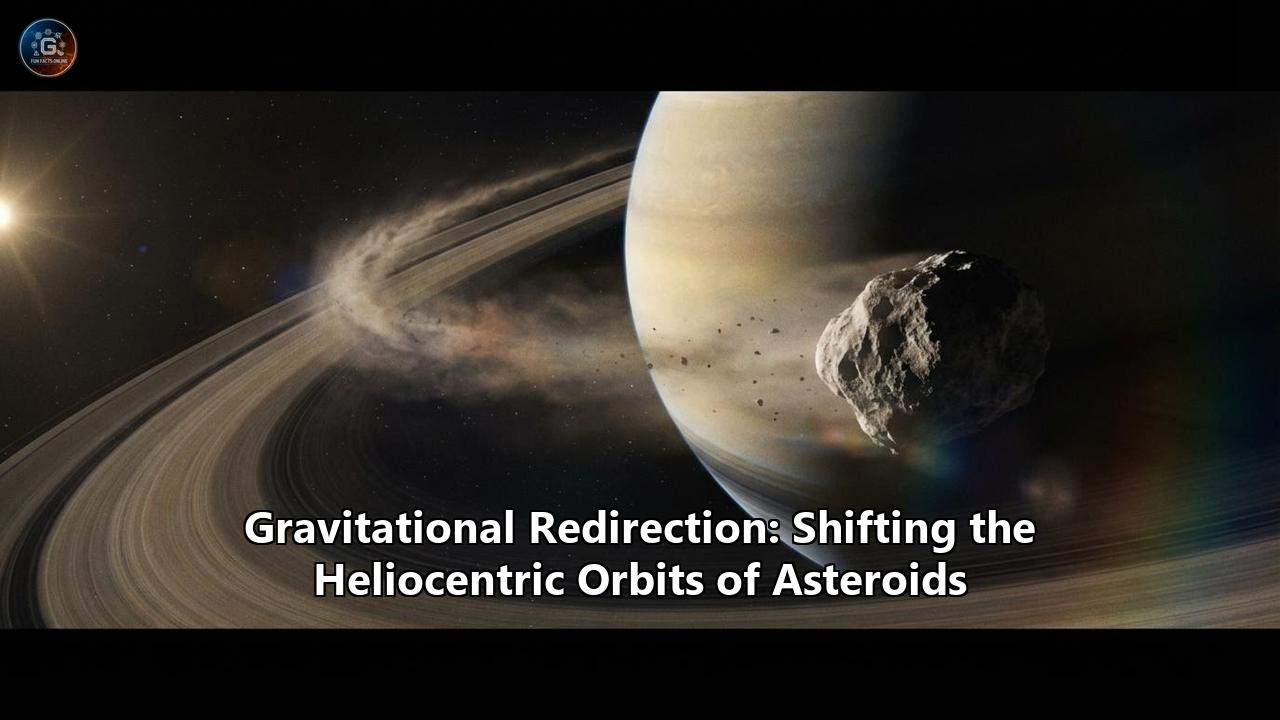
For billions of years, the solar system has operated as a chaotic, high-stakes billiard table. Earth, a vibrant blue marble, has continuously navigated this cosmic shooting gallery, though not always unscathed. The scars of our planet's violent past are etched into its crust, from the dinosaur-killing Chicxulub impact to the flattened forests of the Tunguska event. But today, humanity stands at a unique threshold. We are the first species in the history of our planet with the technological capability to look up, identify an incoming threat, and literally move the heavens to protect our home.
While popular culture has long obsessed over the brute-force approach to planetary defense—launching nuclear warheads to shatter incoming space rocks—modern astrophysics has developed a far more elegant, precise, and arguably more reliable solution: Gravitational Redirection.
By employing a conceptual spacecraft known as a "Gravity Tractor," we can utilize Sir Isaac Newton’s law of universal gravitation as an invisible tow rope, slowly and methodically shifting the heliocentric orbit of a threatening asteroid. This is not science fiction; it is the bleeding edge of planetary defense.
The Historic Precedent: Moving Heaven and Earth
To understand how we can shift a heliocentric orbit—an object's trajectory around the Sun—we must first look at the monumental breakthrough that proved humanity capable of altering celestial mechanics.
In September 2022, NASA’s Double Asteroid Redirection Test (DART) mission intentionally slammed a spacecraft into Dimorphos, a small asteroid moonlet orbiting a larger parent asteroid named Didymos. The immediate, highly celebrated result was that the kinetic impact shortened the moonlet's orbit around its parent by 33 minutes. However, it wasn't until March 2026 that the true magnitude of this achievement was unveiled.
A landmark study published in the journal Science Advances revealed that the DART collision accomplished something far more profound: it successfully altered the heliocentric orbit of the entire binary asteroid system. By analyzing high-precision radar measurements and tracking stellar occultations, scientists discovered that the kinetic impact—and the subsequent massive plume of ejected rocky debris—slowed the binary system's solar orbit by 11.7 microns per second.
While 11.7 microns per second translates to just about 1.7 inches per hour, or 360 meters per year, it marked the very first time in history that a human-made object measurably altered the path of a celestial body around the Sun. The 770-day orbital period of the system around the Sun was changed by 0.15 seconds. As researchers noted, given enough lead time, even a microscopic change in velocity can compound over years and millions of miles, making the absolute difference between a catastrophic Earth impact and a harmless flyby.
Yet, the success of DART also highlighted the limitations and sheer unpredictability of the "kinetic impactor" method. Smashing a probe into a rock is inherently chaotic. You cannot predict exactly how the asteroid will fracture, how much ejecta will be produced, or how the object's internal structure will absorb the blow. This unpredictability brings us to one of the most terrifying concepts in orbital mechanics, and the primary reason why the Gravity Tractor is essential to our survival.
The Terror of the Gravitational Keyhole
When dealing with planetary defense, a near-miss is not always a victory. Space is riddled with invisible, treacherous traps known as "gravitational keyholes".
A gravitational keyhole is a tiny, specific region of space near a planet where that planet's gravity will slightly alter the orbit of a passing asteroid. If an asteroid passes through one of these narrow keyholes, the gravitational slingshot effect will perfectly align the asteroid's trajectory so that it returns on a direct collision course with Earth on a future orbital pass, perhaps years or decades later.
In September 2025, scientists presented chilling research at the Europlanet Science Congress regarding these keyholes. They revealed that a poorly aimed or imprecise kinetic impact could accidentally deflect a threatening asteroid just enough to push it straight into a gravitational keyhole. It is the cosmic equivalent of a funky pinball machine: hitting the wrong bumper might save you now, but it will send the ball ricocheting back toward the flippers for a guaranteed strike later.
Because every point on an asteroid's surface has a different probability of sending the rock into a keyhole post-impact, deflection missions require "probability maps" and a level of surgical precision that a brute-force crash simply cannot guarantee. A kinetic impactor acts as a sledgehammer, but planetary defense ultimately requires a scalpel.
This is where the Gravity Tractor comes in.
The Physics of the Gentle Tug
A Gravity Tractor is a theoretical spacecraft designed to deflect a potentially hazardous asteroid without ever physically touching it. The concept was first proposed by former astronauts Dr. Ed Lu and Dr. Stanley G. Love.
The mechanics rely on the most fundamental force in the cosmos: gravity. Every object with mass exerts a gravitational pull on every other object with mass. If you fly a spacecraft alongside an asteroid and maintain a constant, close distance, the mutual gravitational attraction between the two bodies acts as an invisible tether.
If the spacecraft continuously fires its thrusters to maintain its position, preventing itself from falling onto the asteroid's surface, it will slowly but steadily drag the massive space rock along with it. Over months or years, this gentle, persistent tug alters the asteroid's velocity—its delta-v—and shifts its heliocentric orbit.
The advantages of this method are revolutionary:
- Composition Independence: Asteroids range from solid iron monoliths to loosely held "rubble piles" of dust and gravel. A kinetic impactor might shatter a rubble pile into a deadly shotgun blast of debris. The Gravity Tractor accelerates the asteroid as a single, coherent mass, completely bypassing the need to know the rock's structural integrity, rotation, or chemical composition.
- Absolute Precision: Because the force applied is tiny and highly controlled, a Gravity Tractor can be used to meticulously steer an asteroid. It is the perfect secondary tool. After a kinetic impactor delivers the primary deflection, a Gravity Tractor can hover nearby, acting as a "trimmer" to fine-tune the trajectory and ensure the asteroid safely bypasses any gravitational keyholes.
- Real-Time Tracking: Equipped with transponders, the tractor spacecraft provides highly accurate trajectory updates to Earth, improving impact predictions by a factor of 2 to 5 compared to ground-based telescopes.
However, traditional Gravity Tractors face a daunting limitation: the mass differential. A standard spacecraft weighs a few metric tons, while a hazardous asteroid weighs millions of tons. Generating a meaningful gravitational pull requires an agonizingly long time. For asteroids larger than 100 to 500 meters in diameter, a standard Gravity Tractor might take decades of continuous hovering to achieve a safe deflection, making it unfeasible if warning time is short.
To solve this, aerospace engineers devised one of the most audacious space heists ever conceived.
The Game Changer: The Enhanced Gravity Tractor (EGT)
If a spacecraft isn't massive enough to pull an asteroid quickly, it must increase its mass. But launching a heavier spacecraft from Earth requires exponentially larger rockets and prohibitive amounts of fuel. The solution? Steal the mass from the asteroid itself.
This innovation is known as the Enhanced Gravity Tractor (EGT).
In an EGT mission, the robotic spacecraft approaches the target asteroid, matches its spin, and carefully descends to the surface. Using robotic arms or a capture mechanism, it extracts a multi-ton boulder—or a massive collection of regolith—from the asteroid. The spacecraft then ascends to a safe hovering distance.
By holding onto a boulder weighing tens to hundreds of metric tons, the spacecraft artificially augments its own mass. This dramatically increases the gravitational force exerted between the spacecraft and the asteroid. Depending on the mass of the captured boulder and the power of the spacecraft's propulsion system, the EGT technique can multiply the gravitational pull by orders of magnitude, reducing the required deflection time by a factor of 10 to 50. What would take a standard Gravity Tractor decades to achieve, an Enhanced Gravity Tractor can accomplish in mere months or a few years.
The EGT concept transitioned from mathematical theory to concrete mission architecture through NASA's Asteroid Redirect Mission (ARM). Though the mission underwent various iterations and political shifts, its baseline engineering provided the blueprint for future planetary defense.
The reference target for ARM was an asteroid named 2008 EV5, a carbonaceous, 400-meter-wide space rock shaped remarkably like a muffin, complete with an equatorial ridge and a 150-meter-wide impact crater. Radar observations indicated that 2008 EV5 was littered with large boulders. The mission plan dictated that the Asteroid Redirect Vehicle (ARV) would capture a 2-to-4-meter boulder, ascend to a "halo orbit" around the asteroid, and spend up to two months demonstrating the EGT technique before dragging the boulder back to cis-lunar space for astronaut study.
Engineering the Impossible: Propulsion and Trajectories
Executing a Gravity Tractor maneuver, whether standard or enhanced, is a staggering feat of orbital engineering. Chemical rockets—the fiery engines that launch vehicles off Earth—are utterly useless for this task. They burn through their fuel in minutes, whereas a Gravity Tractor requires continuous thrust for months or years.
The only viable technology is Solar Electric Propulsion (SEP), commonly utilizing ion engines. Instead of burning chemical fuel, SEP uses massive solar arrays to generate electricity, which is then used to positively charge a heavy inert gas, like xenon. These ions are accelerated out the back of the spacecraft using magnetic fields at extreme velocities. While the thrust generated by an ion engine is incredibly faint—often compared to the weight of a piece of paper resting on your hand—it can fire continuously for years. Over time in the frictionless vacuum of space, this gentle push accumulates into massive velocities. For EGT missions, propulsion systems scaling from 40 kilowatts up to 150 kW or 300 kW are envisioned to handle the augmented mass.
But hovering next to an asteroid presents a unique physical paradox: if the spacecraft points its ion thrusters directly away from the asteroid to hover, the high-speed exhaust plume will strike the asteroid's surface. This exhaust would push the asteroid in the exact opposite direction of the gravitational pull, completely neutralizing the tractor effect.
Engineers solve this by "canting" the thrusters. The ion engines are angled outward in a V-shape, ensuring the exhaust plumes safely clear the sides of the asteroid. Alternatively, the spacecraft can fly in a "halo orbit," tracing a continuous circle in front of the asteroid along its velocity vector. This dynamic positioning ensures the gravitational pull remains constant in the desired direction without the exhaust contaminating the asteroid's surface.
The Arsenal of Planetary Defense
The Gravity Tractor does not exist in a vacuum; it is part of a broader, collaborative arsenal of planetary defense techniques being developed by space agencies worldwide, including NASA, the European Space Agency (ESA), and the Japan Aerospace Exploration Agency (JAXA).
When analyzing how to shift a heliocentric orbit, mission planners must match the tool to the timeline and the target:
- Kinetic Impactors (The Vanguard): As proven by DART, slamming a massive object into an asteroid is highly effective for immediate, brute-force deflection. However, it is primarily effective on solid bodies and carries the risk of fragmentation and keyhole trajectory issues.
- Nuclear Detonation (The Last Resort): If an impactor is detected with only months to spare, or if the asteroid is terrifyingly large, a nuclear device may be detonated slightly above the surface. The intense X-ray flash would instantly vaporize a layer of the asteroid's surface, causing a massive blowout of material that would propel the asteroid in the opposite direction.
- Ion Beam Shepherds: Instead of using an ion engine to hover, a spacecraft could point its ion beam directly at the asteroid, using the high-velocity particle stream to gently push the rock.
- Laser and Solar Ablation: Spacecraft equipped with powerful lasers or massive magnifying mirrors could focus intense heat onto a small point on the asteroid's surface. This localized vaporization creates a continuous jet of escaping gas, essentially turning the asteroid into its own rocket ship to alter its course.
Among these, the Gravity Tractor remains the most reliable method for absolute, controlled precision. Advanced studies even suggest deploying "swarms" of automated Gravity Tractors. By launching a constellation of smaller spacecraft to orbit a hazardous asteroid in formation, the collective gravitational pull could achieve the necessary delta-v faster, providing redundancy in case one spacecraft fails.
The Future of Orbital Modification
The ability to shift the heliocentric orbits of asteroids represents a paradigm shift in our relationship with the cosmos. We are moving from a state of passive observation to active engineering of the solar system.
The data retrieved from the Hera mission—the European Space Agency's follow-up probe arriving at the DART impact site in December 2026—will further refine our understanding of asteroid momentum transfer and internal structure. Concurrently, advancements in asteroid mining and resource utilization will directly feed into Enhanced Gravity Tractor capabilities. The technology required to extract a 100-ton boulder to harvest water or precious metals is the exact same technology required to inflate the mass of a planetary defense tractor.
The Gravity Tractor proves that we do not always need to rely on the explosive, destructive technologies of our past to secure our future. Sometimes, the most powerful tool at our disposal is patience, precision, and the quiet, unyielding invisible force that binds the universe together. By mastering gravitational redirection, humanity ensures that when the cosmos eventually lines up a shot at Earth, we will be ready to gently, but firmly, move the target.
Reference:
- https://en.wikipedia.org/wiki/Gravity_tractor
- https://www.planetary.org/articles/asteroid-deflection-techniques-to-save-the-earth
- https://gigazine.net/gsc_news/en/20260313-nasa-asteroid-smashing-spacecraft-changed-orbit/
- https://www.nasa.gov/missions/dart/nasas-dart-mission-changed-orbit-of-asteroid-didymos-around-sun/
- https://www.sciencedaily.com/releases/2026/03/260307213238.htm
- https://b612foundation.org/b612-funded-jpl-study-confirms-feasibility-of-gravity-tractor-for-asteroid-deflection/
- https://en.wikipedia.org/wiki/Gravitational_keyhole
- https://www.sciencealert.com/scientists-reveal-the-hidden-danger-of-deflecting-asteroids
- https://www.space.com/astronomy/asteroids/attempting-to-deflect-a-potentially-hazardous-asteroid-could-accidentally-put-it-on-a-collision-course-with-earth
- https://www.universetoday.com/articles/one-wrong-hit-could-send-an-asteroid-on-a-collision-course-with-earth
- https://ieeexplore.ieee.org/document/7943774/
- https://iaaspace.org/wp-content/uploads/iaa/Scientific%20Activity/conf/pdc2015/IAA-PDC-15-04-11.pdf
- https://www.cosmos.esa.int/documents/336356/1197204/Mazanek_ARM_gravity_tractor.pdf/5f6bf309-5247-4790-a111-1fdab9eff680
- https://ntrs.nasa.gov/citations/20150010968
- https://ntrs.nasa.gov/citations/20170005468
- https://ntrs.nasa.gov/api/citations/20160007709/downloads/20160007709.pdf
- https://www.space.com/28937-asteroid-capture-mission-2008-ev5.html
- https://meetingorganizer.copernicus.org/EPSC2015/EPSC2015-279.pdf
- https://ntrs.nasa.gov/citations/20160007709
- https://ntrs.nasa.gov/api/citations/20050186573/downloads/20050186573.pdf