
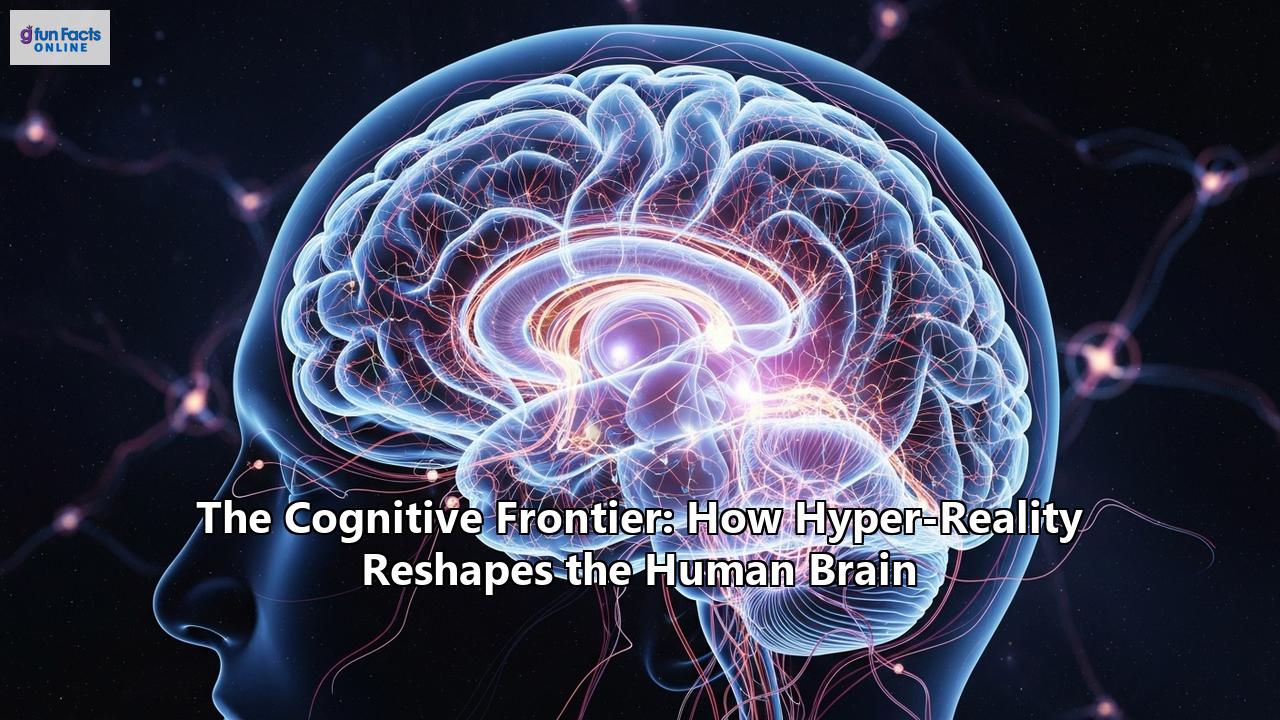
The Cognitive Frontier: How Hyper-Reality Reshapes the Human Brain
In an era where digital landscapes are becoming as significant as our physical surroundings, we stand at a precipice of cognitive evolution. The lines between the real and the artificial are not just blurring; they are merging to create a new layer of existence known as hyper-reality. This concept, once confined to the realm of postmodern philosophy, is now a tangible force, actively reshaping the very architecture of the human brain. From the immersive realms of virtual reality (VR) to the informational overlays of augmented reality (AR), we are embarking on a journey into a cognitive frontier with profound implications for our perception, our memories, and our sense of self.
The term "hyper-reality" was first introduced by French sociologist and philosopher Jean Baudrillard in his 1981 book Simulacra and Simulation. He described it as "the generation by models of a real without origin or reality," a state where simulations of reality become more real than reality itself. In Baudrillard's view, society has become so saturated with images and signs that they no longer represent an underlying reality but have become a reality in their own right. Think of a meticulously crafted theme park, a curated social media feed, or a 24-hour news cycle—these are all examples of hyper-real environments that shape our perceptions and desires. While Baudrillard's theories were initially focused on media and consumerism, the advent of advanced technologies like VR, AR, and artificial intelligence has given his concept of hyper-reality a new and urgent relevance. We are no longer passive consumers of these simulations; we are active participants in them, and our brains are constantly adapting to this new reality.
Neuroscience offers a powerful lens through which to understand the impact of hyper-reality on the human brain. The brain's remarkable ability to change and adapt in response to experience, known as neuroplasticity, is at the heart of this transformation. Immersive technologies are not just providing new forms of entertainment; they are creating novel sensory experiences that can forge new neural pathways and reconfigure existing ones. This has opened up exciting possibilities for everything from neurorehabilitation to cognitive enhancement. However, it also raises critical questions about the potential downsides of a life lived in the thrall of the hyper-real. As we venture deeper into this cognitive frontier, it is essential to understand both the promise and the peril of this new relationship between our minds and our machines.
The Malleable Mind: Neuroplasticity in the Age of Hyper-Reality
The human brain is not a static organ. It is a dynamic and ever-changing landscape of neural connections that are constantly being forged, strengthened, and pruned in response to our thoughts, feelings, and experiences. This remarkable capacity for change, known as neuroplasticity, is the very mechanism through which hyper-reality exerts its influence on our cognitive architecture. Every time we don a VR headset, interact with an AR overlay, or lose ourselves in a digital world, we are engaging in a process of neural remodeling.
The principles of neuroplasticity are well-established in the field of neuroscience. We know that repeated experiences can lead to long-term changes in brain structure and function. For example, London taxi drivers, who are required to memorize the city's labyrinthine street layout, have been shown to have larger hippocampi—a brain region crucial for spatial memory—than the general population. Similarly, musicians who spend years practicing their instruments develop enhanced motor cortex representations of their hands. These examples demonstrate that the brain is a "use it or lose it" organ, and the skills we practice and the environments we inhabit literally shape our minds.
Hyper-realistic technologies provide a powerful new toolkit for harnessing the brain's neuroplastic potential. By creating immersive and engaging experiences, VR and AR can provide targeted stimulation to specific neural circuits, driving functional and structural changes in the brain. This has profound implications for a wide range of applications, from clinical therapies to skill acquisition.
Neurorehabilitation in a Virtual WorldOne of the most promising applications of hyper-reality is in the field of neurorehabilitation. For individuals who have suffered a stroke, brain injury, or other neurological condition, VR and AR offer a unique opportunity to regain lost function. These technologies can create safe and controlled environments where patients can practice motor tasks, such as reaching for an object or walking, without the risk of falling or injury.
For example, a stroke patient with hemiparesis (weakness on one side of the body) might use a VR system to engage in a virtual game that requires them to use their affected arm. The system can provide real-time feedback and gradually increase the difficulty of the task as the patient's strength and coordination improve. This type of repetitive, task-specific training has been shown to be highly effective in promoting neuroplastic changes in the brain's motor pathways, leading to lasting improvements in motor function.
AR, in particular, offers a unique advantage in this context by allowing for the integration of virtual elements into the real world. This means that patients can practice real-world tasks, such as navigating their own home or preparing a meal, with the guidance and support of an AR overlay. This approach not only enhances the ecological validity of the training but also promotes the transfer of skills from the virtual to the physical world.
Cognitive Enhancement and Skill AcquisitionBeyond the clinical realm, hyper-realistic technologies are also being explored for their potential to enhance cognitive abilities and accelerate skill acquisition in healthy individuals. By creating engaging and interactive learning environments, VR and AR can make complex information more accessible and memorable.
In educational settings, for instance, AR applications can bring abstract concepts to life by overlaying 3D models and animations onto textbooks or classroom displays. This can help students to better understand complex subjects like biology, chemistry, and engineering. Similarly, VR can be used to create immersive simulations that allow students to experience historical events, explore distant planets, or dissect a virtual frog without harming a living creature.
In the realm of professional training, VR is being used to train surgeons, pilots, and other professionals in high-stakes environments. These simulations allow trainees to practice complex procedures and decision-making skills in a safe and forgiving setting, where mistakes can be made without real-world consequences. This type of experiential learning has been shown to be highly effective in promoting skill acquisition and retention.
The Dark Side of Digital NeuroplasticityWhile the potential benefits of hyper-reality-driven neuroplasticity are undeniable, it is also important to consider the potential downsides. The same mechanisms that allow us to learn and adapt can also make us vulnerable to the addictive and distracting nature of digital technologies. The constant stream of notifications, the endless scroll of social media, and the immersive allure of virtual worlds can all contribute to cognitive fatigue, reduced attention spans, and even behavioral addictions.
The concept of "digital amnesia," where we offload our memory onto our devices, is another area of concern. When we rely on our smartphones to store phone numbers, navigate our way around town, and remind us of appointments, we are essentially outsourcing our cognitive functions. Over time, this could lead to a decline in our own memory abilities.
Furthermore, the hyper-realistic nature of these technologies raises questions about the potential for reality distortion. If our brains become accustomed to the highly stimulating and often idealized world of VR and AR, will we find the real world to be dull and unengaging by comparison? This could lead to a form of digital escapism, where individuals prefer to spend their time in virtual worlds rather than engaging with the complexities and challenges of real life.
As we continue to develop and integrate these powerful technologies into our lives, it is crucial that we do so with a clear understanding of their potential impact on our brains. By harnessing the power of neuroplasticity in a mindful and intentional way, we can unlock the transformative potential of hyper-reality while mitigating its potential risks.
The Fragmented Self: Identity and Social Interaction in the Hyper-Real World
The self is not a static entity but a fluid and multifaceted construct that is constantly being shaped by our interactions with the world and with others. In the age of hyper-reality, this process of identity formation is becoming increasingly complex and fragmented. The curated personas we create on social media, the avatars we inhabit in virtual worlds, and the augmented selves we present through AR filters are all contributing to a new understanding of what it means to be a person.
Baudrillard's concept of the simulacrum is particularly relevant here. A simulacrum is a copy without an original, an image that has no basis in reality. In the hyper-real world of social media, our online profiles can become simulacra of ourselves, carefully crafted representations that may bear little resemblance to our offline lives. We present a highlight reel of our best moments, our most flattering photos, and our most witty thoughts, creating a "virtual self" that is often an idealized version of who we are.
This can lead to a form of cognitive dissonance, where there is a disconnect between our online and offline selves. We may feel pressure to live up to the expectations of our online persona, leading to anxiety, depression, and a diminished sense of self-worth. The constant comparison with the seemingly perfect lives of others can also take a toll on our mental health, fostering feelings of envy and inadequacy.
The Empathy ParadoxHyper-realistic technologies also have a complex and often contradictory impact on our ability to empathize with others. On the one hand, VR has been shown to be a powerful tool for fostering empathy. By allowing us to step into the shoes of another person and experience the world from their perspective, VR can help us to better understand their thoughts, feelings, and experiences. For example, a VR simulation that allows you to experience what it is like to be homeless or to suffer from a debilitating illness can be a powerful catalyst for empathy and compassion.
On the other hand, the very nature of hyper-reality can also create a sense of detachment from the real world and from real people. When we interact with others through the mediated and often anonymous channels of the internet, it can be easy to forget that there is a real person with real feelings on the other side of the screen. This can lead to a decline in civility and an increase in online harassment and abuse.
Moreover, the curated nature of social media can create echo chambers and filter bubbles, where we are only exposed to information and opinions that confirm our existing beliefs. This can lead to a form of "empathy for the like-minded," where we are able to empathize with those who are in our in-group but struggle to understand or connect with those who are different from us. This can exacerbate social and political polarization, making it more difficult to find common ground and to engage in constructive dialogue.
The Future of Social InteractionAs hyper-realistic technologies become more immersive and more integrated into our daily lives, they will undoubtedly continue to reshape the landscape of social interaction. The rise of the metaverse, a persistent and interconnected network of virtual worlds, promises to create new opportunities for social connection and collaboration. In the metaverse, we will be able to interact with others as embodied avatars, transcending the limitations of physical distance.
This could lead to new forms of community and belonging, where people from all over the world can come together to share their interests and passions. It could also create new opportunities for education, work, and entertainment. However, it also raises important questions about the nature of presence, intimacy, and authenticity in a world where our interactions are increasingly mediated by technology.
As we navigate this new social frontier, it will be essential to cultivate a sense of digital citizenship and to develop new norms and ethics for online interaction. We will need to learn how to balance the opportunities for connection and community with the risks of isolation and alienation. We will also need to be mindful of the ways in which these technologies are shaping our sense of self and our relationships with others.
The Perceptual Maze: How Hyper-Reality Alters Our Senses
Our perception of the world is not a direct and unmediated experience of reality. Instead, it is a complex and dynamic process of interpretation, in which our brains actively construct a model of the world based on the sensory information they receive. This process is shaped by our past experiences, our expectations, and our cultural background. In the age of hyper-reality, this perceptual maze is becoming even more complex, as the lines between the physical and the digital, the real and the simulated, become increasingly blurred.
Hyper-realistic technologies like VR and AR are designed to hijack our perceptual systems, to trick our brains into accepting a simulated reality as real. VR does this by replacing our sensory input from the real world with a computer-generated environment, creating a sense of presence and immersion. AR, on the other hand, works by overlaying digital information onto our view of the real world, augmenting our perception of reality.
The Brain's Reality EngineThe brain is a remarkably adaptable organ, and it is constantly working to make sense of the sensory information it receives. When we are immersed in a VR environment, our brains work to integrate the visual and auditory cues from the simulation with our own body's movements and sensations. This process can be so convincing that we may experience a phenomenon known as "presence," the feeling of actually being in the virtual world.
This ability of the brain to adapt to new sensory environments has both positive and negative implications. On the one hand, it allows us to learn new skills and to have new experiences that would not be possible in the real world. On the other hand, it can also lead to a form of sensory confusion, where we may have difficulty distinguishing between what is real and what is not.
For example, after spending a prolonged period of time in a VR environment, some people report experiencing a sense of "derealization" or "depersonalization," a feeling that the real world is somehow less real or that they are detached from their own bodies. This is a temporary phenomenon for most people, but it raises questions about the long-term psychological effects of sustained exposure to hyper-realistic environments.
Augmenting the SensesAR technologies are also changing the way we perceive the world, but in a more subtle and insidious way. By overlaying digital information onto our field of view, AR can provide us with a constant stream of data about the world around us. This can be incredibly useful, allowing us to navigate unfamiliar cities, to identify plants and animals, and to access information about products and services in real-time.
However, it can also lead to a form of "attentional tunneling," where we become so focused on the digital overlays that we fail to notice what is happening in the real world around us. This can have serious consequences, particularly in situations that require our full attention, such as driving a car or operating heavy machinery.
Furthermore, the constant availability of information can also lead to a form of cognitive offloading, where we rely on our devices to do our thinking for us. Instead of trying to remember information or to solve problems on our own, we may simply turn to our AR glasses for the answer. This could lead to a decline in our own cognitive abilities, as we become increasingly dependent on our digital assistants.
The Ethics of PerceptionThe ability of hyper-realistic technologies to manipulate our perception of reality also raises a host of ethical concerns. For example, what are the implications of using AR to create a "perfect" world, where all of the unpleasant or unsightly elements of reality are filtered out? This could lead to a form of "sanitized reality," where we are shielded from the harsh realities of the world, such as poverty, inequality, and environmental degradation.
This could have a desensitizing effect, making us less likely to care about these issues or to take action to address them. It could also create a society of "perceptual haves" and "perceptual have-nots," where those who can afford the latest AR technology are able to live in a more beautiful and desirable world than those who cannot.
As we move forward into a future where our perception of reality is increasingly mediated by technology, it is crucial that we engage in a broad public conversation about the ethical implications of these technologies. We need to develop a framework for ensuring that these technologies are used in a way that is beneficial to humanity and that does not undermine our connection to the real world or to each other.
The Path Forward: Navigating the Cognitive Frontier with Wisdom and Forethought
We are at a pivotal moment in human history, a time when the very nature of reality is being redefined. The rise of hyper-reality, fueled by the rapid advancement of immersive technologies, is not just a technological revolution; it is a cognitive one. The human brain, with its remarkable capacity for plasticity, is adapting to this new landscape in ways that we are only beginning to understand. This journey into the cognitive frontier is fraught with both exhilarating possibilities and profound challenges.
The potential benefits are immense. In the realm of medicine, VR and AR are already revolutionizing neurorehabilitation, offering new hope to individuals with brain injuries and neurological disorders. In education, these technologies are creating more engaging and effective learning experiences, bringing abstract concepts to life and providing students with opportunities to explore the world in new and exciting ways. In the world of work, they are transforming professional training, allowing individuals to acquire new skills and to practice complex tasks in safe and controlled environments.
However, the path forward is not without its perils. The same neuroplastic mechanisms that allow us to learn and adapt can also make us vulnerable to the addictive and distracting nature of the hyper-real. The curated perfection of social media can take a toll on our mental health, fostering anxiety, depression, and a diminished sense of self-worth. The immersive allure of virtual worlds can lead to a sense of detachment from the real world and from real people. And the ability of these technologies to manipulate our perception of reality raises a host of ethical concerns that we cannot afford to ignore.
As we stand on the cusp of this new era, we are faced with a choice. We can either be passive consumers of hyper-reality, allowing it to shape our brains and our societies in ways that are beyond our control, or we can take an active role in shaping the future of this technology, harnessing its power for good while mitigating its potential for harm.
This will require a multi-pronged approach. We need to invest in further research to better understand the long-term effects of hyper-reality on the human brain. We need to develop new educational programs that teach digital literacy and critical thinking skills, empowering individuals to navigate the complexities of the hyper-real world with wisdom and discernment. We need to foster a public dialogue about the ethical implications of these technologies, creating a framework for responsible innovation that prioritizes human well-being.
Ultimately, the future of the cognitive frontier is not a foregone conclusion. It is a story that is still being written, and we are all co-authors. By approaching this new reality with a sense of curiosity, a healthy dose of skepticism, and a deep commitment to our shared human values, we can ensure that the next chapter in the story of human evolution is one of growth, connection, and empowerment. The cognitive frontier is not just a place we are going; it is a place we are creating, one neural connection at a time.
Reference:
- https://en.wikipedia.org/wiki/Hyperreality
- https://mlsu.ac.in/econtents/2289_hyper%20reality%20boudrilard.pdf
- https://literariness.org/2016/04/03/baudrillards-concept-of-hyperreality/
- https://www.ebsco.com/research-starters/psychology/hyperreality
- https://rojournals.org/wp-content/uploads/2024/08/ROJESR-P19.pdf
- https://www.researchgate.net/publication/382878588_Neuroplasticity_and_Augmented_Reality_Rehabilitation
- https://www.iiis.org/CDs2025/CD2025Spring/papers/ZA620FU.pdf
- https://www.xrom.in/post/neuroplasticity-through-ar-vr
- https://www.youtube.com/watch?v=1jAEWeIWk2w
- https://philosophy.stackexchange.com/questions/100143/how-are-hyperrealities-created-psychologically
- https://olli.sonoma.edu/sites/olli/files/sullinsfall20week3.pdf
- https://nautil.us/when-reality-feels-unreal-787295/