
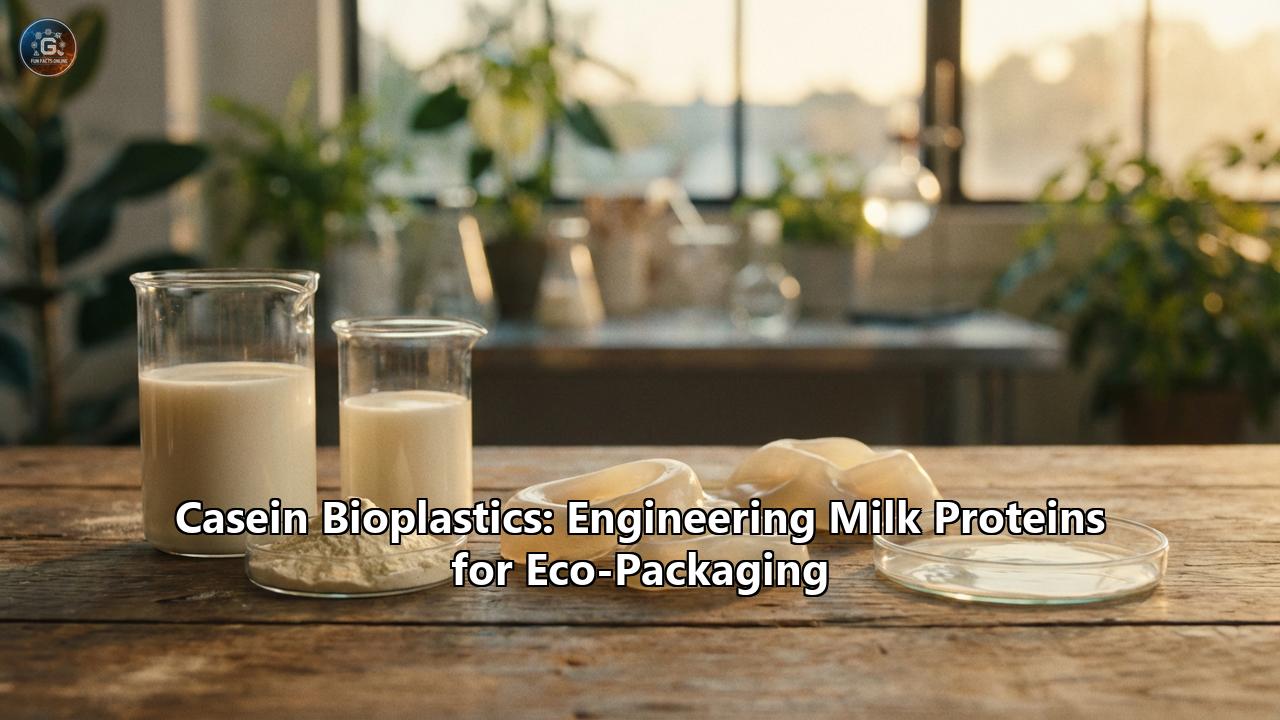
Imagine walking down the aisles of a modern supermarket. Almost every item you see—from the crisp apples in the produce section to the individually wrapped slices of cheese in the dairy cooler—is swathed in a layer of synthetic plastic. For decades, petroleum-based polymers have been the undisputed champions of food preservation, offering unmatched durability, flexibility, and cost-effectiveness. However, this convenience has come at a catastrophic environmental cost. Our oceans are choking on microplastics, our landfills are overflowing with synthetic waste that will outlive us by centuries, and the carbon footprint of petrochemical extraction continues to drive global climate change.
In the desperate search for sustainable alternatives, materials scientists and bioengineers are looking in an unexpected direction: the dairy aisle. Specifically, they are turning to casein, the primary protein found in mammalian milk, to engineer a new generation of bioplastics. Casein bioplastics represent a fascinating intersection of biomimicry, historical chemistry, and cutting-edge biotechnology. These protein-based films are not only fully biodegradable and sustainable, but they also possess functional properties that actually outperform traditional plastics in crucial areas of food preservation. Furthermore, as the world grapples with the ethical and environmental implications of animal agriculture, the rise of "precision fermentation" is allowing scientists to brew these milk proteins without the need for a single cow.
The transition from fossil fuels to bio-based materials is arguably the most critical industrial shift of the 21st century. To understand how milk proteins are being engineered for eco-packaging, we must dive deep into the history of bioplastics, the complex molecular architecture of casein, the advanced engineering required to turn liquid milk into flexible film, and the futuristic fermentation technologies that will allow this innovation to scale globally.
The Forgotten Era of Milk Plastics
While the idea of wrapping food in milk protein might sound like a highly modern, avant-garde concept, the truth is that casein-based plastics are among the oldest synthetic materials in human history. The story of casein plastic begins long before the invention of polyethylene or polystyrene. In the late 19th century, a German chemist named Adolf Spitteler and a Bavarian printer named Wilhelm Krische were tasked with developing a white, waterproof coating for paper. Their experiments led them to mix sour milk with formaldehyde. The result was a hard, horn-like substance that was incredibly durable and could be polished to a high shine.
They patented this material in 1899 under the trade name "Galalith," derived from the Greek words gala (milk) and lithos (stone). By the early 20th century, Galalith had become a sensation. Because it took dye beautifully and could be molded into intricate shapes, it became the premier material for manufacturing buttons, jewelry, knitting needles, fountain pens, and even piano keys. At its peak in the 1920s and 1930s, thousands of tons of casein plastic were produced annually. It was a staple of the Art Deco movement, providing a cheap but luxurious-looking alternative to ivory, tortoiseshell, and horn.
So, why did Galalith disappear? The downfall of casein plastic was brought about by the outbreak of World War II and the subsequent boom of the petrochemical industry. Milk was needed to feed armies and civilian populations, making it too valuable to be diverted into plastic production. Simultaneously, wartime research accelerated the development of petroleum-based polymers like nylon, acrylic, and polyethylene. These new materials were entirely waterproof, could be mass-produced at a fraction of the cost, and could be easily extruded and injection-molded at high speeds. Casein plastic, which required a lengthy curing process in formaldehyde, simply could not compete. By the 1960s, Galalith was little more than a historical curiosity.
Today, however, the tables have turned. The very properties that made petrochemical plastics so successful—their indestructible nature and resistance to environmental degradation—have become our greatest nightmare. As the push for a circular economy intensifies, the materials science community has revisited casein, not to make hard buttons, but to engineer flexible, biodegradable, and even edible packaging films.
The Biochemical Architecture of Casein
To understand why casein is such a promising material for eco-packaging, we must look at its molecular structure. Casein accounts for approximately 80% of the total protein content in cow's milk. It is not a single protein, but rather a family of phosphoproteins comprising four main fractions: alpha-S1, alpha-S2, beta, and kappa-casein.
In its natural state in milk, casein exists in spherical structures known as micelles. These micelles are complex, highly hydrated aggregates of the casein protein fractions, held together by nanoclusters of calcium phosphate. The beta and alpha caseins, which are highly hydrophobic (water-repelling), form the dense core of the micelle. Meanwhile, the kappa-casein, which is hydrophilic (water-attracting), forms a hairy outer layer that stabilizes the micelle in the watery environment of milk.
This unique structure is what makes casein an extraordinary candidate for bioplastics. Proteins are essentially natural polymers—long chains of amino acids linked by peptide bonds. Because proteins contain a vast array of functional groups in their amino acid side chains (such as hydroxyl, carboxyl, amino, and thiol groups), they offer incredible potential for chemical bonding, cross-linking, and structural modification.
When the micellar structure of casein is disrupted—typically through the addition of an acid or an enzyme like rennet—the proteins precipitate out of the liquid. This precipitated curd is then neutralized with an alkali (often sodium hydroxide) to create sodium caseinate, a highly soluble, purified protein powder that serves as the base ingredient for modern casein bioplastics.
Unlike synthetic polymers, which are often uniform and inert, casein proteins are highly interactive. They readily form numerous intermolecular forces, including electrostatic interactions, hydrophobic bonds, and hydrogen bonds. When a solution of sodium caseinate is cast onto a flat surface and allowed to dry, these intermolecular forces pull the protein chains together into a tight, cohesive matrix. The result is a smooth, transparent, and continuous film.
Overcoming the Achilles' Heel: Water Sensitivity and Mechanical Strength
If pure casein forms films so easily, why isn't it already wrapping our food? The answer lies in the protein's inherent affinity for water. Casein films are highly hydrophilic. In a dry environment, a pure casein film is an excellent material, but the moment it is exposed to high humidity or direct moisture, it absorbs water, swells, loses its mechanical strength, and eventually dissolves. Imagine buying a bag of frozen vegetables packaged in a casein film, only to have the bag dissolve in your hands as condensation forms. Furthermore, without modification, unplasticized protein films tend to be extremely brittle, shattering like glass when bent or folded.
To transform casein from a fragile, water-soluble film into a robust, flexible packaging material, materials engineers must manipulate its chemical structure through two primary processes: plasticization and cross-linking.
1. Plasticization for FlexibilityTo overcome brittleness, scientists add plasticizers to the casein formulation. Plasticizers are small, low-molecular-weight molecules that insert themselves between the long protein chains. By increasing the free volume between the polymer chains, plasticizers reduce the intermolecular forces holding the proteins tightly together. This allows the protein chains to slide past one another more easily, granting the film flexibility and elasticity.
Glycerol and sorbitol are the most commonly used plasticizers in edible casein films. Because they are food-grade and non-toxic, they ensure that the final packaging remains entirely safe for human consumption. The ratio of plasticizer to protein is a delicate balancing act; too little, and the film is brittle; too much, and the film becomes overly sticky and weak.
2. Cross-Linking for Water Resistance and StrengthTo solve the issue of water sensitivity, researchers employ cross-linking techniques. Cross-linking involves introducing agents that create strong, covalent bonds between the individual protein chains, essentially welding the polymer matrix together. This prevents water molecules from easily penetrating the structure and dissolving the film.
Historically, formaldehyde was used to cross-link Galalith, but its toxicity makes it entirely unsuitable for modern eco-packaging and food applications. Today, scientists use safe, food-grade cross-linking methods. Calcium ions, naturally present in milk, can be utilized to create calcium bridges between the protein chains. Enzymes like transglutaminase (often called "meat glue" in culinary circles) are also highly effective at forming covalent bonds between the amino acids glutamine and lysine within the casein structure. Chemical cross-linkers like citric acid or ferulic acid—a natural antioxidant found in plant cell walls—not only strengthen the film but also add nutritional and preservative benefits.
Advanced Nanocomposites: Building a Better Barrier
Even with plasticizers and cross-linking, casein films sometimes need an extra boost to match the mechanical strength of petrochemical plastics. To achieve this, scientists have ventured into the realm of nanotechnology and composite blending.
By blending casein with other natural biopolymers, researchers can create synergistic materials that leverage the best properties of both ingredients. For instance, researchers at the U.S. Department of Agriculture (USDA), led by scientists Laetitia Bonnaillie and Peggy Tomasula, made a massive breakthrough when they incorporated citrus pectin into casein films. Pectin, a complex carbohydrate extracted from citrus peels, interweaves with the casein protein matrix to dramatically enhance the film's mechanical strength and its resistance to high temperatures and humidity.
Another highly successful additive is chitosan, a biodegradable polymer derived from the exoskeletons of crustaceans (like crabs and shrimp). Blending chitosan with casein not only improves the functional properties and structural integrity of the packaging film but also brings a natural antimicrobial property to the material, actively preventing the growth of spoilage bacteria on the packaged food.
In the cutting-edge field of nanocomposites, scientists are embedding microscopic particles—such as cellulose nanocrystals derived from wood pulp or agricultural waste—into the casein matrix. These nanoparticles act like structural rebar in concrete, absorbing stress and making the bioplastic vastly more durable without compromising its biodegradability. Innovations in these nanocomposite technologies have reportedly improved film strength and water resistance by up to 35%, bridging the performance gap between natural proteins and synthetic plastics.
The Unrivaled Superpower of Casein: The Ultimate Oxygen Barrier
While petrochemical plastics are excellent at keeping water out, they possess a fatal flaw when it comes to food preservation: they are highly permeable to oxygen. Oxygen is the enemy of fresh food. It causes fats to go rancid, vitamins to degrade, and aerobic bacteria and molds to thrive. To compensate for the poor oxygen barrier properties of standard plastics, food manufacturers must use thick, multi-layered packaging or flush the packages with nitrogen gas.
This is where casein bioplastics do not just replace traditional plastics; they completely outclass them. Because of the tight, highly cohesive network formed by the protein chains, casein films have exceedingly small micropores. Research has demonstrated that casein-based packaging films are up to 500 times better at blocking oxygen than standard petroleum-based plastic films (like polyethylene and PET).
This phenomenal oxygen barrier property has profound implications for global food waste. By wrapping perishable foods in casein films, the shelf life of the product can be extended exponentially. Meat, cheese, bread, and snacks can retain their freshness, color, and nutritional value for significantly longer periods, reducing the amount of spoiled food that ends up in landfills. Notably, while other bioplastics like PLA (Polylactic Acid) or starch-based films exist on the market, their structures are more porous and allow oxygen to seep through micro-holes. Casein's dense protein network provides a barrier that carbohydrates simply cannot match.
Transforming Manufacturing: From Liquid to Film
The transition of casein bioplastics from laboratory experiments to commercial grocery store shelves relies heavily on scalable manufacturing processes. The production of protein-based packaging typically follows two primary routes: solution casting and extrusion.
Solution Casting:This is the most common method used in laboratory research and for producing highly specialized, ultra-thin edible coatings. In this process, sodium caseinate is dissolved in water along with plasticizers, cross-linking agents, and any desired bioactive additives. The solution is heated and stirred until it forms a homogenous mixture. It is then degassed to remove any air bubbles, which would cause weak spots in the final plastic. The liquid is poured (cast) onto a flat, non-stick surface—such as a Teflon plate or a moving steel belt—and passed through a drying oven. As the water evaporates, the proteins bind together, leaving behind a clear, flexible film that can be peeled off and rolled onto spools. While highly effective for creating perfect, thin films, casting is an energy-intensive and relatively slow process because it requires evaporating massive amounts of water.
Twin-Screw Extrusion:For bulk, commercial-scale production, the packaging industry relies on extrusion. This is the exact same technology used to produce traditional petroleum plastics, which makes the adoption of casein bioplastics highly attractive to manufacturers—they do not need to build entirely new factories. In the extrusion process, dry casein powder is fed into a long, heated barrel containing two interlocking, rotating screws (a twin-screw extruder). As the screws turn, they generate intense mechanical shear and heat. A precise amount of liquid plasticizer (like glycerol) and a minimal amount of water are injected into the barrel.
The combination of heat, shear force, and pressure denatures the casein proteins, causing them to unfold and melt into a viscous, dough-like thermoplastic resin. This molten protein is then forced through a specialized die at the end of the extruder, shaping it into a continuous flat sheet or blowing it into a thin tube, much like blowing a bubble. As it hits the cool air, the bioplastic solidifies instantly. Extrusion is fast, uses very little water, and can produce miles of film in a matter of hours.
Beyond films, researchers are also exploring emerging technologies such as 3D printing, plasma deposition, and corona discharge to rapidly cure and shape hydrophobic protein films, accelerating their path to commercialization.
Groundbreaking Applications in Eco-Packaging
The sheer versatility of engineered casein allows it to be utilized in an astonishing array of packaging applications. Because the material is inherently safe, derived from food, and totally biodegradable, it opens up packaging paradigms that are physically impossible with synthetic plastics.
1. Edible Single-Serve WrappersConsider the environmental absurdity of the individually wrapped cheese stick, a staple of children's lunchboxes. A tiny cylinder of cheese is encased in a thick plastic wrapper that is used for five seconds and then discarded, destined to sit in a landfill for 500 years. With casein bioplastics, that same cheese stick can be wrapped in an edible film. A consumer could simply eat the cheese, wrapper and all, leaving absolutely zero waste. Because casein is a protein, the wrapper itself adds nutritional value to the snack. The films possess virtually no taste, but manufacturers have the option to add flavorings. The same concept applies to instant coffee or soup packets: instead of tearing open a plastic sachet and throwing it away, you simply drop the whole casein packet into hot water, where it dissolves harmlessly and adds a boost of protein to your meal.
2. Active and Smart PackagingBecause casein is highly effective at carrying small molecules, it is an ideal matrix for "active packaging." Traditional packaging is passive; it merely sits there and acts as a physical wall. Active casein packaging interacts with the food to extend its shelf life. Scientists can incorporate bioactive compounds—such as essential oils (like cinnamon and lemongrass), phenolic acids, or even live probiotics—directly into the protein film. As the food sits on the shelf, the casein wrapper slowly and steadily releases these antimicrobial and antioxidant agents onto the surface of the food, actively fighting off mold, neutralizing oxidative stress, and maintaining the sensory quality of fresh produce, meats, and cheeses.
3. Spray-On Coatings and Shelf-Life ExtensionCasein doesn't have to be formed into a standalone wrapper; it can be applied directly to food as an invisible, edible coating. For perishable fruits and vegetables, an ultra-thin spray of casein acts as a second skin. This coating prevents moisture loss, slowing down the dehydration and wilting of produce during transport and storage. In one study, cherries coated with a sodium caseinate formulation retained their moisture and structural integrity at cold storage for an impressive 63 days.
In the dry foods sector, casein coatings can be sprayed onto cereal flakes to keep them crunchy in milk for longer periods, entirely replacing the heavy sugar coatings currently used for this purpose.
4. Replacing Toxic PFAS in PaperboardPaper and cardboard are highly sustainable, renewable materials, but they are terribly porous. To prevent a greasy pizza from turning its cardboard box into a soggy mess, or to stop a paper coffee cup from leaking, manufacturers traditionally coat the paper with per- and polyfluoroalkyl substances (PFAS), known as "forever chemicals." These synthetic chemicals are highly toxic, accumulate in the human body, and never break down in nature. With regulatory bodies like the US Food & Drug Administration (FDA) increasingly banning PFAS, the packaging industry is in a state of panic. Casein offers the perfect, safe alternative. When laminated or sprayed onto paperboard, casein acts as a formidable barrier against grease and oils, making paper packaging functionally waterproof and grease-proof while maintaining its ability to be easily composted or recycled.
The Ethical and Environmental Dilemma: Cows, Carbon, and Casein
Despite the miraculous properties of casein bioplastics, a glaring paradox threatens its claim as the ultimate eco-friendly material: cow's milk.
Industrial dairy farming is a massive contributor to global greenhouse gas emissions. Cows are ruminants; their digestive processes produce vast quantities of methane, a greenhouse gas roughly 28 times more potent than carbon dioxide at trapping heat in the atmosphere. Furthermore, dairy farming requires immense tracts of land, causes deforestation, consumes billions of gallons of fresh water, and often involves severe ethical concerns regarding animal welfare.
If we replace millions of tons of petroleum plastics with casein plastics, the resulting demand for milk would require breeding millions more cows. The environmental devastation caused by this massive expansion of the dairy industry would completely negate the benefits of eliminating plastic pollution. Using a resource-intensive, animal-derived food product to make disposable wrappers is neither sustainable nor ethically sound on a global scale.
Historically, researchers have attempted to mitigate this by sourcing casein strictly from dairy waste. When cheese is made, a massive amount of liquid by-product called whey is generated, which still contains residual proteins. Furthermore, millions of gallons of milk spoil and are discarded before reaching consumers. Utilizing this dairy effluent and waste to produce casein bioplastics promotes a circular economy. For instance, companies like the French biotech pioneer Standing Ovation and Bel Group have collaborated to valorize dairy effluents, capturing under-utilized whey to extract sustainable proteins.
However, even relying on waste is not enough to meet the staggering global demand for packaging materials. If casein bioplastics are to save the world, we must find a way to decouple the protein from the cow.
The Precision Fermentation Revolution: Brewing Dairy Without the Cow
The solution to the dairy dilemma has arrived in the form of a groundbreaking biotechnological process known as "precision fermentation." This technology is the missing puzzle piece that elevates casein bioplastics from a niche, waste-stream novelty to a globally scalable, climate-resilient juggernaut.
Precision fermentation leverages the ancient art of brewing, but instead of using yeast to ferment sugars into alcohol (like in beer or wine), scientists use genetically engineered microorganisms to brew specific, targeted molecules. The technology is not entirely new; it has been safely used for decades to produce human insulin for diabetics and microbial rennet for cheese-making. Now, the food-tech industry is turning this technology toward milk proteins.
How it Works:The process begins by identifying the specific sequence of cow DNA that provides the genetic instructions for producing casein proteins. Scientists copy this genetic sequence and insert it into the DNA of a host microorganism, typically a specific strain of yeast or Escherichia coli (E. coli). These engineered microbes become microscopic, highly efficient protein factories.
The microbes are placed into large, stainless-steel bioreactors (fermenters) and fed a nutrient-rich broth consisting of plant-based sugars, vitamins, and minerals. As they consume the sugars, they follow their newly programmed genetic instructions and secrete vast quantities of casein protein into the fermentation broth. Once the fermentation cycle is complete, the liquid is filtered, and the proteins are separated and purified from the microbial biomass.
The resulting bio-identical casein powder is molecularly indistinguishable from the casein found in a cow's udder. It possesses the exact same amino acid profile, the same hydrophobic and hydrophilic properties, and the same unparalleled ability to form dense, oxygen-blocking plastic films.
Overcoming the Micelle Challenge:For a long time, precision-fermented casein faced a major hurdle. While microbes could produce the individual casein fractions, they struggled to perform the "post-translational modifications" (PTMs)—such as phosphorylation—that allow the proteins to naturally self-assemble into the complex, three-dimensional micelle structures found in real milk. Without micellar structure, the functional performance of the protein as a bioplastic and a food ingredient was compromised.
Recently, massive breakthroughs have shattered this barrier. Researchers at the Technical University of Denmark (DTU) successfully produced phosphorylated alpha-S1 casein in E. coli using specialized bacterial enzymes. Simultaneously, cutting-edge start-ups are achieving commercial milestones. Food-tech companies like DairyX, Formo, and Standing Ovation are pioneering this space. For example, DairyX has engineered advanced yeast strains that produce "smart casein" capable of precisely self-assembling into micelles, matching the exact sensory and functional performance of conventional dairy. Formo, another leader in the field, utilizes yeast cultures to brew pure, bioidentical casein powder that forms the foundation for both animal-free dairy products and functional material applications.
By synthesizing casein via precision fermentation, we completely bypass the cow. The environmental benefits are staggering: compared to traditional dairy, precision fermentation uses a fraction of the land, consumes vastly less water, and produces zero methane emissions. It requires no hormones, no antibiotics, and entails zero animal cruelty. Crucially, it provides an infinite, localized, and climate-resilient supply chain. A fermentation facility can be built anywhere in the world, producing bio-identical casein bioplastics regardless of agricultural climate, droughts, or land availability.
Environmental Impact and End-of-Life Reality
The true test of any bioplastic is what happens when it is discarded. The term "bioplastic" is often misused in the industry; some bioplastics are bio-based (made from plants) but are still non-biodegradable (like Bio-PET), while others are biodegradable but require massive industrial composting facilities operating at high heat to break down (like PLA). If a PLA cup ends up in the cold ocean, it will act much like standard plastic for decades.
Casein bioplastics offer a genuine, uncompromising end-of-life solution. Because they are fundamentally just proteins and natural carbohydrates (when blended with pectin or glycerol), they are recognized as food by the natural environment. If a casein wrapper blows into a forest or an ocean, it does not break down into toxic microplastics. Instead, naturally occurring bacteria, fungi, and enzymes rapidly metabolize the material. In a home compost bin, or even in marine environments, casein bioplastic will biodegrade completely in a matter of weeks, returning its constituent amino acids and nitrogen to the soil, acting effectively as a fertilizer.
Navigating Market Dynamics and Commercialization
Despite the immense promise, the transition to casein-based eco-packaging is not without its hurdles. The global plastic packaging market is deeply entrenched in the economics of petroleum. Petrochemical plastics are heavily subsidized and incredibly cheap to produce at scale.
Currently, the cost of producing casein bioplastics—particularly via precision fermentation—is higher than that of producing conventional polyethylene. However, this gap is closing rapidly. As fermentation technology scales up, the creation of highly efficient yeast strains that produce high yields of casein in shorter timeframes will drive costs down to achieve price parity. Furthermore, as governments worldwide implement stringent taxes on single-use plastics and ban harmful chemicals like PFAS, the economic landscape will inherently favor sustainable alternatives. The protein films market is witnessing significant growth; pharmaceutical and food packaging segments are driving a multi-billion dollar expansion, supported by increasing R&D investments in protein film processing.
Regulatory approval is another critical step. Because these films are designed to touch food—and in many cases, be eaten—they must pass rigorous safety evaluations by bodies like the FDA in the United States and the European Food Safety Authority (EFSA). Fortunately, precision-fermented proteins are gaining traction, with companies successfully securing regulatory clearance to sell animal-free casein proteins in the US.
Finally, there is the hurdle of consumer perception. While the idea of "edible packaging" is scientifically brilliant, overcoming the psychological barrier of eating a wrapper requires strategic marketing. Consumers must be educated that the film protecting their food is not synthetic chemistry, but a pure, nutritious protein matrix. Ensuring that these edible films are protected from external dirt during transit—typically by utilizing larger, recyclable cardboard secondary packaging—is essential to maintaining hygiene and consumer trust.
The Vision of 2030 and Beyond
We stand on the precipice of a materials revolution. The convergence of historical protein chemistry and futuristic synthetic biology is paving the way for a world where our consumption no longer leaves a permanent scar on the planet.
Imagine the supermarket of 2030. You walk down the aisle and pick up a block of artisan cheese. It is wrapped in a crystal-clear, tightly conforming film that feels perfectly smooth. This film is blocking oxygen 500 times more effectively than the plastics of the past, ensuring the cheese stays fresh for months without chemical preservatives. When you return home, you don't peel the wrapper off and throw it in the trash. You might drop the entire block, wrapper and all, into a pot of hot water for a recipe, watching the bio-identical, yeast-brewed casein wrapper dissolve instantly, enriching your meal with protein.
Or perhaps you unwrap a fresh bell pepper, peeling away a thin, flexible casein film that was infused with lemongrass essential oils to keep the vegetable crisp. You toss that wrapper into your backyard garden bed. Within a month, the rain and soil microbes have completely digested it, turning the packaging back into the building blocks of life.
By engineering milk proteins for eco-packaging—and liberating those proteins from the confines of animal agriculture through precision fermentation—we are not just inventing a new product. We are rewriting the rules of human manufacturing. We are proving that humanity can create materials that are functionally superior, economically viable, and perfectly harmonious with the natural world. The era of indestructible, polluting petrochemical plastics is drawing to a close, and the future is looking remarkably, beautifully biodegradable.
Reference:
- https://www.mdpi.com/2079-6412/11/8/899
- https://eatformo.com/process/
- https://www.scmp.com/lifestyle/health-beauty/article/2007394/could-edible-food-packaging-be-answer-hong-kongs-plastic
- https://www.gelgoogmachinery.com/blog/packing-machine-for-food.html
- https://isappscience.org/resource/episode-51-precision-fermentation-for-animal-free-milk/
- https://www.researchgate.net/figure/Plasticizers-used-in-protein-based-films_tbl2_326481310
- https://www.researchgate.net/publication/383005071_Beyond_buttons_repurposing_of_casein-based_materials_in_education_and_industry-a_review
- https://www.greenqueen.com.hk/precision-fermentation-casein-micelles-recombinant-protein-cheese/
- https://agreads.com/2024/09/25/dairyx-is-successfully-crafting-next-gen-casein-micelles-using-precision-fermentation/
- https://iipseries.org/assets/docupload/rsl20245444854DAB47C7A.pdf
- http://plasticsandrubberasia.com/feb2017/materials6.html
- https://dokumen.pub/biobased-polymers-properties-and-applications-in-packaging-0128184043-9780128184042.html
- https://www.globalgrowthinsights.com/market-reports/protein-films-market-114361
- https://dokumen.pub/second-and-third-generation-bioplastics-production-application-and-innovation-1nbsped-1032365986-9781032365985.html
- https://www.researchgate.net/figure/Comparison-of-bioplastic-films-produced-from-DAF-casein-and-skim-milk-powder-DAF-casein_fig2_338125332
- https://worldbiomarketinsights.com/breakthrough-precision-fermentation-turns-dairy-waste-to-protein/
- https://www.slideshare.net/slideshow/bioplastics-and-biopolymers-microorganisms-involvement-new-pptx/282163840