
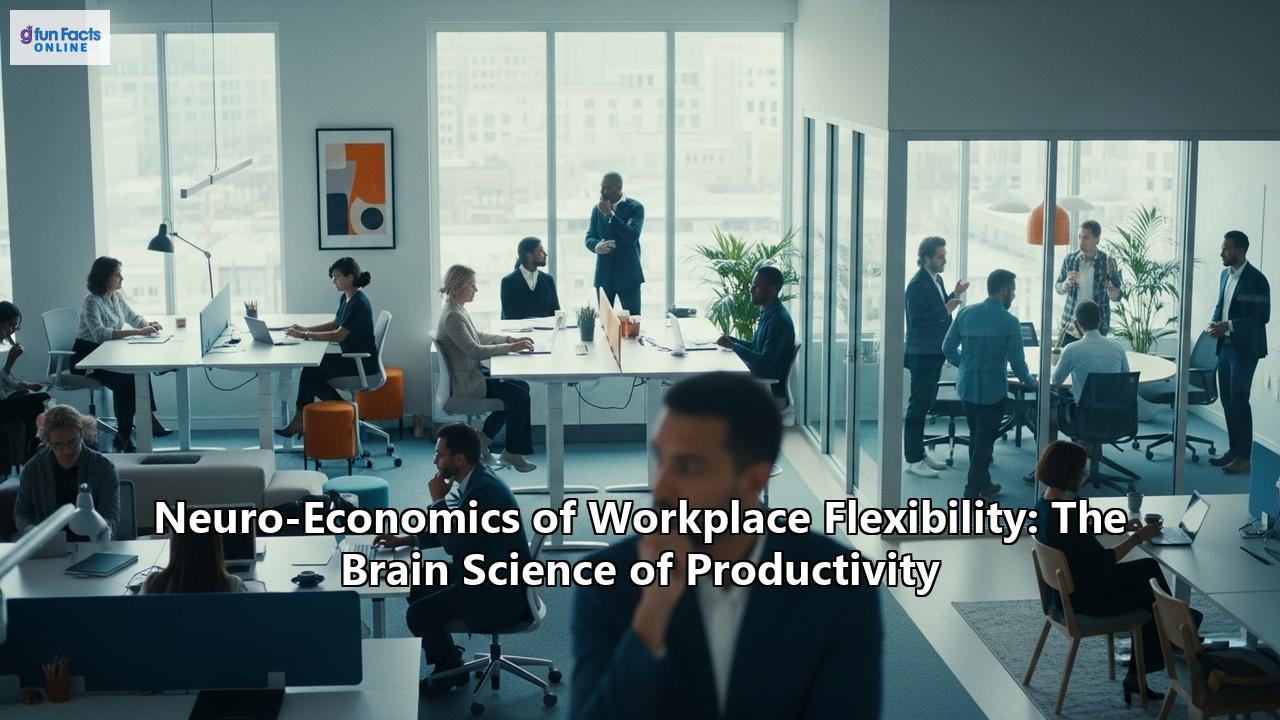
The Neuro-Economics of Workplace Flexibility: Unlocking Productivity Through Brain Science
In the ever-evolving landscape of the modern workplace, a quiet revolution is taking place, not in the corner office, but within the intricate neural pathways of our brains. The traditional nine-to-five, office-centric model is being supplanted by a more fluid, flexible approach to work. This shift is not merely a matter of convenience; it is a profound alignment with the fundamental principles of how our brains operate at their peak. Welcome to the fascinating intersection of neuroscience, psychology, and economics—a field known as neuro-economics—which is providing compelling, science-backed evidence for the power of workplace flexibility. By understanding the brain's response to autonomy, stress, and environment, businesses can unlock unprecedented levels of productivity, innovation, and employee well-being.
The Core Principles: A Glimpse Inside the Working Brain
At its heart, productivity is a cognitive and physiological phenomenon. It hinges on the effective functioning of key brain systems that govern our ability to focus, make decisions, and stay motivated. Neuro-economics provides the tools to understand these systems by combining insights from neuroscience with economic theories of decision-making. This interdisciplinary field moves beyond simply observing behavior to investigating the "why" behind our actions, using advanced techniques like functional Magnetic Resonance Imaging (fMRI) and electroencephalography (EEG) to map brain activity during work-related tasks.
Three key brain systems are central to our understanding of workplace productivity:
- The Prefrontal Cortex (PFC): Often referred to as the brain's "executive manager," the PFC is responsible for higher-order cognitive functions such as planning, decision-making, and maintaining focus. It's the part of the brain that helps us set goals, organize tasks, and regulate our impulses.
- The Dopamine Reward System: Dopamine, a neurotransmitter famously known as the "feel-good" chemical, plays a crucial role in motivation, attention, and goal-directed behavior. When we anticipate or receive a reward, our brains release dopamine, which in turn drives us to repeat the behaviors that led to that reward.
- The Limbic System: This is the emotional center of the brain, regulating our responses to stress and social cues. A key player in this system is the amygdala, which acts as the brain's fear and threat detector.
The interplay between these systems dictates our ability to be productive. When we feel a sense of control and autonomy, our PFC functions optimally, and our dopamine system keeps us motivated. Conversely, when we feel micromanaged or overwhelmed by stress, the amygdala goes into overdrive, flooding the brain with the stress hormone cortisol, which can impair cognitive function and lead to burnout.
The Autonomy Advantage: How Freedom Rewires the Brain for Success
One of the most profound insights from neuro-economics is the powerful impact of autonomy on the brain. When employees are given control over their work—how, when, and where they do it—it triggers a cascade of positive neurological responses.
A 2023 study from Harvard Medical School found a direct correlation between high levels of autonomy and increased dopamine activity. This surge in dopamine not only boosts motivation and mental clarity but also makes individuals more emotionally stable and less susceptible to stress-related disorders. Employees with a strong sense of autonomy are more engaged, with studies showing a 64% increase in engagement and a 50% reduction in the likelihood of experiencing burnout.
This neurological advantage translates into tangible improvements in performance. Research has shown that a sense of autonomy is linked to increased self-regulatory performance, with individuals demonstrating a greater sensitivity to their own errors and an enhanced ability to learn from them. This is because autonomy supports intrinsic motivation, the desire to engage in an activity for its own sake rather than for an external reward. When we are intrinsically motivated, we are more likely to find our work meaningful and to persevere through challenges.
A neuroscience experiment designed to investigate the mechanisms of autonomy and productivity found that a simple video prime about the benefits of autonomy led to a 5.2% increase in average productivity and a 31% increase in positive affect compared to a control group. While the study didn't pinpoint the exact neurological mechanism, it provided clear evidence that the perception of autonomy has a direct and positive impact on both mood and output. This aligns with broader research indicating that employees who feel empowered are more productive and satisfied with their jobs.
Furthermore, the benefits of autonomy extend to team dynamics. The same study found that group productivity also increased in the autonomy-primed group, suggesting that a sense of individual control can foster a more collaborative and effective team environment. This is likely due to the release of oxytocin, a neurochemical associated with trust and social bonding, which is more prevalent in high-trust, high-autonomy environments.
The Flexible Workplace: Designing for the Brain's Natural Rhythms
The traditional 9-to-5 workday, a relic of the industrial revolution, is fundamentally at odds with our biological wiring. Our brains operate on natural cycles of productivity and recovery known as ultradian rhythms, which typically last for 90 to 120 minutes. During these cycles, we experience peaks of high-frequency brain activity, where we are capable of intense focus and deep work, followed by troughs of low-frequency activity, where our brains need to rest and consolidate information.
Forcing employees to work in long, uninterrupted blocks of time ignores these natural rhythms, leading to cognitive fatigue, decreased creativity, and diminished productivity. Workplace flexibility, on the other hand, allows individuals to align their work schedules with their personal ultradian rhythms, empowering them to work when they are most effective and take breaks when their brains need them.
This alignment with our natural cycles has a profound impact on our ability to be creative and innovative. Creativity is not a single event but a process that involves different brain networks working in concert. The "default mode network," which is active during periods of rest and mind-wandering, plays a crucial role in generating new ideas and making novel connections. By providing opportunities for downtime and mental incubation, flexible work arrangements allow the brain to engage in this vital creative process. Encouraging employees to take breaks, go for walks, or simply change their scenery can stimulate new neural connections and spark innovative solutions.
The physical environment itself is another critical factor in cognitive performance. Traditional open-plan offices, while designed for collaboration, can often be a source of sensory overload, with constant noise and interruptions that impair focus. Flexible work arrangements, particularly those that include remote or hybrid options, give employees control over their work environment, allowing them to retreat to quieter spaces for deep work when needed. This ability to control one's surroundings can lead to a significant boost in productivity, as individuals can minimize distractions and create a workspace that is conducive to their specific needs.
The Double-Edged Sword of Remote Work: Navigating the Neurological Challenges
While workplace flexibility offers a wealth of benefits, the widespread adoption of remote work has also brought to light a new set of neurological challenges. The very technologies that enable us to work from anywhere can also be a source of stress, isolation, and cognitive overload.
One of the most significant downsides of remote work is the increased risk of loneliness and social isolation. Humans are inherently social creatures, and our brains are wired for connection. Face-to-face interactions trigger the release of oxytocin, which fosters trust and emotional bonding. In a remote environment, these crucial social cues are often lost, leading to feelings of disconnection and, in some cases, atrophy of the brain cells related to social engagement. Studies have shown that prolonged social isolation can even lead to the shrinking of key brain areas like the prefrontal cortex, hippocampus, and amygdala, resulting in a decline in cognitive function, including impaired learning and memory.
The now-ubiquitous video conference, while a necessary tool for remote collaboration, also places a significant cognitive load on the brain. During in-person interactions, our brains naturally process a wealth of nonverbal cues, such as body language and tone of voice. In a video call, much of this information is lost, forcing our brains to work overtime to fill in the gaps. This constant effort to decode fragmented social signals can be mentally exhausting, a phenomenon now widely known as "Zoom fatigue." Research has shown that the brain has to work 34% harder during virtual meetings compared to face-to-face interactions, leading to a flood of stress hormones in the prefrontal cortex.
The blurred boundaries between work and home life in a remote setting can also be a major source of stress. The constant connectivity and the expectation of being always available can disrupt the brain's natural stress response system, leading to chronically elevated levels of cortisol. This can result in a host of negative health consequences, including anxiety, irritability, and impaired cognitive function.
However, the picture is not entirely bleak. Remote work also offers some unique neurological benefits. For instance, working from home often allows for greater exposure to natural light, which can boost serotonin levels, a neurotransmitter that promotes feelings of well-being and reduces fatigue. The key is to be mindful of the potential pitfalls and to implement strategies to mitigate them.
Crafting a Brain-Friendly Flexible Work Policy: Actionable Strategies for Businesses
The neuro-economics of workplace flexibility provides a clear roadmap for businesses looking to create a more productive, innovative, and engaged workforce. It's not about simply allowing employees to work from home; it's about thoughtfully designing flexible work policies that are grounded in the science of how our brains work best.
Here are some practical, evidence-based strategies that companies can implement:
- Embrace True Autonomy: Move beyond rigid, one-size-fits-all policies and empower teams and individuals to determine the work arrangements that are most effective for them. This could involve a "digital first, not digital only" approach, where technology is the primary mode of communication, but teams are encouraged to come together for in-person collaboration when it is most beneficial.
- Prioritize Asynchronous Communication: To combat the cognitive load of constant virtual meetings, encourage asynchronous communication through tools like Slack and email. This allows individuals to process information at their own pace and respond when they are most focused.
- Design for Brain-Friendly Meetings: When virtual meetings are necessary, make them more "brain-friendly" by keeping them short, focused, and with a clear agenda. Encourage the use of cameras to restore some of the missing nonverbal cues, but also be mindful of camera fatigue.
- Foster a Culture of Trust: Trust is the cornerstone of a successful flexible work environment. Leaders need to shift their focus from monitoring activity to measuring outcomes, trusting their employees to manage their own time and workload effectively.
- Promote "Deep Work" and Uninterrupted Focus: Encourage employees to block out time for "deep work," periods of intense, uninterrupted focus. This could involve implementing "monotasking Mondays" or creating designated quiet zones in the office.
- Encourage Regular Breaks and Movement: Educate employees on the importance of ultradian rhythms and encourage them to take regular breaks throughout the day. Promote physical activity, which has been shown to boost cognitive function and creativity.
- Invest in Training and Development: Provide managers with the coaching and support they need to lead effectively in a hybrid environment. This includes training on how to foster psychological safety, build trust, and manage a distributed team.
- Measure What Matters: Track key metrics related to employee well-being, engagement, and productivity to understand the impact of your flexible work policies and make data-driven adjustments as needed.
The Economic Imperative: The Tangible ROI of a Brain-Friendly Workplace
The benefits of workplace flexibility are not just about creating a happier, healthier workforce; they are also about driving significant and measurable business outcomes. The neuro-economic principles that underpin flexible work have a direct and positive impact on the bottom line.
One of the most immediate financial benefits is a reduction in overhead costs. By allowing employees to work from home, even for part of the week, companies can save a significant amount on office space, utilities, and other related expenses. Some reports suggest that firms can save as much as $11,000 per remote employee annually.
But the financial advantages go far beyond real estate savings. A more engaged and motivated workforce is a more productive workforce. Businesses with highly engaged employees see 17% higher productivity and 21% more profitability. This is because a brain-friendly work environment, rich in autonomy and trust, fosters the very conditions that lead to peak performance.
Furthermore, flexible work arrangements are a powerful tool for attracting and retaining top talent. In today's competitive job market, flexibility is no longer a perk; it's an expectation. Companies that offer flexible work options are better positioned to attract a diverse and highly skilled talent pool. And once they have that talent, they are more likely to keep it. Studies have shown that employees with flexible work arrangements are more satisfied with their jobs and less likely to leave, which can lead to significant savings in recruitment and training costs. One case study of a nationwide retail chain found that implementing a flexible scheduling system led to a 24% reduction in turnover, translating to an estimated $3.2 million in annual savings.
The impact on innovation is another key driver of financial success. A flexible work environment that allows for creativity and divergent thinking can lead to the development of new products, services, and business models. Companies like Google have famously encouraged employees to spend a portion of their time on passion projects, a practice that has led to the creation of some of their most successful products.
The Future of Work is Flexible, and It's Written in Our Neural Code
The science is clear: workplace flexibility is not a trend, but a fundamental shift in our understanding of how to create a thriving, productive, and innovative work environment. By aligning our work practices with the principles of neuro-economics, we can unlock the full potential of the human brain, creating a future of work that is not only more productive but also more human. The companies that embrace this new paradigm will be the ones that attract and retain the best talent, foster a culture of innovation, and ultimately, lead the way in the 21st-century economy. The blueprint for success is not in a management textbook; it is in the intricate and fascinating workings of the human brain.
Reference:
- https://richard-reid.com/the-neuroscience-of-productivity/
- https://www.adp.com/spark/articles/2018/07/the-finances-behind-flexible-working-the-upside-of-a-flexible-workplace.aspx
- https://www.forbes.com/sites/bryanrobinson/2022/02/03/neuroscience-discovers-what-work-environments-must-have-for-the-best-creative-solutions/
- https://blogs.vorecol.com/blog-how-work-flexibility-influences-employee-creativity-and-innovation-188211
- https://pmc.ncbi.nlm.nih.gov/articles/PMC11120557/
- https://www.renascence.io/journal/behavioral-economics-and-neuroeconomics-mapping-the-brain-of-decision-making
- https://www.numberanalytics.com/blog/top-neuro-measures-econ-guide
- http://iwbbio.ugr.es/papers/iwbbio_103.pdf
- https://mentorcruise.com/blog/the-neuroscience-of-creativity-how-brain-research-can-help-businesses-foster-innovati/
- https://barrowmount.com/the-benefits-of-flexible-working-in-financial-services-recruitment/
- https://timewise.co.uk/wp-content/uploads/2022/04/Reaching-positive-ROI-flexible-working.pdf
- https://buildingbetterbrains.com.au/the-fascinating-link-between-neuroscience-and-creativity/
- https://funnel.io/blog/how-to-improve-workplace-productivity
- https://disasteravoidanceexperts.com/redefining-leadership-for-the-hybrid-work-era-the-neuroscience-of-connection-and-performance/
- https://www.myshyft.com/blog/roi-success-stories/
- https://www.jeffbullas.com/neuroscience-of-creativity/
- https://bluemonarchgroup.com/blog/the-brain-in-the-office-how-neuroscience-informs-workspace-planning/
- https://www.employment-studies.co.uk/resource/reaching-positive-financial-return-investment-flexible-working
- https://edenmccallum.com/the-neuroscience-of-hybrid-working/
- https://www.forbes.com/sites/glebtsipursky/2023/07/12/decoding-flexible-work-success-a-case-study/
- https://www.staffingadvisors.com/blog/what-neuroscience-tells-us-about-employee-retention/
- https://www.ukg.com/blog/workforce-institute/the-psychology-behind-employee-retention-and-turnover-the-fight-for-relevance
- https://www.researchgate.net/publication/319574290_Managing_employee_retention_and_turnover_with_21st_century_ideas
- https://workplacehero.co.uk/blog/thinking-differently-the-impact-of-divergent-thinking-at-work
- https://www.inc.com/marcel-schwantes/3-neuroscience-backed-habits-managers-should-use-to-stop-employee-turnover/90997815