
The House Always Wins, And It Designs the Playing Field
The moment you step into a casino, you are entering a meticulously crafted world, an environment where every detail, from the pattern on the carpet to the scent in the air, has been designed with a single purpose: to keep you playing. Among the most potent tools in the casino's psychological arsenal is its lighting design. Far from being mere decoration, the strategic use of light is a powerful and subtle force that can influence your mood, distort your sense of time, and ultimately, encourage you to take bigger risks.
The environmental psychology of gambling is a fascinating and complex field, and at its core lies the understanding that our surroundings can significantly shape our behavior. Casinos are masters of manipulating these environmental cues, creating a sensory-rich experience that can lower inhibitions and foster a sense of detachment from the outside world. This carefully constructed reality is no accident; it is the result of decades of research and design, all aimed at maximizing player engagement and, consequently, casino profits.
The Perpetual Twilight: Erasing Time and Reality
One of the most well-known and effective lighting strategies in casino design is the conspicuous absence of natural light. By eliminating windows and clocks, casinos create a timeless, hermetically sealed environment where the normal temporal cues of daily life disappear. Whether it is midday or the dead of night, the interior of the casino remains the same, a constant, glowing twilight that makes it easy for players to lose track of how many hours have slipped by. This temporal disorientation is a key factor in encouraging prolonged gambling sessions.
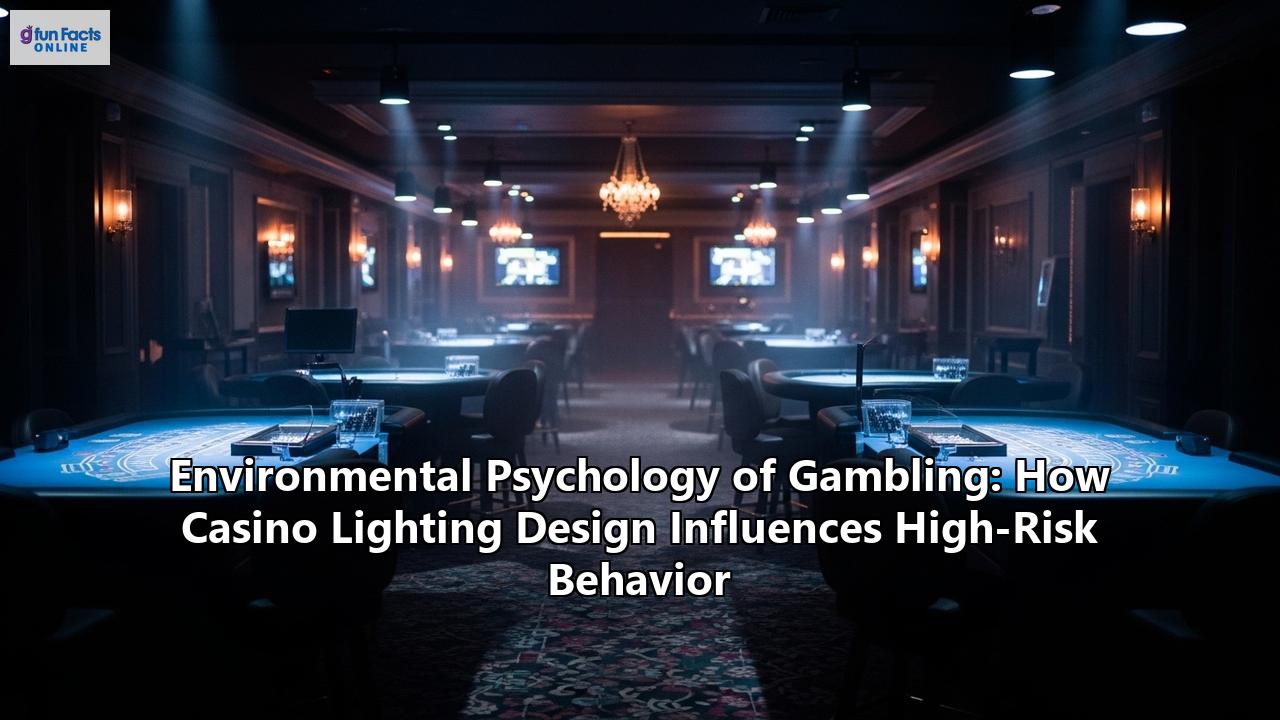
This manufactured environment is further enhanced by low, ambient lighting, which can evoke a sense of intimacy and mystery. Research has shown that dim lighting can increase the duration of gambling and the amount of money spent. The theory is that dimmer conditions can lower self-regulation, leading individuals to engage in riskier behaviors. This creates a comfortable, almost womb-like, sense of security that can make players feel safer and more inclined to take greater risks.
The Allure of the Blue Light: A New Understanding of Risk
Recent scientific discoveries have shed new light, quite literally, on how specific colors can influence high-risk behavior. A groundbreaking study from Flinders University and Monash University in Australia, published in June 2025, revealed that blue-enriched lighting, commonly emitted by LED screens and prevalent in modern casino design, can make individuals less sensitive to financial losses.
According to the research, this type of light subtly influences brain responses, making people more willing to choose risky financial options over safer ones. The study found that under blue-enriched light, the sting of a loss doesn't feel as potent, which in turn encourages more reckless betting. This effect is believed to be linked to circadian photoreception, our body's non-visual response to light that helps regulate our internal clocks. The blue wavelengths may activate specific cells in the eye that are connected to brain regions responsible for decision-making and emotional regulation, effectively dampening the negative feelings associated with losing money. This finding is particularly significant in the context of both land-based and online casinos, where blue-heavy light from screens is ubiquitous.
The Symphony of Stimulation: Flashing Lights and Hypnotic Trances
In stark contrast to the calming effect of ambient lighting, the flashing, vibrant lights of slot machines are designed to excite and arouse. These dazzling displays, often accompanied by celebratory sounds, are powerful reward-linked stimuli. Research from the University of British Columbia has shown that these audiovisual cues can promote risky decision-making by making players less guided by the actual odds of winning.
When a player wins, even a small amount, the accompanying light show and jingles trigger the brain's reward system, creating a pleasurable experience that reinforces the desire to keep playing. Eye-tracking technology used in these studies revealed that in the presence of such sensory cues, participants paid less attention to information about the odds of winning. They also exhibited greater pupil dilation, a sign of increased arousal and engagement. This constant sensory stimulation can create a hypnotic, trance-like state, making it difficult for players to disengage from the game.
This concept is related to what some researchers call "information load." Flashing lights create a high information load, which has been shown to be a deterrent to responsible gambling. In contrast, static lighting, with its lower information load, is associated with a reduced intention to gamble beyond one's planned limits.
A Carefully Layered and Focused Experience
Beyond the general ambiance and the spectacle of the slot machines, casino lighting is also used in more nuanced ways to guide and influence behavior. Layered lighting is employed to create a sense of depth and space, making the casino floor feel larger and more expansive. This can encourage exploration, leading players past more and more gaming opportunities.
Focused lighting is another key technique, used to highlight gaming tables for games like poker and blackjack. This bright, direct light makes the action on the table seem more important and dramatic, drawing players in and making them feel like part of an exclusive event.
The color temperature of the lighting is also strategically manipulated. Warmer tones, such as yellows and oranges, are often used to create a welcoming and comfortable atmosphere in lounges and bars, encouraging patrons to relax and stay longer. Cooler, bluish lights, as previously mentioned, are used to engage players and can be mixed with other temperatures to create a sense of urgency in high-stakes areas.
In conclusion, the lighting in a casino is far more than just a matter of aesthetics. It is a scientifically-backed and psychologically potent tool designed to create an immersive experience that encourages prolonged play and higher-risk behavior. From the deliberate exclusion of natural light to the stimulating flash of a jackpot and the newly understood influence of blue light, every lumen is part of a carefully constructed environment. The next time you find yourself on a casino floor, take a moment to look around. You might just see the invisible hand of the designer at play, subtly shaping the very fabric of your experience.
Reference:
- https://www.smithersofstamford.com/blog/how-does-casino-design-influence-gambling-behavior/
- https://www.greo.ca/Modules/EvidenceCentre/files/Ilicic%20et%20al%20(2019)_Hidden%20in%20the%20dark%20Dim%20ambient%20lighting%20increases%20game_final.pdf_Hidden%20in%20the%20dark%20Dim%20ambient%20lighting%20increases%20game_final.pdf)
- https://bircheshealth.com/resources/how-casinos-enable-gambling-addicts
- https://www.youtube.com/watch?v=W-05SJ8MnU4
- https://www.sciencealert.com/casino-lights-could-be-warping-your-brain-to-take-risks-scientists-warn
- https://sew-lexicon.com/lighting-effects-in-casinos-and-arcades/
- https://amazingarchitecture.com/articles/the-role-of-light-and-space-in-casino-design
- https://www.ndtv.com/science/casino-lighting-may-be-secretly-pushing-you-to-gamble-more-reveals-study-8719874
- https://www.ndtv.com/world-news/blinding-lights-the-hidden-science-behind-gamblings-glow-8716753
- https://scienceblog.com/blue-light-makes-people-take-more-gambling-risks/
- https://lumenture.com/blog/casino-lighting/
- https://www.gatewayfoundation.org/blog/casino-psychology/
- https://theacademic.com/flashing-lights-and-catchy-sounds-in-casinos-stimulate-risky-decision-making/
- https://www.centreforbrainhealth.ca/news/casino-lights-and-sounds-encourage-risky-decision-making/
- https://psych.ubc.ca/news/new-research-casino-lights-and-sounds-encourage-risky-decision-making/
- https://www.researchgate.net/publication/249624622_Casino_Decor_Effects_on_Gambling_Emotions_and_Intentions
- https://rclite.com/blog/best-lighting-for-casinos-and-gaming/