
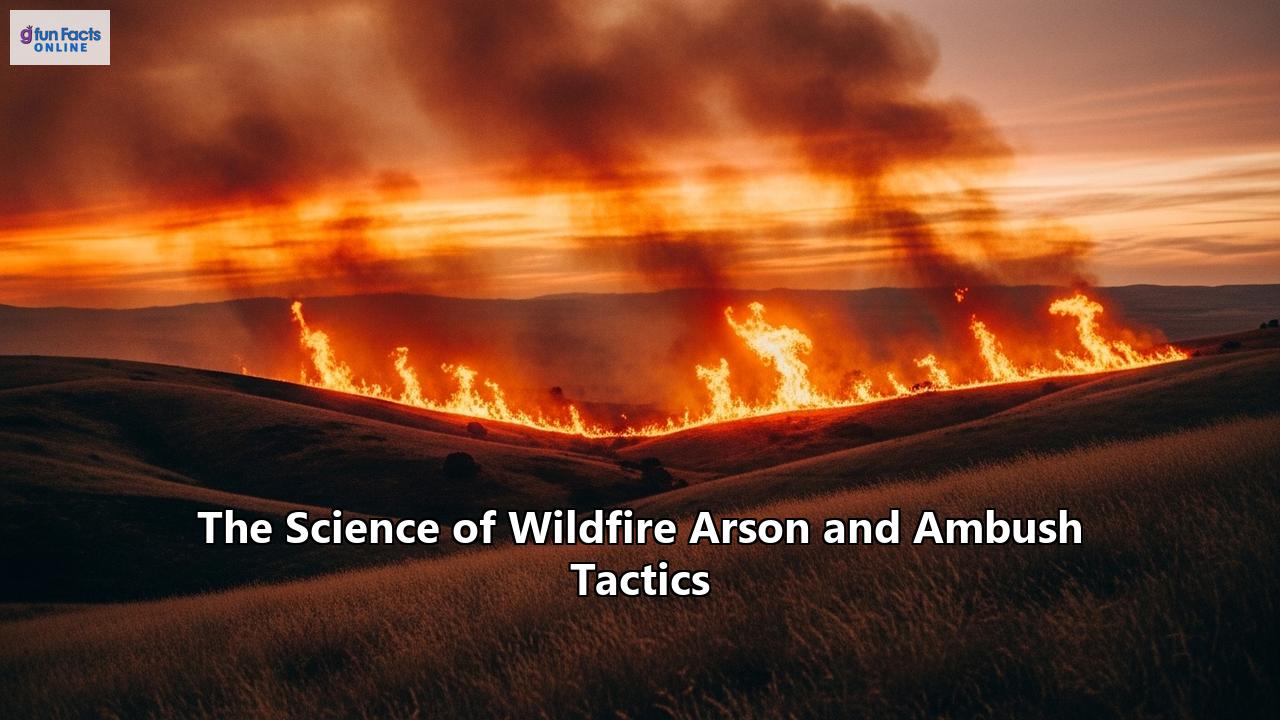
The Unseen Enemy: Probing the Science of Wildfire Arson and Deadly Ambush Tactics
The orange glow on the horizon, a sight that has become tragically familiar, often signals more than just a natural disaster. Hidden within the smoke and embers of many devastating wildfires lies a darker truth: the deliberate act of an arsonist. This is a crime born from a complex cocktail of psychological drivers, a destructive act that not only consumes landscapes and homes but can also be a calculated tactic of ambush, turning first responders into targets. To understand the full scope of this threat, one must delve into the science behind the flames, the mind of the arsonist, and the chilling evolution of fire as a weapon.
The Spark of Malice: Deconstructing the Arsonist's Mind
While human activity is a leading cause of wildfires, with sources ranging from unattended campfires to sparks from machinery, a significant portion are intentionally set. In some jurisdictions, arson can account for over 20% of all human-caused wildland fires, and in certain areas, that figure can climb to a staggering 70%. But what compels an individual to unleash such widespread destruction? The motivations are as varied and complex as the fires themselves.
Contrary to the common stereotype of the pyromaniac, true pyromania, a psychiatric disorder characterized by an obsessive impulse to set fires, is diagnosed in only a small fraction of arson cases. In one study of 283 arsonists, only three were diagnosed with pyromania. The reality is far more nuanced, with a spectrum of psychological factors often at play.
A Quest for Power and Recognition: For many arsonists, fire is a tool of empowerment. Often feeling marginalized or insignificant in their daily lives, the act of starting a blaze that commands a massive response can provide a sense of control and importance they otherwise lack. They may derive excitement and a thrill from watching the chaos unfold, a feeling likened to a predator stalking its prey. This desire for recognition can sometimes manifest in a "hero complex," where an individual, often a firefighter themselves, sets a fire to then be the one to extinguish it or assist in the response, craving the praise and heroic status that follows. A case study of a firefighter, "Ben," revealed he began a firesetting spree after seeing the heroic portrayal of New York City firefighters following the September 11th attacks, desiring similar recognition. Revenge and Retaliation: Wildfires can be a potent weapon of revenge. An individual nursing a grievance against a person, an organization, or even society as a whole may use arson to inflict damage and sow fear. These acts are often directed at specific targets, though the indiscriminate nature of fire means the consequences frequently spiral far beyond the arsonist's initial intent. Historically, fires have been set for retaliatory purposes, and this motivation continues to be a significant driver of modern wildland arson. Mental Illness and Emotional Turmoil: A significant number of arsonists have a history of mental health issues. Studies have shown a high prevalence of psychiatric disorders among fire-setters, including personality disorders, schizophrenia, and bipolar disorder. For some, setting a fire can be a way to regulate emotions or soothe internal distress. Substance abuse is also a common factor, with one study finding that 64% of arsonists were under the influence of alcohol or drugs at the time they set the fire. Concealment of Other Crimes: Fire is a powerful destroyer of evidence. Arson is sometimes used as a tool to cover up another crime, such as a burglary, homicide, or the discovery of an illegal operation like a methamphetamine lab. The intense heat and destructive force of a fire can make it incredibly difficult for investigators to piece together the events that preceded the blaze.The Sinister Evolution: Wildfire as an Ambush Tactic
In a chilling escalation of this crime, arson is increasingly being used not just as an act of destruction, but as a carefully planned ambush tactic designed to lure first responders into a trap. The very nature of their job—to rush toward danger to save lives and property—makes firefighters and other emergency personnel uniquely vulnerable to this type of premeditated violence.
Recent events have cast a harsh light on this terrifying trend. In June 2025, the peaceful community of Coeur d'Alene, Idaho, was shattered when a deliberately set wildfire became the backdrop for a deadly sniper attack. Authorities believe the suspect, Wess Roley, intentionally started the Nettleton Gulch Fire to draw emergency crews into a pre-planned ambush. As firefighters arrived on the scene, they were met with a hail of gunfire that left two dead and another critically injured. The Kootenai County Sheriff described the incident as a "total ambush," stating, "These firefighters did not have a chance." The incident sparked a massive law enforcement response, with the suspect later found deceased. An investigation into the motive revealed the suspect may have recently been rejected from a position with the police or fire department.
This was not an isolated incident. In 2012, a New York man, William Spengler, set his house on fire on Christmas Eve to lure firefighters into a deadly trap, killing two and injuring two others. Spengler, who had previously served time for killing his grandmother, left a note stating his intention to "do what I like doing best, killing people." These cases highlight a disturbing reality: for some, arson is merely the first step in a more sinister plan.
The use of fire as a weapon to ambush responders creates a terrifying paradox for emergency services. Fire crews cannot safely combat a blaze while under attack, but law enforcement may be hesitant to enter a burning and unstable environment to engage the assailant. This indecision and confusion play directly into the hands of the attacker.
The tactics can be brutally simple or horrifyingly complex. They can range from a lone gunman hiding in the terrain overlooking a fire to elaborate booby traps. In one case in Endicott, New York, a building was found to be booby-trapped with tripwires, gasoline, propane, and butane in an apparent attempt to injure or kill responding firefighters. In another instance, a car parked next to a warehouse fire was found to have been "booby-trapped" to catch fire, suggesting a deliberate attempt to escalate the blaze and potentially harm those responding.
This evolution has led to the concept of "pyro-terrorism," the use of incendiary attacks to intimidate or coerce a government or population. The FBI has warned of potential plots by terrorist organizations to use wildfires as a weapon, with plans to set multiple fires using timed devices to cause widespread economic damage and terror.
Reading the Ashes: The Science of Wildfire Arson Investigation
In the blackened aftermath of a suspicious fire, a new kind of expert steps in: the wildfire arson investigator. Their task is a daunting one. The very act of firefighting, with its use of water and chemical retardants, can destroy or contaminate the evidence they so desperately need. Yet, through a meticulous and scientific process, they can read the story left behind in the ashes.
The investigation process is guided by the scientific method, involving data collection, hypothesis development and testing, and drawing conclusions based on evidence. The primary objectives are to determine the fire's origin, its cause, and who was responsible.
Finding the Point of Origin: The first and most crucial step is to pinpoint where the fire started. Investigators work their way from the areas of least damage to the most, looking for tell-tale signs. They analyze burn patterns, which can reveal the direction of the fire's spread. A "V" pattern on a slope, for instance, typically points to the origin at its base. They also examine the depth of char on wood, the "alligatoring" effect, and the way glass has cracked or melted, all of which can provide clues about the fire's intensity and origin. Identifying the Cause: Once the origin is located, the search for the cause begins. Investigators look for any potential natural or accidental ignition sources, such as lightning strikes, downed power lines, or evidence of a campfire. If all accidental causes can be ruled out, the focus shifts to arson. Key indicators of arson include:- Multiple points of origin: This is a strong sign that the fire was deliberately set in several locations to ensure a larger and more rapid spread.
- The presence of accelerants: Investigators use specialized equipment and even trained dogs to detect the presence of flammable liquids like gasoline or kerosene. Samples of soil and debris are collected and sent to a lab for analysis.
- Ignition devices: Remnants of matches, lighters, or more sophisticated timing devices can sometimes be found at the point of origin.
- Elimination of other causes: A thorough investigation must systematically rule out all other potential causes before concluding arson.
- Chemical analysis: Gas chromatography is used in laboratories to identify the specific chemical signature of accelerants in fire debris.
- Witness testimony: First responders are often key witnesses, as their observations of the fire's behavior, smoke color, and any unusual circumstances can provide vital clues.
- Digital forensics: Cell phone data, social media activity, and surveillance footage can help place a suspect at the scene or reveal a motive.
A Collaborative Defense: Combating a Multifaceted Threat
The complex nature of wildfire arson, particularly when combined with ambush tactics, necessitates a collaborative approach. Law enforcement agencies, fire departments, and forensic specialists must work in close coordination, sharing intelligence and resources. Task forces are often formed to investigate serial arson cases, pooling the expertise of various agencies.
Prevention is another critical component. Public awareness campaigns can educate people about the dangers of careless fire use, while community watch programs can encourage the reporting of suspicious activity. Understanding the psychological profiles of arsonists can also help in developing prevention strategies and identifying at-risk individuals.
For first responders, the threat of ambush has led to changes in training and protocols. Increased situational awareness, approaching scenes with caution, and coordinating with law enforcement are now essential elements of firefighter safety. In some cases, the concept of a "Force Protection Officer" has been proposed for incident command structures, an individual dedicated to assessing and mitigating threats to firefighting personnel.
The battle against wildfire arson is a continuous one, fought on multiple fronts. It is a battle of science against malice, of collaboration against chaos. As long as there are those who would use fire as a weapon of destruction and terror, there will be those who walk into the smoky ruins, determined to uncover the truth and bring the perpetrators to justice. The science of wildfire arson investigation, combined with a greater understanding of the complex motivations behind these acts, offers our best defense against this devastating crime. The ashes may seem to hold only destruction, but for the trained eye, they contain the faint but undeniable fingerprints of the unseen enemy.
Reference:
- https://idahodispatch.com/suspect-identified-after-arson-ambush-leads-to-two-idaho-firefighters-deaths/
- https://wnbf.com/bizarre-endicott-arson-case-remains-unsolved/
- https://www.aljazeera.com/news/2012/12/26/body-found-in-home-of-us-arsonist-gunman
- https://www.latimes.com/archives/la-xpm-1985-06-27-me-10795-story.html
- https://www.cisa.gov/sites/default/files/2024-08/fire-as-a-weapon-action-guide_08-30-2024_508.pdf
- https://en.as.com/latest_news/who-is-wess-roley-the-suspect-behind-the-idaho-firefighter-attack-that-shocked-the-nation-n/
- https://www.independent.co.uk/news/world/americas/crime/idaho-shooting-firefighters-sniper-canfield-mountain-suspect-b2779371.html
- https://www.police1.com/crowd-control/articles/the-abcs-of-fire-as-a-weapon-Ec0agYi5mOam9D84/
- https://www.hcn.org/issues/42-13/some-notable-arson-wildfires-in-the-west/
- https://colitco.com/idaho-firefighters-shot-coeur-d-alene-ambush/
- https://people.com/shooter-suspected-ambushing-idaho-firefighters-found-dead-11763382
- https://gvwire.com/2025/06/30/suspect-identified-in-ambush-shooting-that-killed-2-idaho-firefighters/
- https://www.firerescue1.com/line-of-duty-death-lodd/2-firefighters-killed-1-fighting-for-his-life-after-ambush-at-idaho-wildfire
- https://www.firerescue1.com/active-shooter/multiple-idaho-firefighters-ambushed-by-gunman-while-battling-brush-fire
- https://www.firerescue1.com/firefighter-training/articles/the-abcs-of-fire-as-a-weapon-TELWuyflEMDIZWHL/
- https://wnbf.com/no-arrests-in-endicott-booby-trap-arson-case/
- https://www.ojp.gov/ncjrs/virtual-library/abstracts/pyro-terrorism-threat-arson-induced-forest-fires-future-terrorist
- https://apnews.com/article/new-jersey-wildfire-smoke-ny-air-quality-67b146ae19bef2cb111d7efc3d0b563d
- https://pars.lasd.org/Viewer/Manuals/GeneratePDF/11412?reportIndex=1
- https://www.latimes.com/archives/la-xpm-1990-08-27-me-138-story.html
- https://www.justice.gov/usao-cdca/pr/federal-and-local-law-enforcement-officials-form-task-force-combat-crimes-related-los