
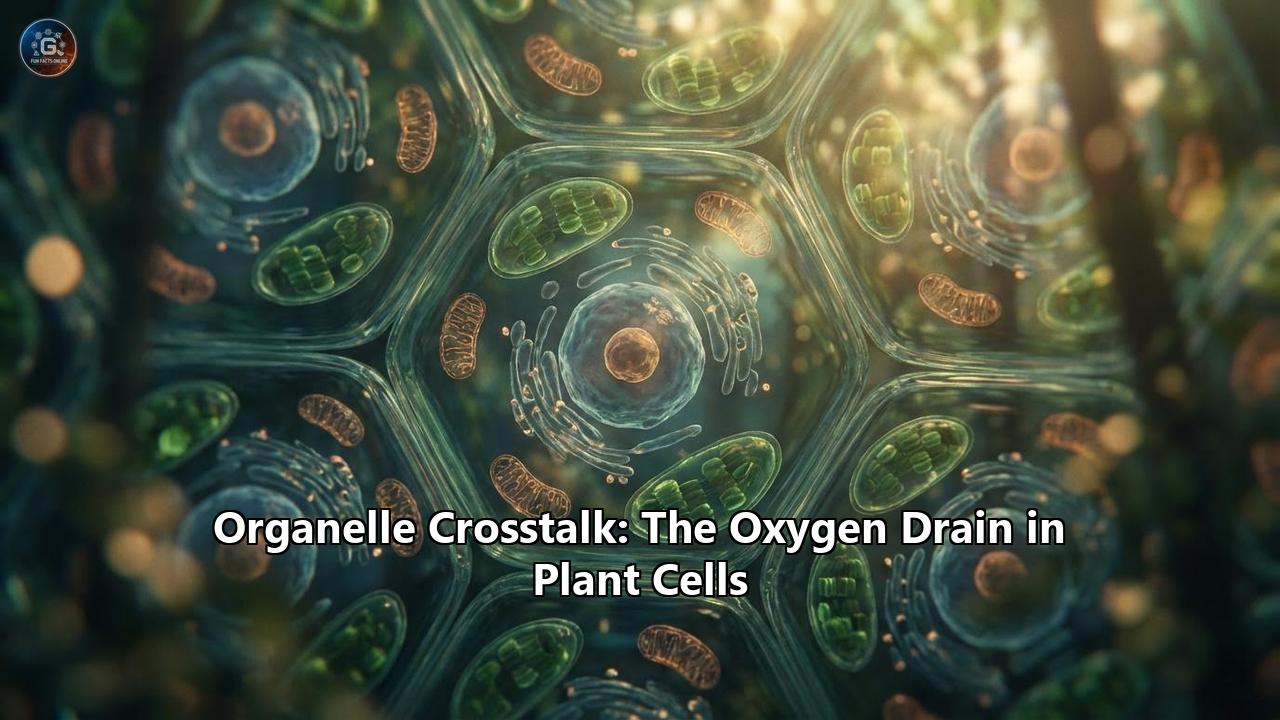
In the microscopic universe of a plant cell, a silent, ceaseless battle for resources wages every millisecond of every day. To the naked eye, a leaf basking in the sunlight appears tranquil, a static monument to the miracle of nature. But zoom in past the epidermis, past the palisade mesophyll, and into the cytoplasm of a single cell, and you will witness a bustling, highly industrialized metropolis. Here, giant biochemical factories—the organelles—are locked in an intricate dance of cooperation and competition. They exchange chemical currencies, send distress signals, and, most intriguingly, engage in a high-stakes tug-of-war over one of the most vital and volatile molecules on Earth: molecular oxygen (O2).
For decades, we have been taught a simplified version of plant biology. We learn that plants are the lungs of the planet, taking in carbon dioxide and breathing out oxygen. We are taught that they are the ultimate producers, graciously providing the oxygen that sustains all aerobic life, including our own. However, this macro-level view obscures a fascinating and paradoxical micro-level reality. Plants are not just oxygen producers; they are also voracious oxygen consumers. Within the plant cell, oxygen is both a life-giving necessity and a highly reactive threat.
The management of this paradoxical molecule is handled through a phenomenon known as "organelle crosstalk"—the sophisticated communication and physical interaction between the cell’s distinct compartments. At the heart of this crosstalk lies a mechanism that scientists are only just beginning to fully understand: the "oxygen drain." This term refers to the myriad ways in which plant organelles actively consume, sequester, and manipulate intracellular oxygen to balance energy production, prevent cellular damage, and adapt to harsh environmental stresses.
To truly appreciate the elegance of the oxygen drain, we must embark on a comprehensive journey through the inner workings of the plant cell. We will explore the "Holy Trinity" of plant metabolism—the chloroplasts, the mitochondria, and the peroxisomes. We will delve into the wasteful yet essential process of photorespiration, examine the dark side of oxygen in the form of reactive oxygen species (ROS), and uncover a groundbreaking 2026 discovery that has fundamentally rewritten our understanding of intracellular oxygen dynamics. Finally, we will look to the future, exploring how biotechnologists are attempting to hack this oxygen drain to create the climate-resilient super-crops of tomorrow.
The Holy Trinity of Plant Metabolism: Producers, Consumers, and Refineries
To understand the oxygen drain, we must first introduce the main actors in this microscopic drama. Plant cells are eukaryotic, meaning they contain membrane-bound organelles, each specialized for specific tasks. When it comes to oxygen and energy dynamics, three organelles stand above the rest, forming a highly integrated metabolic triad.
The Chloroplasts: The Oxygen GeneratorsChloroplasts are the crown jewels of the plant kingdom. These plastids contain the green pigment chlorophyll and are the sites of photosynthesis. Inside the chloroplast, intricate stacks of thylakoid membranes act as solar panels, capturing the kinetic energy of photons. During the light-dependent reactions of photosynthesis, an enzyme complex known as Photosystem II performs one of the most thermodynamically challenging feats in biology: the photolysis of water. By splitting H2O molecules, the chloroplast strips away electrons and protons to fuel the production of ATP and NADPH. The byproduct of this violent molecular tearing is molecular oxygen (O2).
Under optimal conditions, the chloroplast is a roaring oxygen fountain. The local concentration of O2 within and immediately surrounding a highly active chloroplast can become exceptionally high. While much of this oxygen eventually diffuses out of the cell, through the stomata, and into the atmosphere, a significant portion remains trapped inside the cell, creating a highly oxygenated, highly reactive internal environment.
The Mitochondria: The Oxygen ConsumersIf chloroplasts are the solar panels, mitochondria are the combustion engines. Inherited from an ancient endosymbiotic event wherein a primitive eukaryotic cell engulfed an aerobic bacterium, mitochondria are the powerhouses of the cell. Their primary function is cellular respiration—the process of breaking down sugars (originally synthesized by the chloroplast) to extract energy in the form of ATP.
This process relies heavily on the electron transport chain located on the inner mitochondrial membrane. Here, electrons are passed down a series of protein complexes, pumping protons to create an electrochemical gradient. At the very end of this chain sits cytochrome c oxidase, an enzyme that requires molecular oxygen to act as the final electron acceptor. The oxygen binds with the electrons and protons to form water. Thus, the mitochondrion is an insatiable oxygen sink. It constantly drains oxygen from the cellular environment to keep the fires of metabolism burning.
The Peroxisomes: The Chemical RefineriesThe third, often-overlooked member of this triad is the peroxisome. Unlike chloroplasts and mitochondria, peroxisomes do not have their own DNA, but they are absolutely critical to the survival of the plant cell. Peroxisomes are highly dynamic, single-membrane organelles that act as the cell's hazardous waste treatment facilities and chemical refineries. They are loaded with oxidative enzymes that strip hydrogen atoms from various substrates and transfer them to molecular oxygen, creating hydrogen peroxide (H2O2)—a toxic and highly reactive molecule.
To prevent this hydrogen peroxide from destroying the cell, peroxisomes also contain massive amounts of an enzyme called catalase, which rapidly breaks down H2O2 into water and oxygen. Peroxisomes are responsible for a significant portion of a plant cell's oxygen consumption, making them a crucial component of the overall oxygen drain. As we will see, their physical proximity and biochemical integration with both chloroplasts and mitochondria form the backbone of organelle crosstalk.
Photorespiration: The Original Oxygen Drain
The most dramatic and metabolically expensive example of organelle crosstalk and oxygen draining in the plant cell is a process known as photorespiration. To understand photorespiration, we must examine the fatal flaw of the most abundant enzyme on Earth: Ribulose-1,5-bisphosphate carboxylase/oxygenase, universally known as Rubisco.
Rubisco is the engine of the Calvin-Benson cycle, the light-independent reactions of photosynthesis. Its job is to grab carbon dioxide from the air and attach it to a five-carbon sugar called RuBP, effectively "fixing" inorganic carbon into organic matter. This is the process that builds the foundation of the global food web. However, Rubisco has a dark secret: it is not entirely specific to carbon dioxide. In an atmosphere that contains 21% oxygen and only 0.04% carbon dioxide, Rubisco frequently makes a mistake.
Roughly one out of every four times it performs its catalytic function, Rubisco accidentally grabs an oxygen molecule instead of a carbon dioxide molecule. This is the "oxygenase" activity of the enzyme. When this happens, instead of producing two molecules of a useful three-carbon sugar (3-PGA), it produces one molecule of 3-PGA and one molecule of 2-phosphoglycolate (2-PG).
2-PG is a metabolic dead-end. Worse, it is actively toxic to the plant cell, inhibiting the very enzymes needed for photosynthesis. The plant cannot simply throw this molecule away; it contains valuable carbon that the plant expended precious energy to fix in the first place. To salvage this carbon and detoxify the 2-PG, the plant cell initiates a sprawling, energy-intensive biochemical relay race that spans three different organelles. This is the C2 cycle, or photorespiration.
The Inter-Organelle Relay RaceThe oxygen drain of photorespiration begins in the chloroplast, where the toxic 2-PG is converted into a molecule called glycolate. The chloroplast cannot process glycolate any further, so it exports it into the cytoplasm.
Here, the importance of physical organelle crosstalk becomes apparent. In active plant cells, peroxisomes and mitochondria physically migrate to press themselves tightly against the chloroplasts, forming membrane contact sites. This intimate physical proximity ensures that toxic intermediates do not drift aimlessly through the cytoplasm but are efficiently handed off from one factory to the next.
The glycolate enters the peroxisome, where a massive oxygen drain occurs. An enzyme called glycolate oxidase uses molecular oxygen to convert glycolate into glyoxylate, producing copious amounts of toxic hydrogen peroxide in the process (which is swiftly neutralized by peroxisomal catalase). The glyoxylate is then converted into the amino acid glycine.
The relay baton is then passed to the mitochondrion. The peroxisome exports the glycine, which is taken up by the mitochondrion. Inside the mitochondrion, two molecules of glycine are broken apart and reassembled to form one molecule of the amino acid serine. In doing so, the mitochondrion releases one molecule of carbon dioxide and one molecule of ammonia. The serine is then shipped back to the peroxisome, converted to glycerate, and finally sent back to the chloroplast, where it re-enters the Calvin cycle.
The Cost and the PurposePhotorespiration is a colossal drain on the plant's resources. It consumes oxygen, burns through hard-won ATP and reducing equivalents (NADPH/NADH), forces the cell to detoxify dangerous ammonia, and literally breathes out the carbon dioxide that the plant just spent energy trying to fix. It is estimated that photorespiration reduces the photosynthetic efficiency of C3 plants (like wheat, rice, and soybeans) by up to 25% to 30%. In a world demanding higher crop yields, this seems like a tragic evolutionary blunder.
However, modern plant biology suggests that photorespiration is more than just an evolutionary hangover from an ancient era when the Earth's atmosphere had very little oxygen and high CO2. It acts as a critical safety valve. Under conditions of high light and low carbon dioxide (such as when a plant closes its stomata to conserve water during a drought), the photosynthetic machinery absorbs more solar energy than it can use to fix carbon. If this excess energy has nowhere to go, it will destroy the chloroplast.
By running the wasteful photorespiration cycle, the plant intentionally creates an "energy sink" and an "oxygen drain." It gives the photosynthetic electron transport chain a safe way to dump excess energy and electrons, preventing the formation of lethal free radicals. Furthermore, the photorespiratory cycle is deeply intertwined with nitrogen assimilation and amino acid metabolism, proving that in the economy of the plant cell, nothing is entirely wasted.
The Dark Side of Oxygen: Reactive Oxygen Species (ROS)
To fully comprehend the oxygen drain, we must explore what happens when oxygen goes rogue. While molecular oxygen (O2) in its ground state is relatively stable, the high-energy environments inside chloroplasts and mitochondria can easily force extra electrons onto the oxygen molecule, creating Reactive Oxygen Species (ROS).
Historically, ROS were viewed purely as destructive agents of oxidative stress—cellular vandals that indiscriminately smashed lipids, denatured proteins, and mutated DNA, ultimately leading to cellular senescence and death. Today, we know that ROS are an integral part of the plant cell's oxygen drain and serve as the primary language of retrograde signaling (organelle-to-nucleus communication).
The ROS ArsenalThe plant cell generates several distinct flavors of ROS, each with its own specific creation site and reactivity:
- Singlet Oxygen (1O2): This highly toxic form of oxygen is generated almost exclusively in the chloroplast. When a plant is exposed to excessive light, the chlorophyll molecules in Photosystem II become overexcited. Instead of passing their energy down the standard electron transport chain, they can inadvertently transfer their excitation energy directly to nearby ground-state molecular oxygen. The result is singlet oxygen, a wildly unstable molecule that can instantly cause lipid peroxidation, tearing apart the thylakoid membranes from the inside out.
- Superoxide (O2•−): Superoxide is a free radical created when a single electron leaks from the electron transport chains of either the chloroplast or the mitochondrion and attaches to a molecule of oxygen. Because both organelles process massive flows of electrons, electron leakage is a constant, unavoidable statistical reality.
- Hydrogen Peroxide (H2O2): While not a free radical itself, hydrogen peroxide is a potent oxidizing agent. It is primarily formed when an enzyme called Superoxide Dismutase (SOD) acts as a cellular first responder, grabbing two highly reactive superoxide radicals and mashing them together with protons to form the slightly more stable H2O2. As mentioned earlier, peroxisomes also generate vast amounts of H2O2 during photorespiration and fatty acid breakdown.
- Hydroxyl Radical (•OH): If hydrogen peroxide is not dealt with quickly, it can react with free iron or copper in the cell (via the Fenton reaction) to form the hydroxyl radical. This is the most destructive, indiscriminately reactive ROS known to biology. There are no enzymes that can detoxify the hydroxyl radical; it will instantaneously react with the very first molecule it bumps into, causing catastrophic damage.
Because ROS are inherently dangerous, the plant cell has evolved a massive antioxidant defense network—including enzymes like ascorbate peroxidase (APX), catalase (CAT), and glutathione reductase, as well as molecules like vitamin C (ascorbate) and vitamin E (tocopherol)—to scavenge and neutralize them. This continual production and neutralization of ROS acts as a steady oxygen drain.
However, the plant cell does not want to eliminate ROS completely. Instead, it tightly manages the "ROS tone" of the cell, using these molecules as messengers. Because organelles like chloroplasts and mitochondria do not have brains, they must communicate their metabolic state to the cell's nucleus so the nucleus can activate the appropriate genes. This is called retrograde signaling.
When a chloroplast experiences drought stress and the thylakoid membranes begin to over-reduce, singlet oxygen and hydrogen peroxide levels spike. Rather than just causing damage, this specific spatial and temporal spike in ROS oxidizes specific signaling proteins in the cytosol. These proteins then travel to the nucleus and act as transcription factors, turning on hundreds of stress-response genes. The peroxisomes, too, participate in this crosstalk. When peroxisomes experience stress, they can physically elongate into structures called "peroxules," reaching out to touch mitochondria and chloroplasts, sharing ROS signals and orchestrating a unified cellular defense strategy.
The 2026 Breakthrough: The Oxygen Tug-of-War
For decades, plant biologists believed they understood the basic geography of oxygen in the cell: chloroplasts produce it, mitochondria and peroxisomes consume it, and oxygen diffuses passively between them according to basic concentration gradients. But in March 2026, a groundbreaking study from the University of Helsinki, led by Dr. Alexey Shapiguzov, completely overturned this passive view, revealing an active, aggressive "oxygen tug-of-war".
The Helsinki researchers were studying genetically modified lines of the model plant Arabidopsis thaliana. These plants were designed with specific mitochondrial defects that forced their mitochondria to work in overdrive, consuming oxygen at a vastly accelerated rate. The scientists expected to see changes in mitochondrial function, but they observed something entirely unprecedented in the chloroplasts.
They discovered that when mitochondria ramp up their oxygen consumption—particularly under environmental stress conditions—they possess the ability to actively suck oxygen out of the surrounding cellular environment, including directly draining molecular oxygen from the interior of the chloroplasts.
The Active Oxygen Drain MechanismThis is not mere passive diffusion. The mitochondria act as a powerful, localized vacuum, creating an intense internal "oxygen drain." By drastically pulling O2 levels down, the mitochondria intentionally create a micro-hypoxic (low oxygen) environment around and inside the chloroplast.
But why would the mitochondrion want to choke the chloroplast of oxygen? The answer lies in the danger of Reactive Oxygen Species.
Under stress—such as flooding, drought, or extreme light—the chloroplast's electron transport chain becomes bottlenecked. The risk of electrons spilling over onto molecular oxygen to create singlet oxygen or superoxide is exceptionally high. Dr. Shapiguzov’s team demonstrated that by proactively draining the oxygen out of the chloroplast, the mitochondria remove the substrate required for ROS formation.
The researchers proved this by exposing the plants to methyl viologen (also known as the herbicide paraquat). Methyl viologen works by stealing electrons from Photosystem I in the chloroplast and immediately transferring them to oxygen, creating a lethal burst of superoxide. Incredibly, the plants with the overactive mitochondria were highly resistant to the herbicide. Because the mitochondria had already drained the oxygen from the chloroplast, the methyl viologen had no oxygen to react with. The lethal weapon was unloaded.
This discovery of a literal oxygen tug-of-war provides the first evidence that mitochondria influence chloroplasts not just through chemical metabolites like ATP or malate, but through the direct, active modulation of intracellular oxygen exchange. It paints a picture of the plant cell as a master tactician, actively shifting the literal atmosphere inside its own compartments to disarm oxidative bombs before they can explode.
Alternative Oxygen Drains: AOX and PTOX
The 2026 Helsinki discovery beautifully highlighted a concept that plant biologists have been studying for years: the vital importance of "alternative" respiratory and photosynthetic pathways. To achieve the massive oxygen drain required to protect the chloroplast, the mitochondria rely on a unique piece of molecular machinery found almost exclusively in plants, fungi, and some protists: the Alternative Oxidase (AOX).
Alternative Oxidase (AOX): The Deliberate Energy WasterIn classical mitochondrial respiration, electrons flow through a series of complexes (Complex I, III, and IV), pumping protons to generate a large amount of ATP. The final step is the reduction of oxygen to water at Complex IV (cytochrome c oxidase). However, under severe stress, this primary pathway can become saturated or damaged.
Plants have evolved a bypass valve: the Alternative Oxidase. AOX allows electrons to bypass Complex III and IV entirely, flowing directly from the ubiquinone pool to molecular oxygen, reducing it to water.
From an energy perspective, AOX is wildly inefficient. Because it bypasses the main proton pumps, electron flow through AOX produces very little ATP. The energy is instead released as heat (a phenomenon famously used by certain plants, like the Titan Arum or the Skunk Cabbage, to heat their flowers, volatilize foul-smelling compounds, and attract pollinating flies).
However, in most plants, thermogenesis is not the goal. The true purpose of AOX is to act as a relentless, high-capacity oxygen drain. When the chloroplast is over-reduced and screaming for help via retrograde ROS signaling, the mitochondrion turns on AOX. AOX rapidly consumes intracellular oxygen and oxidizes the cellular pools of NADH and NADPH, safely dissipating excess energy and pulling oxygen away from the vulnerable chloroplasts. AOX is the physical engine pulling the rope in the "oxygen tug-of-war."
Plastid Terminal Oxidase (PTOX): The Chloroplast's Internal DrainWhile the mitochondria can drain oxygen from the outside, the chloroplast also possesses its own internal, emergency oxygen drain known as Plastid Terminal Oxidase (PTOX).
PTOX operates similarly to the mitochondrial AOX but is located directly on the thylakoid membranes of the chloroplast. It is a key player in a process called "chlororespiration." When the photosynthetic electron transport chain is backed up—perhaps due to a sudden drop in temperature or a lack of CO2—the plastoquinone pool becomes fully reduced (filled with electrons). If the sun is still shining, more electrons will keep pouring in, risking a catastrophic blowout of singlet oxygen.
PTOX acts as a pressure relief valve. It takes these excess electrons directly from the plastoquinone pool and dumps them onto molecular oxygen, creating water. Like AOX, it produces no energy. It is purely a safety mechanism, a localized oxygen and electron drain designed to keep the photosynthetic machinery from tearing itself apart in fluctuating environments.
When the Drain Runs Dry: The Crisis of Hypoxia
We have spent this entire exploration marveling at the complex, multi-organelle systems plants have evolved to drain away excess oxygen. But what happens when the environment suddenly flips, and the oxygen drain runs out of oxygen? This is the crisis of hypoxia (low oxygen) and anoxia (no oxygen), most commonly experienced by plants during heavy flooding or waterlogging.
Water contains about 30 times less dissolved oxygen than the atmosphere, and oxygen diffuses through water 10,000 times slower than through air. When a plant's roots are submerged, the local oxygen supply is rapidly depleted by the respiration of root cells and soil microbes. Suddenly, the mitochondria, which are so adept at draining oxygen to protect the cell, find themselves suffocating.
The Metabolic ShiftThe drop in oxygen triggers a massive, panicked shift in organelle crosstalk and gene expression. Without oxygen to act as the final electron acceptor, the mitochondrial electron transport chain halts. ATP production crashes. The Krebs cycle stops.
To survive, the plant cell must switch to ancient, anaerobic metabolism: fermentation. In the cytoplasm, pyruvate (the end product of glycolysis) is converted into lactate or ethanol to regenerate NAD+, allowing a minimal trickle of ATP production to continue. However, fermentation is incredibly inefficient and produces toxic byproducts. If a plant remains submerged for too long, the accumulation of ethanol and the severe energy deficit will lead to cell death.
Anatomical and Signaling AdaptationsBecause oxygen is so vital, plants have evolved remarkable ways to secure it even when flooded. The onset of hypoxia triggers the production of the gaseous plant hormone ethylene. This ethylene accumulation acts as a signal to initiate programmed cell death in specific cells of the root cortex, creating large, hollow, continuous tubes called aerenchyma.
Aerenchyma act like biological snorkels. They provide a low-resistance internal pathway for oxygen to diffuse from the aerial parts of the plant (which are still above water and actively photosynthesizing) all the way down to the submerged roots. By doing so, the plant attempts to feed the mitochondrial oxygen drain in the roots, keeping cellular respiration alive just long enough for the floodwaters to recede.
Engineering the Oxygen Drain: The Future of Agriculture
Understanding the intricate web of organelle crosstalk and the oxygen drain is not merely an academic exercise. As the global population marches toward 10 billion and the impacts of climate change—rising temperatures, shifting rainfall, and increased drought—wreak havoc on arable land, global food security faces an existential threat. Plant biologists and bioengineers are now looking at the oxygen drain not just as a phenomenon to study, but as a system to be hacked, optimized, and rewritten.
Bypassing PhotorespirationThe most lucrative target in agricultural biotechnology is the massive energy loss associated with photorespiration. The C2 cycle’s oxygen drain costs crops like wheat and rice millions of tons of potential yield every year. As global temperatures rise, Rubisco's affinity for oxygen increases, meaning photorespiration will only get worse in a warming world.
Scientists are working on radical genetic engineering projects, such as the RIPE (Realizing Increased Photosynthetic Efficiency) project, to bypass or optimize the photorespiratory oxygen drain. Some strategies involve inserting genes from bacteria or algae into plant chloroplasts to create entirely new, synthetic pathways (like the Gothard or South pathways) that process the toxic 2-PG directly inside the chloroplast. By keeping the metabolism localized to one organelle, these synthetic pathways prevent the energy-wasting relay race to the peroxisomes and mitochondria. Early greenhouse trials of these engineered plants have shown staggering biomass increases of up to 40%.
Other efforts focus on converting C3 plants into C4 plants. C4 plants (like corn and sugarcane) have evolved a specialized leaf anatomy that physically separates Rubisco from the oxygen-rich environment of the mesophyll. They use a biochemical pump to concentrate carbon dioxide around Rubisco, effectively eliminating the oxygenase reaction and shutting down the photorespiratory oxygen drain entirely. Engineering the complex C4 pathway into rice (the C4 Rice Project) is one of the most ambitious biological endeavors of the 21st century.
Tuning the Tug-of-War for Stress ResilienceThe 2026 discovery of the mitochondrial oxygen tug-of-war opens an entirely new avenue for creating stress-resistant crops. If we know that mitochondria can actively drain oxygen to protect chloroplasts from ROS damage during environmental stress, can we genetically tune this response?
Researchers are currently exploring ways to upregulate the Alternative Oxidase (AOX) or alter the membrane contact sites between mitochondria and chloroplasts. By enhancing the efficiency of the intracellular oxygen drain, we could potentially create crop varieties that are highly resistant to the oxidative stress caused by severe drought, heatwaves, or soil salinity. These "super-crops" would possess internal molecular vacuum cleaners, rapidly clearing out oxygen the moment the environment turns hostile, preserving their photosynthetic machinery until conditions improve.
Furthermore, understanding the delicate balance of peroxisomal ROS signaling and peroxule formation could allow scientists to prime plant immune systems. By fine-tuning the retrograde signaling pathways—ensuring the nucleus gets the message loud and clear without the cell suffering actual oxidative damage—we could develop plants that pre-emptively activate their drought or pathogen defense genes at the slightest hint of danger.
The Symphony of the Cell
To peer inside a plant cell is to look upon a miracle of evolutionary engineering. The static, green leaf that we observe in the macro world is, in reality, a thriving, dynamic ecosystem of organelles engaged in continuous, complex conversation.
The concept of the oxygen drain fundamentally reframes our understanding of plant biology. It destroys the simplistic dichotomy of "plants make oxygen, animals consume it." Instead, it reveals that plants are locked in an eternal, internal struggle with the very molecule they produce. The chloroplasts generate the oxygen that fuels the world, but they rely on the tireless work of the mitochondria and peroxisomes to actively drain that oxygen away, protecting the delicate machinery of life from oxidative annihilation.
From the wasteful yet necessary relay race of photorespiration, to the precision-guided signaling of reactive oxygen species, to the dramatic, active tug-of-war discovered in 2026, organelle crosstalk is the ultimate fail-safe mechanism. It is a decentralized intelligence network, where discrete membrane-bound factories share chemical currencies and physical space to ensure the survival of the whole.
As we continue to unravel the profound mysteries of the oxygen drain, we do more than just write textbooks; we unlock the blueprints to securing our own future. By learning to speak the biochemical language of organelles, we gain the unprecedented ability to help plants adapt to a rapidly changing world. The invisible, silent wars fought over oxygen within a single microscopic cell may very well hold the key to feeding humanity in the centuries to come.
Reference:
- https://scitechdaily.com/scientists-just-found-a-hidden-oxygen-drain-inside-plant-cells/
- https://www.sciencedaily.com/releases/2026/03/260308201601.htm
- https://www.helsinki.fi/en/faculty-biological-and-environmental-sciences/news/new-link-between-power-stations-plants
- https://www.academicjobs.com/research-publication-news/oxygen-tug-of-war-plant-cells-new-mechanism-or-academicjobs-8603
- https://encyclopedia.pub/entry/19356
- https://www.researchgate.net/figure/Crosstalk-of-reactive-oxygen-species-ROS-between-organelles-High-levels-of-ROS-are_fig2_324549593
- https://allen.in/dn/qna/648330781
- https://www.rseco.org/content/232-photorespiration-needs-three-organelles.html
- https://en.wikipedia.org/wiki/Photorespiration
- https://pmc.ncbi.nlm.nih.gov/articles/PMC8154099/
- https://www.mdpi.com/2076-3921/14/6/617
- https://pmc.ncbi.nlm.nih.gov/articles/PMC3578903/
- https://pubmed.ncbi.nlm.nih.gov/34009340/
- https://www.mdpi.com/1422-0067/24/17/13052?utm_source=researchgate.net&utm_medium=article
- https://pmc.ncbi.nlm.nih.gov/articles/PMC9911404/
- https://pmc.ncbi.nlm.nih.gov/articles/PMC10619851/
- https://www.frontiersin.org/journals/cell-and-developmental-biology/articles/10.3389/fcell.2023.1136992/full
- https://news.ssbcrack.com/researchers-discover-new-interaction-between-plant-mitochondria-and-chloroplasts-that-regulates-oxygen-levels/
- https://www.mdpi.com/2076-3921/14/7/776