
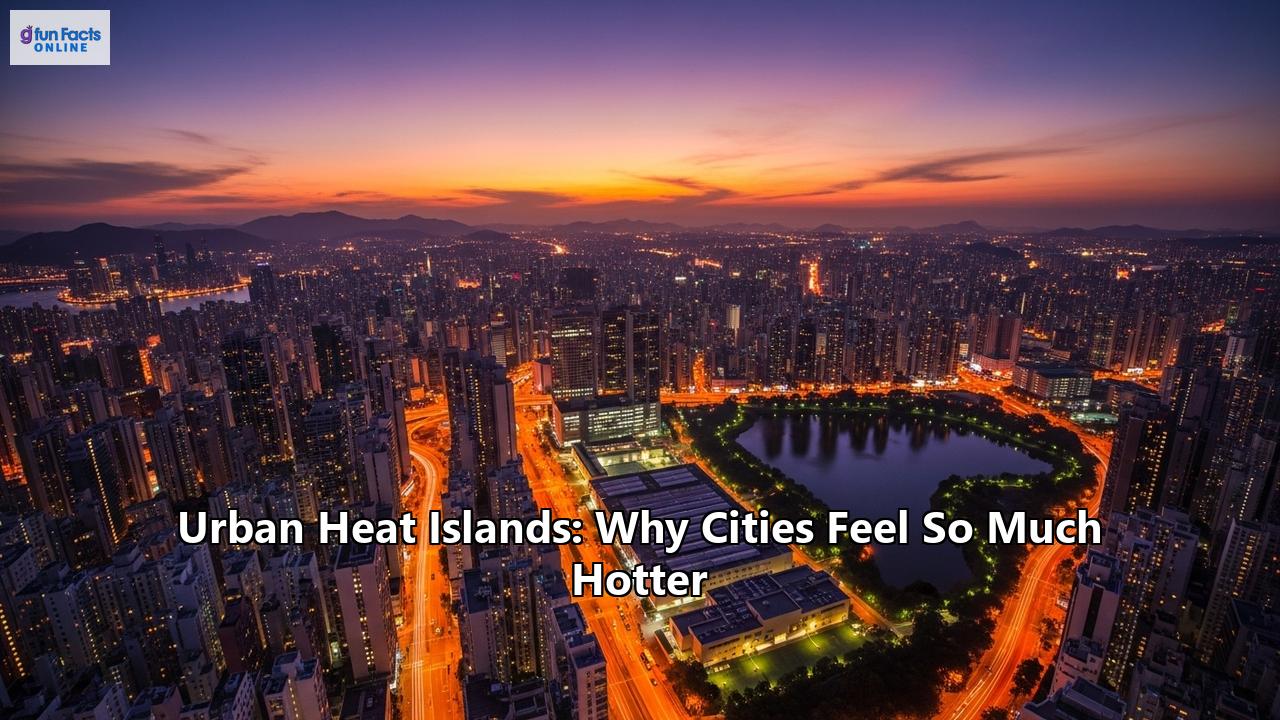
The Concrete Jungles Getting Hotter: Unpacking the Urban Heat Island Effect
Ever notice how a city street can feel like an oven on a summer day, significantly warmer than a nearby park or the surrounding countryside? This isn't just a feeling; it's a well-documented phenomenon known as the "urban heat island" (UHI) effect. In essence, our cities, with their dense concentration of buildings, roads, and other infrastructure, absorb and retain more heat than natural landscapes, creating islands of elevated temperatures. This temperature difference can be stark, with urban areas experiencing temperatures several degrees higher than adjacent rural areas, a gap that often widens after sunset. As more than half of the world's population now resides in urban areas, a figure projected to rise, understanding and mitigating the UHI effect has become a critical challenge for creating livable and sustainable cities.
The Vicious Cycle: How Cities Cook Themselves
The urban heat island effect is not the result of a single factor but rather a complex interplay of several elements that differentiate the urban environment from the natural one. The way we build our cities essentially creates a recipe for retaining heat.
The Building Blocks of Heat: Materials and Surfaces
The primary driver of the urban heat island effect is the modification of land surfaces. Natural landscapes are rich in trees, vegetation, and water bodies, which have a natural cooling effect through shade and evapotranspiration—the process of water evaporating from plant leaves. In contrast, cities are dominated by impervious surfaces like asphalt, concrete, and brick. These materials typically have a low albedo, meaning they reflect less solar energy and absorb more of it.
Think of wearing a black t-shirt on a sunny day versus a white one. The black shirt absorbs more light and feels hotter. Similarly, dark-colored asphalt and roofing materials soak up a significant amount of solar radiation throughout the day. Asphalt, for instance, can absorb up to 95% of the sun's rays. These materials also have a high thermal admittance, meaning they can store large amounts of heat. This stored heat is then slowly released back into the atmosphere, especially at night, preventing the city from cooling down as effectively as its rural counterparts. This is why the temperature difference between urban and rural areas is often most pronounced after sunset.
The Absence of Nature's Air Conditioning
The lack of vegetation in urban areas is another major contributor to the UHI effect. Trees and green spaces are nature's air conditioners. They provide shade, which can significantly reduce surface temperatures. Furthermore, through evapotranspiration, plants release water vapor into the air, a process that cools the surrounding environment. One study found that increasing urban green cover by just 10% could offset the projected 4°C temperature rise in Manchester, UK, over the next 80 years. The U.S. Forest Service has reported that American cities are losing 36 million trees annually, further diminishing this natural cooling capacity.
The Geometry of a Hot City: The Urban Canyon Effect
The very structure of our cities, with tall buildings clustered closely together, creates what is known as the "urban canyon effect." These canyons of concrete and glass trap heat in several ways. The multiple surfaces of buildings reflect and absorb sunlight, increasing the overall heating efficiency of the urban area. The tall structures also block wind flow, which would otherwise help to dissipate heat through convection. This trapped, stagnant air further exacerbates the heat island effect. The geometry of a city can significantly influence its climate; for example, cities in hot climates like Madrid benefit from narrow, shaded streets, while cities in colder climates like Helsinki utilize wider streets to maximize sun exposure in winter.
The Heat of Human Activity
Finally, the sheer concentration of human activity in cities generates a significant amount of "waste heat," also known as anthropogenic heat. This heat is released from a multitude of sources, including vehicles, industrial processes, and the heating and cooling systems of buildings. Cities consume over 75% of global energy, and much of this energy is ultimately released as heat into the urban environment. Air conditioning units, for example, pump hot air out into the streets, creating a feedback loop where our attempts to cool our indoor spaces contribute to the warming of our outdoor spaces. Studies have shown that waste heat, particularly from HVAC systems, can increase nighttime temperatures in urban areas by as much as 1.3°C.
The Ripple Effect: The Far-Reaching Consequences of Urban Heat Islands
The elevated temperatures in our cities are more than just a matter of discomfort. They have a cascade of negative impacts on public health, energy consumption, the environment, and the economy.
A Threat to Public Health
The most direct and serious consequence of the urban heat island effect is the risk it poses to human health. Elevated temperatures, especially during heatwaves, can lead to a range of heat-related illnesses, from heat exhaustion and dehydration to life-threatening heatstroke. Vulnerable populations, such as the elderly, young children, and individuals with pre-existing cardiovascular or respiratory conditions, are particularly at risk.
The UHI effect can magnify the mortality rate during extreme heat events. The lack of cooling at night is especially dangerous, as it deprives the body of the respite needed to recover from daytime heat stress. The urban heat island effect is not just a seasonal threat; a European study found it has a significant impact on mortality risk comparable to that of air pollution.
Straining Our Grids: Increased Energy Consumption
As cities get hotter, the demand for air conditioning skyrockets. Research indicates that for every 1°F (0.6°C) increase in temperature, electricity demand for cooling can rise by 1.5% to 2.0%. It's estimated that 5–10% of a community's total electricity demand is used just to offset the UHI effect. This increased energy consumption not only leads to higher utility bills for residents and businesses but also puts a significant strain on the electrical grid, especially during peak demand on hot summer afternoons. In extreme cases, this can lead to brownouts or blackouts.
Environmental Degradation
The urban heat island effect also has a detrimental impact on the environment. The increased demand for electricity often means that power plants, many of which burn fossil fuels, must ramp up production, leading to higher emissions of air pollutants and greenhouse gases like sulfur dioxide, nitrogen oxides, and carbon dioxide.
Furthermore, the high temperatures in cities can accelerate the chemical reactions that form ground-level ozone, a key component of smog, which is harmful to human health and can trigger asthma attacks. The heat also affects water quality. When rainwater falls on hot pavement and other surfaces, it warms up before flowing into local streams and rivers. This thermal pollution can shock and stress aquatic ecosystems, harming or killing off native species that are adapted to cooler water temperatures.
The Economic Toll of Hotter Cities
The consequences of urban heat islands come with a hefty price tag. The economic costs are multifaceted, including increased healthcare expenditures for heat-related illnesses, lost productivity due to heat stress, and the high cost of increased energy consumption. One study estimated that the annual cost of heat-related illnesses in the United States could be as high as $20 billion. Another study focusing on European cities calculated the average annual cost of heat-island-induced mortality to be around €192 (approximately $210) per adult resident. Research suggests that the economic losses from higher temperatures could be 2.6 times higher in cities due to the amplifying effect of the urban heat island.
Cooling Down Our Concrete Jungles: Strategies for a More Sustainable Future
The good news is that the urban heat island effect is not an insurmountable problem. A variety of strategies, ranging from simple changes in materials to large-scale urban planning initiatives, can help to cool our cities and create more comfortable and sustainable urban environments.
Paving the Way to a Cooler Future: Cool Pavements
One of the most promising strategies is the use of "cool pavements." These are paving materials designed to reflect more solar energy and absorb less heat than traditional asphalt. This can be achieved through a variety of technologies, including reflective coatings, using lighter-colored materials like concrete, or even permeable pavements that allow water to evaporate and cool the surface. Studies have shown that cool pavements can have surface temperatures 10°F to 16°F cooler than conventional pavements. While the technology is still evolving, some cities are already experimenting with cool pavement solutions. For example, a pilot study in Phoenix, Arizona, investigated the effects of reflective coatings on residential streets.
Greening from the Ground Up: Parks, Trees, and Green Roofs
Increasing the amount of green space in our cities is a fundamental and highly effective way to combat the urban heat island effect. Planting more trees provides shade and cooling through evapotranspiration. Urban planning that prioritizes the creation of parks and green corridors can have a significant cooling effect on entire neighborhoods. The design of these green spaces matters; larger, square-shaped green areas tend to be more effective at cooling than small, scattered patches.
Another innovative approach is the use of "green roofs," which involve growing vegetation on rooftops. Green roofs not only cool the building they are on, reducing the need for air conditioning, but they also help to cool the surrounding air. They can reduce roof surface temperatures by as much as 56°F and lower nearby air temperatures by up to 20°F. Green roofs also offer a host of co-benefits, including improved stormwater management, better air quality, and the creation of new habitats for wildlife.
Designing for a Cooler Tomorrow: Smarter Urban Planning
Ultimately, tackling the urban heat island effect requires a holistic approach to urban design and planning. This includes implementing policies that encourage the use of cool materials in new construction and renovations, as well as zoning regulations that promote green infrastructure. For instance, the city of Chicago has implemented a "Green Permit Process" that provides incentives for projects that incorporate green building strategies.
Strategic urban planning can also optimize the layout of a city to enhance natural cooling. This can involve creating wind corridors to improve ventilation and designing buildings and public spaces to maximize shade during the hottest parts of the day. By integrating these strategies into the fabric of our cities, we can create urban environments that are not only cooler but also more resilient, equitable, and pleasant places to live.
The urban heat island effect is a clear and present challenge, a direct consequence of how we have built our modern world. However, by understanding its causes and consequences, and by embracing innovative solutions, we can begin to transform our concrete jungles into cooler, greener, and more sustainable oases for generations to come.
Reference:
- https://oneclicklca.com/en/resources/articles/the-role-of-urban-design-in-reducing-city-temperatures
- https://www.unsw.edu.au/newsroom/news/2023/11/5-ways-to-cool-cities-as-temperatures-soar
- https://www.mdpi.com/2071-1050/11/16/4452
- https://www.c40knowledgehub.org/s/article/How-to-adapt-your-city-to-extreme-heat?language=en_US
- https://www.epa.gov/heatislands/using-cool-pavements-reduce-heat-islands
- https://www.researchgate.net/publication/351181414_Cool_pavements_for_urban_heat_island_mitigation_A_synthetic_review
- https://www.numberanalytics.com/blog/urban-heat-island-mitigation-strategies
- https://www.royalroofinginc.ca/green-roofs/
- https://www.bbhub.io/dotorg/sites/32/2019/08/20190516_Cool-Pavement-Research-FINAL.pdf
- https://climate-adapt.eea.europa.eu/en/metadata/publications/cooling-the-cities-green-roof-mitigation-technologies-to-fight-heat-island-and-improve-comfort/11238649/@@download/file/11238649.pdf
- https://envi-met.com/urban-climate-design-adapting-cities-to-extreme-temperatures/
- https://www.mdpi.com/2075-5309/15/3/504
- https://greensuccessstories.com/urban-heat-island-mitigation/
- https://www.epa.gov/heatislands/using-green-roofs-reduce-heat-islands
- https://edepot.wur.nl/331971
- https://www.researchgate.net/publication/278621765_Urban_Heat_Island_UHI_mitigating_strategies_A_case-based_comparative_analysis
- https://watersensitivecities.org.au/urban-heat-island-mitigation/
- https://www.cmigroupinc.ca/the-benefits-of-green-roofs-from-living-roofs-to-cool-roofs/
- https://neumannmonson.com/blog/green-roofs-types-benefits-considerations
- https://eri.iu.edu/erit/case-studies/chicago-il-uses-green-infrastructure-reduce-extreme-heat.html