
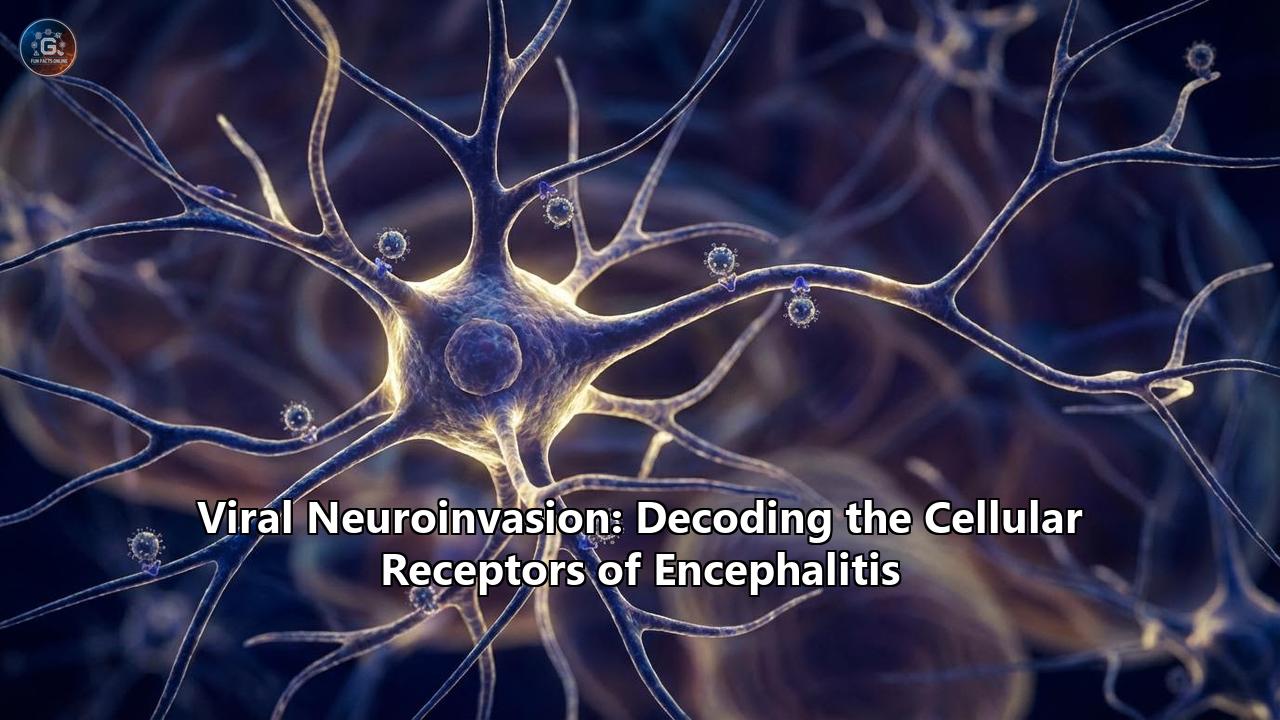
The human brain is an unparalleled fortress. Encased in bone, bathed in sterile cerebrospinal fluid, and strictly guarded by a microscopic security system known as the blood-brain barrier (BBB), the central nervous system (CNS) is one of the most highly protected, immune-privileged environments in biology. Yet, despite millions of years of evolutionary defense mechanisms, a select class of microscopic invaders has mastered the art of siege warfare. Neurotropic viruses—agents capable of infiltrating the nervous system and causing devastating inflammation known as viral encephalitis—do not merely break down the brain’s doors; they use precisely forged biochemical keys to unlock them.
Viral encephalitis represents a catastrophic collision between pathogenic ambition and the brain's delicate neurochemistry. Whether it is the frantic aggression of the Rabies virus, the silent, opportunistic reactivation of Herpes Simplex Virus (HSV), or the mosquito-borne marauding of Flaviviruses like West Nile and Zika, the outcome is often a severe, life-threatening inflammation of the brain parenchyma,. To truly understand how these pathogens orchestrate their invasion, we must delve deeply into the world of viral neuroinvasion and decode the specific cellular receptors—the molecular "locks"—that these viruses exploit to cross our ultimate biological threshold.
The Architecture of the Fortress: The Blood-Brain Barrier
Before exploring the viral keys, one must understand the locks. The blood-brain barrier is not a single wall, but a dynamic, multi-layered neurovascular unit. It is primarily composed of brain microvascular endothelial cells (BMECs) that line the interior of the cerebral blood vessels,. Unlike endothelial cells in the rest of the body, which have small gaps to allow nutrients to flow freely into tissues, BMECs are stitched together by complex protein structures called tight junctions (TJs) and adherens junctions.
These endothelial cells are wrapped by pericytes—contractile cells that help regulate capillary blood flow—and are further encased by the end-feet of astrocytes, star-shaped glial cells that provide biochemical support and regulate the barrier's strict permeability. Together, this triad ensures that only essential molecules like glucose, oxygen, and specific amino acids can pass into the brain, while blocking toxins, circulating immune cells, and blood-borne pathogens.
However, viruses have evolved three distinct logistical routes to bypass or dismantle this barrier:
- The Hematogenous Route (Bloodstream): Viruses circulating in the blood interact directly with the BBB. They can infect the endothelial cells, utilizing them as replication factories before releasing new viral particles into the brain tissue without necessarily destroying the cell—a process known as basolateral release,. Alternatively, they can slip through by exploiting transcytosis, hitching a ride in transport vesicles.
- The "Trojan Horse" Mechanism: Some viruses infect circulating immune cells, such as monocytes and macrophages. Because the immune system is occasionally permitted to send surveillance cells across the BBB to monitor for damage, the virus quietly rides inside these specialized cells, crossing the heavily fortified border entirely undetected before breaking out and infecting the brain,.
- The Transneural and Olfactory Routes: Foregoing the blood altogether, some viruses invade peripheral nerves or the olfactory neurons in the nasal cavity. Because olfactory neurons project directly from the nasal epithelium into the olfactory bulb of the brain, they offer a direct, unobstructed neurological highway straight into the central nervous system, bypassing the BBB entirely.
Biochemical Lockpicking: Decoding Viral Receptors
The initial, defining event in any viral life cycle is the attachment of the viral particle to the surface of a host cell. This interaction dictates "tropism"—the specific tissues and species a virus is capable of infecting. To gain entry, a viral surface protein (the key) must bind to a specific cellular receptor (the lock) on the host's cell membrane. In a tragic biological irony, the receptors these viruses hijack are not evolutionary accidents; they are essential proteins required for healthy cellular function, neural communication, and immune signaling.
Herpes Simplex Virus (HSV): The Opportunistic Resident
Herpes Simplex Virus type 1 (HSV-1) is the leading cause of sporadic, fatal viral encephalitis in the developed world. While it typically causes benign cold sores, in rare cases, it mounts a full-scale invasion of the brain, particularly targeting the temporal lobes and causing severe necrosis, memory loss, and personality changes.
HSV utilizes a sophisticated, multi-step receptor engagement process. When the virus first approaches a cell, it uses its glycoproteins (gB and gC) to loosely tether itself to heparan sulfate proteoglycans, which are complex sugar chains abundant on the surface of almost all human cells. This initial tethering allows the virus to surf along the cell membrane until it encounters its true entry receptors.
The primary entry locks for HSV are Nectin-1 and the Herpesvirus Entry Mediator (HVEM). Nectins are a family of adhesion molecules vital for holding adjacent cells together and forming synapses between neurons. By binding to Nectin-1, HSV seamlessly fuses its viral envelope with the neuronal membrane. Because Nectin-1 is highly expressed in the human hippocampus and temporal cortex, HSV exhibits a devastating, highly specific tropism for these memory-forming regions of the brain once it gains entry via the olfactory or trigeminal nerves.
Rabies Virus: The Fatal Neurotropic Assassin
Rabies is arguably the most efficient and lethal neurotropic virus in existence. Transmitted through the saliva of an infected animal, Rabies does not use the bloodstream; it is strictly neurotropic, moving exclusively through the nervous system to avoid detection by the systemic immune system.
Upon entering muscle tissue through a bite, the Rabies virus seeks out the neuromuscular junction—the exact point where nerve endings meet muscle fibers. Here, it targets the nicotinic acetylcholine receptor (nAChR). Normally, this receptor binds acetylcholine to trigger muscle contraction. The Rabies virus brilliantly exploits this receptor to concentrate itself at the nerve terminal.
Once poised at the nerve ending, the virus shifts its target to NCAM (Neural Cell Adhesion Molecule) and p75NTR (a low-affinity Nerve Growth Factor Receptor). By binding to these receptors, the virus tricks the nerve cell into swallowing it via a process called endocytosis. Once inside the peripheral nerve axon, the virus hijacks the neuron's internal motor proteins (dynein), riding the microtubule tracks all the way up the spinal cord and into the brain in a process called retrograde axonal transport. By utilizing receptors fundamental to neural growth and communication, Rabies ensures its uninterrupted journey to the brainstem and limbic system, resulting in the classic symptoms of hydrophobia, hyperactivity, and inevitable fatality.
Flaviviruses (West Nile, Zika, and Japanese Encephalitis): The Mosquito-Borne Marauders
Flaviviruses represent a massive global health burden, utilizing arthropod vectors like mosquitoes and ticks to inject the virus directly into the human bloodstream. West Nile Virus (WNV), Zika Virus (ZIKV), Japanese Encephalitis Virus (JEV), and Tick-Borne Encephalitis Virus (TBEV) rely heavily on the hematogenous route, demanding mechanisms to cross the intact blood-brain barrier,.
The cellular receptors for flaviviruses are incredibly diverse. They heavily utilize Integrins (proteins that regulate cellular structural attachment) and DC-SIGN (a receptor on dendritic immune cells). However, recent research has illuminated the critical role of TAM receptors (Tyro3, Axl, Mertk). These receptors are normally involved in clearing away dead cells and calming the immune response. By binding to TAM receptors on brain endothelial cells and astrocytes, flaviviruses like Zika not only gain entry into the cell but simultaneously suppress the cell's innate antiviral alarm system, allowing the virus to replicate silently.
Flaviviruses are also biological saboteurs. They secrete a non-structural protein known as NS1. Studies show that NS1 proteins from Zika, WNV, and JEV bind directly to brain microvascular endothelial cells and trigger the degradation of tight junction proteins,. By literally dissolving the biochemical mortar that holds the BBB together, flaviviruses induce hyperpermeability, flooding the brain with both viral particles and destructive inflammatory cells.
Nipah Virus: The Deadly Zoonosis
Emerging from fruit bats, the Nipah virus causes severe acute respiratory distress and devastating encephalitis, with mortality rates recently surging past 80% globally. The virus achieves this stunning lethality by targeting a highly specific set of receptors: Ephrin-B2 and Ephrin-B3.
Ephrin-B2 is heavily expressed on endothelial cells lining the blood vessels and in the smooth muscle surrounding them. When Nipah virus binds to Ephrin-B2, it causes massive endothelial damage, resulting in systemic vasculitis and small strokes throughout the brain. Furthermore, Ephrin-B3 is highly expressed on neurons in the brainstem, the area controlling breathing and heart rate. By utilizing these dual receptors, Nipah virus efficiently obliterates both the blood-brain barrier and the deepest, most vital neural networks of the human host.
The Brain’s Alarm System and the Cytokine Storm
While understanding how viruses enter the brain is vital, the pathology of viral encephalitis is rarely caused by the virus alone. In fact, severe brain damage is often the result of the host’s own immune system overreacting—a phenomenon known as immunopathogenesis.
The brain is patrolled by resident immune cells called microglia, and structurally supported by astrocytes,. These cells act as the brain's first responders. They are equipped with Pattern Recognition Receptors (PRRs), most notably Toll-like Receptors (TLRs) such as TLR3, TLR7, and TLR9, as well as RIG-I-like receptors,. These receptors do not facilitate viral entry; instead, they act as smoke detectors, specifically recognizing viral genetic material (like double-stranded RNA) that shouldn't be present in a healthy cell,.
When microglia and astrocytes detect a viral invader via Toll-like receptors, they unleash a torrent of signaling proteins known as type I interferons (IFNs), cytokines, and chemokines,. While this response is intended to halt viral replication, it functions as a double-edged sword. In their panic, infected astrocytes secrete matrix metalloproteinases (particularly MMP9), an enzyme that indiscriminately chews up the extracellular matrix and the tight junctions of the blood-brain barrier,.
This breakdown of the BBB is catastrophic. It allows peripheral immune cells—T-cells, B-cells, and macrophages—to flood into the immune-privileged brain. While these cells hunt the virus, their weapons (cytotoxins and inflammatory mediators) cause profound collateral damage, destroying healthy neurons and triggering apoptosis (programmed cell death),. In attempting to purge the viral infection, the hyperactivated immune system causes severe swelling (cerebral edema), rising intracranial pressure, and extensive tissue necrosis—the exact hallmarks of life-threatening encephalitis,.
The Shadows Left Behind: Sequelae and Post-Viral Autoimmunity
Even if a patient survives the acute phase of viral encephalitis, the battle is rarely over. The structural and inflammatory damage inflicted upon the brain architecture leads to long-term neurological sequelae in a vast majority of survivors. Patients recovering from viruses like West Nile or Japanese Encephalitis frequently suffer from prolonged motor dysfunction, speech disorders, devastating memory impairment, debilitating depression, and in some cases, the onset of intractable epilepsy.
However, one of the most fascinating and terrifying discoveries in modern neurology is the phenomenon of Post-Viral Autoimmune Encephalitis. In recent years, clinicians noted that some patients recovering from Herpes Simplex Virus encephalitis would suddenly relapse weeks or months later. Brain biopsies and spinal fluid analysis revealed a shocking truth: the virus was completely gone, but the patient’s immune system was actively attacking their own brain.
During the initial viral siege, the destruction of neurons spills vast amounts of intracellular brain proteins into the bloodstream—proteins the peripheral immune system has never seen before because they are normally hidden behind the blood-brain barrier. Misidentifying these essential neural proteins as foreign pathogens, the immune system begins producing autoantibodies against them.
The most common and severe form of this condition is Anti-NMDA Receptor Encephalitis,. The NMDA (N-methyl-D-aspartate) receptor is a crucial neurotransmitter receptor located at the synapses of neurons, fundamentally responsible for synaptic plasticity, learning, memory, and cognitive function,. When autoantibodies bind to the NMDA receptor, they cross-link and pull the receptors directly out of the neural synapse. The result is a precipitous decline in brain function, famously characterized as "Brain on Fire" disease,. Patients exhibit acute psychosis, severe memory loss, catatonia, and highly complex seizures,. What begins as a viral infection subtly morphs into a devastating autoimmune disease, proving that the echoes of viral neuroinvasion can last a lifetime.
2026 Breakthroughs: Quenching the "Brain on Fire"
For years, treating post-viral and primary autoimmune encephalitis has relied on a sledgehammer approach: massive doses of broad immunosuppressants like corticosteroids, rituximab, and plasma exchange to indiscriminately wipe out the patient's immune response,. However, these therapies are highly toxic, leave the patient vulnerable to secondary infections, and patients frequently relapse.
A monumental paradigm shift occurred in the early months of 2026. Researchers at the Oregon Health & Science University (OHSU) Vollum Institute—led by neuroscientists Junhoe Kim and Eric Gouaux—made a staggering breakthrough in the treatment of anti-NMDAR encephalitis,. Utilizing state-of-the-art near-atomic imaging technology known as Cryo-Electron Microscopy (Cryo-EM) at the Pacific Northwest Cryo-EM Center, the team successfully mapped the exact molecular structure of the autoantibody-bound NMDA receptor,,.
By examining autoantibodies from a specially engineered mouse model and comparing them directly with antibodies from human patients suffering from the disease, the researchers discovered highly specific "antigenic hotspots",,. They found that nearly all of the destructive autoantibodies target and bind to a single, specific extracellular domain of the NMDA receptor,.
This revelation, published in the journal Science Advances in January 2026, is profoundly transformative,. By pinpointing the exact binding site on the receptor, scientists have uncovered a distinct molecular target for therapeutic intervention,. Pharmaceutical developers can now engineer precise blocker drugs—such as monoclonal antibodies or small-molecule receptor decoys—that specifically shield this domain on the NMDA receptor,. This targeted approach promises to neutralize the disease, potentially reversing the psychotic and neurological symptoms without requiring the suppression of the patient's entire immune system,. Furthermore, mapping this receptor profile paves the way for advanced blood diagnostics, allowing clinicians to detect the autoimmune transition much earlier, vastly improving survival and recovery rates,.
The Horizon: Reclaiming the Fortress
The study of viral neuroinvasion and cellular receptors is no longer just an academic pursuit of pathology; it is the frontline of neurological medicine. As climate change expands the geographical ranges of arthropod vectors, arboviruses like West Nile, Zika, Japanese Encephalitis, and Powassan virus are knocking on the doors of populations previously unexposed,. Understanding the specific cellular locks these viruses exploit provides an unprecedented opportunity to bar the gates before the siege begins.
Future therapeutics are heavily leaning into receptor-targeted strategies. If we know that HSV requires Nectin-1, or that Flaviviruses utilize TAM receptors and disrupt the BBB via NS1 proteins, we can design synthetic receptor decoys that circulate in the bloodstream,. These decoys would act as microscopic sponges, binding to the viral keys and neutralizing the pathogens before they ever reach the blood-brain barrier. Additionally, therapies aiming to stabilize the BBB during infection—such as specific inhibitors targeting the destructive MMP9 enzymes—could prevent the catastrophic cytokine storms that lead to fatal brain swelling,.
The narrative of viral encephalitis is ultimately a testament to the staggering complexity of human biology. It is an arms race millions of years in the making, fought on a microscopic battlefield where neurotransmitter receptors are hijacked, immune cells act as double agents, and the barrier meant to protect our consciousness becomes the very wall we must learn to reinforce. With each new cellular receptor decoded, and every molecular interaction mapped in stunning near-atomic detail, science edges closer to an era where the human mind can finally be made impervious to the viral invaders that seek to claim it.
Reference:
- https://pmc.ncbi.nlm.nih.gov/articles/PMC9611789/
- https://emedicine.medscape.com/article/1166498-overview
- https://www.mdpi.com/1999-4915/13/10/2065
- https://www.frontiersin.org/journals/cellular-neuroscience/articles/10.3389/fncel.2021.755875/full
- https://www.frontiersin.org/journals/microbiology/articles/10.3389/fmicb.2019.00525/full
- https://pubmed.ncbi.nlm.nih.gov/30984122/
- https://pmc.ncbi.nlm.nih.gov/articles/PMC9965671/
- https://www.encephalitis.info/wp-content/uploads/2025/09/research-summary-2024.pdf
- https://pmc.ncbi.nlm.nih.gov/articles/PMC6546292/
- https://pubmed.ncbi.nlm.nih.gov/40399061/
- https://www.eurekalert.org/news-releases/1112385
- https://www.sciencedaily.com/releases/2026/02/260225081150.htm
- https://news.ohsu.edu/2026/01/14/scientists-identify-target-to-treat-devastating-brain-disease