
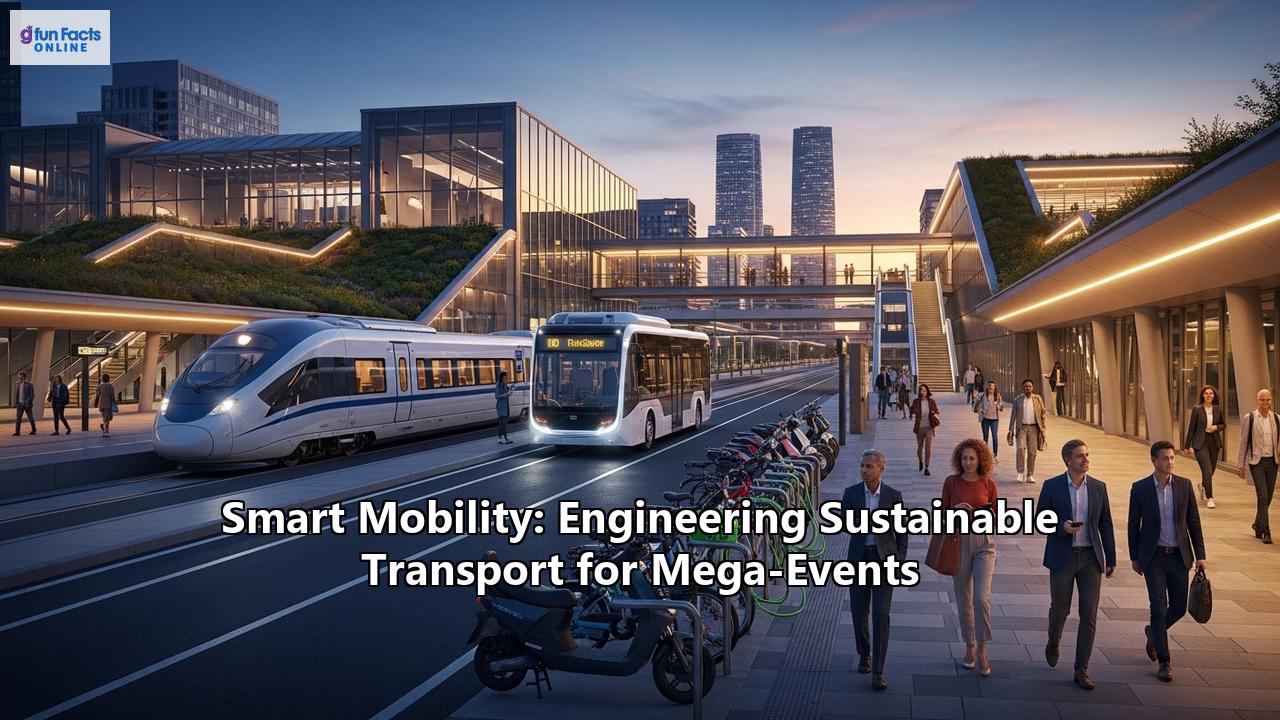
Mega-events, from the Olympic Games to World Expos, are the ultimate test of a city's metabolism. For a few intense weeks, they draw the population of a small city, all needing to move seamlessly and safely between venues, accommodations, and cultural hotspots. This sudden, massive influx of people—athletes, officials, media, and millions of spectators—can either showcase a city's ingenuity or expose its infrastructural frailties, leading to a transportation meltdown of global proportions. The challenge is immense: how to manage this temporary surge without gridlocking the host city, while also leaving behind a positive, lasting inheritance for its residents.
The answer lies in a powerful synergy of technology and forward-thinking policy: Smart Mobility. This is not merely about adding more buses or trains. It is a paradigm shift towards an integrated, intelligent, and data-driven transportation ecosystem. By weaving together the threads of real-time data, artificial intelligence, ubiquitous connectivity, and sustainable principles, host cities are increasingly aiming to solve the mega-event conundrum. They seek to engineer transport systems that are not only efficient and resilient during the spectacle but also sustainable and equitable long after the crowds have departed. This is the story of how smart mobility is revolutionizing transport for mega-events, turning a logistical nightmare into a catalyst for profound urban transformation.
Part 1: The Mega-Event Mobility Challenge
The scale of a modern mega-event is difficult to overstate. The Paris 2024 Olympics, for instance, involved welcoming millions of spectators, all converging on a city that already has a dense and busy transport network. The logistical complexity is staggering, creating a perfect storm of transportation challenges that can bring a city to its knees.
The Anatomy of a Mega-Event Transportation CrisisThe core of the problem is a massive, temporary, and highly concentrated spike in demand. A city's transport infrastructure, designed for the rhythm of daily life, is suddenly expected to handle a deluge of users with very specific travel patterns—moving between a handful of venues at predictable, overlapping times. This creates several critical pressure points:
- Traffic Congestion and Parking Nightmares: The sheer volume of attendees can lead to crippling traffic congestion, rendering roads impassable. Parking, especially in dense urban centers, becomes an acute challenge, not just for spectators but also for residents and local businesses.
- Overwhelmed Public Transport: While public transport is the backbone of any mega-event mobility plan, the sudden surge can overwhelm systems. This can lead to dangerous overcrowding on platforms and in vehicles, along with significant delays that frustrate both visitors and daily commuters.
- Diverse and Demanding User Groups: The needs of different groups vary wildly. Athletes and officials require secure, punctual, and reliable transport. The global media needs to move quickly between venues. Spectators, often unfamiliar with the city, need clear guidance and accessible options. Volunteers and the event workforce have their own complex travel needs.
- Crowd Control and Security: Managing the flow of huge crowds is a paramount safety concern. Bottlenecks at transport hubs and venue entrances can pose significant security risks if not managed proactively. The mood of a large crowd can shift quickly, making efficient and calm movement essential.
- The Global Spotlight: In an age of instant global communication, any failure becomes a headline. A transportation breakdown not only mars the spectator experience but also damages the host city's reputation on the world stage.
Faced with these daunting challenges, host cities are turning to a more intelligent and conscientious approach. The solution is twofold, encompassing "smart mobility" and "sustainable transport."
Smart Mobility is the strategic integration of technology, data, and communication to create a more efficient, responsive, and user-centric transportation network. It’s about moving from reactive problem-solving to proactive, predictive management. Key elements include:- Integration: Breaking down silos between different transport modes (bus, rail, metro, bike-share, ride-hailing) to offer a seamless journey.
- Real-Time Data: Using sensors, GPS, and mobile devices to understand what is happening on the network at any given moment.
- Intelligence: Applying artificial intelligence (AI) and predictive analytics to this data to forecast demand, optimize routes, and preemptively solve problems.
- User-Centricity: Placing the traveler at the heart of the system, providing them with personalized information and tools to make their journey easier.
- Environmental Responsibility: Minimizing the carbon footprint and ecological impact of transportation through the promotion of public transport, active mobility (walking and cycling), and low-emission vehicles.
- Social Equity: Ensuring that the benefits of transport investments are distributed fairly across all segments of society, not just affluent areas or event-centric corridors. This includes a strong focus on accessibility for people with disabilities.
- Economic Viability: Creating a transport legacy that serves the host city's long-term development goals and provides lasting value, rather than becoming a financial burden of underutilized "white elephant" projects.
Mega-events, therefore, are no longer just a transportation challenge; they are a unique opportunity to fast-track the implementation of smart and sustainable mobility solutions that can redefine a city for decades to come.
Part 2: The Smart Mobility Toolkit for Mega-Events
To tackle the immense complexity of moving millions, host cities are deploying an increasingly sophisticated arsenal of technological tools. This "smart mobility toolkit" transforms the transportation network from a collection of disparate parts into a coordinated, intelligent, and responsive organism.
The Digital Backbone: Intelligent Transportation Systems (ITS)
At the heart of any smart mobility strategy lies a robust Intelligent Transportation System (ITS). ITS refers to the integrated application of advanced sensor, computer, and communications technologies to enhance the safety and efficiency of the surface transportation system. For a mega-event, this forms the central nervous system of the entire transport operation.
- Real-Time Traffic Monitoring: The foundation of ITS is data. This is gathered through a vast network of sensors, including inductive loops embedded in roadways, and advanced video surveillance. For the London 2012 Olympics, a system of existing and new "smart cameras" was used to monitor vehicle congestion and automatically notify the control center of issues, allowing for rapid response. Drones can also be deployed to provide aerial views of traffic flow and crowd density.
- Advanced Traffic Management Centers (ATMCs): This is the mission control for the event's transportation. Here, data from all sources is aggregated, visualized on vast screens, and analyzed by teams of experts. The ATMC allows for centralized coordination between different agencies—traffic police, public transport operators, and emergency services. This integration is crucial for managing the dedicated "Olympic Route Networks" (ORNs) that provide priority access for athletes and officials, a feature of every Games since Atlanta 1996.
- Dynamic and Responsive Control: Armed with real-time data, operators in the ATMC can actively manage traffic flow. This includes using dynamic traffic signaling, where the timing of traffic lights is adjusted in real-time to alleviate congestion, and variable message signs (VMS) on highways to inform drivers of delays, suggest alternative routes, or provide directions to park-and-ride facilities.
A prime example is the Traffic Coordination Centre developed for the London 2012 Olympics. This state-of-the-art facility integrated feeds from thousands of cameras and sensors, allowing for unprecedented situational awareness. The traffic modeling tools and operational concepts developed for the Games were so successful that they continue to be used for managing major events in the city today, a clear example of a positive technological legacy.
The Power of Prediction: AI and Big Data Analytics
If ITS is the nervous system, artificial intelligence (AI) and big data analytics are the brain. These technologies move beyond simply reacting to current conditions to predicting and shaping future outcomes, making the entire system more proactive and efficient.
- Predictive Crowd Flow Modeling: By analyzing historical data, ticket sales, event schedules, and real-time inputs from sensors, AI algorithms can predict where and when crowds will form. This allows organizers to preemptively increase public transport frequency, deploy additional staff, or reroute pedestrian flows to prevent dangerous bottlenecks. Companies like Crowdlytics use AI to analyze CCTV feeds in real-time, providing insights into crowd density, flow patterns, and space utilization, which was showcased at Expo City Dubai.
- Optimizing Public Transport: AI can optimize public transport schedules in real-time based on actual demand. Germany's Deutsche Bahn, for example, uses advanced analytics to predict capacity demand and adjust the number of carriages on trains during major events. This ensures that resources are deployed efficiently, reducing both overcrowding and the running of empty vehicles.
- Real-Time Public Sentiment Analysis: Modern systems can even tap into social media feeds and other online data to gauge public sentiment and identify emerging issues that may not be visible through traditional sensors. This can provide early warnings about confusion, frustration, or security concerns at specific locations.
During the Tokyo 2020 Olympics, AI systems were used to analyze attendee behavior to optimize crowd flow, demonstrating how these technologies can directly enhance the visitor experience by minimizing wait times and distributing people more evenly across venues.
The Spectator's Best Friend: Mobile Applications
For the millions of visitors navigating an unfamiliar city, a smartphone becomes an indispensable tool. Host cities and organizers are leveraging this by creating sophisticated mobile applications that serve as a personal guide to the event.
- Multimodal Journey Planning and Navigation: Event-specific apps provide integrated journey planners that combine all available transport options—metro, bus, tram, walking, cycling, and ride-hailing—to offer the quickest or most sustainable route. For the FIFA World Cup 2022 in Qatar, a dedicated navigation app was created for over 1,400 drivers, providing turn-by-turn guidance along more than 600 mandated routes to ensure the seamless transportation of VIPs, players, and officials.
- Real-Time Information and Alerts: Apps are a crucial channel for disseminating real-time information. Push notifications can alert users to service disruptions, schedule changes, platform alterations, or even weather-related issues. This keeps spectators informed and allows them to adjust their plans on the fly, reducing confusion and stress.
- Integrated Ticketing and Payments: A key trend is the integration of ticketing directly into the event app. The Paris 2024 Games featured a dedicated ticketing app that allowed for 100% digital tickets, which could be transferred or resold, streamlining venue access. This digital approach also allows for better demand management and security.
- Enhanced Accessibility and Experience: Apps can offer specialized features for a more inclusive experience. The Paris 2024 app ecosystem included features for visually impaired spectators, such as audio descriptions of the action and stadium environment, delivered in real-time.
The digital communication strategy for Paris 2024 was extensive, with over 100 automated email, SMS, and push notification paths designed to deliver personalized information to spectators based on their tickets, location, and real-time conditions. In total, 9 million emails and 7 million SMS messages were sent during the Olympic fortnight, showcasing the scale of modern digital engagement.
Seamless Journeys: Integrated and Contactless Payments
One of the biggest friction points in urban travel is paying for it, especially when a journey involves multiple modes of transport operated by different entities. Mega-events have become a powerful catalyst for breaking down these barriers and implementing integrated, contactless payment systems.
- The Challenge of Interoperability: A major technical hurdle is ensuring that different systems can communicate and work together seamlessly. A spectator's journey might involve a train, a bus, and a bike-share, and they expect a single, simple way to pay for it all.
- The Rise of Open-Loop Systems: The trend is moving away from closed-loop proprietary cards (like the early Oyster card in London) towards open-loop systems. This allows travelers to simply tap their existing contactless credit/debit card or a mobile wallet (like Apple Pay or Google Pay) to pay for travel. This is incredibly convenient for international tourists who don't need to purchase a special travel card.
- Benefits Beyond Convenience: Contactless payments significantly reduce queues at ticket machines and boarding times for buses, improving overall system efficiency. Furthermore, the anonymized data generated provides transport authorities with incredibly valuable insights into travel patterns, which can be used to optimize services long after the event.
The Next Frontier: Autonomous and Connected Vehicles
While not yet a widespread reality, autonomous vehicles (AVs) represent the next frontier in smart mobility for mega-events. Host cities for upcoming Games are actively exploring their potential.
- Potential Roles for AVs: The most likely initial applications are in controlled environments. This could include autonomous shuttles operating on dedicated lanes to transport athletes and officials between the Olympic Village and venues, or providing accessible transport for attendees with limited mobility within large event complexes.
- Vehicle-to-Everything (V2X) Communication: This technology allows vehicles to communicate with each other (V2V), with infrastructure like traffic signals (V2I), and with pedestrians (V2P). V2X can dramatically improve safety by warning of potential collisions and can enhance traffic flow by coordinating vehicle movements.
- Future Ambitions: Los Angeles, preparing for the 2028 Olympics, has bold ambitions to become a "transportation technology capital." Planners envision a future with designated "autonomous lanes" to optimize traffic flow and are exploring the potential for air taxis to ferry people over the city's notorious congestion. The city is even aiming for a "no-car" Games, heavily discouraging private vehicle use and relying on a massively expanded public and shared transport system. While fully driverless taxis for the general public, like those being tested by Waymo in cities like Los Angeles and Phoenix, might still be in a nascent stage by 2028, the Games are serving as a powerful deadline to accelerate innovation.
The smart mobility toolkit is a dynamic and evolving set of solutions. By combining the digital backbone of ITS, the predictive power of AI, the user-centric focus of mobile apps, the convenience of seamless payments, and the future potential of autonomous technology, host cities are fundamentally re-engineering how they manage the monumental challenge of mega-event transportation.
Part 3: Engineering Sustainability into Mega-Event Transport
Beyond the technological wizardry, a profound shift is occurring in the philosophy behind mega-event planning. Sustainability is no longer a peripheral concern but a core objective, deeply woven into the fabric of transportation strategy. This involves a conscious effort to minimize environmental harm, promote social inclusion, and ensure that investments serve the city's long-term health. Future hosts like Brisbane 2032 are building their entire strategy around this, aiming to deliver the first-ever "carbon-positive" Games.
Prioritizing People over Cars: The Public Transport Push
The single most effective strategy for sustainable mega-event transport is to get people out of private cars and onto shared public systems. This has become the mantra for modern host cities.
- Massive Infrastructure Investment: Mega-events act as a powerful catalyst for accelerating long-planned public transport projects. Beijing, ahead of the 2008 Olympics, embarked on a monumental expansion of its transport system, investing over $20 billion. This included extending its subway network from just two lines to a system that served 80% of the Olympic venues, a permanent upgrade that continues to serve millions of commuters daily.
- Upgrades and Modernization: It's not just about building new lines. The London 2012 Olympics saw an investment of over £6.5 billion in upgrading the capacity and reliability of the existing network, including new trains, modernized stations, and a completely accessible bus network. These upgrades are designed for longevity, with the trains purchased for the Games expected to be in service for decades.
- Bus Rapid Transit (BRT): For cities seeking a more cost-effective and rapidly deployable solution, BRT systems, which use dedicated bus lanes to mimic the efficiency of a rail system, are a popular choice. They can provide high-capacity service and, as seen in Rio de Janeiro for the 2016 Games, can be a key part of the transport legacy.
The goal of these investments is clear: to make public transport so efficient, reliable, and convenient that it becomes the default choice for the vast majority of attendees. London 2012, promoted as the "public transport Games," successfully aimed for almost all spectators to arrive by public transport, walking, or cycling.
The Green Fleet: Electrification and Alternative Fuels
Reducing the carbon footprint of the event's vehicle fleet is another critical pillar of sustainability.
- Electric and Hydrogen Buses: Host cities are increasingly deploying large fleets of electric and hydrogen-powered buses to transport athletes, officials, and spectators. The Paris 2024 Games trimmed its overall vehicle fleet by 40% compared to previous Games and prioritized electric, hybrid, and hydrogen vehicles for the remaining fleet. This not only reduces emissions during the event but also helps accelerate the city's transition to a green public transport fleet.
- Charging Infrastructure: A key legacy of deploying a green fleet is the installation of permanent charging and hydrogen refueling infrastructure. For the LA 2028 Games, the city plans to deploy 10,000 public electric vehicle charging stations as part of its smart city blueprint, an initiative spurred on by the Olympic deadline.
- Incentivizing EV Use: Alongside greening the official fleet, cities can offer incentives for private individuals to use electric vehicles, such as providing priority parking or access to charging stations.
The introduction of hydrogen buses for the London 2012 Games was part of a broader European initiative. The lessons learned from that pilot program are now informing the development of the next generation of affordable hydrogen vehicles, showcasing how mega-events can serve as real-world laboratories for green technology.
Active Mobility: Fostering Walking and Cycling
The most sustainable form of transport is human-powered. Mega-events provide a golden opportunity to reorient urban design towards pedestrians and cyclists.
- Creating Dedicated Infrastructure: This includes building new, safe, and connected cycle lanes and creating pedestrian-friendly zones around venues and transport hubs. For Paris 2024, over 400km of new bike lanes were created, fundamentally reshaping the city's cycling network.
- Bike-Sharing and Micromobility: Large-scale bike and e-scooter sharing programs are deployed to help spectators cover the "last mile" of their journey from a transport station to a venue. Secure parking for these services and for privately-owned bikes is a crucial supporting element.
- Integrating Active and Public Transport: The key to success is seamless integration. This means ensuring safe and well-lit walking paths from metro stations, providing bike racks at transport hubs, and even allowing bikes on trains during off-peak hours.
- Promoting a Cultural Shift: The London 2012 Games placed a strong emphasis on walking and cycling, publishing special walking maps and encouraging people to walk for short trips. This helped trigger a lasting behavioral shift, with positive impacts on public health and reduced road congestion.
For Brisbane 2032, promoting active transport is a core part of its legacy planning. The government is developing tools to assess the effectiveness of transport strategies in encouraging more people to walk and cycle, not just to and from events, but as a part of their daily lives.
Demand Management Strategies
The final piece of the sustainability puzzle is actively managing and shaping travel demand to avoid overwhelming the system. This is about influencing how, when, and if people travel.
- Incentivizing Off-Peak Travel: Ticketing strategies can be used to encourage spectators to arrive earlier or stay later, spreading the demand peak.
- Promoting Remote Work: During the Games, host cities often launch major public information campaigns encouraging local businesses to allow employees to work from home or adopt flexible hours. This frees up significant capacity on the transport network for event-related travel.
- Private Vehicle Restrictions: A common and effective strategy is to restrict or charge for private vehicle access in the busiest areas of the city. Beijing implemented temporary travel restrictions on virtually all private vehicles during the 2008 Olympics and retained a modified version of the policy afterward, a legacy that continues to help manage congestion.
By combining massive investments in sustainable public and active transport with intelligent strategies to manage demand, host cities can engineer a mobility system that is not only capable of handling the immense pressure of a mega-event but also sets a new, greener, and healthier standard for the future.
Part 4: The Legacy: Catalyst for Urban Transformation or Costly Mistake?
The true measure of a mega-event's success is not just a flawlessly executed three-week spectacle, but the enduring legacy it leaves for the host city and its residents. Transportation infrastructure, often the largest single item of public investment, is at the heart of this legacy debate. An event can be a powerful catalyst, accelerating decades of urban development into a few short years. However, it can also become a cautionary tale of misaligned priorities, financial burdens, and deepened social divides.
The Good: Positive Transportation Legacies
When planned with foresight, the transport legacy of a mega-event can be transformative, creating lasting benefits that are enjoyed for generations.
- Permanent Infrastructure Improvements: The most tangible legacy is the new and upgraded infrastructure. Barcelona's 1992 Olympics are often cited as the gold standard for positive urban transformation. The Games spurred the revitalization of the city's waterfront, the development of a ring road system, and a major expansion of the airport, which collectively improved urban life and boosted its global image as a top tourist destination. Similarly, Beijing's massive subway expansion for the 2008 Games created the backbone of a modern public transit system for a rapidly growing metropolis.
- Accelerated Adoption of Technology and Policy: Mega-events create a hard deadline that forces the adoption of new technologies and policies. London's pioneering city-wide implementation of contactless payments for the 2012 Olympics is a prime example of a technological legacy that set a new global standard. Beijing's post-Olympic vehicle restrictions demonstrate a policy legacy that continues to manage congestion.
- Behavioral Shifts towards Sustainability: By showcasing the convenience and appeal of public and active transport, events can trigger lasting changes in how residents travel. The increased emphasis on walking and cycling during London 2012 had a measurable positive impact on public health and reduced road congestion in the years that followed.
- Enhanced Urban Accessibility: Well-planned projects can improve accessibility for all. The London 2012 legacy included making many more Tube stations step-free and introducing a fully accessible bus network, benefiting people with disabilities, parents with strollers, and elderly residents long after the Paralympics concluded.
The Bad: When Legacy Fails
However, the historical record is also littered with examples of negative legacies, where the short-term needs of the event overshadowed the long-term needs of the city.
- "White Elephant" Infrastructure: This refers to hugely expensive facilities and infrastructure built for the event that see little or no use afterward, becoming a drain on public funds. While often associated with stadiums, this can also apply to transport links built to serve a specific venue that is later downsized or abandoned.
- Financial Burdens: The immense cost of infrastructure projects can place a huge financial burden on taxpayers. If the promised economic benefits and long-term utility fail to materialize, cities can be left paying for the event for decades.
- Exacerbated Social Inequalities: This is one of the most significant and damaging criticisms of mega-event legacies. The case of the Rio 2016 Olympics provides a stark warning. The city invested heavily in new Bus Rapid Transit (BRT) corridors and a metro line extension. However, subsequent analysis revealed that these investments disproportionately benefited wealthier, middle- and higher-income groups. This was compounded by a reorganization and reduction of conventional bus services that served poorer, more peripheral neighborhoods. The result was that, contrary to the official promises, the transport legacy actually exacerbated socio-spatial inequalities, making it harder for the city's poorest residents to access jobs, schools, and healthcare.
The Complex: Navigating the Socio-Economic Impacts
The impact of mega-event transport projects is rarely black and white. It often involves a complex interplay of development, displacement, and gentrification.
- Community Displacement and Gentrification: The construction of new transport lines and venues often requires the acquisition of land, which can lead to the displacement of long-standing communities and small businesses. Furthermore, the very infrastructure intended to improve an area can make it more desirable, driving up property values and rents. This "social multiplier effect" can lead to gentrification, where the original residents who were meant to benefit from the improvements are priced out and forced to move.
- The Need for Inclusive Planning: The key takeaway from cases like Rio is the absolute necessity of inclusive planning. It is not enough to simply build new infrastructure; it must be planned and designed in consultation with the communities it is supposed to serve. The focus must be on improving connectivity and accessibility for all residents, particularly the most vulnerable and transport-disadvantaged populations.
- Equitable Access to Benefits: A successful legacy ensures that the new transport options are not just physically present but also affordable and accessible to everyone. This involves considering fare structures, service frequencies, and physical accessibility for people of all abilities.
Best Practices for a Positive Legacy
Learning from both the successes and failures of the past, a clear set of best practices has emerged for engineering a positive and sustainable transport legacy.
- Align Event Planning with Long-Term City Strategy: The mega-event should be seen as a tool to achieve the city's pre-existing, long-term development goals, not as an end in itself. Transport projects should be selected because they meet a genuine, long-term need for the city, with the event serving as a catalyst for their accelerated delivery.
- Prioritize Multipurpose Projects: Investments should focus on projects that serve both the temporary needs of the event and the permanent needs of the community. Upgrading an existing rail line that serves a key commuter corridor and an Olympic venue is far more sustainable than building a new line to a remote, single-use stadium.
- Engage Stakeholders and the Community Early and Continuously: The planning process must be transparent and participatory. This involves consulting with local communities, businesses, transport advocacy groups, and other stakeholders from the very beginning to ensure that projects reflect their needs and priorities.
- Adopt a Holistic View of Sustainability: Sustainability must be evaluated across all three pillars: environmental, social, and economic. Formal assessment frameworks, which use a range of indicators to measure performance against sustainability goals, are becoming increasingly important tools for planners. While standardized metrics are still evolving, the focus is on quantifying impacts related to emissions, resource use, accessibility, and economic return on investment.
Ultimately, the legacy of a mega-event is not pre-ordained. It is the result of thousands of decisions made during the planning process. By consciously prioritizing long-term community benefit and sustainability over short-term spectacle, host cities can leverage the unique opportunity of a mega-event to create a truly transformative and positive transportation legacy.
Part 5: Conclusion: Blueprint for the Future of Mega-Event Mobility
The challenge of hosting a mega-event is a crucible in which the future of urban mobility is being forged. The intense pressure to move millions of people safely, efficiently, and sustainably is accelerating the adoption of technologies and strategies that will define our cities for generations to come. What was once a logistical exercise in crowd control has evolved into a sophisticated dance of data, technology, and human-centric design.
The journey from the traffic-clogged streets of past events to the smart, sustainable, and integrated systems of today and tomorrow reveals a clear blueprint for success. This blueprint is built on several key pillars:
- Intelligence is Paramount: The future of mega-event mobility is undeniably smart. The integration of Intelligent Transportation Systems, powered by AI and real-time data analytics, is no longer an option but a necessity. These systems provide the situational awareness and predictive capability required to manage immense complexity, transforming transport networks from rigid structures into responsive, living systems.
- Sustainability is the Foundation: The paradigm has shifted. Success is no longer measured solely by the smooth flow of traffic during the Games, but by the long-term environmental, social, and economic health of the host city. This means a fundamental prioritization of public transport, a rapid transition to green fleets, and the promotion of active mobility. Ambitious goals, like Brisbane's aim for a "carbon-positive" Games, are setting a new standard for environmental responsibility.
- The User Experience is Key: In the digital age, the spectator's journey begins long before they reach the venue. Mobile applications, seamless contactless payments, and personalized, real-time information are critical tools for creating a positive and stress-free experience. By placing the user at the center of the design process, cities can win the hearts and minds of visitors and residents alike.
- Legacy is the Ultimate Goal: The most critical lesson from decades of mega-events is that the planning process must begin with the end in mind. The event itself is fleeting, but its legacy is permanent. Every investment, every policy, and every new piece of infrastructure must be scrutinized through the lens of its long-term value to the community. This requires a deep and unwavering commitment to inclusive planning, ensuring that the benefits of transformation are shared equitably and do not come at the cost of displacing or disadvantaging vulnerable communities.
Looking ahead, cities like Los Angeles for the 2028 Olympics and Brisbane for 2032 are building on these lessons. LA's bold vision of a "no-car" Games, leveraging massive public transport expansion and exploring the potential of autonomous vehicles and air taxis, signals a radical rethinking of mobility in a car-centric city. Brisbane's focus on accelerating its zero-emission bus transition and creating a lasting legacy of walking and cycling infrastructure underscores the deep integration of sustainability into its core strategy.
Engineering sustainable transport for mega-events is more than just a logistical challenge; it is a profound opportunity. It is a chance for a city to hold a mirror up to itself, to identify its needs, and to use the catalyst of a global spectacle to become more connected, more equitable, more sustainable, and ultimately, more livable for all its citizens. The games may only last a few weeks, but the journey to a smarter, more sustainable urban future is a marathon, and these events provide a powerful, focused sprint towards that essential goal.
Reference:
- https://www.google.com/search?q=time+in+Brisbane,+AU
- https://discovery.ucl.ac.uk/id/eprint/1462367/
- https://newsroom.cisco.com/c/r/newsroom/en/us/a/y2019/m05/l-a-embraces-futuristic-vision-of-mobility-for-2028-olympic-games.html
- https://www.researchgate.net/publication/362618037_Evaluating_the_Sustainability_of_the_Olympic_Transport_System_on_the_View_of_Regional_Transport_Development_Pattern
- https://www.thti.edu.tt/blog/sustainability-and-environmental-considerations-in-mega-event-planning/
- https://www.mdpi.com/2071-1050/14/23/15815
- https://aecom.com/without-limits/article/transport-mobility-brisbane-2032/
- https://www.delivering2032.com.au/legacy-for-queensland/transport
- https://statetechmagazine.com/article/2021/07/how-los-angeles-plans-become-smarter-city-2028-olympics
- https://www.researchgate.net/publication/350996436_An_evaluation_of_the_sustainability_of_the_Olympic_Games
- https://www.youtube.com/watch?v=d61At69QcjU
- https://www.wsp.com/en-au/insights/three-considerations-to-transport-brisbane-to-2032-games-success
- https://www.the-autonomous.com/main-event/
- https://www.google.com/search?q=time+in+Los+Angeles,+CA,+US
- https://matadornetwork.com/read/los-angeles-car-free-olympics/
- https://economictimes.indiatimes.com/tech/technology/how-tesla-and-waymos-radically-different-robotaxi-approaches-will-shape-the-industry/articleshow/123565288.cms?from=mdr
- https://www.mdpi.com/2412-3811/9/3/51
- https://comotionla.com/archives/2171
- https://www.sportspro.com/news/la-2028-olympic-games-hosting-sustainability-venues-public-transport-karen-bass/
- https://www.wnyc.org/story/driverless-cars-in-nyc/
- https://www.tmr.qld.gov.au/travel-and-transport/pedestrians-and-walking/queensland-walking-strategy/action-plan-for-walking/planning-walkable-communities/planning-actions-2022-2024/planning-for-walking-at-brisbane-2032
- https://www.sami.eco/en/blog/carbon-footprint-paris-olympics
- https://ciss-journal.org/article/view/11991