
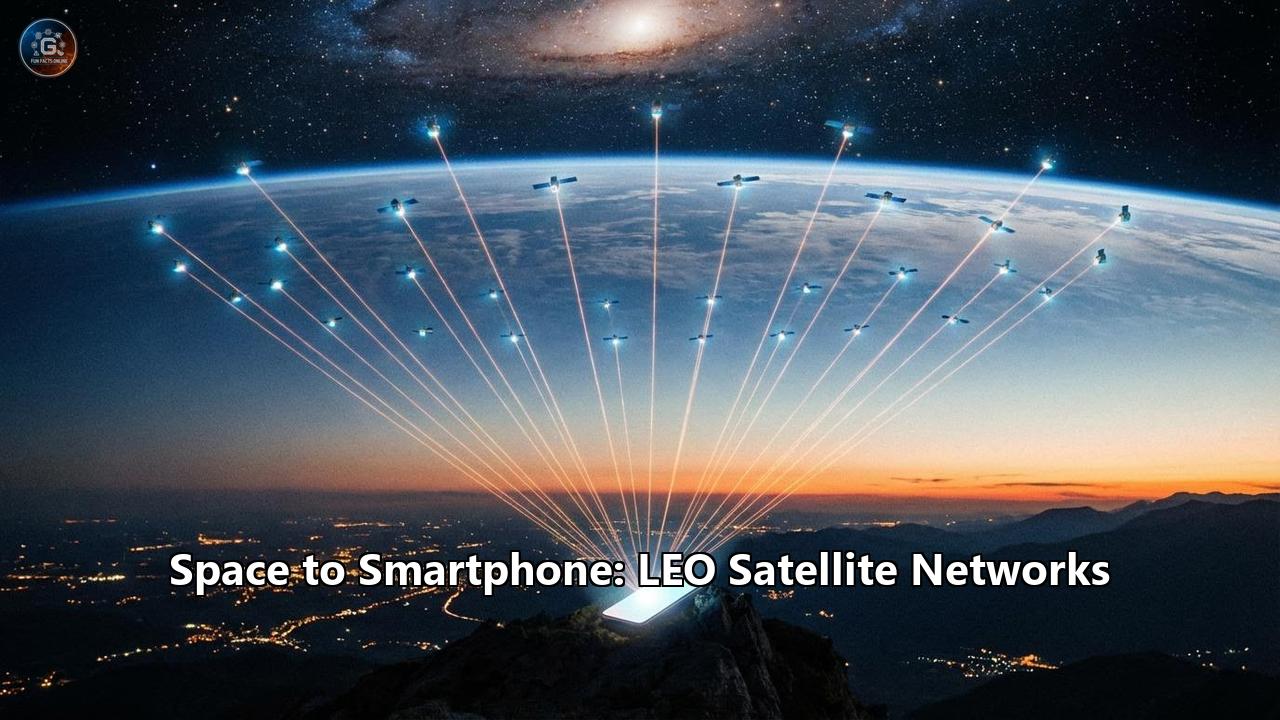
For decades, the fundamental rule of mobile connectivity has been tethered to the ground: if you want a signal, you need a line of sight to a physical cell tower. We have all experienced the sudden, frustrating isolation of the "dead zone"—a dropped call on a remote highway, a vanishing GPS signal on a hiking trail, or the terrifying loss of communication during a severe storm when terrestrial infrastructure fails. Until recently, the only solution for off-grid communication was a bulky, expensive, purpose-built satellite phone with an antenna the size of a ruler.
But as we navigate through 2026, a radical paradigm shift is rewriting the rules of global telecommunications. The cell tower is no longer confined to the earth; it has moved to the stars.
Welcome to the era of Low Earth Orbit (LEO) Direct-to-Cell satellite networks—a technological revolution designed to connect everyday, unmodified smartphones directly to space. This isn't a science fiction concept slated for the distant future. It is a booming, multi-billion-dollar reality currently being deployed by aerospace titans and telecommunications giants alike, promising to eliminate dead zones forever, provide ultimate disaster resilience, and bridge the digital divide for the billions who remain unconnected.
The Physics and Wizardry of "Cell Towers in Space"
To appreciate the magnitude of this achievement, one must understand the sheer physics involved in connecting a fragile piece of glass and metal in your pocket to a satellite hurtling through space.
Traditional terrestrial cell towers are usually located just a few miles away from your phone. Your smartphone is equipped with a low-power, omnidirectional antenna designed to ping these nearby towers. LEO satellites, however, orbit the Earth at altitudes ranging from 300 to 500 kilometers and travel at blistering speeds of around 27,000 kilometers per hour. Connecting a standard phone to a satellite involves overcoming monumental technical hurdles:
- Free-Space Path Loss: The signal from a smartphone is incredibly weak by the time it travels hundreds of kilometers through the atmosphere.
- The Doppler Effect: Because the satellite is moving so fast relative to the user on the ground, the frequency of the radio waves shifts dramatically—much like the pitch of a police siren changing as it speeds past you.
- Timing Advance: The time it takes for a signal to travel to space and back must be perfectly synchronized with terrestrial cellular protocols that expect a tower to be just down the road.
To solve this, the burden of heavy lifting has been shifted from the phone to the satellite. Space companies are deploying satellites equipped with massive, highly advanced phased array antennas. These colossal "ears" in space are sensitive enough to pick up the faint whisper of a smartphone's standard LTE or 5G signal and intelligent enough to computationally correct for the Doppler shift in real-time. Paired with upcoming 3GPP Release 19 chipsets integrated into next-generation smartphones, the boundary between terrestrial and non-terrestrial networks (NTN) is seamlessly dissolving.
The Titans Clashing in Low Earth Orbit
The race to dominate the direct-to-device (D2D) market has coalesced into a fierce competition among a few visionary aerospace companies, each utilizing distinct strategies to capture the skies.
SpaceX: The Birth of "Starlink Mobile"
SpaceX has undeniably set the pace in the LEO connectivity race. What began in early 2024 as an ambitious "Direct to Cell" initiative—deploying the first generation of modified Starlink satellites—has rapidly evolved. At the Mobile World Congress (MWC) in early March 2026, SpaceX officially rebranded its direct-to-device service as "Starlink Mobile".
The numbers are already staggering. SpaceX's Starlink Mobile currently serves approximately 16 million unique users via partner carriers, with around 10 million active users checking in on a monthly basis. During the MWC 2026 keynote, Michael Nicolls, SpaceX’s VP for Satellite Engineering, alongside President Gwynne Shotwell, unveiled the company’s roadmap for a massive expansion. SpaceX aims to grow its active user base to over 25 million by the end of 2026.
However, the true game-changer arrives in mid-2027 with the deployment of the "V2" (Version 2) next-generation satellites. Enabled by the massive payload capacity of SpaceX's Starship rocket—which will deploy more than 50 of these V2 satellites per launch—the new network will support full voice, data, and video streaming, a massive upgrade from the current text-only capabilities. Armed with custom-designed silicon, advanced phased arrays, and 50 MHz of exclusive S-band spectrum acquired from EchoStar, the V2 constellation will deliver a 100x capacity increase and throughput speeds up to 150 Mbps, making satellite connectivity feel completely indistinguishable from using a regular ground-based cell tower. SpaceX's ultimate goal is epic: providing broadband connectivity to "hundreds of millions, potentially more, devices" globally.
AST SpaceMobile: The Broadband Behemoths
If SpaceX relies on a swarm of smaller satellites, AST SpaceMobile is betting on sheer size. The Midland, Texas-based company is building the largest commercial communications arrays ever deployed in low Earth orbit, specifically designed to deliver direct 4G and 5G cellular broadband to standard smartphones.
AST SpaceMobile is currently at a critical inflection point. Following the successful deployment of its initial satellites, the company has ramped up its manufacturing capabilities to produce six of its massive "Block 2 BlueBird" satellites per month. In early 2026, AST aims to accelerate its launch cadence, targeting the deployment of 45 to 60 BlueBird satellites by the end of the year. This specific number is vital; according to AST President Scott Wisniewski and CEO Abel Avellan, reaching the 45-to-60 satellite threshold will allow the company to transition from "intermittent" coverage to full, continuous commercial service across its initial key markets, including the United States, Europe, and Japan.
To get these behemoths into orbit, AST is writing large checks to both SpaceX (using Falcon 9 rockets) and Jeff Bezos' Blue Origin. Blue Origin's heavy-lift New Glenn rocket, which debuted in 2025, is scheduled to carry multiple BlueBirds per launch, vastly accelerating AST's constellation deployment. Backed by heavyweight telecom partners like AT&T, Verizon, Vodafone, and Rakuten, AST SpaceMobile expects to start generating meaningful revenue—projected between $50 million and $75 million in the latter half of 2025—as it lights up its thousands of orbital cell sites.
Lynk Global: The Multi-Orbit Underdogs
While SpaceX and AST battle for broadband supremacy, Lynk Global is taking a highly strategic, resilient approach. Lynk holds the distinction of receiving the world’s first commercial license for international satellite D2D service from the FCC and has proven its technology across all seven continents.
Lynk’s strategy is rooted in vast global partnerships—having signed agreements with over 50 mobile network operators (MNOs) across 60 countries. Recently, Lynk facilitated Africa’s first successful satellite-to-mobile phone call in partnership with MTN South Africa. Furthermore, Lynk is heavily focused on emerging markets and disaster-prone regions, recently partnering with Smart Communications in the Philippines to bring basic text and mobile applications to coastal and mountainous barangays during typhoons and earthquakes.
Looking toward the future, Lynk Global is currently undergoing a strategic merger with Omnispace. This combined entity will leverage a "multi-orbit, multi-spectrum" approach. By combining Lynk's LEO constellation with Omnispace's 60MHz of S-band spectrum and utilizing SES’s medium-Earth orbit (MEO) and geostationary (GEO) satellites, the new venture aims to provide an incredibly cost-effective, "always-on" narrowband connectivity network. Lynk CEO Charles Miller envisions a network of 5,000 LEO satellites that will serve as the ultimate fail-safe—an "instant backup for planet Earth" when hurricanes, fires, or tsunamis wipe out terrestrial infrastructure.
The Telecom Alliance: Why Carriers Love Space
Historically, satellite operators and terrestrial telecom companies viewed each other with suspicion. Today, they are locked in a symbiotic embrace. Mobile Network Operators (MNOs) have realized that D2D is not a threat to their core business; rather, it is the ultimate complementary technology.
Building physical cell towers in remote, mountainous, or highly rural areas is an economic nightmare. The capital expenditure required to lay fiber optics and maintain hardware in areas with a population density of a few people per square mile rarely yields a return on investment. As Lynk's Charles Miller noted, some operators are actually eager to use satellite services to replace remote physical towers that are operating at a deep financial loss.
Consequently, a massive wave of partnerships has materialized:
- The Americas: In the US, T-Mobile has exclusively partnered with Starlink, while AT&T and Verizon are the primary anchors for AST SpaceMobile. In Canada, Rogers is leveraging both Starlink and Lynk Global to cover the vast northern territories.
- Japan: The Japanese market is highly competitive regarding disaster-resilient communications. KDDI was the first to launch its "AU Direct Starlink" service, initially offering SMS and emergency alerts before adding data connectivity. SoftBank is also utilizing Starlink, while NTT Docomo is officially rolling out its direct-to-cell service on LTE-compatible phones in early FY2026, partnering with Lynk to cover mountainous regions and maritime routes. Rakuten Mobile, meanwhile, is championing AST SpaceMobile.
- Europe & Beyond: Deutsche Telekom recently signed up for Starlink's V2 services to provide coverage across ten European countries by 2028, while operators like Optus (Australia) and One NZ (New Zealand) have fully integrated satellite backup into their consumer plans.
For consumers, this integration is invisible and frictionless. There are no new apps to download or special antennas to buy. When a smartphone loses the signal from a ground tower, it simply scans the sky and handshakes with a satellite, often retaining the user's existing phone number and billing plan. Industry analysts project that this feature will be heavily utilized by telcos to increase subscriber loyalty and upsell users to premium mobile tariffs.
The Real-World Impact: Saving Lives and Connecting the Unconnected
The implications of this technology extend far beyond the convenience of checking social media on a remote hiking trail. At its core, the space-to-smartphone revolution is a humanitarian and socio-economic equalizer.
When SpaceX began deploying its direct-to-cell constellation, statistics revealed that 20 percent of the land area in the United States and a staggering 90 percent of the Earth's surface lacked terrestrial mobile connectivity. Over one billion people globally do not own a mobile phone, largely because they live in regions entirely devoid of reliable service. By blanketing the Earth with LEO coverage, the digital divide can be closed without the need for generational infrastructure investments in developing nations.
Furthermore, these networks serve as an indestructible safety net. In recent years, natural disasters have highlighted the fragility of ground-based communications. When a tsunami strikes Japan or a super-typhoon ravages the Philippines, the first casualties are often the power grid and the cell towers, right when emergency coordination is needed most. Satellites orbiting 400 kilometers above the weather remain entirely unaffected. Public safety officials globally have heralded the integration of D2D technologies—such as KDDI's capability to deliver J-Alerts via Starlink—as a game-changing asset that will definitively save lives.
Hurdles in the Heavens: Capital, Regulation, and Privacy
Despite the blinding momentum, establishing a seamless global space network is fraught with complex challenges.
The Financial Burn Rate: Space is relentlessly expensive. Deloitte forecasts that by the end of 2026, cumulative global investments in D2D satellites and LEO broadband constellations will reach an astonishing $10 billion, with annual spending on D2D satellite capacity hitting $6 to $8 billion. Companies like AST SpaceMobile and Lynk Global are in a constant race to secure capital to meet their ambitious manufacturing and launch milestones. Regulatory Labyrinths: The skies are governed by strict international laws. Companies must navigate the Federal Communications Commission (FCC) in the US and the International Telecommunication Union (ITU) globally. The crux of the regulatory debate has been "Supplemental Coverage from Space" (SCS)—the rules governing how satellite operators can utilize terrestrial mobile frequencies without causing harmful interference to existing ground networks. Furthermore, acquiring dedicated Mobile Satellite Service (MSS) spectrum, like Starlink's recent S-band purchase from EchoStar, requires navigating a minefield of geopolitical and corporate negotiations. The Privacy Dilemma: As satellite networks merge with terrestrial ones, a unique cybersecurity vulnerability arises: Location Privacy. Multi-tenant LEO satellite networks run the risk of inadvertently exposing a user's precise geographical location to the Satellite Network Operator (SNO). Because satellites cover massive footprints, tracking the exact beam a user connects to can yield highly specific location data. To combat this, researchers in 2025 and 2026 have developed protocol-layer solutions like the Location Privacy Game (LPG). LPG allows for "identity-location decoupling," enabling SNOs to provide connectivity without ever knowing the user's identity, while MNOs handle the billing without accessing the user's precise location. Implementing such cryptographic privacy protocols on resource-constrained satellite hardware is becoming a vital step in securing the future of D2D networks.Will Space Make Ground Towers Obsolete?
With satellites capable of delivering 150 Mbps directly to a phone anywhere on Earth, a logical question emerges: Are traditional cell towers destined for the scrap heap?
The definitive answer is no. While LEO satellite networks offer unparalleled geographic reach, they are bound by the physics of spectrum capacity. A single satellite may cover an area the size of Texas, but it must share its available bandwidth with every user inside that massive footprint. Terrestrial networks, conversely, achieve massive capacity through density. In a busy urban center, hundreds of micro-cell towers and localized 5G nodes divide the user load, offering deep, high-capacity, low-latency data streams that a satellite hundreds of miles away simply cannot match.
Therefore, Direct-to-Cell networks are not a replacement, but a profound augmentation. They will coexist in a beautifully orchestrated hybrid ecosystem. In the cities and suburbs, your phone will feast on the high-capacity terrestrial 5G infrastructure. But the moment you drive past the city limits, venture into the mountains, or sail into the open ocean, the invisible handoff will occur. The sky will take over, ensuring that the bar on your phone never drops to zero.
Looking to the Horizon
As we stand in 2026, looking up at the night sky means looking at the future of human connection. From SpaceX's Starship delivering 50 next-generation Starlink Mobile satellites per flight, to AST SpaceMobile's massive BlueBirds unfolding their phased arrays in the vacuum of space, the architecture of a truly borderless world is being built above our heads.
The promise of Direct-to-Cell LEO networks is ultimately a promise of fundamental security and equality. It ensures that a fisherman in the South China Sea, a farmer in rural Africa, and a hiker in the Rocky Mountains all share the exact same access to emergency services, global information, and each other. The dead zone is officially on the brink of extinction. Space has answered the call, and our world will never be disconnected again.
Reference:
- https://strandconsult.dk/will-leo-satellite-direct-to-cellular-networks-make-traditional-mobile-networks-obsolete/
- https://www.youtube.com/watch?v=HAogxFe-IGI
- https://www.fierce-network.com/wireless/mwc-starlink-mobile-unveils-plans-v2-satellites-and-more
- https://www.pcmag.com/news/spacex-makes-starlink-mobile-official-not-competing-with-carriers-mwc-2026
- https://gadgets.beebom.com/news/spacex-starlink-big-upgrade-direct-to-cell-service-expands-globally-in-2027
- https://www.spacex.com/updates
- https://www.thefastmode.com/technology-solutions/41759-ast-spacemobile-prepares-for-five-launches-with-block-2-satellite-rollout
- https://www.openpr.com/news/4429829/future-of-satellite-to-phone-service-market-2026-global
- https://www.advanced-television.com/2025/12/18/ast-spacemobile-confirms-2026-launch-schedule/
- https://www.telecoms.com/satellite/ast-spacemobile-to-put-another-60-satellites-into-orbit-in-2025-26
- https://www.pcmag.com/news/ast-spacemobile-has-big-cellular-satellite-plans-can-it-deliver-mwc-2026
- https://www.lightreading.com/satellite/ast-spacemobile-risks-missing-2026-satellite-launch-target
- https://www.advanced-television.com/2025/05/02/lynk-wins-global-licence-modification/
- https://www.bworldonline.com/corporate/2025/10/29/708580/smart-partners-with-lynk-global-to-expand-satellite-connectivity-in-remote-areas/
- https://www.lightreading.com/satellite/telcos-pick-satellite-sides-in-mobile-broadband-space-race
- https://urgentcomm.com/broadband/lynk-global-inks-deals-with-eight-carriers-plans-for-global-broadband-coverage-by-2025
- https://www.lightreading.com/satellite/ntt-docomo-to-roll-out-direct-to-cell-service-in-early-fy2026
- https://www.deloitte.com/us/en/insights/industry/technology/technology-media-and-telecom-predictions/2026/next-gen-satellite-internet.html
- https://eprint.iacr.org/2025/2255