
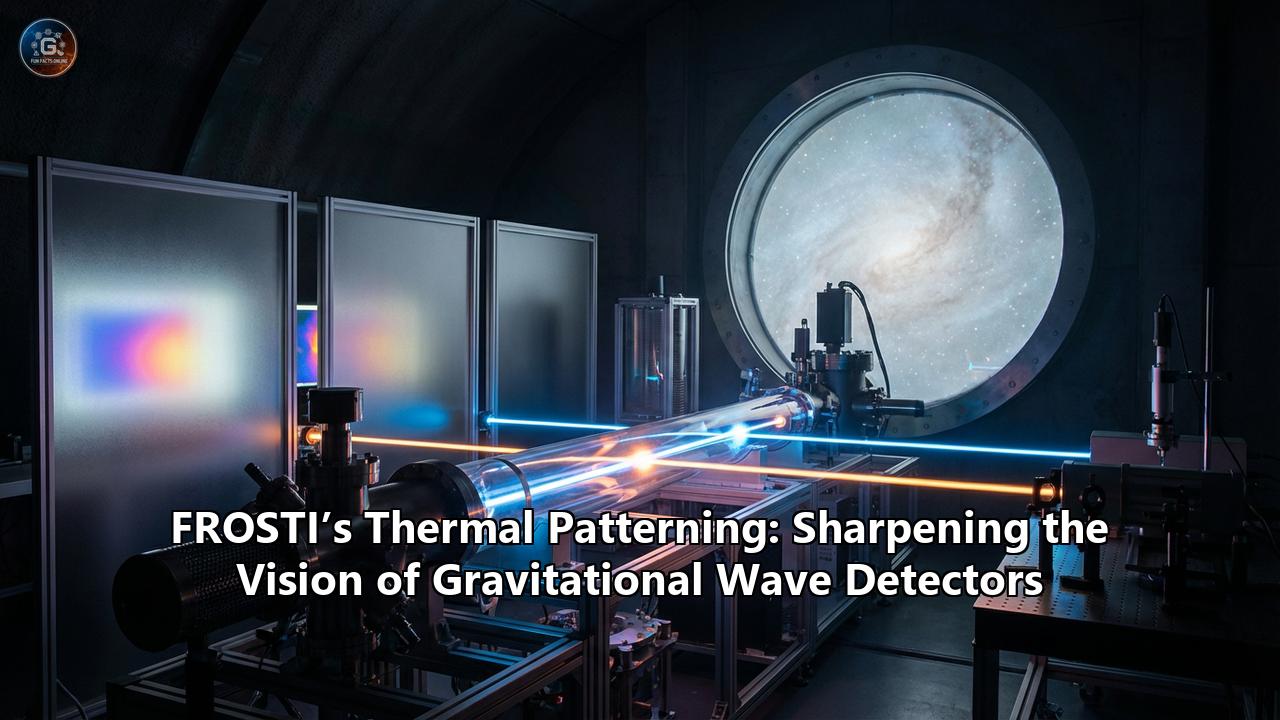
Introduction: The Universe’s Faintest Whispers
In the silent vacuum of space, massive cataclysms are constantly reshaping the fabric of reality. Black holes collide with the power of a billion suns; neutron stars smash together, shedding gold and platinum into the cosmos. For billions of years, these events were silent movies—violent, energetic, but completely unheard by humanity. That changed on September 14, 2015, when the Laser Interferometer Gravitational-Wave Observatory (LIGO) detected the first ripples in spacetime, gravitational waves, emanating from a binary black hole merger. It was a moment that changed astronomy forever, akin to a deaf person suddenly hearing sound for the first time.
However, "hearing" these cosmic whispers requires a level of precision that borders on the impossible. The detectors must measure changes in distance smaller than one-thousandth the width of a proton. To achieve this, LIGO and its partner observatories (Virgo in Italy, KAGRA in Japan) use lasers of immense power, bouncing them between mirrors suspended in a near-perfect vacuum. But this power comes with a price. The very lasers used to detect these waves can distort the mirrors they bounce off, blurring the detector's vision just as it tries to focus.
Enter FROSTI (FROnt Surface Type Irradiator), a revolutionary new adaptive optics system developed by researchers at the University of California, Riverside. Despite its icy acronym, FROSTI uses the paradox of heat to fight thermal distortion. It acts as a corrective lens, not made of glass, but of carefully sculpted thermal radiation, sharpening the "vision" of gravitational wave detectors and paving the way for a new era of cosmic exploration. This article delves deep into the science, the struggle, and the future of this groundbreaking technology.
Part 1: The Paradox of Power in Gravitational Wave Astronomy
To understand why FROSTI is necessary, one must first appreciate the "optical trap" that high-precision interferometry finds itself in.
The Quantum Limit and the Need for Power
Gravitational wave detectors are, at their heart, Michelson interferometers. They split a laser beam into two perpendicular arms, bounce the light off mirrors (test masses) at the ends, and recombine the beams. If a gravitational wave passes through, it stretches one arm and squeezes the other, causing the light waves to shift out of phase and produce a signal.
The sensitivity of this measurement is limited by quantum shot noise. Light is not a continuous stream but a hail of discrete photons. When the number of photons is low, the "flicker" of their arrival creates noise that can mask a gravitational wave signal. The solution is simple in theory: increase the laser power. More photons mean a smoother signal and less shot noise. This is why future detectors like LIGO A+ and the proposed Cosmic Explorer aim to ramp up power from roughly 200 kilowatts to over a megawatt of circulating power.
The Thermal Curse
However, mirrors are not perfect reflectors. Even the ultra-pure fused silica mirrors used in LIGO absorb a tiny fraction of the laser light—about one part in a few million. When you have a megawatt of power hitting a mirror, even that tiny absorption generates heat.
This heat creates two major problems:
- Thermal Lensing: The mirror substrate warms up, and because the speed of light in glass changes with temperature (the thermo-optic effect), the mirror acts like a weak lens, distorting the laser beam profile.
- Thermo-Elastic Deformation: The heat causes the mirror surface to physically expand and bulge outward. Instead of a perfectly flat surface, the laser encounters a "bump" in the center.
These distortions scatter light out of the main beam, reducing the detector's sensitivity and, in severe cases, making it impossible to keep the interferometer "locked" or stable. It is the classic Icarus problem: fly too close to the sun (or pump too much power into your laser), and your wings melt.
Part 2: The Villain—Point Absorbers
While general thermal lensing can be corrected with relatively simple heaters, a more insidious villain has emerged in recent observing runs: Point Absorbers.
These are microscopic defects—dust particles or tiny imperfections in the mirror coatings—that absorb light much more aggressively than the rest of the mirror surface. Under high power, these points get incredibly hot, creating sharp, localized "pimples" on the mirror surface.
Imagine trying to look through a telescope, but the lens has tiny, intense hotspots that warp the image in unpredictable ways. These point absorbers scatter light into "higher-order modes" (complex distinct patterns of light) that the detector cannot use. This scattering creates significant optical loss and noise.
"Standard thermal compensation systems are like using a sledgehammer to crack a nut," explains a leading optical engineer. "They can fix the overall curvature of the mirror, but they cannot smooth out these tiny, specific pimples caused by point absorbers."
This is where FROSTI enters the stage.
Part 3: What is FROSTI?
FROSTI stands for FROnt Surface Type Irradiator. It is a sophisticated thermal projection system designed to apply a corrective heat pattern to the face of the mirror.The Concept: Fighting Fire with Fire
The intuition behind FROSTI is counter-intuitive. If the mirror is distorted because it's getting hot, why heat it more?
The answer lies in homogeneity. A distorted mirror is not necessarily "too hot"; it is "unevenly hot." The laser beam heats the center (or specific points), causing a bulge. FROSTI projects a heating pattern that targets the cooler areas surrounding the hot spots. By selectively heating the "valleys" to match the "peaks," FROSTI flattens the thermal gradient. It effectively raises the temperature of the entire surface to a uniform state, restoring the mirror's flat, reflective profile.
The Hardware: An Annular Ring with a Brain
Physically, FROSTI is located inside the ultra-high vacuum of the detector, positioned near the reflective face of the test mass. It is not a simple coil heater (which LIGO already uses for basic corrections). Instead, it is a technological marvel consisting of:
- The Emitter Array: A segmented ring of heating elements.
- Non-Imaging Optics: This is the "secret sauce." Specialized gold-coated reflectors capture the infrared radiation from the heaters and sculpt it. Unlike a lens that focuses an image, these non-imaging optics are designed using complex mathematics to project a specific intensity profile of heat.
- The Target: The radiation is projected onto the mirror's surface in a precise pattern that cancels out the specific distortions caused by the laser.
Part 4: The Innovation—Why FROSTI is a Breakthrough
Several thermal compensation systems existed before, but FROSTI introduces three critical innovations that make it suitable for the "megawatt era" of gravitational wave detection.
1. High-Order Correction
Old systems, like the simple Ring Heater, could primarily correct for "defocus"—basically changing the focal length of the thermal lens. They acted like a pair of reading glasses: good for general blur, but useless if you had complex astigmatism or local defects.
FROSTI can correct higher-order spatial modes. Because its radiation profile is carefully sculpted (and potentially controllable via segmented heaters), it can fix complex shapes, not just simple bowls. This is essential for mitigating the jagged distortions caused by point absorbers.
2. The Blackbody Advantage
One might ask: "Why not just use a projector or a scanning laser to heat the mirror exactly where needed?"
The answer is noise. A laser projector introduces "intensity noise." Lasers fluctuate in brightness. If you shine a fluctuating heating laser onto the mirror, the mirror's surface will fluctuate in response. This physical vibration would look exactly like a gravitational wave signal, swamping the detector.
FROSTI uses blackbody radiation from resistive heating elements. Blackbody radiation is inherently stable. A hot piece of metal does not "flicker" the way a laser or an LED does. Its thermal inertia means it provides a smooth, constant stream of photons. This "low-noise actuation" is the single most critical requirement for any device placed near the test masses. FROSTI allows for correction without adding the noise that would blind the detector.
3. Scalability
The prototype FROSTI was tested on 40 kg mirrors (current LIGO standard). However, its design is scalable. The next generation of detectors, like Cosmic Explorer, will use massive 440 kg mirrors to reduce radiation pressure noise. FROSTI's thermal projection method can be scaled up to cover these larger surface areas, making it a "future-proof" technology.
Part 5: How It Works—The Thermal Patterning Process
Let’s walk through the operational loop of a FROSTI-equipped detector.
- Diagnosis: The detector is running. Hartmann Wavefront Sensors (HWS) constantly monitor the surface of the mirrors. They detect a distortion—perhaps a slight bulge in the center caused by the main laser, plus a sharp spike near the edge caused by a point absorber.
- Calculation: The control computer calculates the "inverse map" of this distortion. It determines exactly how much heat needs to be applied to every other part of the mirror to flatten the surface.
- Actuation: The FROSTI elements are powered up. The resistive heaters glow (in the infrared spectrum, invisible to the naked eye).
- Projection: The non-imaging reflectors catch this infrared light. They don't just spray it; they map the heaters' output into a complex annular (ring-like) or custom profile on the mirror surface.
- Correction: The mirror absorbs this pattern. The glass expands in the cool zones, rising up to meet the level of the hot zones. The surface flattens. The scattering loss drops. The detector's sensitivity creates a clean, sharp resonance.
Researchers describe the result as "ironing out the wrinkles" in the spacetime-sensing fabric.
Part 6: The Path to Discovery
The development of FROSTI, led by Prof. Jonathan Richardson and his team at UC Riverside, represents a shift in how we think about precision instrumentation. It acknowledges that we have reached a limit where we can no longer build "perfect" passive components. The heat loads are simply too high.
Instead, we are moving toward active, adaptive instruments. The mirror is no longer a static block of glass; it is a dynamic system that breathes and flexes, controlled by a thermal nervous system (FROSTI) that keeps it in peak condition.
LIGO A+ and Beyond
The immediate home for FROSTI is the LIGO A+ upgrade. This upgrade aims to increase the volume of space LIGO can survey by a factor of seven. With FROSTI installed, LIGO will be able to run at higher powers, pushing the "shot noise" floor down and revealing mergers that were previously too faint to see—perhaps including the collisions of black holes from the very early universe.
Looking further ahead, the Cosmic Explorer (US) and Einstein Telescope (Europe) will require technologies like FROSTI as a baseline. These third-generation detectors aim to see every black hole merger that has occurred in the history of the observable universe. They will operate with megawatts of power, making thermal patterning not just a luxury, but a necessity for survival.
Conclusion: The Sharpened Eye
For centuries, astronomers polished glass lenses to remove imperfections. Today, in the era of gravitational wave astronomy, the "lenses" are mirrors, and the "polishing" is done with beams of invisible heat.
FROSTI is a triumph of engineering—a device that solves a high-tech problem (laser-induced distortion) with a solution rooted in fundamental thermodynamics (blackbody radiation). By sharpening the vision of our gravitational wave detectors, FROSTI ensures that as we peer deeper into the dark, violent history of the cosmos, our view will remain crystal clear.
The universe is speaking to us. Thanks to FROSTI, we are finally ready to listen without the static.
Reference:
- https://dcc.ligo.org/public/0187/T2300145/001/Sophia_Arnold_SURF23_Intrim_Report_2.pdf
- https://archive.aps.org/smt/2025/apr-p20/1/
- https://www.sciencedaily.com/releases/2025/12/251203004736.htm
- https://physicsworld.com/feed/
- https://techtransfer.universityofcalifornia.edu/NCD/34164.html
- https://dcc.ligo.org/LIGO-T2400197/public