
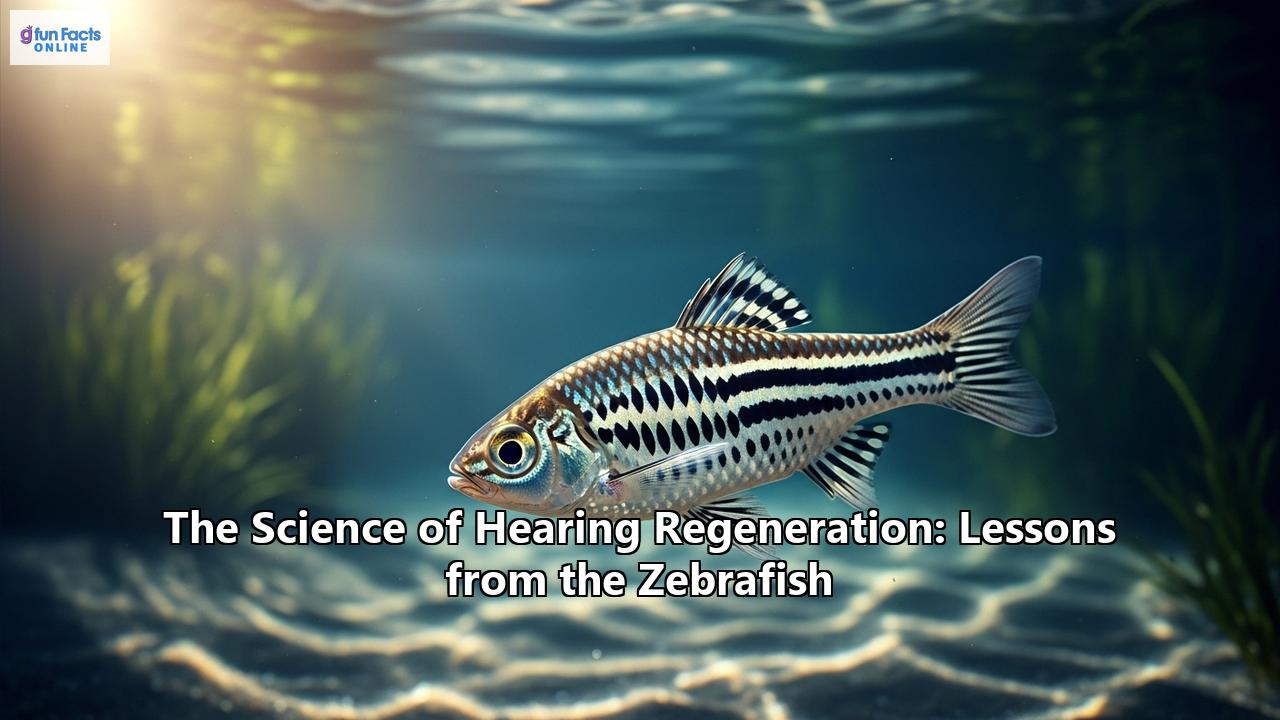
An unassuming hero in the quest to conquer hearing loss resides not in a high-tech laboratory, but in the humble fish tank. The tiny, striped zebrafish, known to many as a common aquarium pet, holds within its genome the remarkable ability to do something that humans and other mammals have lost: the power to regenerate the delicate sensory cells of the inner ear. The loss of these "hair cells" is a primary cause of permanent hearing loss, a condition that affects millions worldwide. By studying the zebrafish's innate gift of auditory renewal, scientists are uncovering the fundamental biological processes that could one day lead to revolutionary treatments for deafness in humans. This exploration into the science of hearing regeneration is not just a tale of two species, but a journey into the intricate dance of genes, cells, and signaling pathways that govern one of our most precious senses.
The Silent Epidemic: A World Without Sound
Hearing loss is a global health issue of staggering proportions. The World Health Organization estimates that by 2050, nearly 2.5 billion people will have some degree of hearing loss. For many, this progressive loss of auditory perception is due to the death of mechanosensory hair cells in the inner ear. These exquisitely sensitive cells, named for the hair-like bundles of stereocilia that protrude from their surface, are the primary receptors for sound. When sound waves travel into our ears, they cause these stereocilia to bend, which in turn triggers an electrical signal that is sent to the brain for processing.
Unfortunately, human hair cells are a finite resource. We are born with a set number, and once they are damaged or destroyed by factors such as aging, prolonged exposure to loud noise, certain medications, or genetic conditions, they are gone forever. In the mammalian inner ear, there is no significant capacity for these cells to regenerate, leading to permanent hearing impairment. This inability to self-repair is a fundamental biological roadblock that has, for centuries, rendered most forms of sensorineural hearing loss incurable.
Enter the Zebrafish: A Model of Hope
In the world of scientific research, the zebrafish (Danio rerio) has emerged as a powerhouse model organism for studying a wide range of biological processes, from development to disease. There are several key characteristics that make this small, tropical fish an invaluable tool for hearing research. Firstly, despite our vast visual differences, humans and zebrafish share more than 70% of their genes, making them surprisingly similar at a genomic level. This genetic overlap means that many of the fundamental biological pathways are conserved between the two species, allowing researchers to study processes in zebrafish with a high degree of relevance to human health.
Furthermore, zebrafish embryos are fertilized externally and are optically transparent, allowing scientists to observe the development of the inner ear in real-time within a living organism. This is a significant advantage over mammalian models, where the inner ear is encased in dense bone and difficult to access for study. However, the most compelling reason for the zebrafish's prominent role in hearing research is its remarkable regenerative prowess. Unlike mammals, zebrafish can readily regenerate damaged hair cells throughout their lives, restoring their sense of hearing and balance with incredible efficiency. This innate ability to heal what is broken in our own auditory system makes the zebrafish an unparalleled model for unlocking the secrets of hearing regeneration.
Two Ears, Two Systems: The Auditory World of the Zebrafish
Like humans, zebrafish possess an inner ear that is responsible for both hearing and balance. This intricate labyrinth of fluid-filled canals and sensory patches is where the magic of sound and motion detection happens. The zebrafish inner ear develops rapidly, with functional hair cells forming just 24 hours after fertilization, and a fully operational auditory and vestibular system by five days post-fertilization.
In addition to their inner ear, zebrafish and other aquatic vertebrates have a unique sensory system called the lateral line. This system consists of a series of sensory organs called neuromasts, which are distributed along the surface of the fish's body and are used to detect water movement, pressure changes, and vibrations in their environment. Each neuromast contains a cluster of hair cells that are functionally and morphologically very similar to those found in the mammalian inner ear. The accessibility of the lateral line neuromasts on the exterior of the fish makes them an incredibly convenient system for studying hair cell development, damage, and regeneration in a living animal. The ease with which scientists can observe and manipulate these external hair cells has made the lateral line a primary workhorse in the field of hearing regeneration research.
The Miracle of Regeneration: How Zebrafish Restore Their Hearing
The zebrafish's ability to regenerate hair cells is nothing short of a biological marvel. When these delicate sensory cells are damaged, whether by exposure to ototoxic drugs (medications that are harmful to the ear), loud noise, or other forms of trauma, a remarkable cascade of events is initiated to replace the lost cells. Within hours of damage, the process of regeneration begins, and within a matter of days, the sensory epithelium can be fully repopulated with new, functional hair cells, leading to a complete recovery of hearing. This robust regenerative response stands in stark contrast to the permanent silence that follows hair cell death in the mammalian ear.
The key to this incredible feat lies in a population of cells that, in mammals, have lost their regenerative potential: the supporting cells.
The Unsung Heroes: Supporting Cells Take Center Stage
In both the zebrafish and mammalian inner ear, hair cells are surrounded and supported by a diverse population of non-sensory cells known as supporting cells. These cells play a crucial role in maintaining the structural and functional integrity of the sensory epithelium. In mammals, after hair cells die, the surrounding supporting cells simply remain, forming a "scar" of non-sensory tissue. However, in the zebrafish, these same cells are the source of new life for the auditory system.
Upon hair cell damage, the quiescent supporting cells of the zebrafish spring into action, employing two primary mechanisms to regenerate the lost hair cells:
- Direct Transdifferentiation: In this process, a supporting cell directly transforms into a hair cell without first undergoing cell division. This is a remarkable feat of cellular reprogramming, where one mature cell type changes its identity to become another.
- Mitotic Regeneration: In this mechanism, supporting cells re-enter the cell cycle and divide. One or both of the resulting daughter cells then differentiate into new hair cells. This proliferative response allows for a more substantial repopulation of the sensory epithelium, particularly after extensive damage.
Recent research has revealed that the zebrafish inner ear utilizes a sophisticated dual-mechanism approach. Following hair cell ablation, there is an initial burst of supporting cell division, which expands the pool of potential progenitor cells. In parallel, new hair cells begin to emerge through the direct transdifferentiation of these progenitor cells, a process that is temporally uncoupled from the initial proliferative phase. This elegant strategy ensures a steady supply of new hair cells to restore auditory function.
Single-cell transcriptomic studies have further illuminated the complexity of the supporting cell population in the zebrafish inner ear. These studies have identified molecularly distinct subtypes of supporting cells, some of which may be more primed for regeneration than others. By understanding the unique characteristics of these regenerative-competent supporting cells, scientists hope to find ways to awaken the dormant potential of their mammalian counterparts.
The Molecular Toolkit for Regeneration: A Symphony of Genes and Pathways
The zebrafish's ability to regenerate hair cells is orchestrated by a complex and dynamic interplay of signaling pathways and transcription factors. These molecular players act as the conductors of the regenerative symphony, ensuring that supporting cells are activated at the right time and in the right place to rebuild the damaged sensory epithelium. Several key pathways have been identified as being crucial for this process:
The Wnt Signaling Pathway: A Pro-proliferative Powerhouse
The Wnt signaling pathway is a well-known regulator of cell proliferation and fate decisions in a variety of tissues and developmental contexts. In the context of zebrafish hair cell regeneration, the Wnt pathway plays a critical role in promoting the proliferation of supporting cells. Activation of Wnt signaling has been shown to increase the number of dividing supporting cells, leading to a more robust regenerative response. Interestingly, RNA-sequencing analyses have revealed that the Wnt pathway is not immediately activated after hair cell death. Instead, it appears to be upregulated at later stages of regeneration, suggesting that it is not the initial trigger for proliferation but rather a key driver of the proliferative phase once it has begun.
The Notch Signaling Pathway: The Gatekeeper of Cell Fate
The Notch signaling pathway is a master regulator of cell-cell communication and is crucial for determining cell fate in many developing tissues, including the inner ear. In the context of hair cell development, Notch signaling acts as a form of lateral inhibition, where a cell that is destined to become a hair cell signals to its neighbors to adopt a supporting cell fate. This ensures a precise pattern of hair cells and supporting cells within the sensory epithelium.
During zebrafish hair cell regeneration, the Notch pathway plays a a dynamic and critical role. Immediately following hair cell damage, there is a transient downregulation of Notch signaling. This release of the "Notch brake" is thought to be a crucial step in allowing supporting cells to re-enter the cell cycle and begin the regenerative process. Subsequently, as new hair cells and supporting cells are being formed, Notch signaling is reactivated to ensure proper cell fate decisions and to control the number of new hair cells being produced. Studies have shown that inhibiting Notch signaling during regeneration leads to an overproduction of hair cells, highlighting its role as a key regulator of the regenerative response.
The Fibroblast Growth Factor (FGF) Signaling Pathway: A Versatile Player
The Fibroblast Growth Factor (FGF) signaling pathway is involved in a wide array of developmental processes, including the initial formation of the inner ear. In zebrafish hair cell regeneration, the role of FGF signaling is complex and appears to be context-dependent. Some studies have suggested that FGF signaling is required for hair cell regeneration, while others have shown that its inhibition can actually enhance the regenerative response.
Like the Wnt and Notch pathways, FGF signaling is also downregulated immediately following hair cell damage. This suggests that a coordinated and temporary shutdown of these key developmental pathways may be a prerequisite for initiating the regenerative program. It is likely that FGF signaling interacts with the Wnt and Notch pathways to fine-tune the regenerative process, ensuring that the right number of new hair cells are produced and that they are properly integrated into the sensory epithelium.
The Sox and Six Transcription Factors: The Master Conductors
At the heart of these signaling pathways are transcription factors, proteins that bind to DNA and control which genes are turned "on" or "off." Recent groundbreaking research has identified two families of transcription factors, the Sox and Six families, as key orchestrators of zebrafish hair cell regeneration.
Using advanced single-cell genomic techniques, scientists have been able to map the changes in gene expression and chromatin accessibility that occur in supporting cells as they transform into new hair cells. This has revealed a two-step process orchestrated by the Sox and Six transcription factors:
- Initiation by Sox factors: Following hair cell death, Sox transcription factors, particularly Sox2, are activated in the surrounding supporting cells. This initiates the regenerative response, causing the supporting cells to change their identity and become more "progenitor-like."
- Collaboration between Sox and Six factors: As the progenitor cells begin to differentiate into new hair cells, the Sox and Six transcription factors work together to guide this transformation. This collaborative effort ensures that the cells adopt the correct fate and mature into functional hair cells.
The discovery of this "Sox-Six" regulatory network represents a major breakthrough in our understanding of hair cell regeneration. It provides a specific set of molecular targets that could potentially be manipulated to induce a similar regenerative response in the mammalian ear.
The Role of Epigenetics: The "Memory" of a Cell
Beyond the genetic code itself, there is another layer of regulation known as epigenetics. These are chemical modifications to DNA and its associated proteins that can influence which genes are expressed without changing the underlying DNA sequence. Epigenetic modifications act as a form of cellular memory, helping to lock in a cell's identity.
In the context of hearing regeneration, epigenetics plays a crucial role. Research has shown that in mammals, the genes required for hair cell development are epigenetically silenced in supporting cells after birth. This "epigenetic block" is a major reason why mammalian supporting cells are unable to regenerate hair cells. In contrast, in zebrafish, the epigenetic landscape of supporting cells appears to be more permissive, allowing for the reactivation of the hair cell genetic program following injury.
Studies in zebrafish have shown that manipulating epigenetic factors can indeed impact hair cell regeneration. For example, inhibiting certain histone-modifying enzymes can affect the expression of key signaling pathways like Wnt and FGF, and consequently, the number of regenerated hair cells. This suggests that a combination of genetic and epigenetic approaches may be necessary to unlock the regenerative potential of the mammalian inner ear.
Why Can't We Be More Like a Zebrafish? The Mammalian Roadblock to Regeneration
The stark contrast between the regenerative capacity of the zebrafish and the regenerative failure of the mammalian inner ear is a central question in hearing research. The reasons for this disparity are complex and multifactorial, involving differences at the cellular, molecular, and epigenetic levels.
One of the key differences lies in the response of supporting cells to hair cell death. In zebrafish, as we've seen, supporting cells are readily activated to proliferate and transdifferentiate. In mammals, however, supporting cells largely remain quiescent and do not re-enter the cell cycle. This is partly due to the active suppression of cell cycle progression in these cells.
The molecular signaling environment in the mammalian inner ear is also less conducive to regeneration. While the same key pathways (Wnt, Notch, FGF) are present, their regulation following hair cell damage is different from that in zebrafish. For example, the transient downregulation of Notch signaling that is observed in zebrafish does not occur in the same way in mammals. This persistent Notch activity may help to maintain the supporting cell identity and prevent them from transforming into hair cells.
Furthermore, the epigenetic silencing of key hair cell genes in mammalian supporting cells, as mentioned earlier, poses a significant barrier to regeneration. These genes are essentially locked away, preventing their reactivation even in the face of injury. Overcoming this epigenetic blockade is a major focus of current research efforts.
From Fish Tank to Clinic: Translating Lessons from the Zebrafish
The ultimate goal of studying zebrafish hearing regeneration is to translate these findings into effective therapies for hearing loss in humans. While this is a long and challenging road, the zebrafish model has already proven to be an invaluable tool in several key areas of translational research.
Drug Discovery and Otoprotection
The small size and external hair cells of the zebrafish larva make it an ideal system for high-throughput drug screening. Scientists can place individual larvae in the wells of a multi-well plate and expose them to thousands of different chemical compounds to see if they can protect hair cells from damage or promote their regeneration. This has led to the identification of several promising "otoprotective" compounds that can prevent hair cell death caused by ototoxic drugs like aminoglycoside antibiotics. One such compound, ORC-13661, which was identified through zebrafish screening, has successfully completed Phase 1 clinical trials and is being developed as a medication to prevent hearing loss in patients receiving aminoglycoside treatments.
Zebrafish are also being used to screen for drugs that can stimulate the regeneration of hair cells. By identifying compounds that can activate the key signaling pathways involved in zebrafish regeneration, researchers hope to find drugs that can awaken the dormant regenerative potential of the mammalian inner ear.
Gene Therapy: Rewriting the Genetic Code for Hearing
Gene therapy represents another promising avenue for treating hearing loss, and zebrafish research is providing crucial insights into which genes to target. By understanding the roles of genes like those in the Wnt, Notch, and Sox families, scientists can develop strategies to deliver these genes to the inner ear to promote regeneration.
One approach that is being explored is the use of a drug-like cocktail of small molecules and siRNA (small interfering RNA) to activate the Myc and Notch pathways, which have been shown to be crucial for hair cell regeneration in both zebrafish and chickens. When combined with the delivery of the key hair cell transcription factor Atoh1 via a harmless virus, this approach was able to induce the regeneration of new hair cells in a normal adult mouse model. This demonstrates the feasibility of a multi-pronged approach that combines chemical and genetic therapies to stimulate hearing regeneration.
The Role of Other Players: The Immune System's Contribution
Recent research has also begun to explore the role of the immune system in zebrafish hair cell regeneration. Following hair cell damage, immune cells, particularly macrophages, are rapidly recruited to the site of injury. These macrophages act as "clean-up crews," engulfing the debris of dead and dying hair cells. While some studies have suggested that this inflammatory response may be important for promoting regeneration, others have found that the depletion of macrophages does not significantly impact the number of regenerated hair cells. The precise role of the immune system in this process is still an area of active investigation, but it is clear that the regenerative environment is a complex ecosystem involving multiple cell types and signaling molecules.
The Toolkit of Discovery: How Scientists Study Zebrafish Hearing
The remarkable discoveries in the field of zebrafish hearing regeneration have been made possible by a powerful array of experimental techniques. These tools allow scientists to visualize, manipulate, and analyze the cellular and molecular processes of regeneration with unprecedented detail.
- Live Imaging: The transparency of zebrafish larvae allows for high-resolution, real-time imaging of hair cell development and regeneration in a living animal. Using fluorescently labeled transgenic fish, researchers can watch as supporting cells divide and transform into new hair cells, providing invaluable insights into the cellular dynamics of regeneration.
- Genetic Manipulation: The zebrafish genome is readily amenable to genetic manipulation. Techniques like CRISPR-Cas9 allow scientists to precisely edit genes to study their function. By knocking out or overexpressing specific genes, researchers can determine their role in the regenerative process.
- Single-Cell RNA Sequencing (scRNA-Seq): This powerful technique allows scientists to analyze the gene expression profiles of individual cells. By applying scRNA-Seq to the regenerating zebrafish inner ear, researchers have been able to identify different subtypes of supporting cells and map the transcriptional changes that occur as they become new hair cells.
- Pharmacological Screens: As mentioned earlier, the small size of zebrafish larvae makes them ideal for large-scale drug screens. This has been instrumental in identifying compounds that can protect hair cells from damage or modulate the regenerative process.
The Future of Hearing Regeneration: Challenges and Next Frontiers
Despite the incredible progress that has been made, there are still many challenges and unanswered questions on the path to restoring hearing in humans. One of the major hurdles is translating the findings from zebrafish to the much more complex and less permissive environment of the adult mammalian inner ear. The newly regenerated hair cells in mammalian models are often immature and not fully functional. Therefore, a key area of future research will be to understand how to not only generate new hair cells but also ensure their proper maturation and integration into the auditory circuitry.
Future research will also continue to delve deeper into the intricate molecular networks that govern regeneration. By identifying more of the key players and understanding how they interact, scientists can develop more targeted and effective therapeutic strategies. The use of multi-modal approaches that combine gene therapy, small molecule drugs, and potentially even stem cell-based therapies will likely be necessary to achieve robust and functional hearing restoration in humans.
Conclusion: A Symphony of Hope
The humble zebrafish has provided us with a biological blueprint for hearing regeneration, a roadmap to a future where deafness may no longer be a permanent condition. By meticulously deciphering the lessons encoded in this tiny fish's genome, scientists are piecing together the intricate symphony of genes and cells that can orchestrate the renewal of our most delicate sensory structures. The journey from the fish tank to the clinic is a long and arduous one, but the promise of restoring the gift of hearing to millions is a powerful motivator. The science of hearing regeneration, inspired by the remarkable abilities of the zebrafish, is a testament to the power of basic research to illuminate the path toward a future filled with sound.
Reference:
- https://www.pnas.org/doi/10.1073/pnas.1806440115
- https://www.news-medical.net/news/20250714/Scientists-discover-how-two-distinct-genes-guide-regeneration-of-sensory-cells-in-zebrafish.aspx
- https://pmc.ncbi.nlm.nih.gov/articles/PMC2912212/
- https://pmc.ncbi.nlm.nih.gov/articles/PMC7415493/
- https://journals.biologists.com/dev/article/151/14/dev204240/361265/In-preprints-theme-and-variations-on-hair-cell
- https://karger.com/books/book/263/chapter/5182029/Using-Zebrafish-to-Study-Human-Deafness-and
- https://pmc.ncbi.nlm.nih.gov/articles/PMC8110678/
- https://elifesciences.org/articles/82978
- https://rnid.org.uk/2023/08/making-a-big-splash-for-treatments-for-hearing-loss/
- https://www.researchgate.net/publication/261409930_Gene-expression_analysis_of_hair_cell_regeneration_in_the_zebrafish_lateral_line
- https://pmc.ncbi.nlm.nih.gov/articles/PMC9903800/
- https://www.frontiersin.org/journals/neuroanatomy/articles/10.3389/fnana.2013.00033/full
- https://pmc.ncbi.nlm.nih.gov/articles/PMC9851615/
- https://hearinghealthfoundation.org/blogs/filling-in-the-gaps
- https://www.e-ceo.org/m/journal/view.php?number=891
- https://pubmed.ncbi.nlm.nih.gov/24706903/
- https://pubmed.ncbi.nlm.nih.gov/36598134/
- https://www.pnas.org/doi/10.1073/pnas.1402898111
- https://repositorio.uchile.cl/handle/2250/166797
- https://pmc.ncbi.nlm.nih.gov/articles/PMC3811936/
- https://experiments.springernature.com/articles/10.1007/978-1-0716-2022-9_9
- https://www.tandfonline.com/doi/abs/10.1080/17460441.2017.1340270
- https://www.frontiersin.org/journals/cellular-neuroscience/articles/10.3389/fncel.2020.613246/full
- https://hms.harvard.edu/news/scientists-regenerate-hair-cells-enable-hearing
- https://www.openaccessjournals.com/articles/sensorineural-hearing-loss-by-aavmediated-gene-therapy-15894.html
- https://pmc.ncbi.nlm.nih.gov/articles/PMC7650643/
- https://pmc.ncbi.nlm.nih.gov/articles/PMC8745006/
- https://www.frontiersin.org/journals/audiology-and-otology/articles/10.3389/fauot.2024.1404617/full