
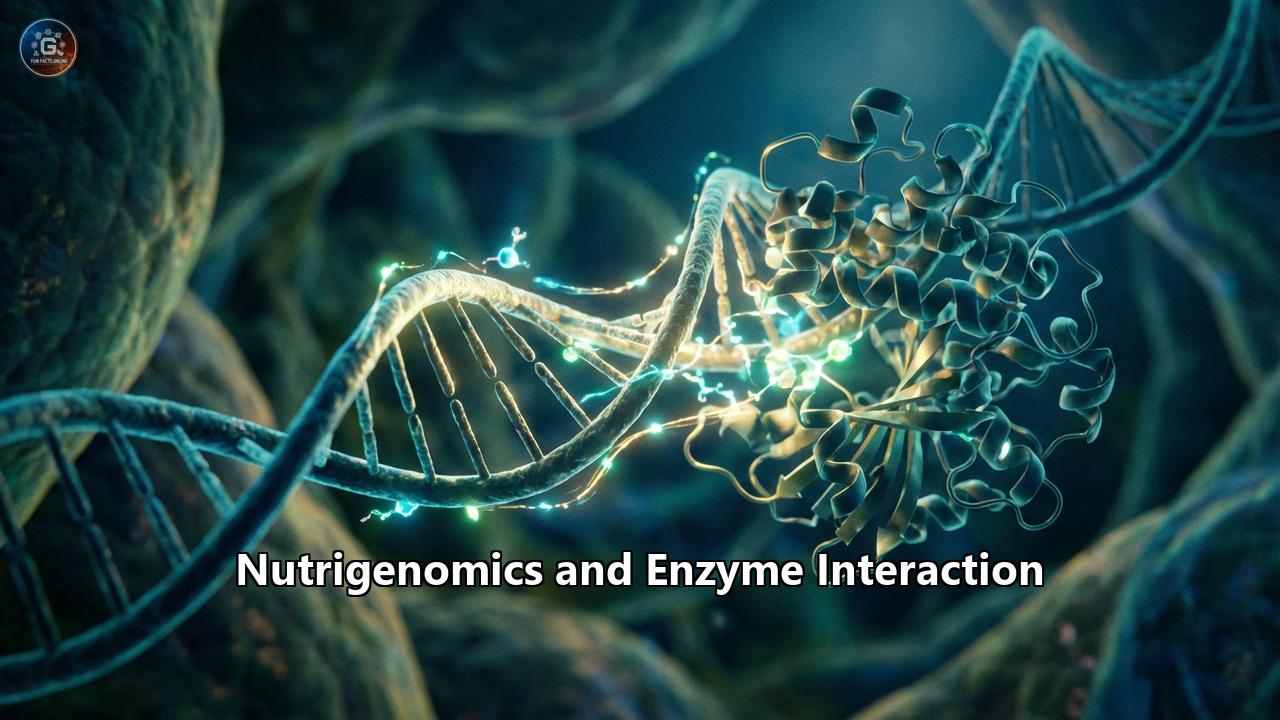
Introduction: The End of "One Size Fits All"
For decades, the field of nutrition has been dominated by a "one-size-fits-all" approach. Public health guidelines suggest a standard recommended daily intake of vitamins, minerals, and macronutrients, assuming a bell-curve average for the entire population. Yet, we all know the anomalies: the person who eats high-fat dairy and maintains perfect cholesterol, the individual who feels jittery after a single cup of coffee while their partner sleeps soundly after a double espresso, or the patient who thrives on a plant-based diet while another suffers from nutrient deficiencies on the exact same regimen.
The answer to these physiological riddles lies not in the food itself, but in the unique biological machinery that processes it. At the heart of this machinery are enzymes—specialized proteins that catalyze millions of biochemical reactions every second. And the blueprints for these enzymes are written in our DNA.
This is the domain of Nutrigenomics and Nutrigenetics, twin fields that have revolutionized our understanding of the human body. While nutrigenomics studies how nutrients influence the expression of our genes, nutrigenetics looks at how our genetic variations affect our response to nutrients. Together, they explain a fundamental truth: our genes do not dictate our destiny, but they do determine our potential. The bridge between that potential and our actual health reality is built by the interaction between what we eat and the enzymes we encode.
This article explores the intricate dance between our genome, our diet, and our enzymes. We will journey through the specific gene variants that alter metabolic pathways, uncover the epigenetic switches that food can flip, and examine the gut microbiome's role as a "second genome." Finally, we will navigate the technological breakthroughs making personalized nutrition possible and the ethical frontiers we must cross to use this power responsibly.
Part I: The Biological Machinery—Enzymes as Genetic Mediators
To understand nutrigenomics, one must first appreciate the role of the enzyme. Enzymes are the laborers of the metabolic factory. They build tissues, break down toxins, generate energy, and regulate signaling pathways.
The Gene-Enzyme Connection
Every enzyme in the body is encoded by a specific gene. A gene is essentially a recipe for a protein. When a cell needs a specific enzyme—say, lactase to digest milk sugar—it "reads" the corresponding gene (LCT) and transcribes it into messenger RNA (mRNA), which is then translated into the enzyme protein.
However, these recipes are not identical across all humans. Small "typos" or variations in the genetic code, known as Single Nucleotide Polymorphisms (SNPs), can occur. A SNP might simply change one letter of the DNA sequence (e.g., a C becomes a T). Depending on where this change happens, it can have three major effects on the resulting enzyme:
- Altered Structure: The enzyme is shaped differently, making it less efficient at binding to its substrate (the molecule it acts upon).
- Altered Stability: The enzyme degrades faster than normal, leading to a shortage.
- Altered Expression: The "dimmer switch" for the gene is affected, causing the body to produce too much or too little of the enzyme.
This variation is the foundation of nutrigenetics. It explains why a nutrient load that is easily handled by one person's enzymes might cause a metabolic traffic jam in another.
Part II: The Macronutrient Matrix—Carbohydrates, Fats, and Proteins
The most immediate impact of gene-enzyme interactions is seen in how we process macronutrients. These are the fuels and building blocks of life, yet our ability to utilize them varies wildly.
1. Carbohydrates: The AMY1 Gene and Starch Tolerance
For years, the "low-carb" vs. "low-fat" debate has raged without a clear winner. The AMY1 gene offers a genetic explanation for this stalemate. AMY1 codes for salivary amylase, the enzyme that begins breaking down starch into glucose the moment food hits your mouth.
Unlike most genes where we have two copies (one from each parent), AMY1 exhibits Copy Number Variation (CNV). Humans can have anywhere from 2 to 15+ copies of this gene.
- High Copy Number: Individuals with many copies produce high levels of salivary amylase. They can rapidly digest starch, leading to a quicker glucose spike but also a more efficient clearing of glucose from the blood. Evolutionarily, these individuals likely descended from agrarian ancestors who relied on grains.
- Low Copy Number: Individuals with fewer copies struggle to break down starch efficiently. Research suggests these individuals may have a higher risk of insulin resistance and obesity when consuming a high-starch diet. For them, a "healthy" bowl of oatmeal might result in prolonged blood sugar dysregulation compared to a high-copy individual.
2. Fats: APOA2 and the Saturated Fat "Switch"
Saturated fat is controversial, but the APOA2 gene suggests the risk is not universal. This gene encodes Apolipoprotein A-II, a protein that stabilizes High-Density Lipoprotein (HDL, the "good" cholesterol). A specific SNP in the promoter region of APOA2 (-265T>C) creates a fascinating diet-gene interaction.
- The "CC" Genotype: Carriers of this variant (about 10-15% of the population) are highly sensitive to saturated fat. Studies have shown that if "CC" individuals consume more than 22 grams of saturated fat per day, their risk of obesity and insulin resistance skyrockets compared to other genotypes. However, if they keep intake low, their risk is identical to the rest of the population.
- Implication: For a "CC" carrier, the Keto diet (often high in saturated fat) could be metabolically disastrous, whereas a low-fat Mediterranean approach would be protective.
3. Omega-3 Conversion: The FADS1/FADS2 Cluster
We are often told that plant sources of Omega-3s, like flaxseeds and walnuts, are sufficient. These foods contain Alpha-Linolenic Acid (ALA), which must be converted into the active forms EPA and DHA by desaturase enzymes encoded by FADS1 and FADS2.
- The Efficiency Gap: Genetic variants in the FADS gene cluster significantly dictate this conversion rate. "Slow converters" possess variants that make the desaturase enzymes sluggish. For these individuals, relying on plant-based Omega-3s will lead to systemic deficiency in EPA/DHA, potentially impacting brain health and inflammation. They essentially require direct dietary sources like fatty fish or algae oil.
- Evolutionary Context: This variation often tracks with ancestry. Populations that historically had limited access to marine foods (e.g., vegetarians in parts of India) often selected for "fast converter" alleles to maximize ALA usage, while Inuit populations, with high fish intake, retained "slow converter" alleles as they had no need for conversion.
Part III: The Methylation Engine—Micronutrients and Cellular Repair
Beyond fuel, our bodies need micronutrients to run the "maintenance" machinery. The most famous example of this is the methylation cycle—a biochemical highway that repairs DNA, detoxifies chemicals, and regulates neurotransmitters.
MTHFR and the Folate Trap
The MTHFR (Methylenetetrahydrofolate Reductase) gene has become the "celebrity" of nutrigenomics. The enzyme it produces is responsible for converting dietary folate (Vitamin B9) into its active form, 5-Methyltetrahydrofolate (5-MTHF). This active folate acts as a methyl donor to convert homocysteine (a toxic amino acid) into methionine.
- The C677T Variant: A common SNP (C677T) creates a heat-sensitive version of the enzyme with reduced activity. Homozygous carriers (TT) have ~30% of normal enzyme function.
- The Consequence: Without adequate active folate, homocysteine builds up, damaging blood vessels and increasing the risk of cardiovascular disease, clotting disorders, and potentially cognitive decline.
- The Nutrient Interaction: "TT" carriers have a significantly higher requirement for folate. Crucially, they may struggle to process synthetic folic acid found in fortified foods, which can accumulate unmetabolized. These individuals often benefit specifically from consuming natural folates (leafy greens) or methylated folate supplements (5-MTHF) that bypass the enzymatic block.
PEMT and the Choline Crisis
Choline is an essential nutrient for liver health and brain development. The PEMT gene encodes an enzyme that allows the liver to synthesize choline endogenously (from within).
- Estrogen Dependence: The PEMT gene is upregulated by estrogen, which is why pre-menopausal women are generally protected from choline deficiency.
- The Genetic Glitch: Specific SNPs in PEMT can break this estrogen-response element. Women with these variants cannot ramp up choline production effectively. If they consume a low-choline diet, they are at high risk for Non-Alcoholic Fatty Liver Disease (NAFLD) and muscle damage, even if they are otherwise healthy. This highlights a critical "gene x gender x diet" interaction.
Part IV: Oxidative Stress and Detoxification
Our cells are constantly bombarded by Reactive Oxygen Species (ROS)—waste products of energy production. To survive, we employ an army of antioxidant enzymes.
SOD2: The Mitochondrial Shield
The SOD2 gene produces Manganese Superoxide Dismutase, the primary antioxidant defender inside our mitochondria.
- The Ala16Val Variant: A SNP changes the amino acid structure of the enzyme's targeting signal. This affects how efficiently the enzyme is transported into the mitochondria.
- Nutritional Hack: Individuals with lower SOD2 efficiency are more prone to mitochondrial oxidative stress. While we can't change the gene, we can support the enzyme. Since SOD2 is manganese-dependent, ensuring adequate dietary manganese (from nuts, seeds, whole grains) is crucial. Furthermore, increasing intake of exogenous antioxidants (Vitamin C, E, and plant polyphenols) can help "mop up" the excess free radicals that the sluggish enzyme misses.
GPX1 and Selenium Sensitivity
Glutathione Peroxidase 1 (GPX1) is another critical antioxidant enzyme that neutralizes hydrogen peroxide. It is a "selenoprotein," meaning it physically incorporates the mineral selenium into its active site.
- The Interaction: A variant in GPX1 (Pro198Leu) makes the enzyme less responsive to selenium. Individuals with this variant need higher dietary selenium levels (from Brazil nuts, seafood) to achieve the same level of enzyme activity as someone with the normal genotype. This is a classic example of how a "Recommended Daily Allowance" (RDA) fails to account for genetic need.
Part V: The Neuro-Nutrient Connection
Our diet affects our mood and cognition, mediated by enzymes that build and break down neurotransmitters.
COMT: The Worrier vs. The Warrior
The COMT (Catechol-O-Methyltransferase) gene encodes an enzyme that breaks down catecholamines: dopamine, norepinephrine, and epinephrine.
- Val158Met Polymorphism:
The "Val" (Warrior) Genotype: Produces a fast-acting enzyme. These individuals clear dopamine rapidly. They handle stress well (high stress raises dopamine to optimal levels) but may struggle with focus and memory under low-stress conditions due to low baseline dopamine.
The "Met" (Worrier) Genotype: Produces a slow-acting enzyme (3-4x slower). These individuals have high baseline dopamine, giving them good focus and cognitive fluidity. However, under stress, dopamine floods the system and isn't cleared, leading to anxiety and "crashing."
- Dietary Strategy: "Worriers" (slow COMT) are often sensitive to catechols in diet. Caffeine, green tea (catechins), and high-protein loads (tyrosine/tryptophan) can overstimulate them. They may benefit from magnesium (a cofactor for COMT) and avoiding excessive caffeine. "Warriors" often thrive on caffeine and high-protein diets to boost their lower dopamine baseline.
Part VI: The Second Genome—The Microbiome Factor
We cannot talk about enzymes without acknowledging the trillions of microbial enzymes in our gut. This "microbiome" acts as a metabolic organ, performing enzymatic reactions the human host cannot.
The Estrobolome and Beta-Glucuronidase
The liver detoxifies "used" estrogen by conjugating it (tagging it) for excretion. However, certain gut bacteria (like E. coli and Clostridium) produce an enzyme called Beta-Glucuronidase.
- The Mechanism: This bacterial enzyme snips the "excretion tag" off the estrogen, reactivating it. The free estrogen is then reabsorbed into the bloodstream.
- Clinical Impact: If the gut microbiome is dysbiotic and produces too much beta-glucuronidase, it leads to "estrogen dominance," increasing the risk of hormone-sensitive conditions like breast cancer and endometriosis.
- Nutritional Intervention: A diet high in glucaric acid (found in apples, broccoli, Brussels sprouts) can inhibit beta-glucuronidase activity via a compound called calcium D-glucarate, helping to normalize estrogen excretion.
TMAO: When Good Nutrients Go Bad
Choline and L-carnitine (found in red meat and eggs) are generally healthy. However, gut bacteria convert these into Trimethylamine (TMA). The host liver enzyme FMO3 then oxidizes TMA into TMAO (Trimethylamine N-oxide).
- The Risk: High levels of TMAO are strongly linked to atherosclerosis and heart disease.
- The Interaction: This is a three-way interaction: Diet (meat/eggs) + Microbiome (TMA-producing bacteria) + Host Genetics (FMO3 activity). Some people have FMO3 variants that produce more TMAO. Conversely, vegetarians often lack the specific gut bacteria to produce TMA, so even if they eat a steak, they don't get the same TMAO spike as an omnivore.
Part VII: Epigenetics—Nutrients as Genetic Switches
While SNPs are static (you are born with them), Epigenetics is dynamic. It refers to chemical modifications that turn genes "on" or "off" without changing the DNA sequence. Enzymes control these switches, and nutrients control the enzymes.
Histone Deacetylase (HDAC) Inhibition
DNA is wrapped around protein spools called histones. When histones are tightly packed (deacetylated), genes are hidden and turned off. When they are relaxed (acetylated), genes are readable.
- The Fiber Connection: When we eat dietary fiber, gut bacteria ferment it into Short-Chain Fatty Acids (SCFAs) like Butyrate.
- The Mechanism: Butyrate is a potent inhibitor of HDAC enzymes. By inhibiting the "off" switch, butyrate keeps specific tumor-suppressor genes "on," protecting colon cells from becoming cancerous. This is a direct molecular pathway linking a high-fiber diet to cancer prevention via enzyme regulation.
Methylation and Gene Silencing
We discussed methylation earlier regarding MTHFR. Methyl groups (CH3) can also be added directly to DNA to silence genes.
- Nutrient Availability: The availability of methyl donors (folate, B12, choline, betaine) dictates the activity of DNA Methyltransferase (DNMT) enzymes.
- Agouti Mouse Study: In a famous experiment, pregnant mice fed a diet rich in methyl donors produced offspring with brown coats and low disease risk. Genetically identical mice whose mothers were fed a methyl-poor diet were born yellow, obese, and prone to cancer. The diet of the mother altered the epigenetic enzymatic activity in the fetus, permanently changing their phenotype.
Part VIII: The Technological Frontier—Measuring the Invisible
How do we move from theory to practice? The tools of nutrigenomics have evolved from simple PCR tests to complex "Omics" workflows.
1. Transcriptomics (RNA-Seq)
This technology measures the expression levels of thousands of genes simultaneously. By taking a tissue sample (or blood) before and after a dietary intervention, researchers can see exactly which enzyme-coding genes were up- or down-regulated.
- Application: Determining if a polyphenol supplement actually turns on antioxidant genes (like SOD2) in a human subject.
2. Metabolomics (Mass Spectrometry & NMR)
Metabolomics measures the end-products of enzymatic reactions—the small molecules (metabolites) left behind in blood or urine.
- The Workflow: Liquid Chromatography-Mass Spectrometry (LC-MS) separates complex mixtures (like plasma) and identifies metabolites by their mass-to-charge ratio. Nuclear Magnetic Resonance (NMR) offers a rapid, non-destructive "fingerprint" of a sample.
- Clinical Utility: Instead of guessing if a patient has a functional block in the folate pathway, metabolomics can measure the ratio of homocysteine to methionine directly. If homocysteine is high despite normal folate intake, it confirms an enzymatic bottleneck (like MTHFR dysfunction).
3. Pharmacomicrobiomics
This emerging field sequences the gut microbiome to predict how bacterial enzymes will metabolize drugs and nutrients. It is the future of dosing—knowing not just your liver function, but your bacterial function.
Part IX: Ethics, Limitations, and the Future
The promise of nutrigenomics is immense, but the path is fraught with challenges.
Direct-to-Consumer (DTC) Testing: The "Wild West"
Companies like 23andMe and Ancestry have democratized access to genetic data. However, the clinical utility often lags behind the marketing.
- The Validity Gap: A company might sell a "custom vitamin" based on a single SNP. In reality, most traits are polygenic (influenced by hundreds of genes). Telling someone they need expensive supplements based on one MTHFR variant is scientifically weak and potentially exploitative.
- Psychological Impact: Learning one has a "high obesity risk" genotype (like FTO or APOA2) can lead to fatalism ("Why bother dieting?") or anxiety, rather than empowerment.
Data Privacy and Bioethics
Who owns your genetic data? When you submit saliva for a nutrition report, that data can be sold to pharmaceutical companies or potentially used by insurers (though laws like GINA in the US offer some protection). As we identify more gene-behavior links, the risk of "genetic discrimination" in employment or insurance grows.
The Future: Systems Nutrition
The future lies in Systems Biology. We will move away from looking at single genes (Nutrigenetics 1.0) to integrating the Genome, Epigenome, Microbiome, and Metabolome.
- The Vision: A "Digital Twin" of your metabolism. You input a meal into an app; the model—knowing your enzyme variants, your current gut bacteria status, and your real-time glucose levels—predicts exactly how you will process that meal and suggests the perfect enzymatic co-factors (magnesium? B6?) to optimize it.
Conclusion
Nutrigenomics and enzyme interaction represent the maturation of nutritional science. We are moving from the alchemy of "food groups" to the chemistry of molecular interaction. By understanding the enzymatic gears that turn within us, we can stop fighting our biology and start fueling it.
Food is not just calories; it is information. It is a code that talks to our genes, modifies our enzymes, and shapes our cellular reality. As we learn to speak this language, we unlock the potential for a future where chronic disease is not inevitable, and health is truly personalized.
Comprehensive Reference Section
1. General Principles of Nutrigenomics & Nutrigenetics- Definitions: Nutritional Genomics is the umbrella term. Nutrigenetics focuses on genetic variation (SNPs) affecting nutrient response. Nutrigenomics focuses on nutrients affecting gene expression.
- The Enzyme Role: Enzymes are the functional proteins encoded by genes. Variations (polymorphisms) affect catalytic efficiency (Vmax) or affinity (Km).
- Core Concept: The "Gene x Environment" (G x E) interaction. A genetic risk allele (e.g., for obesity) often requires a specific environmental trigger (e.g., high saturated fat) to manifest.
- Gene: AMY1 (Salivary Amylase).
- Variation: Copy Number Variation (CNV). Range: 2 to 17 diploid copies.
- Mechanism: Higher copies = higher salivary amylase concentration = faster starch hydrolysis in the mouth/esophagus.
- Research: Perry et al. (2007) showed populations with high-starch diets (agricultural) have higher AMY1 copies than hunter-gatherers.
- Clinical: Low AMY1 copy number is associated with higher BMI and insulin resistance in high-starch consumers. (Falchi et al., 2014).
- Gene: APOA2 (Apolipoprotein A-II).
- SNP: rs5082 (-265T>C).
- Interaction: Corella et al. (2009) demonstrated that the "CC" genotype is associated with obesity only when saturated fat intake is >22g/day.
- Mechanism: The variant likely affects the satiety signaling or VLDL clearance rates in the presence of saturated fatty acids.
- Dietary Implication: "CC" carriers are candidates for low-saturated fat diets; "T" carriers have more flexibility.
- Genes: FADS1 (Delta-5 Desaturase) and FADS2 (Delta-6 Desaturase).
- Function: Conversion of ALA (plant omega-3) -> EPA -> DHA.
- Variation: Major/Minor alleles determine "Fast" vs. "Slow" converter status.
- Research: Amerindian populations (historically low marine intake) have high frequency of "slow" alleles. (Reynolds et al., 2020).
- Clinical: Slow converters on plant-based diets have significantly lower plasma DHA and may require algal/fish oil supplementation.
- MTHFR Gene: Methylenetetrahydrofolate Reductase.
SNP: C677T (rs1801133).
Effect: Thermolabile enzyme, reduced capacity to convert 5,10-methylene-THF to 5-methyl-THF.
Result: Elevated homocysteine, impaired methylation.
Nutrient: Riboflavin (B2) is a cofactor; 5-MTHF is the bypass product.
- PEMT Gene: Phosphatidylethanolamine N-methyltransferase.
Function: De novo choline synthesis in the liver.
Interaction: Estrogen regulates PEMT. SNP rs12325817 reduces this estrogen sensitivity.
Clinical: Women with the variant are at higher risk for choline-deficiency-induced fatty liver (NAFLD) and organ dysfunction (Zeisel et al.).
6. Antioxidant Defense: SOD2 & GPX1- SOD2 Gene: Superoxide Dismutase 2 (Mitochondrial).
SNP: Val16Ala (rs4880).
Effect: The "Val" variant causes the enzyme to get "stuck" in the mitochondrial inner membrane channel, reducing active enzyme levels in the matrix.
Nutrient: Manganese status and high dietary antioxidants are critical for Val carriers.
- GPX1 Gene: Glutathione Peroxidase 1.
SNP: Pro198Leu.
Effect: The "Leu" variant is less responsive to selenium stimulation.
Research: "Leu" carriers had lower enzyme activity at marginal selenium intakes compared to "Pro" carriers. (Bastidas-Ponce et al.).
7. Neurotransmitters: COMT- Gene: Catechol-O-Methyltransferase.
- SNP: Val158Met (rs4680).
- Mechanism: Methionine (Met) allele is unstable at body temperature -> low enzyme activity -> high synaptic dopamine. Valine (Val) allele -> high stability -> high enzyme activity -> low synaptic dopamine.
- Dietary Factors:
Inhibitors (Slow down enzyme): Quercetin, Green Tea Catechins (EGCG), Caffeine. (Beneficial for Val/Val, potentially over-stimulating for Met/Met).
Cofactors: Magnesium, SAMe (methyl donor).
8. Microbiome & Estrobolome- Enzyme: Beta-glucuronidase (bacterial origin).
- Substrate: Estrogen-glucuronide (conjugated estrogen).
- Mechanism: Deconjugation allows reabsorption of free estrogen (Enterohepatic circulation).
- Dysbiosis: High bacterial beta-glucuronidase activity = Estrogen Dominance.
- Inhibitor: Calcium D-glucarate (metabolite of glucaric acid found in crucifers/citrus).
- Mechanism: Histone Acetylation = Open chromatin (Gene On). Histone Deacetylation = Closed chromatin (Gene Off).
- Nutrient: Dietary Fiber -> Fermentation -> Butyrate.
- Action: Butyrate acts as a Histone Deacetylase (HDAC) Inhibitor.
- Effect: Increases acetylation of p21/p53 genes (tumor suppressors), promoting apoptosis in colon cancer cells.
- Transcriptomics: RNA-Seq. Measures gene expression (mRNA).
- Metabolomics:
LC-MS/GC-MS (Mass Spec): High sensitivity, identifies thousands of metabolites. Good for discovery.
NMR (Nuclear Magnetic Resonance): Non-destructive, high reproducibility, quantitative. Good for "fingerprinting" and lipoproteins.
- Genotyping: Microarrays (SNP chips) vs. Whole Genome Sequencing (WGS).
- Clinical Validity vs. Utility: A test may be valid (it accurately detects the SNP) but lack utility (knowing the SNP doesn't change clinical outcome).
- ELSI: Ethical, Legal, and Social Implications.
Privacy: Genetic data is immutable.
Discrimination: GINA (Genetic Information Nondiscrimination Act) protects health insurance/employment but not life/disability insurance.
determinism: The risk of patients assuming genetics is fate.
12. Summary Table of Key Interactions| Gene | Enzyme Function | Key SNP/Variant | Nutrient Interaction | Clinical Outcome |
| :--- | :--- | :--- | :--- | :--- |
| MTHFR | Folate Metabolism | C677T | Folate (B9), B2, B12 | Homocysteine levels, CVD risk |
| APOA2 | HDL Structure | -265T>C | Saturated Fat | Obesity, Insulin Resistance |
| AMY1 | Starch Digestion | Copy Number | Starch | Glucose tolerance, BMI |
| LCT | Lactose Digestion | C/T -13910 | Lactose (Dairy) | Lactose Intolerance |
| FADS1 | Omega-3 Conversion | rs174537 | ALA (Plant Omega-3) | EPA/DHA Status, Inflammation |
| PEMT | Choline Synthesis | rs12325817 | Choline (Dietary) | Fatty Liver (NAFLD) |
| COMT | Dopamine Breakdown | Val158Met | Caffeine, Magnesium | Anxiety, Focus, Stress resilience |
| SOD2 | Mito-Antioxidant | Val16Ala | Manganese, Antioxidants | Oxidative Stress |
| CYP1A2 | Caffeine Metabolism | rs762551 | Caffeine | Hypertension, Heart Attack risk |
Reference:
- https://pmc.ncbi.nlm.nih.gov/articles/PMC6686084/
- https://www.ahajournals.org/doi/10.1161/CIRCGENETICS.109.891366?doi=10.1161/CIRCGENETICS.109.891366
- https://pmc.ncbi.nlm.nih.gov/articles/PMC7371677/
- https://academic.oup.com/jas/article-pdf/97/Supplement_3/135/31256180/skz258.275.pdf
- https://www.researchgate.net/publication/334475051_A_Nutrigenomics_Approach_Using_RNA_Sequencing_Technology_to_Study_Nutrient-Gene_Interactions_in_Agricultural_Animals
- https://pubmed.ncbi.nlm.nih.gov/31414073/
- https://ncmedicaljournal.com/article/54393-sidebar-direct-to-consumer-nutrigenomic-testing-is-it-valuable-in-spite-of-its-limitations.pdf
- https://www.researchgate.net/publication/378453195_Obesity_and_Nutrigenetics_Testing_New_Insights
- https://pmc.ncbi.nlm.nih.gov/articles/PMC12105183/
- https://www.technologynetworks.com/analysis/news/nmr-spectroscopy-offers-diagnostic-potential-for-inflammatory-disease-376700
- https://www.researchgate.net/figure/Schematic-representation-of-metabolomics-workflow-in-nutritional-research_fig2_351993212
- https://www.mdpi.com/2673-8392/5/4/174
- https://www.bruker.com/en/landingpages/bbio/we-discover-together/clinical-research-nutrition.html
- https://pubmed.ncbi.nlm.nih.gov/18155987/