
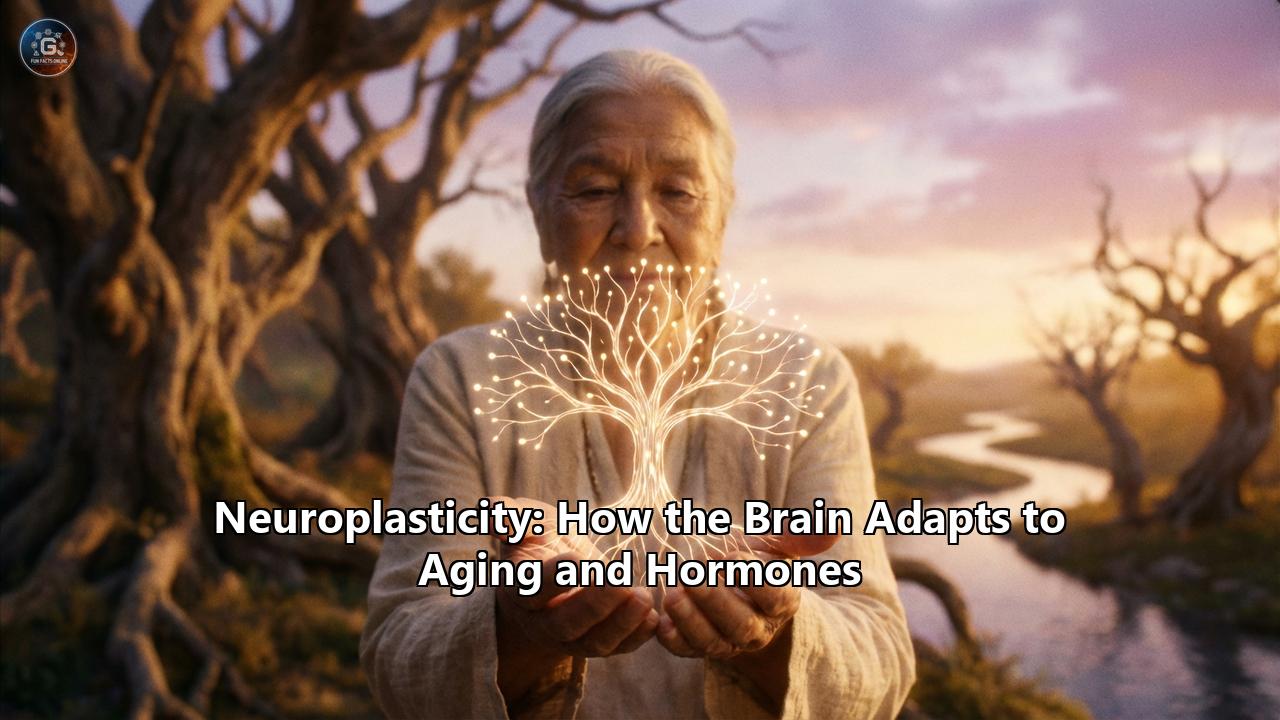
For decades, the scientific community held a rigid conviction that the adult brain was a static organ—fixed, immutable, and destined for a slow, inevitable decline after a peak in early adulthood. We were told that we were born with a finite number of neurons and that aging was simply a process of losing them, like sand slipping through an hourglass.
This narrative was wrong.
We now stand in the midst of a revolution in neuroscience, one that has overturned the bleak determinism of the past. The discovery of neuroplasticity—the brain's lifelong ability to reorganize itself by forming new neural connections—has fundamentally shifted our understanding of aging. We now know that the brain is not a porcelain vase that cracks with time, but a dynamic, living clay that reshapes itself in response to our experiences, our environment, and our internal chemistry.
However, this plasticity does not happen in a vacuum. It is orchestrating by a complex chemical symphony, with hormones serving as the conductors. As we age, the hormonal landscape shifts dramatically—estrogen, testosterone, progesterone, and cortisol levels fluctuate and wane. These shifts are not merely reproductive footnotes; they are critical events that alter the very architecture of our minds.
This comprehensive guide explores the intricate dance between neuroplasticity, aging, and hormones. It uncovers the mechanisms that allow our brains to adapt, the challenges posed by hormonal changes, and the actionable strategies we can deploy to harness our brain's potential well into our later years.
Part I: The Architecture of Adaptability
To understand how the brain adapts to aging, we must first understand the machinery of change. Neuroplasticity is not a single process; it is a collection of adaptive mechanisms that occur on microscopic and macroscopic levels.
1. Synaptic Plasticity: The Micro-Wiring of Thought
At the most fundamental level, learning and memory are physical events. When two neurons communicate frequently, the connection between them—the synapse—strengthens. This process, known as Long-Term Potentiation (LTP), is the cellular basis of memory. Conversely, connections that are rarely used weaken and eventually vanish through Long-Term Depression (LTD) and synaptic pruning.
Imagine a dense forest. If you walk the same path every day, the underbrush clears, the ground packs down, and the path becomes wide and easy to traverse. If you stop walking it, nature reclaims the trail. The aging brain continues this trail-blazing process every day. While the speed of LTP may slow with age, the capacity for it remains robust, allowing older adults to learn complex skills, from a new language to tango dancing.
2. Neurogenesis: Birth of New Neurons
For a century, dogma held that adults could not grow new brain cells. We now know this is false. In specific regions of the brain—most notably the hippocampus (the seat of memory and learning) and the subventricular zone—neural stem cells divide and give birth to new neurons throughout life. This process is called adult neurogenesis.
These newborn neurons are particularly responsive to new environments and are crucial for distinguishing between similar memories (pattern separation). While the rate of neurogenesis declines with age, it never fully stops. Crucially, as we will explore later, this rate is heavily influenced by hormonal signals.
3. Functional Reorganization: The Compensatory Brain
Perhaps the most miraculous adaptation of the aging brain is its ability to re-route. In young brains, specific tasks are often highly localized to one hemisphere (lateralization). For example, language processing is typically dominant in the left hemisphere.
Imaging studies reveal that aging brains often show bilateral activation for tasks that were unilateral in youth. This phenomenon, known as the HAROLD model (Hemispheric Asymmetry Reduction in Older Adults), suggests that the aging brain recruits additional neural resources to compensate for age-related decline in processing efficiency. It is the neural equivalent of calling in reinforcements. This scaffolding allows older adults to perform at high cognitive levels despite structural degradation.
Part II: The Hormonal Conductors
If the brain is the engine of our experience, hormones are the oil, the fuel, and the spark. They cross the blood-brain barrier and attach to receptors scattered densely across neurons, influencing everything from mood to memory retention. When hormone levels change during midlife—perimenopause, menopause, and andropause—the brain loses some of its primary protective signals.
1. Estrogen: The Master Architect
Estrogen (specifically 17β-estradiol) is arguably the most potent neuroprotective hormone in the human body. Its role extends far beyond reproduction; in the brain, it acts as a "master switch" for energy and growth.
- Synaptic Builder: Estrogen directly stimulates the production of dendritic spines—tiny protrusions on neurons where synapses form. Higher estrogen levels correlate with a denser "forest" of connections in the hippocampus and prefrontal cortex.
- Energy Regulator: The brain is an energy-hungry organ, consuming 20% of the body’s glucose. Estrogen regulates glucose metabolism in the brain. When estrogen levels plummet during menopause, neurons in the brain can experience a temporary energy crisis, often described subjectively as "brain fog."
- The Menopause Transition: For women, the drop in estrogen is precipitous. This withdrawal can lead to a transient state of neurological vulnerability. The "critical window hypothesis" suggests that the timing of this drop matters immensely. If the brain is supported during this transition, it can recalibrate; if not, the risk for neurodegenerative conditions like Alzheimer's increases. Women comprise two-thirds of Alzheimer's patients, a statistic closely tied to the loss of estrogen's neuroprotective shield.
2. Testosterone: The Survival Signal
Often typecast as the hormone of aggression or libido, testosterone is a vital neurosteroid for both men and women, though it is the dominant driver in the male brain.
- Neuroprotection: Testosterone reduces the accumulation of beta-amyloid, the sticky protein plaque associated with Alzheimer's disease. It acts as an anti-inflammatory agent in the brain.
- Spatial Memory: High densities of androgen receptors are found in the hippocampus, particularly in the regions dedicated to spatial mapping and navigation.
- Andropause: Unlike the "cliff" of menopause, men experience a "slope"—a gradual decline in testosterone of about 1% per year after age 30. However, men with rapidly declining levels often show faster rates of cognitive decline. Interestingly, some testosterone in the male brain is converted into estrogen by an enzyme called aromatase, meaning men benefit from estrogen-mediated neuroplasticity as well.
3. Progesterone: The Soothing Neurosteroid
Progesterone is often overshadowed by estrogen, but it plays a critical complementary role.
- Myelin Repair: Progesterone stimulates the production of myelin, the fatty sheath that insulates nerve fibers and ensures rapid signal transmission. As we age, myelin sheaths can fray, slowing down cognitive processing speed. Progesterone helps maintain this "insulation."
- GABAergic Activity: A metabolite of progesterone, allopregnanolone, interacts with GABA receptors—the brain's "brake pedal." This provides a calming, anti-anxiety effect. The sleep disturbances common in perimenopause are often linked to the loss of this sedating hormone.
4. Cortisol: The Double-Edged Sword
While sex hormones generally build the brain up, chronic stress hormones tear it down. Cortisol is essential for waking us up and managing acute stress, but in excess, it is neurotoxic.
- The Hippocampal Shrinker: The hippocampus is rich in glucocorticoid (cortisol) receptors. Chronic high cortisol literally kills hippocampal neurons and inhibits neurogenesis. It forces the brain into a state of "survival" rather than "growth."
- The Aging Feedback Loop: As we age, the HPA axis (hypothalamic-pituitary-adrenal axis) becomes less resilient. It takes longer for cortisol to return to baseline after a stressor. This prolonged exposure to cortisol accelerates synaptic pruning, particularly in the prefrontal cortex (executive function) and hippocampus (memory).
Part III: The Aging Brain’s Challenge
The collision of aging biology and hormonal withdrawal creates a specific set of challenges for neuroplasticity.
The "Use It or Lose It" Reality
As hormonal support wanes, the brain becomes less forgiving of inactivity. In youth, high levels of growth factors (like BDNF - Brain-Derived Neurotrophic Factor) and hormones provide a buffer. You can eat poorly, sleep little, and still learn quickly. In the aging brain, that buffer is gone. Plasticity becomes resource-dependent. If you do not actively engage a neural circuit, the aging brain, in an effort to conserve energy, will dismantle it. This is why retirement is a statistical risk factor for cognitive decline—the sudden removal of cognitive load can signal the brain to "power down" essential networks.
Inflammation: The Silent Blockade
"Inflammaging"—chronic, low-grade inflammation associated with aging—inhibits neuroplasticity. Inflammatory cytokines block the molecular pathways required for LTP. They essentially lock the synaptic gates, making it harder to form new memories. Hormones like estrogen and testosterone previously kept this inflammation in check; without them, lifestyle interventions become the primary defense.
Part IV: Strategic Neuroplasticity — A Protocol for the Aging Brain
The good news is that we can biohack this system. While we cannot stop the clock, we can manually trigger the mechanisms of neuroplasticity that hormones used to regulate automatically. We can use lifestyle as a "drug" to stimulate the production of BDNF, stabilize glucose, and reduce cortisol.
1. Physical Intervention: Muscles as Endocrine Organs
Exercise is the single most potent trigger for neuroplasticity currently known to science. It is not just about heart health; it is about neurochemistry.
- The BDNF Pump: Aerobic exercise increases the production of BDNF, often called "Miracle-Gro for the brain." BDNF promotes the survival of new neurons in the hippocampus and strengthens existing synapses.
- Irisin and the Muscle-Brain Axis: When muscles contract during resistance training, they release a myokine called irisin. Irisin travels to the brain and induces the expression of BDNF. This suggests that lifting weights is literally lifting your cognitive reserve.
- Angiogenesis: Exercise stimulates the growth of new blood vessels (angiogenesis) in the brain, ensuring that metabolic fuel reaches shrinking areas.
2. Nutritional Plasticity: Fueling the Repair
The aging brain struggles to metabolize glucose efficiently (a state sometimes called Type 3 Diabetes). To maintain plasticity, we must optimize fuel.
- Ketones as Superfuel: Ketone bodies (produced during fasting or a ketogenic diet) bypass the broken glucose machinery and provide a more efficient fuel source for neurons. They also increase the production of BDNF and reduce neuro-inflammation.
- Omega-3 Fatty Acids: DHA, found in fish oil, makes up a significant portion of the neuronal membrane. Adequate DHA keeps cell membranes "fluid," allowing receptors to move and signals to transfer easily.
- Flavonoids and Polyphenols: Compounds found in berries, dark chocolate, and green tea stimulate blood flow to the brain and have been shown to enhance LTP.
3. Cognitive Stimulation: The Power of Novelty
Doing crossword puzzles is not enough. To trigger structural remodeling, the brain needs novelty and complexity.
- The Discomfort Zone: Plasticity is triggered by the struggle to learn. When you are good at something, your brain is in "autopilot" (efficiency mode). When you are bad at something—like learning a new language or an instrument—your brain releases acetylcholine and norepinephrine, chemicals that mark neural circuits for change.
- Enriched Environments: Animal studies consistently show that "enriched environments" (filled with new toys, social interaction, and challenges) dramatically increase the survival rate of new neurons. For humans, this translates to travel, social clubs, and learning new skills.
4. Sleep and Restoration: The Glymphatic Cleanse
During deep sleep, the brain's glymphatic system opens up and flushes out metabolic waste products, including beta-amyloid and tau proteins.
- Hormonal Impact: Sleep deprivation spikes cortisol, which blocks this cleaning process. Furthermore, growth hormone—crucial for tissue repair—is released almost exclusively during deep slow-wave sleep.
- The Cycle: Protecting sleep architecture is arguably the most critical step in preserving neuroplasticity. As we age, we naturally lose deep sleep; reclaiming it through sleep hygiene, temperature control, and potentially magnesium or glycine supplementation is vital.
Part V: The Future of Brain Aging
We are entering a new era of "Precision Aging." The debate around Hormone Replacement Therapy (HRT) is becoming more nuanced. We are moving away from the "one size fits all" fear of the early 2000s toward a personalized approach. For many women, transdermal estradiol and micronized progesterone, started within the "critical window" (within 10 years of menopause), may offer substantial neuroprotection. For men, testosterone therapy is being evaluated not just for muscle, but for memory.
Beyond hormones, the frontier of non-invasive brain stimulation (TMS, tDCS) and neurofeedback offers hope for manually "tuning" brain circuits that have drifted out of sync.
Conclusion: The Plastic Paradox
The aging brain is a paradox. It is vulnerable, stripping away connections it deems unnecessary, yet it is infinitely capable, ready to build new cathedrals of thought if given the right materials.
We are not victims of our hormones. While the hormonal tides recede, they reveal a landscape that we can shape. Through the rigorous application of movement, novelty, nutrition, and rest, we can take up the conductor's baton. We can drive the plasticity that keeps our minds sharp, our memories clear, and our selves intact, well into the twilight of our years. The brain changes every day until we die. The question is: How will you change it today?
Reference:
- https://aeon.co/essays/what-the-metaphor-of-rewiring-gets-wrong-about-neuroplasticity
- https://pmc.ncbi.nlm.nih.gov/articles/PMC4632662/
- https://www.heart.org/en/news/2021/02/01/hormones-are-key-in-brain-health-differences-between-men-and-women
- https://www.drfranklipman.com/post/healthy-aging-and-the-brain-5-ways-to-improve-neuroplasticity
- https://www.pacificneuroscienceinstitute.org/blog/brain-health/neuroplasticity-and-healthy-aging-what-you-need-to-know/
- https://pmc.ncbi.nlm.nih.gov/articles/PMC2072817/
- https://pmc.ncbi.nlm.nih.gov/articles/PMC7818866/
- https://www.mdpi.com/2076-3425/13/12/1610
- https://www.plasticitycenters.com/blog/how-do-you-increase-neuroplasticity-in-older-adults
- https://www.health.harvard.edu/mind-and-mood/tips-to-leverage-neuroplasticity-to-maintain-cognitive-fitness-as-you-age
- https://academic.oup.com/endo/article/160/9/2128/5520373